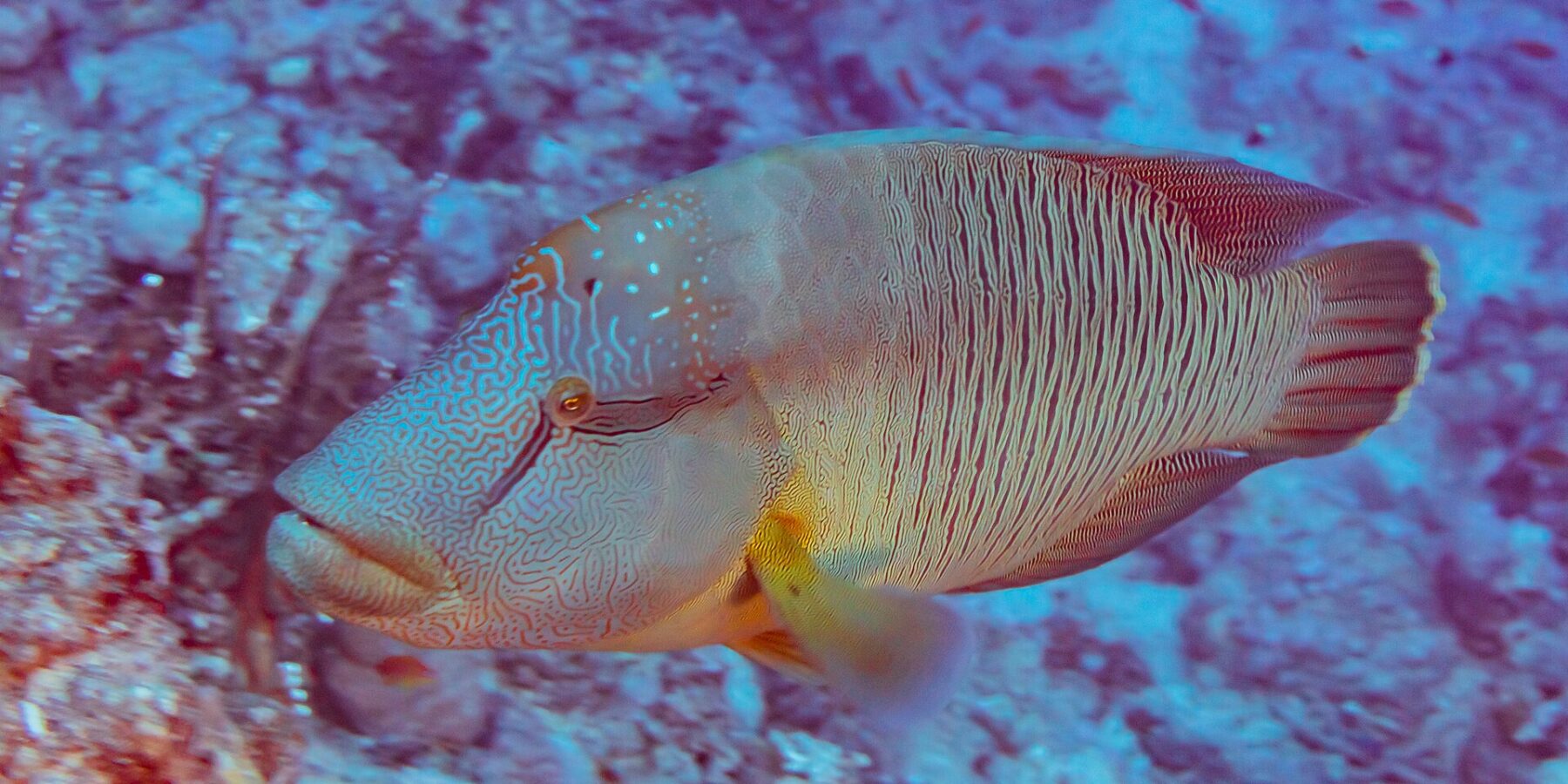
The Napoleon wrasse often stays on the same reef and comes to check out divers up close. Ras Mohammed and the Brothers, in the Red Sea, have their residents, seen in every season, and at Fish Head in the Maldives and in Raja Ampat, Indonesia, the encounter is just as certain.
Where to dive to see the napoleon wrasse?
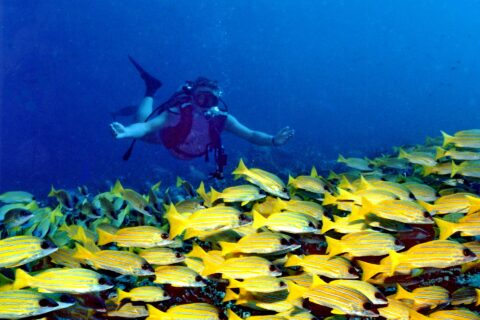
 MaldivesReef
Banana Reef
Malé atollsPeak season all year round: resident, along the walls and the north face
 IndonesiaReef
Batu Bolong
KomodoPeak season all year round: one or two adults circling the rock
 IndonesiaPelagic
Blue Magic
Raja AmpatPeak season all year round: a few adults circling the top
 FrancePass
Boulari Pass (New Caledonia)
New CaledoniaCan be seen all year round: resident in the pass and on the nearby reefs
 EgyptPelagic
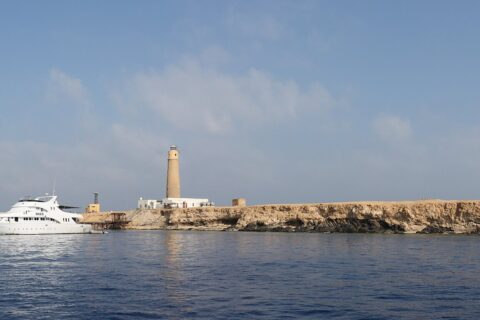
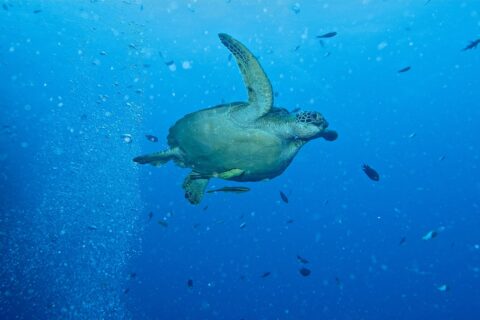
Brothers Islands
Southern Red Sea, EgyptPeak season all year round: a resident family around the Big Brother wrecks
 IndonesiaReef
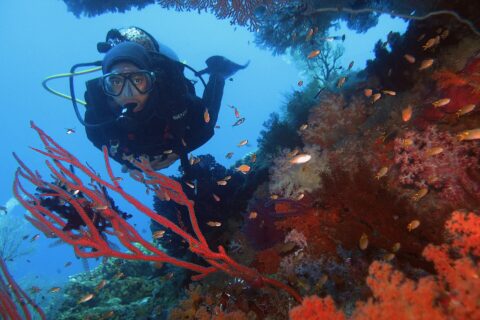
Bunaken, Lekuan walls
Sulawesi: Bunaken and LembehPeak season all year round: along the wall and in the blue
 IndonesiaReef
Cape Kri
Raja AmpatPeak season all year round: several resident adults that swim close to divers during the drift
 IndonesiaPelagic
Castle Rock
KomodoPeak season all year round: on the coral slopes, on calm days
 FrancePass
Fakarava South Pass (Tumakohua)
French PolynesiaCan be seen all year round: in the pass and over the coral garden
 MaldivesReef
Fish Head (Mushimasmingili Thila)
Ari and Rasdhoo atollsPeak season all year round: one or two big residents, curious about divers
 TanzaniaPass
Fundu Gap
PembaPeak season all year round: big individuals along the walls, on almost every dive
 MaldivesPelagic
Kandooma Thila
Malé atollsPeak season all year round: pushed by the current toward the east face
 TanzaniaPass
Kinasi Pass
Mafia IslandCan be seen all year round: along Kinasi Wall, on the second dive
 MaldivesReef
Kuda Rah Thila
Ari and Rasdhoo atollsPeak season all year round: resident, around the coral heads
 IndonesiaPelagic
Magic Mountain (Misool)
Raja AmpatPeak season from October to April: several big adults following the hunting trevally in the shallows
 TanzaniaReef
Misali Island
PembaCan be seen all year round: big individuals in the blue, along the Coral Mountain wall
 TanzaniaReef
Mnemba Atoll
ZanzibarCan be seen all year round: on the Aquarium and the deeper parts
 EgyptReef
Panorama Reef
Central Red Sea, EgyptPeak season all year round: the guardian of the north plateau, a big resident that comes to check out dive groups
 MaldivesPelagic
Rasdhoo Madivaru
Ari and Rasdhoo atollsPeak season all year round: in the channel between Kuramathi and Rasdhoo
 FrancePass
S Pass (Mayotte)
French Indian Ocean: Réunion and MayotteCan be seen all year round: rare, along the walls
 EgyptReef
Shark and Yolanda Reef, Ras Mohammed
Northern Red Sea, EgyptPeak season all year round: several residents on the saddle, they come right up to your mask
 EgyptCave or cenote
St. John's and Fury Shoals
Southern Red Sea, EgyptPeak season all year round: resident on the gotas and pinnacles
 FrancePass
Tiputa Pass (Rangiroa)
French PolynesiaCan be seen all year round: on the ocean wall, on an outgoing current
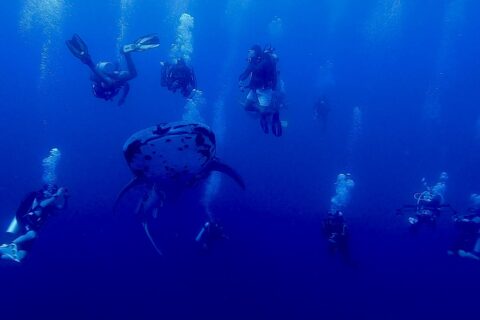
 PhilippinesPelagic
Tubbataha Reef
PalawanPeak season from April to May: at Amos Rock, on North Atoll
How do you identify a Napoleon wrasse?
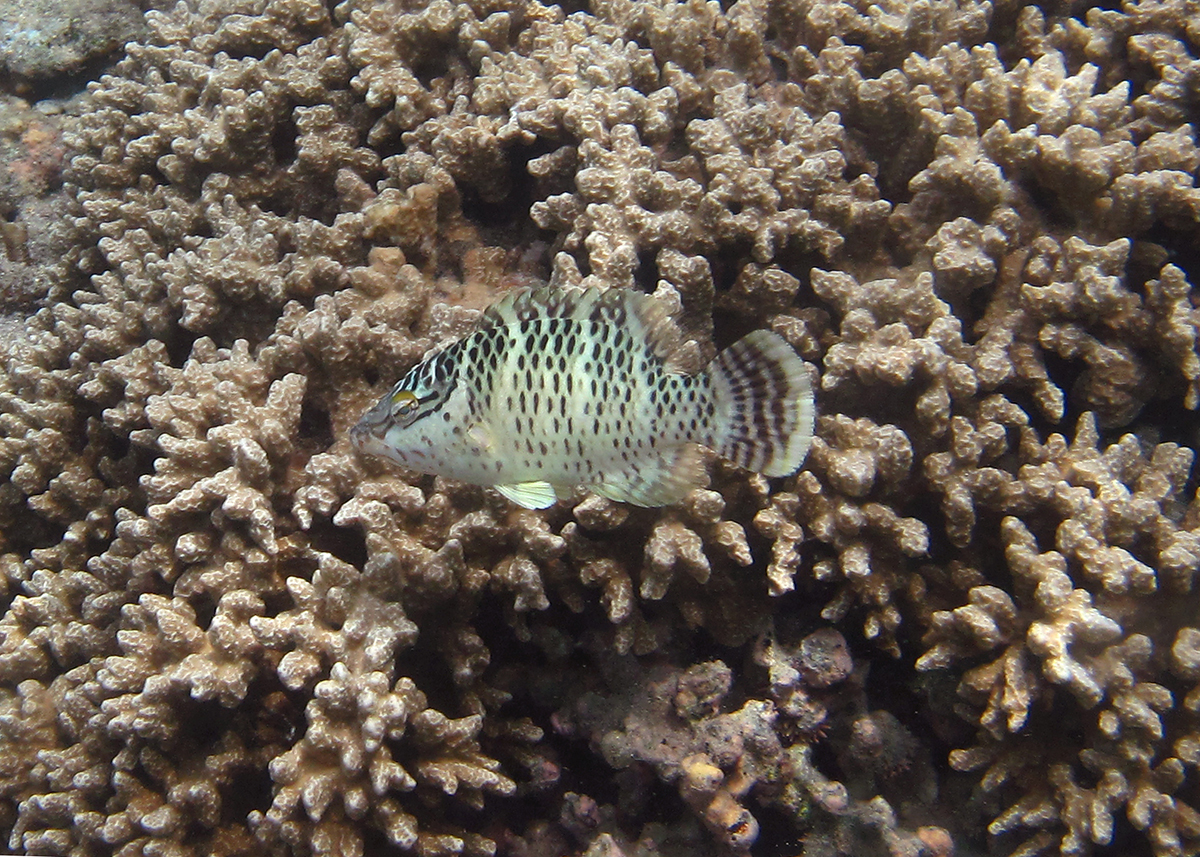
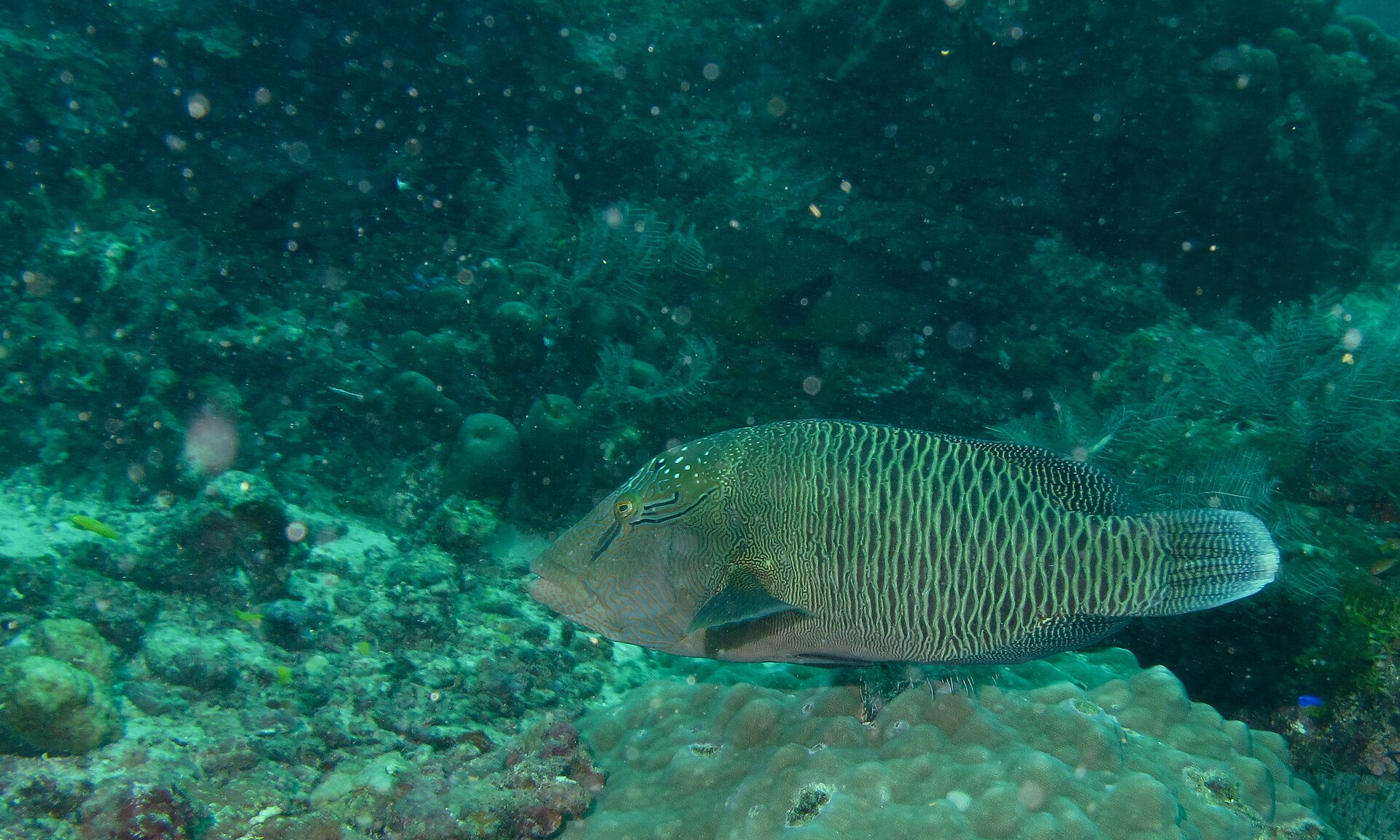
The Napoleon wrasse, or humphead wrasse, is the largest member of the wrasse family and one of the largest bony fish on coral reefs: up to 2.30 meters and nearly 200 kilos, although the average size is 60 centimeters. The body is massive and laterally compressed. The adult male has a prominent hump on its forehead, which recalls the emperor's bicorne hat and gave the fish its name. The mouth is large, fleshy and protractile, the eyes small and bulging. The adult is olive green, with many vertical black lines on the flanks and a network of yellowish marbling on the head; the convex tail fin has a white edge. It moves mainly with its pectoral fins, in a slow, slightly clumsy swim.
Napoleon wrasse in pictures
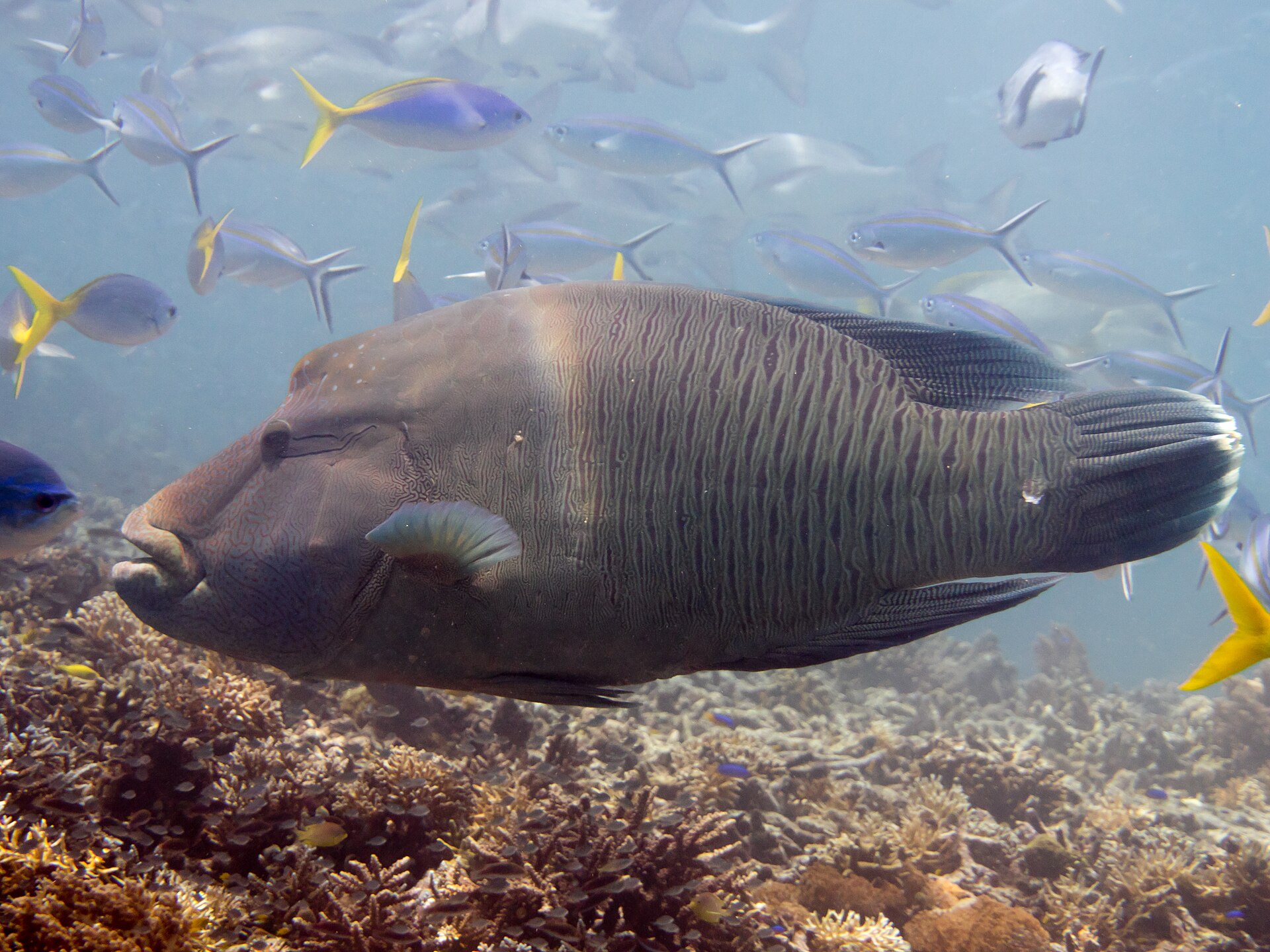
How does the Napoleon wrasse live?
The Napoleon wrasse lives on coral reefs in the Red Sea and the Indo-Pacific, often along walls and on plateaus exposed to the current, where the large individuals hold their territories. It feeds on reef invertebrates, mollusks, crustaceans and sea urchins, and it is one of the few fish able to eat the crown-of-thorns starfish, the sea star that devours coral. Juveniles and young females are brown to greenish, with two black lines behind the eye; the largest individuals become males.
Where and when can you see a Napoleon wrasse?
In the Red Sea, several reefs have resident Napoleon wrasse, seen all year. At Ras Mohammed, they live on the saddle between Shark and Yolanda Reef and come right up to your mask. The northern plateau of Panorama Reef is guarded by a big resident that comes to check out dive groups. At the Brothers, a family lives around the wrecks of Big Brother. At St. John's, residents live on the pinnacles and coral islets. Elsewhere in the Red Sea, you will meet it by chance along the walls, often alone. Sometimes a trevally follows it to take advantage of its hunting.
In the Maldives too, residents show up all year. At Fish Head, one or two big Napoleon wrasse are curious about divers. In Tanzania, at Fundu Gap off Pemba, big Napoleon wrasse cruise the walls on almost every dive. In Indonesia, at Cape Kri in Raja Ampat, several adults pass close to divers during the drift, all year. At Magic Mountain, in Misool, big adults follow hunting trevallies in shallow water, mostly from October to April.
In the Pacific, you can meet it all year in the passes of Rangiroa and Fakarava, in French Polynesia. It also lives in Boulari Pass, in New Caledonia. To be sure of seeing it, choose the Red Sea, the Maldives or Indonesia.
Is the Napoleon wrasse endangered?
Slow to grow, late to breed and highly prized alive by restaurants in Asia, the Napoleon wrasse is listed as Endangered and appears in CITES Appendix II, which regulates its trade. In Egypt, it is protected, and the residents of Ras Mohammed built its reputation. But years of feeding from boats have made some individuals so familiar that they became dependent. Give them nothing, and enjoy their curiosity without provoking it.
Our tip
Never feed it, even if some guides have done so before you: hard-boiled eggs and bread have made several individuals dependent and sick. Let it come to you, since it is curious. Stay calm and it will pass within reach of your mask.