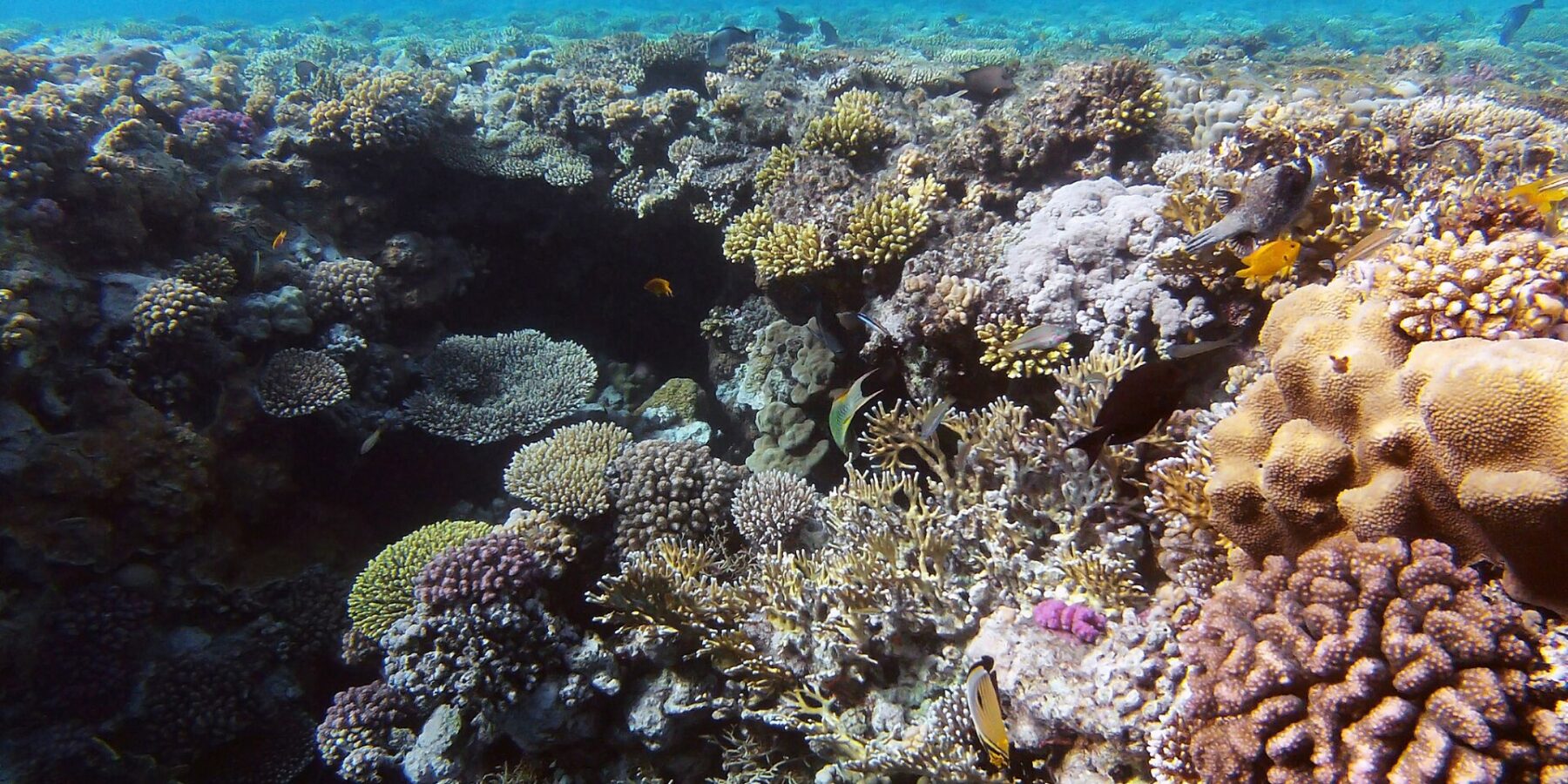
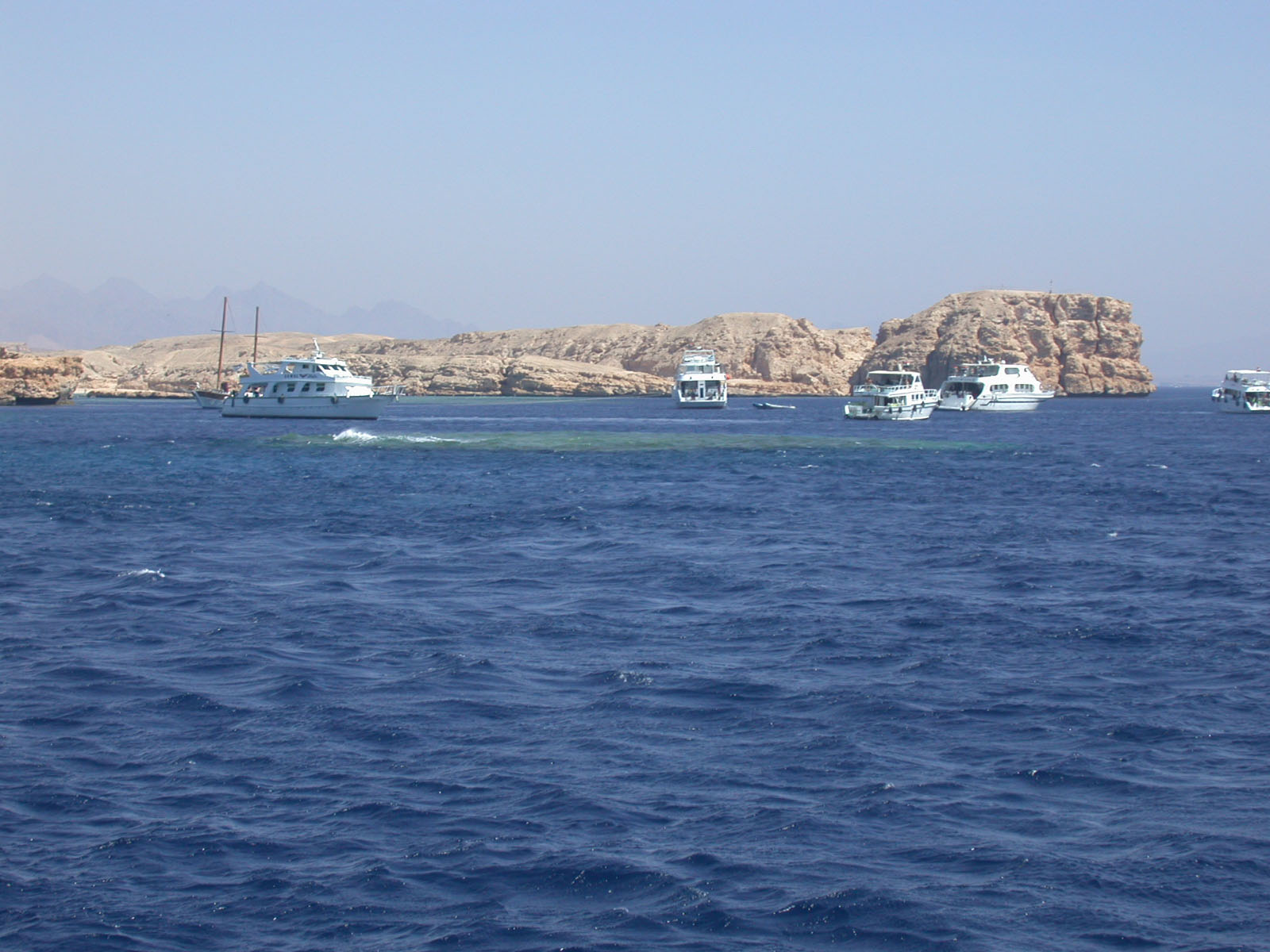
Shark Reef and Yolanda Reef are two reefs at the southern tip of the Sinai: a wall that drops more than 700 meters and, on the plateau, the bathroom fittings cargo of a freighter sunk in 1980. It is the most popular dive in Ras Mohammed, and the most reliable in the Red Sea for schooling pelagics.
Why dive Shark and Yolanda Reef?
- Shark Reef: a vertical wall that drops more than 700 meters, covered in soft corals
- From June to October, the most reliable schools of barracudas, trevallies and snappers in the Red Sea
- On the Yolanda plateau, the bathroom fittings from the freighter sunk in 1980, toilets and bathtubs included
- Resident Napoleon wrasse that come very close to divers
- A single drift that links both reefs
The dive site on the map
Base: Sharm el-Sheikh, 22 km as the crow flies.
See nearby dive sites on the mapShark and Yolanda Reef in pictures
What will you see at Shark and Yolanda Reef?
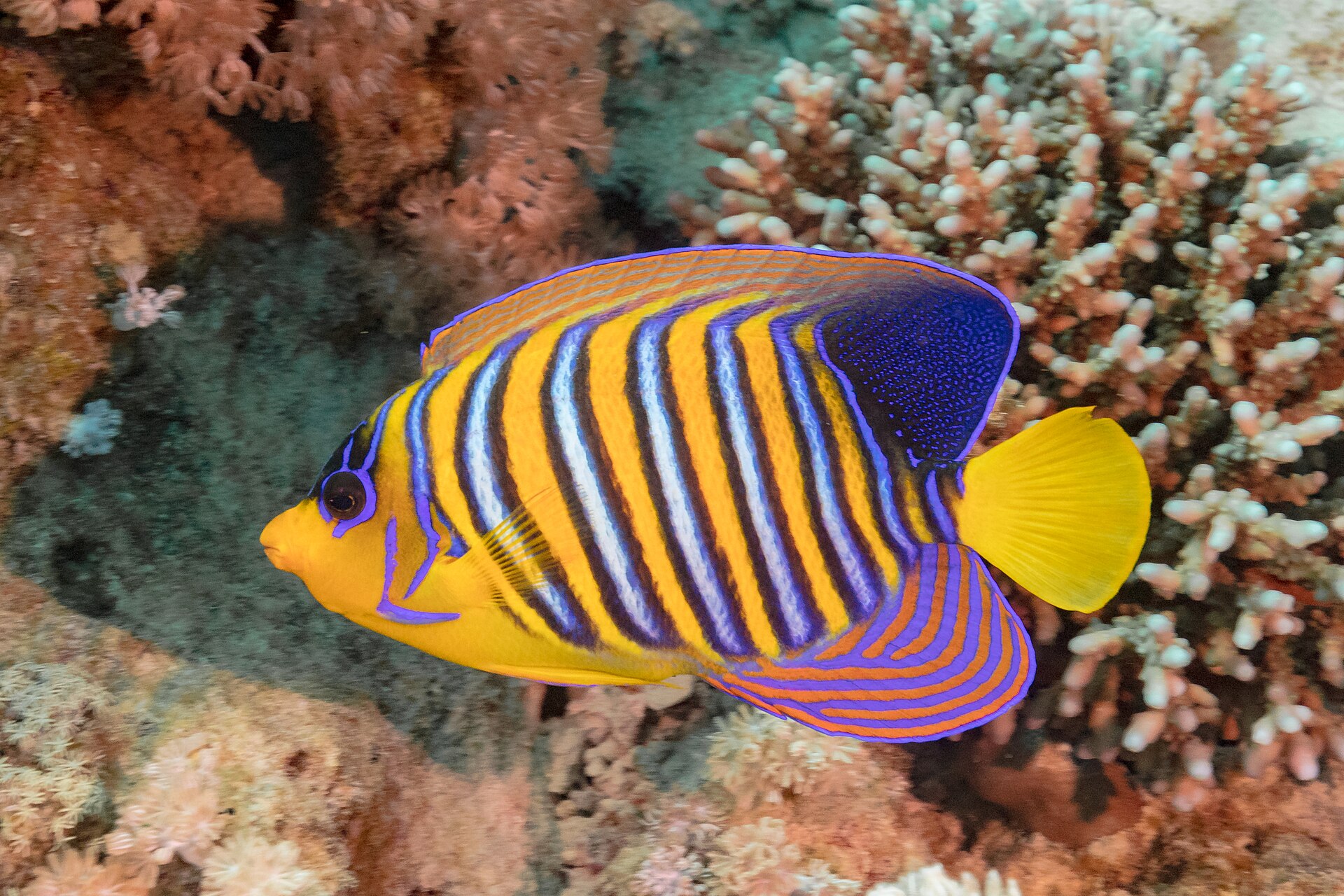
The Shark Reef wall is carpeted with soft corals and sea fans, and it is in front of it that the scenes that made the site famous play out: from June to October, barracudas, trevallies and bluestripe snappers form schools of several hundred fish above the saddle, between the two reefs. Resident Napoleon wrasse circle the divers, batfish turn under the boats and regal angelfish keep to the cracks. On the Yolanda plateau, among the toilet bowls and bathtubs, morays, crocodilefish and scorpionfish have moved in, and green turtles come by to graze. In the blue, gray reef and whitetip reef sharks sometimes show up, though they are never guaranteed.
| Species | J | F | M | A | M | J | J | A | S | O | N | D | Note |
|---|---|---|---|---|---|---|---|---|---|---|---|---|---|
 Great barracuda | possible | possible | possible | possible | peak season | peak season | peak season | peak season | peak season | peak season | possible | possible | in a tight school above the saddle, from May to October |
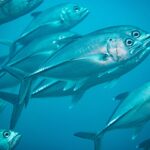 Bigeye trevally | possible | possible | possible | possible | peak season | peak season | peak season | peak season | peak season | peak season | possible | possible | giant trevallies and bluefin trevallies hunting in the blue |
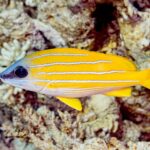 Bluestripe snapper | rare | rare | rare | rare | possible | peak season | peak season | peak season | possible | rare | rare | rare | the big summer school, from June to August |
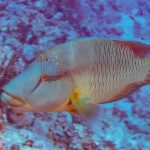 Napoleon wrasse | peak season | peak season | peak season | peak season | peak season | peak season | peak season | peak season | peak season | peak season | peak season | peak season | several residents on the saddle, they come right up to your mask |
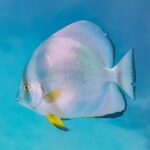 Orbicular batfish | peak season | peak season | peak season | peak season | peak season | peak season | peak season | peak season | peak season | peak season | peak season | peak season | schooling under the boats and along the wall |
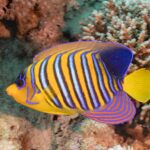 Regal angelfish | peak season | peak season | peak season | peak season | peak season | peak season | peak season | peak season | peak season | peak season | peak season | peak season | in the cracks of the wall, among the soft corals |
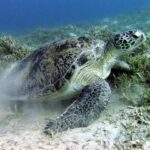 Green turtle | possible | possible | possible | possible | possible | possible | possible | possible | possible | possible | possible | possible | passing on the Yolanda plateau |
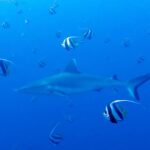 Gray reef shark | rare | rare | rare | rare | rare | rare | rare | rare | possible | possible | possible | rare | in the blue off Shark Reef, never guaranteed, mostly in the fall |
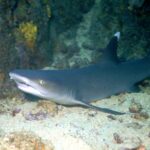 Whitetip reef shark | rare | rare | rare | rare | rare | rare | rare | rare | possible | possible | possible | rare | in the blue off Shark Reef, never guaranteed, mostly in the fall |
peak seasonpossiblerare
What is diving like at Shark and Yolanda Reef?
The two reefs are drift dived, usually in a single dive: entry north of Shark Reef, descent along the wall between 20 and 30 meters, across the saddle at 12 or 20 meters depending on the current, then the Yolanda plateau and its cargo between 15 and 25 meters. The current comes from the meeting of the waters of the Gulf of Suez and the Gulf of Aqaba: it varies, is sometimes strong, and can push you offshore at the point. Advanced is required for the drift; Open Water divers stick to Yolanda Reef in calm seas, without the wall.
When to dive Shark and Yolanda Reef?
idealgoodnot recommended
The park is dived all year, with water at 22°C in February and 29°C in August, and visibility that rarely drops below 25 meters. The schools form with the warm water: June to August for the snappers, until October for the barracudas and trevallies, and pelagics are most numerous from September to November. Winter is still a good season for the wall and the corals, but the north wind cancels some trips and the current gets more unpredictable.
How to get to Shark and Yolanda Reef?
Ras Mohammed is the southern tip of the Sinai, about twenty kilometers from Sharm el-Sheikh by sea. Every dive center in town runs day boats there, an hour to an hour and a half from Naama Bay or Sharm el-Maya, with two dives in the park: Shark and Yolanda, then Anemone City, Eel Garden or Jackfish Alley. The park entry fee, €7 per trip, comes on top of the package. Sharm el-Sheikh airport is a five-hour flight from Paris, and the free Sinai stamp, issued on arrival and valid for fifteen days, is enough for this trip.
Stay in Sharm el-Sheikh
Where to find a dive guide in Shark and Yolanda Reef?
Guided tours you can book online, ranked by number of reviews. These are affiliate links: if you book, you support us at no extra cost.

 Viator
Discover Scuba Diving
5.0 (1,861 reviews)View and book Viator
Open Water Diver Course
5.0 (280 reviews)View and book Viator
Discover Scuba Diving Sharm El Sheikh
4.8 (235 reviews)View and book Viator
PADI Scuba Diver (PSD)
5.0 (189 reviews)View and book Viator
Introduction: Diving in Sharm El Sheikh 15 minutes underwater
5.0 (125 reviews)View and book Viator
Advanced Open Water Diver Course
5.0 (88 reviews)View and bookWhere to stay near Shark and Yolanda Reef?
Hotels, apartments and rooms around Sharm el-Sheikh, with current prices.
Which hotels to choose near Shark and Yolanda Reef?
 Egypt
Reef Oasis Beach Resort
Northern Red Sea, Egypt Egypt
JAZ Fanara Resort
Northern Red Sea, Egypt Egypt
Sunrise Arabian Beach Resort
Northern Red Sea, Egypt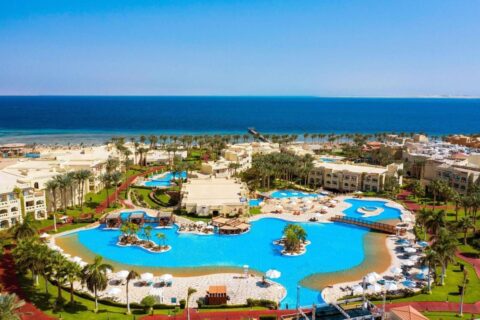 Egypt
Rixos Sharm El Sheikh
Northern Red Sea, EgyptIs Ras Mohammed Egypt's first national park?
Ras Mohammed occupies the southern tip of the Sinai Peninsula, where the Gulf of Suez and the Gulf of Aqaba meet the Red Sea. Declared a national park in 1983, the country's first, it protects the cape, its fossil cliffs, its mangrove and the reefs around it. Underwater, the meeting of the two gulfs brings a nutrient-rich current: it feeds the corals on the wall and draws the schools. Shark Reef and Yolanda Reef are its two signature sites, at the far southern end of the cape.
What can you see at Shark and Yolanda Reef?
Shark Reef is a pinnacle whose outer face drops straight into more than 700 meters of water. The wall is covered in soft corals, sea fans and anthias, and the blue next to it is the realm of the schools: barracudas, trevallies and snappers by the hundreds in season. A sandy saddle at about twelve meters links Shark Reef to Yolanda Reef; that is where the resident Napoleon wrasse come to look at divers. Yolanda Reef, lower down, slopes as a plateau to 18 meters, and that plateau holds the most famous cargo in the Red Sea.
What happened to the Yolanda and its cargo?
The Yolanda was a Cypriot freighter that ran aground on the reef in 1980 with a load of bathroom fittings. The hull itself slid down the wall a few years later and now lies well beyond recreational depths, but its cargo stayed on the plateau, between 15 and 25 meters: dozens of toilet bowls, bathtubs, sinks, broken porcelain and the chassis of a car. Corals have grown over the ceramics, morays live in them, and the absurd, photogenic scene has traveled around the world.
What other dive sites are there in Ras Mohammed?
A day at Ras Mohammed almost always includes a second dive in the park. Anemone City, on the side of Shark Reef, lines up hundreds of anemones and their clownfish on a shallow plateau. Eel Garden is a sandy plateau of garden eels, often paired with Shark and Yolanda. Jackfish Alley owes its name to the trevallies patrolling between its two pinnacles, with a swim-through cave near the surface. Ras Za'atar, Ras Ghozlani and Shark Observatory complete the list, with quieter, less crowded walls.
Our tip
Ask for the Shark to Yolanda drift from June to October, the schooling season. Leave early, before the Naama Bay boats. Keep a DSMB in your pocket, because the dive ends in open water, away from the reef.
Other dive sites nearby
 EgyptWreck
Dunraven wreck
Northern Red Sea, Egypt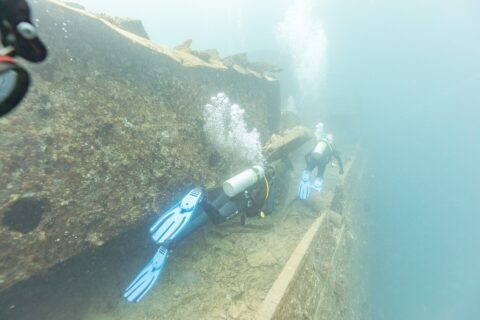 EgyptWreck
SS Thistlegorm
Northern Red Sea, Egypt EgyptReef