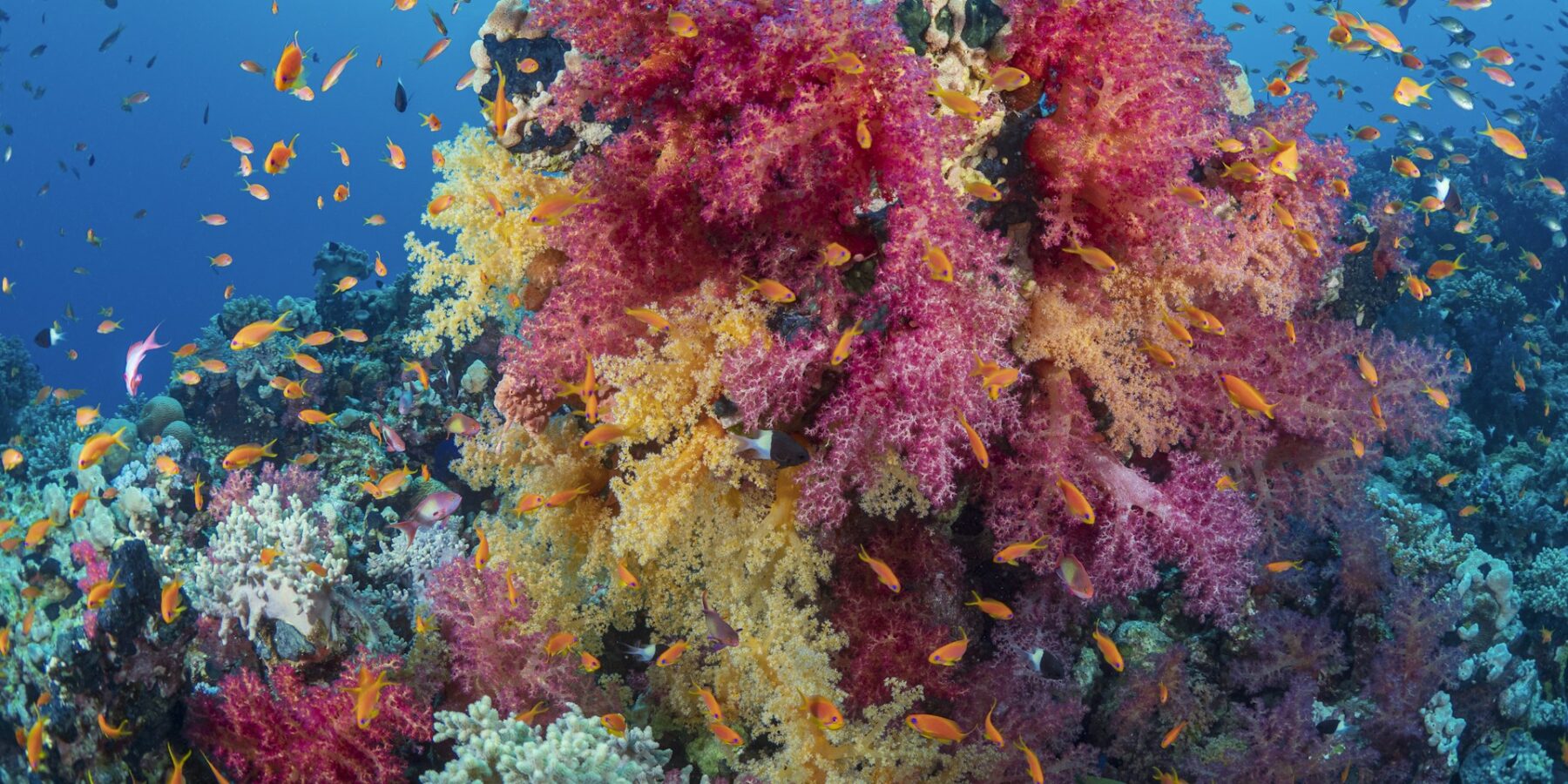
St. John's and Fury Shoals are the reefs of Egypt's deep south, near the Tropic of Cancer. St. John's lines up its pinnacles 200 kilometers south of Marsa Alam, and Fury Shoals brings together caves, a coral maze and the spinner dolphins of Sataya. You go on a liveaboard, or on a day trip from Hamata.
Why dive St. John's?
- Habili Ali, Habili Jafar, Gota Kebir, Gota Soraya: pinnacles and coral islets rising in the blue, with gray reef sharks
- The caves of Sha'ab Claudio and St. John's Caves, shallow cathedrals of light
- The Sataya spinner dolphin pod, to see with fins, mask and snorkel at daybreak
- The Malahi maze of pinnacles and the Tien Hsing wreck at Abu Galawa
- The least crowded reefs in Egypt, near the Tropic of Cancer
St. John's in pictures
What will you see at St. John's?
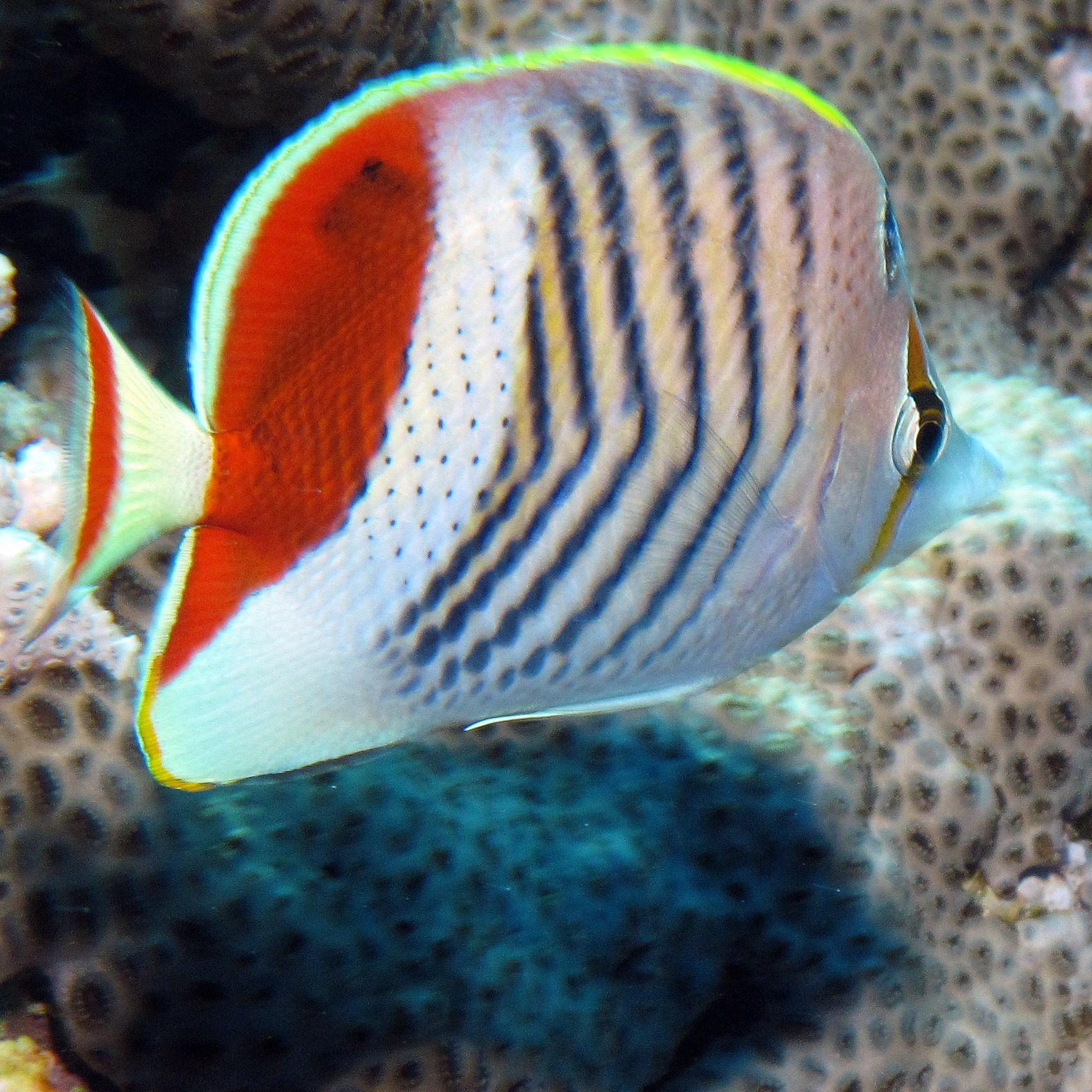
Almost all of the Red Sea's fauna turns up on these reefs, in an untouched setting. The St. John's habilis, pinnacles that rise from the bottom without reaching the surface, are lookout posts for gray reef sharks, whitetip reef sharks and, in summer, hammerheads in the blue; tuna, trevallies, Napoleon wrasse, turtles and dolphins pass by, and a whale shark in some summers. The gotas, coral islets, carry gardens of hard and soft corals covered in anthias and butterflyfish. At Fury Shoals, the Sha'ab Claudio caves are full of glassfish, the Sataya lagoon is home to a large pod of spinner dolphins, and the Tien Hsing wreck, at Abu Galawa, shelters a myriad of small reef fish.
| Species | J | F | M | A | M | J | J | A | S | O | N | D | Note |
|---|---|---|---|---|---|---|---|---|---|---|---|---|---|
 Spinner dolphin | peak season | peak season | peak season | peak season | peak season | peak season | peak season | peak season | peak season | peak season | peak season | peak season | the Sataya pod, in the lagoon, at daybreak |
 Gray reef shark | peak season | peak season | peak season | peak season | peak season | peak season | peak season | peak season | peak season | peak season | peak season | peak season | on the St. John's habilis, Habili Ali first and foremost |
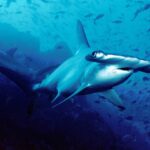 Scalloped hammerhead | rare | rare | rare | possible | possible | peak season | peak season | possible | possible | rare | rare | rare | in the blue off the habilis, in summer |
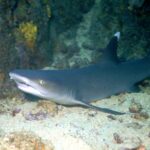 Whitetip reef shark | possible | possible | possible | possible | possible | possible | possible | possible | possible | possible | possible | possible | under the overhangs of the gotas |
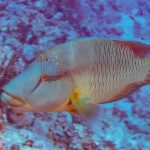 Napoleon wrasse | peak season | peak season | peak season | peak season | peak season | peak season | peak season | peak season | peak season | peak season | peak season | peak season | resident on the gotas and pinnacles |
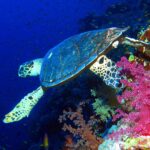 Hawksbill turtle | peak season | peak season | peak season | peak season | peak season | peak season | peak season | peak season | peak season | peak season | peak season | peak season | on the soft corals, at Fury Shoals as at St. John's |
| Tuna | possible | possible | possible | possible | possible | possible | possible | possible | possible | possible | possible | possible | hunting off the habilis |
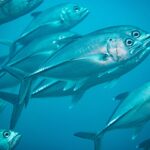 Bigeye trevally | possible | possible | possible | possible | possible | possible | possible | possible | possible | possible | possible | possible | hunting off the habilis |
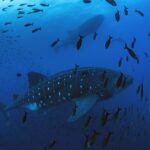 Whale shark | rare | rare | rare | rare | rare | rare | rare | rare | rare | rare | rare | rare | reported some summers, never guaranteed |
 Glassfish | peak season | peak season | peak season | peak season | peak season | peak season | peak season | peak season | peak season | peak season | peak season | peak season | in the caves of Sha'ab Claudio and St. John's Caves |
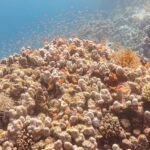 Scalefin anthias | peak season | peak season | peak season | peak season | peak season | peak season | peak season | peak season | peak season | peak season | peak season | peak season | everywhere on the coral gardens |
| Butterflyfish | peak season | peak season | peak season | peak season | peak season | peak season | peak season | peak season | peak season | peak season | peak season | peak season | everywhere on the coral gardens |
peak seasonpossiblerare
What is diving like at St. John's?
The sites are varied and, for the most part, open to Open Water divers: the gotas and coral gardens are dived between 5 and 25 meters, the caves of Sha'ab Claudio and St. John's Caves are shallow and open to the light, and the Malahi maze is explored across a plateau. The habilis call for more comfort: you descend along the pinnacle to 30 or 40 meters, in variable current, and ascend away from the pinnacle under an inflatable buoy that marks the divers. Entry is by zodiac from the liveaboard, or from the Hamata day boats for Fury Shoals. No night dives on the offshore sites.
When to dive St. John's?
idealgoodnot recommended
Liveaboards to St. John's run from March to November; in midwinter, the offshore wind makes sailing and anchoring too uncertain this far south. Day trips from Hamata to Fury Shoals, closer to the coast, run almost all year. The water drops to 23°C in February and rises to 30°C in August; visibility, 25 to 40 meters, is among the best in Egypt, far from any town or port. The Sataya dolphins are in the lagoon all year, at daybreak.
How to get to St. John's?
St. John's lies two hundred kilometers south of Marsa Alam, near the Tropic of Cancer, and is only reached by liveaboard: a week from Port Ghalib, ten minutes from Marsa Alam airport, with sixteen dives over six days and the Fury Shoals reefs on the way, from €1,200 to €1,350 without flights depending on the boat. Fury Shoals, closer to the coast, is also dived on day trips from Hamata and Wadi Lahami bay, 180 kilometers south of Marsa Alam, where a few hotels and dive villages face the lagoon. Marsa Alam airport is a five-hour flight from Paris; the full visa, US$25, is mandatory.
Stay in Hamata
Where to stay near St. John's?
Hotels, apartments and rooms around Hamata, with current prices.
Where are St. John's and Fury Shoals?
South of Marsa Alam, the Egyptian coast empties out: Hamata, Wadi Lahami bay, then nothing until the Sudanese border. Offshore, two groups of reefs make the reputation of the deep south. Fury Shoals, a few dozen kilometers from Hamata, is a field of shoals, lagoons and coral heads; St. John's, two hundred kilometers south of Marsa Alam, level with the Tropic of Cancer, lines up its pinnacles and coral islets in blue water that almost no one visits. These reefs are well protected and, for now, far less visited than those in the north.
What are the habilis and gotas of St. John's?
Habilis are pinnacles that rise from the bottom without reaching the surface: Habili Ali and Habili Jafar are the best known, coral towers you descend along their sides, gray reef sharks and the blue on one side, sea fans and soft corals on the other. Gotas are reef islets: Gota Kebir, the big one, and Gota Soraya, the small one, offer coral gardens, overhangs with whitetip reef sharks and drifts along their walls. Umm Arouk and its pinnacles, and St. John's Caves, a network of shallow caves and tunnels pierced by light, round out a week's program.
What are the best dive sites at Fury Shoals?
Sha'ab Sataya is the most visited site in the south: a huge lagoon ringed by an oval reef, guarded by seven coral pillars, home to a large pod of spinner dolphins that you visit with fins, mask and snorkel. Sha'ab Claudio, the best-known reef of Fury Shoals, is round and ringed with small caverns, especially to the south: shallow, easy caves, true cathedrals of light. Malahi, on the southern part of its reef, is a maze of huge pinnacles and canyons on a plateau, a playground to end a dive. At Abu Galawa Kebir, the wreck of the Tien Hsing, a 35 meter Chinese ship built in 1935 and sunk in 1943 on the route from Suez to Eritrea, lies at 18 meters, with part of it still above water; at Abu Galawa Soraya, a 17 meter sailboat sunk in 1980 shelters a myriad of small fish.
Should you dive St. John's on a liveaboard or from Hamata?
For St. John's, there is only the liveaboard: a week from Port Ghalib, with sixteen dives over six days, the habilis and gotas of St. John's, then Fury Shoals and Sataya on the way back. Boats generally accept Open Water divers, with the habilis kept for the most comfortable. For Fury Shoals alone, the dive villages of Hamata and Wadi Lahami, 180 kilometers south of Marsa Alam, run day trips to Sataya, Claudio, Malahi and Abu Galawa: a simpler and cheaper option, if you accept lodging at the end of the world.
Our tip
Choose a liveaboard that spends at least two nights at St. John's and one at Sataya, where the dolphins are in the lagoon at dawn. Bring a light for the caves and a wide-angle lens, because the scenery makes the shot.
Other dive sites nearby
 EgyptPelagic
Daedalus Reef
Southern Red Sea, Egypt EgyptPelagic
Elphinstone Reef
Southern Red Sea, Egypt EgyptPelagic