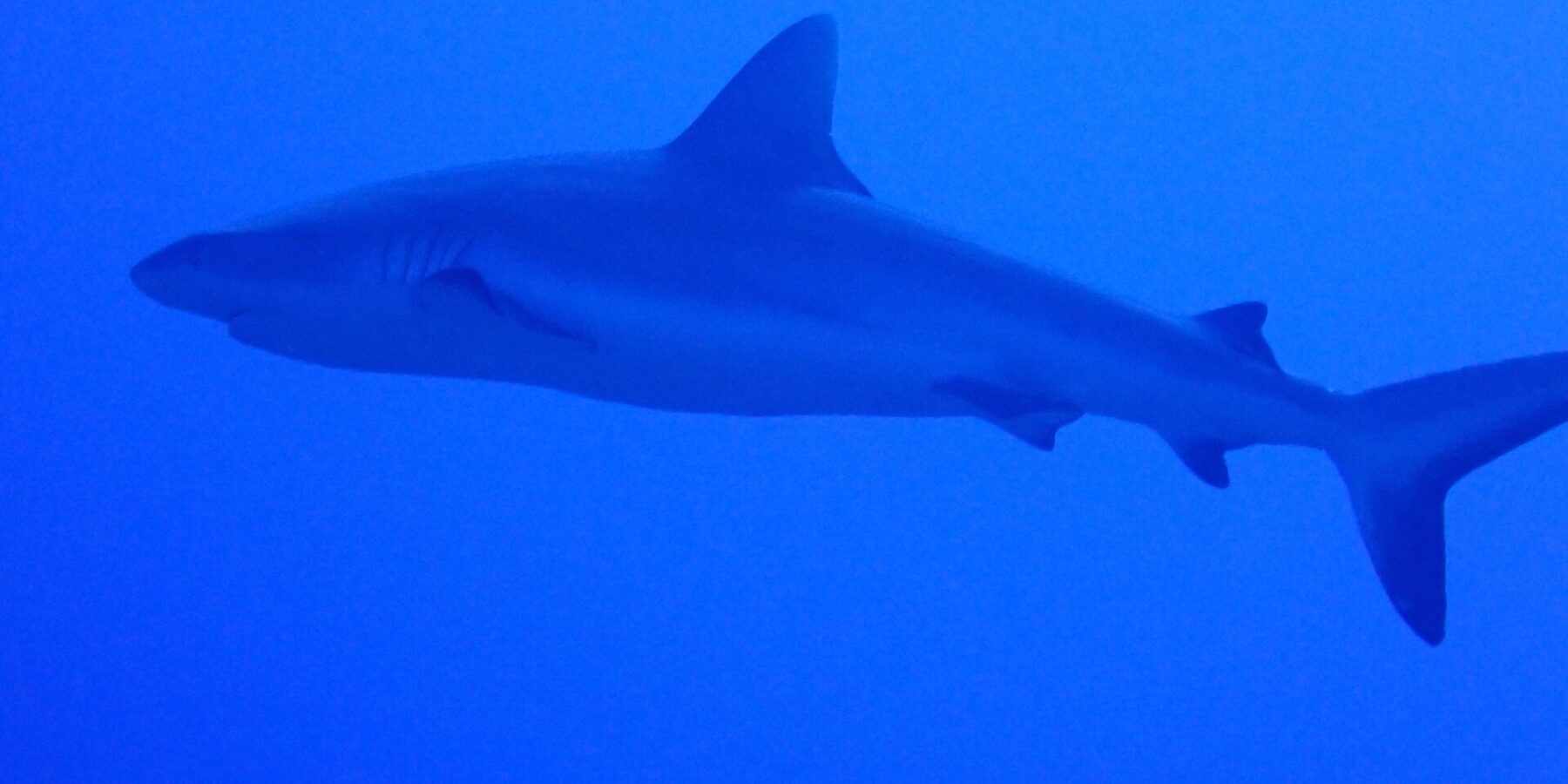
Fakarava South Pass, 200 m wide, is part of a UNESCO biosphere reserve and home to 600 gray reef sharks on average, joined by more than 17,000 camouflage groupers that come to spawn around the June and July full moons. You dive it on a day trip from Rotoava or from a guesthouse in the south.
Why dive Fakarava South Pass?
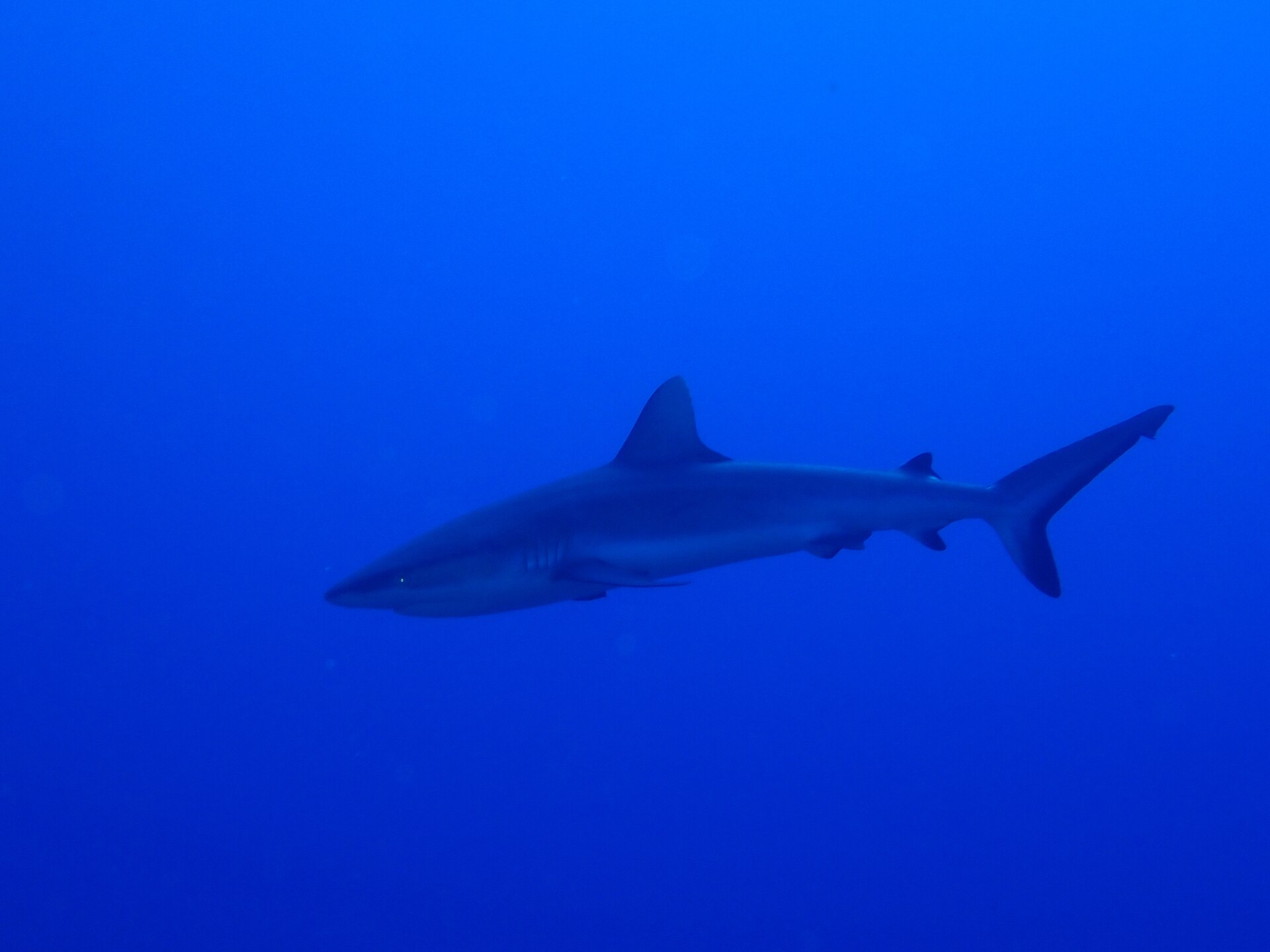
- A wall of gray reef sharks, 600 on average and up to 700, in a pass 200 m wide
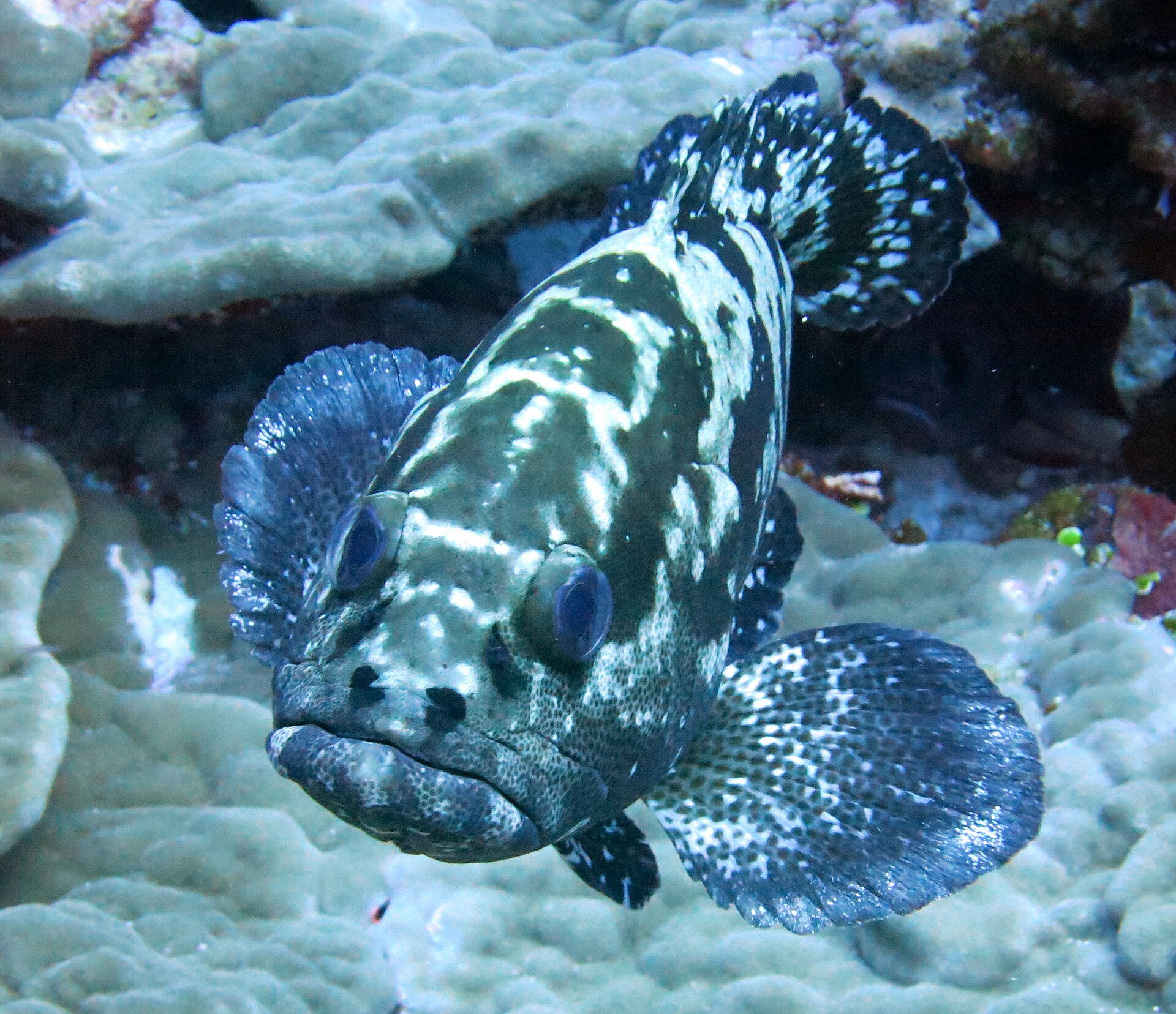
- More than 17,000 camouflage groupers spawning around the June and July full moons
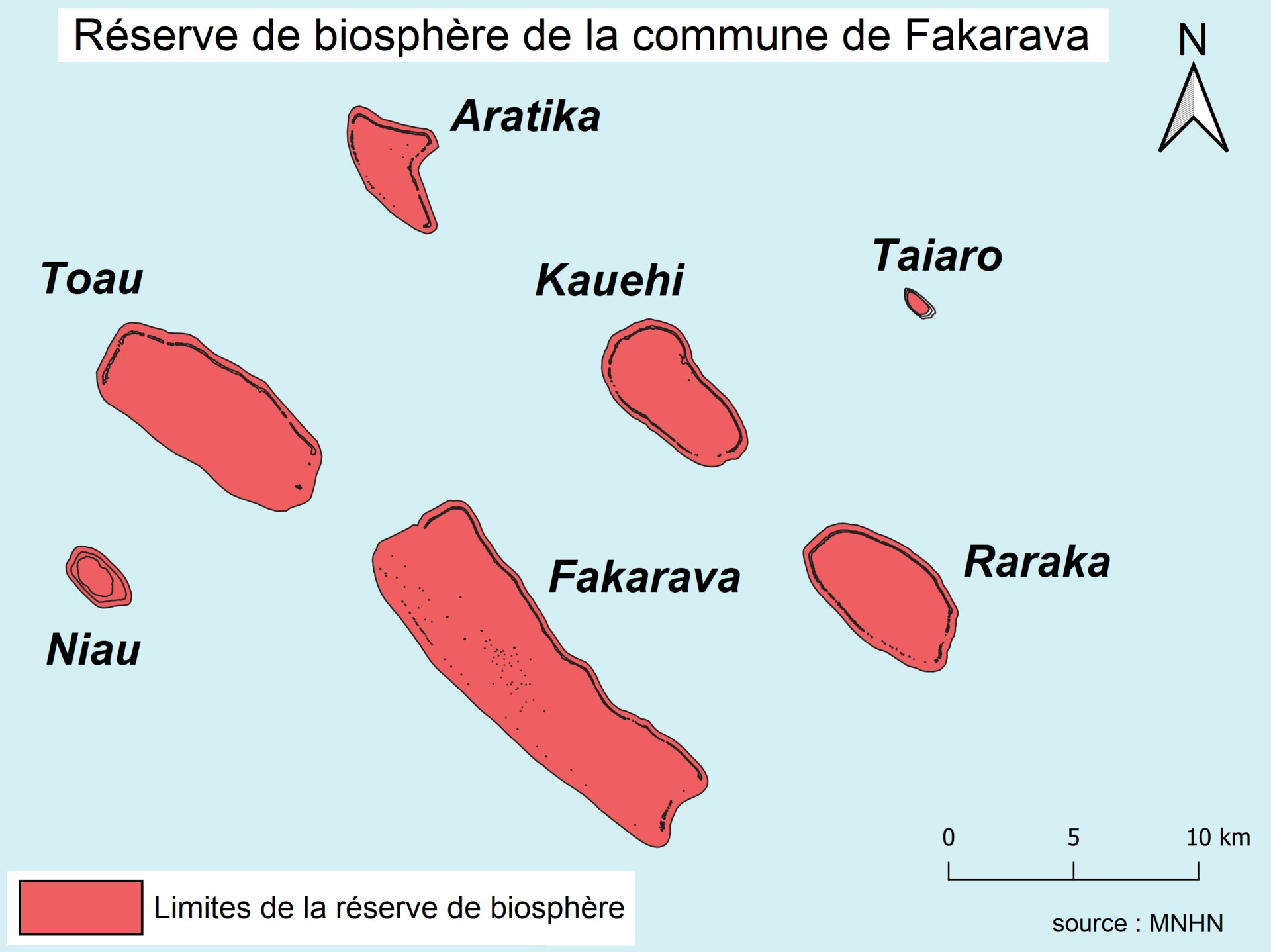
- A UNESCO biosphere reserve, seven atolls and nearly 20,000 km²
- A drift dive open from the first certification level, with weaker current than the North Pass
- Lunch at Tetamanu, an old village with its 1874 coral church
The dive site on the map
Base: Tetamanu, Fakarava, 1 km as the crow flies.
See nearby dive sites on the mapFakarava South Pass in pictures
What will you see at Fakarava South Pass?
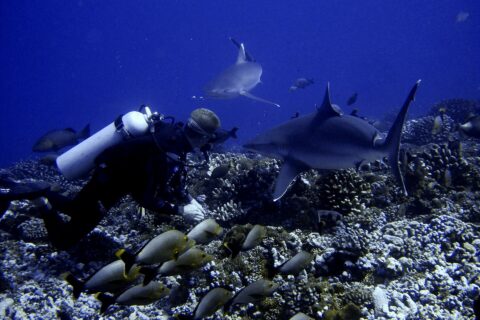
The South Pass is known for its gray reef sharks: 600 on average, up to 700 in counts, holding still against the current in a 200 m pass. That many predators eat about 90 metric tons of fish a year, while the reef produces only about 17: the grouper spawning fills the gap. Around the June and July full moons, more than 17,000 camouflage groupers gather in the pass, arriving two weeks before the full moon and almost all leaving within 48 hours of spawning. The gray reef sharks hunt at night, and manta rays come to eat the eggs at the mouth of the pass. The rest of the year, Napoleon wrasse, barracuda, tuna, trevally and schools of snappers fill the pass, and a coral garden ends the drift on the lagoon side.
| Species | J | F | M | A | M | J | J | A | S | O | N | D | Note |
|---|---|---|---|---|---|---|---|---|---|---|---|---|---|
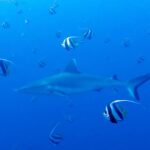 Gray reef shark | peak season | peak season | peak season | peak season | peak season | peak season | peak season | peak season | peak season | peak season | peak season | peak season | 600 on average, up to 700, holding still in the current; peak during the grouper spawning |
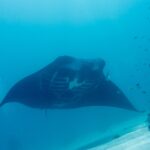 Reef manta ray | rare | rare | rare | rare | rare | possible | possible | rare | rare | rare | rare | rare | at the mouth of the pass during the spawning, feeding on grouper eggs |
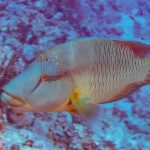 Napoleon wrasse | possible | possible | possible | possible | possible | possible | possible | possible | possible | possible | possible | possible | in the pass and over the coral garden |
| Camouflage grouper | possible | possible | possible | possible | possible | peak season | peak season | possible | possible | possible | possible | possible | more than 17,000 around the June and July full moons, a few the rest of the year |
| Barracuda | possible | possible | possible | possible | possible | possible | possible | possible | possible | possible | possible | possible | schooling in the pass |
| Tuna and trevally | possible | possible | possible | possible | possible | possible | possible | possible | possible | possible | possible | possible | hunting at the entrance to the pass |
| Snappers | possible | possible | possible | possible | possible | possible | possible | possible | possible | possible | possible | possible | schooling along the walls |
peak seasonpossiblerare
What is diving like at Fakarava South Pass?
The pass is narrow, 200 m, and shallower than Garuae, the North Pass; the dive stays between 20 and 30 m. You do it as a drift, ideally on an incoming current, from the ocean mouth to the coral garden; it can also be dived on a falling tide. The incoming current stays steady but weaker than in the north, and dive centers open it to all levels: an Open Water or Level 1 diver goes with a guide, to 29 m at most under Polynesian rules. You need to stay with the group in the current and hold your depth above the sharks. The pass is remote, more than an hour by boat from the village, and the nearest recompression chamber is on Tahiti: do not push your depth or your number of dives.
When to dive Fakarava South Pass?
idealgoodnot recommended
The pass can be dived all year: the gray reef sharks live there permanently, and the trip depends on the weather and the number of divers, not the season. The water rises to 27 to 29 °C from February to May and drops back to 25 to 27 °C from June to September. June and July are the months to aim for: the camouflage groupers gather to spawn around the full moon, and the sharks are then at their most numerous. The exact date changes every year with the moon, and it is also the high tourist season: book flights, guesthouse and dives early. The rest of the year, the diving is still great, with fewer groupers and fewer people.
How to get to Fakarava South Pass?
Air Tahiti flies from Papeete to Fakarava in about 2 hours 5 minutes, and from Rangiroa to Fakarava in under an hour; the airport is in the north, near Rotoava village, 60 km from the South Pass. O2 Fakarava, in Rotoava, charges for the season from June 1, 2026 to May 31, 2027 XPF 10,900 (€91) for a single dive, XPF 9,200 (€77) from ten dives, plus a XPF 15,000 (€126) surcharge for the southern day trip, transfer and lunch included: XPF 35,600 (€298) for the two dives. Te Ava Nui charges XPF 35,000 (€293) for the same day, taxes included, with an hour and a half by boat on the way out and at least four divers. TOPDIVE also runs the trip. In the south, Tetamanu Diving Center and Enata Fakarava Diving, at the Raimiti guesthouse, dive the pass from the nearby guesthouses.
Stay in Tetamanu, Fakarava
Where to stay near Fakarava South Pass?
Hotels, apartments and rooms around Tetamanu, Fakarava, with current prices.
What is Tetamanu, the old village on Fakarava South Pass?
Fakarava is an atoll 60 by 21 km, and its 1,121 km² lagoon is the second largest in French Polynesia after Rangiroa. Two passes cut through it, 60 km apart: Garuae in the north, 1,600 m wide, the widest in French Polynesia, and Tumakohua in the south, also called Tetamanu. In the early 20th century, the atoll was split into two districts, Tehatea and Tetamanu; the southern village still has its 1874 church, built of coral. Today, the 844 residents live mostly in Rotoava, in the north, and Tetamanu only hosts guesthouses and divers at lunchtime.
Why does Fakarava South Pass have an upside-down food pyramid?
On an ordinary reef, predators are far fewer than their prey. The South Pass turns the rule upside down: its 600 gray reef sharks would need about 90 metric tons of fish a year, and the reef produces only about 17. A study published in 2016 showed that camouflage groupers, coming from all over the atoll to spawn, feed the sharks. The groupers arrive two weeks before the June or July full moon, pack in at more than one fish per square meter at the heart of the aggregation, spawn, and leave within 48 hours. Of 30 groupers tagged in 2011, a third came back the following year. In 2014, divers and researchers stayed underwater for 24 hours, at 20 m, to watch the spawning.
How do you plan a day trip to Fakarava South Pass?
From Rotoava, the trip leaves in the morning for an hour to an hour and a half by boat. You do a first drift dive, have lunch at Tetamanu during the surface interval, then dive the pass again in the afternoon. The dive center confirms the day before, depending on the weather and the number of divers signed up, four at the minimum. Underwater, stay behind the guide when the current carries you toward the wall of sharks, and do not drop below the group to get closer to them.
Our tip
Book the southern day trip as soon as you arrive, because it needs at least four divers and good weather. For the grouper spawning, time your stay with the June or July full moon. One or two nights at a guesthouse in the south save you the three hours on the boat.
Other dive sites nearby
 FrancePass
Tiputa Pass (Rangiroa)
French Polynesia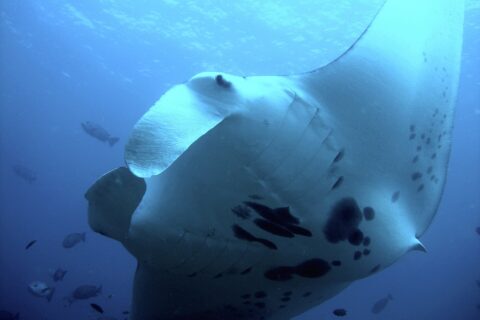 FrancePass
Boulari Pass (New Caledonia)
New Caledonia
 MexicoPelagic