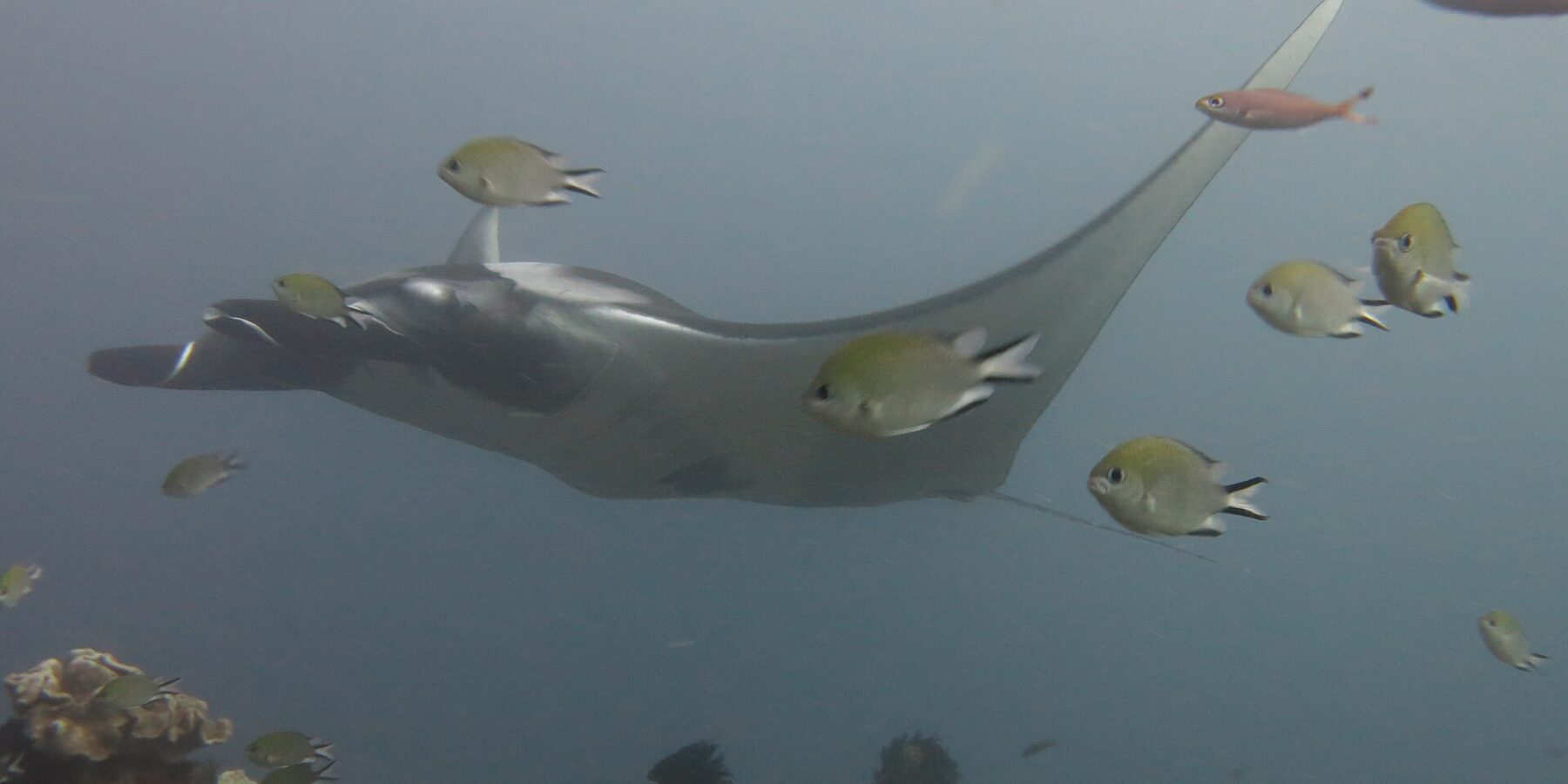
Blue Magic is a pinnacle in the middle of the Dampier Strait, in Raja Ampat, rising from 30 m to within 7 m of the surface. Its cleaning stations draw reef mantas and, from December to March, oceanic mantas, while trevallies and gray reef sharks hunt in the current.
Why dive Blue Magic?
- Cleaning stations at 7 or 8 m where mantas linger for ten to twenty minutes
- Oceanic mantas from December to March, reef mantas possible year-round
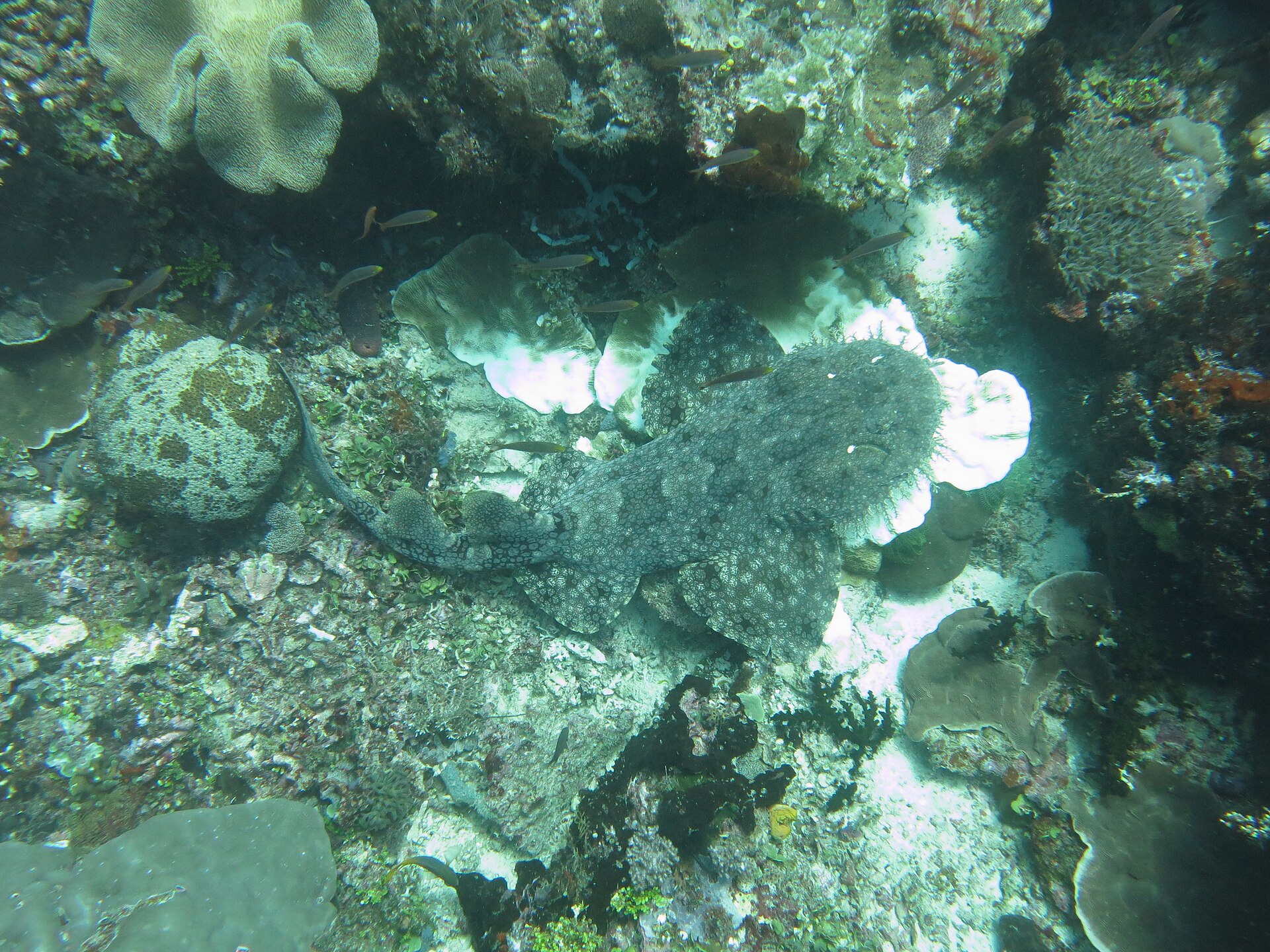
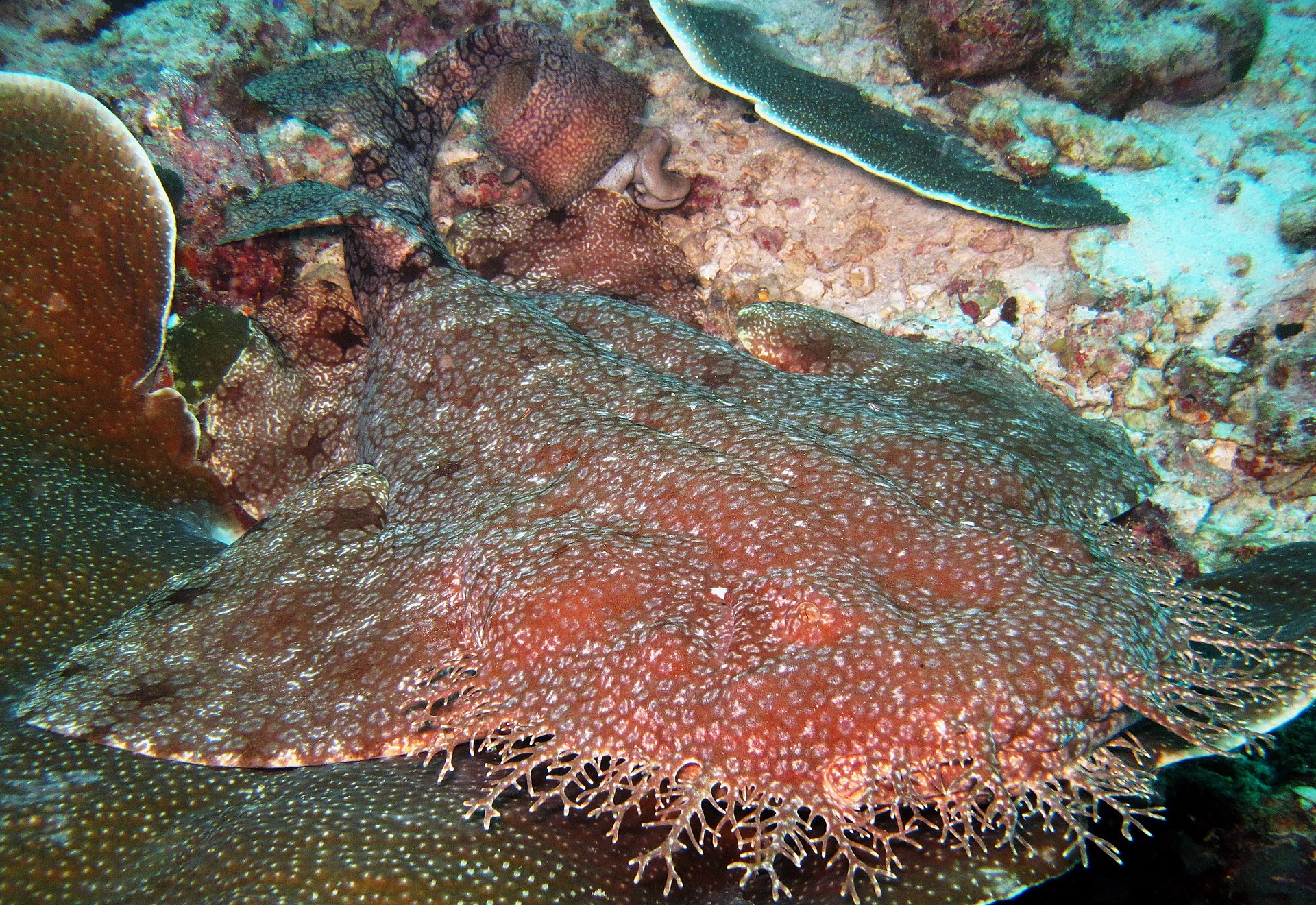
- Wobbegongs lying under the corals, in every season
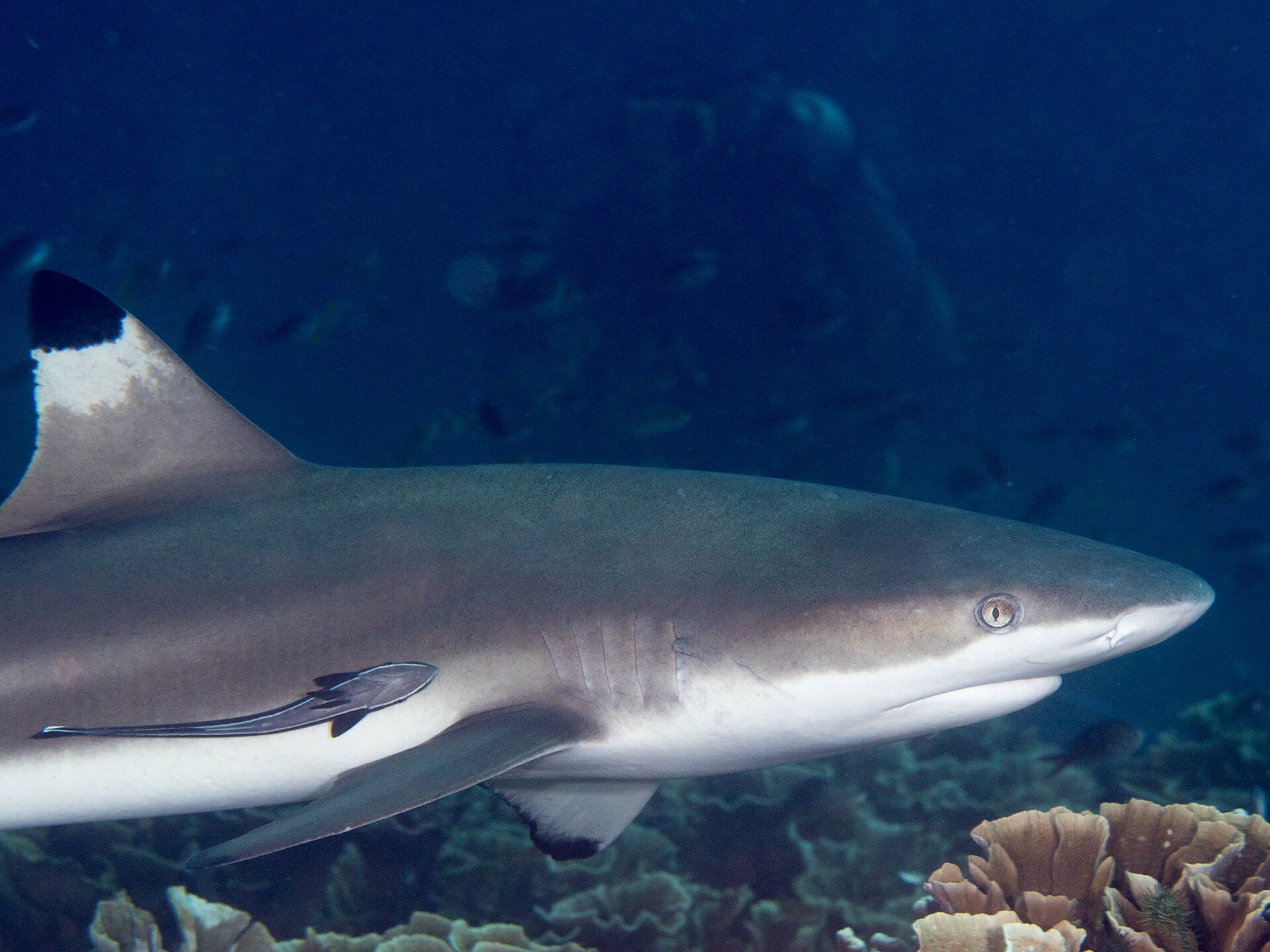
- Barracuda, trevally, tuna and Spanish mackerel in the current, gray reef sharks on the flanks
- 45 minutes from the Kri resorts, the first site in the strait from Waisai
Blue Magic in pictures
What will you see at Blue Magic?
Blue Magic owes its name to the blue of the water and to the encounters it delivers: the pinnacle is a cleaning station, and two species of manta come here. The reef manta, 3 to 3.5 m across, visits year-round; the oceanic manta, up to 6 m in wingspan, arrives from December to March with the plankton the current concentrates in the strait. They linger ten to twenty minutes over the boulders on top while wrasses clean them. All around, the pinnacle works like a magnet for pelagics: schools of yellowtail and chevron barracuda, tornadoes of bigeye trevally, dogtooth tuna, giant trevally, a resident group of Spanish mackerel, gray reef sharks on the flanks, whitetips and blacktips on patrol. Wobbegongs sleep under the table corals. On the pink and purple soft corals and the two-meter sea fans live pygmy seahorses, nudibranchs, porcelain crabs and mantis shrimp; Napoleon wrasse, bumphead parrotfish and hawksbill turtles complete the picture.
| Species | J | F | M | A | M | J | J | A | S | O | N | D | Note |
|---|---|---|---|---|---|---|---|---|---|---|---|---|---|
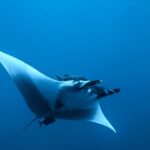 Oceanic manta ray | peak season | peak season | peak season | possible | rare | rare | rare | rare | rare | possible | possible | peak season | at the cleaning stations on top, from December to March, when plankton concentrates in the strait |
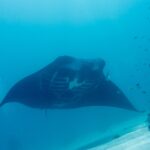 Reef manta ray | peak season | peak season | peak season | possible | possible | possible | possible | possible | possible | possible | possible | peak season | possible year-round over the boulders on top, best in season |
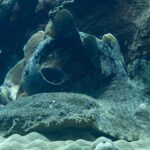 Tasseled wobbegong | peak season | peak season | peak season | peak season | peak season | peak season | peak season | peak season | peak season | peak season | peak season | peak season | resident, lying under the table corals and in the hollows of the pinnacle |
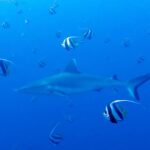 Gray reef shark | peak season | peak season | peak season | peak season | possible | possible | possible | possible | possible | peak season | peak season | peak season | on the deep flanks, with whitetips and blacktips |
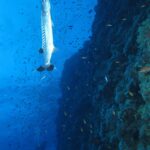 Great barracuda | peak season | peak season | peak season | peak season | possible | possible | possible | possible | possible | peak season | peak season | peak season | a school of yellowtail and chevron barracuda at the edge of the pinnacle |
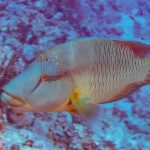 Napoleon wrasse | peak season | peak season | peak season | peak season | peak season | peak season | peak season | peak season | peak season | peak season | peak season | peak season | a few adults circling the top |
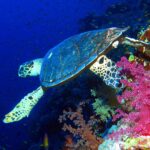 Hawksbill turtle | peak season | peak season | peak season | peak season | peak season | peak season | peak season | peak season | peak season | peak season | peak season | peak season | on the corals of the plateau |
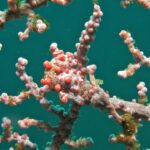 Pygmy seahorse | peak season | peak season | peak season | peak season | peak season | peak season | peak season | peak season | peak season | peak season | peak season | peak season | on the sea fans on top, pointed out by the guide |
| Bigeye trevally, dogtooth tuna, Spanish mackerel | peak season | peak season | peak season | peak season | possible | possible | possible | possible | possible | peak season | peak season | peak season | hunting in the current, with a resident group of Spanish mackerel |
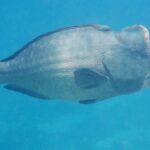 Bumphead parrotfish | possible | possible | possible | possible | possible | possible | possible | possible | possible | possible | possible | possible | passing over the plateau |
peak seasonpossiblerare
What is diving like at Blue Magic?
Blue Magic is a submerged pinnacle running east to west, its top between 5 and 8 m and its flanks dropping to a sandy slope at 30 m. The current is moderate to strong, often over two knots, with vertical movement along the edges: you enter negatively buoyant on the sheltered side and descend right away to the top, then down the slope to around 25 m. You explore one flank to the northern tip and circle the pinnacle if the current allows; otherwise you zigzag back up the exposed face. The last fifteen minutes are spent on the plateau on top, at the cleaning stations, reef hook in hand if the current pulls, and the safety stop is done right there, at 5 m. Visibility 15 to 30 m, water 27 to 29°C. Advanced level, experience in current and an SMB are essential.
When to dive Blue Magic?
idealgoodnot recommended
The site can be dived year-round in 27 to 29°C water, but the Raja Ampat season, October to April, brings calm seas and 20 to 30 m visibility. Oceanic mantas peak from December to March, the heart of the southern winter, when plankton-rich currents sweep the strait; a reef manta can turn up in any month. From May to September, the southeast monsoon stirs up the south of the archipelago; the Dampier Strait stays sheltered by Waigeo and the Kri resorts keep diving it, with visibility sometimes dropping to 15 m. More than the month, the tide decides: guides pick slack water or a moderate current, and skip the site on full moon days when the flow tops two knots.
How to get to Blue Magic?
The pinnacle sits in the middle of the Dampier Strait, between Mioskon and Cape Kri, halfway between Waigeo and Kri Island. From Waisai, the district capital, it's the first major site you reach by boat; dive centers in town, such as Meridian Adventure Dive, run day trips there. From the Kri resorts, Kri Eco Resort and Sorido Bay, Papua Diving gets there in 45 minutes by boat, for €60 per single dive, or as part of the unlimited diving package at €1,894 a week full board, Nitrox included; Blue Magic lies outside the package's ten-kilometer radius and may carry a fuel surcharge. Every liveaboard in northern Raja Ampat stops here, from €4,280 for ten days, flights not included, with Adékua. The airport is in Sorong, two hours away by speedboat; budget IDR 2,000,000 per person for the permit and entry ticket.
Stay in Waisai
Where to stay near Blue Magic?
Hotels, apartments and rooms around Waisai, with current prices.
Which hotels to choose near Blue Magic?
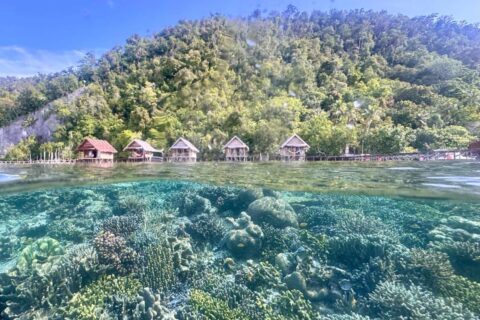
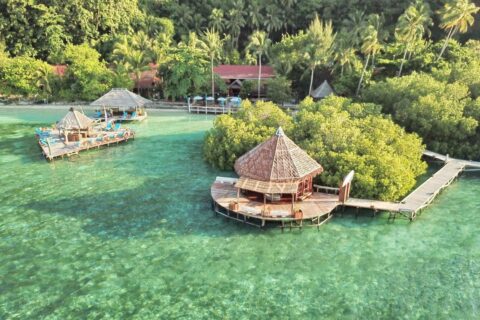
Where do the mantas get cleaned at Blue Magic?
The top of Blue Magic is a plateau of boulders and small pinnacles, between 5 and 10 m, where cleaner wrasses set up shop. The mantas arrive alone or in twos and threes, position themselves over a boulder, slow down and let themselves be cleaned, sometimes for twenty minutes. Two species share the site: the reef manta, recognizable by the scattered spots on its belly, and the oceanic manta, larger, with a darker back and spots clustered on the lower belly. The rule is the same for both: stay low, beside or below, with no bubbles above the animal, and let it come to you. The same plateau hosts smaller stations, where batfish and bumphead parrotfish also come to be cleaned.
How do you dive Blue Magic?
The boat sets up upwind of the pinnacle and you roll in negatively buoyant. You reach the top at 8 m, then descend the slope on the sheltered side to around 25 m: that's where the schools hang out, barracuda, trevally and fusiliers in the light, gray reef sharks and tuna at the edge of the blue. You follow the flank to the northern tip; if the current allows, you circle the pinnacle, otherwise you zigzag back up the face. On the slope, look for wobbegongs under the table corals, often two or three per dive. You finish on the plateau, reef hook set on the rock when the current pulls, waiting for the mantas during the safety stop.
Which dive sites pair with Blue Magic?
Blue Magic pairs in a day with Mioskon, the neighboring islet with its reef sloping down to 25 m, or with Manta Sandy, the cleaning station on a sandy bottom, between 10 and 20 m, where wrasses clean the reef mantas. Sardine Reef and Chicken Reef, closer to Kri, offer the same tornadoes of trevally and fusiliers in slightly gentler current.
Our tip
Dump the air from your BCD and head straight down into the lee of the pinnacle. Keep fifteen minutes of air for the plateau on top, where the mantas get cleaned. If a manta shows up, settle down, stay still and let it circle.
Other dive sites nearby
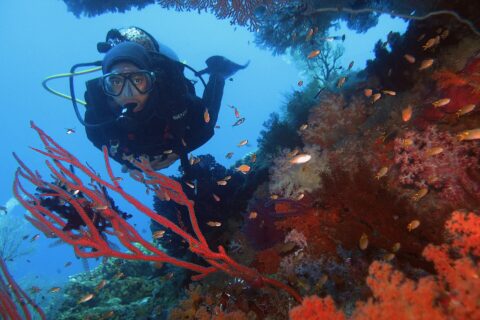
 IndonesiaReef
Cape Kri
Raja Ampat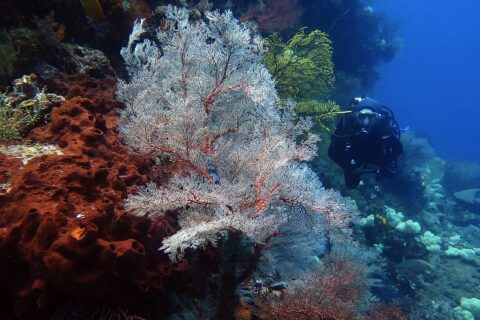 IndonesiaPelagic
Magic Mountain (Misool)
Raja Ampat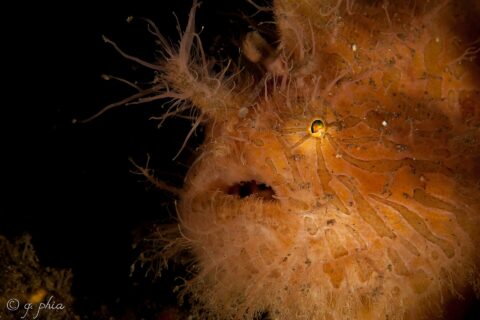 IndonesiaReef