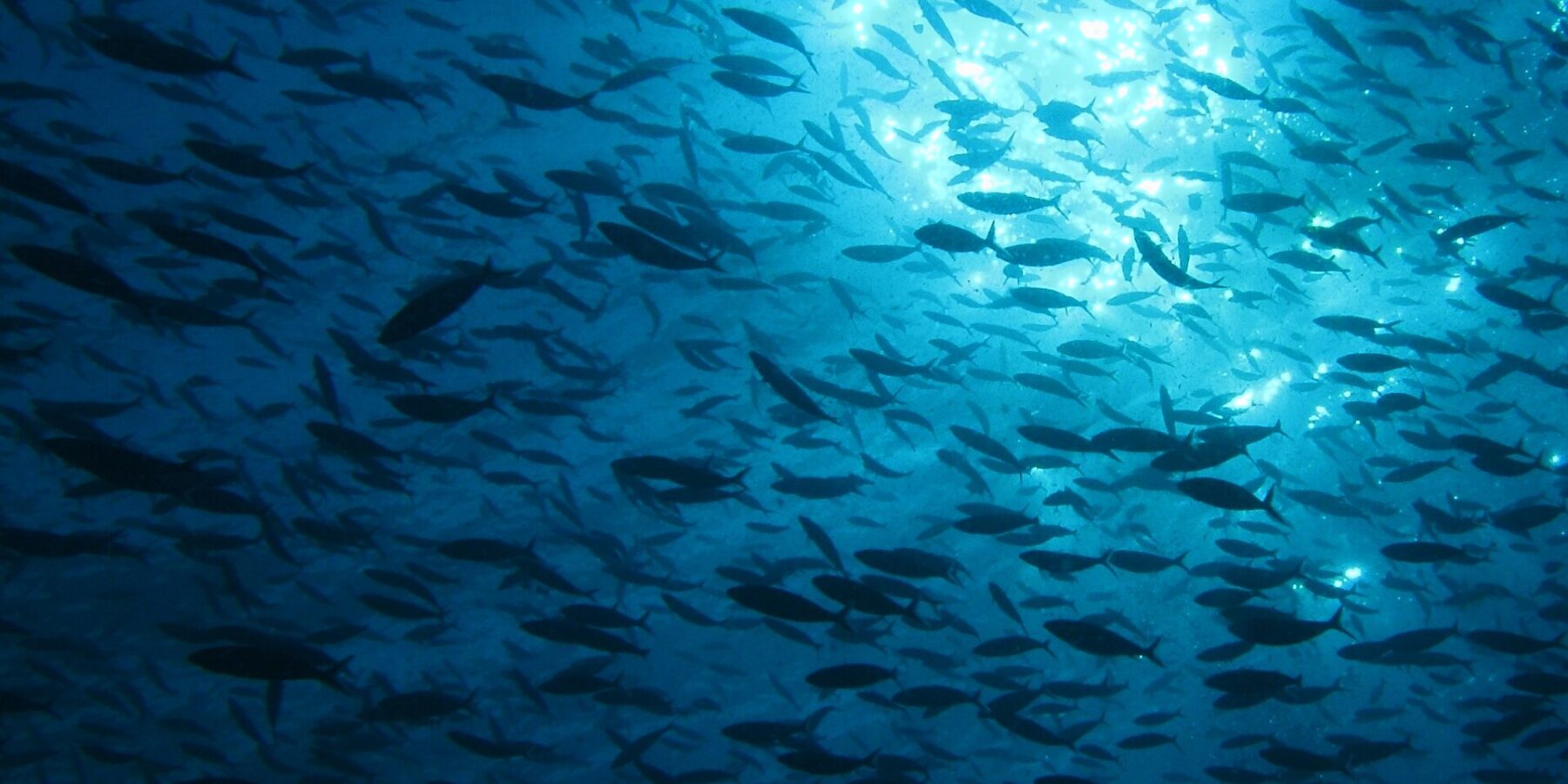
Castle Rock is a seamount in the north of Komodo National Park, rising from beyond 60 m to 4 m below the surface. The current gathers tornadoes of trevally and five to twenty gray reef sharks, and the site is for experienced divers only.
Why dive Castle Rock?
- Komodo's shark dive: 5 to 12 gray reef sharks on average, up to 20 from July to September
- Walls of fusiliers and surgeonfish by the thousands, tornadoes of trevally that hide the sun
- A submerged pinnacle from 4 m to beyond 60 m, in the tidal channel between Gili Lawa Laut and Komodo
- Frequent dolphins, eagle rays, dogtooth tuna, the occasional hammerhead
- Crystal Rock, the gentler neighbor, to warm up the day before
Castle Rock in pictures
What will you see at Castle Rock?
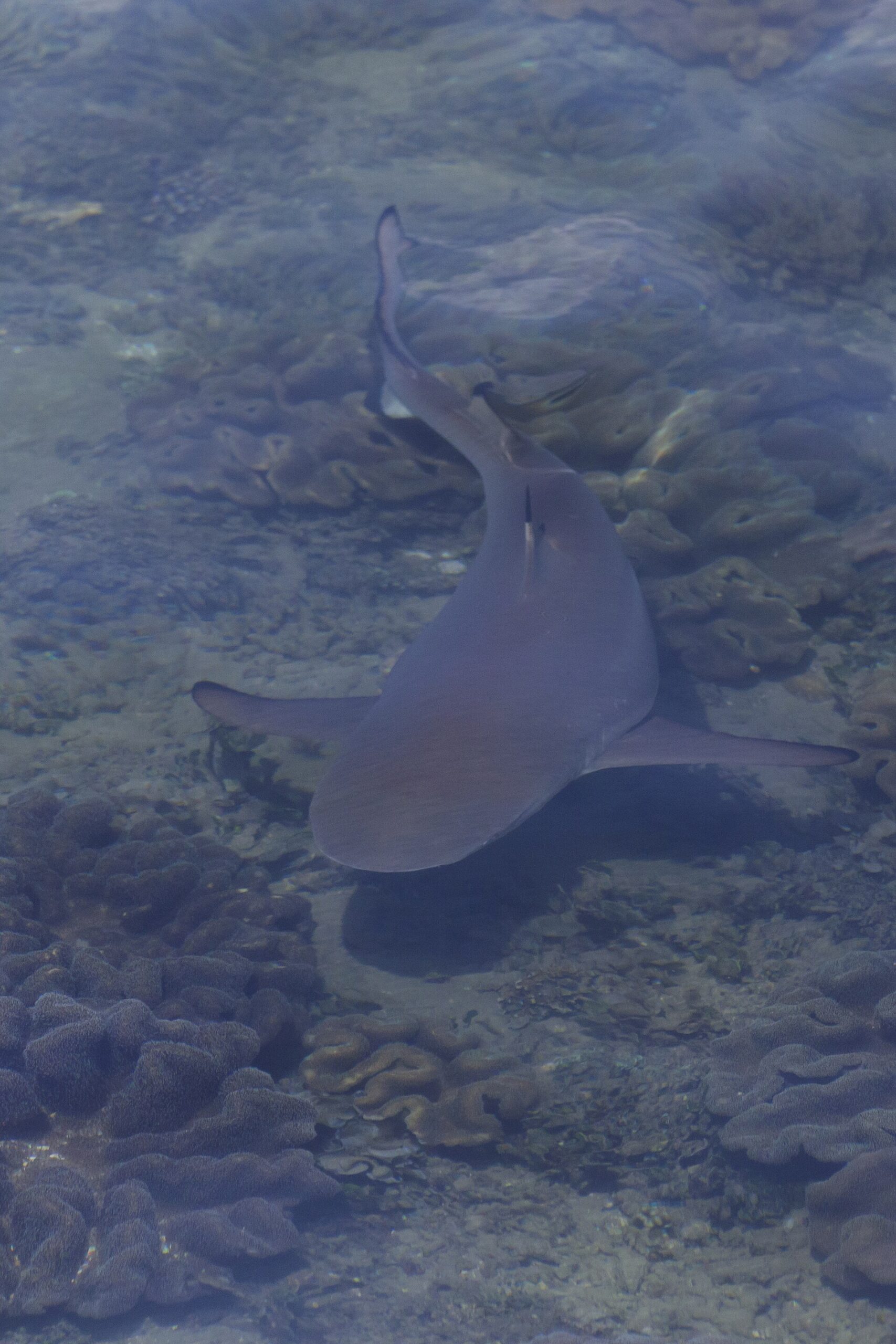
Castle Rock is Komodo's shark site. The pinnacle rises in the tidal channel between Gili Lawa Laut and Komodo, and the water the current pushes against it concentrates plankton, small fish and everything that eats them. Fusiliers and surgeonfish form walls of several thousand fish; bigeye trevally spin in tornadoes that block out the light; giant trevally charge into the schools, with dogtooth tuna and Spanish mackerel close behind. Gray reef sharks hang in the flow like kites, facing the current, 5 to 12 per dive, up to 20 on good days from July to September; whitetips are almost guaranteed on the flanks, and blacktips cruise higher up. Bottlenose dolphins often hunt around the pinnacle and pass over the divers; eagle rays follow the deep edge; a great hammerhead turns up now and then in the cool water of the southern winter. On top, sheltered from the current, groupers, sweetlips, morays, Napoleon wrasse and bumphead parrotfish live on a healthy hard coral reef, and bannerfish surround the safety stop.
| Species | J | F | M | A | M | J | J | A | S | O | N | D | Note |
|---|---|---|---|---|---|---|---|---|---|---|---|---|---|
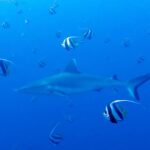 Gray reef shark | possible | possible | possible | peak season | peak season | peak season | peak season | peak season | peak season | peak season | peak season | possible | 5 to 12 per dive on average, up to 20 from July to September, holding still in the current facing the pinnacle |
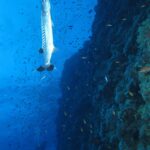 Great barracuda | peak season | peak season | peak season | peak season | peak season | peak season | peak season | peak season | peak season | peak season | peak season | peak season | loners in the blue, near the trevally tornadoes |
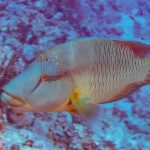 Napoleon wrasse | peak season | peak season | peak season | peak season | peak season | peak season | peak season | peak season | peak season | peak season | peak season | peak season | on the coral slopes, on calm days |
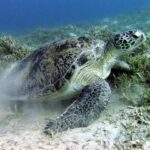 Green turtle | possible | possible | possible | possible | possible | possible | possible | possible | possible | possible | possible | possible | passing over the top of the pinnacle |
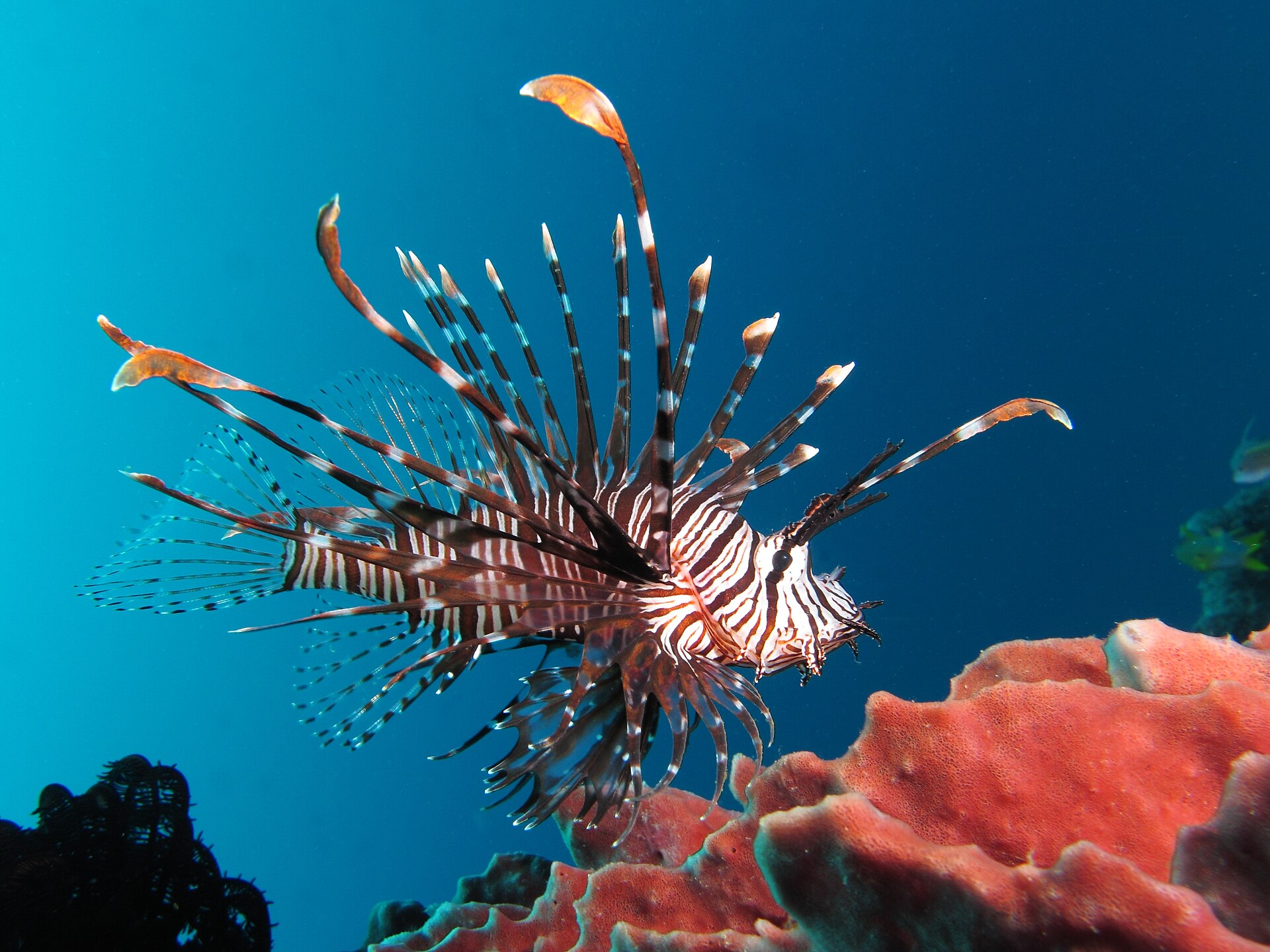
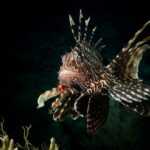 Lionfish | peak season | peak season | peak season | peak season | peak season | peak season | peak season | peak season | peak season | peak season | peak season | peak season | in the cracks on top, out of the current |
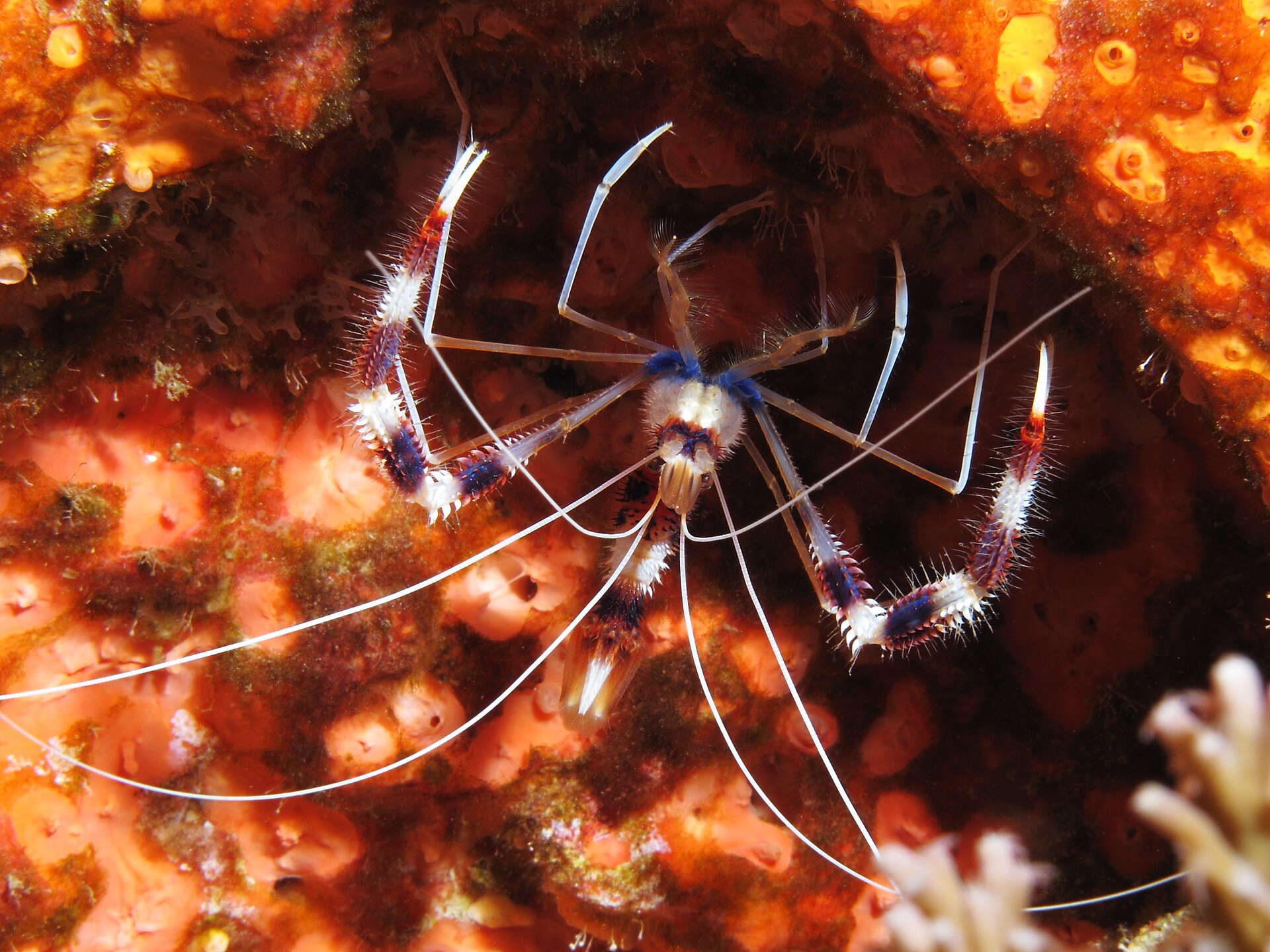
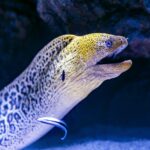 Giant moray | peak season | peak season | peak season | peak season | peak season | peak season | peak season | peak season | peak season | peak season | peak season | peak season | among the boulders on top, with cleaner shrimp |
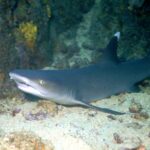 Whitetip reef shark | peak season | peak season | peak season | peak season | peak season | peak season | peak season | peak season | peak season | peak season | peak season | peak season | whitetips almost guaranteed on every dive, on the deep flanks |
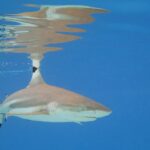 Blacktip reef shark | peak season | peak season | peak season | peak season | peak season | peak season | peak season | peak season | peak season | peak season | peak season | peak season | whitetips almost guaranteed on every dive, on the deep flanks |
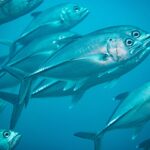 Bigeye trevally | possible | possible | possible | peak season | peak season | peak season | peak season | peak season | peak season | peak season | peak season | possible | tornadoes of bigeye trevally that block out the light, giant trevally hunting through the fusiliers |
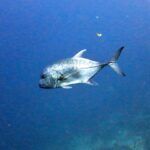 Giant trevally | possible | possible | possible | peak season | peak season | peak season | peak season | peak season | peak season | peak season | peak season | possible | tornadoes of bigeye trevally that block out the light, giant trevally hunting through the fusiliers |
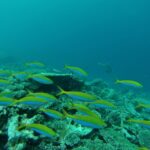 Fusiliers | peak season | peak season | peak season | peak season | peak season | peak season | peak season | peak season | peak season | peak season | peak season | peak season | walls of fish by the thousands, bannerfish around the safety stop |
| Surgeonfish | peak season | peak season | peak season | peak season | peak season | peak season | peak season | peak season | peak season | peak season | peak season | peak season | walls of fish by the thousands, bannerfish around the safety stop |
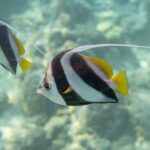 Bannerfish | peak season | peak season | peak season | peak season | peak season | peak season | peak season | peak season | peak season | peak season | peak season | peak season | walls of fish by the thousands, bannerfish around the safety stop |
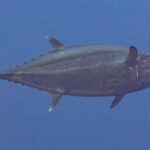 Dogtooth tuna | possible | possible | possible | peak season | peak season | peak season | peak season | peak season | peak season | peak season | peak season | possible | on the deep edge, in the flow |
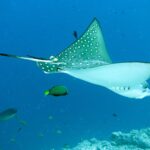 Spotted eagle ray | possible | possible | possible | peak season | peak season | peak season | peak season | peak season | peak season | peak season | peak season | possible | on the deep edge, in the flow |
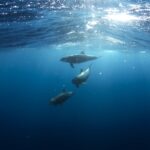 Bottlenose dolphin | possible | possible | possible | possible | possible | possible | possible | possible | possible | possible | possible | possible | pods hunting near the pinnacle or passing over the divers |
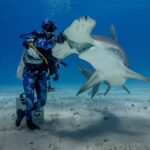 Great hammerhead | rare | rare | rare | rare | rare | possible | possible | possible | possible | rare | rare | rare | rare, in the deep, cool water of the southern winter |
peak seasonpossiblerare
What is diving like at Castle Rock?
The pinnacle never breaks the surface: its top sits between 4 and 8 m, and its flanks drop past 60 m into the blue. The current wrapping around it is moderate to strong, more violent at the surface than at depth, with possible down-currents on the deep edges on some tides. You enter negatively buoyant, upwind of the rock: you descend without waiting to the top, reach the sheltered flank and hook in at 20 or 25 m, near the line where the current splits, to watch the hunt. You then unhook and drift along the pinnacle toward the calm zone, where you make your safety stop under an SMB before the boat picks up the group downstream. If you miss the rock on the way down, you surface and start again. Visibility 15 to 30 m, water 26 to 29°C. Advanced level with at least 30 dives, good buoyancy and air management in current; dive centers often take divers to Crystal Rock, the calmer neighbor, before Castle Rock.
When to dive Castle Rock?
idealgoodnot recommended
Northern Komodo is dived from April to November, the dry season: calm seas, 20 to 30 m visibility, 27 to 29°C water. Sharks are most numerous from July to September, when the water drops toward 26°C and southern winter upwellings charge the current; April, May and October bring the best visibility. From December to March, rain and the northwest wind kick up the sea at the northern sites, and dive centers only go on calm days; that's manta season in the center and south of the park. As on every current site in the park, the time of day matters more than the month: Castle Rock is dived in the slack-water window, 45 to 60 minutes around high or low tide, and on full moon and new moon days the current is too strong for divers who aren't used to it.
How to get to Castle Rock?
Castle Rock is in the north of the park, near Gili Lawa Laut, an hour and a half by speedboat from Labuan Bajo: dive centers devote a full day to it, with Crystal Rock and the Cauldron, the drift through the neighboring channel. Dragon Dive Komodo charges IDR 3,050,000 for a three-dive day, park fees and gear included, IDR 5,825,000 for six dives over two days and IDR 8,737,500 for nine dives, with Nitrox free from three days; Blue Marlin Komodo sells the day at IDR 2,950,000, lunch and Nitrox included, plus park fees, IDR 275,000 on weekdays and IDR 350,000 on Sundays, and a surcharge for the north. Dive centers rarely take you there on the first day: they watch their clients dive Batu Bolong or Crystal Rock first. Liveaboards of three nights to a week, leaving from the same port, anchor at Gili Lawa Laut and dive the two pinnacles back to back at slack water. Labuan Bajo is a flight from Bali; arrive the day before, and book your day within the park's quota.
Stay in Labuan Bajo
Where to stay near Castle Rock?
Hotels, apartments and rooms around Labuan Bajo, with current prices.
Which hotels to choose near Castle Rock?
Why are there so many sharks at Castle Rock?
Sharks don't spread out at random: they gather where current, terrain and prey overlap. At Castle Rock, all three coincide. The Indonesian Throughflow, which carries water from the Pacific to the Indian Ocean between the islands, wraps around the pinnacle nonstop and lifts plankton up its flanks; fusiliers and surgeonfish feed there by the thousands; trevally, tuna and sharks come to hunt them. And the park, with no fishing, keeps populations stable from one year to the next. Crystal Rock, the neighboring pinnacle, breaks the surface and offers the same show with a little less violence: dive centers often start there.
How do you dive Castle Rock?
The briefing comes first: current direction, descent line, where the down-currents are, turnaround pressure, ascent line. You roll in with an empty BCD, upwind of the rock, and descend immediately, finning toward the top at 4 to 8 m; the current pushes, you aim for the rock and regroup on the sheltered flank. You then go down that flank to 20 or 25 m and hook in, in the eddy, facing the line where the current splits: gray reef sharks hold 15 to 25 m away in the flow, trevally pass in front of your mask, dolphins sometimes overhead. When your air runs low, you unhook and let the current carry you along the pinnacle to the calm zone; the safety stop is made under an SMB, surrounded by bannerfish, and the boat picks up the group downstream.
What else can you dive in northern Komodo?
A day in the north pairs Castle Rock with Crystal Rock, whose top breaks the surface and whose soft corals are prettier and shallower, and with the Cauldron, also called Shotgun, the best-known channel drift in the park, where the current pulls divers from one end of the pass to the other. Golden Passage, between Gili Lawa Darat and Komodo Island, is a gentler drift to end the day. Liveaboards anchor overnight at Gili Lawa Laut.
Our tip
Empty your BCD before you jump and go straight down: the surface current sweeps you away in seconds. Hook in at 20 or 25 m on the sheltered face. If a current pulls you down, add a little air to your BCD and move away from the reef.
Other dive sites nearby
 IndonesiaReef
Batu Bolong
Komodo IndonesiaShore dive
USAT Liberty wreck
Bali and Nusa Penida IndonesiaPelagic