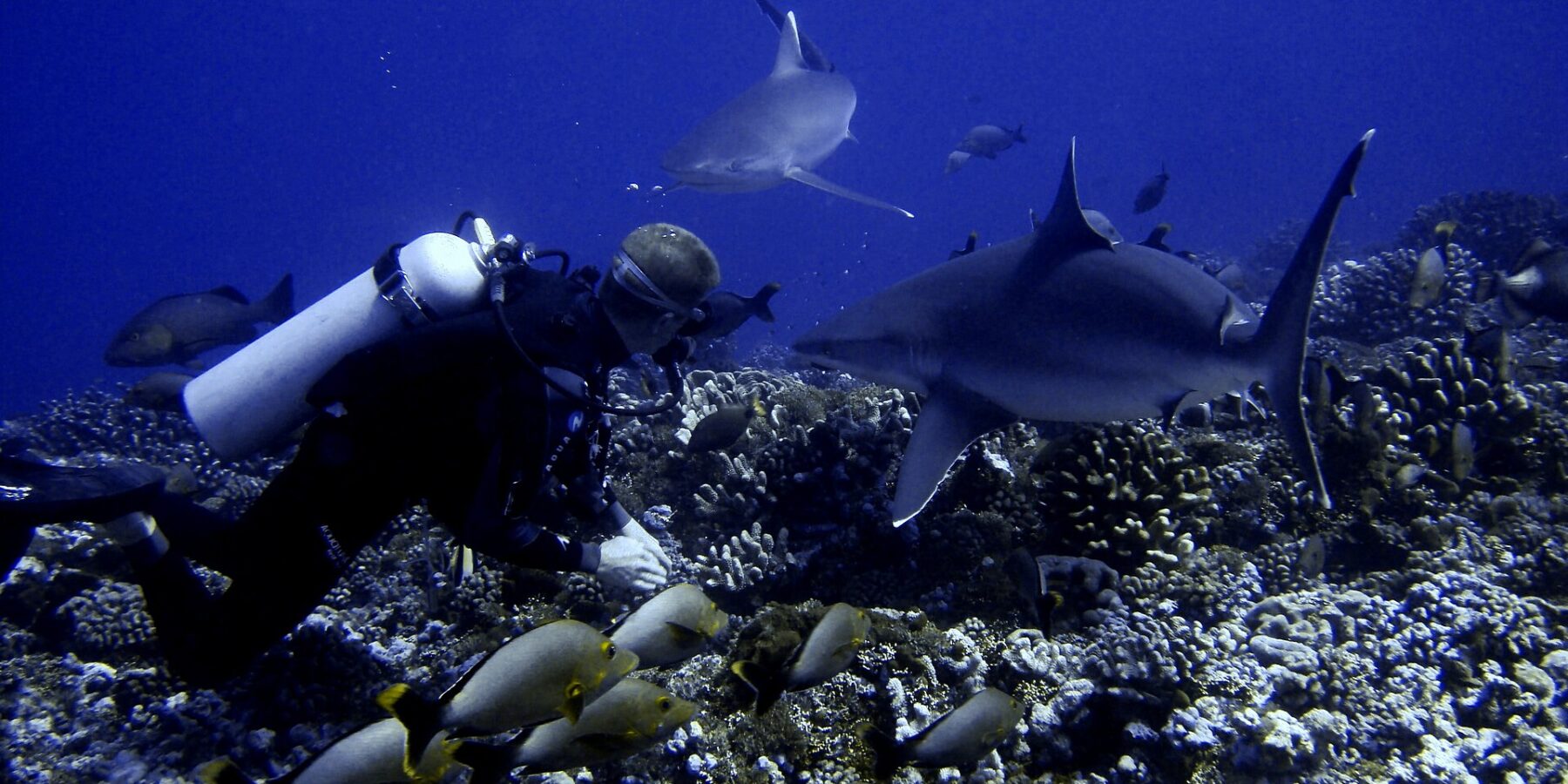
Tiputa Pass links the Rangiroa lagoon to the ocean over 950 m, in 14 to 60 m of water, less than 10 minutes by boat from the Avatoru dive centers. You ride the incoming current among gray reef sharks and bottlenose dolphins, with great hammerheads from December to March.
Why dive Tiputa Pass?
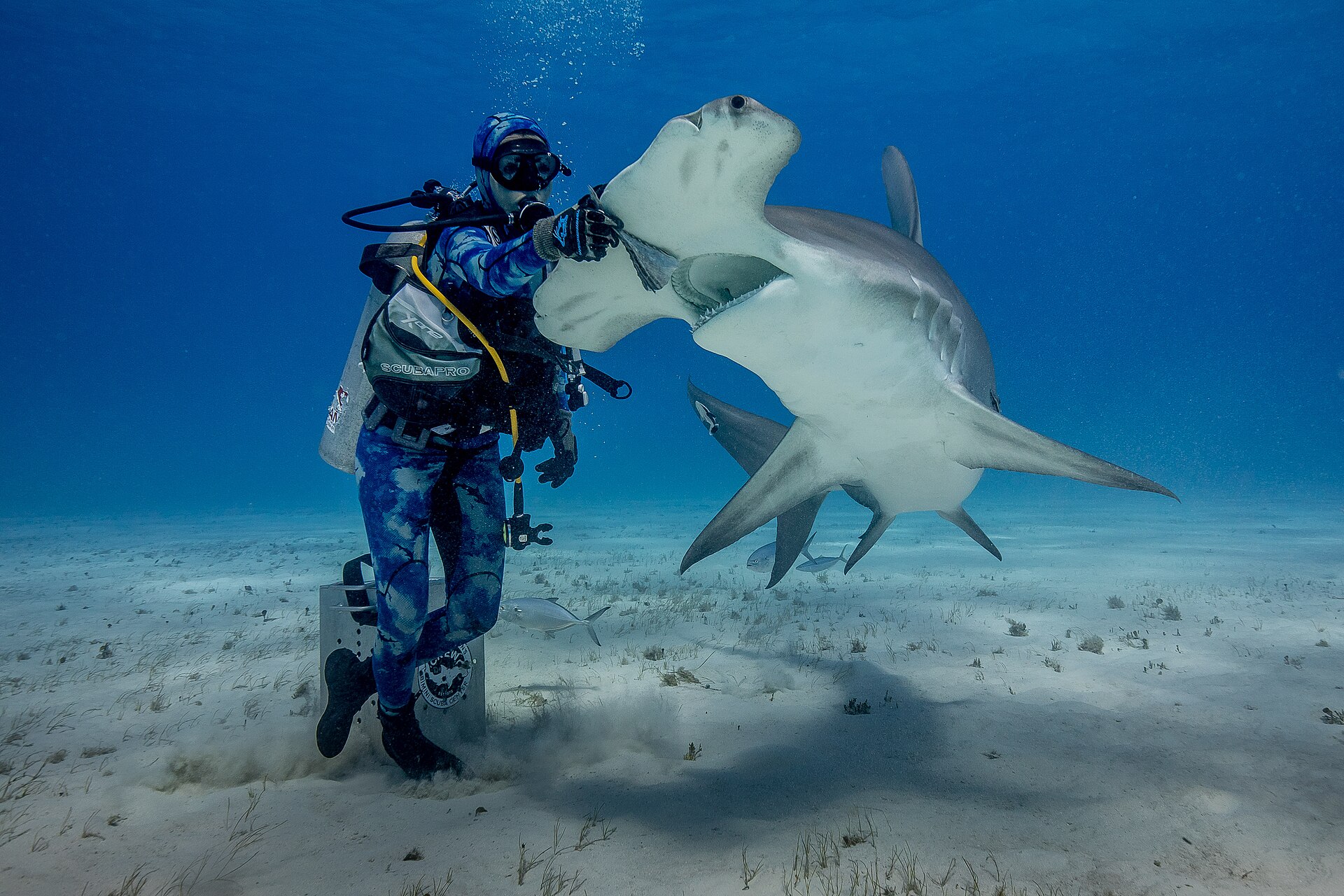
- Great hammerheads from December to March: at least 50 individuals identified at Tiputa in 2020-2021, seen on nearly two dives out of three
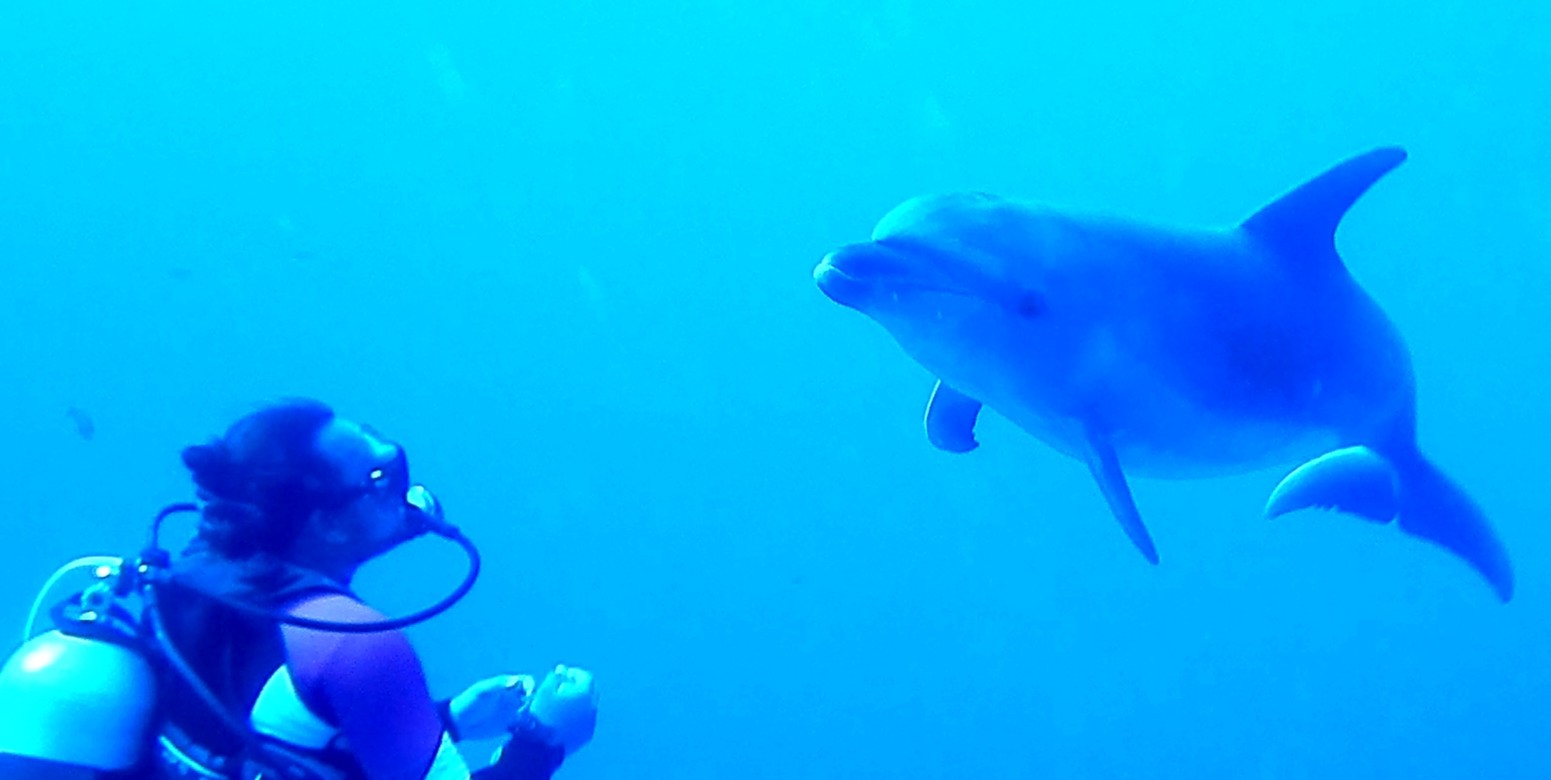
- A group of about 25 bottlenose dolphins that visits the pass all year
- Gray reef sharks schooling all year, gathering by the hundreds in the canyons in June
- A drift from the ocean into the lagoon, less than 10 minutes by boat from the dive centers
The dive site on the map
Base: Avatoru, Rangiroa, 9 km as the crow flies.
See nearby dive sites on the mapTiputa Pass in pictures
What will you see at Tiputa Pass?
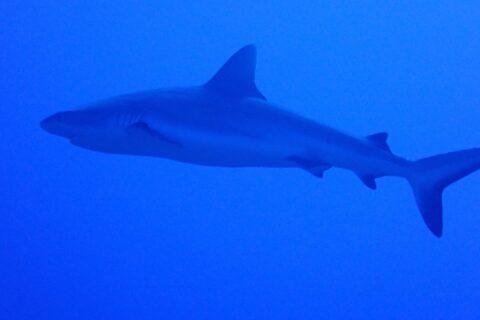
Tiputa is a shark pass. Gray reef sharks hold a wall between 20 and 40 m all year, and in June they gather by the hundreds in the canyons to breed. From December to March, great hammerheads, mostly adult females, patrol the plateau at the mouth of the pass at around 50 m: a 2020-2021 study identified 50 of them in the pass and saw them on 64% of dives. Spotted eagle rays then fly in groups around the same plateau. A group of about 25 bottlenose dolphins lives in the pass and often comes close to dive groups during the incoming drift. On the outer wall, manta rays, Napoleon wrasse, turtles and tuna pass by, with a school of chevron barracudas and snappers at the corner. In the blue, whitetip reef sharks and sometimes silky sharks round out a list of more than nine shark species.
| Species | J | F | M | A | M | J | J | A | S | O | N | D | Note |
|---|---|---|---|---|---|---|---|---|---|---|---|---|---|
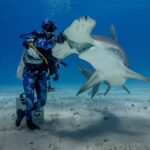 Great hammerhead | peak season | peak season | peak season | possible | rare | rare | rare | rare | rare | rare | possible | peak season | on the plateau at the mouth of the pass, from 45 to 57 m, mostly from December to March |
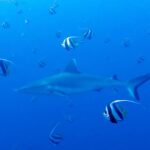 Gray reef shark | peak season | peak season | peak season | peak season | peak season | peak season | peak season | peak season | peak season | peak season | peak season | peak season | in schools all year between 20 and 40 m, gathering by the hundreds in the canyons in June |
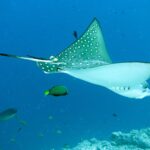 Spotted eagle ray | peak season | peak season | peak season | possible | possible | possible | possible | possible | possible | possible | possible | peak season | in squadrons around the plateau at the mouth from December to March |
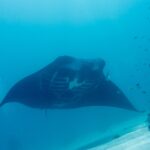 Reef manta ray | possible | possible | possible | possible | possible | possible | possible | possible | possible | possible | possible | possible | on the outer wall, at the corner of the pass and at the Éolienne |
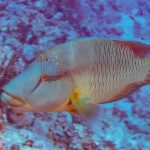 Napoleon wrasse | possible | possible | possible | possible | possible | possible | possible | possible | possible | possible | possible | possible | on the ocean wall, on an outgoing current |
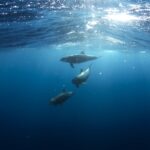 Bottlenose dolphin | peak season | peak season | peak season | peak season | peak season | peak season | peak season | peak season | peak season | peak season | peak season | peak season | a group of about 25 visits the pass almost every day |
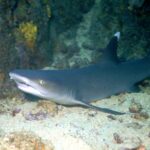 Whitetip reef shark | possible | possible | possible | possible | possible | possible | possible | possible | possible | possible | possible | possible | in the blue, off the wall |
| Chevron barracudas | possible | possible | possible | possible | possible | possible | possible | possible | possible | possible | possible | possible | schooling at the corner of the pass, with snappers |
| Turtles | possible | possible | possible | possible | possible | possible | possible | possible | possible | possible | possible | possible | on the outer wall |
peak seasonpossiblerare
What is diving like at Tiputa Pass?
The pass breaks through the reef rim, 240 m wide and 950 m long, with a bottom from 14 to 60 m. The current is strong, and always stronger at the surface. On an incoming current, you start at the corner on the ocean side and drift into the lagoon, where you do your safety stop: the typical dive stays between 25 and 35 m, Shark Cave at around 35 m, the Traversée down to 50 m. On an outgoing current, the pass becomes undiveable and the water turns murky: dive centers then dive the outer wall, at the Éolienne, 25 m at most, or at the Angle, with the bottom at around 45 m. You need to hold your depth in a drift and stay behind the guide. Wall dives are open to all certifications; the heart of the pass and the Canyons call for experience, and the Marche, at 45 to 55 m, is for experienced divers only.
When to dive Tiputa Pass?
idealgoodnot recommended
The pass can be dived all year, and the Rangiroa dive centers are open from January 1 to December 31. The water drops to 25 °C from July to September and rises to 27 °C from March to May; the Tuamotu thermocline stays between 25 and 29 °C. December to March is the season for great hammerheads, peaking from December to February, and for the big eagle ray squadrons. June is gray reef shark month, with hundreds gathered in the canyons, and a few hammerheads still show up. The rest of the year, the dolphins and gray reef sharks are there, and the diving stays great. No month is worth avoiding.
How to get to Tiputa Pass?
Air Tahiti flies from Papeete to Rangiroa every day on an ATR, in about an hour. The dive centers are on the Avatoru motu, less than 10 minutes from the pass. The 6 Passengers, on Ohutu Bay, has been diving since 1995, seven days a week, with six divers at most per instructor and up to four trips a day; pickup is at 7:45 a.m. for the first one. Its 2026 price list shows XPF 11,500 (€96) per dive for one to four dives, XPF 10,300 (€86) for five to nine, XPF 9,800 (€82) from ten, gear included, plus XPF 2,200 (€18) for nitrox. TOPDIVE, on the Avatoru side of the pass, sells a six-dive pass valid on two islands for XPF 58,800 (€493), nitrox included at no charge. From Paris, Air Tahiti Nui and Air France fly via Los Angeles and French Bee via San Francisco: allow 22 hours and an ESTA for the US stopover.
Stay in Avatoru, Rangiroa
Where to find a dive guide in Tiputa Pass?
Guided tours you can book online, ranked by number of reviews. These are affiliate links: if you book, you support us at no extra cost.

 Viator
Rangiroa Discover Scuba Diving in French Polynesia
5.0 (5 reviews)View and bookWhere to stay near Tiputa Pass?
Hotels, apartments and rooms around Avatoru, Rangiroa, with current prices.
Why do sharks and dolphins gather at Tiputa Pass?
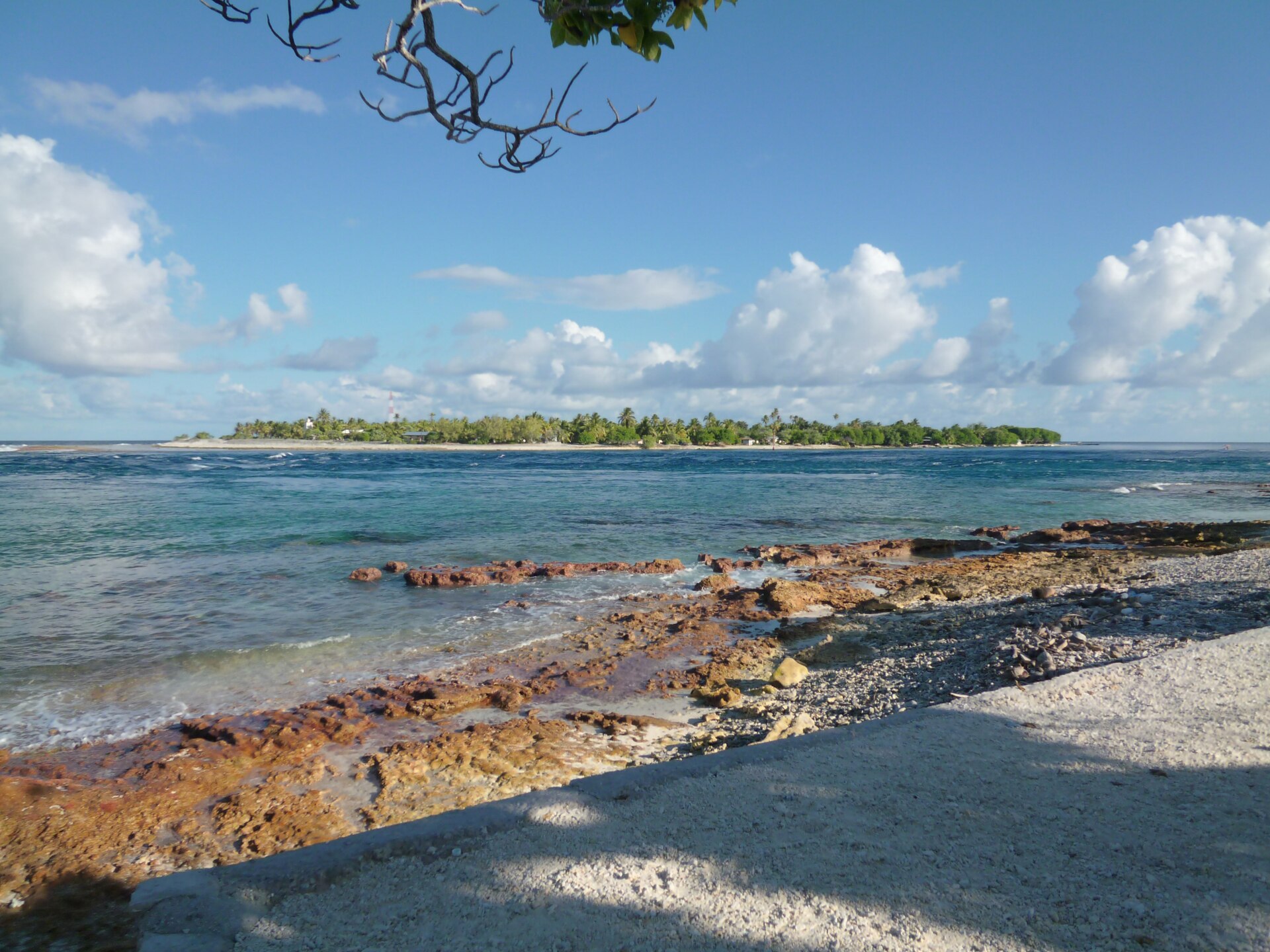
Rangiroa is the world's second-largest atoll by lagoon area, 80 by 32 km, after Kwajalein. Only two passes cut through its ring of 240 motu: Avatoru, the shallower one, and Tiputa, between Tiputa village and Ohotu. With every tide, the lagoon fills and empties through these two gates, and the current brings in the food that draws sharks, rays and dolphins. Since 2019, the Mokarran Protection Society, based in Avatoru, has tracked the pass's great hammerheads: some females have been coming back for twelve years and stay up to five months a season. The dolphins started coming close to divers in 2007, with a female named Nikki.
What will you see on each Tiputa Pass dive?
On an incoming current, Shark Cave (Grotte aux Requins) starts at the right-hand corner of the pass: you stop for ten minutes in front of a hollow at around 35 m to watch the gray reef sharks, then drift into the lagoon. The Canyons cut through the middle of the pass, where the current is strongest, and host the gray reef sharks in June. The Traversée runs from one corner to the other down to 50 m, and the Marche drops onto the hammerhead plateau between 45 and 55 m from January to March. On an outgoing current, the Éolienne, 350 m from the corner and 25 m at most, is the dive for dolphins, mantas and eagle rays; the Mi-Éolienne, at 150 m, offers countercurrents and small caves; the Angle goes down to around 45 m. Try dives take place behind the islet in the pass, out of the current.
How do you drift dive Tiputa without disturbing the wildlife?
A drift quickly scatters a dive group: stay behind the instructor and at the same depth, and carry a DSMB, since the boat follows your bubbles. The dolphins and hammerheads make you want to go deeper; at certain times, ten or twelve boats gather in the pass, and divers limited to 20 m have chased the dolphins down to 40 or 50 m. The group has lost five individuals in five years: watch them go by, do not follow them. Do not put your hand anywhere, as stonefish and cone shells blend into the bottom.
Our tip
Do your first dive on an outgoing current, on the wall at the Éolienne or the Angle, before the incoming drift. Hammerhead dives, from December to March, go down to 45 or 55 m and require at least Level 3. With the dolphins, do not seek contact.
Other dive sites nearby
 FrancePass
Fakarava South Pass (Tumakohua)
French Polynesia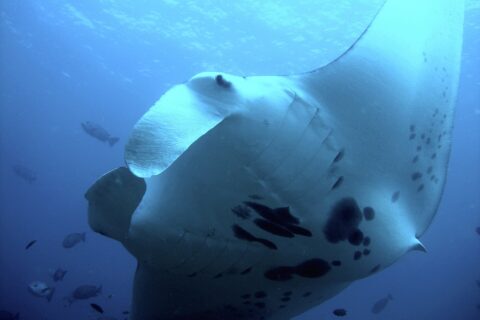 FrancePass
Boulari Pass (New Caledonia)
New Caledonia
 MexicoPelagic