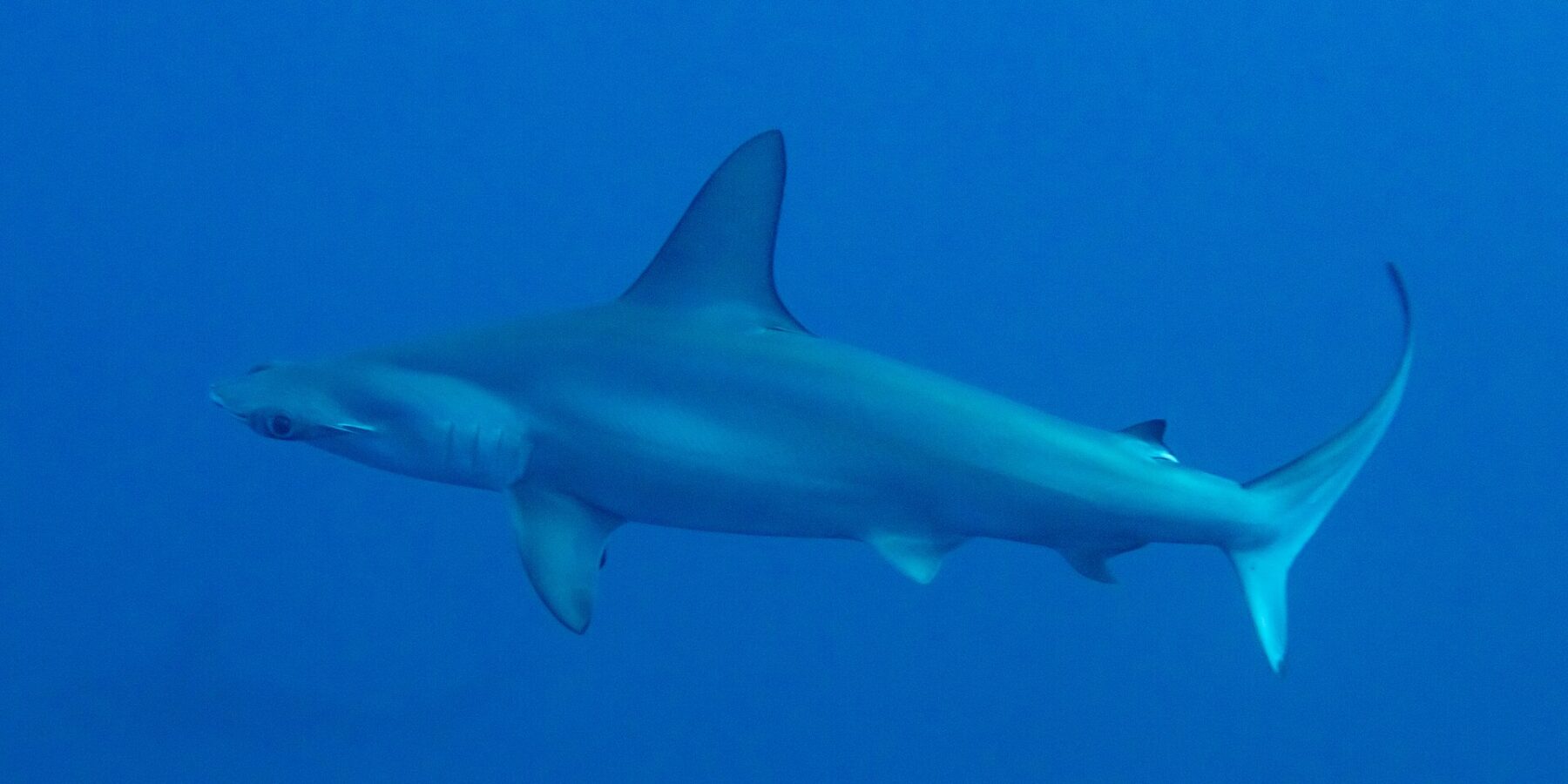
Rasdhoo Madivaru is the outer reef of Madivaru islet, and the site in the Maldives with the most scalloped hammerhead sightings over the year. You descend in open water to 25 or 30 meters between 5:30 and 7:30 a.m., ten minutes by boat from Rasdhoo island.
Why dive Rasdhoo Madivaru?
- The site in the Maldives with the most scalloped hammerhead sightings over the year, schooling off the wall at dawn
- A blue-water dive at 25 or 30 meters between 5:30 and 7:30 a.m., then the Madivaru wall and its overhangs
- Gray reef sharks, eagle rays, Napoleon wrasse, tuna and trevallies in the channel between Kuramathi and Rasdhoo
- A separate atoll 60 kilometers from Malé, with a local island and dive centers at US$50 or US$69 a dive
Rasdhoo Madivaru in pictures
What will you see at Rasdhoo Madivaru?
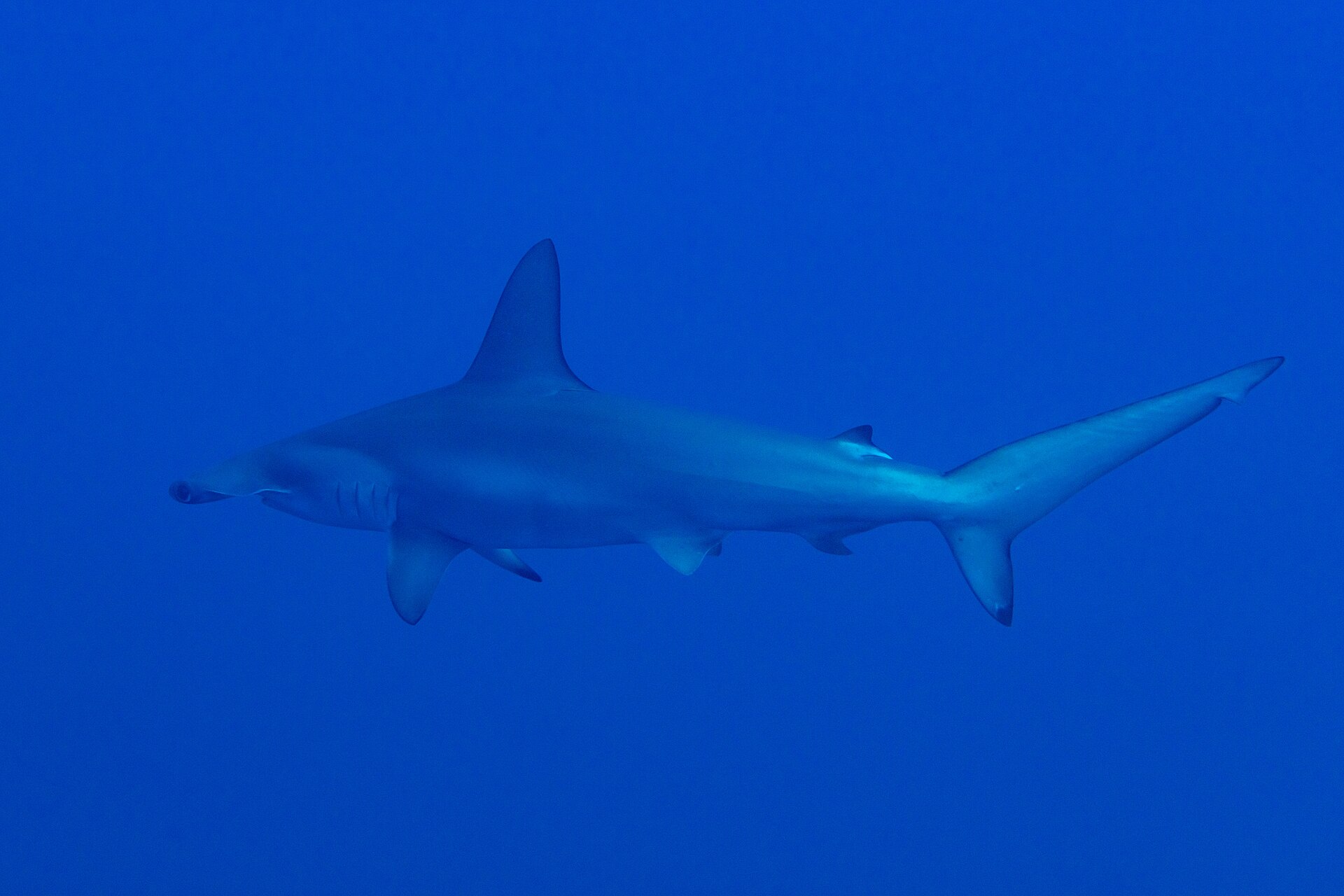
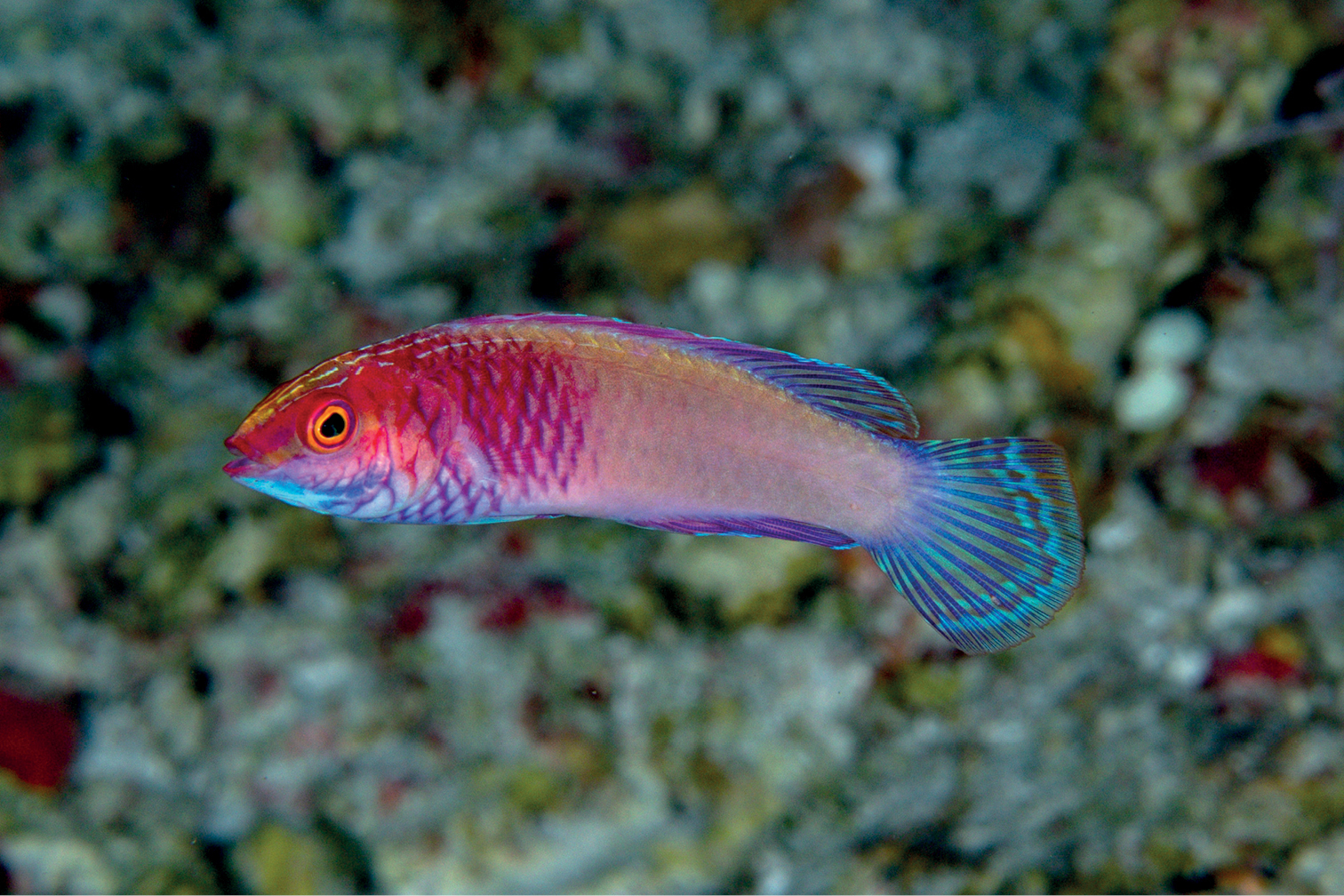
Rasdhoo Madivaru is known for the scalloped hammerhead. These sharks, about 3 meters long, live in schools, rise from the deep along the wall in the early morning and sink back into the depths as the day breaks. They are resident in the channel all year but shy, and encounters are less regular than twenty years ago. The wall and the channel do the rest: patrolling gray reef sharks, eagle rays at the edge of the wall, Napoleon wrasse, green turtles, tuna, trevallies and barracudas in the blue, and the occasional mobula ray and silvertip shark. On the Madivaru reef, a healthy coral horseshoe pierced with overhangs and caverns, the sand patches hold colonies of garden eels. The site also gave its name to a small deep-reef wrasse, Cirrhilabrus finifenmaa, photographed here at 60 meters.
| Species | J | F | M | A | M | J | J | A | S | O | N | D | Note |
|---|---|---|---|---|---|---|---|---|---|---|---|---|---|
 Scalloped hammerhead | peak season | peak season | peak season | peak season | possible | possible | possible | possible | possible | possible | possible | peak season | resident in the channel all year, schooling off the wall between 5:30 and 7:30 a.m., most regular from January to April |
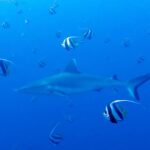 Gray reef shark | peak season | peak season | peak season | peak season | peak season | peak season | peak season | peak season | peak season | peak season | peak season | peak season | along the wall and in the channel |
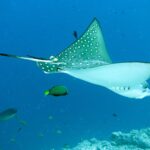 Spotted eagle ray | peak season | peak season | peak season | peak season | peak season | peak season | peak season | peak season | peak season | peak season | peak season | peak season | at the edge of the wall, often several together |
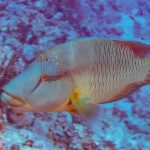 Napoleon wrasse | peak season | peak season | peak season | peak season | peak season | peak season | peak season | peak season | peak season | peak season | peak season | peak season | in the channel between Kuramathi and Rasdhoo |
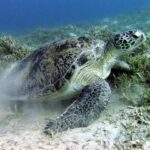 Green turtle | possible | possible | possible | possible | possible | possible | possible | possible | possible | possible | possible | possible | on the Madivaru reef |
| Tuna | peak season | peak season | peak season | peak season | peak season | peak season | peak season | peak season | peak season | peak season | peak season | peak season | in the blue, above the wall |
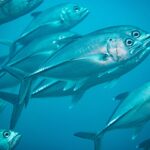 Bigeye trevally | peak season | peak season | peak season | peak season | peak season | peak season | peak season | peak season | peak season | peak season | peak season | peak season | in the blue, above the wall |
| Barracudas | peak season | peak season | peak season | peak season | peak season | peak season | peak season | peak season | peak season | peak season | peak season | peak season | in the blue, above the wall |
| Mobula rays and silvertip sharks | possible | possible | possible | possible | possible | possible | possible | possible | possible | possible | possible | possible | occasional, off the wall |
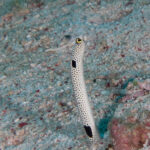 Spotted garden eel | peak season | peak season | peak season | peak season | peak season | peak season | peak season | peak season | peak season | peak season | peak season | peak season | on the sand patches of the Madivaru reef |
peak seasonpossiblerare
What is diving like at Rasdhoo Madivaru?
These are two very different dives. The dawn dive is in the blue: you enter off the outer wall, descend straight to 25 or 30 meters, the legal limit, and wait in open water in a tight group, looking out into the blue. There is no reference point, the current can push you out to sea or down, and you ascend under a surface marker buoy. Advanced Open Water and comfort in open water are essential. The second dive follows the Madivaru wall, a drop-off deeper than 20 meters with overhangs, caverns and sand patches, or drifts through the channel between Kuramathi and Rasdhoo at 20 or 25 meters, in a medium to strong current that ends over 200 meters of water. Visibility ranges from 15 to 30 meters.
When to dive Rasdhoo Madivaru?
idealgoodnot recommended
You can dive the atoll all year. Hammerheads are present in every season, with the most regular encounters from January to April, during the northeast monsoon: calm seas, visibility of 20 to 30 meters or more, moderate currents. From May to November, the southwest wind raises a swell on the exposed side, June and July are the wettest months, and plankton brings visibility down to around 15 meters, but the channel and the wall can still be dived. Surface water is 28 °C from December to February and rises to 30 °C in April; off the wall, at 25 or 30 meters, it sometimes drops to 26 °C.
How to get to Rasdhoo Madivaru?
Rasdhoo is a small atoll attached to the northeast tip of Ari, 60 kilometers west of Malé: one local island, Rasdhoo, the resort island of Kuramathi and a few islets including Madivaru, on the edge of the outer reef. From Malé, the public speedboat takes two to two and a half hours; Kuramathi can also be reached by seaplane in 25 minutes. On the island, dive centers sell single dives. At The Deep Blue Maldives it is US$60 up to six dives, US$55 up to ten and US$50 beyond, plus US$5 for gear, US$10 for Nitrox and a US$10 night surcharge; Acqua Adventures Rasdhoo charges US$69 with gear included, and Jerrys Dive Club US$80. The dawn trip leaves around 5:30 a.m., and the site is a few minutes away by dhoni, eight from Kuramathi. Liveaboards out of Malé stop here on the "Best of Maldives" route. Entry to the protected area is free.
Stay in Rasdhoo
Where to stay near Rasdhoo Madivaru?
Hotels, apartments and rooms around Rasdhoo, with current prices.
How does the dawn dive at Rasdhoo's Hammerhead Point work?
The hammerhead site, called Hammerhead Point or Madivaru Corner depending on the dive center, is the edge of the Madivaru outer reef, where a tongue of reef meets the deep water of the open sea. The boat leaves in the dark, between 5:30 and 6 a.m., to be in the water at first light. You descend straight to 25 or 30 meters, in open water, and wait in a group, looking out into the blue. Scalloped hammerheads, sharks about 3 meters long that live in schools, rise from the deep at that hour and sink back down as soon as the light settles in. They are shy, and a diver who swims toward them makes them vanish. Around 7:30 a.m. the window closes, and you drift toward the wall to finish the dive on the reef.
Can you still see hammerheads at Rasdhoo Madivaru?
The protected area is the site in the Maldives with the most hammerhead sightings over the year, and the sharks are resident in the Rasdhoo channel system. But encounters have become less frequent. In August 2023, the Kuramathi resort's dive center had dropped the scheduled Hammerhead Point trip from its program because sightings were not regular enough, and the island's dive centers now sell it as a chance, not a certainty. The best period is still January to April, at dawn, in calm seas. Go knowing this, and enjoy the rest of the site, which does not depend on luck.
What else can you dive at Madivaru and in the Rasdhoo channel?
Rasdhoo Madivaru itself is a healthy horseshoe reef whose wall drops past 20 meters with overhangs, caverns and crevices, and sand patches where garden eels live. Trevallies, barracudas, tuna, gray reef sharks and eagle rays pass by all year, with the occasional mobula ray and silvertip shark. Between Kuramathi and Rasdhoo island, you drift the channel at 20 or 25 meters, in a current that opens onto 200 meters of water: reef sharks, rays, Napoleon wrasse, snappers and turtles. At 60 meters, out of reach of recreational divers, the reef is home to Cirrhilabrus finifenmaa, a pink and purple wrasse photographed in the atoll.
Where is Rasdhoo Atoll, and where do you stay to dive it?
Rasdhoo is a separate atoll attached to the northeast tip of Ari, 60 kilometers west of Malé: one local island, one resort, a few islets and a channel. The EPA protected the Madivaru area on October 7, 2018, over 266 hectares, within an area recognized as ecologically and biologically significant under the Convention on Biological Diversity since 2016; entry is free. Rasdhoo island, with its guesthouses and dive centers at US$50 or US$69 a dive, is the budget base. Kuramathi, eight minutes by boat from the site, is the comfortable base, and liveaboards stop here between Malé and North Ari.
Our tip
Book the dawn trip as soon as you arrive, with no guarantee: encounters have become rarer since the 2010s. Stay grouped in open water at 25 meters, looking out into the blue and down. Keep the second dive for the wall and the channel.
Other dive sites nearby
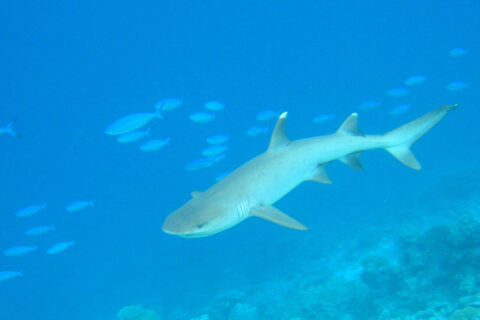
 MaldivesReef
Maaya Thila
Ari and Rasdhoo atolls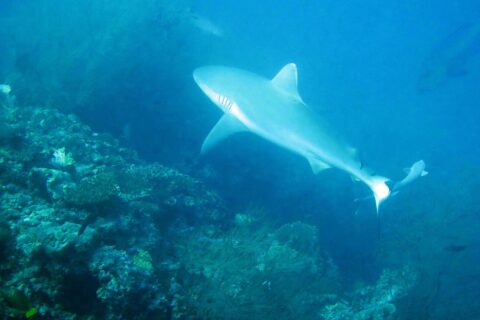 MaldivesReef
Fish Head (Mushimasmingili Thila)
Ari and Rasdhoo atolls MaldivesReef