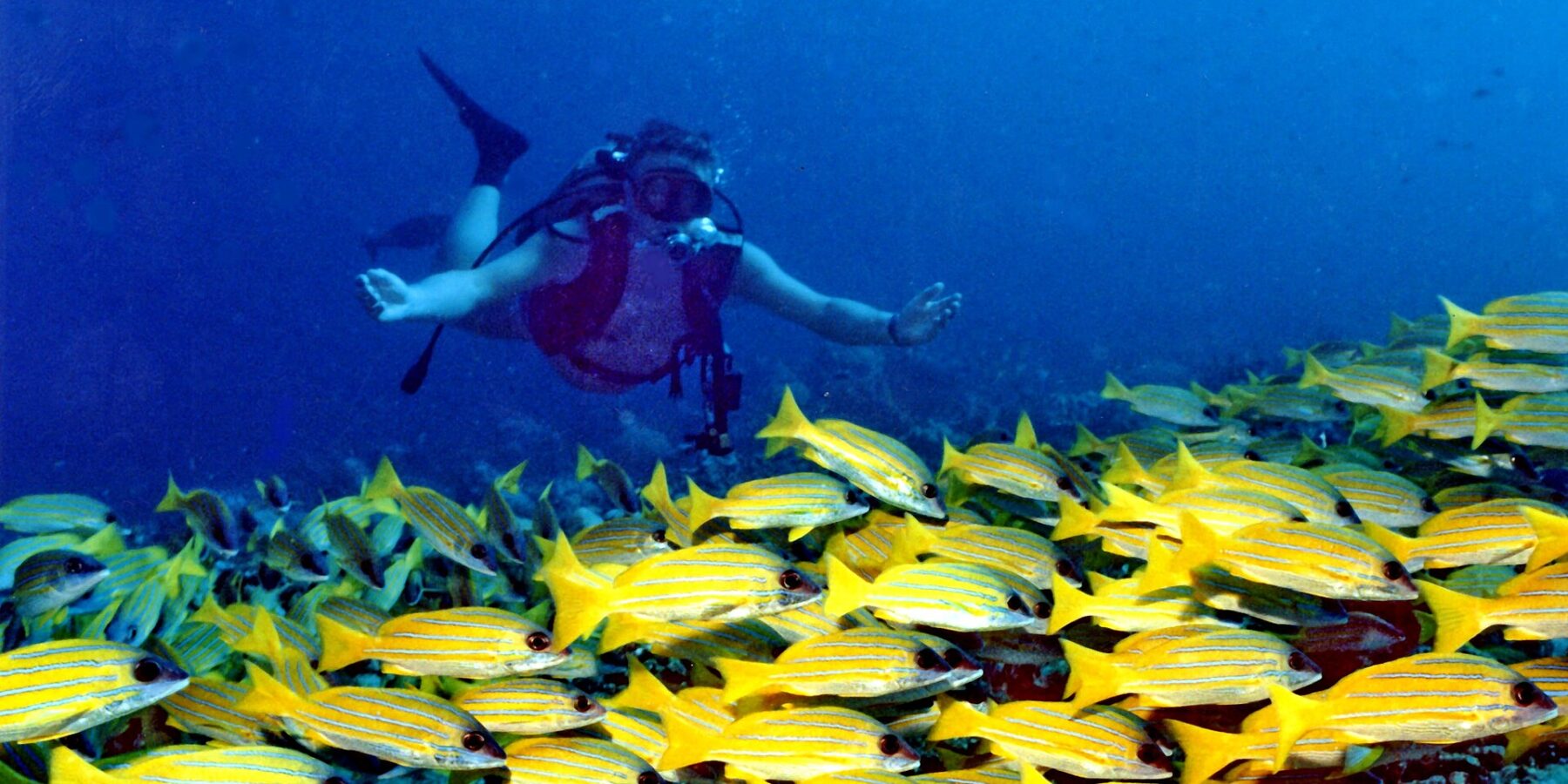
Banana Reef is a banana-shaped reef 20 minutes by speedboat from Malé and one of the first dive sites in the Maldives. Its coral gardens run from 3 to 15 meters and its sea fan caves open down to 25 meters, a dive for Open Water divers when the current allows.
Why dive Banana Reef?
- Marine protected area since September 27, 1995, among the first fifteen protected sites in the country
- 20 minutes by speedboat from Malé and the airport, open to Open Water divers in calm seas
- Caves, overhangs and caverns between 10 and 25 meters, lined with soft corals and sea fans
- A resident school of bannerfish, clouds of bluestripe snappers, Napoleon wrasse and turtles
- Dives at US$65 from Himmafushi, US$80 from Hulhumalé
Banana Reef in pictures
What will you see at Banana Reef?
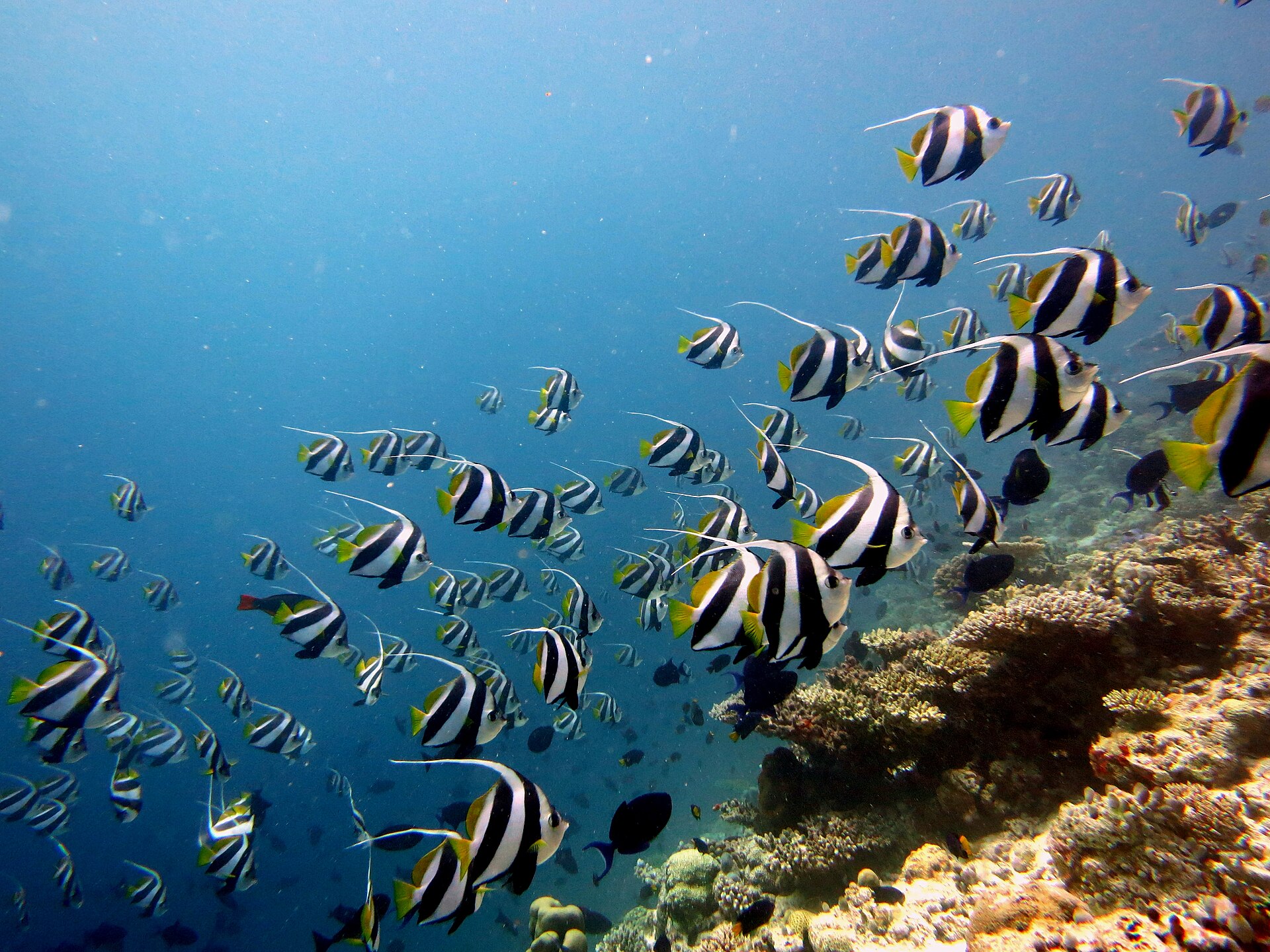
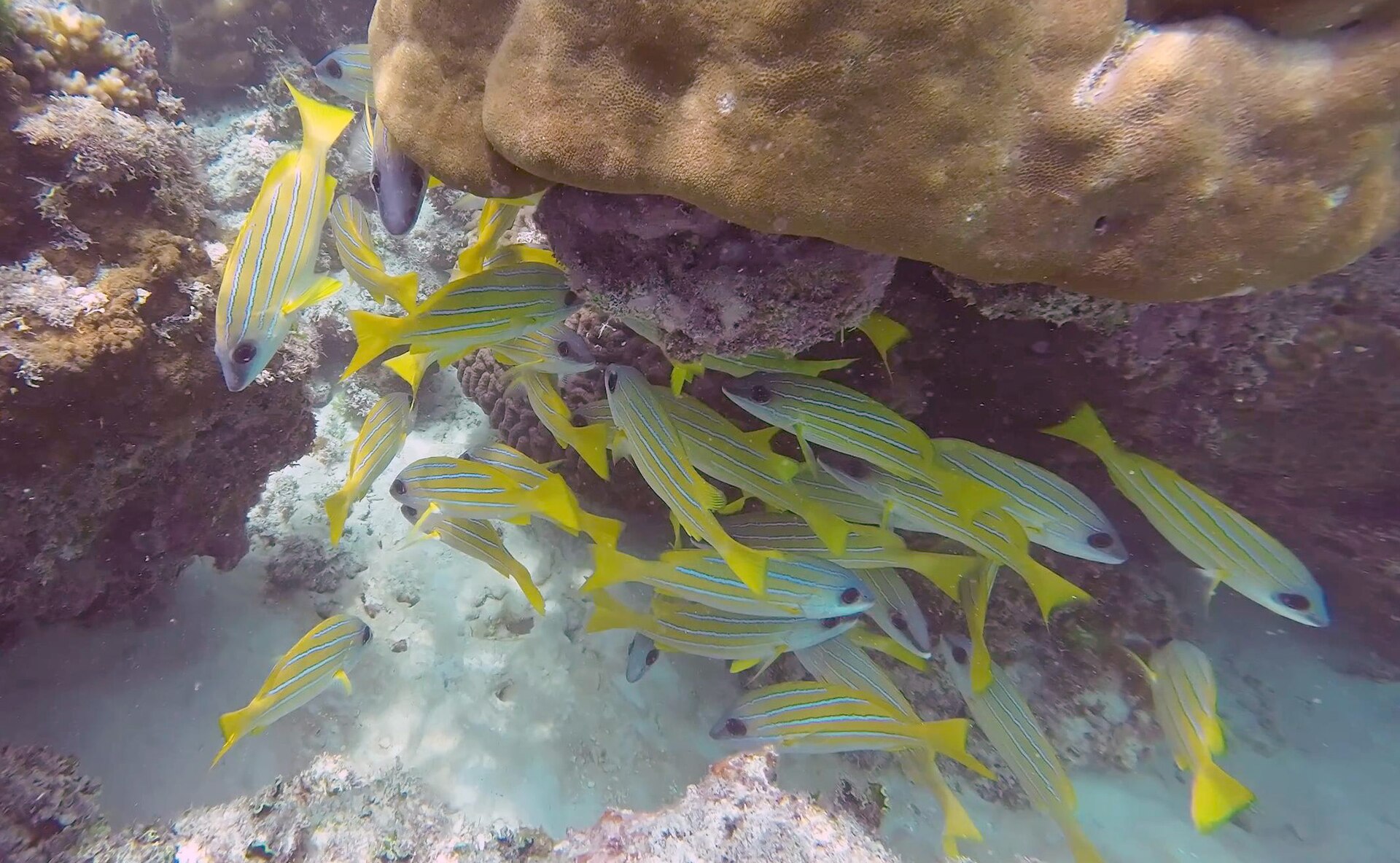
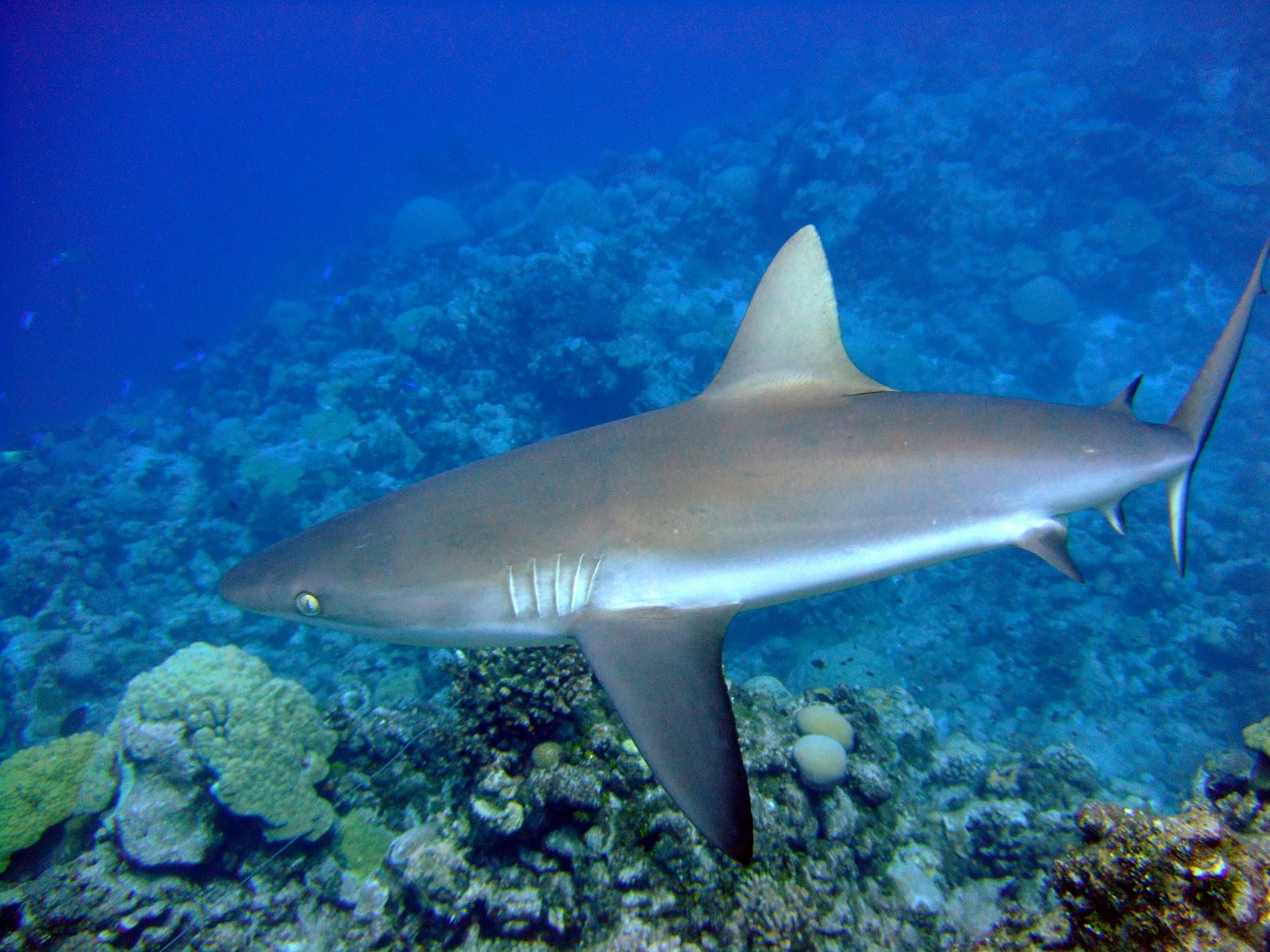
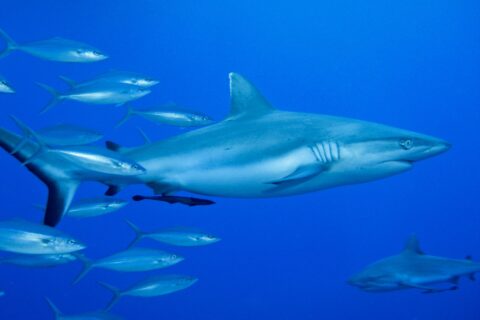
Banana Reef is first of all about its schools. East of the reef, in the current, a huge resident school of bannerfish holds the water column. In the caves and under the overhangs, between 10 and 25 meters, bluestripe snappers form yellow clouds around the sea fans, with oriental sweetlips, giant groupers, angelfish, moray eels and spiny lobsters deep in the holes. Napoleon wrasse patrol the walls, a gray reef shark cruises past off the boulders of the northeast point, and great barracudas and giant trevallies hunt in the flow. Hawksbill turtles graze on the plateau, covered in acropora tables. Two things made the site's name: the sheer mass of reef fish and a coral cover that is still very good, led by soft corals and sea fans, intact on the walls where the current feeds everything that grows there.
| Species | J | F | M | A | M | J | J | A | S | O | N | D | Note |
|---|---|---|---|---|---|---|---|---|---|---|---|---|---|
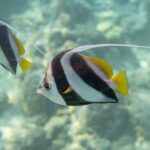 Bannerfish | peak season | peak season | peak season | peak season | peak season | peak season | peak season | peak season | peak season | peak season | peak season | peak season | a huge resident school east of the reef, in the current |
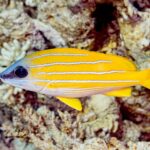 Bluestripe snapper | peak season | peak season | peak season | peak season | peak season | peak season | peak season | peak season | peak season | peak season | peak season | peak season | in yellow clouds in the caves and under the overhangs, between 10 and 25 meters |
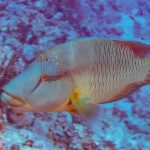 Napoleon wrasse | peak season | peak season | peak season | peak season | peak season | peak season | peak season | peak season | peak season | peak season | peak season | peak season | resident, along the walls and the north face |
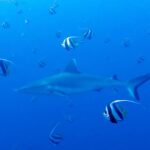 Gray reef shark | possible | possible | possible | possible | possible | possible | possible | possible | possible | possible | possible | possible | passing by off the boulders of the northeast point |
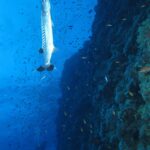 Great barracuda | possible | possible | possible | possible | possible | possible | possible | possible | possible | possible | possible | possible | hunting in the current, with giant trevallies |
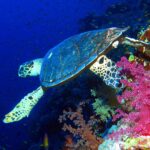 Hawksbill turtle | possible | possible | possible | possible | possible | possible | possible | possible | possible | possible | possible | possible | on the plateau, among the acropora tables |
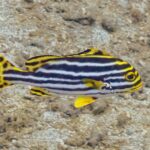 Oriental sweetlips | peak season | peak season | peak season | peak season | peak season | peak season | peak season | peak season | peak season | peak season | peak season | peak season | in small groups sheltering under the overhangs |
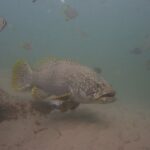 Giant grouper | peak season | peak season | peak season | peak season | peak season | peak season | peak season | peak season | peak season | peak season | peak season | peak season | deep in the caves, bring a dive light |
| Moray eels | peak season | peak season | peak season | peak season | peak season | peak season | peak season | peak season | peak season | peak season | peak season | peak season | deep in the caves, bring a dive light |
| Spiny lobsters | peak season | peak season | peak season | peak season | peak season | peak season | peak season | peak season | peak season | peak season | peak season | peak season | deep in the caves, bring a dive light |
peak seasonpossiblerare
What is diving like at Banana Reef?
The reef is about 300 meters long, runs north to south and curves west like a banana. The coral gardens spread from 3 to 15 meters, the walls, caves, overhangs and swim-throughs from 15 to 30 meters, and the dive plays out between 5 and 30 meters, the legal limit in the Maldives. Visibility ranges from 20 to 30 meters. Current is the only difficulty. Gentle to moderate most of the time, it turns strong at times and creates eddies around the overhangs when it comes from the east. The eastern section, where the bannerfish school sits, has earned the nickname "the washing machine". The site is open to Open Water divers in calm seas, as long as they stay close to the guide; on strong current days, dive centers keep it for confident divers. A surface marker buoy is recommended, a computer is mandatory, and decompression diving is not allowed.
When to dive Banana Reef?
idealgoodnot recommended
You can dive the reef all year. The northeast monsoon, from December to April, brings the calmest seas and the best visibility, 25 to 40 meters in the Malé atolls. That is the season to pick for a first trip, and conditions stay mild into May. From May to November, the southwest monsoon brings wind, swell and plankton: visibility drops to 15 to 25 meters and the speedboat rides get rougher, but no season closes the site. Surface water barely changes: 28 °C in December and January, 29 °C in March, 30 °C in April, then 28 to 29 °C from May to November, with a monthly low of 26.6 °C in December. The marine life is resident: bannerfish, snappers, Napoleon wrasse and turtles follow no calendar, and you see them on every dive.
How to get to Banana Reef?
Banana Reef lies on the eastern side of North Malé Atoll, 8 kilometers northeast of Malé, near the resort islands of Furanafushi and Kuda Kalhi and very close to the airport: 20 minutes by speedboat from Malé or Hulhumalé. Dive Club Maldives, on the beach at Hulhumalé, heads out at 8:30 a.m. for one or two dives and comes back at 1:30 p.m. It charges US$80 a dive with your own gear, US$90 with rental, US$135 or US$145 for two dives, and US$190 to US$250 for a three-dive day. From the local island of Himmafushi, 17 kilometers north of Malé (20 minutes by speedboat with Naseeb Express, three departures a day, about US$20 one way), Himmafushi Scuba Adventure charges US$65 for a single dive and US$285 for five, plus US$15 a dive for full rental. Resorts in the south of the atoll and liveaboards out of Malé dive it too. Entry to the protected site is free.
Stay in Malé
Where to find a dive guide in Banana Reef?
Guided tours you can book online, ranked by number of reviews. These are affiliate links: if you book, you support us at no extra cost.

 Viator
Maldives Adventure Trip
4.7 (72 reviews)View and book Viator
Underwater and Drone photoshoot in Maldives
5.0 (17 reviews)View and bookWhere to stay near Banana Reef?
Hotels, apartments and rooms around Malé, with current prices.
How did Banana Reef become one of the first dive sites in the Maldives?
The Maldives opened up to diving in the 1970s, and Banana Reef, within dhoni range of Malé and the airport, was one of the very first reefs explored and the first one set up for divers. Its name comes from its shape: seen from above, the reef, about 300 meters long and running north to south, curves west like a banana. Maldivians call it Gaathugiri or Aiydhashugiri. On September 27, 1995, the government declared it a marine protected area along with fourteen other dive sites, the country's first wave of protection. The official protected areas portal still lists it with that status, with no entry fee. Protection has kept what makes the reef valuable: very good coral cover, soft corals and sea fans on the walls, acropora tables on the plateau, and a mass of reef fish that is rare so close to the capital.
What is the dive like at Banana Reef, from the slope to the washing machine?
You drop onto the slope covered in acropora, and the current carries the drift northeast. Between 10 and 25 meters comes a run of caves, overhangs and caverns, lined with soft corals and sea fans, where bluestripe snappers mass by the hundreds with sweetlips, giant groupers, moray eels and spiny lobsters. The north face is the best part of the reef. At the northeast point, a row of huge detached boulders serves as a lookout for Napoleon wrasse and passing gray reef sharks; in the northwest, the reef juts out and forms a vast cavern. Then comes the east side and its resident school of bannerfish, in the area nicknamed the washing machine, because the current swirls around the overhangs there. You come back up onto the plateau for the safety stop, among the table corals and the hawksbill turtles.
How do you photograph and dive Banana Reef?
Banana Reef is a wide-angle site: sea fan overhangs with a diver in the opening, acropora tables just below the surface, clouds of yellow snappers against the blue and the bannerfish school in the current. Position yourself downcurrent, facing the school, and let the fish come to you; never brace yourself on the coral. The current sets the rules. When it comes from the east, the eddies around the overhangs can throw an inexperienced diver off balance, and the guide cuts the drift short. Everyone carries a surface marker buoy, sends it up before leaving the bottom and ends the dive as a group, since the boat picks up the groups in an area with heavy boat traffic. You never go below 30 meters, which is the law in the Maldives, and the reef is at its best between 10 and 25 meters anyway.
Our tip
Ask for the north face and the northeast point, with their big boulders and the large cavern in the northwest. In the eastern section, stay close to the guide: the current swirls around the overhangs. Dive in the morning, before the wind and the boats.
Other dive sites nearby
 MaldivesPelagic
Kandooma Thila
Malé atolls MaldivesPelagic
Rasdhoo Madivaru
Ari and Rasdhoo atolls MaldivesReef