 France
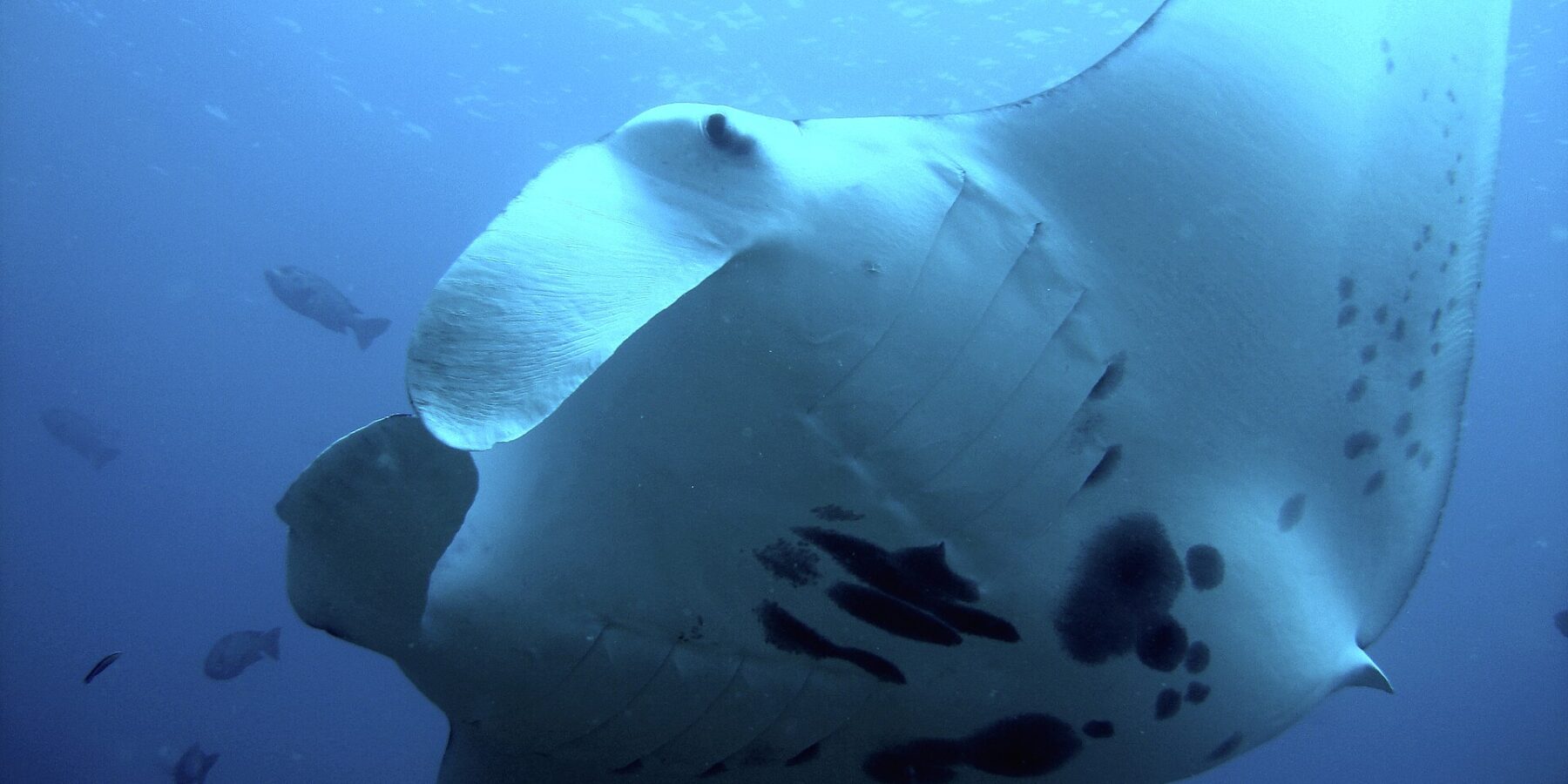
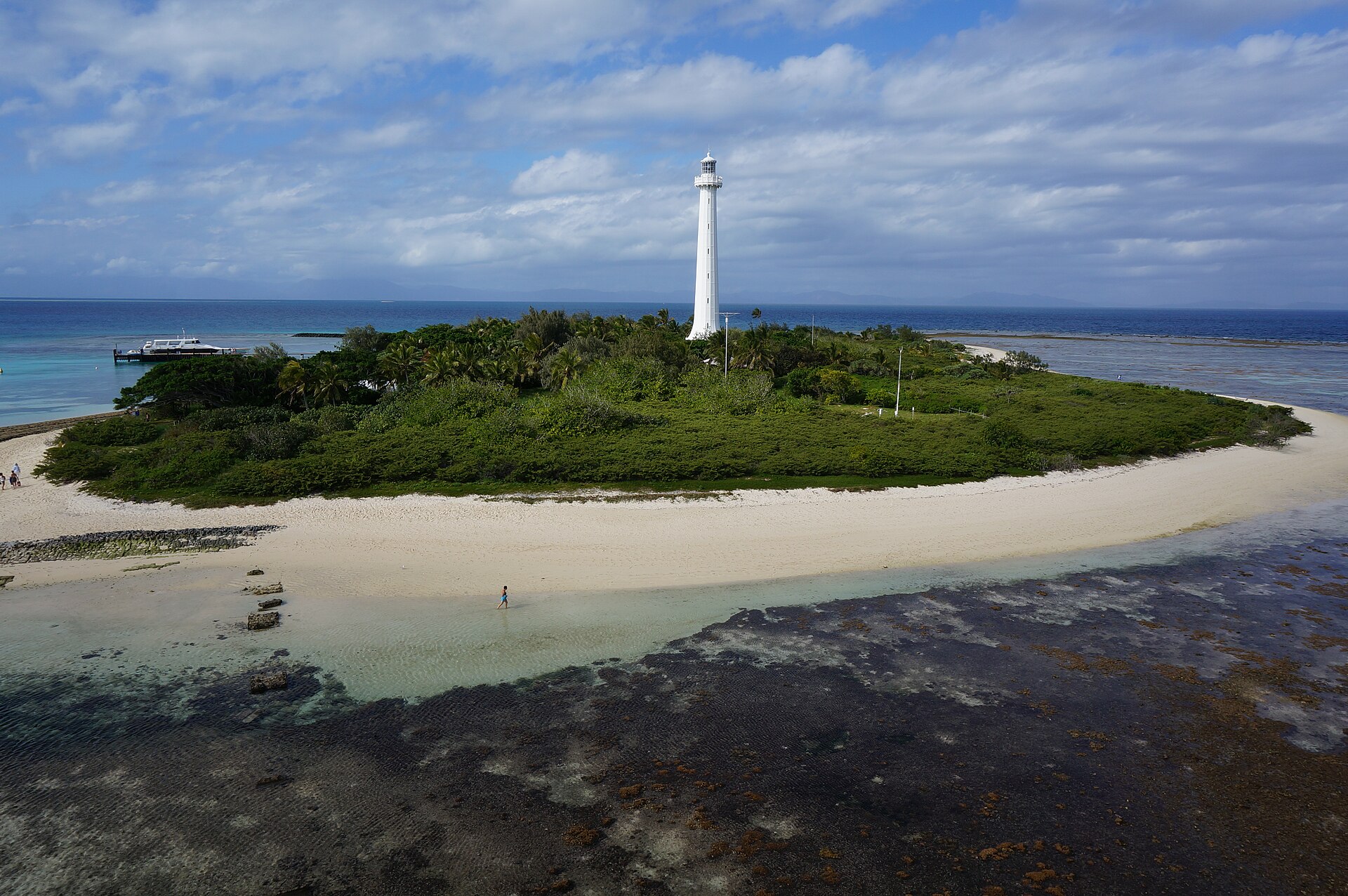
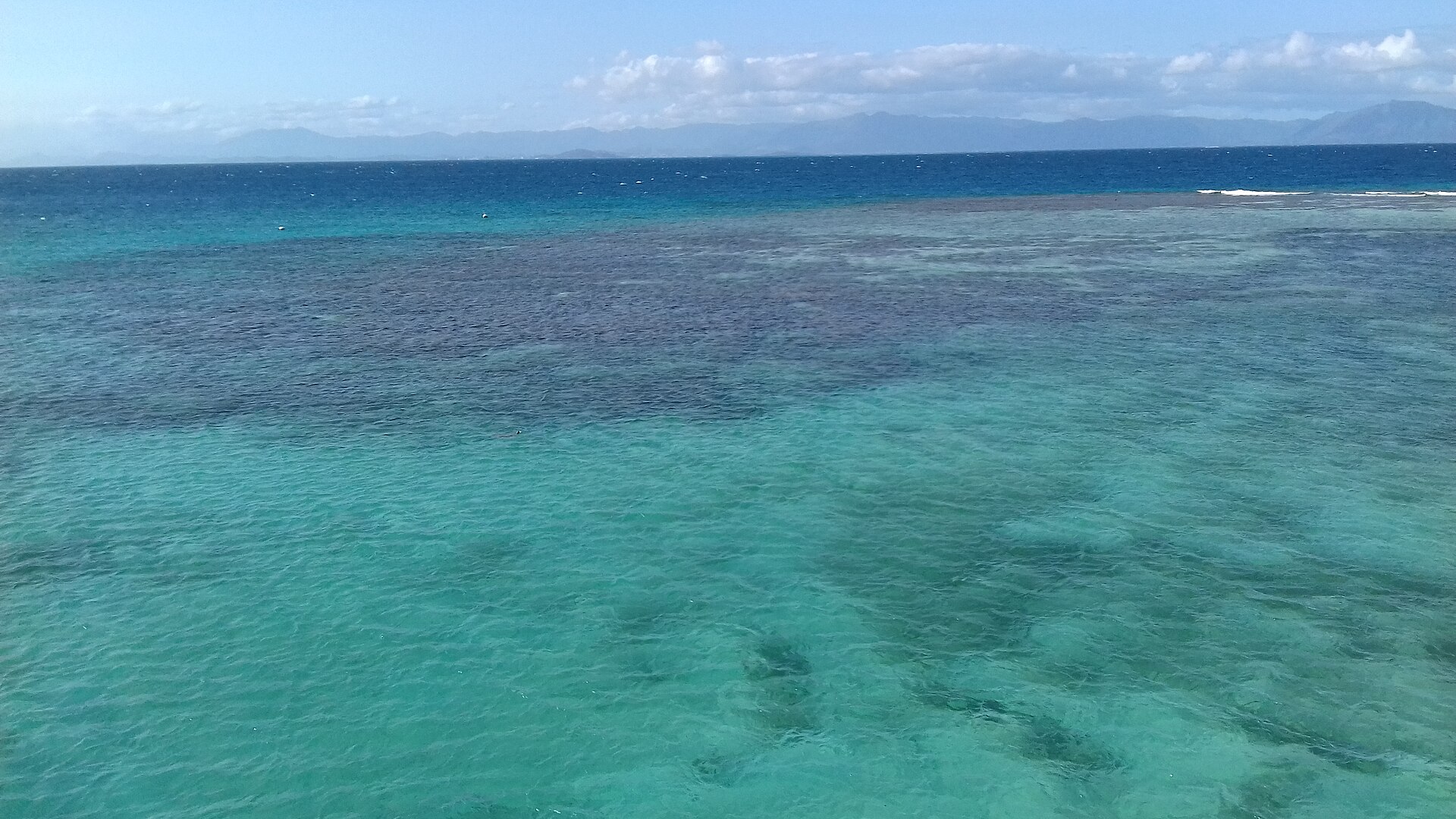
Boulari Pass cuts through the barrier reef between Grand Récif Aboré and Kué Reef, south of Amédée Lighthouse, about forty minutes from Nouméa. You drift at around 13 to 18 m, manta rays come to a plateau to be cleaned, and gray reef sharks show up mostly from April to June.
Why dive Boulari Pass?
- A manta cleaning station on a plateau at 13 m, inside the pass
- Gray reef sharks in the current, more numerous from April to June
- A drift dive about forty minutes from Nouméa, at the foot of the 1865 Amédée Lighthouse
- A Southern Province nature reserve where fishing and collecting are banned
- The Dieppoise wreck, at 26 m, between the pass and Amédée islet, for the second dive
The dive site on the map
Base: Nouméa, Marina Port du Sud, 31 km as the crow flies.
See nearby dive sites on the mapBoulari Pass in pictures
What will you see at Boulari Pass?
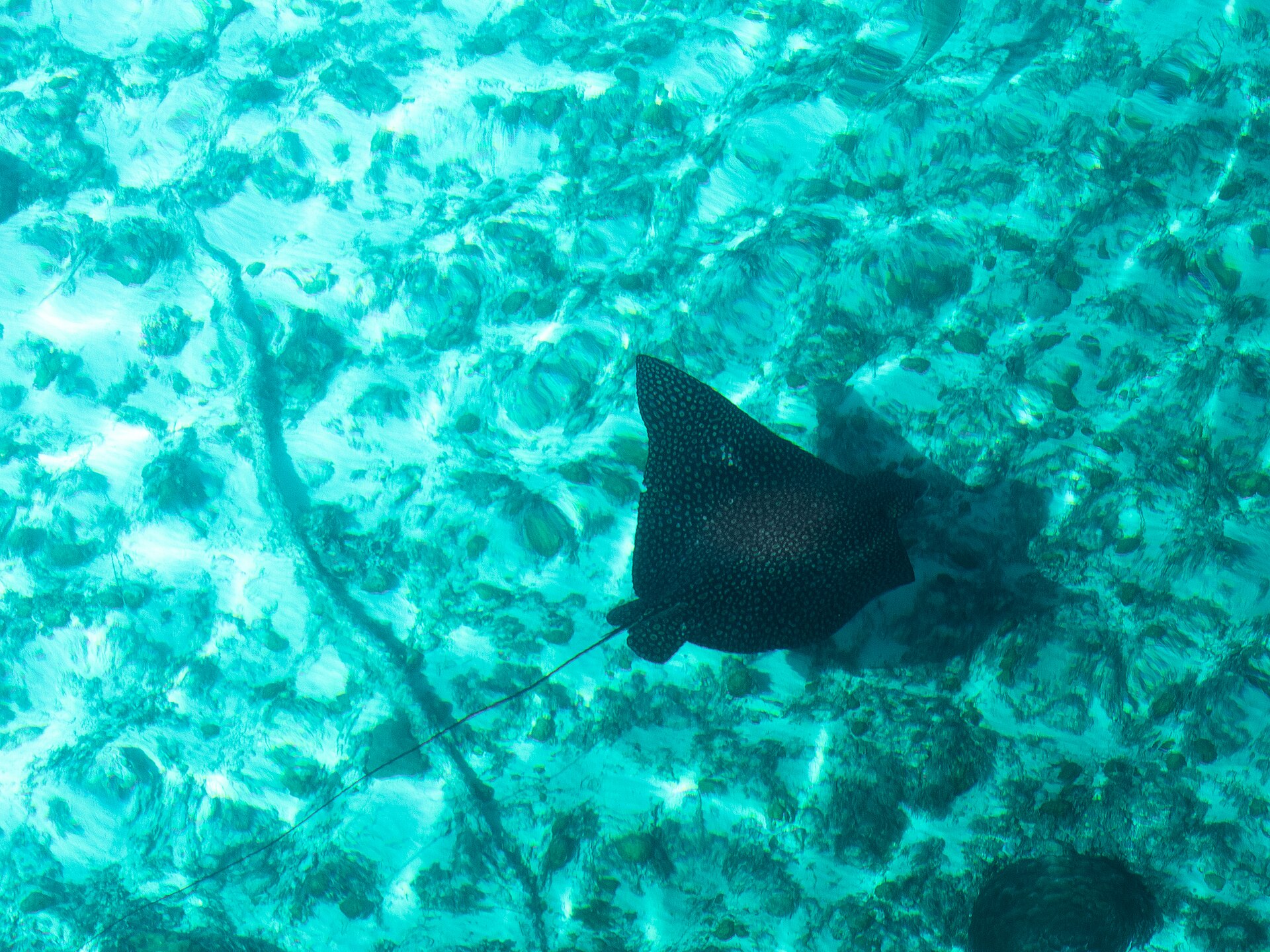
You dive Boulari for big fish, not for coral. The plateau that extends the barrier reef into the pass, at 13 m, holds a cleaning station where reef mantas come to get rid of parasites: you can meet them all year, with the best odds from January to April. Gray reef sharks hold the current in numbers, especially from April to June, along with whitetip reef sharks. Napoleon wrasse and groupers are resident, turtles pass over the nearby reefs, and eagle rays visit Sournois reef. During the drift, dolphins and dugongs sometimes show up; the New Caledonian lagoon is home to the world's third-largest dugong population. From mid-July to mid-September, humpback whales cruise the southern lagoon and you see them at the surface during the crossing.
| Species | J | F | M | A | M | J | J | A | S | O | N | D | Note |
|---|---|---|---|---|---|---|---|---|---|---|---|---|---|
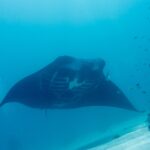 Reef manta ray | peak season | peak season | peak season | peak season | possible | possible | possible | possible | possible | possible | possible | possible | at the cleaning station on the plateau, at 13 m; all year, especially from January to April |
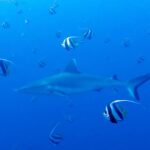 Gray reef shark | possible | possible | possible | peak season | peak season | peak season | possible | possible | possible | possible | possible | possible | in the pass, more numerous from April to June |
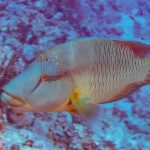 Napoleon wrasse | possible | possible | possible | possible | possible | possible | possible | possible | possible | possible | possible | possible | resident in the pass and on the nearby reefs |
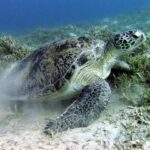 Green turtle | possible | possible | possible | possible | possible | possible | possible | possible | possible | possible | possible | possible | on the reefs near the pass |
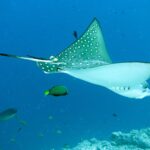 Spotted eagle ray | possible | possible | possible | possible | possible | possible | possible | possible | possible | possible | possible | possible | on Sournois reef |
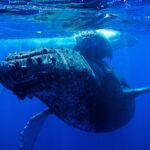 Humpback whale | rare | rare | rare | rare | rare | rare | possible | possible | possible | rare | rare | rare | at the surface during the crossing, from mid-July to mid-September |
| Whitetip reef sharks | possible | possible | possible | possible | possible | possible | possible | possible | possible | possible | possible | possible | in the Nouméa passes |
| Groupers | possible | possible | possible | possible | possible | possible | possible | possible | possible | possible | possible | possible | on the reefs of the pass |
| Dolphins and dugongs | possible | possible | possible | possible | possible | possible | possible | possible | possible | possible | possible | possible | rare, during the drift |
peak seasonpossiblerare
What is diving like at Boulari Pass?
The pass cuts through the barrier reef between Grand Récif Aboré and Kué Reef, about twenty kilometers south of Nouméa. You dive it as a drift, and the tide picks the starting point: the outer pass on an incoming current, the inner pass on an outgoing one. The group stays at around 13 to 18 m, level with the manta plateau. To the north, the Jardin de Marc slopes gently from 6 to 50 m, and Tabou reef, from 3 to 18 m, and Sournois reef, from 6 to 20 m, are more sheltered. The current is often strong and the sea often rough: this is not a site for try dives. Dive centers open it to guided Level 1 or Open Water divers; diving independently requires Level 2. On the bottom, World War II shells still lie around: do not touch them.
When to dive Boulari Pass?
idealgoodnot recommended
Nouméa dive centers are open all year. The cool season, from April to September, brings water at 22 or 23 °C, with a 22.5 °C average in August, and 30 to 40 m visibility; from April to November, the weather is more stable and the trade winds weaker. Bring a 5 mm wetsuit from March to December. From December to March, the water climbs to 27 °C in February, but this is the hot cyclone season: currents are stronger, the sea is rough more often, and trips are canceled when the weather turns. It is still the best time for mantas, from January to April. Gray reef sharks are more numerous from April to June, and humpback whales pass from mid-July to mid-September.
How to get to Boulari Pass?
Aircalin flies from Paris to Nouméa via Bangkok without a change of plane, three times a week, in 24 to 25 hours; La Tontouta airport is 52 km from the city. Dive centers leave from Marina Port du Sud, and the pass is 35 to 45 minutes away by boat. Iatok Diving Paradise sells its two morning dives for XPF 10,500 (€88) on weekdays and XPF 11,500 (€96) on weekends on its 2026 price list, with XPF 1,500 (€13) for a guide for Level 1 or Open Water divers and XPF 600 (€5) per rented piece of gear; every dive is on nitrox. Blue Caledonia Diving boards at 7:30 a.m. on the Pictilis, at pontoon A, for a day at Amédée Lighthouse: XPF 14,000 (€117) for a guided dive, XPF 12,000 (€101) diving independently. Abyss Plongée goes there too. A passport is recommended, and European Union citizens need no visa.
Stay in Nouméa, Marina Port du Sud
Where to stay near Boulari Pass?
Hotels, apartments and rooms around Nouméa, Marina Port du Sud, with current prices.
What is the story of Amédée Lighthouse at Boulari Pass?
Amédée Lighthouse marks the entrance to Nouméa harbor through Boulari Pass. Designed by Léonce Reynaud, built at the Rigolet workshops in Paris and shown at the London International Exhibition in 1862, it was assembled at La Villette, taken apart, then rebuilt on the islet from January to November 1865 and inaugurated on November 15, 1865. It stands 56 m tall, has 247 steps, and is the only large metal lighthouse in France; it has been automated since 1985. A range light, set up on the islet in 1881, guides ships through the pass. On the bottom, World War II shells are a reminder that the pass was the gateway to Nouméa.
What will you see on each Boulari Pass dive?
The outer pass is dived on an incoming current: you enter on the ocean side and drift into the channel. The inner pass is done on an outgoing current. The manta plateau, at 13 m, extends the barrier reef into the pass: you settle on the bottom at a distance from the cleaning station and wait. To the north, the Jardin de Marc slopes gently from 6 to 50 m, also as a drift dive. Tabou and Sournois reefs, more sheltered, serve as second dives. The Dieppoise wreck, a 46 m former Canadian wooden minesweeper sunk as an artificial reef on January 19, 1988, lies at 26 m between the pass and Amédée islet and often rounds off the trip.
How do you drift dive Boulari Pass?
The boat stays on watch at the surface throughout the drift and comes to pick up the group. Stay together behind the guide, at the guide's depth, and keep a DSMB within reach. On the plateau, do not swim toward the mantas: settled on the bottom, away from the station, you get to watch them circle longer. Nothing may be taken in the reserve, neither seashells nor coral, and the wartime shells stay where they are. After dives of less than two hours without decompression stops, wait 12 hours before flying; wait 24 hours after deep dives or several dives in one day.
Our tip
With Level 1 or Open Water, ask for the manta plateau rather than the full drift. Come from April to June for the gray reef sharks, or from January to April for the mantas, at the risk of bad-weather cancellations. After several dives, wait 24 hours before flying.
Other dive sites nearby
 IndonesiaPelagic
Magic Mountain (Misool)
Raja Ampat IndonesiaPelagic
Blue Magic
Raja Ampat IndonesiaReef