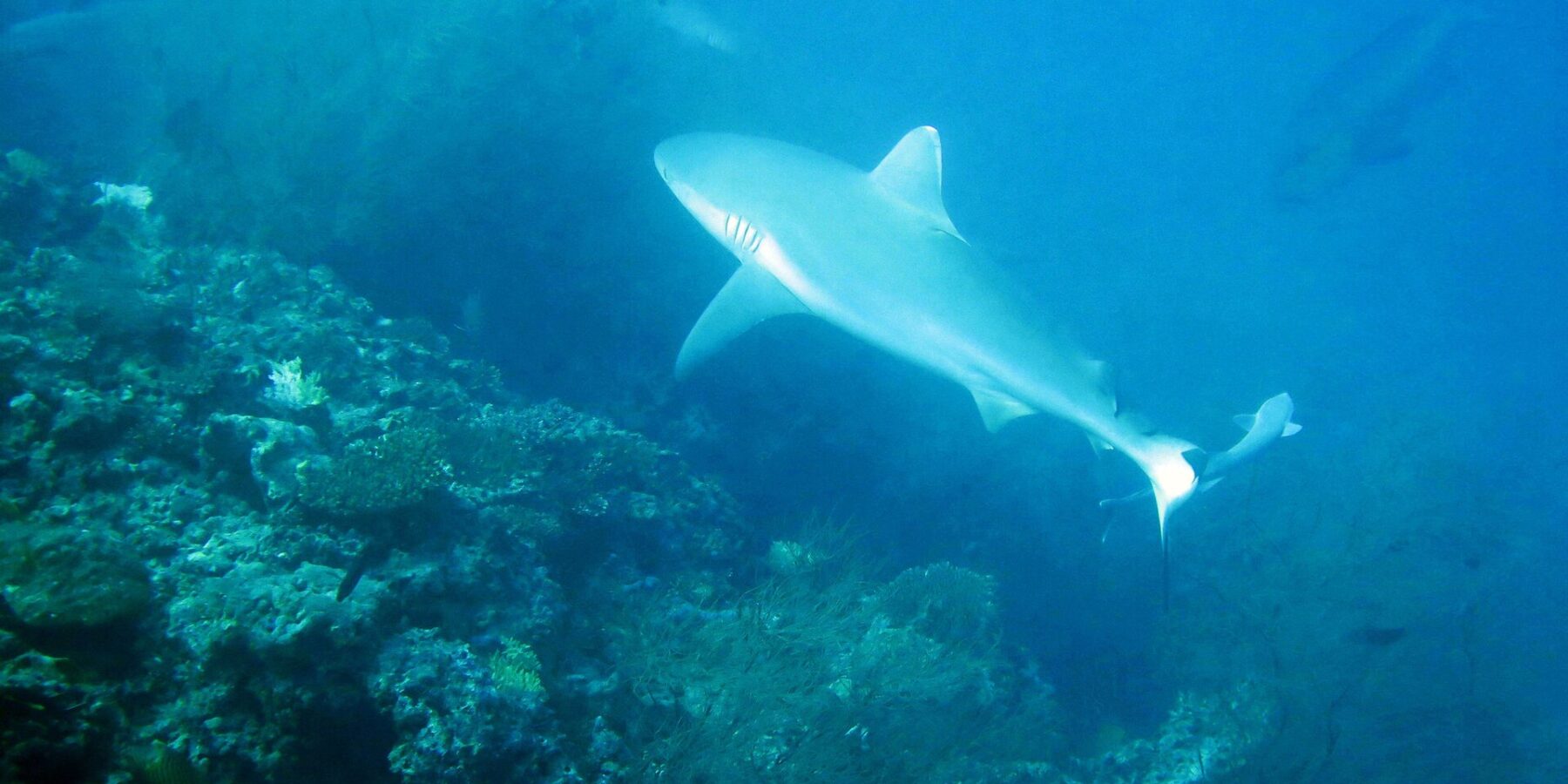
Fish Head is a pinnacle in North Ari Atoll, with a plateau between 8 and 15 meters and sides that drop to 40 or 50 meters. It is the gray reef shark site of the Maldives, with ten to twenty sharks facing the current and more than thirty on good days, and you dive it mostly from a liveaboard.
Why dive Fish Head?
- Ten to twenty gray reef sharks facing the current, more than thirty on good days: the gray shark site of the Maldives
- A pinnacle about a hundred meters long, with a plateau between 8 and 15 meters and overhangs lined with black coral where clouds of glassfish shelter
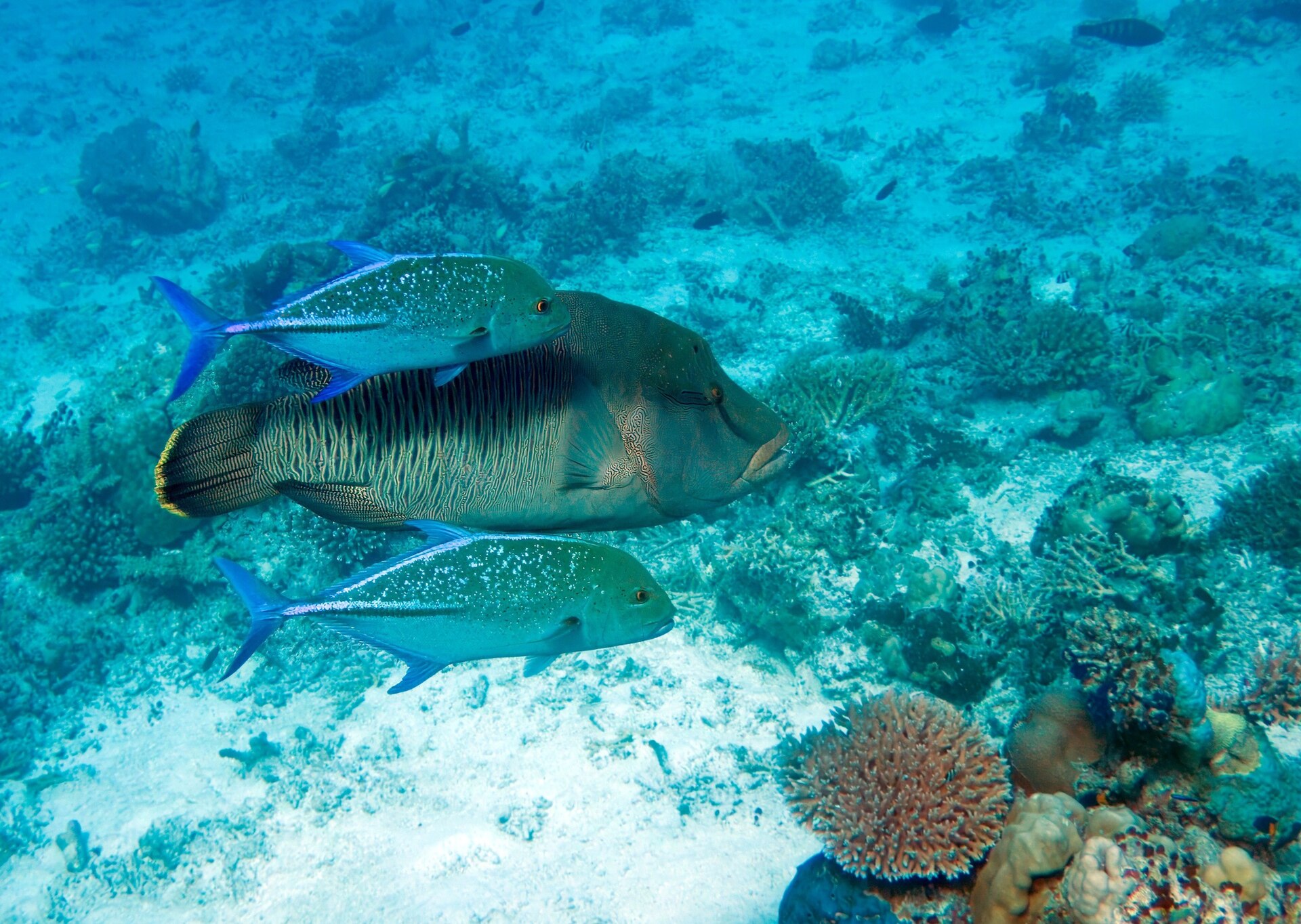
- Resident Napoleon wrasse, schools of bluestripe snappers, barracudas and trevallies in the current
- Protected since 1995, sitting in front of a large channel in North Ari
Fish Head in pictures
What will you see at Fish Head?
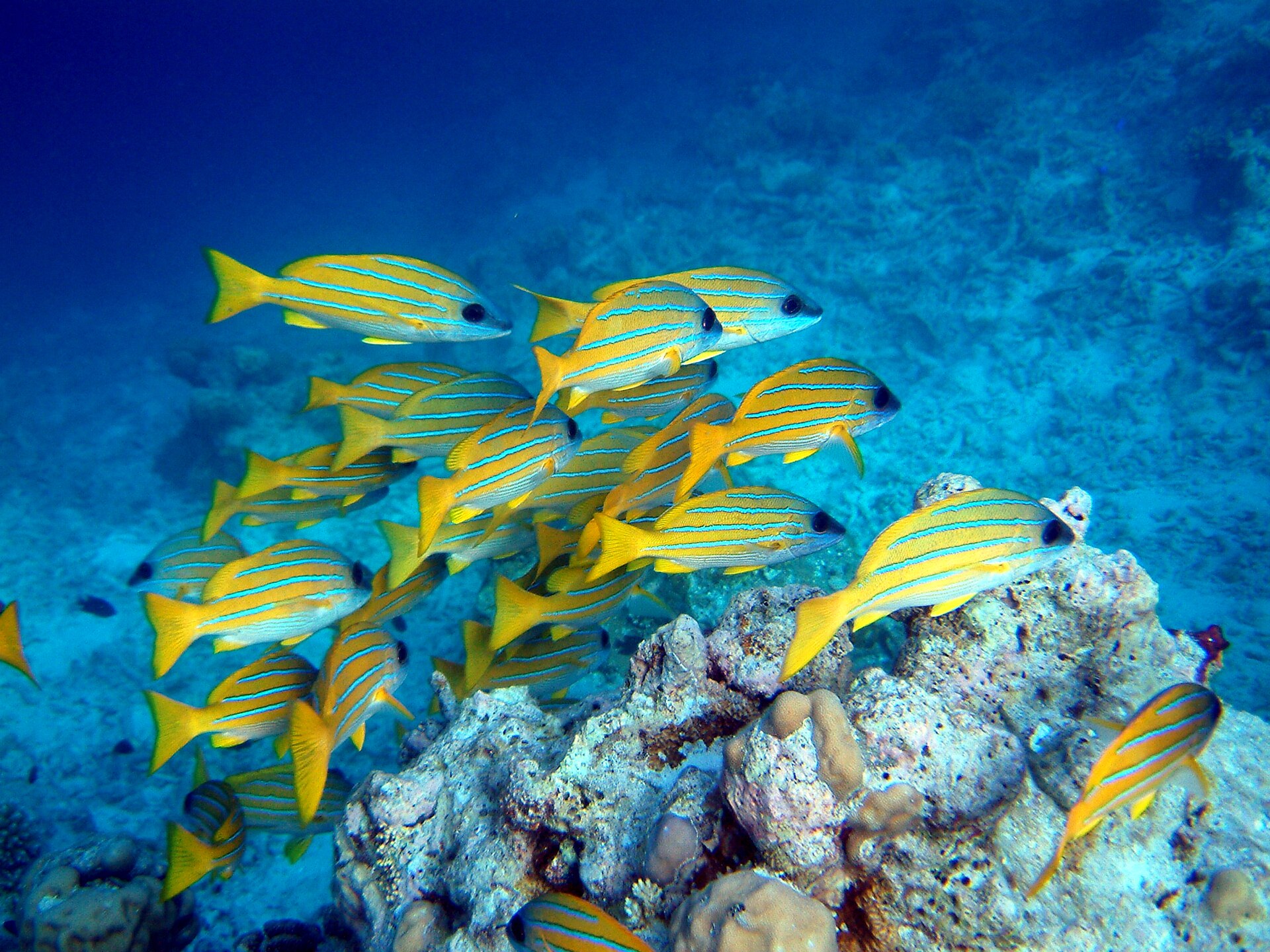
Fish Head owes its reputation to gray reef sharks. Ten to twenty of them, mostly females, hold the upcurrent point of the plateau, and counts top thirty on good days. Whitetips rest under the overhangs and on the sand at the foot of the thila, and eagle rays cruise by in the blue. Above the plateau, chevron barracudas and trevallies hang in the flow, while bluestripe snappers form tight schools against the overhangs. One or two big resident Napoleon wrasse come right up to divers. In the cavities, glassfish move in clouds among feather stars and black coral trees, and hawksbill turtles graze on the top.
| Species | J | F | M | A | M | J | J | A | S | O | N | D | Note |
|---|---|---|---|---|---|---|---|---|---|---|---|---|---|
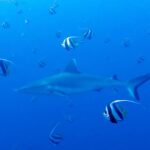 Gray reef shark | peak season | peak season | peak season | peak season | peak season | peak season | peak season | peak season | peak season | peak season | peak season | peak season | 10 to 20 sharks, sometimes more than 30, at the point facing the current; mostly females |
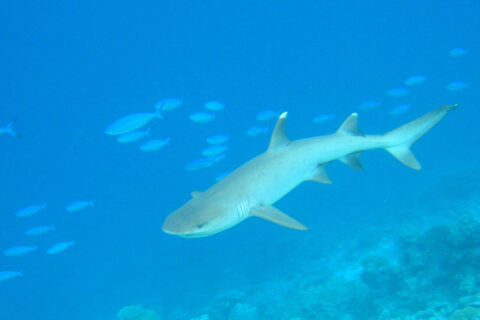
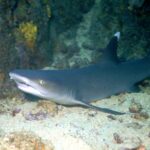 Whitetip reef shark | peak season | peak season | peak season | peak season | peak season | peak season | peak season | peak season | peak season | peak season | peak season | peak season | under the overhangs and on the sand at the foot of the thila |
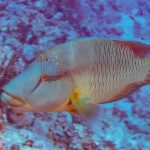 Napoleon wrasse | peak season | peak season | peak season | peak season | peak season | peak season | peak season | peak season | peak season | peak season | peak season | peak season | one or two big residents, curious about divers |
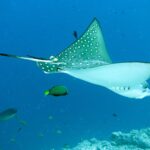 Spotted eagle ray | possible | possible | possible | possible | possible | possible | possible | possible | possible | possible | possible | possible | passing by in the blue |
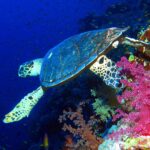 Hawksbill turtle | possible | possible | possible | possible | possible | possible | possible | possible | possible | possible | possible | possible | on the plateau |
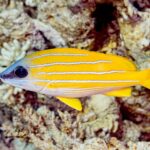 Bluestripe snapper | peak season | peak season | peak season | peak season | peak season | peak season | peak season | peak season | peak season | peak season | peak season | peak season | in tight schools against the overhangs |
| Chevron barracudas and trevallies | peak season | peak season | peak season | peak season | peak season | peak season | peak season | peak season | peak season | peak season | peak season | peak season | schooling above the plateau, in the current |
 Glassfish | peak season | peak season | peak season | peak season | peak season | peak season | peak season | peak season | peak season | peak season | peak season | peak season | in clouds in the cavities, with feather stars and black coral |
peak seasonpossiblerare
What is diving like at Fish Head?
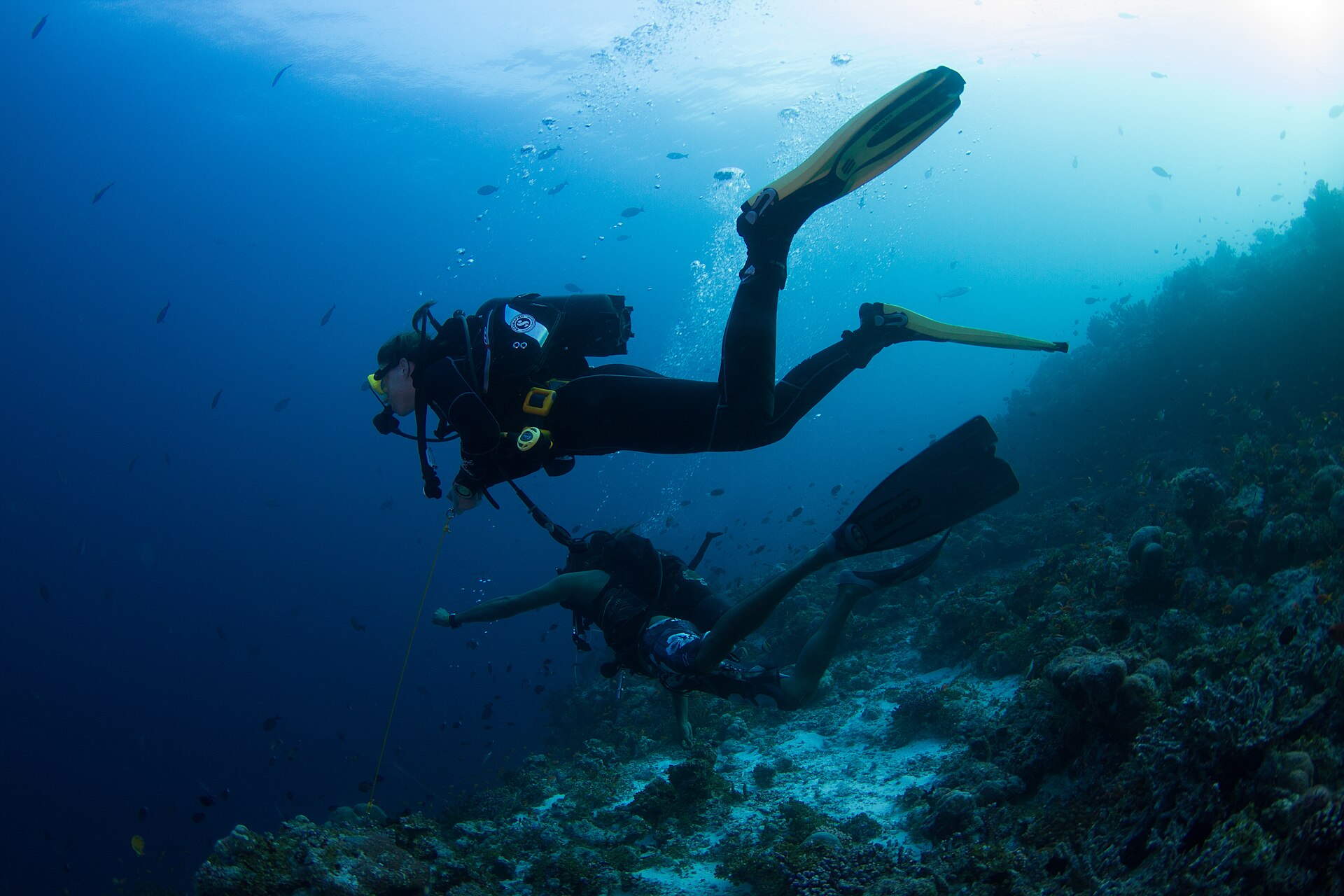
The reef is an oval block about a hundred meters long, sitting just inside North Ari Atoll in front of a large channel. Its top plateau lies between 8 and 15 meters, and its four sides drop steeply to the sand at 40 or 50 meters; the dive stays between 15 and 30 meters, the legal limit. Tidal current is the rule, moderate to powerful, sometimes over two knots, with downcurrents on the outer edges. You descend fast along the sheltered side, settle at the edge of the plateau and ascend in the blue under a surface marker buoy. Visibility ranges from 15 to 30 meters, up to 40 from November to April. Advanced Open Water is required, along with real comfort in current.
When to dive Fish Head?
idealgoodnot recommended
You can dive the thila all year, and the gray reef sharks are resident. The northeast season, from December to April, brings the calmest seas and the best visibility, 30 to 40 meters between November and April; it is peak liveaboard season in Ari. From May to November, the southwest wind raises a swell, plankton brings visibility down to 15 to 25 meters and tidal currents get stronger in the channels. Dives become more demanding, but no less rich. Surface water is 28 °C from December to February and 30 °C in April, and cold upwellings drop to 26 °C at the foot of the thila.
How to get to Fish Head?
Fish Head is in North Ari Atoll, off the local islands and resort islands in the center of the atoll. It is first of all a liveaboard site: out of Malé, the seven-night boats on the "Best of Maldives" route schedule it with Maaya Thila and Kuda Rah Thila. With Emperor, the week costs €2,032 to €3,680 in 2026 depending on the boat, and €2,390 to €2,690 on the Emperor Voyager with Nitrox, the environmental tax and port fees included. Advanced certification and experience in current are required. Dive centers on the resort islands and local islands of North Ari also go there on day trips by boat, when the tide is right. Entry to the protected site is free, and the operator books the slot with the EPA. Allow two to two and a half hours by public speedboat between Malé and Rasdhoo, the gateway to North Ari.
Stay in Malé
Where to find a dive guide in Fish Head?
Guided tours you can book online, ranked by number of reviews. These are affiliate links: if you book, you support us at no extra cost.

 Viator
Small Group Diving experience in Caribbean
5.0 (165 reviews)View and book Viator
2 Tank (1 Day) Guided Diving for Certified Divers - Denarau Marina
4.8 (24 reviews)View and bookWhere to stay near Fish Head?
Hotels, apartments and rooms around Malé, with current prices.
What is Fish Head (Mushimasmingili Thila)?
The Maldivian name is Mushimasmingili Thila; divers have called it Fish Head since the first Ari liveaboards put it on their itinerary. It is a big, isolated oval reef, about a hundred meters long, rising from the atoll's sandy floor at 40 or 50 meters to a plateau between 8 and 15 meters. It sits just inside North Ari Atoll, in front of a large channel: on every incoming tide, the ocean current hits it head-on and pushes plankton, fusiliers and trevallies onto it. The sides are cut with overhangs and cavities where black coral trees grow and clouds of glassfish shelter. In 1995 the government listed it among the country's first fifteen protected dive sites, over 269 hectares.
How many gray reef sharks can you see at Fish Head?
The upcurrent plateau, the one that takes the current, is where the gray reef sharks sit: ten to twenty on a normal day, mostly females, and some days more than thirty. They hold the point of the thila between 15 and 25 meters, swim slowly into the flow and let you come close if you stay anchored at the edge of the plateau without moving toward them. Whitetips, which are smaller, rest under the overhangs and on the sand at the foot of the reef. There is no feeding: the sharks are there for the current and the schools, and that has been the value of the site for thirty years. Since 2010, every shark in the Maldives has been protected by a total ban on catching them.
What else can you see at Fish Head, overhang after overhang?
After the sharks, the dive follows the side of the thila with the current. Bluestripe snappers form tight schools against the overhangs, where feather stars cling to the black coral; glassfish fill the cavities and move as one cloud when trevallies come close. A big Napoleon wrasse, sometimes two, stays with divers from start to finish. Above the plateau, chevron barracudas and trevallies hang still in the flow. Eagle rays and hawksbill turtles pass over the top, where you finish the dive before lifting off into the blue for the safety stop.
How do you dive the current at Fish Head?
Fish Head is dived on the incoming current, when ocean water flows through the channel and hits the thila: that is when the sharks are at the point. The flow can top two knots and comes with downcurrents on the outer edges of the reef. The method is the same as on every thila: an upcurrent entry, a fast descent along the sheltered side, a fixed position at the edge of the plateau at 15 or 20 meters, then a drift along the side and an ascent in open water under a surface marker buoy, away from the reef. Stay above 30 meters, the legal limit in the Maldives, do not enter the cavities and do not hold on to the coral.
Our tip
Dive when the tide pushes the current into the atoll: the sharks then hold the point that takes it. Settle at the edge of the plateau at 15 or 20 meters and stay still. Ascend in open water, under your surface marker buoy.
Other dive sites nearby
 MaldivesReef
Maaya Thila
Ari and Rasdhoo atolls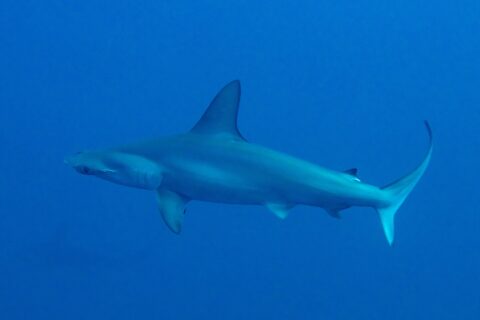 MaldivesPelagic
Rasdhoo Madivaru
Ari and Rasdhoo atolls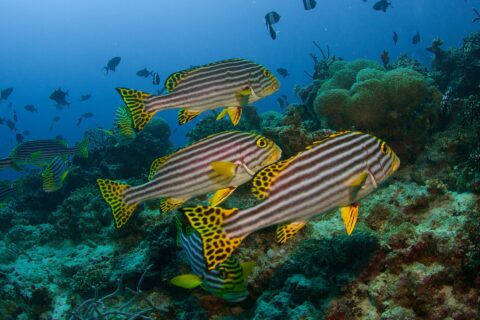 MaldivesReef