 France
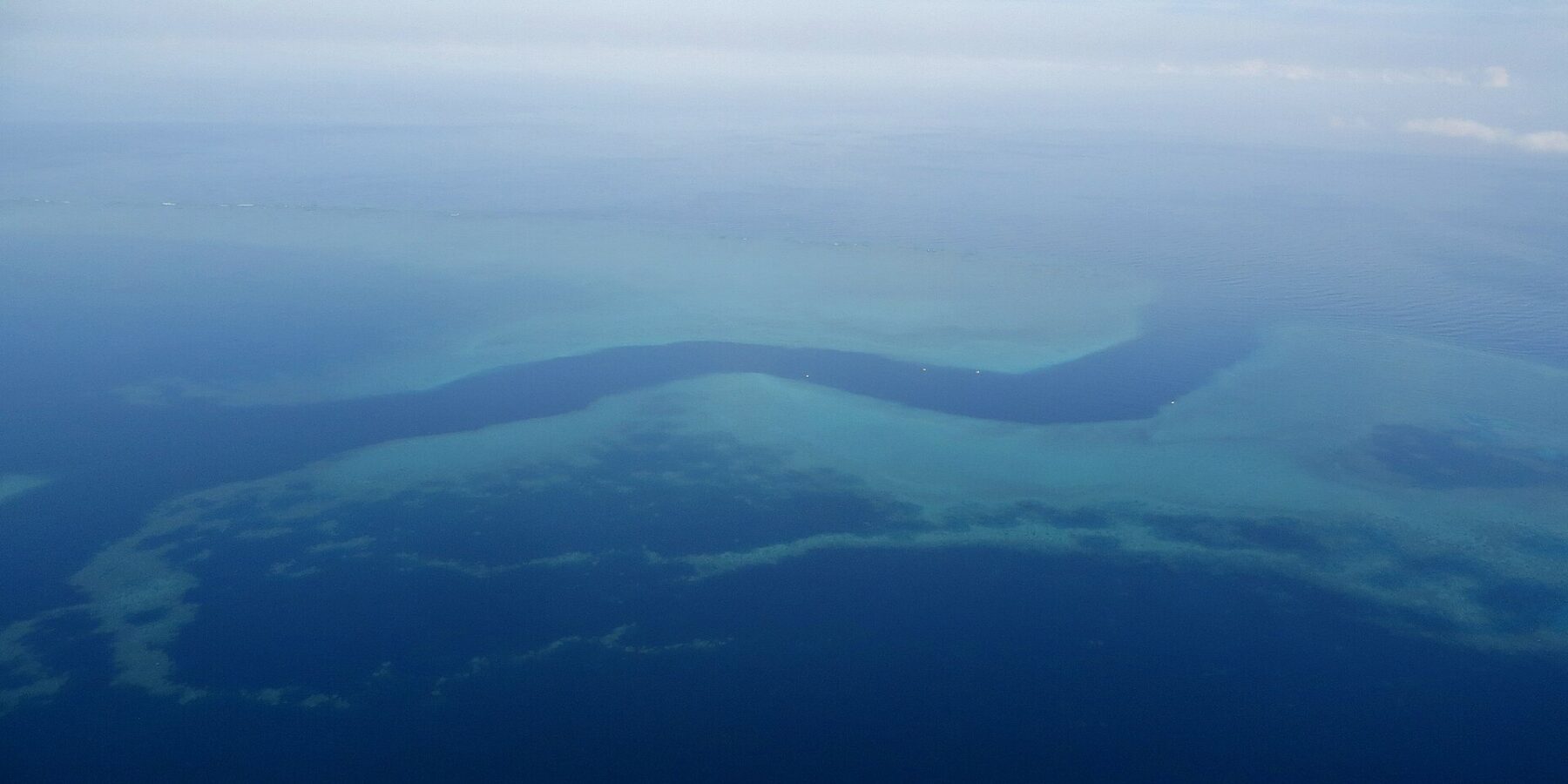
The S Pass, an old riverbed, cuts 2 to 4 km through Mayotte's eastern barrier reef, inside the Marine Nature Park. More than twenty buoyed sites range from coral heads for try dives to spring-tide drifts, with turtles, groupers, bumphead parrotfish and gray reef sharks.
Why dive the S Pass?
- An old riverbed 2 to 4 km long that cuts through the eastern barrier reef, down to 60 m and more
- A no-take fishing reserve since 1990, inside the Mayotte Marine Nature Park
- More than twenty buoyed sites, from coral heads for try dives to spring-tide drift dives
- Turtles at buoy 2, big groupers at buoys 4 and 5, bumphead parrotfish and gray reef sharks around buoy 9
The S Pass in pictures
What will you see at the S Pass?
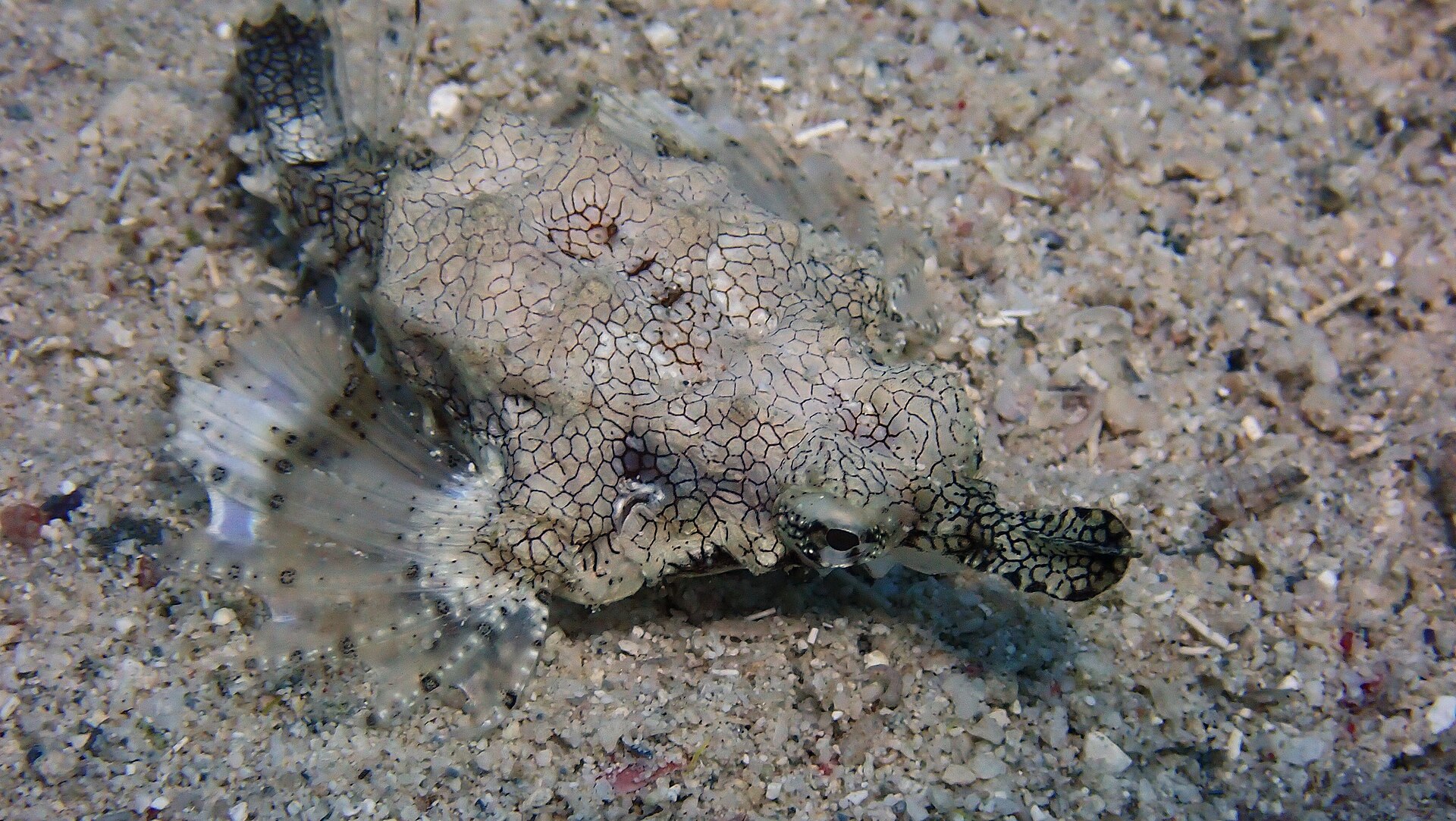
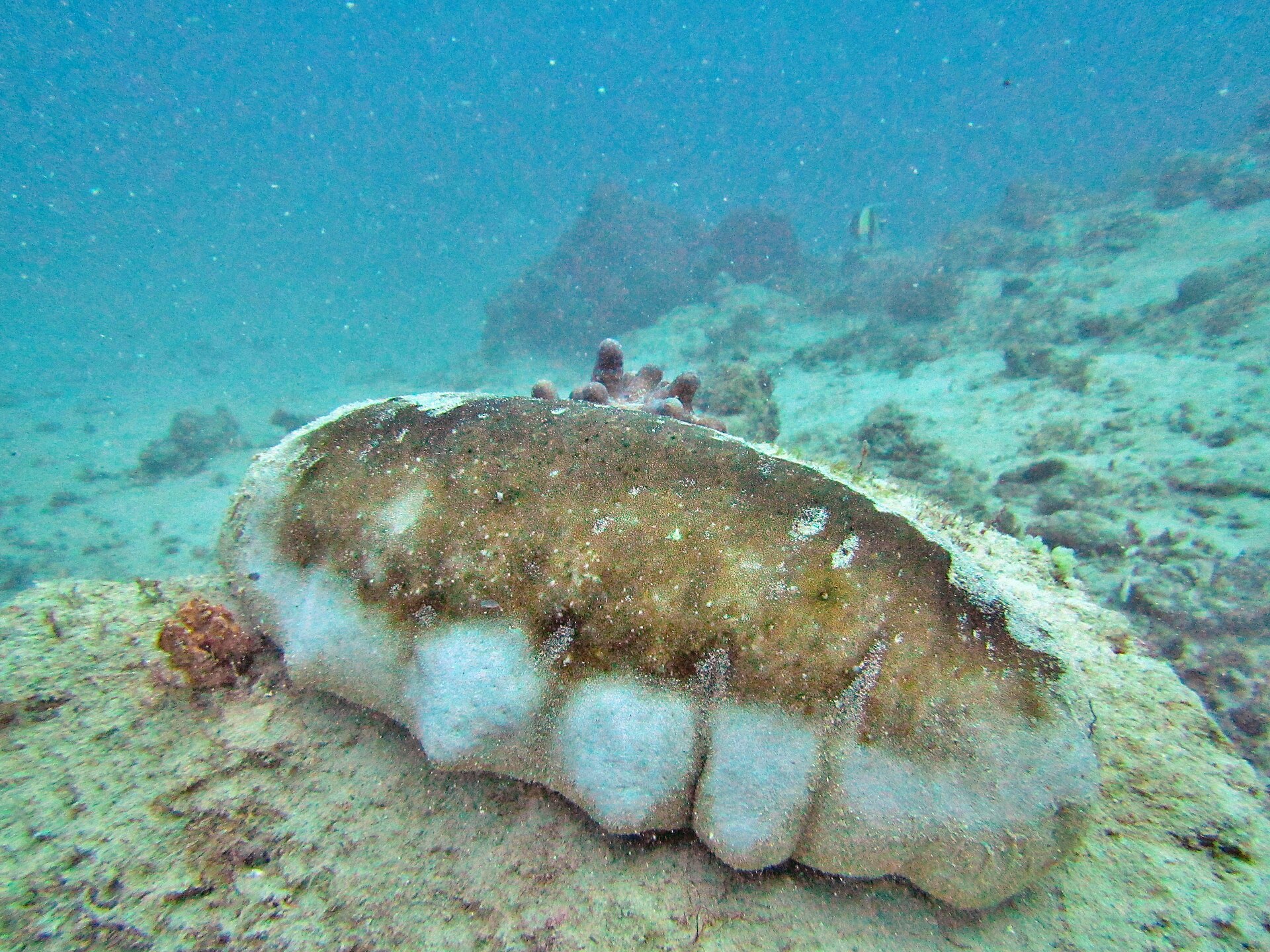
The pass has been a no-take fishing reserve since 1990, and the fish show it. Dives are named after buoy numbers, and each one has its residents. Buoy 2 holds a very large concentration of green turtles, and the hawksbill turtle, resident in the lagoon, also shows up on the walls. Big groupers hold buoys 4 and 5. Bumphead parrotfish pass at buoy 9, and gray reef sharks a little further on. Napoleon wrasse, large rays and, very rarely, the dugong round out the list. On the sand and the coral heads, small critters fill the rest of the dive: nudibranchs, leaf scorpionfish, flatworms, seamoths, sea cucumbers and thorny oysters. The walls carry corals and gorgonians. From July to October, humpback whales come to calve in the lagoon and you see them on the boat rides.
| Species | J | F | M | A | M | J | J | A | S | O | N | D | Note |
|---|---|---|---|---|---|---|---|---|---|---|---|---|---|
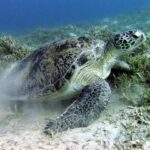 Green turtle | peak season | peak season | peak season | peak season | peak season | peak season | peak season | peak season | peak season | peak season | peak season | peak season | in large numbers at buoy 2 |
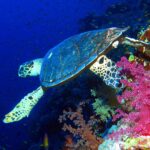 Hawksbill turtle | possible | possible | possible | possible | possible | possible | possible | possible | possible | possible | possible | possible | resident in the lagoon, on the coral walls |
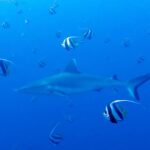 Gray reef shark | possible | possible | possible | possible | possible | possible | possible | possible | possible | possible | possible | possible | beyond buoy 9 |
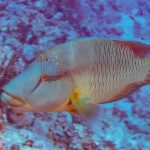 Napoleon wrasse | possible | possible | possible | possible | possible | possible | possible | possible | possible | possible | possible | possible | rare, along the walls |
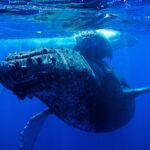 Humpback whale | rare | rare | rare | rare | rare | rare | peak season | peak season | peak season | peak season | rare | rare | in the lagoon, seen at the surface on the boat rides |
| Groupers | possible | possible | possible | possible | possible | possible | possible | possible | possible | possible | possible | possible | big ones at buoys 4 and 5 |
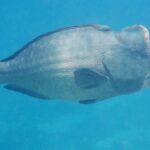 Bumphead parrotfish | possible | possible | possible | possible | possible | possible | possible | possible | possible | possible | possible | possible | around buoy 9 |
| Rays | possible | possible | possible | possible | possible | possible | possible | possible | possible | possible | possible | possible | large rays on the floor of the pass |
| Seamoth | possible | possible | possible | possible | possible | possible | possible | possible | possible | possible | possible | possible | on the sand, with nudibranchs and leaf scorpionfish |
| Dugong | possible | possible | possible | possible | possible | possible | possible | possible | possible | possible | possible | possible | very rare |
peak seasonpossiblerare
What is diving like at the S Pass?
The pass is a reversed S-shaped channel, 2 km long for the channel alone and 4 km with its approaches, 100 to 150 m wide, dropping from a few meters on the plateaus to 60 m, or even 65 to 70 m depending on the survey. The lagoon fills and empties through it with every tide: the current is weak at slack water and on the sheltered buoys, strong on spring tides, and boats pick their buoy based on wind and current. The plateaus and coral heads host try dives; drift dives, on a rising tide with a high coefficient, are open from Level 1, guided to 20 m; the deep walls require Level 2 or Advanced. The outer side of the pass was hit hard by Chido in December 2024, and no public assessment of the reef's condition in 2026 has been published.
When to dive the S Pass?
idealgoodnot recommended
Dive centers go out all year, but the pass is best from April to November, and above all in the dry season, from May to October. The water ranges from 29 to 30 °C from January to April down to an average of 26 °C in August; 24.6 °C was measured in August 2025 and in August 2026, so bring a 5 mm wetsuit in the austral winter. The rainy season, from November to April, brings storms and cyclone risk: Cyclone Chido hit the island on December 14, 2024. From July to October, humpback whales are in the lagoon, and the austral winter is also the most pleasant season on land. Drift dives are timed with big rising spring tides, whatever the month.
How to get to the S Pass?
Air Austral flies nonstop from Paris Charles de Gaulle to Dzaoudzi, about ten hours outbound, and Corsair also serves the island. The airport is on Petite-Terre, next to the Nyamba Club, the only dive center on Petite-Terre, open all year for more than twenty years, which leaves Faré beach every day at 7:30 a.m. and 1:30 p.m. by RIB and dives more than twenty sites in the pass. Its prices posted in October 2026: €65 for a guided dive with full gear, €60 for an independent dive with gear, €530 to €630 for ten, €80 for a try dive, €60 for the FFESSM license. In Mamoudzou, linked to Petite-Terre by the ferry, Nautilus Plongée posts €65 for a guided dive with gear and €140 to €170 for a two-dive day with a meal. French citizens only need an ID card, to be carried at all times during the stay.
Stay in Mamoudzou
Where to stay near the S Pass?
Hotels, apartments and rooms around Mamoudzou, with current prices.
How did an old riverbed become the S Pass in Mayotte?
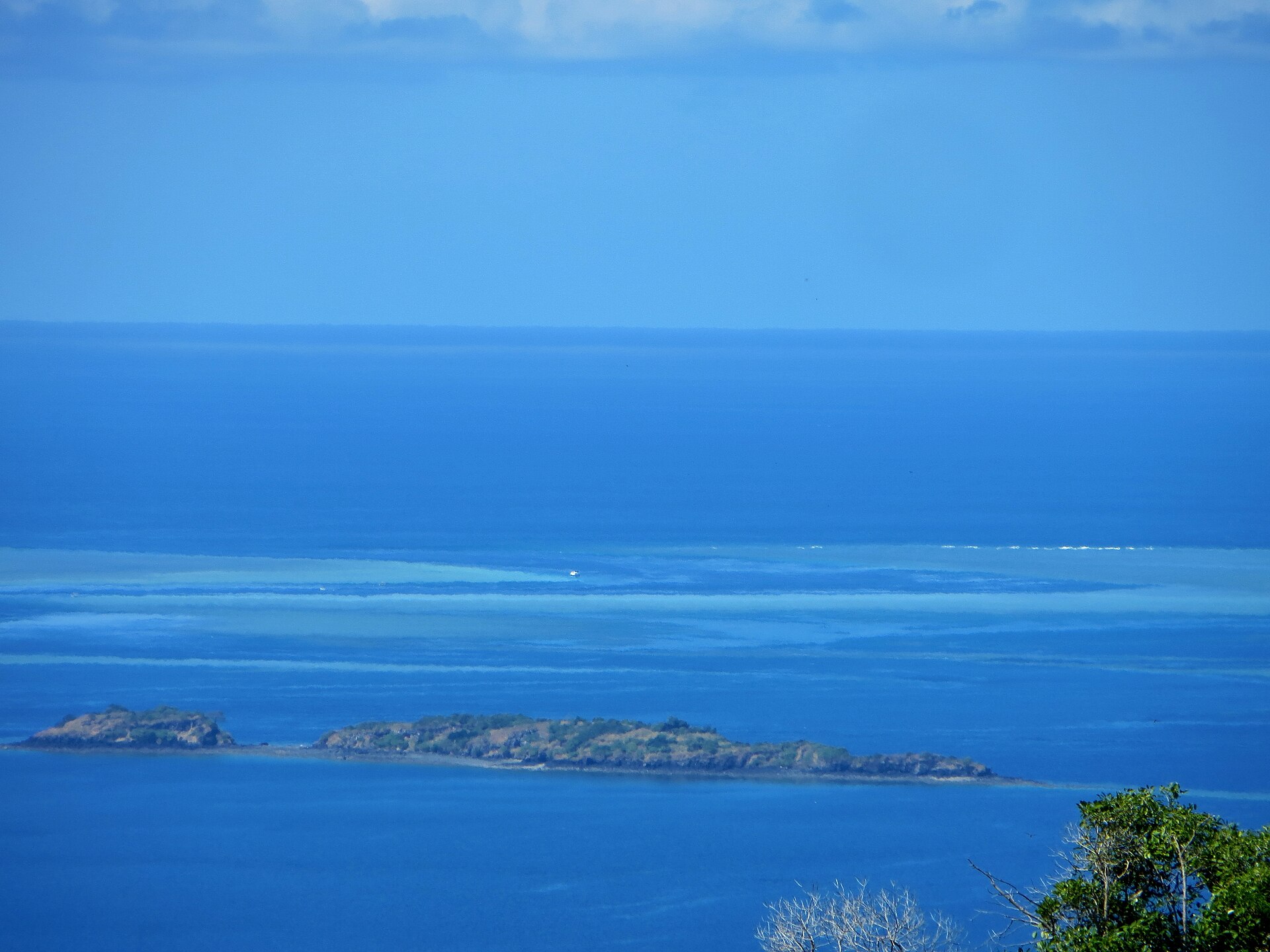
The S Pass, Longogori in Shimaore, is one of the twelve passes in Mayotte's outer barrier reef, 8 km from Mamoudzou and Petite-Terre. It is an old riverbed, carved when sea level was lower and the island reached out to the barrier reef. When the sea rose again, 7,000 to 3,000 years ago, the channel did not fill in: the lagoon still fills and empties through it with every tide. This 1,500 km² lagoon, ringed by a double barrier reef, has been part of the Mayotte Marine Nature Park since 2010, the first created in France's overseas territories, which records more than 2,300 marine species. The pass, a fishing reserve since 1990, is still exposed to poaching.
What are the dives like in the S Pass, buoy by buoy?
The pass has no site names, only buoy numbers, about twenty depending on the dive center. The coral heads and shallow plateaus are used for try dives and first dives. The walls drop away covered in corals and gorgonians, and you dive along the coral walls, across the pass or as a drift. The drift dive is done on a rising tide with a high coefficient: the current carries the group toward the lagoon and the boat follows. Night dives are possible with Nyamba, for a €15 surcharge. Four or five trips in the pass never look alike.
Can you dive Mayotte after Cyclone Chido?
Cyclone Chido hit Mayotte on December 14, 2024. The 9 m swell outside the barrier reef wrecked the most exposed reefs, including the outer side of the S Pass, after a 2024 in which El Niño had already wiped out 35% of the reefs. The bottom is now uneven, devastated in places and intact elsewhere, and the deep reefs held up better. Flights resumed on January 1, 2025 and dive centers are diving again, but lodging is still limited and most jetties have not been rebuilt: book your lodging and dive center before you fly. Protect yourself from mosquitoes and get medical advice before you leave.
Our tip
Ask the dive center for the tide times: slack water, when the current stops, suits the sheltered buoys, and a big rising spring tide suits the drift. Dive the pass several times, since each buoy gives a different dive.
Other dive sites nearby
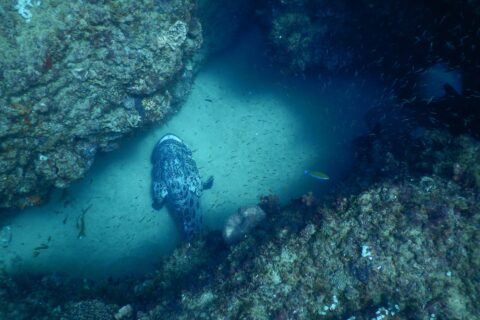
 TanzaniaPass
Kinasi Pass
Mafia Island TanzaniaPelagic
Mafia Island whale sharks
Mafia Island TanzaniaReef