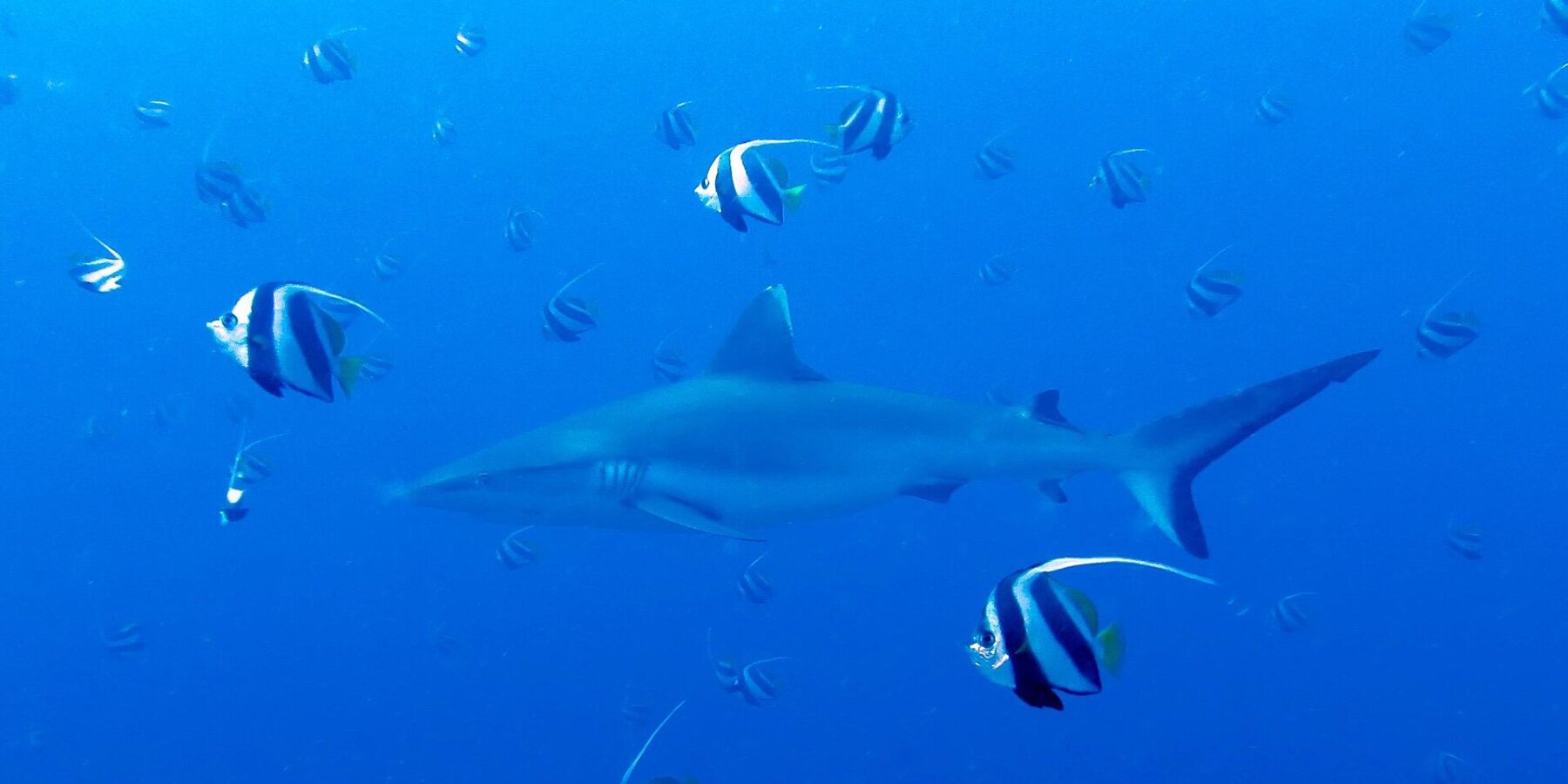
The gray reef shark patrols in groups at the edge of the plateaus, facing the current, and approaches divers who stay still. Fakarava South Pass, in French Polynesia, is home to hundreds, and even more in June and July. In the Maldives and the Red Sea, it is there in every season, at Fish Head as at the Brothers.
Where to dive to see the gray reef shark?
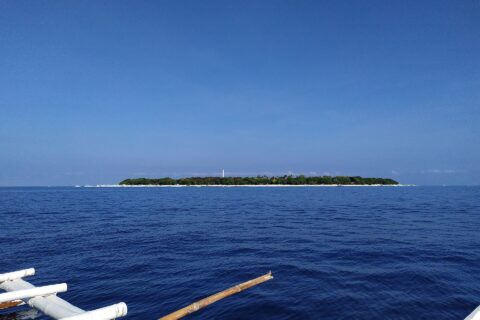
 PhilippinesReef
Balicasag Island
Visayas: Cebu, Bohol and NegrosCan be seen all year round: now and then, patrolling the deep water at the foot of the wall
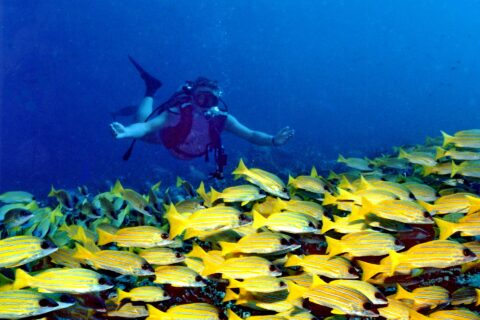
 MaldivesReef
Banana Reef
Malé atollsCan be seen all year round: passing by off the boulders of the northeast point
 IndonesiaReef
Batu Bolong
KomodoPeak season from April to November: on the deep corners of the rock, in the current, with whitetips resting in the crevices
 IndonesiaPelagic
Blue Magic
Raja AmpatPeak season from October to April: on the deep flanks, with whitetips and blacktips
 FrancePass
Boulari Pass (New Caledonia)
New CaledoniaPeak season from April to June: in the pass, more numerous from April to June
 EgyptPelagic
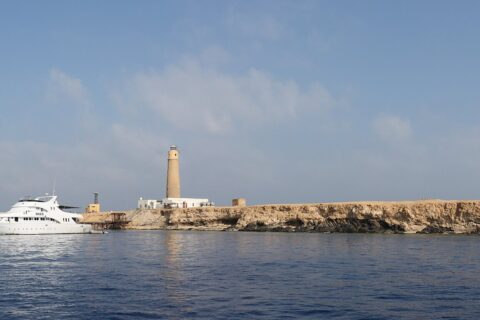
Brothers Islands
Southern Red Sea, EgyptPeak season all year round: on the north and south plateaus of Small Brother, almost guaranteed
 IndonesiaReef
Cape Kri
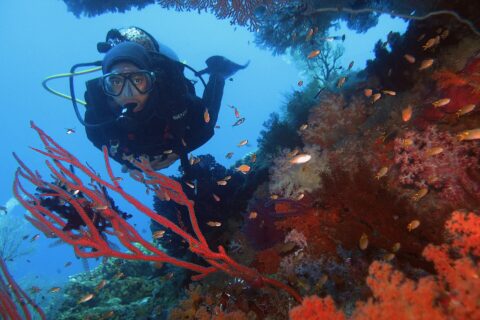
Raja AmpatPeak season from October to April: with whitetips and blacktips, hunting in the current at the point
 IndonesiaPelagic
Castle Rock
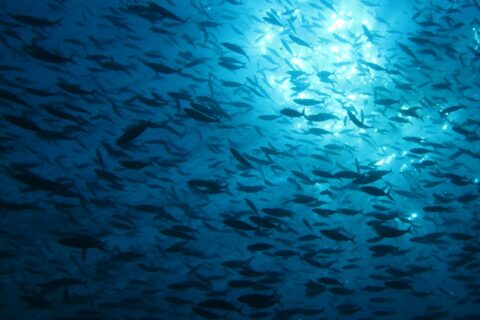
KomodoPeak season from April to November: 5 to 12 per dive on average, up to 20 from July to September, holding still in the current facing the pinnacle
 EgyptPelagic
Daedalus Reef
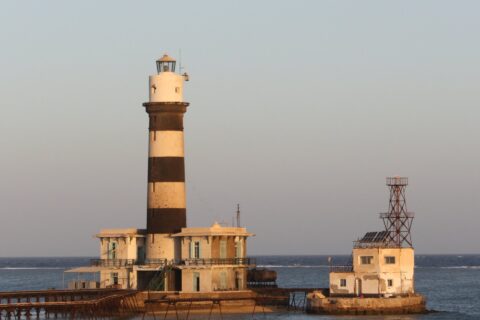
Southern Red Sea, EgyptPeak season all year round: along the edge of the plateaus, all year
 EgyptPelagic
Elphinstone Reef
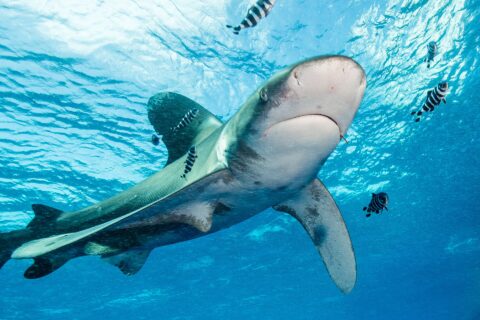
Southern Red Sea, EgyptCan be seen all year round: at the edge of the plateaus, in the current
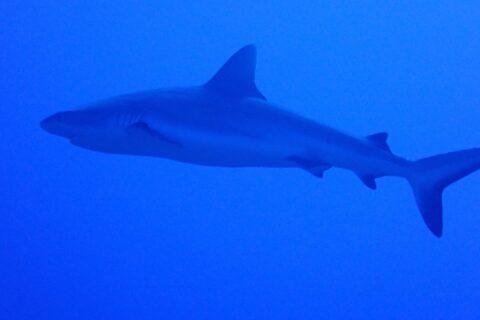 FrancePass
Fakarava South Pass (Tumakohua)
French PolynesiaPeak season all year round: 600 on average, up to 700, holding still in the current; peak during the grouper spawning
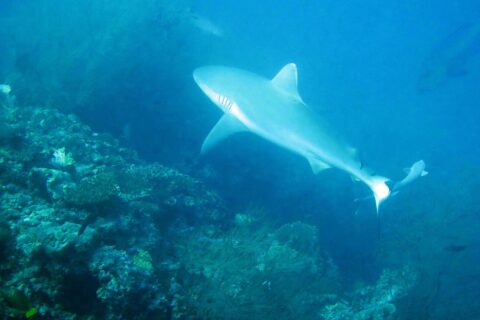 MaldivesReef
Fish Head (Mushimasmingili Thila)
Ari and Rasdhoo atollsPeak season all year round: 10 to 20 sharks, sometimes more than 30, at the point facing the current; mostly females
 TanzaniaPass
Fundu Gap
PembaCan be seen all year round: in the blue, at the corner of the channel, with no regularity
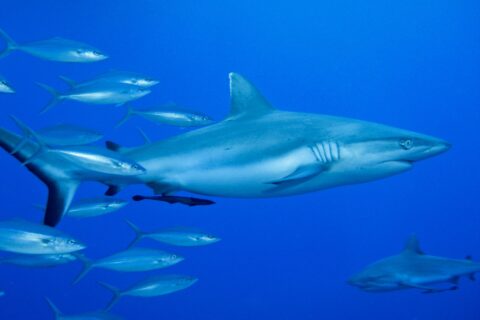 MaldivesPelagic
Kandooma Thila
Malé atollsPeak season all year round: hunting at Jack Corner; between the thila and the ocean on an incoming current, at the northeast cleaning station around 30 meters on an outgoing current
 TanzaniaPass
Kinasi Pass
Mafia IslandCan be seen all year round: in the blue of the pass, with the incoming current
 MaldivesReef
Kuda Rah Thila
Ari and Rasdhoo atollsPeak season all year round: at the edge of the block, facing the current
 MaldivesReef
Maaya Thila
Ari and Rasdhoo atollsPeak season all year round: five or six sharks at the edge of the plateau, facing the current
 IndonesiaPelagic
Magic Mountain (Misool)
Raja AmpatPeak season from October to April: with whitetips, in the upwelling along the peninsula
 MaldivesPelagic
Rasdhoo Madivaru
Ari and Rasdhoo atollsPeak season all year round: along the wall and in the channel
 FrancePass
S Pass (Mayotte)
French Indian Ocean: Réunion and MayotteCan be seen all year round: beyond buoy 9
 EgyptReef
Shark and Yolanda Reef, Ras Mohammed
Northern Red Sea, EgyptCan be seen all year round: in the blue off Shark Reef, never guaranteed, mostly in the fall
 EgyptCave or cenote
St. John's and Fury Shoals
Southern Red Sea, EgyptPeak season all year round: on the St. John's habilis, Habili Ali first and foremost
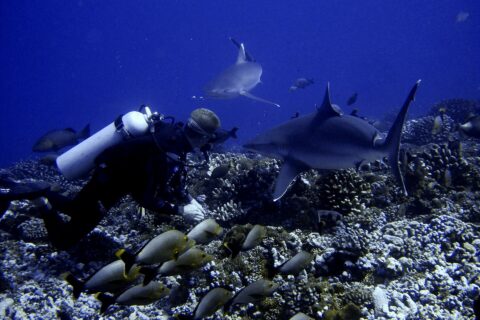 FrancePass
Tiputa Pass (Rangiroa)
French PolynesiaPeak season all year round: in schools all year between 20 and 40 m, gathering by the hundreds in the canyons in June
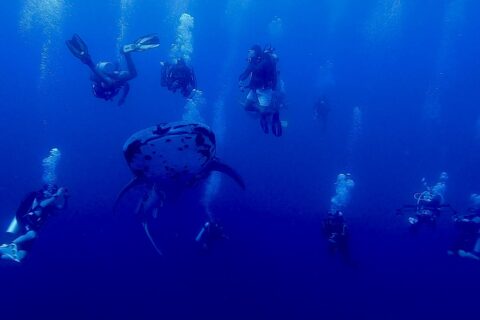 PhilippinesPelagic
Tubbataha Reef
PalawanPeak season from April to May: every day on the northern side of North Atoll, with whitetips and blacktips
How do you identify a gray reef shark?
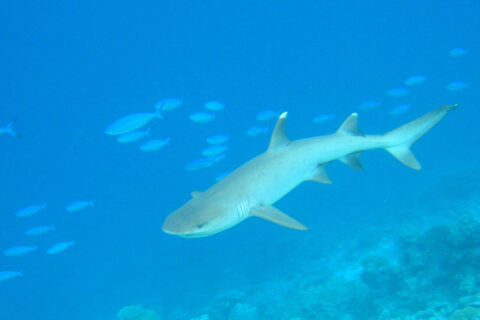
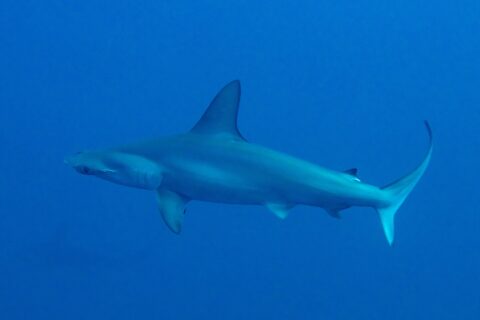
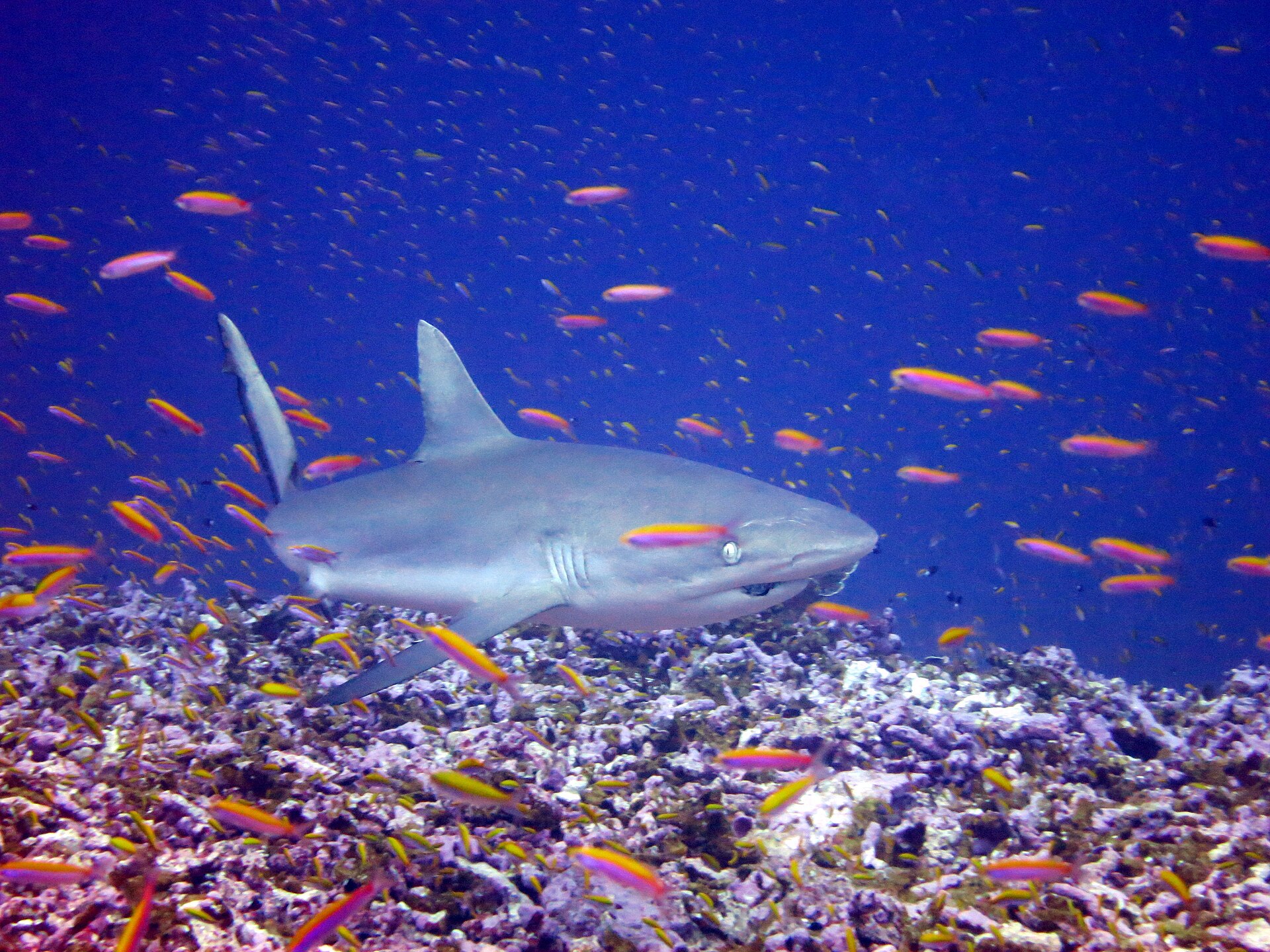
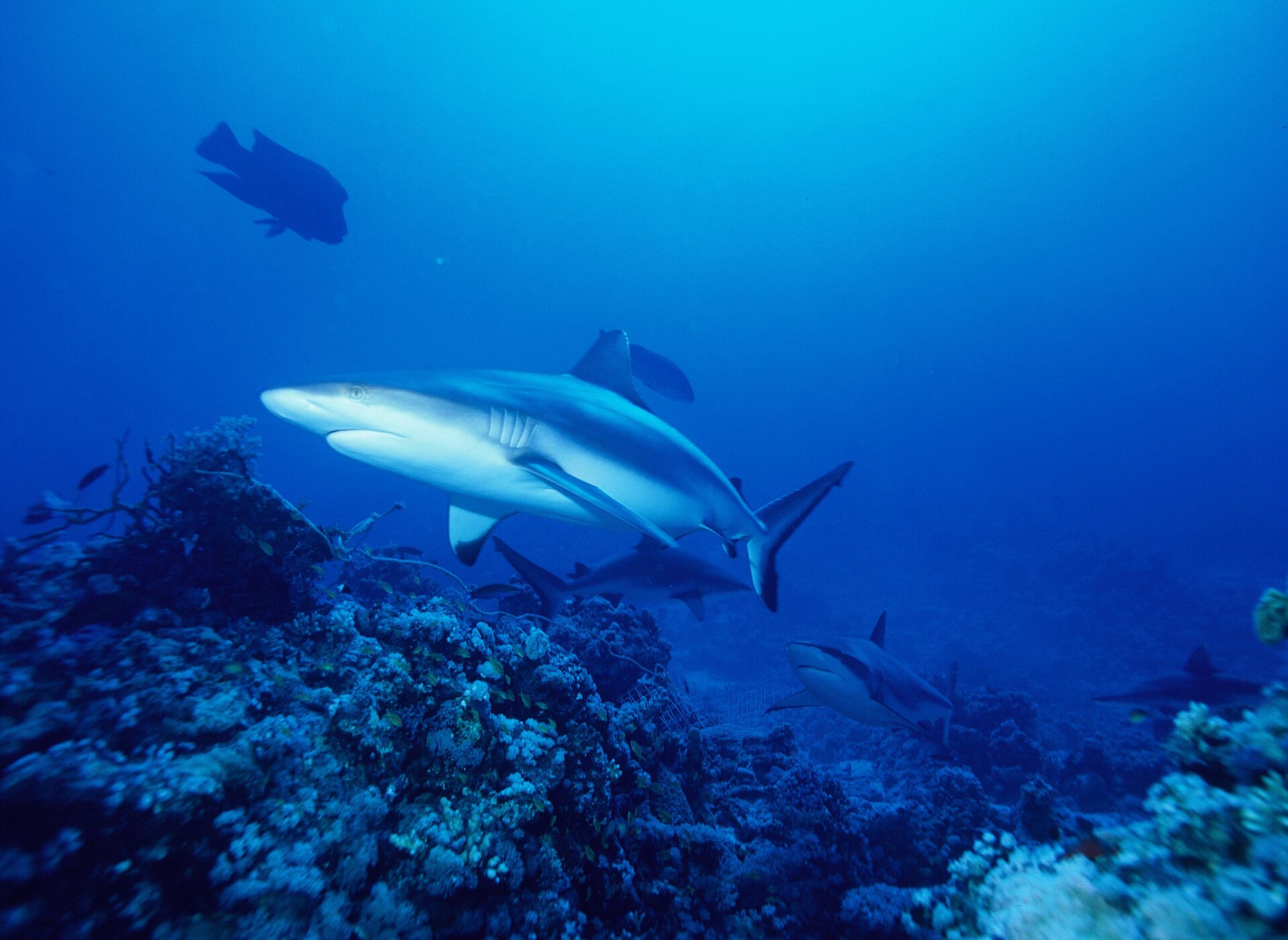
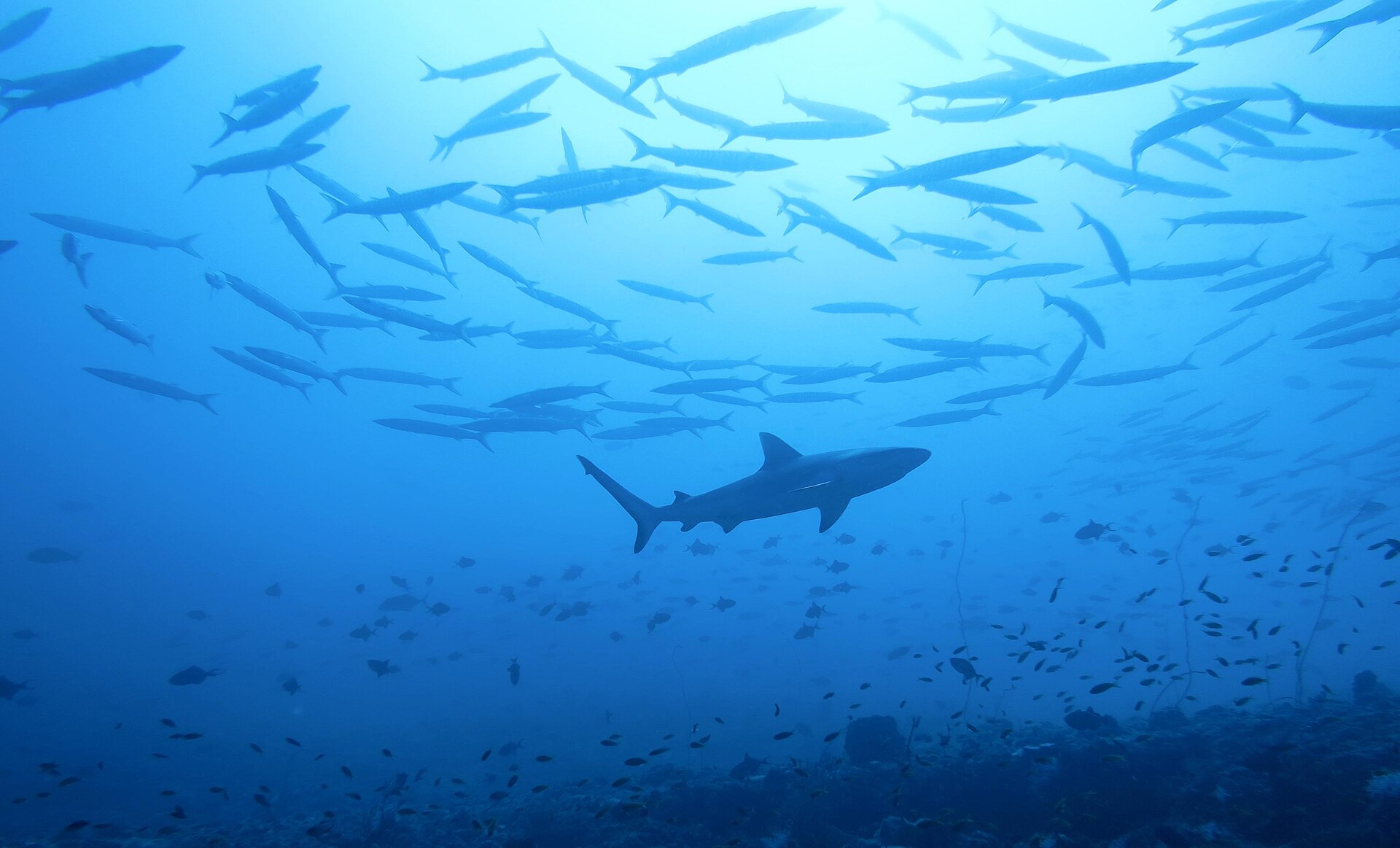
The gray reef shark, also known as the blacktail reef shark, has the classic look of a reef shark, with a broad, rounded snout and large eyes. Most individuals measure under 1.90 meters. Two details set it apart from its cousins: its first dorsal fin, white or tipped with white, while the other fins end in black, and above all the broad black edge along the rear of its tail fin. It has no ridge between the two dorsal fins.
Gray reef shark in pictures
How does the gray reef shark live?
It is one of the most common reef sharks in the Indo-Pacific, from Easter Island to South Africa, often met in shallow water near drop-offs. An agile, fast predator, it feeds mainly on bony fish and cephalopods, and its assertive behavior lets it dominate most other reef sharks despite its size. Several individuals take up residence at a specific spot on the reef, where they keep coming back; they are social rather than territorial animals. By day, they form groups of 5 to 20 near the reef edges, and they split up in the evening to hunt. The species is listed as Endangered.
Where and when can you see gray reef sharks?
In the Red Sea, the gray reef shark lives all year round on the offshore reefs of the south. At the Brothers, it is almost guaranteed on the north and south plateaus of Small Brother. You will also see it at the edge of the plateaus at Daedalus and on the pinnacles of St. John's, Habili Ali first among them. At Elphinstone, it only passes through. It shows up mostly in the morning, at the edge of the plateaus, in the current, between 20 and 40 meters.
In the Indian Ocean, in the Maldives, you will see it all year round. At Fish Head, there are 10 to 20 at the point, facing the current. In Indonesia, the season changes from one region to another. At Castle Rock, in Komodo, there are 5 to 12 per dive on average, holding still in the current in front of the pinnacle. Peak season runs from April to November, with up to 20 sharks from July to September. In Raja Ampat, peak season runs from October to April.
In the Pacific, in French Polynesia, Fakarava South Pass is home to 600 gray reef sharks on average, holding in the current, all year round. They are even more numerous during the grouper spawning, in June and July. At Tiputa, in Rangiroa, they gather by the hundreds in the canyons in June. To see the most, go to French Polynesia in June.
How should you behave around gray reef sharks?
It readily approaches divers settled at the edge of a plateau, and it is curious. It also has a famous threat display, when it feels cornered: arched back, lowered pectoral fins, stiff, jerky swimming. If you see it, back away slowly, facing the shark, without rushing and without blocking its way to open water. If you stay grouped and still, you will never see it.
Our tip
Stay at the edge of the plateau, grouped and still: it passes back and forth on its own. If it arches its back, lowers its pectoral fins and swims in jerks, that is a threat display: back away slowly, without turning your back on it.