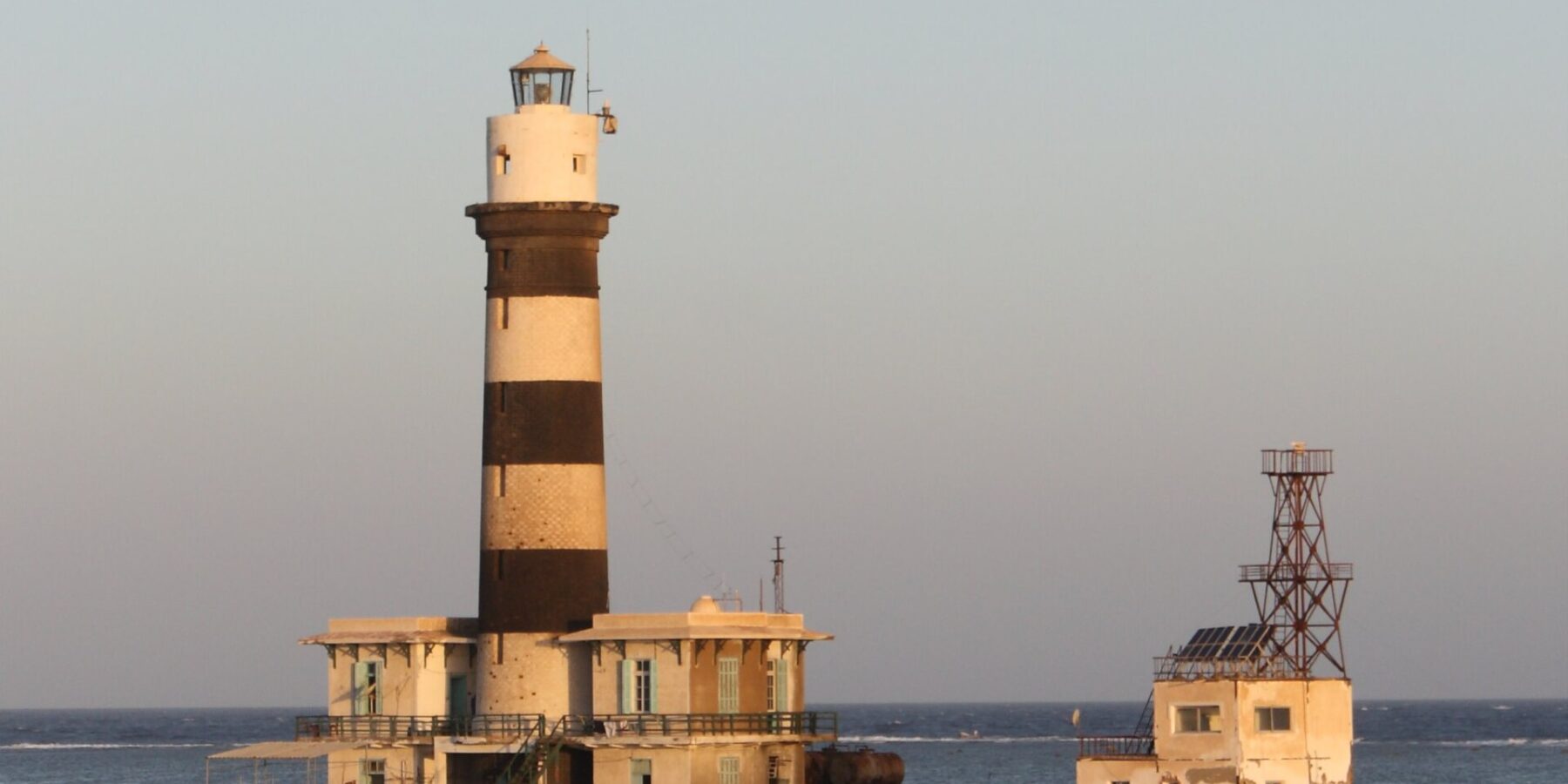
Daedalus Reef is an isolated reef in the middle of the Red Sea, 90 kilometers from Marsa Alam, rising from 550 meters deep to a lighthouse. Divers come for the schools of scalloped hammerheads from May to July, and for eight shark species in all. It is dived on liveaboards only.
Why dive Daedalus?
- Schools of scalloped hammerheads off the north point, from May to July
- Eight shark species recorded: hammerhead, oceanic whitetip, thresher, gray reef, silky, whitetip reef, silvertip, whale shark
- An isolated reef 90 kilometers offshore, rising from 550 meters deep, with a 1931 lighthouse on top
- Walls of soft corals and sea fans, and Anemone City on the south plateau
- Mantas in winter and spring, thresher sharks at dawn in the fall
The dive site on the map
Base: Port Ghalib, 140 km as the crow flies.
See nearby dive sites on the mapWhat will you see at Daedalus?
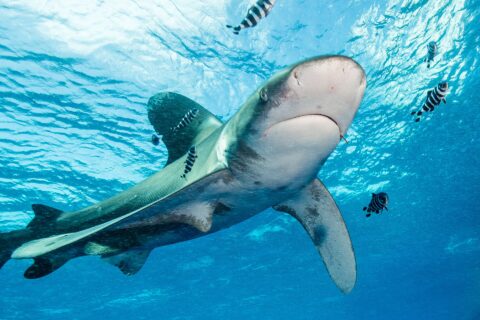
Daedalus is the shark reef. Eight species have been recorded here: the scalloped hammerhead, whose schools rise off the north point from May to July, the oceanic whitetip and the pelagic thresher in the fall, the gray reef shark all year along the edge of the plateaus, the silky shark, the whitetip reef shark, the silvertip and, very rarely, the whale shark. Manta rays pass over the plateaus, mostly in winter and spring. Tuna, trevallies and barracudas hunt in the blue; the walls hold soft corals, sea fans and anthias by the thousands, and the south plateau has Anemone City and its clownfish. The reef's isolation and the plankton-rich summer upwellings explain this density.
| Species | J | F | M | A | M | J | J | A | S | O | N | D | Note |
|---|---|---|---|---|---|---|---|---|---|---|---|---|---|
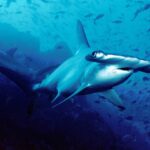 Scalloped hammerhead | rare | rare | rare | possible | peak season | peak season | peak season | possible | peak season | peak season | peak season | rare | schooling off the north point from May to July; closer to the surface from September to November |
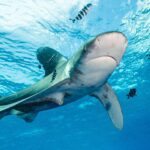 Oceanic whitetip shark | rare | rare | rare | rare | rare | rare | rare | possible | peak season | peak season | peak season | possible | under the moored boats, from September to November |
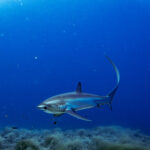 Pelagic thresher shark | rare | rare | rare | rare | rare | rare | rare | rare | peak season | peak season | peak season | rare | at dawn, along the walls, from September to November |
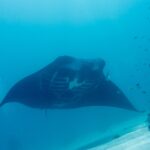 Reef manta ray | peak season | peak season | peak season | peak season | possible | rare | rare | rare | rare | rare | possible | peak season | more often in winter and spring, over the plateaus |
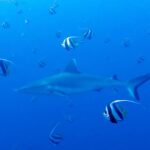 Gray reef shark | peak season | peak season | peak season | peak season | peak season | peak season | peak season | peak season | peak season | peak season | peak season | peak season | along the edge of the plateaus, all year |
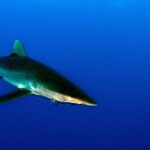 Silky shark | possible | possible | possible | possible | possible | possible | possible | possible | possible | possible | possible | possible | one of the eight species recorded on the reef |
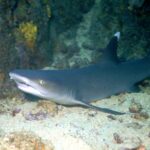 Whitetip reef shark | possible | possible | possible | possible | possible | possible | possible | possible | possible | possible | possible | possible | one of the eight species recorded on the reef |
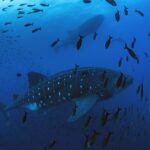 Whale shark | rare | rare | rare | rare | rare | rare | rare | rare | rare | rare | rare | rare | recorded on the reef, an exceptional encounter |
| Tuna | possible | possible | possible | possible | possible | possible | possible | possible | peak season | peak season | peak season | possible | hunting in the blue, off the points |
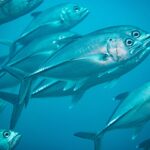 Bigeye trevally | possible | possible | possible | possible | possible | possible | possible | possible | peak season | peak season | peak season | possible | hunting in the blue, off the points |
| Barracudas | possible | possible | possible | possible | possible | possible | possible | possible | peak season | peak season | peak season | possible | hunting in the blue, off the points |
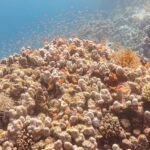 Scalefin anthias | peak season | peak season | peak season | peak season | peak season | peak season | peak season | peak season | peak season | peak season | peak season | peak season | on the walls and at Anemone City |
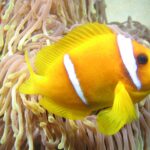 Clownfish | peak season | peak season | peak season | peak season | peak season | peak season | peak season | peak season | peak season | peak season | peak season | peak season | on the walls and at Anemone City |
peak seasonpossiblerare
What is diving like at Daedalus?
The reef measures a little over a kilometer by three hundred meters, and its walls drop on every side into several hundred meters of water. You dive from a zodiac, drifting along the east or west wall, or waiting at the edge of the north plateau, between 25 and 40 meters, facing the blue. The current is strong and shifts with the tide and the wind; you ascend away from the reef under a DSMB, an inflatable buoy that marks the divers, before the zodiac picks you up. Boats require Advanced Open Water and fifty logged dives, and the site calls for real comfort with drift and blue-water diving. No night dives.
When to dive Daedalus?
idealgoodnot recommended
Liveaboards run from March to November; in midwinter, the wind makes the crossing and anchoring difficult, and few boats take the risk. Each season has its animal: schooling hammerheads from May to July, then again from September to November, closer to the surface; oceanic whitetips and threshers from September to November; mantas in winter and spring. The water drops to 23°C in February and rises to 30°C in August; visibility, 25 to 40 meters, is among the best in the Red Sea.
How to get to Daedalus?
Daedalus lies 90 kilometers east of Marsa Alam, right in the middle of the Red Sea: only liveaboards go there. The classic week-long route, Brothers, Daedalus, Elphinstone, leaves from Port Ghalib, ten minutes from Marsa Alam airport, or from Hurghada, with a night's sailing between each reef. Expect €1,115 to €2,260 for the week without flights, depending on the boat and the season, sometimes plus a €255 fuel surcharge, or from €1,390 with flights and visa from French tour operators. About eighteen dives over seven nights, including two or three days at Daedalus.
Stay in Port Ghalib
Where to stay near Daedalus?
Hotels, apartments and rooms around Port Ghalib, with current prices.
Which hotels to choose near Daedalus?

Where is Daedalus Reef?
Abu Kizan, named Daedalus on British charts, is an isolated reef halfway between Egypt and Saudi Arabia, 90 kilometers from Marsa Alam. It rises from 550 meters deep and breaks the surface as a platform a kilometer long, where the British built a lighthouse in 1863; the current tower, lit in 1931, is still kept by a small Egyptian crew, and its metal jetty is where divers stop between dives. From the top of the lighthouse, you see the whole reef, the liveaboards on their moorings and, on clear days, the shadows of schools beneath the surface.
When can you see hammerheads at Daedalus Reef?
The north point is one of the few places in the Red Sea where you see scalloped hammerheads in schools. From May to July, they hold in the blue off the plateau, by the dozens, at 25 to 40 meters, and sometimes rise toward divers waiting still at the edge of the reef; from September to November, they show up closer to the surface. The rule never changes: arrive early, settle at the edge of the plateau without finning, watch the blue, and never chase. A study on the reef recorded eight shark species in a few weeks of surveys; few sites in the world offer as many.
What else can you see at Daedalus Reef?
Sharks aside, Daedalus is a superb reef. Its east and west walls, dived as drifts, are covered in soft corals, sea fans and anthias, with turtles and Napoleon wrasse passing by. On the south plateau, Anemone City lines up its anemones and clownfish in the shallows, for a calmer dive and photogenic safety stops. Mantas pass over the plateaus, mostly in winter and spring, and thresher sharks cruise the walls at dawn in the fall.
Can you dive Daedalus Reef without a liveaboard?
No day boat goes to Daedalus. You come on a liveaboard, on the week-long route that links the Brothers, Daedalus and Elphinstone from Port Ghalib or Hurghada, with a night's sailing between each reef and two or three days on site. Boats require Advanced and fifty dives, tie up to the moorings on the sheltered side and drop dive groups off by zodiac. The stop at the lighthouse, between two dives, is the only time all week you set foot on land.
Our tip
Come from May to July for the hammerheads and ask for the north point at dawn, when the schools rise in the blue. Stay at the edge of the plateau, at 25 or 30 meters, without swimming toward the sharks: they come to a group that keeps still.
Other dive sites nearby
 EgyptPelagic
Elphinstone Reef
Southern Red Sea, Egypt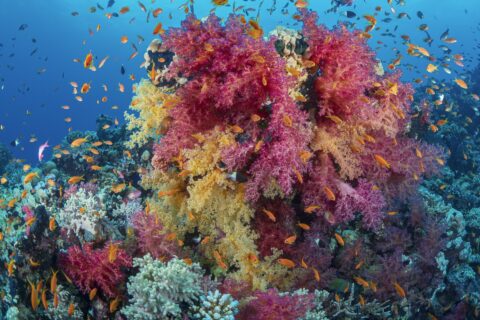 EgyptCave or cenote
St. John's and Fury Shoals
Southern Red Sea, Egypt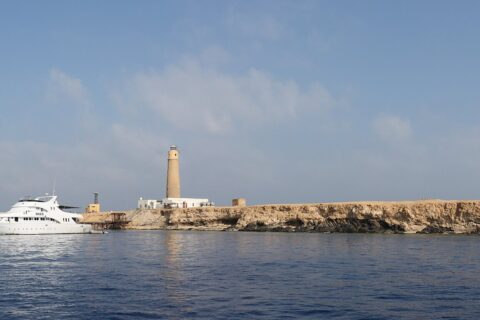 EgyptPelagic