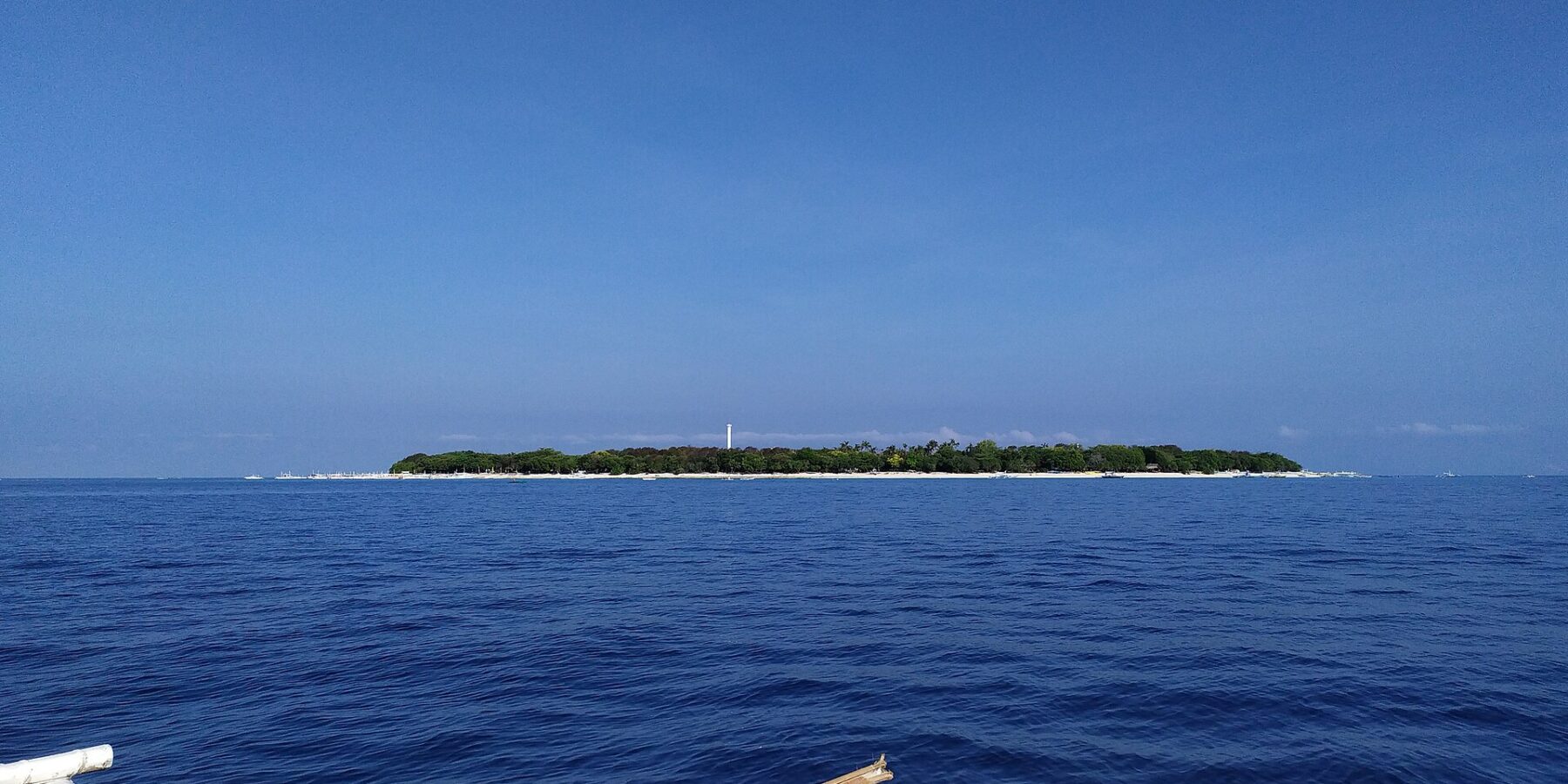
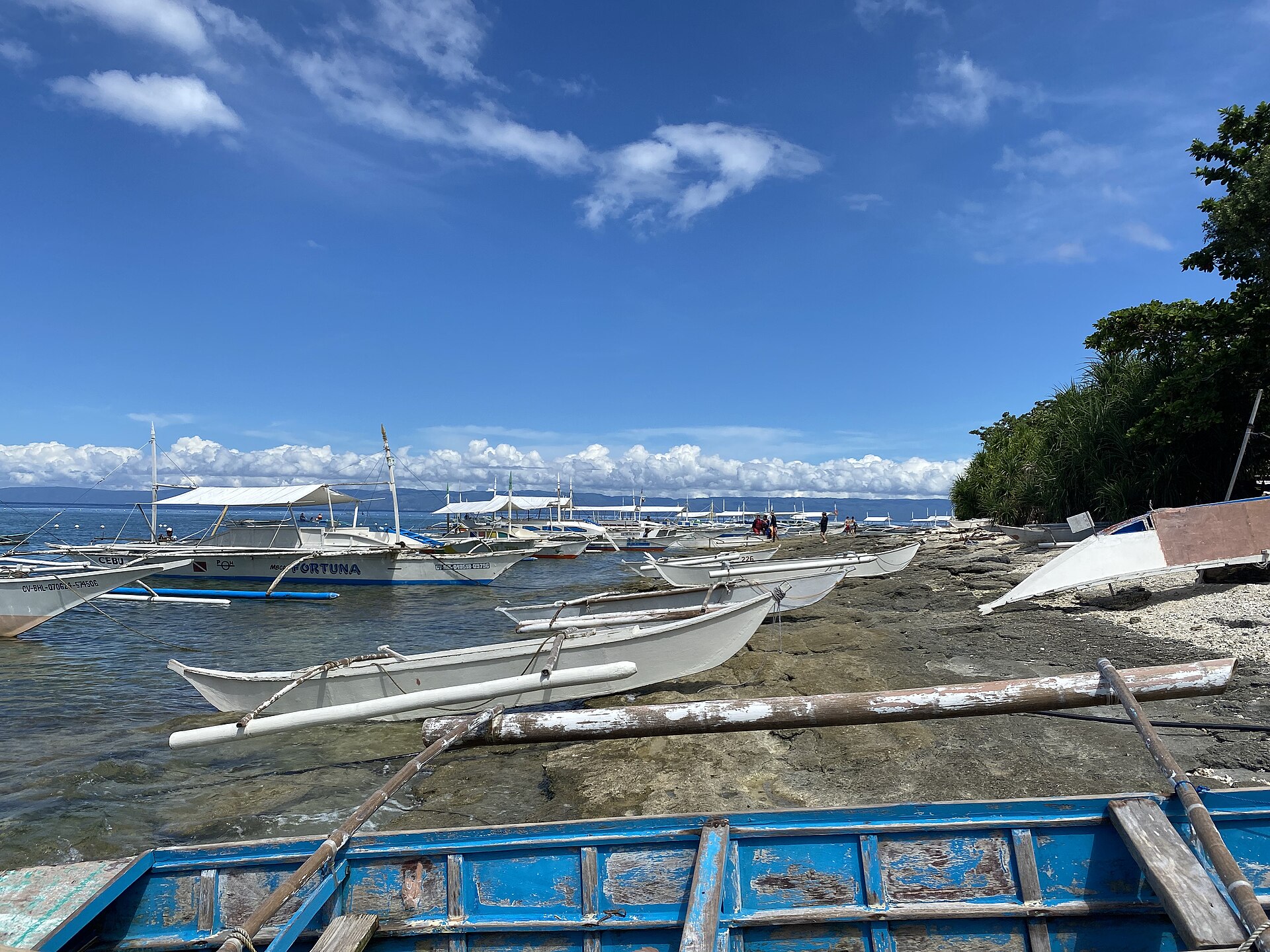
Balicasag is an islet ten kilometers from Panglao, in Bohol, ringed by a plateau from 5 to 18 m and then a wall, and protected since 1985. Turtles show up on almost every dive, and access is capped at 150 divers a day.
Why dive Balicasag Island?
- A plateau from 5 to 18 m all around the island, then the wall: a dive for every level
- Green and hawksbill turtles on almost every dive, too many for some divers' taste
- Schools of trevally and blackfin barracuda at Black Forest and Diver's Heaven
- A marine sanctuary since 1985, given the top management rating in 2008 by the CCEF, a Philippine coastal conservation foundation
- Visitor numbers capped at 150 divers a day, 35 minutes by boat from Panglao
Balicasag Island in pictures
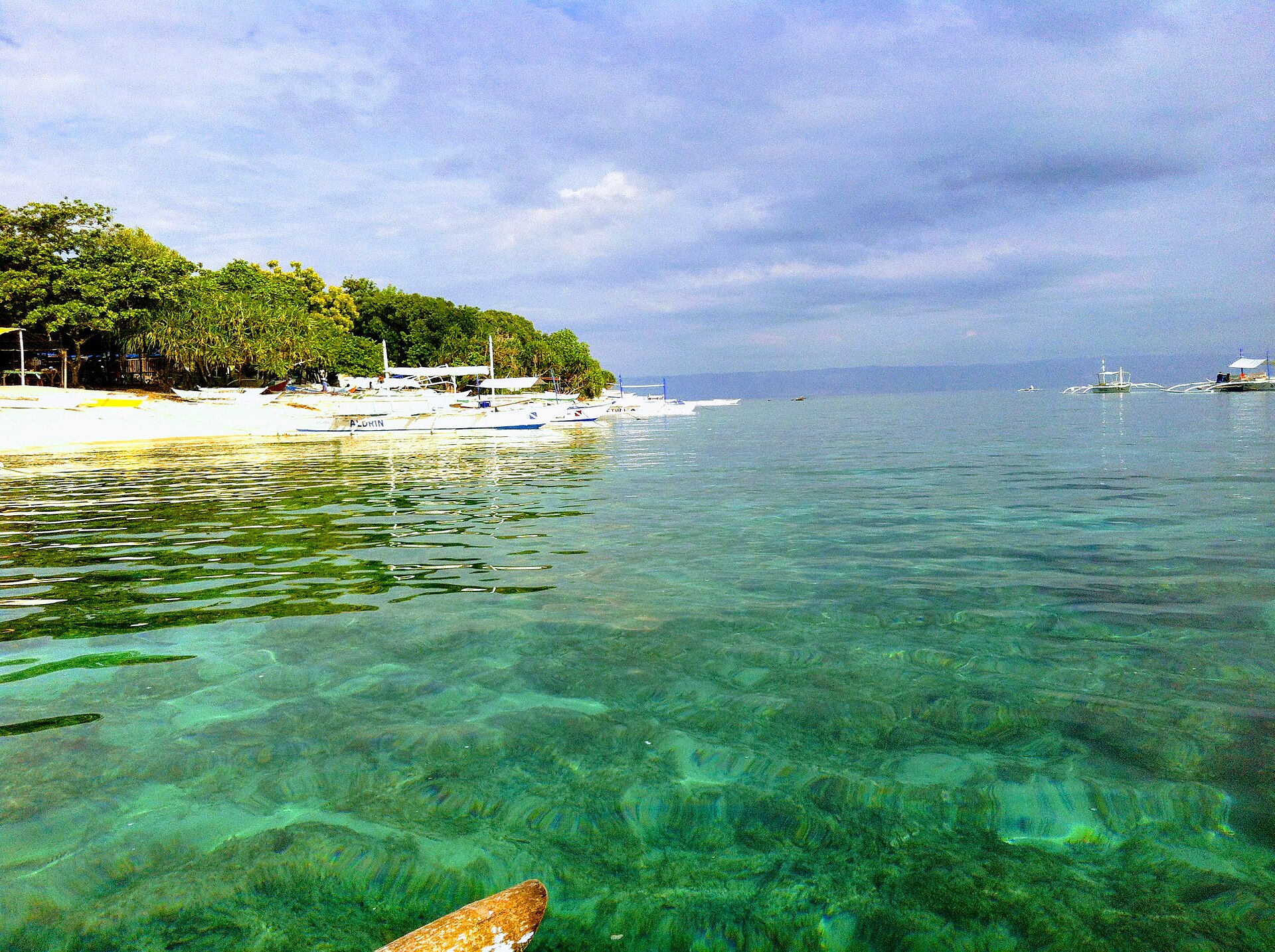
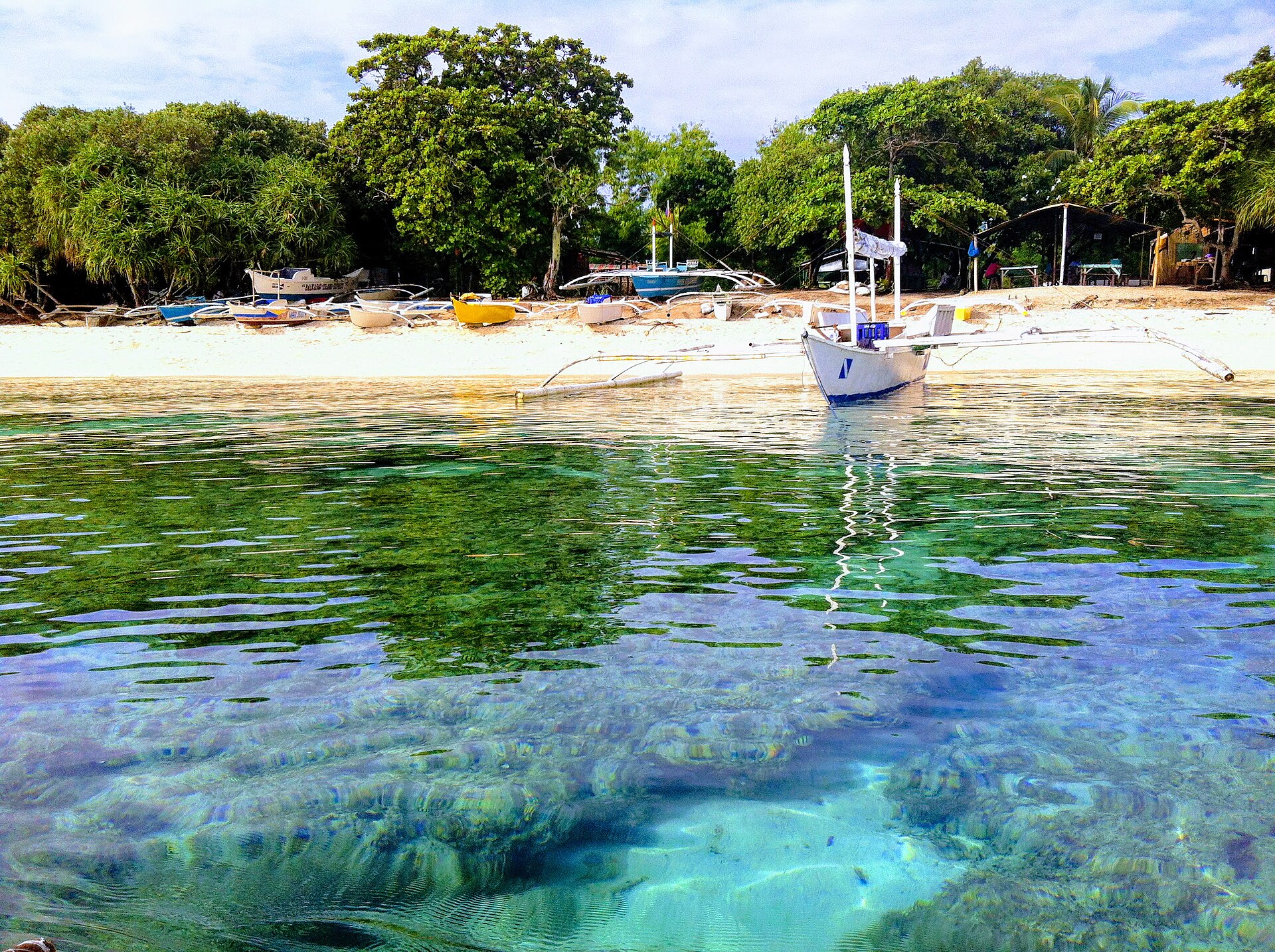
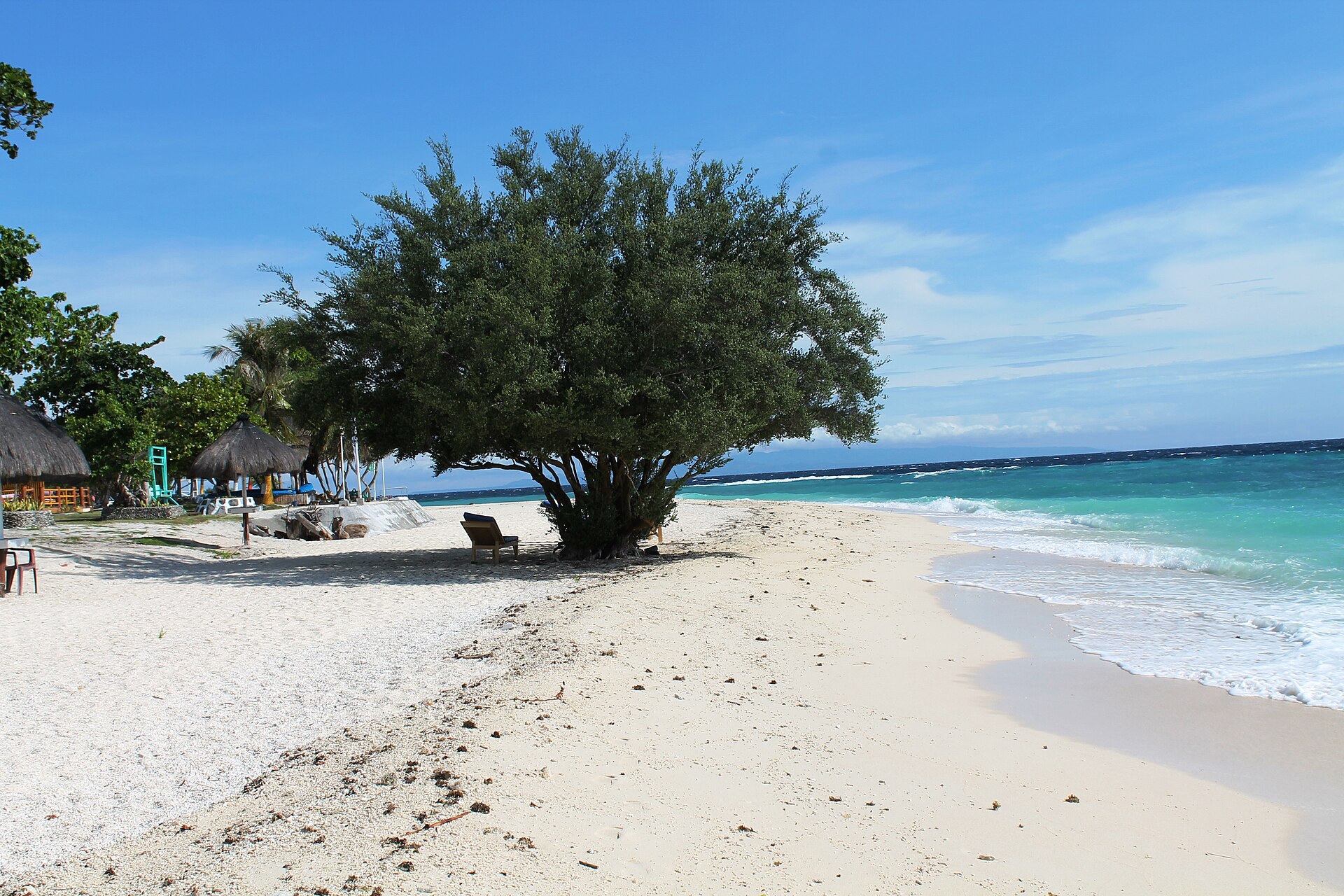
What will you see at Balicasag Island?
Balicasag is above all a turtle island: greens and hawksbills show up on almost every dive, to the point that some divers complain about it. They graze the seagrass of the plateau, rest under the overhangs at Diver's Heaven and give their name to Turtle Point, at the southeastern tip. At the edge of the wall, the schools steal the show: bluefin trevally, blackfin barracuda, fusiliers, mackerel, and fairly frequent schools of sardines. A gray reef shark sometimes patrols the deep water. Black Forest takes its name from the black corals growing below 30 m, above anthias, damselfish and redtooth triggerfish; from May to July, titan triggerfish guard their nests there. Diver's Heaven and Current View Point add sea fans and their pygmy seahorses, leaf scorpionfish, ghost pipefish and giant frogfish. Forty years of protection have brought back coral cover and fish density, with a spillover onto the neighboring Panglao reefs.
| Species | J | F | M | A | M | J | J | A | S | O | N | D | Note |
|---|---|---|---|---|---|---|---|---|---|---|---|---|---|
 Green turtle | peak season | peak season | peak season | peak season | peak season | peak season | peak season | peak season | peak season | peak season | peak season | peak season | on the seagrass of the plateau and at Turtle Point, on almost every dive |
 Hawksbill turtle | peak season | peak season | peak season | peak season | peak season | peak season | peak season | peak season | peak season | peak season | peak season | peak season | under the overhangs at Diver's Heaven, in the shallower sections |
 Pygmy seahorse | peak season | peak season | peak season | peak season | peak season | peak season | peak season | peak season | peak season | peak season | peak season | peak season | on the sea fans at Diver's Heaven and Current View Point |
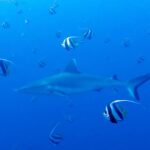 Gray reef shark | possible | possible | possible | possible | possible | possible | possible | possible | possible | possible | possible | possible | now and then, patrolling the deep water at the foot of the wall |
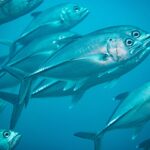 Bigeye trevally | peak season | peak season | peak season | peak season | peak season | peak season | peak season | peak season | peak season | peak season | peak season | peak season | schooling at Black Forest and Diver's Heaven, bluefin trevally on the wall |
| Blackfin barracuda | peak season | peak season | peak season | peak season | peak season | peak season | peak season | peak season | peak season | peak season | peak season | peak season | schooling at Diver's Heaven and Current View Point |
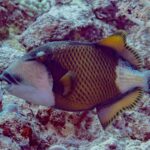 Titan triggerfish | possible | possible | possible | possible | peak season | peak season | peak season | possible | possible | possible | possible | possible | on their nests at Black Forest from May to July: give them a wide berth |
| Sardine schools | possible | possible | possible | possible | possible | possible | possible | possible | possible | possible | possible | possible | fairly common above the plateau |
peak seasonpossiblerare
What is diving like at Balicasag Island?
A plateau from 5 to 18 m rings the island before dropping into great depths: most of the reef stays above 18 m and depth doesn't come quickly, which suits less experienced divers. Dive centers require Open Water, four logged dives and a minimum age of 10. Current is usually moderate but can pick up at the island's points: Black Forest is often dived as a drift, Current View Point, in the northwest, is swept constantly, and conditions range from easy to demanding depending on the day. Black Forest drops to 40 m and its black corals start below 30: you need Advanced to go there. The cave at Turtle Point, at 60 m, is beyond recreational limits. Visibility 15 to 30 m in the dry season, 10 to 20 in the rainy season. At the surface, ten to fifteen bangkas moored at once plus the snorkeling boats: come up along the line and inflate your SMB.
When to dive Balicasag Island?
idealgoodnot recommended
The island can be dived year-round. From January to May, in the dry season, the Cebu Strait is calm and visibility holds between 15 and 30 m: this is the best period, and the busiest, peaking at Christmas, New Year and Easter. From June to December, the rains bring visibility down to between 10 and 20 m, and the swell sometimes complicates the crossing; November is the wettest month. Typhoons rarely hit Bohol, but this is their season. The low-season months, May to December, are often pleasant, with fewer bangkas on the buoys. The water drops to an average of 26.6°C in February, sometimes 25°C, and rises to 29.4°C in October. Turtles are there year-round; titan triggerfish nest at Black Forest from May to July, the time to give them a wide berth.
How to get to Balicasag Island?
Balicasag is about ten kilometers southwest of Panglao, the island linked by two bridges to Bohol and its airport. The dive centers are on Alona Beach and Danao Beach; the bangka takes 35 minutes. Trips leave every day, two dives at two sites on the island chosen according to the sea: departure around 8:45 a.m., snack on board, back around 1:30 p.m. At The Scuba Tribe, in Danao, the two-dive trip costs PHP 4,500 (€64), dive fees, environmental fees, gear, boat, coffee and snack included, and PHP 6,250 with a third local dive and lunch. At Genesis Divers, on Alona Beach, it starts at US$58 with tanks, weights, boat and guide, but the PHP 250 environmental fee per diver per day and the PHP 300 mooring fee per boat are paid on top, in cash. Sierra Madre Divers, on the same beach, includes the fees and charges €15 for Nitrox and €7 for full gear. Spots are booked several days ahead: the municipality caps the island at 150 divers a day. Prices checked on October 14, 2026.
Stay in Panglao
Where to stay near Balicasag Island?
Hotels, apartments and rooms around Panglao, with current prices.
How did Balicasag become a marine sanctuary in 1985?
In the early 1980s, Balicasag's reefs were fished with dynamite and cyanide. In 1985 and 1986, during Silliman University's marine conservation program, the islet's residents marked out a sanctuary on the west coast and guarded it themselves, with technical support from the university's marine laboratory. In 2008, the Coastal Conservation and Education Foundation rated the protected area at level 4, the highest, for the quality of its management. The effect is measurable: coral cover recovered within the first decade, fish density increased, and the neighboring Panglao reefs benefit from the spillover. A twenty-room government-run resort has been built on the island facing the sanctuary.
Divers' money funds the protection. Panglao's 2008 municipal ordinance created an environmental fee, initially PHP 100 a day for diving; its collection, contested by operators, resumed in September 2012 through the municipal treasury. In 2014, a provincial committee recommended mandatory tickets, advance booking, per-site quotas and mooring buoys with helical anchors. Today the fee is PHP 250 per diver per day, mooring is PHP 300 per boat, and the island is capped at 150 divers a day.
What are the dive sites around Balicasag, site by site?
The sites follow one another around the islet. In the north, Cathedral is a wall split by fissures, with a chamber where shafts of light enter. Heading south, Diver's Heaven is a steep slope of sea fans and sponges, with overhangs carpeted in soft corals: trevally, barracuda, mackerel and turtles in the upper sections. Black Forest comes next: a slope from 7 to 40 m, first sand dotted with coral heads, then the black corals of the depths, with schools of trevally, fusiliers and triggerfish in the blue; it's often done as a drift. Ruby's Rock closes off the south coast. At the southeastern tip, Turtle Point lines up soft corals and anemone gardens beneath the turtles, with a cave at 60 m best left to specialists. Royal Garden is a plateau of hard and soft corals at 18 m. In the northwest, Current View Point, swept by current, brings together pygmy seahorses, trevally, barracuda and sometimes a shark.
How do you dive among the schools at Balicasag?
The turtles live in the top five to eighteen meters: a slow dive on the plateau leaves plenty of air to watch them graze and rise to breathe. The schools of trevally and blackfin barracuda hold at the edge of the wall; a diver who drops beneath them, calmly, without rushed bubbles, ends up wrapped in fish. On the Black Forest drift, follow the guide and keep a hand free for your SMB: bangka traffic at the surface is heavy. From May to July, titan triggerfish defend their nests with their teeth; a wide semicircle keeps you clear. Book the island early and avoid it over the holidays, Christmas, New Year and Easter, when the quota fills days in advance.
Our tip
Book several days ahead, especially at Christmas and Easter: the quota fills fast. Keep some pesos in case the fees aren't included. Do Black Forest first thing in the morning, then the turtle plateau.
Other dive sites nearby
 PhilippinesReef
Pescador Island
Visayas: Cebu, Bohol and Negros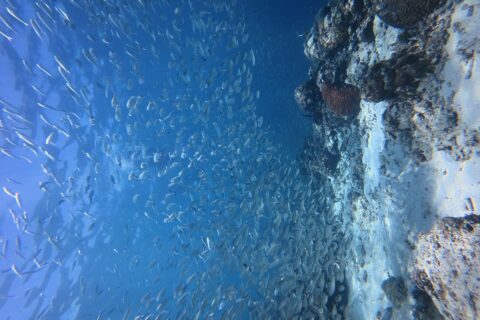 PhilippinesShore dive
Moalboal sardine run
Visayas: Cebu, Bohol and Negros PhilippinesReef