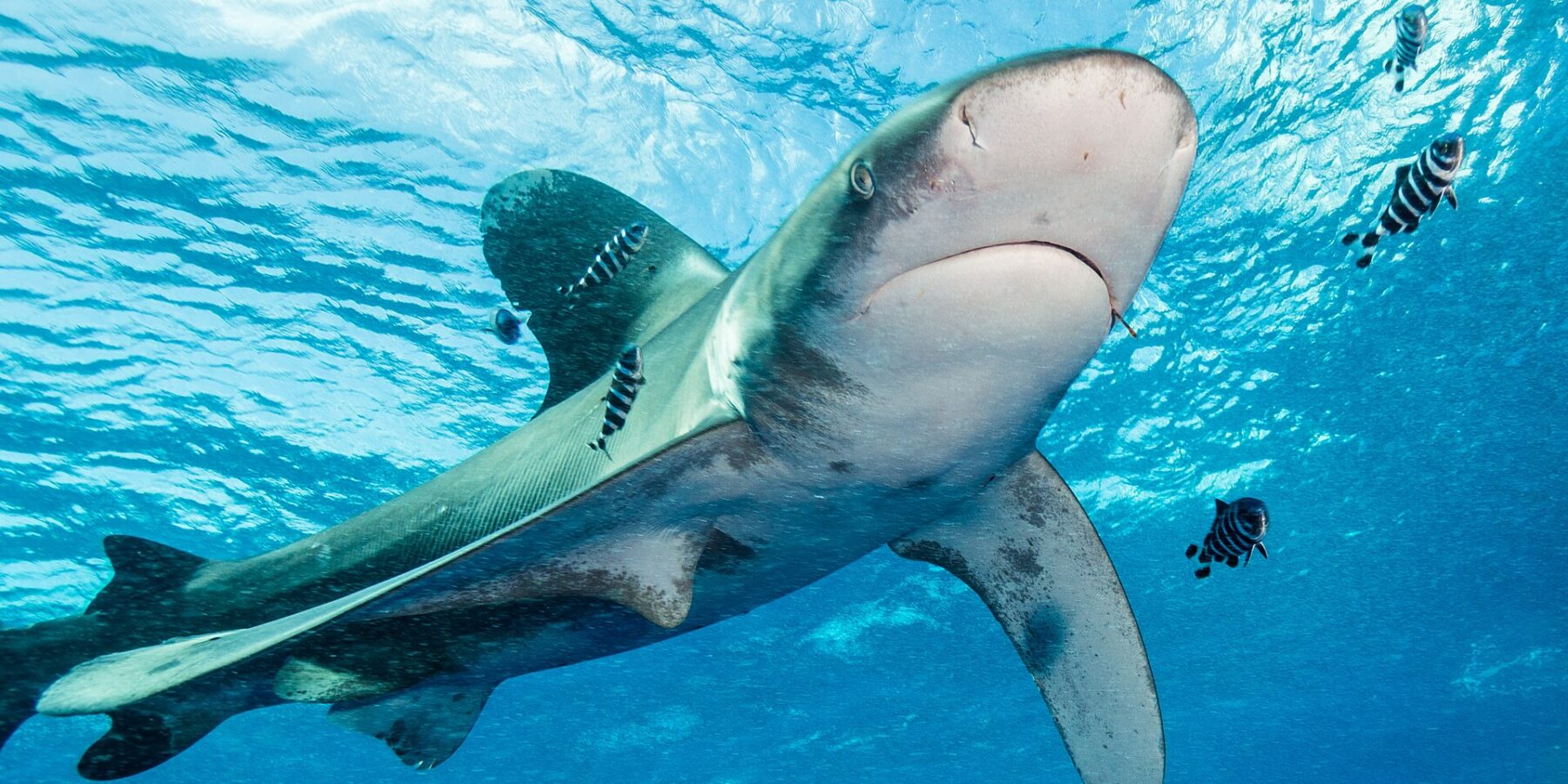
Elphinstone Reef is a 300 meter reef in the open sea, 12 kilometers from Marsa Alam, with soft coral walls dropping into the blue. It is the oceanic whitetip site, with the sharks circling under the boats from October to December, and one of the finest walls in the Red Sea.
Why dive Elphinstone?
- The oceanic whitetip shark, circling under the boats from October to December
- Two plateaus at the tips of the reef, the north one from 2 to 37 meters, the south one from 18 to 35 meters, swept by the current
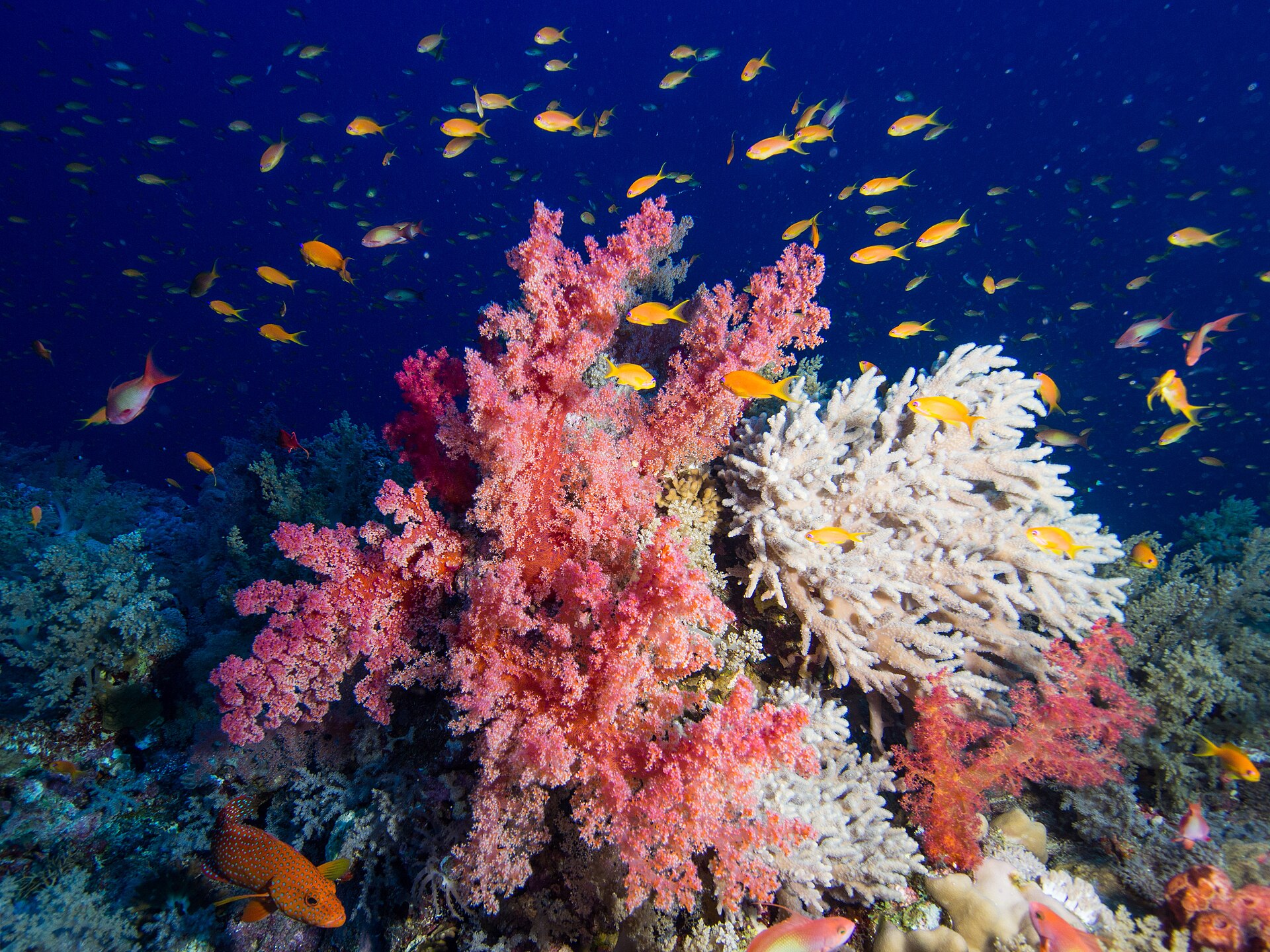
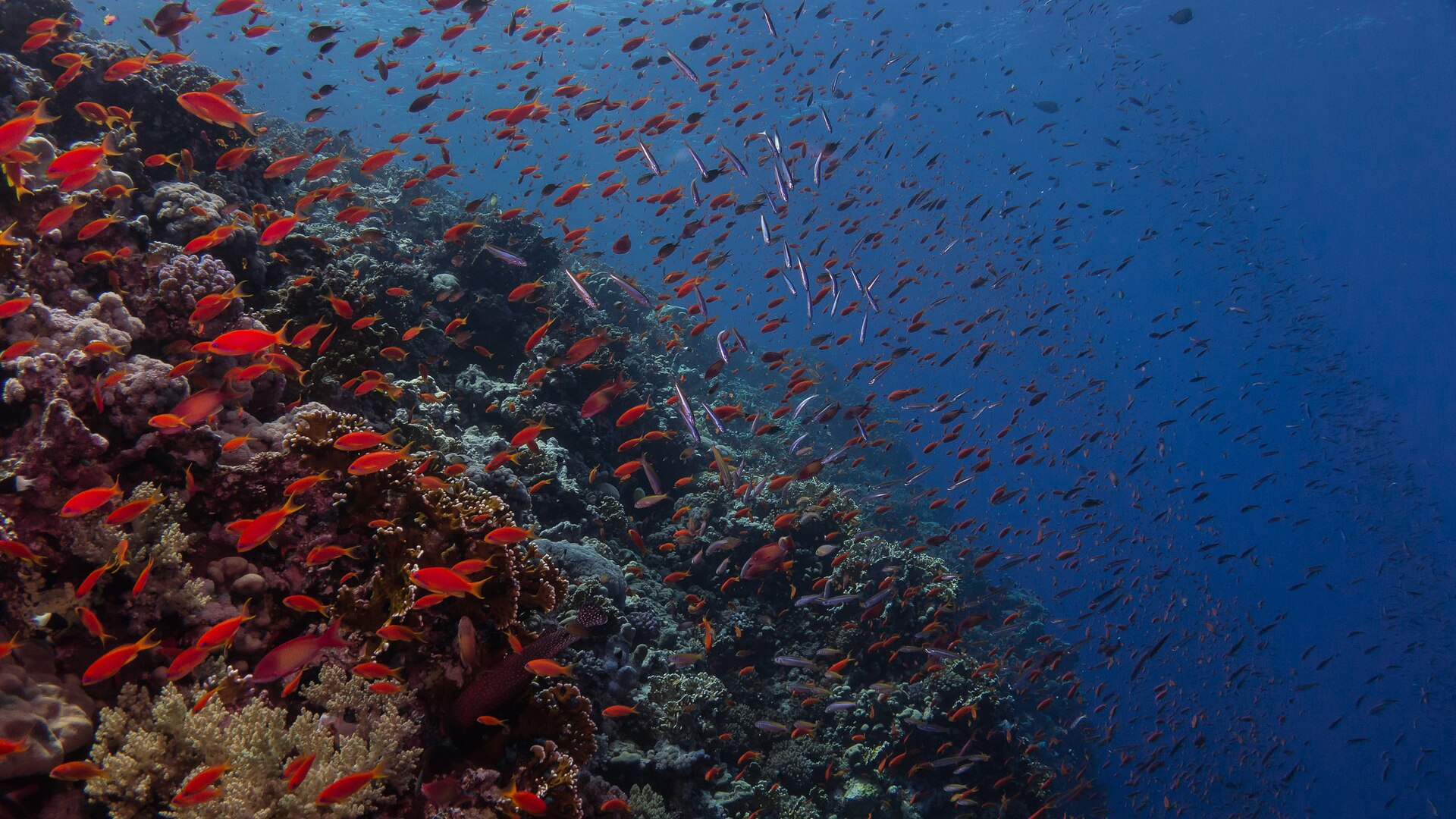
- Walls covered in pink and red soft corals, sea fans and anthias by the thousands
- Manta rays in summer, hammerheads in the blue off the north point
- Reachable on a half-day trip from shore, no liveaboard needed
Elphinstone in pictures
What will you see at Elphinstone?
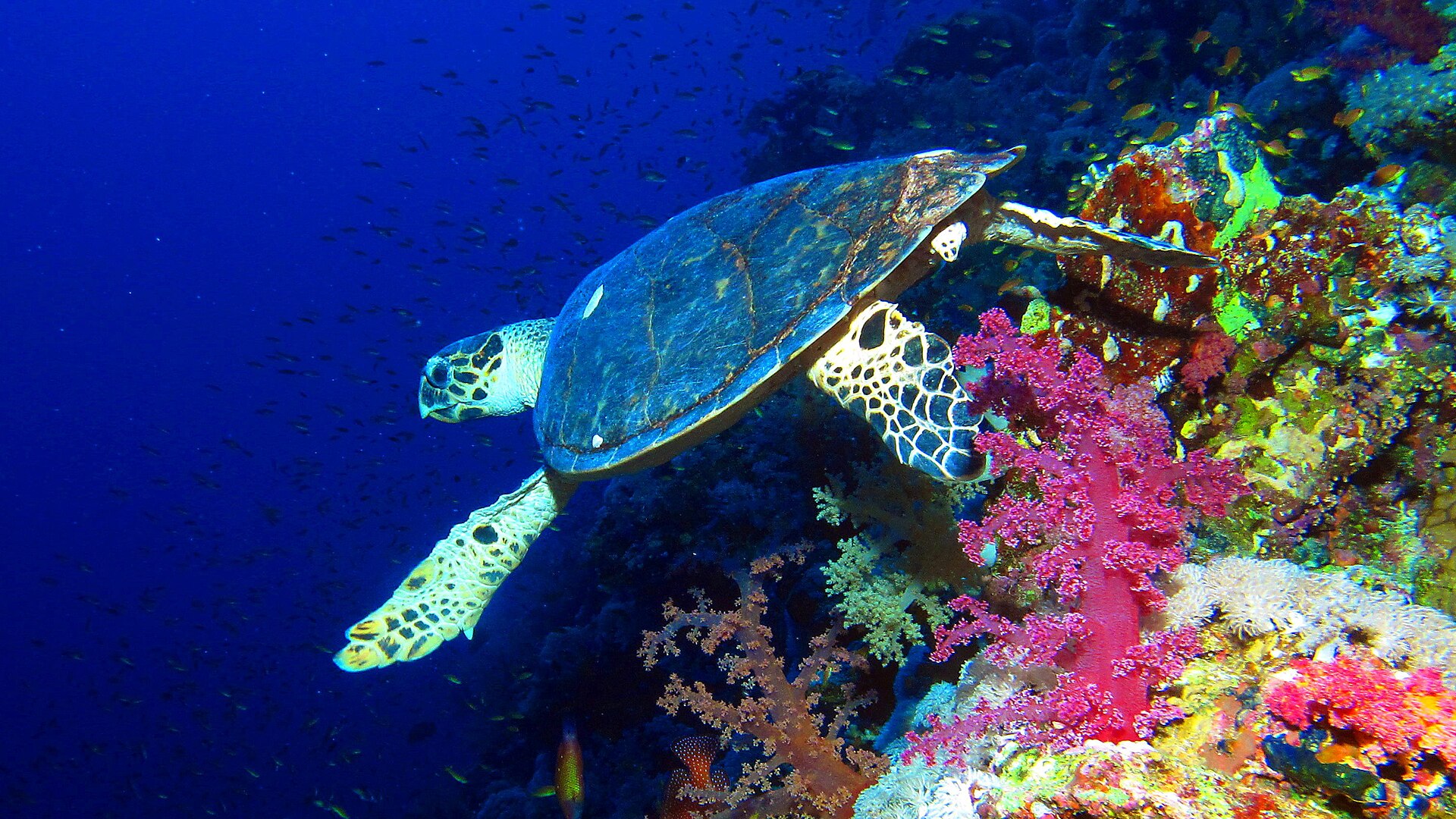
Elphinstone is above all the oceanic whitetip site: long, rounded pectoral fins edged in white, a slow swim and circles under the boats at the surface, mostly from October to December. Summer brings manta rays over the plateaus and, in the blue off the north point, scalloped hammerheads early in the morning. Gray reef sharks patrol the edge of the plateaus all year. On the walls, pink and red soft corals, sea fans and anthias by the thousands set the scene, with hawksbill turtles grazing on sponges, barracudas hanging still at cleaning stations, groupers and parrotfish. Offshore, tuna and trevallies hunt in the current.
| Species | J | F | M | A | M | J | J | A | S | O | N | D | Note |
|---|---|---|---|---|---|---|---|---|---|---|---|---|---|
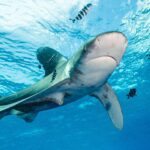 Oceanic whitetip shark | possible | possible | possible | possible | rare | rare | rare | rare | possible | peak season | peak season | peak season | under the boats and over the plateaus, mostly October to December, still around until April |
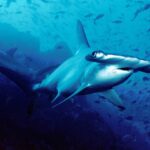 Scalloped hammerhead | rare | rare | rare | rare | possible | peak season | peak season | peak season | possible | rare | rare | rare | in the blue off the north point, in summer, early in the morning |
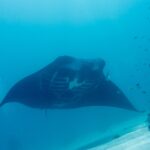 Reef manta ray | rare | rare | rare | rare | peak season | peak season | peak season | peak season | rare | rare | rare | rare | May to August, over the plateaus |
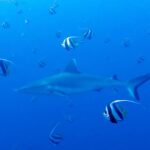 Gray reef shark | possible | possible | possible | possible | possible | possible | possible | possible | possible | possible | possible | possible | at the edge of the plateaus, in the current |
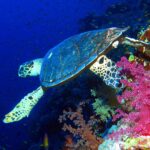 Hawksbill turtle | peak season | peak season | peak season | peak season | peak season | peak season | peak season | peak season | peak season | peak season | peak season | peak season | on the soft corals of the walls, all year |
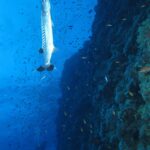 Great barracuda | possible | possible | possible | possible | possible | possible | possible | possible | possible | possible | possible | possible | alone at cleaning stations or schooling in the blue |
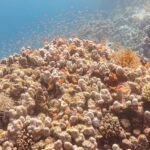 Scalefin anthias | peak season | peak season | peak season | peak season | peak season | peak season | peak season | peak season | peak season | peak season | peak season | peak season | by the thousands on the walls, the everyday show |
| Tuna | possible | possible | possible | possible | possible | possible | possible | possible | peak season | peak season | peak season | possible | hunting off the points |
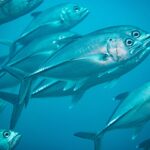 Bigeye trevally | possible | possible | possible | possible | possible | possible | possible | possible | peak season | peak season | peak season | possible | hunting off the points |
peak seasonpossiblerare
What is diving like at Elphinstone?
The reef is about 300 meters long, running north to south, and its walls drop far below 40 meters. Each tip has a plateau: to the north, a tongue of reef sloping from 2 to 37 meters, where you stay at the edge to watch the blue; to the south, a plateau from 18 to 35 meters that ends in an arch between 55 and 60 meters, beyond recreational limits. Current is the rule: it runs along the walls, speeds up at the points and can push you offshore, hence the drift dives, the fast descent and the ascent away from the reef under an inflatable buoy that shows the zodiac where the divers are. Visibility is 20 to 40 meters, often exceptional. Advanced is required, along with real comfort in the blue.
When to dive Elphinstone?
idealgoodnot recommended
The reef is dived all year, but each season has its animal. From October to December, the oceanic whitetip shows up almost daily, and it stays until April; from May to August, it is mantas and hammerheads; winter, with water at 23°C, brings the best visibility, often 40 meters. The north wind, from December to February, makes the zodiac ride uncomfortable and cancels trips; liveaboards run from March to November. The water reaches 30°C in August.
How to get to Elphinstone?
Elphinstone lies about thirty kilometers north of Marsa Alam and 12 kilometers offshore. Dive centers on the coast, at Marsa Shagra, Abu Dabbab or around Port Ghalib, go there by speedboat or zodiac, 30 to 45 minutes at sea, for two dives in a half day: €135 at SeaHorse, a €27 supplement on a package at Coraya Divers, plus €8 a day for the park permit. Liveaboards from Port Ghalib stop here at the end of the week, after the Brothers and Daedalus. Marsa Alam airport is a five-hour flight from Paris, and Port Ghalib is ten minutes from the airport; the full visa, US$25, is mandatory.
Stay in Marsa Alam
Where to find a dive guide in Elphinstone?
Guided tours you can book online, ranked by number of reviews. These are affiliate links: if you book, you support us at no extra cost.

 Viator
Magic Red Sea Discovery - Discover Scuba Diving Marsa Alam
5.0 (13 reviews)View and book Viator
Red Sea Open Water Diver Course in Marsa Alam
5.0 (10 reviews)View and book Viator
Dive with Dugongs and Turtles | Abu Dabbab | Marsa Alam | 2 Dives
5.0 (6 reviews)View and bookWhere to stay near Elphinstone?
Hotels, apartments and rooms around Marsa Alam, with current prices.
Which hotels to choose near Elphinstone?

Where is Elphinstone Reef?
Elphinstone, Sha'ab Abu Hamra to Egyptians, is an isolated reef that breaks the surface 12 kilometers offshore, north of Marsa Alam. From the boat it is just a 300 meter line of foam; underwater it is a mountain whose sides drop sheer into several hundred meters. No lagoon, no shelter: the open-sea current hits the reef head-on, and it explains everything, the lush soft corals as well as the predators. The site is named after a 19th-century British governor of Bombay, like several Red Sea reefs charted by the British navy.
How do you dive the north and south plateaus at Elphinstone?
The typical dive starts at the north plateau: you roll off the zodiac off the point, descend fast onto the tongue of reef that runs from 2 to 37 meters, then wait at the edge of the plateau, facing the blue, where hammerheads and tuna pass. You then drift along the east or west wall, with the current, between 15 and 30 meters, through soft corals and anthias, before ascending in open water. The south plateau, from 18 to 35 meters, is deeper and more exposed; it ends in an arch between 55 and 60 meters that only tech divers visit. Between the two dives, boats drift offshore: none can drop anchor on the reef.
When can you see oceanic whitetips at Elphinstone?
The oceanic whitetip, Carcharhinus longimanus, is an open-ocean shark, known by its long, rounded, white-tipped pectoral fins and its slow, curious swim, which often brings it right under the boats' hulls. At Elphinstone it is around mostly from October to December, and until April, with an escort of pilot fish. It is a powerful, fearless animal, listed as vulnerable worldwide: watch it as a group, under the boat, without swimming toward it or feeding it, and get out of the water if one becomes insistent. Most encounters happen during the safety stop, near the surface, not at depth.
Should you dive Elphinstone on a day trip or a liveaboard?
Elphinstone is the only major offshore reef in Egypt that you can dive on a day trip: coastal dive centers, from Marsa Shagra to Port Ghalib, run there by speedboat for two dives whenever the sea allows. Almost all liveaboards from Port Ghalib include it, usually at the end of the route after the Brothers and Daedalus, with the advantage of reaching the reef at dawn, before the day boats. Either way, Advanced certification and comfort with drift diving are required.
Our tip
Come from October to December for the oceanic whitetip and dive the north plateau early, before the line of boats. Bring a DSMB and a signal light, because the dive ends in the blue. During your safety stop, watch the surface, where the shark cruises.
Other dive sites nearby
 EgyptPelagic
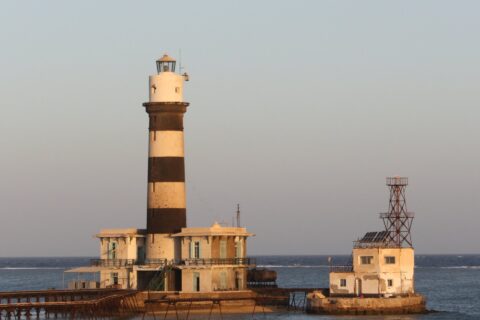
Daedalus Reef
Southern Red Sea, Egypt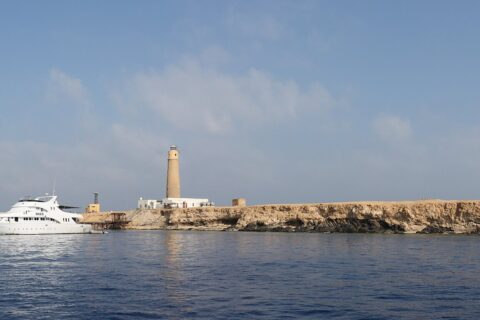 EgyptPelagic
Brothers Islands
Southern Red Sea, Egypt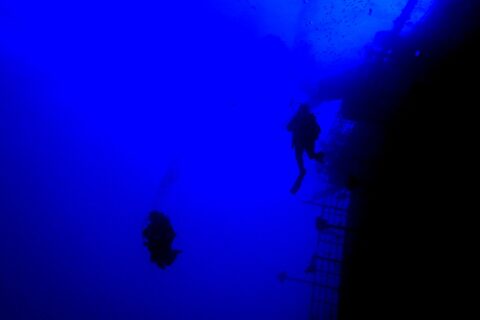 EgyptWreck