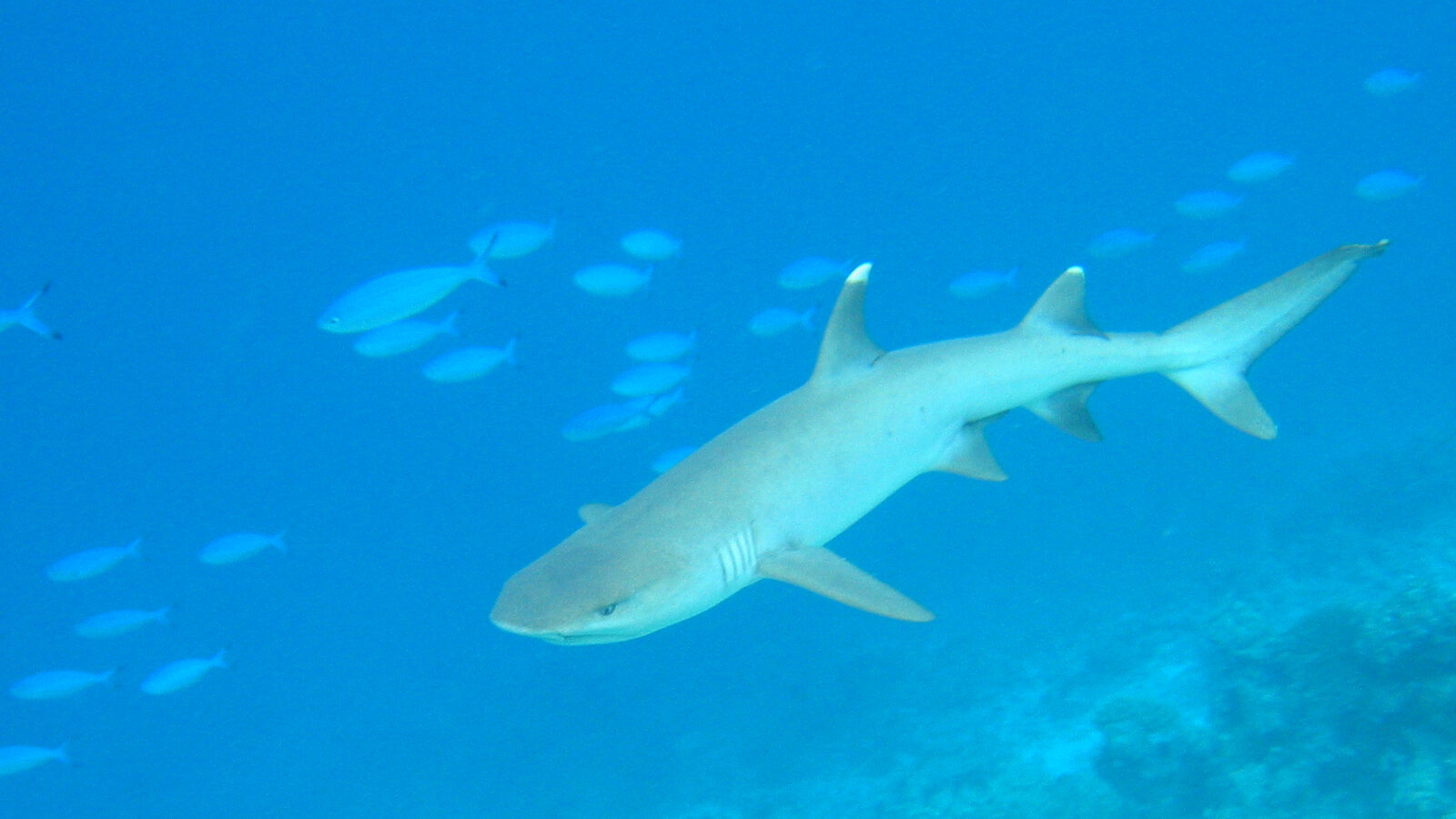
Maaya Thila is an isolated pinnacle in the middle of North Ari, with its top between 6 and 12 meters. By day, gray reef sharks, eagle rays and turtles pass in the current; at night, twenty to thirty whitetip reef sharks hunt there, in one of the most famous night dives in the Maldives.
Why dive Maaya Thila?
- One of the most famous night dives in the Maldives: 20 to 30 whitetip reef sharks hunting on the plateau
- An 80-meter pinnacle you can circle in one dive, with its top between 6 and 12 meters
- Gray reef sharks, eagle rays and bigeye trevallies in the current, turtles and moray eels on the plateau
- Protected since 1995, in the middle of North Ari, on every liveaboard route
Maaya Thila in pictures
What will you see at Maaya Thila?
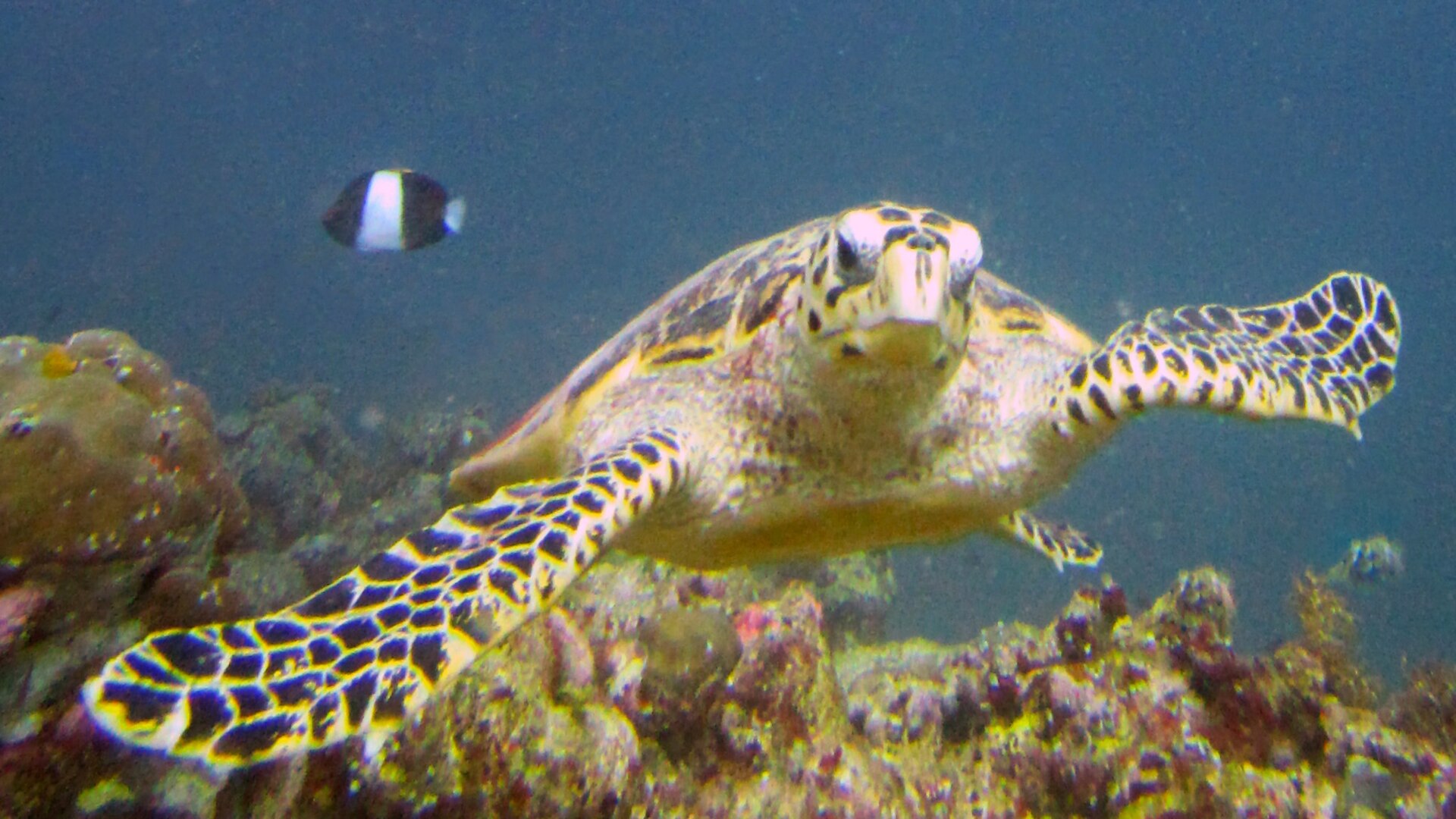
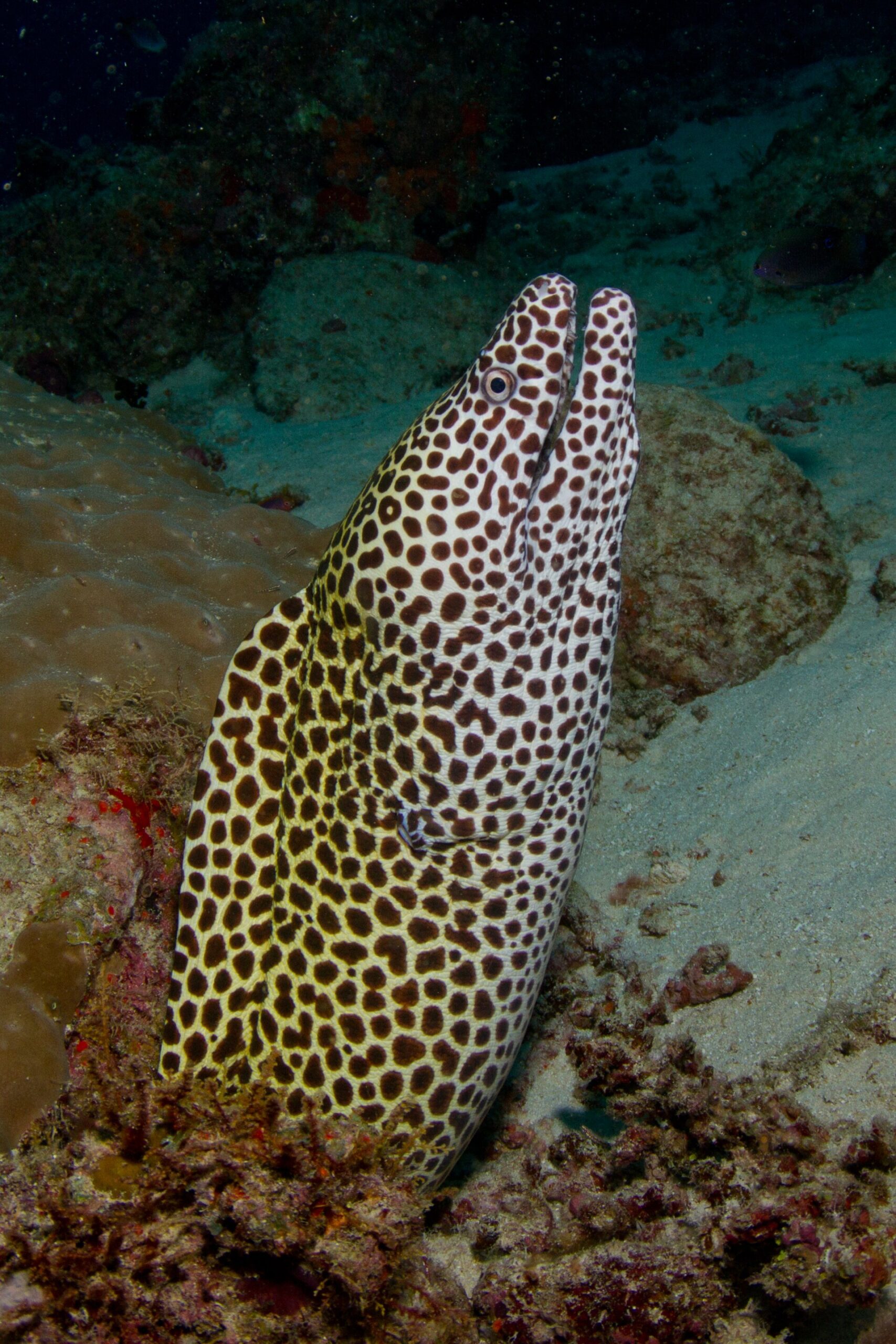
Maaya Thila is the whitetip reef shark site. By day they rest under the overhangs and in the cracks of the plateau; at night, twenty to thirty of them hunt together on the top, a few meters from divers, searching every hole in the reef. Five or six gray reef sharks patrol the edge of the plateau, facing the current, with a school of bigeye trevallies above the top and eagle rays passing along the sides. On the plateau, hawksbill and green turtles graze among the hard corals, soft corals and sea fans. Zebra and honeycomb morays wait in the cracks, and stonefish and frogfish hide on the coral, to be found with a light. Octopus, crabs and spiny lobsters come out at nightfall.
| Species | J | F | M | A | M | J | J | A | S | O | N | D | Note |
|---|---|---|---|---|---|---|---|---|---|---|---|---|---|
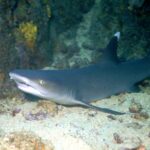 Whitetip reef shark | peak season | peak season | peak season | peak season | peak season | peak season | peak season | peak season | peak season | peak season | peak season | peak season | 20 to 30 hunting on the plateau at night, resting under the overhangs by day |
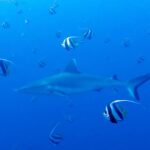 Gray reef shark | peak season | peak season | peak season | peak season | peak season | peak season | peak season | peak season | peak season | peak season | peak season | peak season | five or six sharks at the edge of the plateau, facing the current |
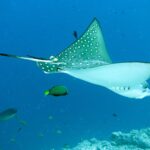 Spotted eagle ray | possible | possible | possible | possible | possible | possible | possible | possible | possible | possible | possible | possible | passing by in the blue, along the sides |
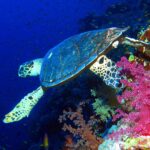 Hawksbill turtle | possible | possible | possible | possible | possible | possible | possible | possible | possible | possible | possible | possible | on the plateau, grazing on sponges |
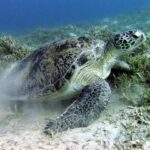 Green turtle | possible | possible | possible | possible | possible | possible | possible | possible | possible | possible | possible | possible | passing over the top |
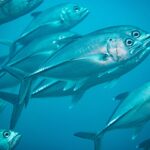 Bigeye trevally | peak season | peak season | peak season | peak season | peak season | peak season | peak season | peak season | peak season | peak season | peak season | peak season | schooling above the top |
| Zebra and honeycomb morays | peak season | peak season | peak season | peak season | peak season | peak season | peak season | peak season | peak season | peak season | peak season | peak season | in the cracks of the plateau, out at night |
| Stonefish, frogfish and octopus | peak season | peak season | peak season | peak season | peak season | peak season | peak season | peak season | peak season | peak season | peak season | peak season | look for them with a light on the plateau |
peak seasonpossiblerare
What is diving like at Maaya Thila?
The pinnacle is about 80 meters across and roughly square, with a top between 6 and 12 meters and four sides that drop steeply to the atoll's sandy floor at 30 or 40 meters; satellite rocks and small overhangs ring the base. The dive is one loop: a descent down the line, a circuit of the thila at 20 or 25 meters, and an ascent onto the plateau. Current is the trap here. Variable, sometimes strong and often unpredictable, it can turn between two dives, and dive centers require Advanced Open Water. Visibility ranges from 20 to 40 meters depending on the season. The legal limit of 30 meters takes care of itself, since the sand lies deeper.
When to dive Maaya Thila?
idealgoodnot recommended
You can dive the thila all year, but the northeast season, from December to April, brings the calmest seas for the crossing and the best visibility, 30 to 40 meters; most Ari liveaboards run from November to May. From May to November, the southwest wind raises a swell and plankton brings visibility down to 15 to 25 meters, with stronger currents in the Ari channels. The sharks, though, are there in every season. Surface water is 28 °C from December to February and rises to 30 °C in April; cold upwellings drop it to 26 °C at depth. The night dive runs all year, whenever the boat can stay at anchor.
How to get to Maaya Thila?
Maaya Thila is in the middle of North Ari Atoll, 8 kilometers northwest of the local island of Ukulhas. It is first of all a liveaboard site: out of Malé, the seven-night boats on the "Best of Maldives" route stop here between Rasdhoo and South Ari and schedule the night dive. With Emperor, the week costs €2,032 to €3,680 in 2026 depending on the boat, and €2,390 to €2,690 on the Emperor Voyager with Nitrox, the environmental tax and port fees. Dive centers ask for Advanced certification and comfort in current. The resort islands of North Ari and the Ukulhas dive centers also go there on day trips by boat. The site is protected and entry is free; the operator books the slot with the EPA. Allow two to two and a half hours by public speedboat between Malé and Rasdhoo, the gateway to North Ari.
Stay in Malé
Where to find a dive guide in Maaya Thila?
Guided tours you can book online, ranked by number of reviews. These are affiliate links: if you book, you support us at no extra cost.

 Viator
Small Group Diving experience in Caribbean
5.0 (165 reviews)View and book Viator
2 Tank (1 Day) Guided Diving for Certified Divers - Denarau Marina
4.8 (24 reviews)View and bookWhere to stay near Maaya Thila?
Hotels, apartments and rooms around Malé, with current prices.
What is Maaya Thila, the thila in the middle of North Ari?
A thila is an isolated reef that rises from the lagoon floor without ever reaching the surface. This one, in the middle of North Ari Atoll, is a square about 80 meters on each side, with its top between 6 and 12 meters. It is shallow enough for the sun to keep a garden of hard corals alive, and deep enough for the tidal current to push plankton-rich water over it all the time, along with the schools of fusiliers and trevallies that draw the predators. The four sides drop steeply to the sand at 30 or 40 meters, ringed by satellite rocks and small overhangs where the whitetip reef sharks shelter by day. On September 27, 1995, the government listed the site among the country's first fifteen marine protected areas: 1,024 hectares, covering the reef and a 500-meter radius around its center.
What is the Maaya Thila night dive like?
In the evening, the boat stays at anchor and you go back down to the plateau with a light. The whitetip reef sharks, sluggish by day, turn into hunters: twenty to thirty of them sweep the top in a pack, slip into every crack, flush out sleeping fish and fight over their catch a few meters from divers, paying them no attention. Settle above the reef, light the bottom rather than the sharks, and do not follow or touch them. Between passes, your light picks out octopus, crabs, spiny lobsters and stonefish, and sometimes a gray reef shark circling at the edge of the beam. It is one of the most famous night dives in the Maldives, and the reason Ari liveaboards spend the night here.
What can you see at Maaya Thila by day?
The day dive circles the pinnacle between 20 and 25 meters, side after side. On the current side, five or six gray reef sharks hold the edge of the plateau, noses into the flow, with a school of bigeye trevallies above them, and eagle rays pass in the blue. Under the overhangs at the base, look for whitetips at rest; on the sides, soft corals, sea fans and moray eels in the cracks. Save the plateau for the end of the dive: hawksbill and green turtles, butterflyfish, Moorish idols, triggerfish, parrotfish, and the small camouflaged things, stonefish and frogfish, that a guide who knows the site will point out.
How do you dive the current at Maaya Thila?
The current sets the plan. It is variable, sometimes strong and often unpredictable, and it can reverse between the morning dive and the evening one. You descend along the mooring line, start the circuit of the thila facing the current, where the sharks are, and finish in the shelter of the lee side, where you come back up onto the plateau for the safety stop. Do not stray from the reef, do not go below 30 meters, the legal limit in the Maldives, and keep an eye on the guide when the flow speeds up at the corners of the square. Dive centers require Advanced Open Water; a surface marker buoy and a backup light for the night dive are the basics.
Our tip
Dive it twice: by day for the topography, and at night, when the whitetip reef sharks hunt. During the hunt, stay above the reef with your light pointed at the bottom. Stay close to the pinnacle, because the current changes from one dive to the next.
Other dive sites nearby
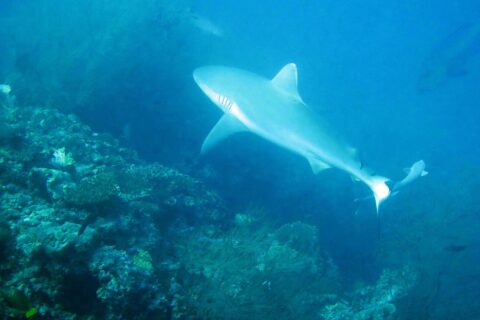
 MaldivesReef
Fish Head (Mushimasmingili Thila)
Ari and Rasdhoo atolls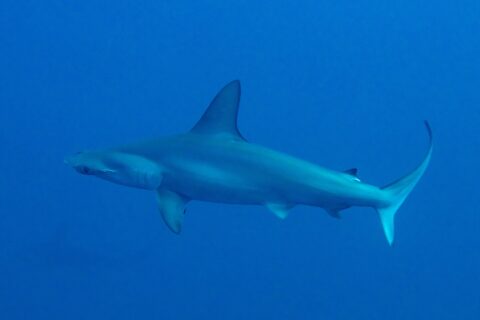 MaldivesPelagic
Rasdhoo Madivaru
Ari and Rasdhoo atolls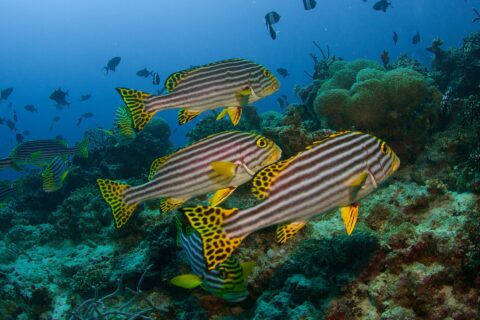 MaldivesReef