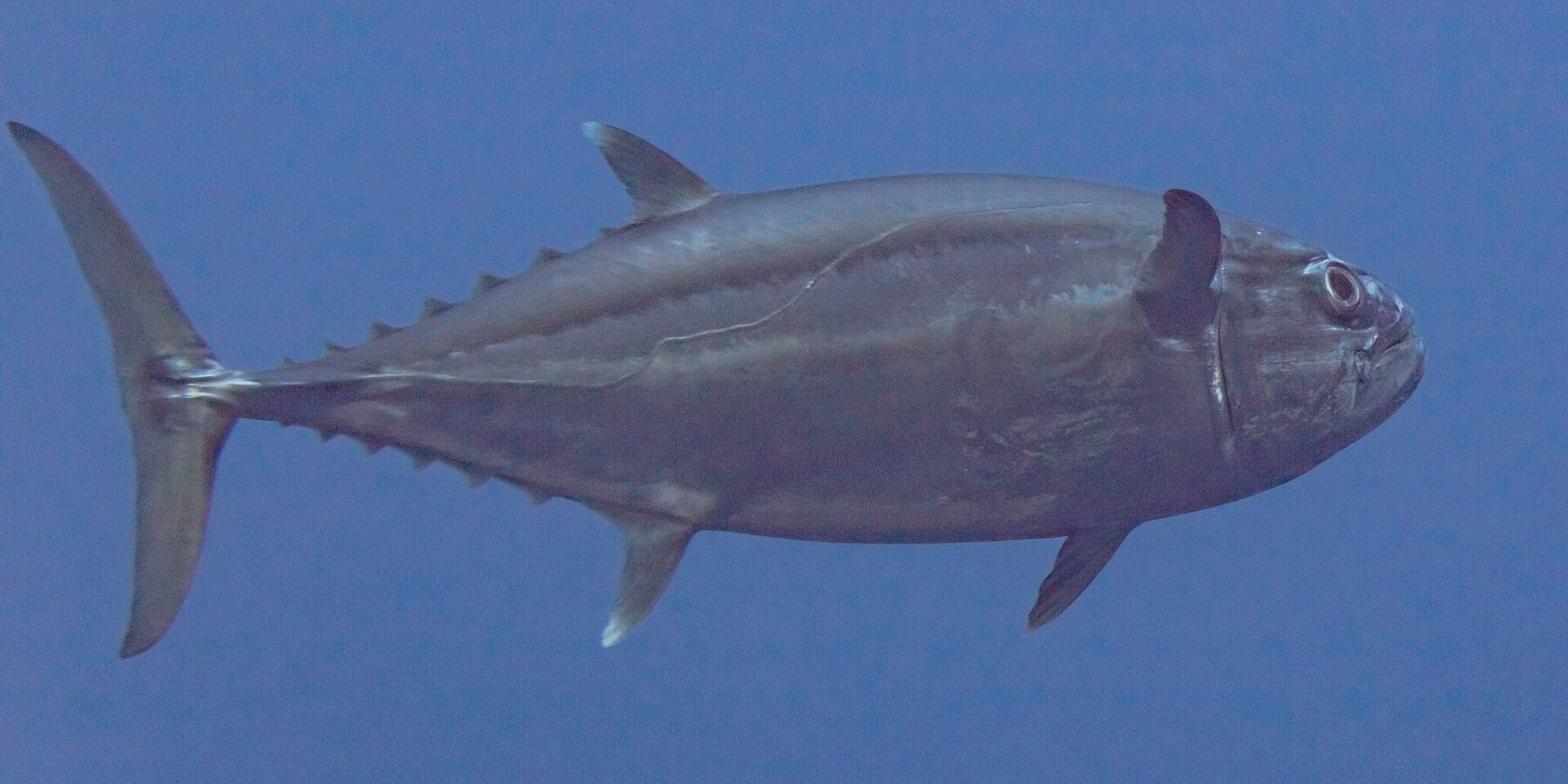
The dogtooth tuna is an Indo-Pacific reef tuna that sometimes exceeds two meters, easy to recognize by its wavy lateral line. You see it hunting in the current at Batu Bolong, Castle Rock, Kuda Rah Thila or Koh Tachai, and in the blue at Tubbataha.
Where to dive to see the dogtooth tuna?
 IndonesiaReef
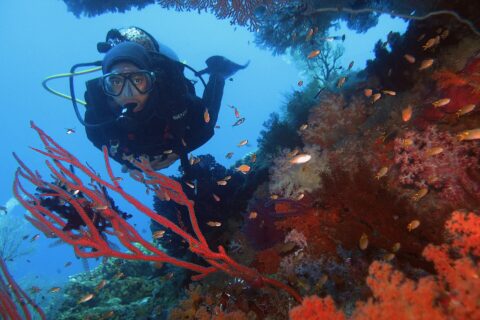
Cape Kri
Raja AmpatPeak season from October to April: tornadoes of bigeye trevally and tuna hunting at peak current
 IndonesiaPelagic
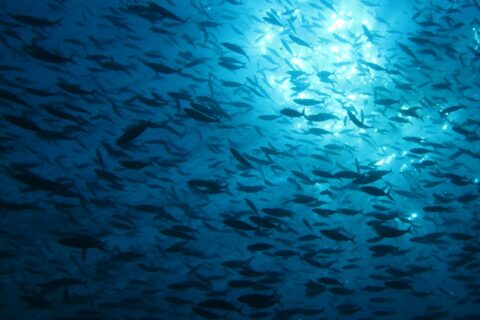
Castle Rock
KomodoPeak season from April to November: on the deep edge, in the flow
 ThailandPelagic
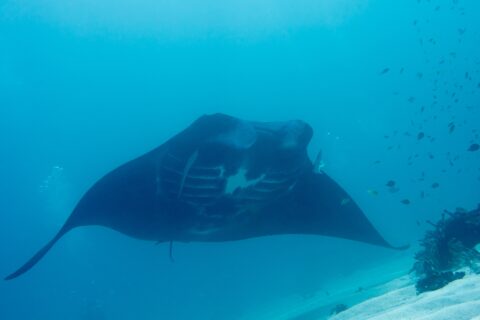
Koh Tachai Pinnacle
Andaman Sea: Similan, Surin and LantaPeak season from October to May: by the hundreds above the reef, hunting in the current
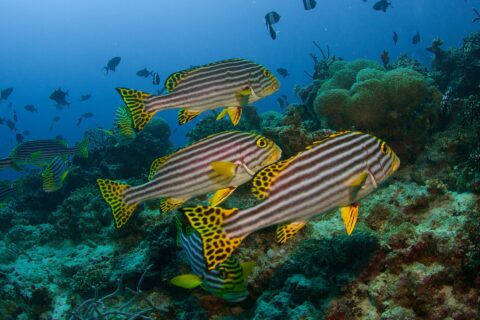
 MaldivesReef
Kuda Rah Thila
Ari and Rasdhoo atollsPeak season all year round: hunting in the current, off the arch
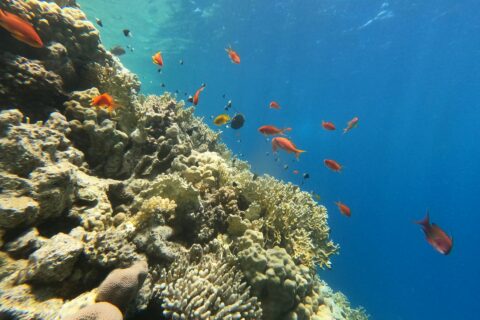
 EgyptReef
Panorama Reef
Central Red Sea, EgyptPeak season from September to November: in the blue, off the plateaus

 PhilippinesPelagic
Tubbataha Reef
PalawanPeak season from April to May: on the south side of North Atoll, in the blue off the wall
How do you identify a dogtooth tuna?
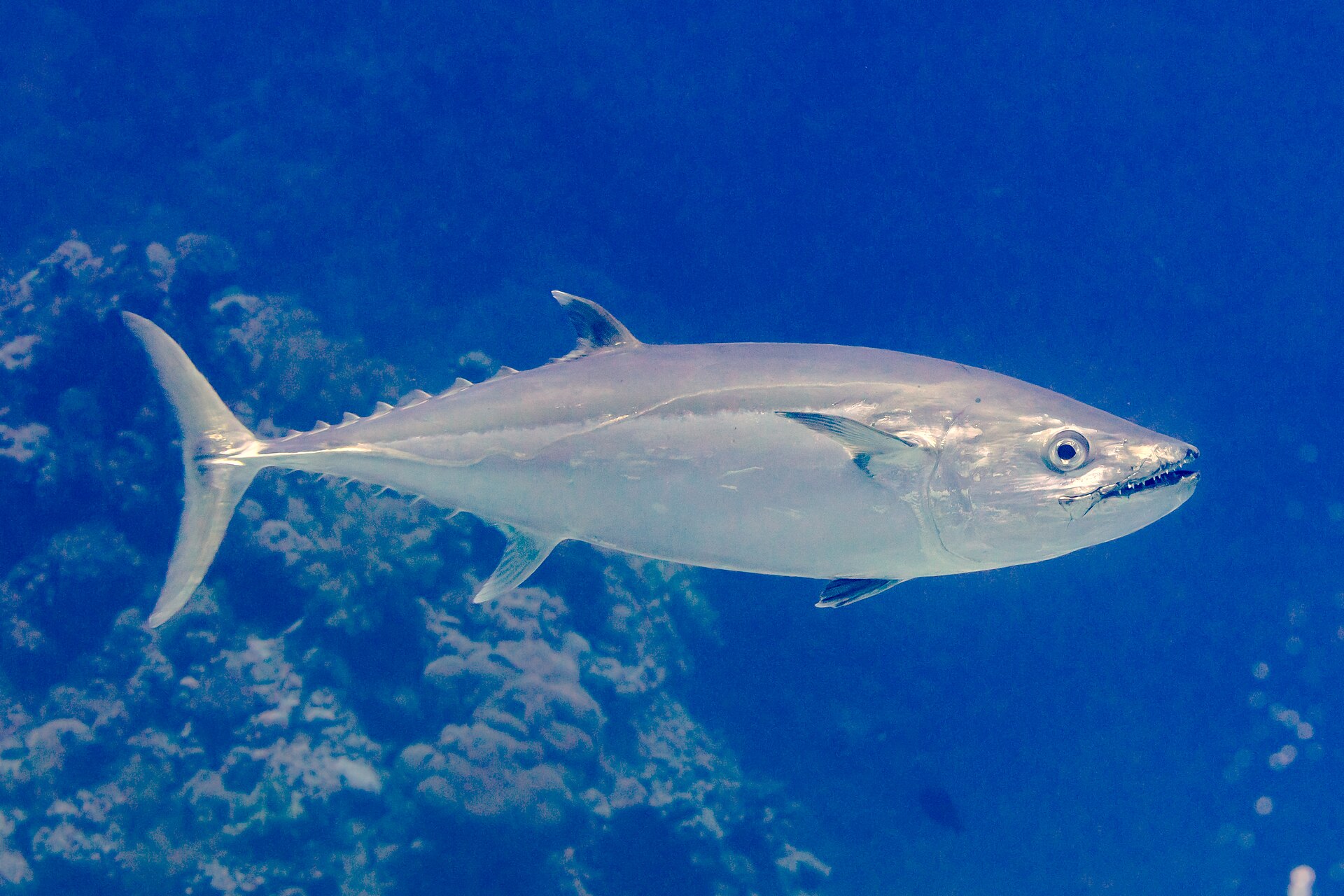
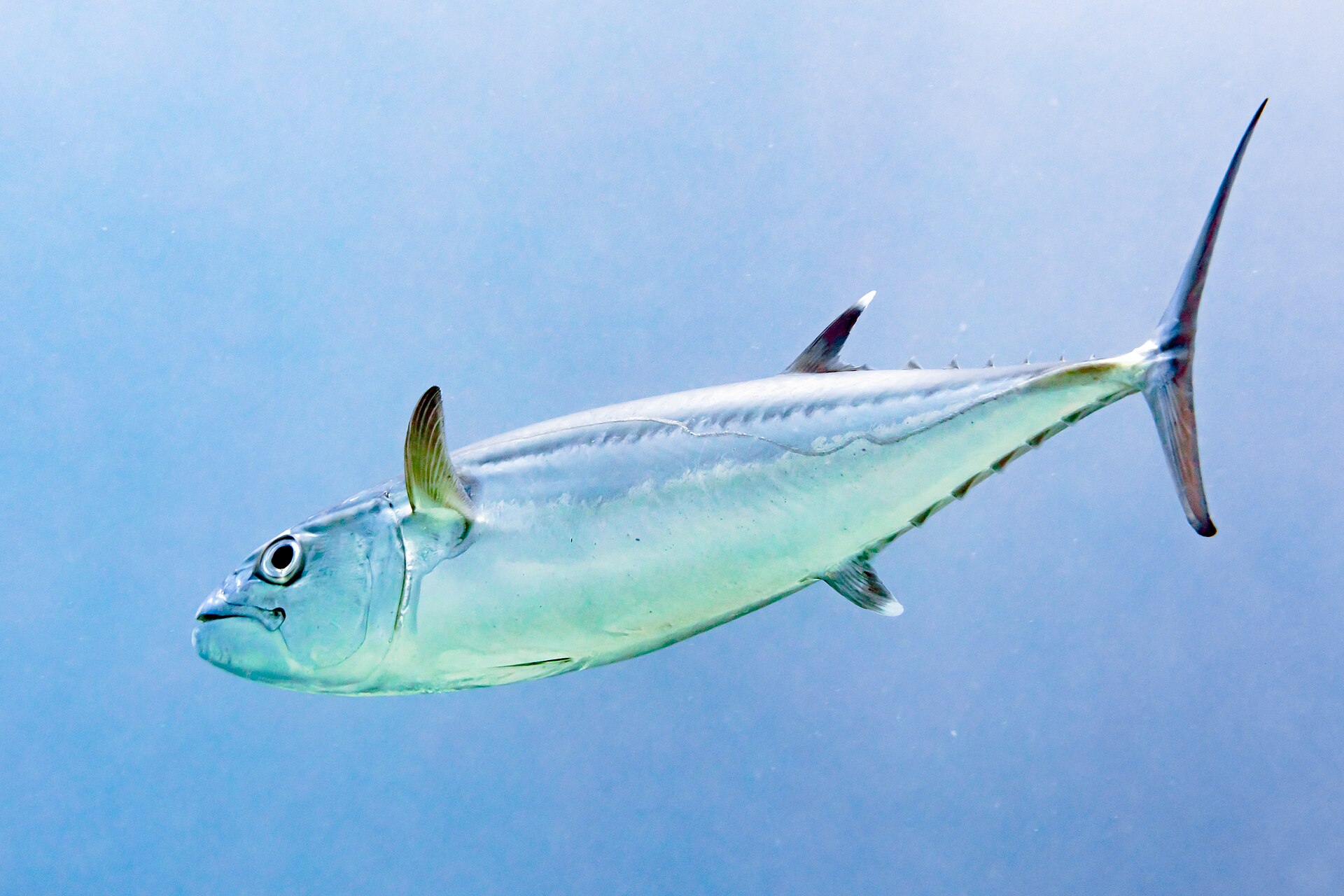
The dogtooth tuna is a large, torpedo-shaped tuna that reaches 2.48 meters and 131 kg; you most often meet it between 40 centimeters and 1.20 meters. The back is a shiny blue-black to blue-green, the flanks silver and the belly whitish, with no lines or spots. Two details give it away: its lateral line, which waves clearly along the flank, and the white tips of its second dorsal and anal fins, just before the row of finlets that leads to the tail. Its big mouth, whose upper jaw reaches the eye, is armed with large conical teeth, 14 to 31 above and 10 to 24 below: they gave it its name.
Dogtooth tuna in pictures
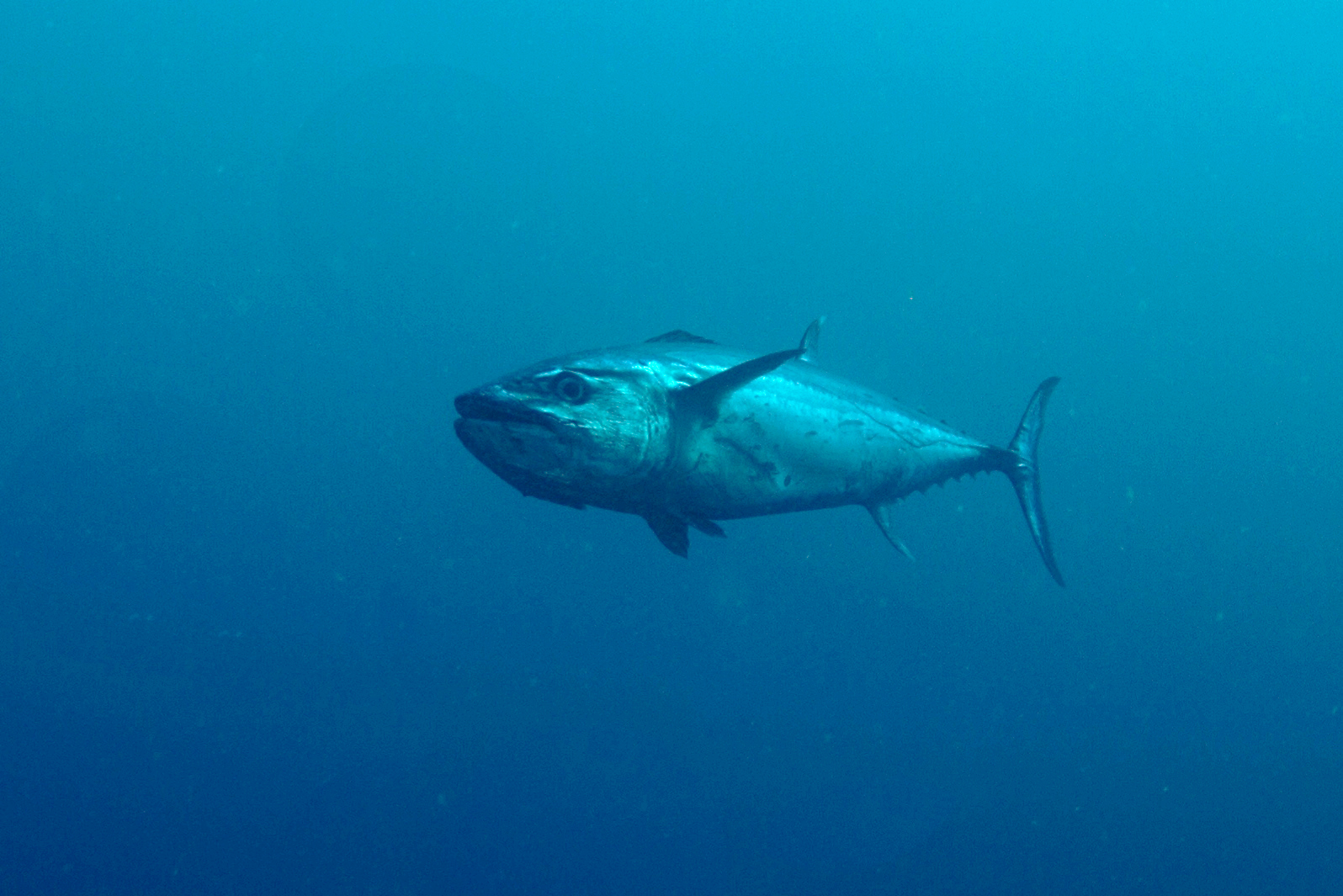
How does the dogtooth tuna live?
The dogtooth tuna lives in the tropical waters of the Indo-Pacific, from the Red Sea and East Africa to French Polynesia, and from Japan to Australia. It is a reef tuna: juveniles stay on shallow reefs, large adults on deep drop-offs, seamounts and sheer walls, between 10 and 300 meters. It lives alone or in small groups of six at most, and it hunts the small schooling fish around reefs, such as fusiliers, as well as squid.
Where and when can you see dogtooth tuna?
The dogtooth tuna is listed at ten of our dive sites, most often in the current, where it hunts. In Indonesia, it works the corners of Batu Bolong and the deep edge of Castle Rock, in Komodo National Park, mostly from April to November; in Raja Ampat, you see it at Blue Magic and Cape Kri at peak current, mostly from October to April. In the Maldives, it hunts all year round off the arch of Kuda Rah Thila, with the giant trevallies. In Thailand, it passes from October to May at Koh Tachai, above the reef with the trevallies, and at Richelieu Rock, at the foot of the rocks, on the current side. In the Philippines, Tubbataha shows it from March to June, mostly in April and May, on the south side of North Atoll, and Apo Island counts it among the fish of the Chapel wall. In the Red Sea, it patrols the blue off the plateaus of Panorama Reef, mostly from September to November.
Is the dogtooth tuna threatened?
The dogtooth tuna is listed as Least Concern on the IUCN Red List, in its 2022 assessment. Prized by sport fishers and caught for the table, it is sold canned or frozen; but adults can carry ciguatoxin, and its flesh has already caused ciguatera poisoning. For divers, it is harmless: the only known risk it poses is ciguatera, on your plate.
Our tip
Look for it where the current hits the reef: on the corners of a rock, on the edge of a pinnacle or off an arch. Tuck in behind a boulder or hold on to the reef, and keep your eyes on the blue rather than on the coral. Do not chase it into the current: you would wear yourself out, and it is from your fixed point that you will see it hunt.