 IndonesiaReef
Batu Bolong
Komodo5 to 30 mAdvancedFrom April to November
BoatCurrent: strongVisibility 15 to 30 m
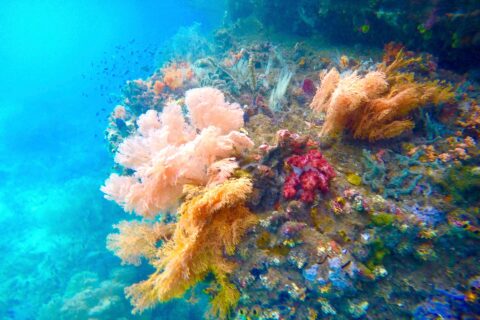
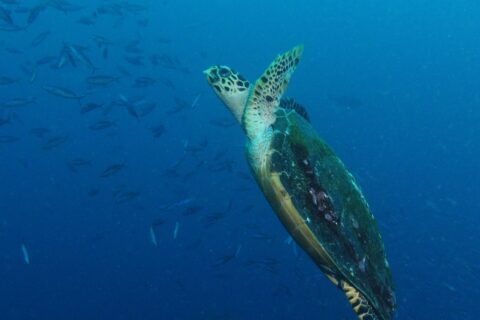
Batu Bolong is a rock between Komodo and Tatawa, coated in coral from the surface to beyond 70 m, the densest site in the park.
Language
Currency
Indonesia9 dive sites
Indonesia has the richest reefs in the world, and scuba diving changes from one region to the next. At Cape Kri, in Raja Ampat, a researcher counted 374 fish species on a single dive, the world record. Near Bali, at Crystal Bay, you wait for the sunfish where it comes to be cleaned.
To combine regions, go in October, when Raja Ampat enters its calm season and Komodo and Bali keep theirs until November. The Bali sunfish only comes from July to October. In southern Raja Ampat, the monsoon closes Misool from June to September.
A shore dive costs about €20 in Tulamben, on Bali, against €60 by boat at Kri, in Raja Ampat. There, a resort sells the week for €1,894 per person, with full board and unlimited diving. Park and district permits add about €100.
Bali and Jakarta are one stopover from Paris. A domestic flight then takes you to Labuan Bajo for Komodo, Manado for Sulawesi, or Sorong for Raja Ampat. The 30-day visa is bought online or on arrival for IDR 500,000, and you can extend it once in the country.
IndonesiaReefBatu Bolong is a rock between Komodo and Tatawa, coated in coral from the surface to beyond 70 m, the densest site in the park.
 IndonesiaPelagic
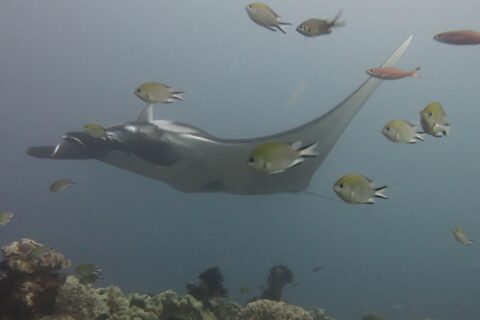
Blue Magic is a pinnacle in the middle of the Dampier Strait, in Raja Ampat, rising from 30 m to within 7 m of the surface.
 IndonesiaReef
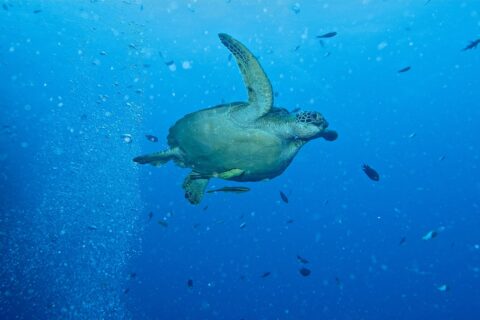
The Lekuan walls are three vertical walls off southern Bunaken, dropping from the surface to 40 m.
 IndonesiaReef
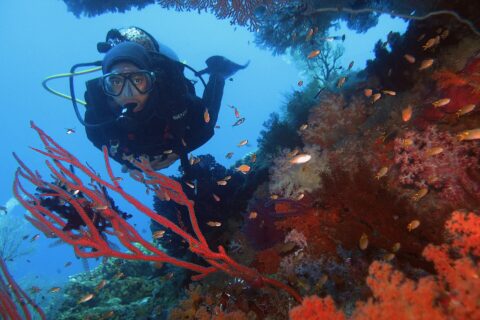
Cape Kri is the eastern tip of Kri Island, in Raja Ampat: in 2012, ichthyologist Gerald Allen counted 374 fish species there in a single dive, a world record.
 IndonesiaPelagic
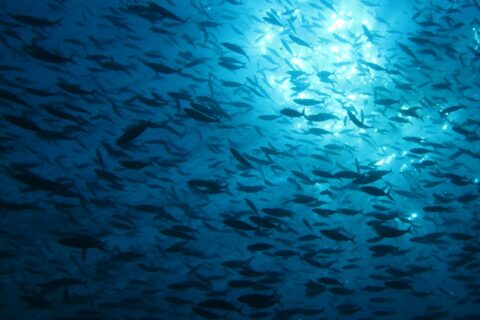
Castle Rock is a seamount in the north of Komodo National Park, rising from beyond 60 m to 4 m below the surface.
 IndonesiaPelagic
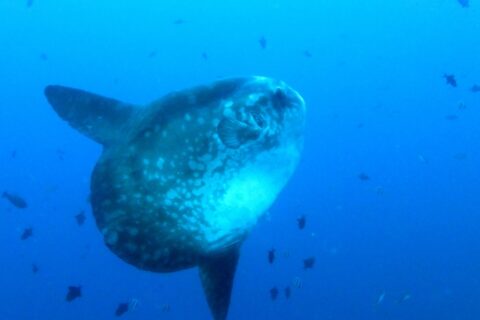
Crystal Bay is a bay on Nusa Penida, off Bali, where sunfish rise to be cleaned from August to October, in 18 to 20°C water.
 IndonesiaReef
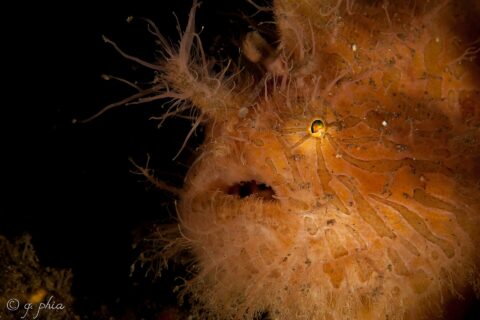
The Lembeh Strait, between Sulawesi and Lembeh Island, is the capital of muck diving on black volcanic sand, with more than sixty sites.
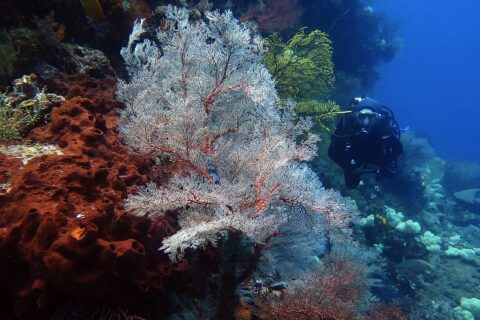 IndonesiaPelagic
Magic Mountain is a seamount south of Misool, in Raja Ampat, rising to 6 m below the surface.
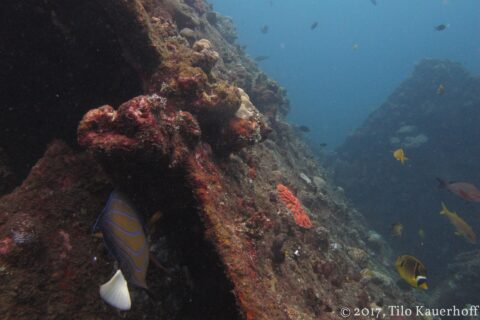 IndonesiaShore dive
The USAT Liberty is a 125 m American cargo ship, torpedoed in 1942 and beached at Tulamben, then pushed into the sea by the eruption of Mount Agung in 1963.
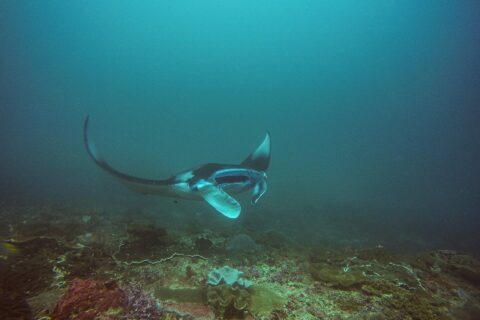
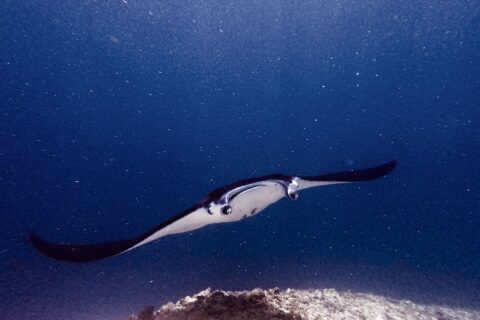
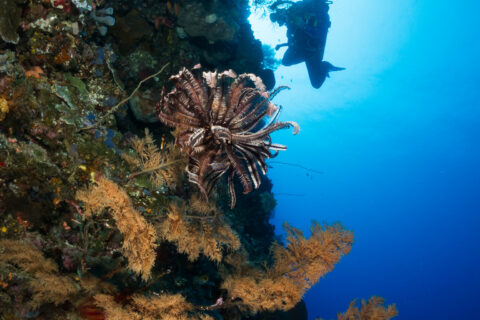
In Raja Ampat, you fin over three quarters of all known hard coral species. On the Blue Magic pinnacle, you settle down, and when the mantas come, they circle their cleaning station for ten to twenty minutes.
The tide rushes between the islands of Komodo, and you dive at slack water or drift among jacks and gray reef sharks. In Lembeh, with almost no current, you watch hairy frogfish and mimic octopus from twenty centimeters away, as the guide finds them on the black sand.
For a first trip, the easiest choice is Bali. You walk in from the beach at Tulamben to the USAT Liberty wreck, and Open Water is enough. The sunfish gets cleaned between 18 and 30 meters at Crystal Bay, on Nusa Penida. The site requires Advanced below 15 meters, for the depth and the down currents.
At Bunaken, in North Sulawesi, green turtles pass by the dozen along the Lekuan walls. Open Water and good buoyancy are enough almost everywhere. For macro, the Lembeh Strait is three hours from Bunaken, by boat and road.
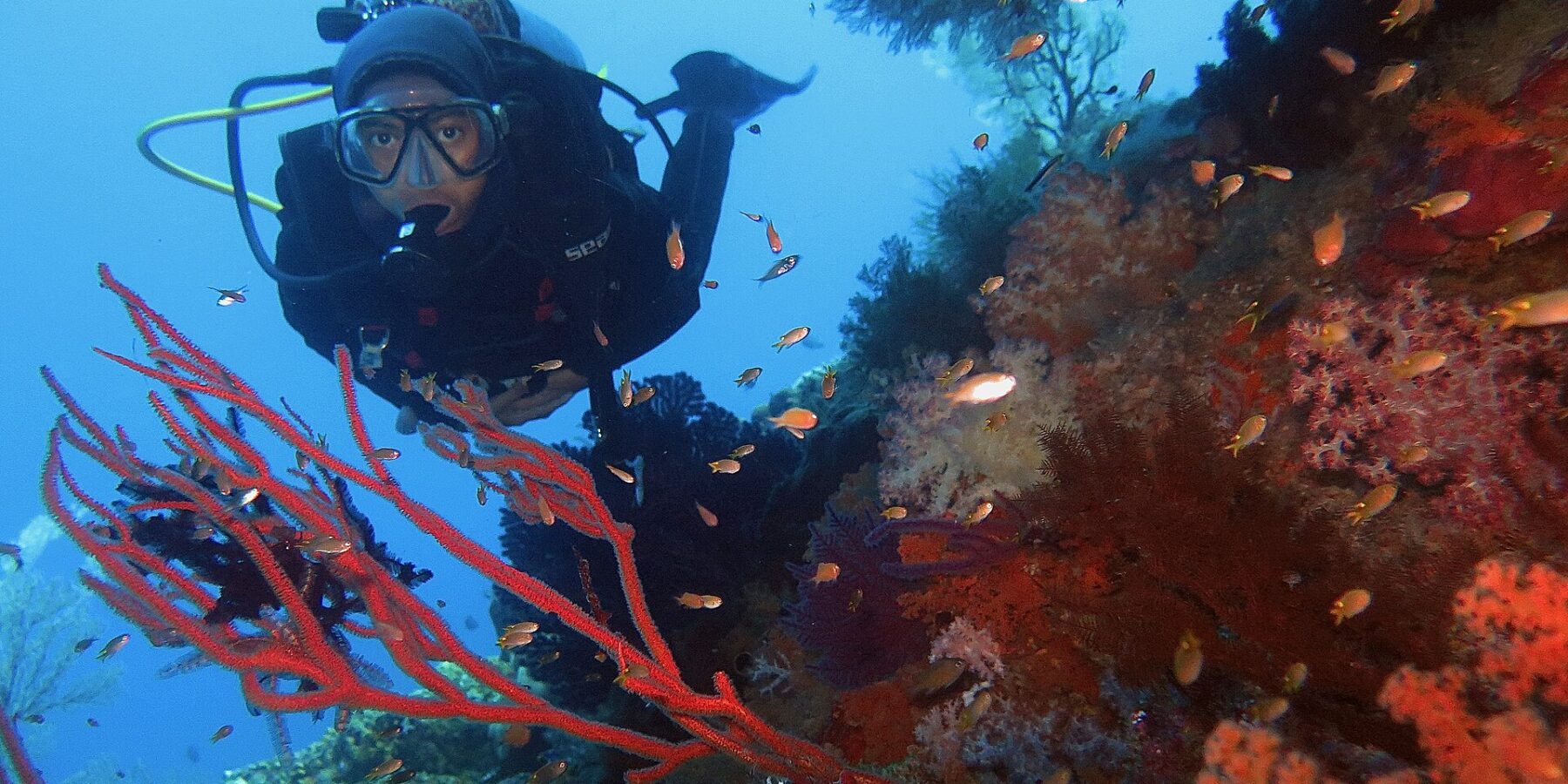
The current sites of Komodo require Advanced and drift diving experience. Boats leave Labuan Bajo every morning, and liveaboards head down to the mantas in the south. Coral and sponges cover Batu Bolong, in the center, without leaving a centimeter of bare rock. In the north, at Castle Rock, you usually meet 5 to 12 gray reef sharks per dive. Dive centers rarely take you there before they have seen you dive.
Current also sweeps all the big sites of Raja Ampat, which requires the same level. The resorts on Kri island put you less than two kilometers from Cape Kri, the record site. For the oceanic mantas of Magic Mountain, in Misool, you need a liveaboard or the area's only resort.
Oceanic mantas gather in Raja Ampat between December and March. In Komodo, mantas and gray reef sharks have different seasons. Mantas come from November to February, but from December to March the rains make trips to the north harder. The gray reef sharks of Castle Rock, in the north, are most numerous from July to September, up to 20 per dive.
At Crystal Bay, the sunfish shows up mostly in August and September, but its dates vary from year to year. From Sanur, on the Bali coast, the same trip also stops at Manta Point, where mantas circle all year.
In North Sulawesi, the best season runs from March to October. The Lembeh critters do not migrate, so the month matters little. The small resorts in the strait, in high demand from July to September, book up several months ahead.
Staying on land, a dive costs about €45 at Bunaken, with guide, boat and tank, but without gear. A day of three dives costs about €147 in Komodo, with lunch and Nitrox. Ask whether the park fees are included, because they cost about €15 a day. Bali charges an IDR 150,000 tax on every stay.
A ten-day liveaboard in Raja Ampat, down to Misool, costs at least €4,280, without flights. A week at a resort on Kri includes the transfer from Sorong, which only runs on Sundays and Wednesdays.
Book a day in Komodo early, even more so from July to October, because the park only accepts 1,000 visitors a day. In Komodo as in Raja Ampat, every diver carries a DSMB. A reef hook only goes on bare rock. At Batu Bolong, which has none, hooking in is banned.
From June to October, the water at Crystal Bay suddenly drops as low as 18°C, and you need a 5 mm wetsuit with a hood. At the cleaning station, stay low against the wall, at least 3 meters away, to let the sunfish rise. Flash is banned, and you never cut off its route to the deep.
Raja Ampat is in Southwest Papua, outside the provinces that the French Foreign Ministry advises against visiting except for essential reasons.
Hotels, apartments and rooms around Sanur, the starting point for dives at Crystal Bay, with current prices.