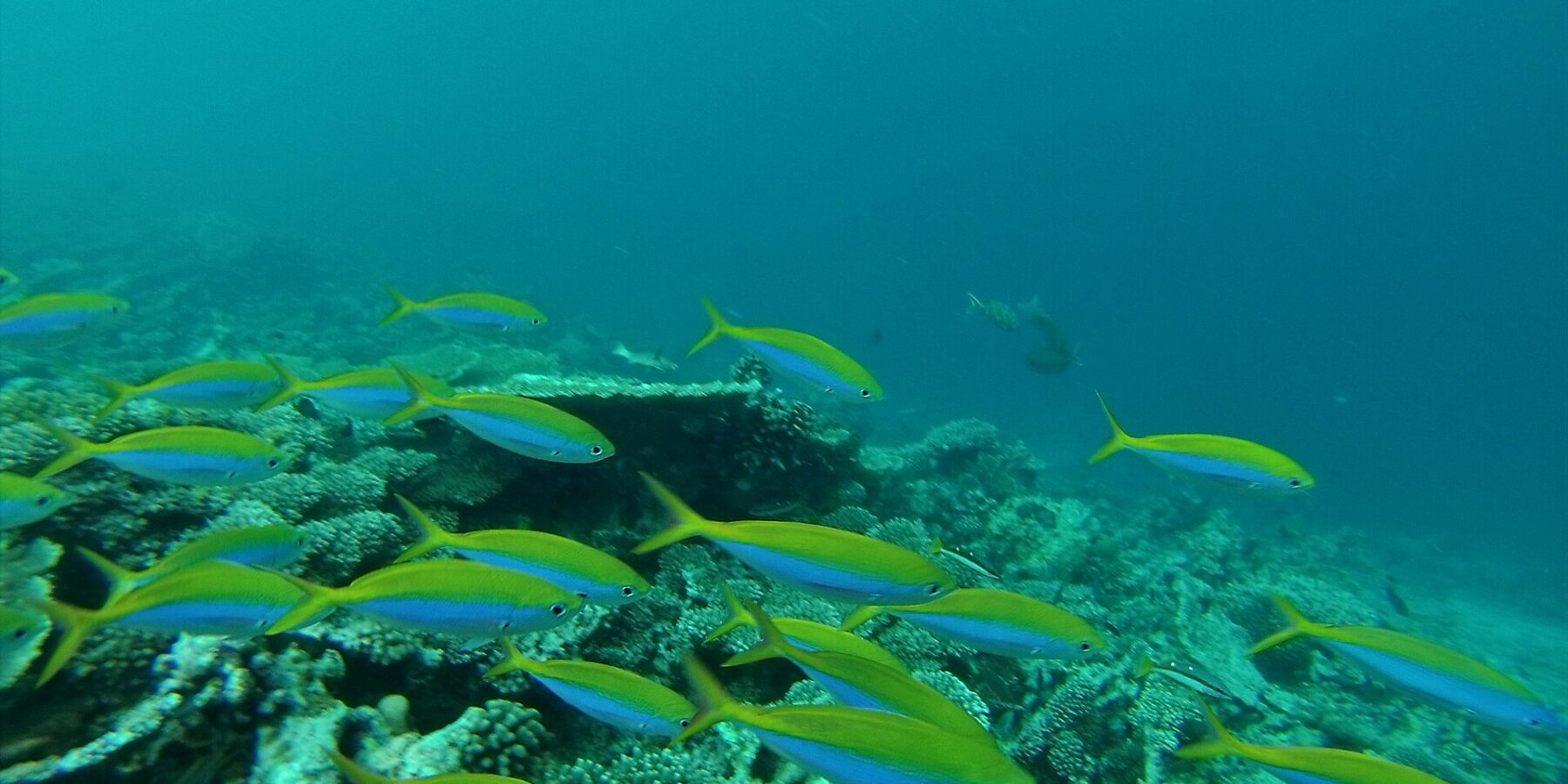
Fusiliers are spindle-shaped fish, often blue and yellow, that swirl by the thousands along walls to feed on plankton. Prey for jacks and sharks, they put on a show year-round at Castle Rock and Batu Bolong, and from October to May at Richelieu Rock.
Where to dive to see the fusiliers?
 IndonesiaReef
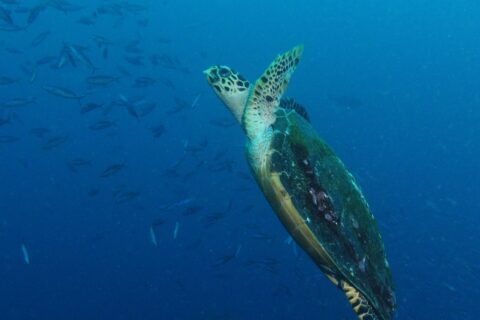
Batu Bolong
KomodoPeak season all year round: by the thousands on the walls, the site's fish soup
 IndonesiaPelagic
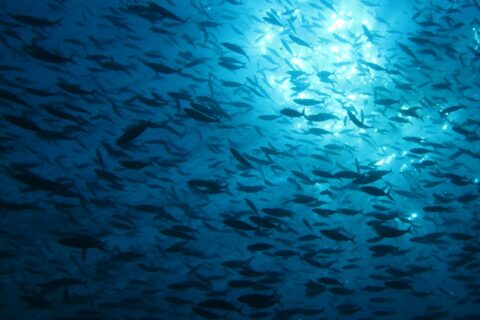
Castle Rock
KomodoPeak season all year round: walls of fish by the thousands, bannerfish around the safety stop
 ThailandReef
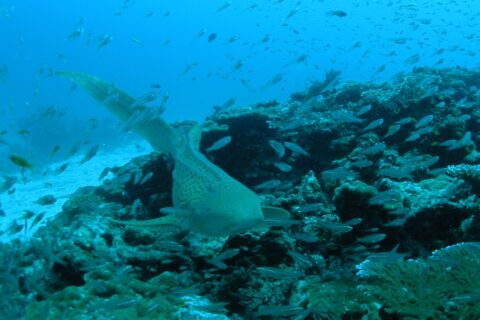
Elephant Head Rock
Andaman Sea: Similan, Surin and LantaPeak season from October to May: hunting around the boulders, especially early in the morning
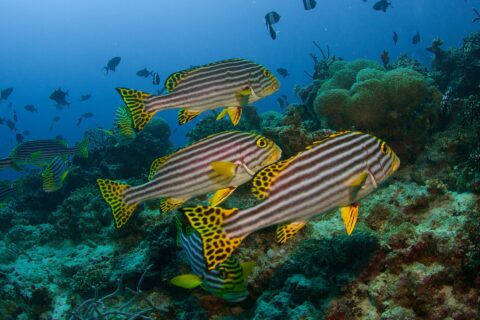
 MaldivesReef
Kuda Rah Thila
Ari and Rasdhoo atollsPeak season all year round: in tight schools around the main block
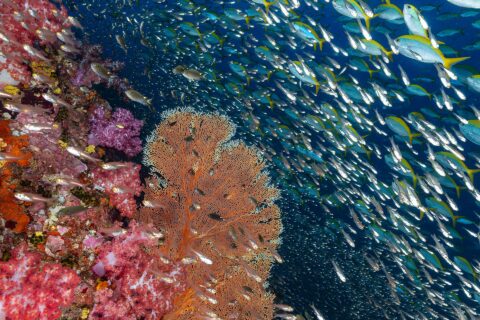 ThailandPelagic
Richelieu Rock
Andaman Sea: Similan, Surin and LantaPeak season from October to May: in walls above the pinnacle, the show on every dive
How do you identify fusiliers?
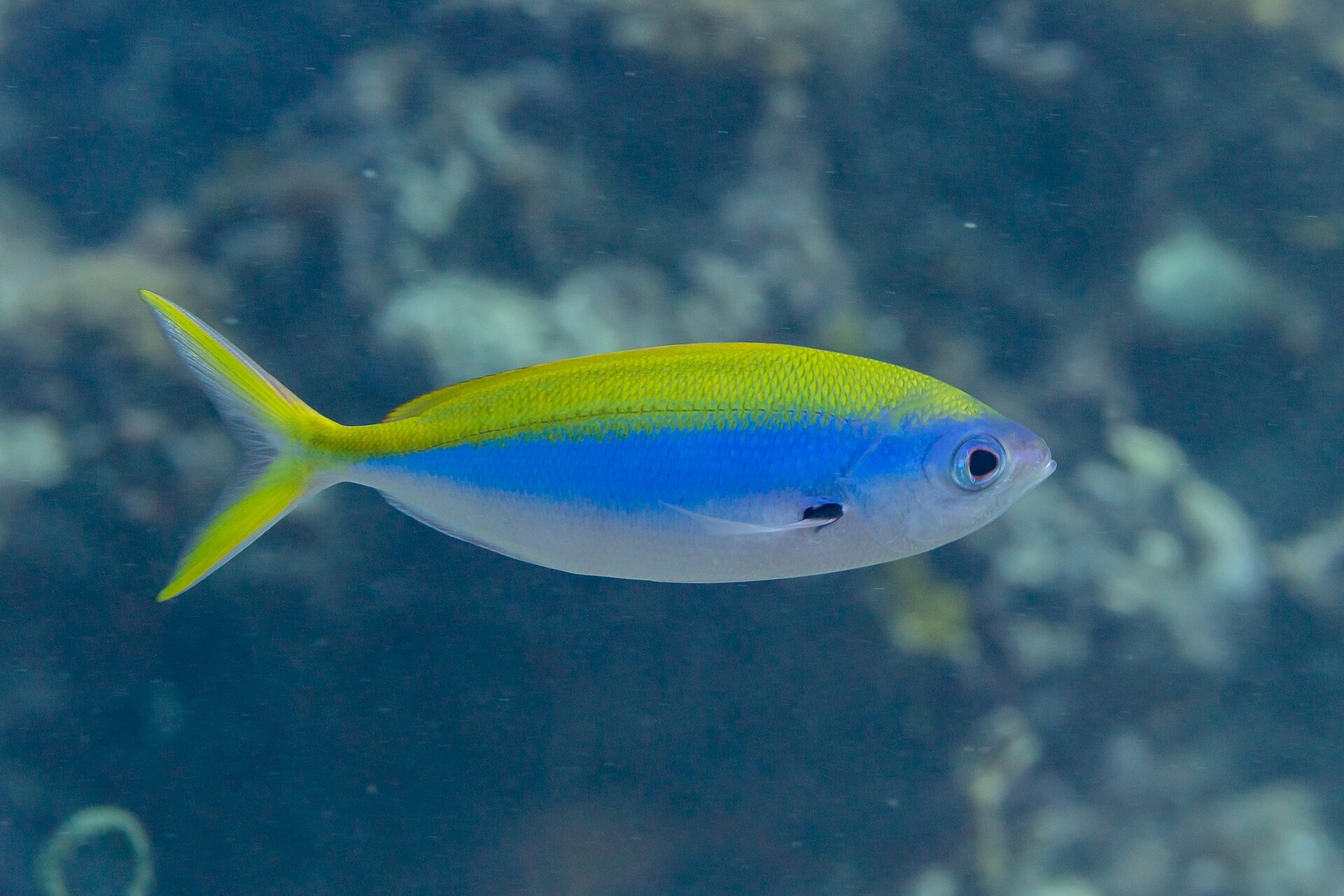
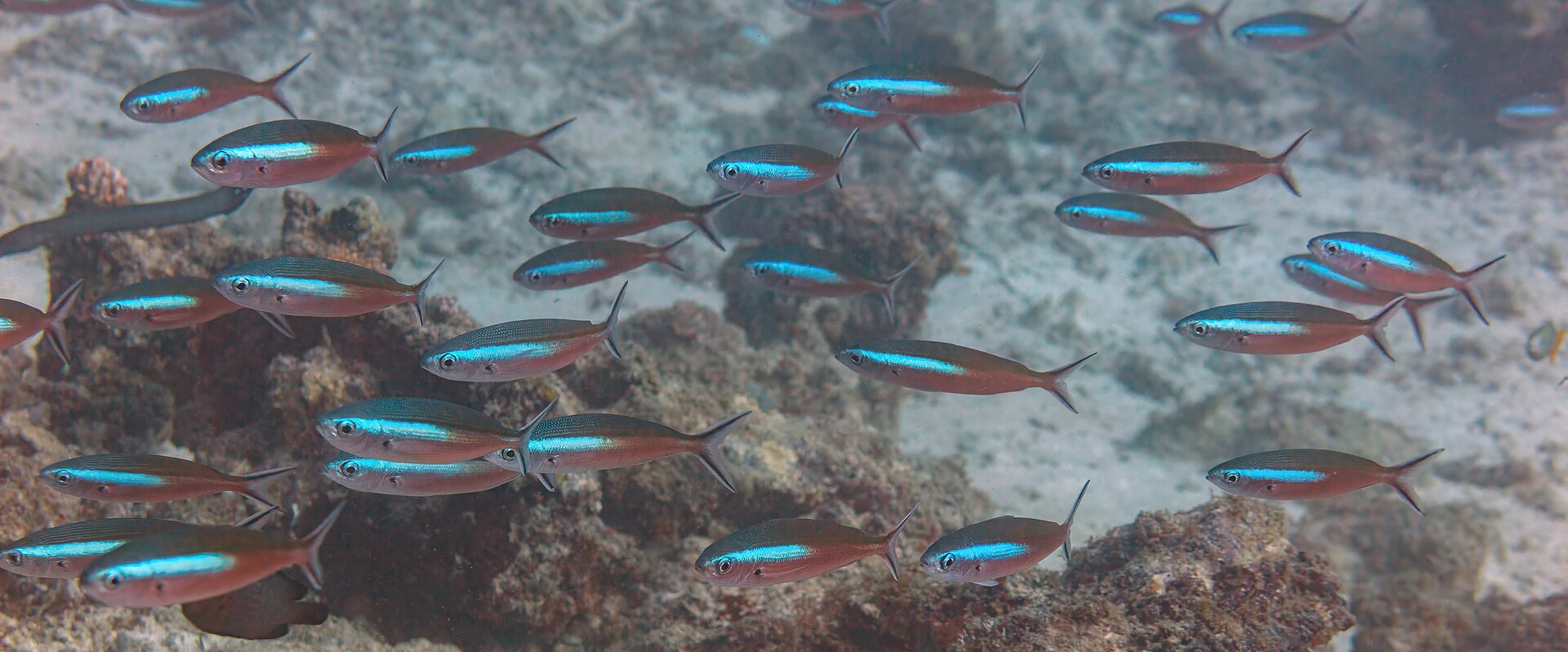
Fusiliers make up the group Caesionidae, which recent classifications place in the snapper family, Lutjanidae. There are about twenty species in four genera, mostly Caesio and Pterocaesio. Their body is an elongated, slightly flattened spindle, ending in a deeply forked tail with angular tips; the mouth is small and protrusible. The largest reaches 60 centimeters, but most species barely exceed half that. Their colors revolve around blue and yellow, and the name Caesio itself comes from the Latin caesius, blue; many have black markings on the tail, and all have a black spot at the pectoral fin axil. The species look alike and their coloring changes, to the point that they are hard to tell apart underwater: in the Maldives, our pages refer to yellowback fusiliers.
Fusiliers in pictures
How do fusiliers live?
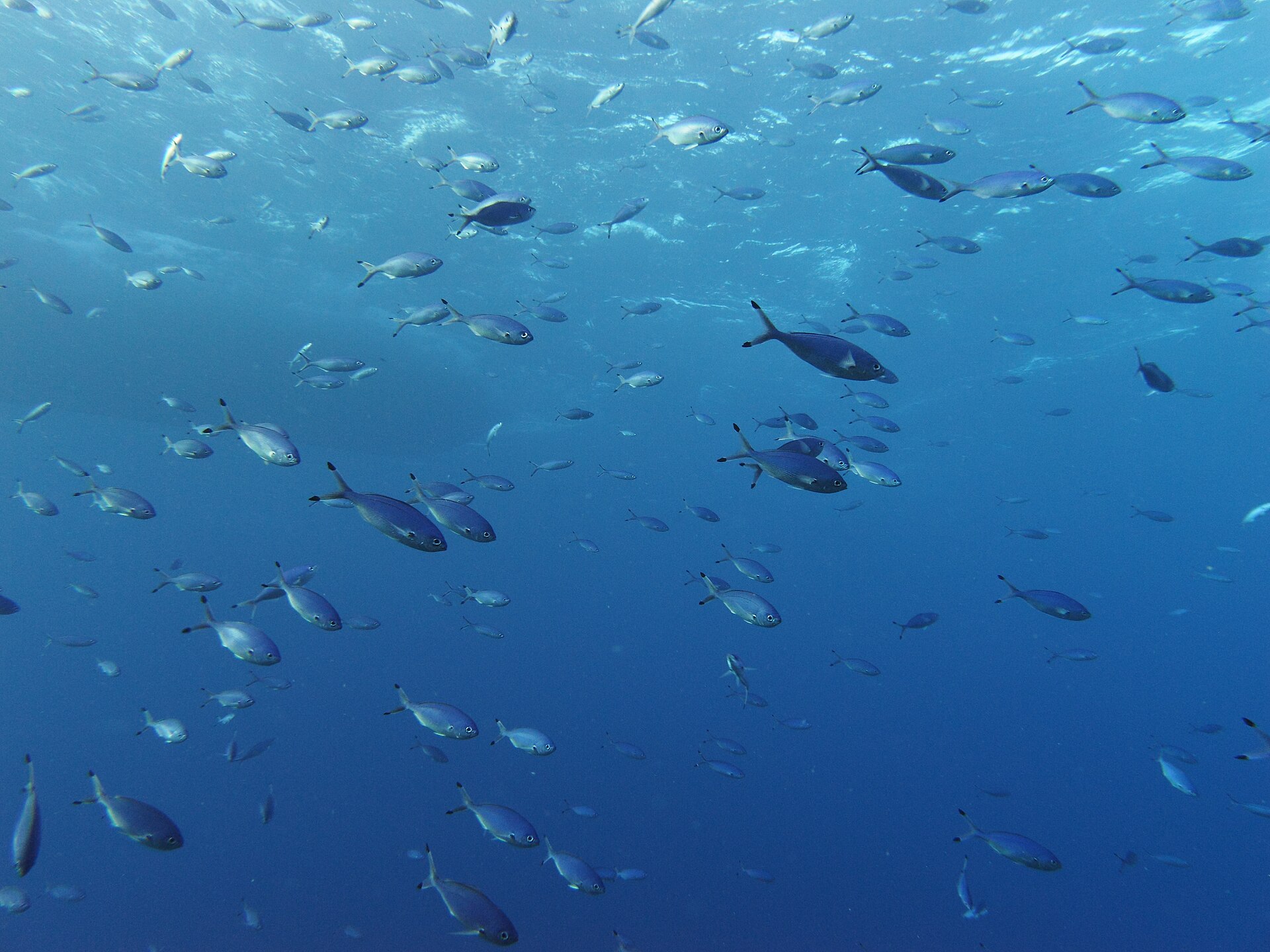
Fusiliers live in the Indo-Pacific and the Red Sea, around coral and rocky reefs, from the surface to 60 meters. They are daytime fish: they spend the day in large schools in open water, often of mixed species, feeding on zooplankton, and shelter in the reef at night. Where the current concentrates plankton, on pinnacles and points, their schools number in the thousands and draw the hunters of the reef. They also matter a great deal to coral reef fisheries, and tuna fishermen use them as bait.
Where and when can you see fusiliers?
In Komodo, Indonesia, fusiliers put on a show year-round. At Castle Rock, with surgeonfish, they form walls of several thousand fish feeding on the plankton brought up by the current, and bannerfish circle around the safety stop; at Batu Bolong, they cover the walls by the thousands with the anthias, the site's fish soup. In the Maldives, yellowback fusiliers wrap the main block of Kuda Rah Thila in tight schools year-round, while gray reef sharks, dogtooth tuna and jacks work their schools. In Thailand, from October to May, they form walls above the pinnacle of Richelieu Rock, the show of every dive, clouds over the sea fans of Koh Tachai, and cruise past Elephant Head Rock, where bluefin trevally hunt through their schools, especially on the first dive of the morning. Our pages also report them at Chumphon Pinnacle, Fish Head and Maaya Thila, Misali and Mnemba, Apo Island, Balicasag and Pescador, and Cape Kri, Blue Magic and Magic Mountain.
Which predators hunt fusiliers?
Fusiliers are the link between plankton and the big hunters: they eat the one and feed the others. On our dive sites, you see giant trevally and Spanish mackerel attacking them at Chumphon Pinnacle, bluefin trevally at Elephant Head Rock, and gray reef sharks, dogtooth tuna and giant trevally at Kuda Rah Thila. Where the fusilier schools are thick, the predators are never far: they are the reason you keep watching the blue.
Our tip
Position yourself at the edge of the wall, facing the current, and let the schools come: that is where they feed on plankton and where the hunters attack them. A wide-angle lens and a little distance capture the mass of the school. Keep an eye on the blue behind them, where the jacks, tuna and sharks come from.