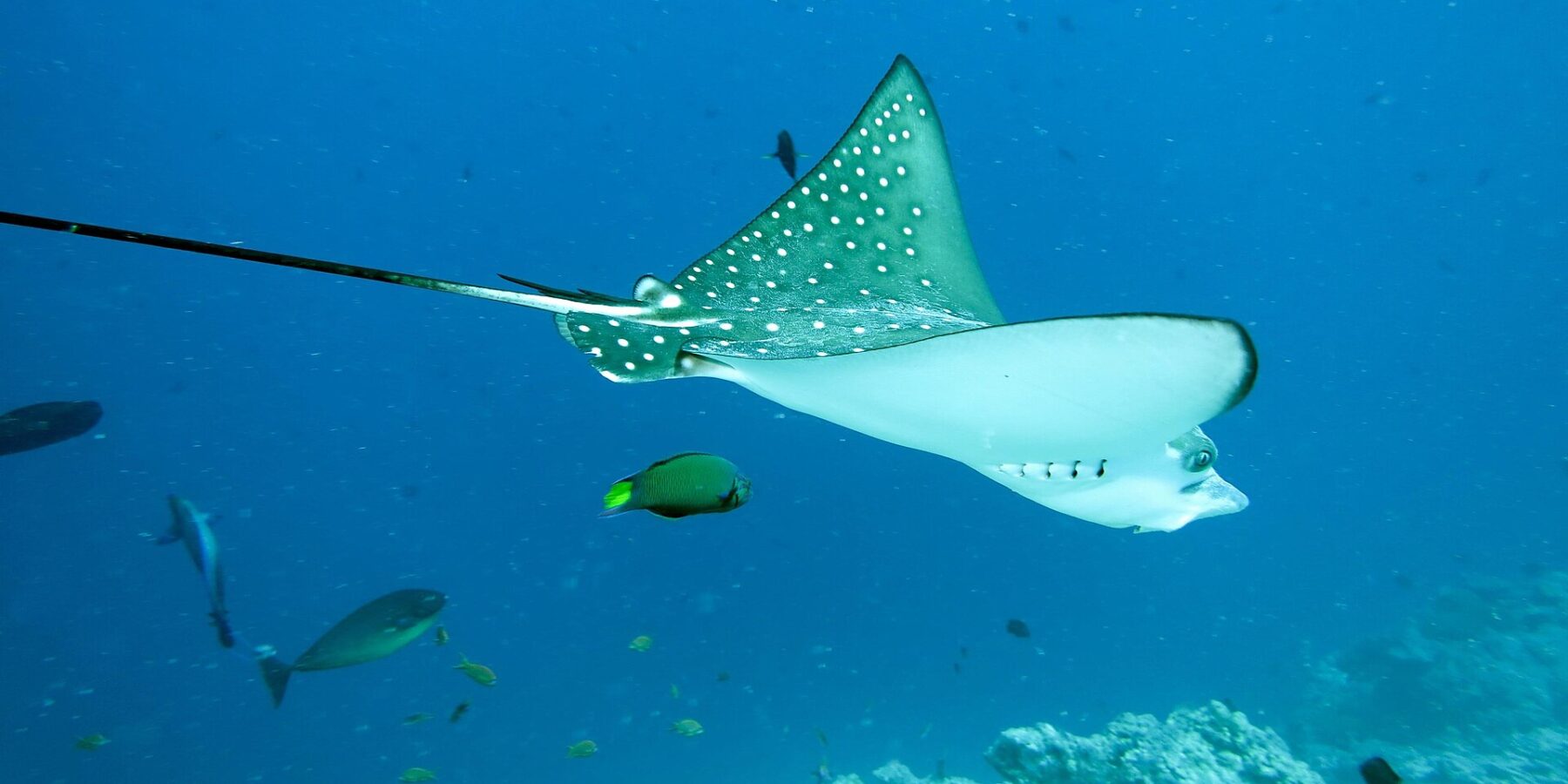
The spotted eagle ray is easy to tell by its dark back dotted with white spots, its pointed snout and its whip-like tail, far longer than its body. It cruises along the walls and through the channels of the Maldives, alone or in small groups. It reaches a 3-meter wingspan, and the IUCN lists it as Endangered.
Where to dive to see the spotted eagle ray?
 FrancePass
Boulari Pass (New Caledonia)
New CaledoniaCan be seen all year round: on Sournois reef
 IndonesiaPelagic
Castle Rock
KomodoPeak season from April to November: on the deep edge, in the flow

 MaldivesReef
Fish Head (Mushimasmingili Thila)
Ari and Rasdhoo atollsCan be seen all year round: passing by in the blue
 TanzaniaPass
Fundu Gap
PembaCan be seen all year round: gliding along the wall, especially on an incoming current
 MaldivesPelagic
Kandooma Thila
Malé atollsCan be seen all year round: passing by in the blue, off the pinnacle
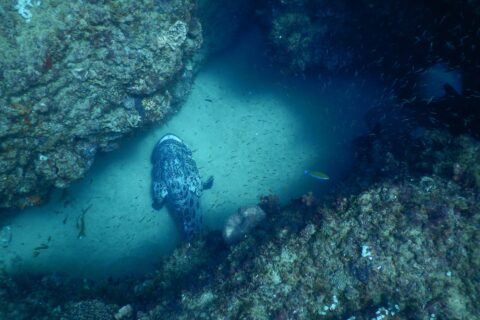 TanzaniaPass
Kinasi Pass
Mafia IslandCan be seen all year round: gliding through the pass, especially with the current
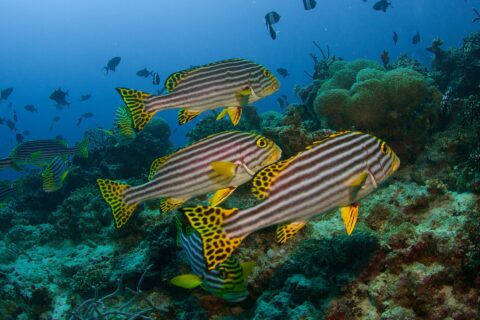 MaldivesReef
Kuda Rah Thila
Ari and Rasdhoo atollsCan be seen all year round: passing through the channel
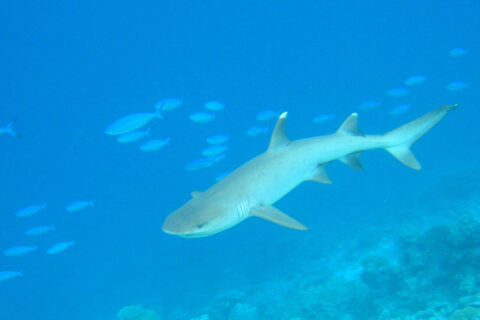 MaldivesReef
Maaya Thila
Ari and Rasdhoo atollsCan be seen all year round: passing by in the blue, along the sides
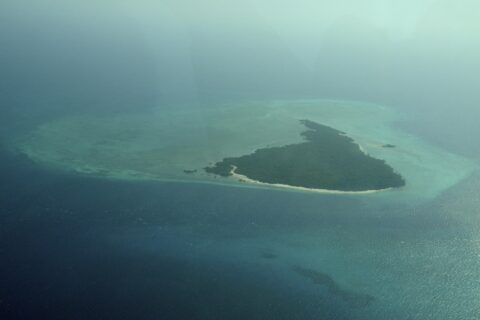 TanzaniaReef
Misali Island
PembaCan be seen all year round: passing in the blue, with no clear season
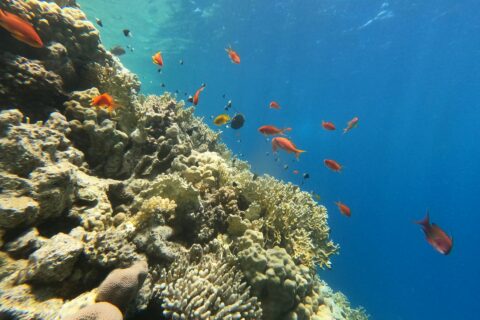
 EgyptReef
Panorama Reef
Central Red Sea, EgyptCan be seen all year round: passing along the walls
 MaldivesPelagic
Rasdhoo Madivaru
Ari and Rasdhoo atollsPeak season all year round: at the edge of the wall, often several together
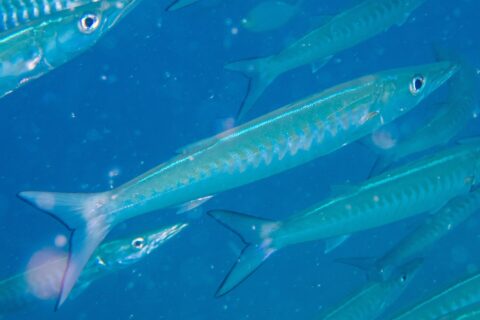
 ThailandPelagic
Sail Rock
Gulf of Thailand: Koh TaoCan be seen all year round: passing by in the blue
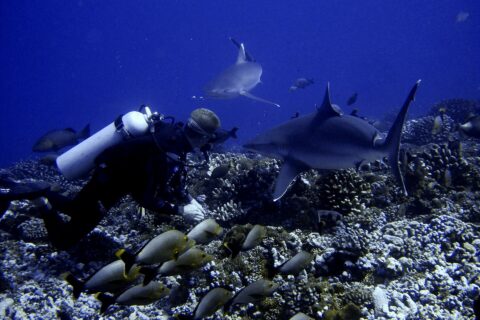 FrancePass
Tiputa Pass (Rangiroa)
French PolynesiaPeak season from December to March: in squadrons around the plateau at the mouth from December to March
How do you identify a spotted eagle ray?
The spotted eagle ray, Aetobatus ocellatus, is the spotted eagle ray of the Indo-Pacific. Until 2010, it was lumped together with the Atlantic species, Aetobatus narinari, from which it has since been split. The disc, diamond-shaped with tapered tips, spans 1.80 meters on average and can reach 3 meters and 200 kilos. The back is dark green to almost black, covered in white dots and rings; the belly is white. The head stands out from the disc and ends in a pointed snout, a bit like a duck's bill, which it uses to dig through the sand. The tail, as thin as a whip, is nearly three times the width of the disc and carries two to six venomous spines at its base: the whole animal, tail included, can exceed 8 meters. It swims by flapping its wings, like a manta, but its outline is slimmer and its spotted back gives it away at once.
How does the spotted eagle ray live?
It lives in tropical coastal waters, from the Red Sea and East Africa to Hawaii and Polynesia, between 1 and 100 meters, most often around 20 to 25 meters. It feeds on the bottom: hermit crabs, whelks, oysters, clams and large mollusks, crustaceans and octopus, which it digs out of the sand and crushes with teeth fused into plates. You see it alone, in pairs or in small groups, sometimes in larger schools in the channels. It is ovoviviparous: after a gestation of more than a year, the female gives birth to up to ten pups, usually four at most. It matures at around 1.55 meters across, which makes the species slow to recover.
Where and when can you see spotted eagle rays in the Maldives?
In the Maldives, you see it all year round on the thilas and in the current-swept channels, where it comes to feed and get cleaned: Kandooma Thila in South Malé Atoll, Fish Head and Kuda Rah Thila in Ari Atoll, Rasdhoo Madivaru, Banana Reef. It usually passes along the edge of the wall or in open water, a few meters off the reef, and veers away as soon as a diver heads toward it. The right approach is the one for every current site: settle at the edge of the plateau, stay still and watch the blue.
Is the spotted eagle ray endangered?
The spotted eagle ray has been listed as Endangered on the IUCN Red List since the 2023 assessment. It is fished for its meat across the Indo-Pacific and caught as bycatch in nets and trawls, even though it breeds slowly. In the Maldives, where manta rays and sharks are protected, it frequents protected sites that are among the most closely watched in the country. Don't chase it, don't touch it, and keep your distance from the tail.
Our tip
Stay low on the reef and keep still: it passes along the edge of the wall or through the channel, often in groups, and veers off as soon as you swim toward it. Keep your distance from the tail, which carries venomous spines at its base. In the current, settle at the edge of the plateau and let it come to you.