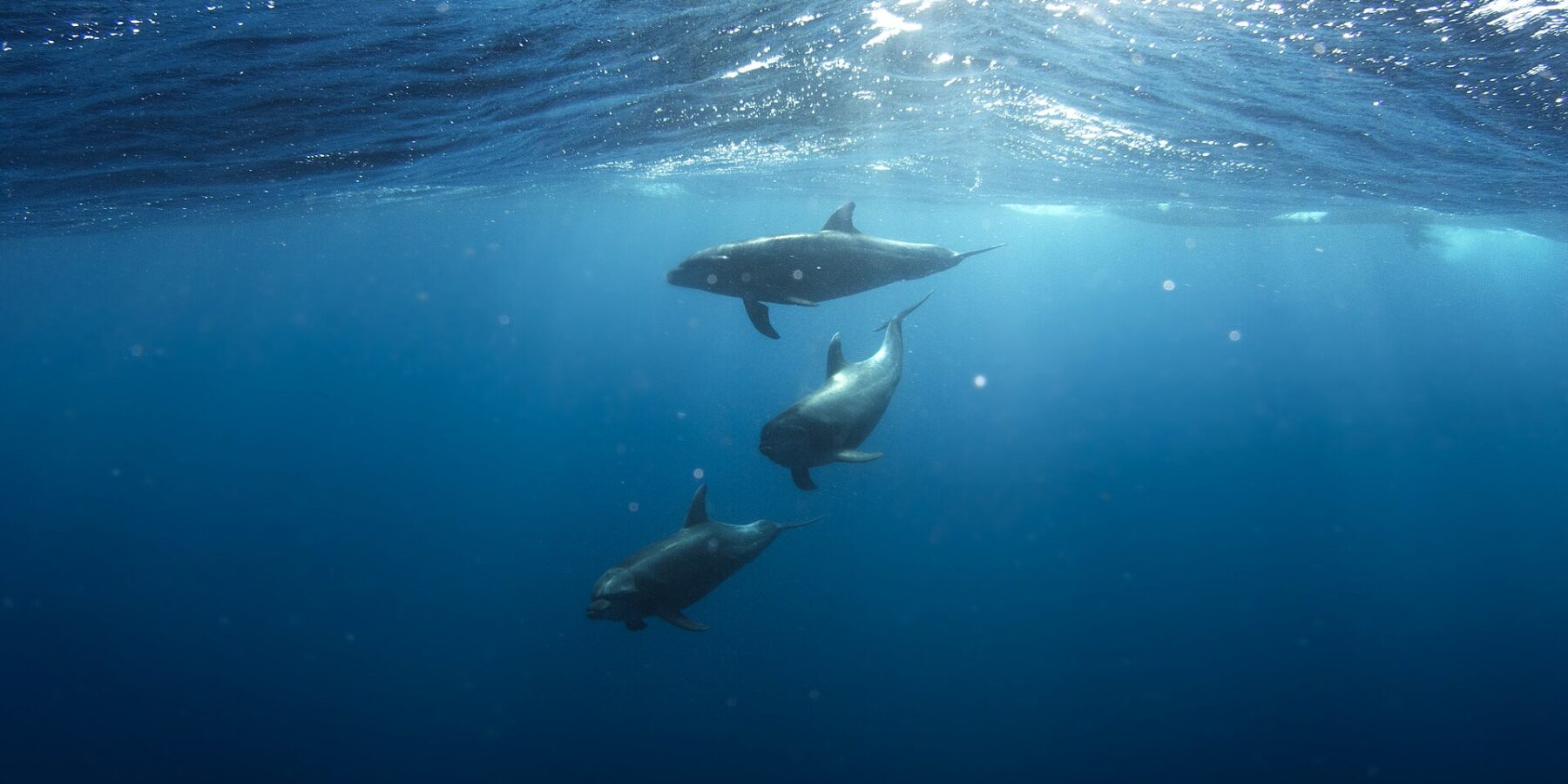
The bottlenose dolphin is a massive gray dolphin with a short beak, 2 to 4 meters long. In the Azores, you see it year-round from the boat between Faial and Pico; underwater, groups pass over divers at Castle Rock, Dirty Rock or El Boiler.
Where to dive to see the bottlenose dolphin?
 AzoresReef
Baixa do Sul
Pico and FaialCan be seen all year round: in the channel, seen from the boat; the channel is protected for it and for the loggerhead turtle
 Costa RicaCave or cenote
Caño Island
South Pacific: Osa and Caño IslandCan be seen all year round: on the boat ride
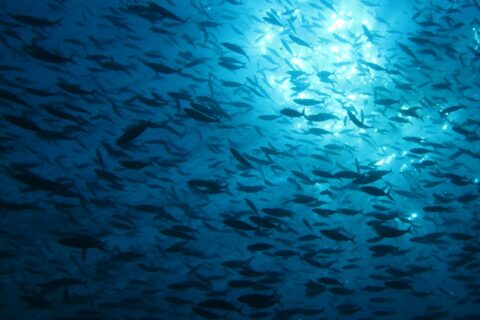
 IndonesiaPelagic
Castle Rock
KomodoCan be seen all year round: pods hunting near the pinnacle or passing over the divers
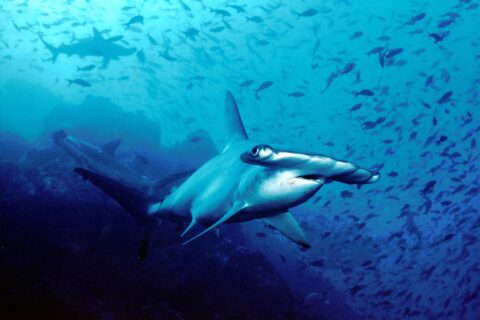 Costa RicaPelagic
Dirty Rock
Cocos IslandCan be seen all year round: hunting the schools of baitfish, sometimes during the dive
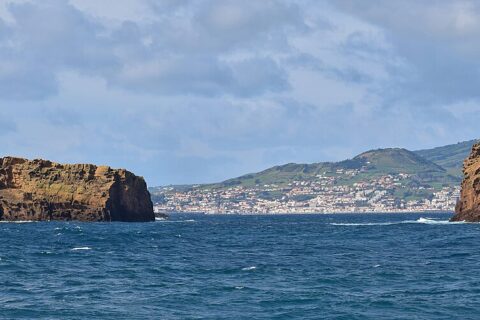 AzoresReef
Ilhéus da Madalena
Pico and FaialCan be seen all year round: around the islets and in the channel, seen from the boat
How do you identify a bottlenose dolphin?
The bottlenose dolphin is a massive dolphin, 2 to 4 meters long and 150 to 650 kilos. It is gray, with no spots or stripes: dark gray, almost black, on the back near the dorsal fin, paler on the flanks and almost white on the belly. Its beak is short and thick, clearly set off from the melon, the rounded forehead it uses for echolocation, and the corners of its mouth draw a smile. The tall dorsal fin, curved backward, rises in the middle of the back. In the Azores, where it shares the water with the common dolphin and the Atlantic spotted dolphin, color is enough to tell them apart: the common dolphin has a tan and gray hourglass on its flank, and the spotted dolphin becomes covered in spots with age.
Bottlenose dolphin in pictures
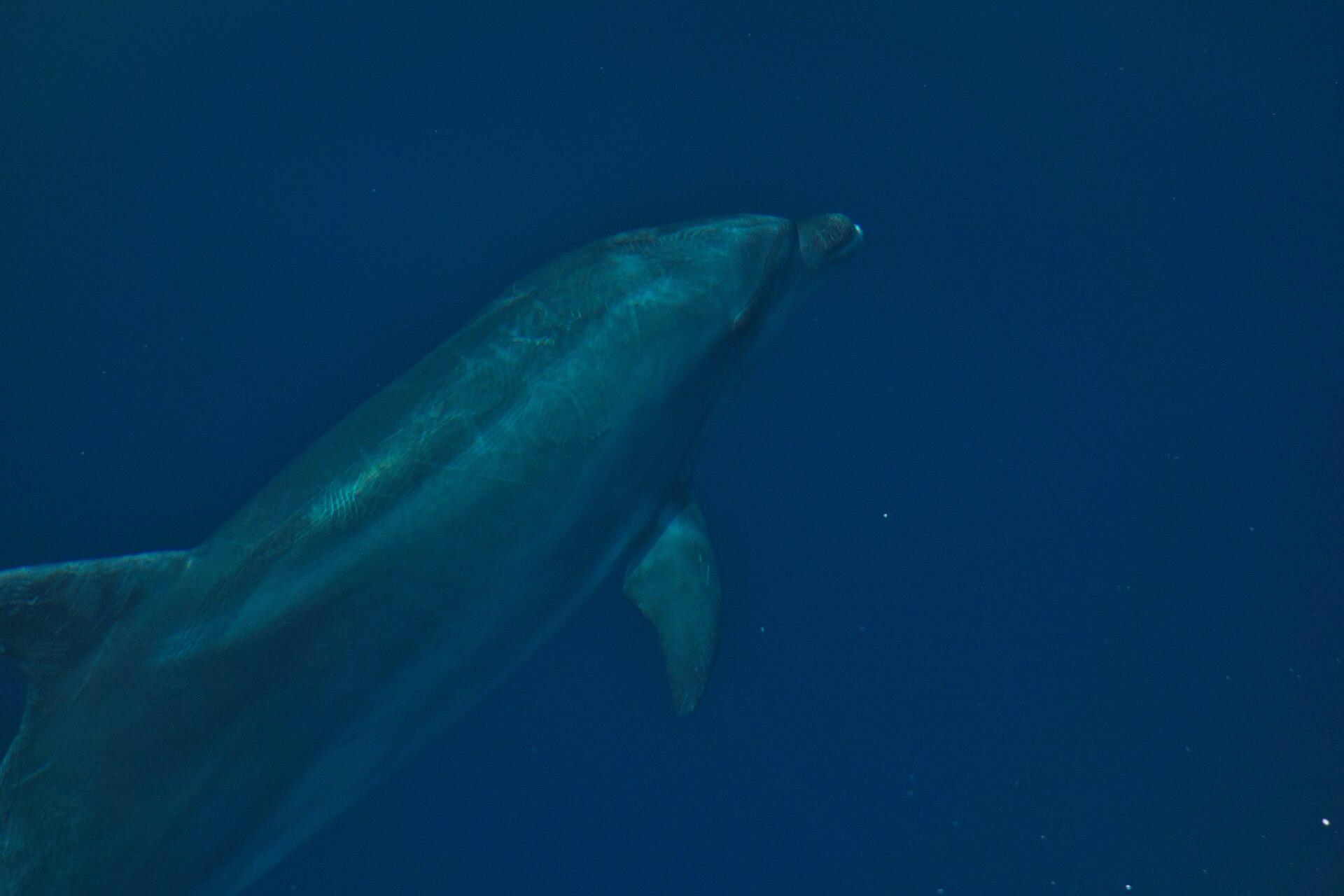
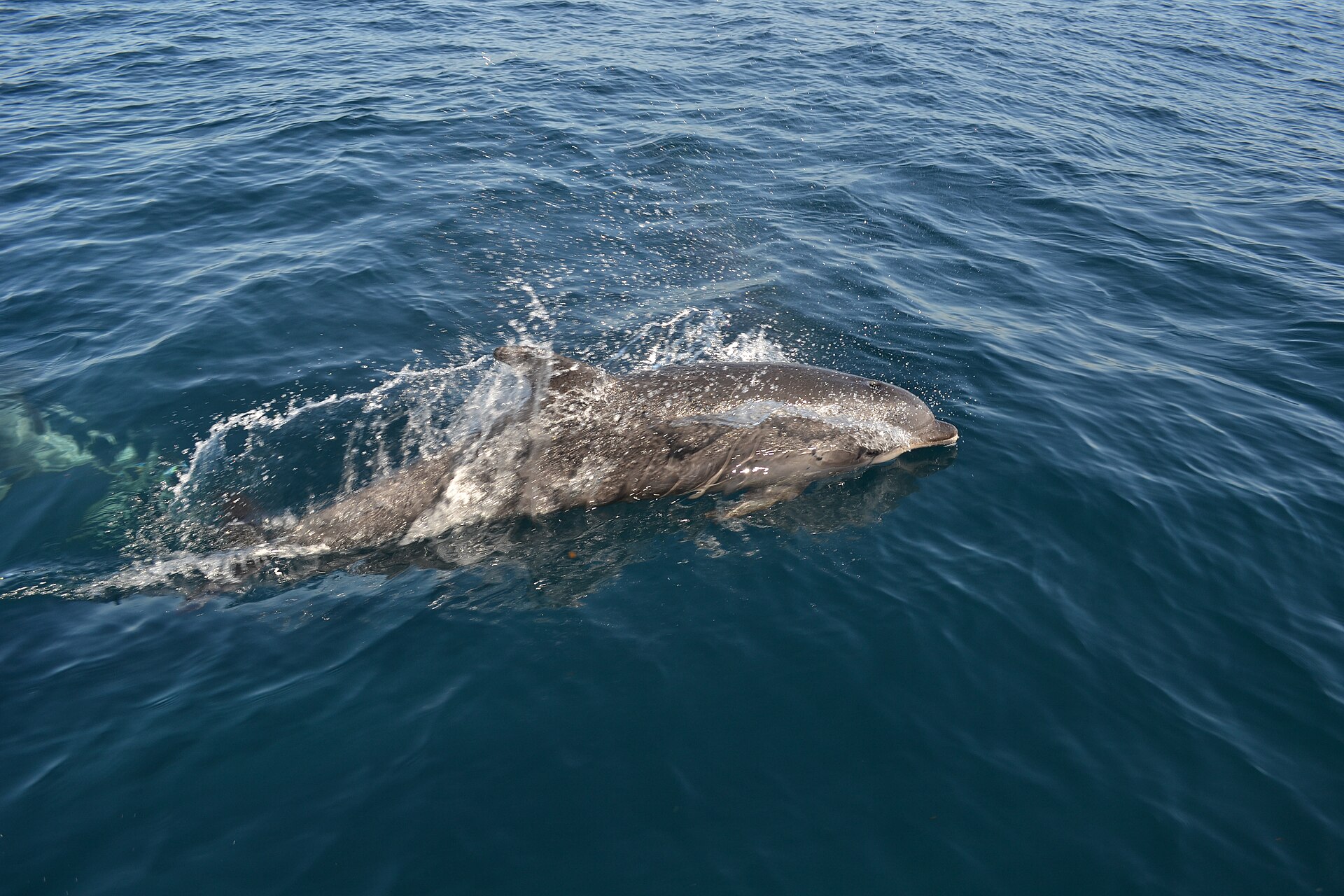
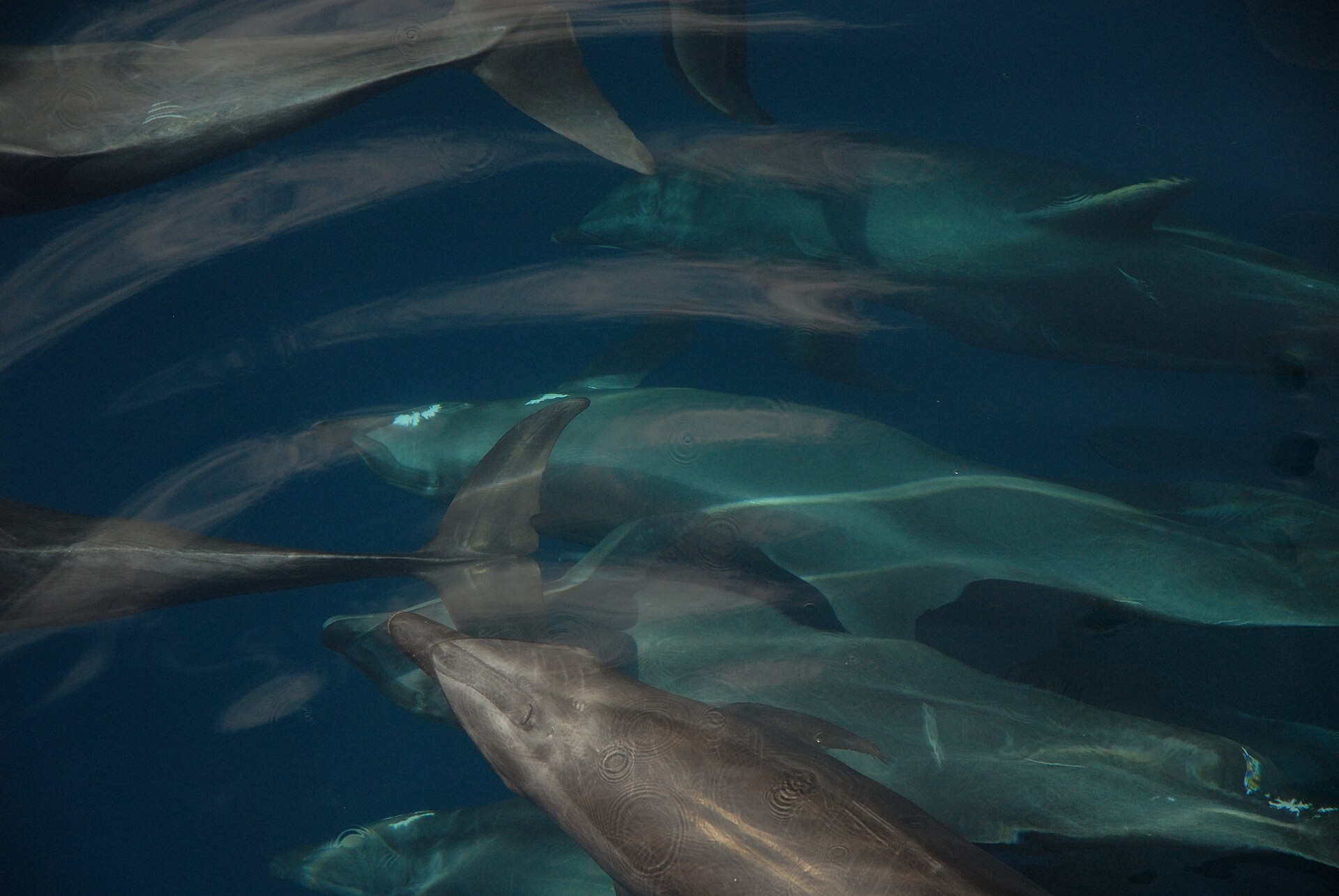
How do bottlenose dolphins live?
The bottlenose dolphin lives in all the temperate, subtropical and tropical seas of the globe, and is absent only from polar waters; there are coastal populations and offshore populations. It lives in groups of very variable size, most often from a pair to about fifteen individuals, sometimes more than a hundred offshore, and these groups form and break up. It feeds on fish, squid and shrimp, which it locates by echolocation; in groups, the dolphins herd the fish into a ball, then take turns cutting through the school. The female gives birth to a single calf after twelve months of gestation and nurses it for about a year and a half. The bottlenose dolphin lives 40 to 60 years, females longer than males.
Where and when can you see bottlenose dolphins?
The bottlenose dolphin appears on eight of our dive sites, and you see it most often from the boat. In the Azores, it uses the channel between Faial and Pico year-round, a Natura 2000 site designated for it and for the loggerhead turtle: you come across it around the Madalena islets and between Madalena and Baixa do Sul. On Santa Maria, it sometimes follows the boat toward Ambrósio, from June to October, as do the common dolphin and the Atlantic spotted dolphin. Underwater, at Castle Rock, in Komodo National Park, groups hunt near the pinnacle and pass over divers year-round; at Dirty Rock, at Cocos Island, they hunt schools of forage fish around the rock, sometimes during the dive. In the Revillagigedo archipelago, Mexico, they visit the El Boiler pinnacle and approach divers, more rarely at Roca Partida, during the liveaboard season, from November to June. In Costa Rica, they also escort the boat toward Caño Island, with spotted dolphins.
Is the bottlenose dolphin endangered?
The bottlenose dolphin is listed as Least Concern on the IUCN Red List, in its 2019 assessment, and in CITES Appendix II, which regulates its international trade. It is still hunted in Japan and the Faroe Islands, and captured for dolphinariums. Its curiosity has made a few celebrities: solitary individuals, such as Fungie in Ireland or Tião in Brazil, sought out the company of swimmers for months, even years, and some injured people. Feeding a wild dolphin makes it lose its wariness and teaches it to link humans with food, which exposes it to propellers and fishing gear: watch it, give it nothing.
Our tip
On the boat ride, keep an eye on the surface: you see it most often from the boat. Underwater, stay together and let it come, without finning toward it or reaching out: at Castle Rock or El Boiler, it is the dolphin that comes to pass over the divers. Never feed it: a fed dolphin loses its wariness, links humans with food and exposes itself to propellers and fishing gear.