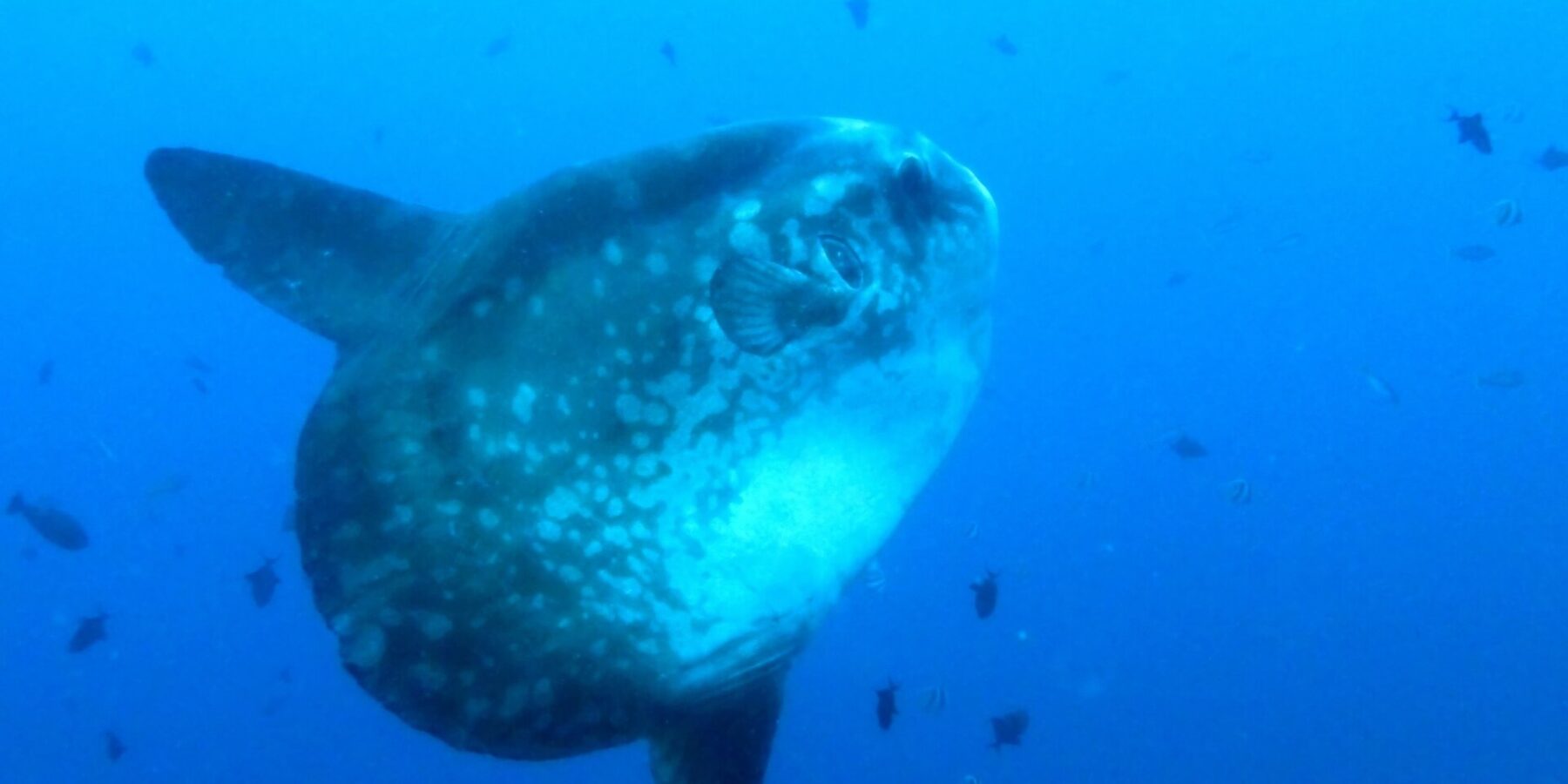
Crystal Bay is a bay on Nusa Penida, off Bali, where sunfish rise to be cleaned from August to October, in 18 to 20°C water. Outside the shelter of the bay, currents pull down and the dive calls for Advanced; Sanur is 45 minutes away by speedboat.
Why dive Crystal Bay?
- The most reliable site in Bali for sunfish, from August to October, at its cleaning stations
- Visibility of 30 to 40 m on good days, the best in Bali, even in the rainy season
- An islet with steep walls, a soft coral plateau to the north, a cave and giant table corals
- Turtles, bluespotted ribbontail rays and small critters on the sand for days without sunfish
- 45 minutes by boat from Sanur, combined with the mantas of Manta Point
Crystal Bay in pictures
What will you see at Crystal Bay?
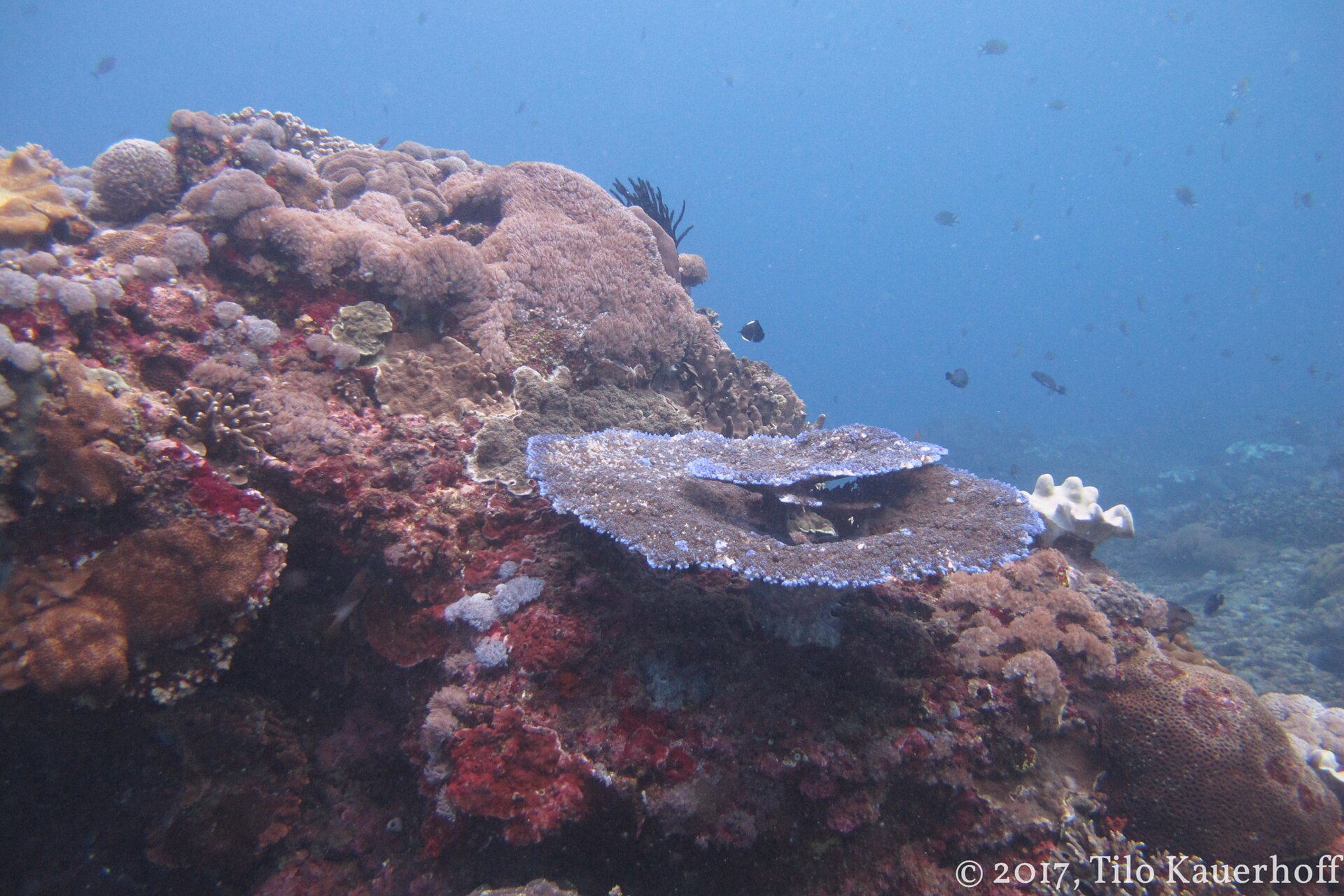
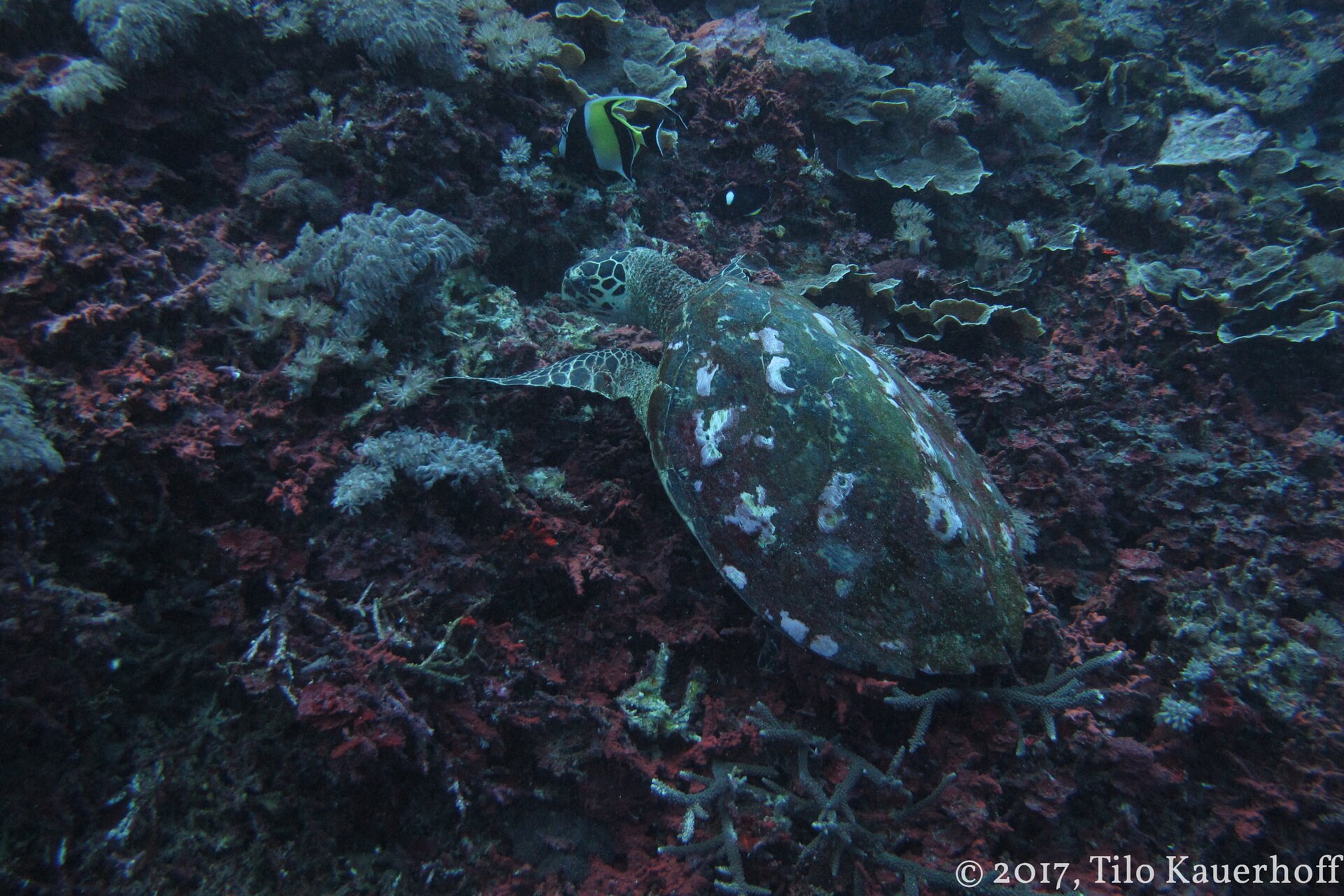
Crystal Bay lives to the rhythm of the sunfish. From June to October, the cold upwellings of the southern winter bring the Bali mola, Mola alexandrini, close to the reef: a two-meter flat fish weighing several hundred kilos that normally lives in deep water. It rises to the cleaning stations on the wall, between 18 and 30 m, where bannerfish pick off its parasites, and encounters are most frequent in August and September. The rest of the year, the bay isn't empty: the islet's wall, covered in hard corals, soft corals, whip corals and sponges, shelters green turtles, morays, lionfish, scorpionfish, tuna and parrotfish; a cave at the north end of the bay serves as a dormitory for small reef sharks, which slip away when divers arrive. The sandy bottom in the middle of the bay delivers the macro, nudibranchs, crabs, shrimp, cuttlefish, and bluespotted ribbontail rays under the boulders. The mantas are at Manta Point, on the other side of the island, year-round.
| Species | J | F | M | A | M | J | J | A | S | O | N | D | Note |
|---|---|---|---|---|---|---|---|---|---|---|---|---|---|
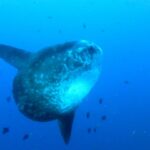 Giant sunfish | rare | rare | rare | rare | rare | possible | peak season | peak season | peak season | peak season | possible | rare | at the cleaning stations on the wall, between 18 and 30 m, when the cold water wells up; best in August and September |
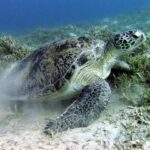 Green turtle | peak season | peak season | peak season | peak season | peak season | peak season | peak season | peak season | peak season | peak season | peak season | peak season | resting on the reef in the bay or swimming along the wall |
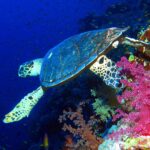 Hawksbill turtle | possible | possible | possible | possible | possible | possible | possible | possible | possible | possible | possible | possible | less common than the green, on the islet's wall |
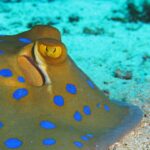 Bluespotted ribbontail ray | peak season | peak season | peak season | peak season | peak season | peak season | peak season | peak season | peak season | peak season | peak season | peak season | on the sand at the bottom of the bay, under the boulders |
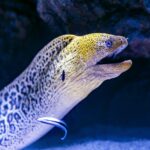 Giant moray | peak season | peak season | peak season | peak season | peak season | peak season | peak season | peak season | peak season | peak season | peak season | peak season | in the cracks of the wall |
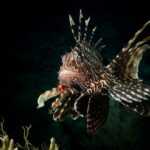 Lionfish | peak season | peak season | peak season | peak season | peak season | peak season | peak season | peak season | peak season | peak season | peak season | peak season | under the islet's overhangs |
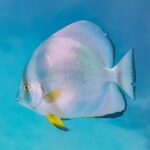 Orbicular batfish | peak season | peak season | peak season | peak season | peak season | peak season | peak season | peak season | peak season | peak season | peak season | peak season | in small schools along the wall |
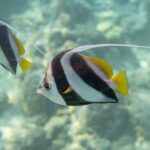 Bannerfish | peak season | peak season | peak season | peak season | peak season | peak season | peak season | peak season | peak season | peak season | peak season | peak season | bannerfish clean the molas; tuna, parrotfish, clownfish and scorpionfish on the wall |
| Schooling reef fish | peak season | peak season | peak season | peak season | peak season | peak season | peak season | peak season | peak season | peak season | peak season | peak season | bannerfish clean the molas; tuna, parrotfish, clownfish and scorpionfish on the wall |
| Sleeping reef sharks | possible | possible | possible | possible | possible | possible | possible | possible | possible | possible | possible | possible | small sharks resting in the cave at the north end of the bay, which leave as divers approach |
| Sand macro: nudibranchs, crabs, shrimp, cuttlefish | peak season | peak season | peak season | peak season | peak season | peak season | peak season | peak season | peak season | peak season | peak season | peak season | on the sandy bottom in the middle of the bay, for the safety stop |
peak seasonpossiblerare
What is diving like at Crystal Bay?
The dive starts in the sheltered bay, over a gently sloping sandy bottom, then follows the wall of the central islet, with steep drop-offs on the south and west sides and a soft coral plateau to the north. Most of the dive stays between 5 and 15 m; for the mola, you go down to the cleaning stations, between 18 and 30 m, and that's where the dive gets technical. Once you leave the bay, the current is strong and shifts direction, and it isn't just horizontal: the cold water cascades over the reef and pulls down, and the swell surges near the rocks that break the surface. A big rock marks the entrance to the channel, where the flow picks up. Visibility tops 30 m on good days, sometimes 40, and rarely drops below 20. Advanced level beyond 15 m, your own SMB, and a 5 mm wetsuit from June to October; don't circle the whole islet without a favorable current and a guide who knows it.
When to dive Crystal Bay?
idealgoodnot recommended
The site is dived year-round, and divers come for two opposite seasons. From November to May, the water holds at 26 to 28°C, the sea is gentler and visibility stays good, even during the December to March rains; this is the season for easy dives on the wall and reef. From June to October, cold upwellings drop the water to between 18 and 24°C, with sharp thermoclines where it goes from 27 to 19°C in a few meters: this is sunfish season, July to October depending on the year, peaking in August and September. The crowds follow, and Crystal Bay then becomes the most dived site on Nusa Penida. Either way, the tide schedule decides the trip: outside the shelter of the bay, the current in the channel between Nusa Penida and Nusa Ceningan quickly turns violent.
How to get to Crystal Bay?
Crystal Bay is on the west coast of Nusa Penida, facing Nusa Ceningan, 30 to 45 minutes by speedboat from Sanur, on Bali's southeast coast. Two Fish Divers, which runs a center in Sanur and another on Nusa Penida, organizes the day from Sanur with hotel pickup around 7:30 a.m., two dives, lunch on board and a third dive before returning around 4 p.m.; on Nusa Penida, the same center sells the two morning dives for IDR 1,925,000 in high season, July 1 to November 30, and IDR 1,825,000 the rest of the year, the third dive for IDR 750,000 and full gear for IDR 150,000 a day, with an IDR 150,000 surcharge for Manta Point. The Nusa Lembongan dive centers, such as World Diving, go there too, two dives for IDR 2,000,000. Staying on one of the two islands lets you dive early, before the boats from Bali arrive. On top of that come the IDR 150,000 provincial levy, IDR 25,000 to enter the island and IDR 100,000 a day for the marine area.
Stay in Sanur
Where to find a dive guide in Crystal Bay?
Guided tours you can book online, ranked by number of reviews. These are affiliate links: if you book, you support us at no extra cost.

 Viator
Open Water Course in Nusa Lembongan - Get Certified on remote island (next Bali)
5.0 (1,005 reviews)View and book Viator
2 Days Discover Scuba Diving in Nusa Lembongan - Scuba Initiation
5.0 (666 reviews)View and book Viator
Advanced Open Water Course - Advanced Certification in Lembongan (next to Bali)
5.0 (290 reviews)View and book Viator
5 Fun Dives in Nusa Lembongan (for certified divers) - Swim with a Mola Mola
5.0 (250 reviews)View and book Viator
Nusa Penida Two Dives Trip for Certified Divers
5.0 (205 reviews)View and book Viator
7 Fun Dives in Nusa Lembongan (for certified divers) - Premium Value Package
5.0 (139 reviews)View and bookWhere to stay near Crystal Bay?
Hotels, apartments and rooms around Sanur, with current prices.
Which sunfish do you see at Crystal Bay?
The Nusa Penida sunfish isn't the Mola mola of the field guides but Mola alexandrini, the bump-head sunfish, recognizable by the bump on its forehead and chin and by its rounded clavus, the fin that serves as its tail. It is the heaviest bony fish in the world: a specimen measuring 3.25 m and weighing 2,744 kg was weighed in the Azores in 2021. It lives offshore and in deep water, at 17 to 25°C, and it's the cold water of the southern winter that brings it close to the Nusa Penida reefs, where it rises to be cleaned by bannerfish and then sometimes warms itself at the surface, lying on its side. Indonesia's marine ministry has placed it under a protection plan, and the Nusa Penida marine area has set a code of conduct that dive centers enforce.
What is a sunfish encounter like at Crystal Bay?
The guide leads the group down the wall to the station, between 18 and 30 m, and has everyone settle low against the reef, away from the boulders. The mola comes up from the deep, slowly, and positions itself above the station; the bannerfish rise to clean it. The rule is to wait until it has been steady for a minute before approaching, to stay 3 m away, never to block its way down or pass above it, and to keep your flash off. If it comes closer, you don't move; if it leaves, you don't follow. An encounter lasts a few minutes, sometimes a quarter of an hour when no one disturbs it, and at that depth the cold ends up deciding when the dive is over.
How do you combine Crystal Bay with Manta Point and Lembongan?
The classic day from Bali pairs Crystal Bay with Manta Point, at the southwest tip of Nusa Penida, a cleaning station on a sandy bottom where reef mantas circle year-round, shallower than 15 m, sometimes seven or eight at a time, with turtles, nurse sharks and stingrays; the sea there is sometimes too rough, and dive centers then switch to Manta Bay, more sheltered, at 12 m maximum. The third dive is on Nusa Lembongan or the north coast of Penida, at Toyapakeh, Pura Ped or Buyuk, warmer, calmer coral slopes where a mola or a ray still passes now and then.
Our tip
Come in August or September, stay on Nusa Penida or Lembongan and book two mornings. Bring a 5 mm wetsuit and a hood: the water suddenly drops to 18°C. Settle low against the wall, stay still and let the sunfish rise to the station.
Other dive sites nearby
 IndonesiaShore dive
USAT Liberty wreck
Bali and Nusa Penida IndonesiaPelagic
Castle Rock
Komodo IndonesiaReef