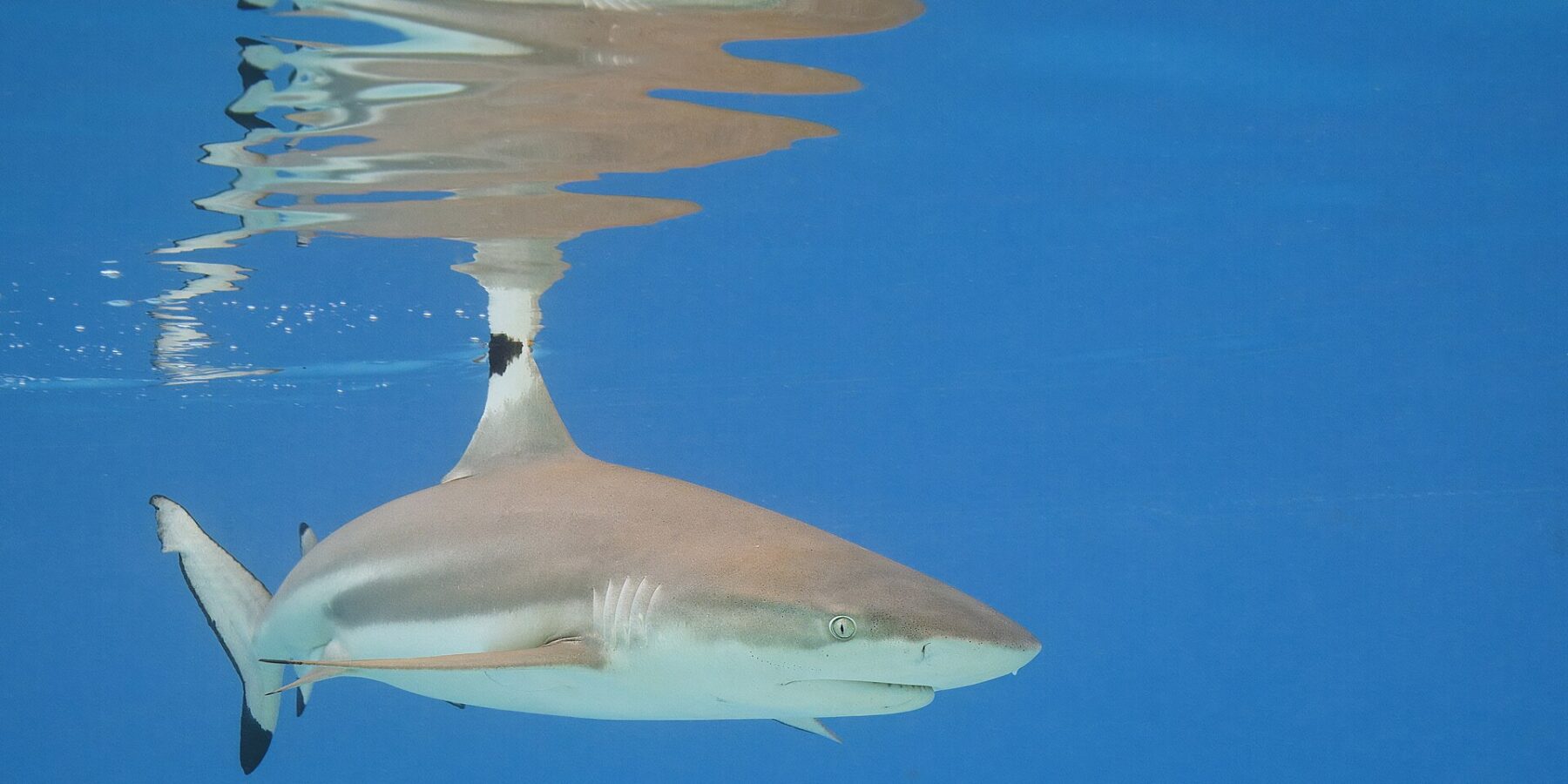
The blacktip reef shark lives in lagoons and on reef flats; it averages 1.60 meters and has a black tip on every fin. Shy, it swims in shallow water from the Red Sea to Polynesia and passes Koh Tachai, Apo Island and Komodo; listed as Vulnerable, it flees from divers.
Where to dive to see the blacktip reef shark?
 PhilippinesReef
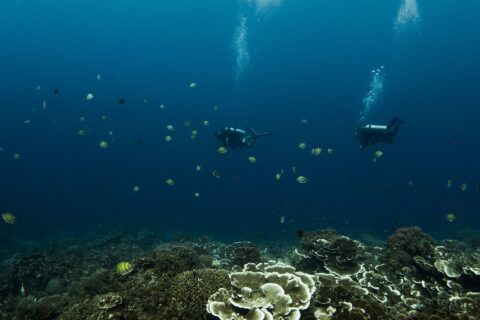
Apo Island
Visayas: Cebu, Bohol and NegrosCan be seen all year round: at Mamsa Point and Rock Point
 IndonesiaPelagic
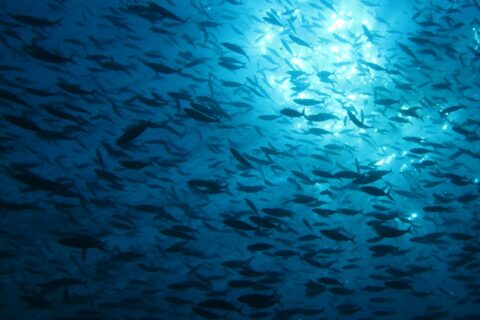
Castle Rock
KomodoPeak season all year round: whitetips almost guaranteed on every dive, on the deep flanks
 ThailandPelagic
Koh Tachai Pinnacle
Andaman Sea: Similan, Surin and LantaCan be seen all year round: passing by at the edge of the boulders
 IndonesiaShore dive
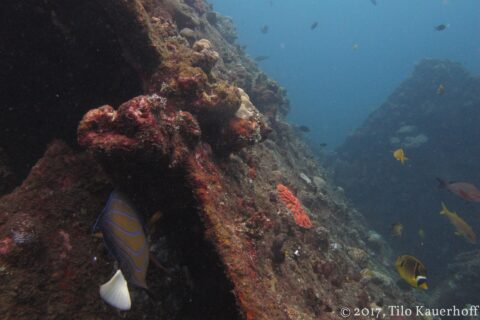
USAT Liberty wreck
Bali and Nusa PenidaCan be seen all year round: rare, off the stern
How do you identify a blacktip reef shark?
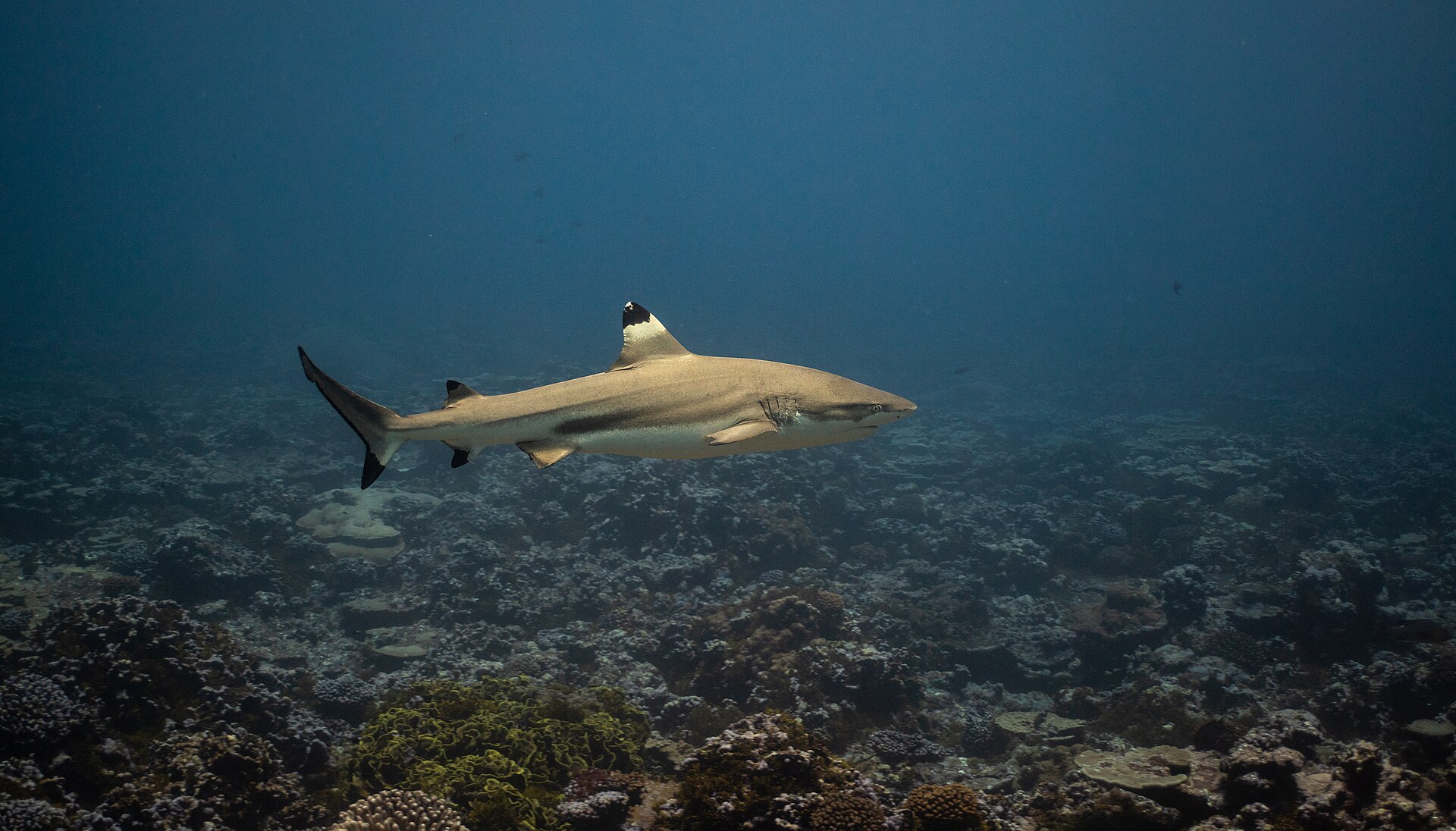
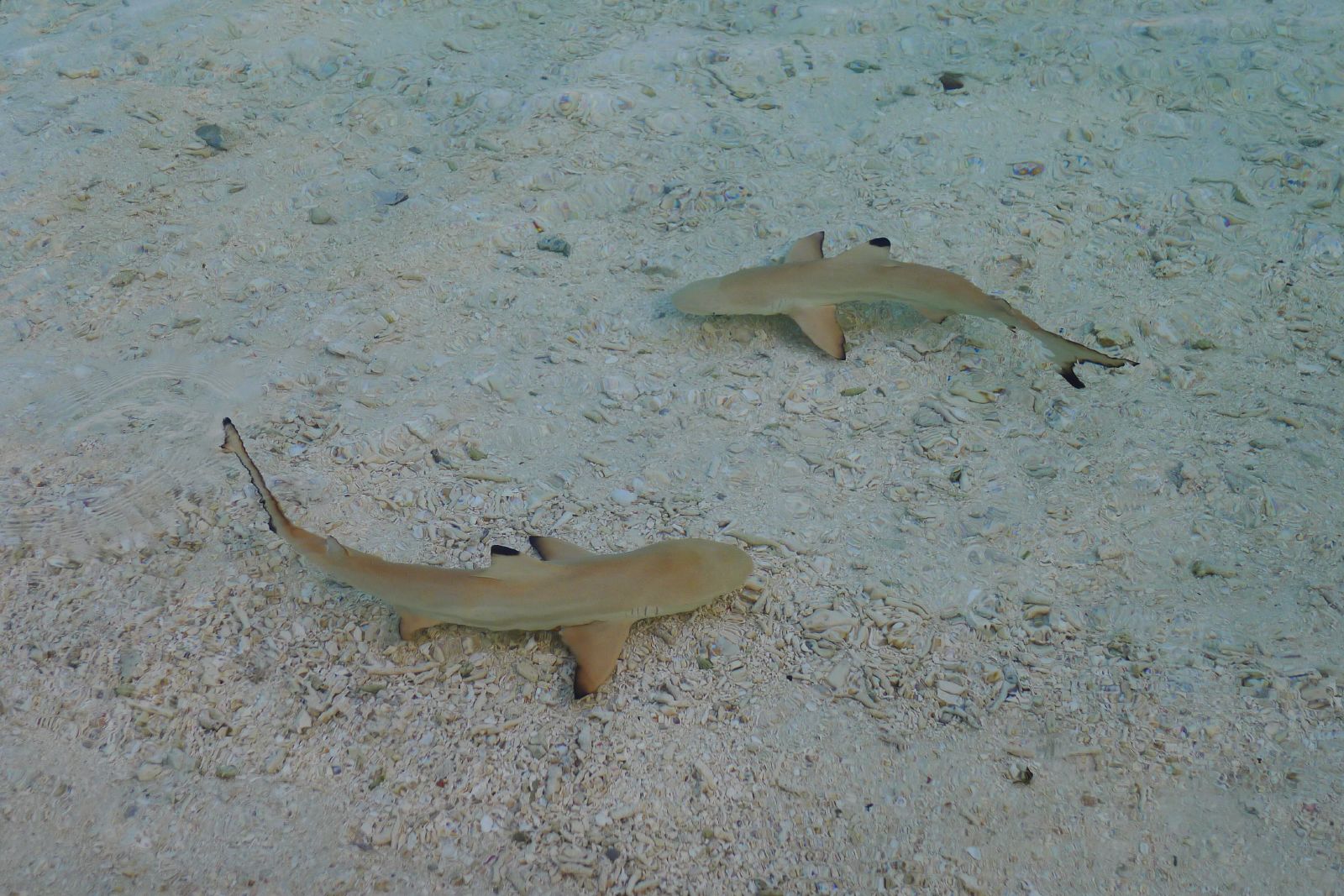
The blacktip reef shark is a modest-sized shark: 1.60 meters on average, rarely over 1.80 meters, 2 meters at most, and 13.6 kg for the heaviest recorded; females are larger than males. The back is pale gray-brown and the belly white, with a white band on the flanks. Every fin has a black tip edged with a paler band, very bold on the first dorsal fin and the lower tail lobe: that is its signature, visible as soon as it passes under the surface. The snout is short, broad and rounded, the eyes oval and fairly large. Do not confuse it with the gray reef shark, whose tail has a broad black margin rather than a simple tip.
Blacktip reef shark in pictures
How does the blacktip reef shark live?
It is the shark of shallow coastal waters across the tropical Indo-Pacific, from South Africa and the Red Sea to Southeast Asia, northern Australia, New Caledonia and the Pacific islands, including Polynesia and Hawaii; having come through the Suez Canal, it has settled in the eastern Mediterranean. You find it most often a few meters deep, on reef flats, in lagoons and over sand, sometimes in estuaries and even in fresh water, in Madagascar and Malaysia; it rarely goes deep, 75 meters at most. Juveniles grow up on sandy shallows and in mangroves. Fast and active, alone or in small groups, it constantly patrols the edge of the reef, more active at night than by day, and it is a homebody: its home range, about half a square kilometer, is among the smallest of all sharks, and the same individual stays in the same place for years. It eats small bony fish such as mullets, groupers, jacks, wrasses or surgeonfish, plus squid, octopus and crustaceans, and now and then a sea snake or a chick fallen into the water; groups have been seen herding schools of mullet against the shore. The species is viviparous: gestation lasts 7 to 9 months in northern Australia and 10 to 11 months in the Indian Ocean and the Pacific islands, and a litter has 2 to 5 pups, most often four, born at 40 to 50 centimeters. Males mature at about 95 to 105 centimeters, females at about 97 to 110.
Where and when can you see blacktip reef sharks?
On our dive sites, it is a passing shark rather than a sure encounter. In Thailand, it cruises along the edge of the boulders at Koh Tachai Pinnacle from October to May, when the park is open. In Bali, it remains rare off the stern of the USAT Liberty wreck; in Bunaken, blacktips pass in the blue off the Lekuan walls, with eagle rays; in Komodo, Castle Rock has it all year round, alongside the whitetip reef shark, which is almost guaranteed there. In the Philippines, Apo Island has it with the whitetip at Mamsa Point and Rock Point, all year round with no marked season. Everywhere, look for it near the surface and on the edge of the reef flat, where it lives.
Is the blacktip reef shark threatened?
The blacktip reef shark has been listed as Vulnerable on the IUCN Red List since 2020: the species remains widespread and common, but it breeds slowly and has declined in several overfished areas. It is caught for its meat, liver oil and fins, without being a major commercial target. With people, it is shy and easily scared. A few dozen bites are recorded worldwide, none fatal, almost all on the legs or feet of people wading in shallow water, mistaken for prey; bait makes it bolder, and it sometimes threatens spearfishers. On a dive, let it come to you, do not feed it, and keep your feet still on the reef flat.
Our tip
Stay calm and low on the reef: it is wary, and a diver swimming toward it makes it flee. Do not feed it: bait makes it bold, and that is the only situation in which it gets pushy. On a reef flat or in a lagoon, walk without stirring your feet in murky water: that is where the rare known bites happen.