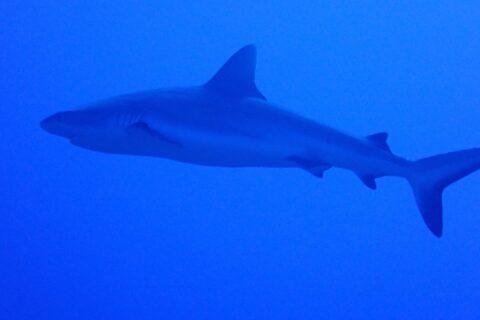
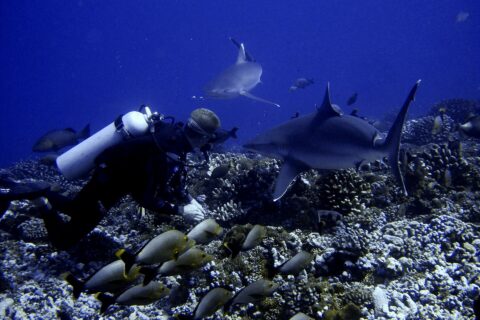
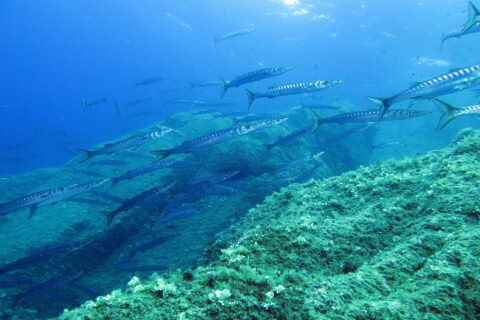
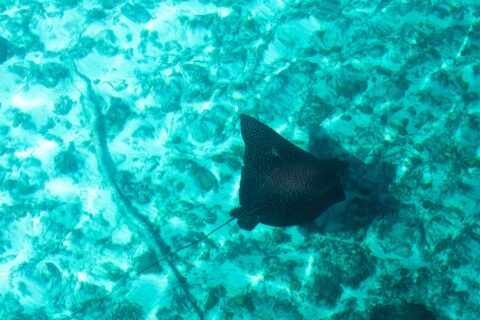
France is a scuba diving country, from the Mediterranean to the atolls of the Pacific, and everywhere the briefing is in French. At La Gabinière, in Port-Cros, you count about ten groupers on every dive. In Fakarava South Pass, you drift with about 600 gray reef sharks, and hammerheads pass Rangiroa from December to March.
Why dive France?
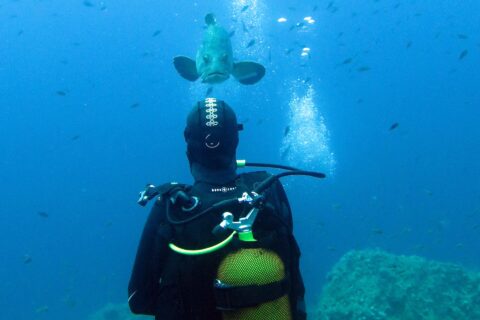
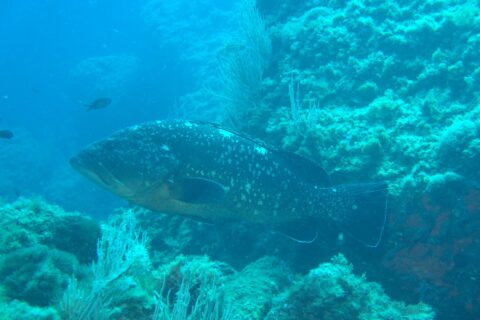
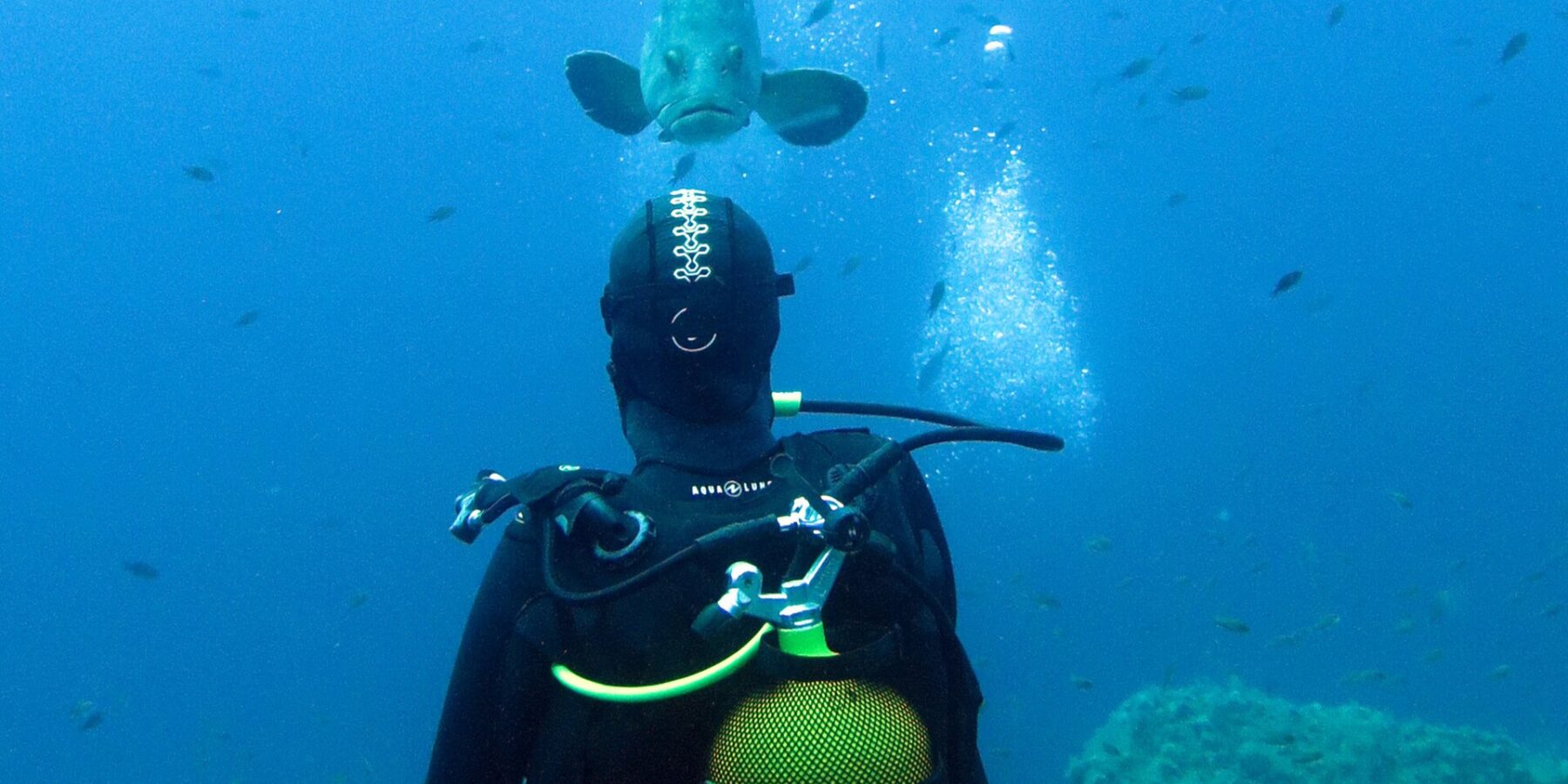
Some of the dusky groupers of the Lavezzi Islands, in Corsica, weigh more than 30 kg and stay a meter or two from you. They have grown used to divers, because the archipelago has been protected since 1982 and fishing for them is banned in the French Mediterranean.
Overseas, you switch to coral without changing certification. In the Tuamotu atolls, the current in the passes carries you from the ocean into the lagoon. About 25 bottlenose dolphins come almost every day to Tiputa Pass, in Rangiroa, among the gray reef sharks.
Where to dive in France?
In the Mediterranean, La Gabinière, at Port-Cros, is thirty minutes from Giens or Le Lavandou. It is rated Advanced, but you see groupers there from 15 meters. In Corsica, the Mérouville shoal, out of Bonifacio, is rated French Level 2. With Level 3, you go down to the bottom of the Rubis submarine, between Cavalaire and Saint-Tropez. A guided Level 2 diver stays above 40 meters there.
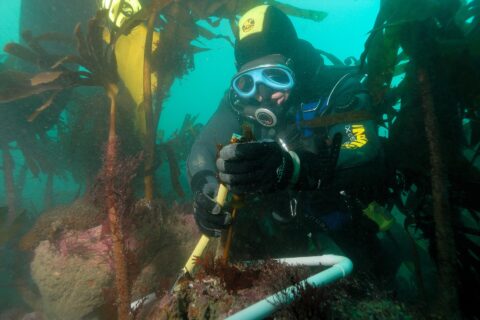
In Brittany, you dive among the kelp of the Glénan Islands, off Concarneau. Breton clubs require Level 2 from visiting divers. CIP Glénan takes all levels, but only on stays on Saint-Nicolas island.
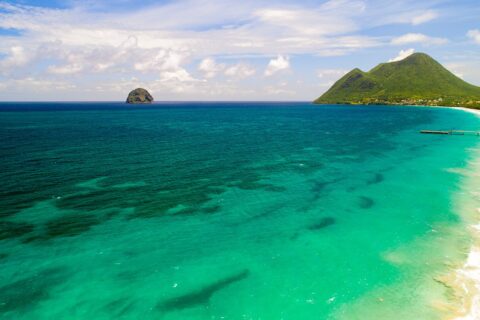
In the French West Indies, the Cousteau Reserve, in Guadeloupe, ranges from try dives to walls at 40 meters. The Saint-Pierre wrecks in Martinique, sunk by the eruption of Mount Pelée, lie from less than 10 to more than 50 meters.
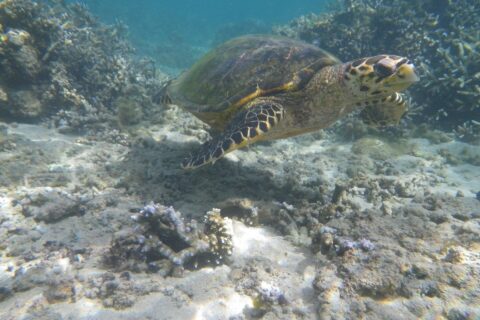
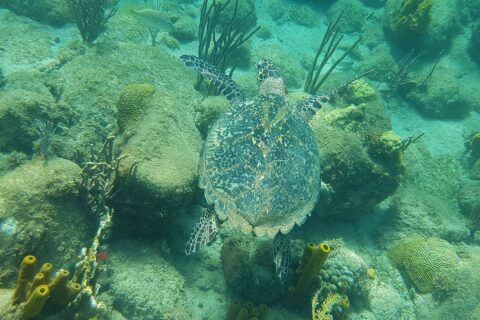
In the Indian Ocean, beginners start on Réunion, at Cap La Houssaye. In Mayotte, you dive the S Pass with turtles and gray reef sharks.
In French Polynesia, Tahiti suits beginners, but the trip is for the Tuamotu passes. Fakarava South Pass is open from the first certification level. In Rangiroa, Tiputa Pass has strong current and is better dived with Advanced.
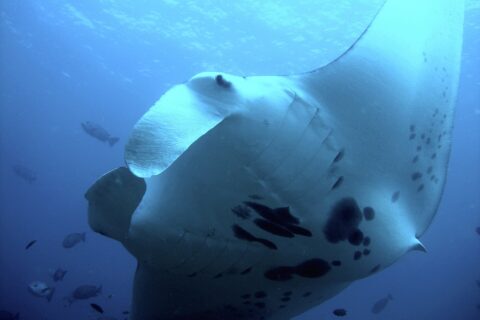
The manta rays of New Caledonia get cleaned in Boulari Pass.
When is the best time to dive France?
La Gabinière is at its best in June, September and October, with fewer boats than in high summer. At the Lavezzi Islands, May and October are calmer, in cooler water.
The great hammerheads of Rangiroa arrive in December and leave in March, with the best odds until February. If you lack the certification to go down to them, come in June instead, when gray reef sharks gather by the hundreds in the Tiputa canyons. In June and July, at the full moon, more than 17,000 camouflage groupers come to spawn in Fakarava South Pass.
The Boulari Pass mantas come mostly from January to April. Until March, it is the hot cyclone season, and trips get canceled in bad weather. From June to October, humpback whales swim along Réunion. You also hear them singing underwater in the French West Indies, in January and February.
How much does a dive trip to France cost?
In Giens, Ulysse Plongée charges €77 for a guided dive with full gear, plus €12 to €15 for Port-Cros. A morning of two guided dives at the Lavezzi costs €124, or €102 for unguided divers. Without your own gear, rental adds €36.
A fully equipped dive costs only €50 to €58 in Guadeloupe and Martinique. A rental car is essential to reach Malendure beach, where the Cousteau Reserve boats leave from. In the Tuamotu, budget €88 to €96 per dive. The day in Fakarava South Pass, with two dives and lunch, costs €293 to €298 from Rotoava.
What do you need to know before diving France?
A medical certificate less than a year old is mandatory everywhere, except for a try dive. In mainland France, a Level 1 diver dives guided down to 20 meters, and a PADI Open Water usually follows the same rule. Port-Cros National Park requires a free permit, which the club can request for you.
French Polynesia's rules limit a Level 1, an Open Water or even an Advanced diver to 29 meters. The Rangiroa hammerhead dives go deeper than 45 meters. Even with Level 3, cleared to 49 meters, you only do the shallower ones. The territory's only recompression chamber is in Tahiti. New Caledonia has remained tense since the riots, and a curfew can be imposed overnight. For Mayotte, book your dive center and your accommodation in advance, because the island is recovering from Cyclone Chido.
 FrancePass