Glénan, Brest or Groix: where to dive in Brittany?
Brittany is dived in green or turquoise water, cold and rich. About fifteen kilometers from Concarneau, the Glénan archipelago lines up about fifty sites 5 to 45 minutes away by boat: the Chambre lagoon, kelp forests, walls and about ten wrecks. Among them is the Pietro Orseolo, a 140-meter cargo ship sunk in 1943, between 17 and 30 meters. Farther north, the Bay of Brest and Le Conquet offer walls, boulder fields and crevices, with the Dellec torpedo boat at 15 meters on average and the Émile Allard at 30 meters. They sit at the gates of the Iroise Marine Natural Park, France's first marine natural park, created on September 28, 2007, over about 3,500 km². Off Groix, the U-171 submarine and the Tasso are dived from Doëlan. On the Normandy coast, several dozen wrecks, including those of 1944, lie between 12 and 25 meters.
When is the best time to dive Brittany?
The season runs from June to September, when the water reaches 16 to 18°C. It drops to 10°C in February. Dive clubs go out to sea from April to October: CIP Glénan from April 1 to October 31, 2026, Actisub from May 1 to November 30, 2026. Wear a 7 mm wetsuit with a hood, or a drysuit. You dive at slack water: tidal currents stay weak at the Glénan, 1.5 knots at most on spring tides, but swell and tide set the schedule.
What marine life can you see in Brittany?
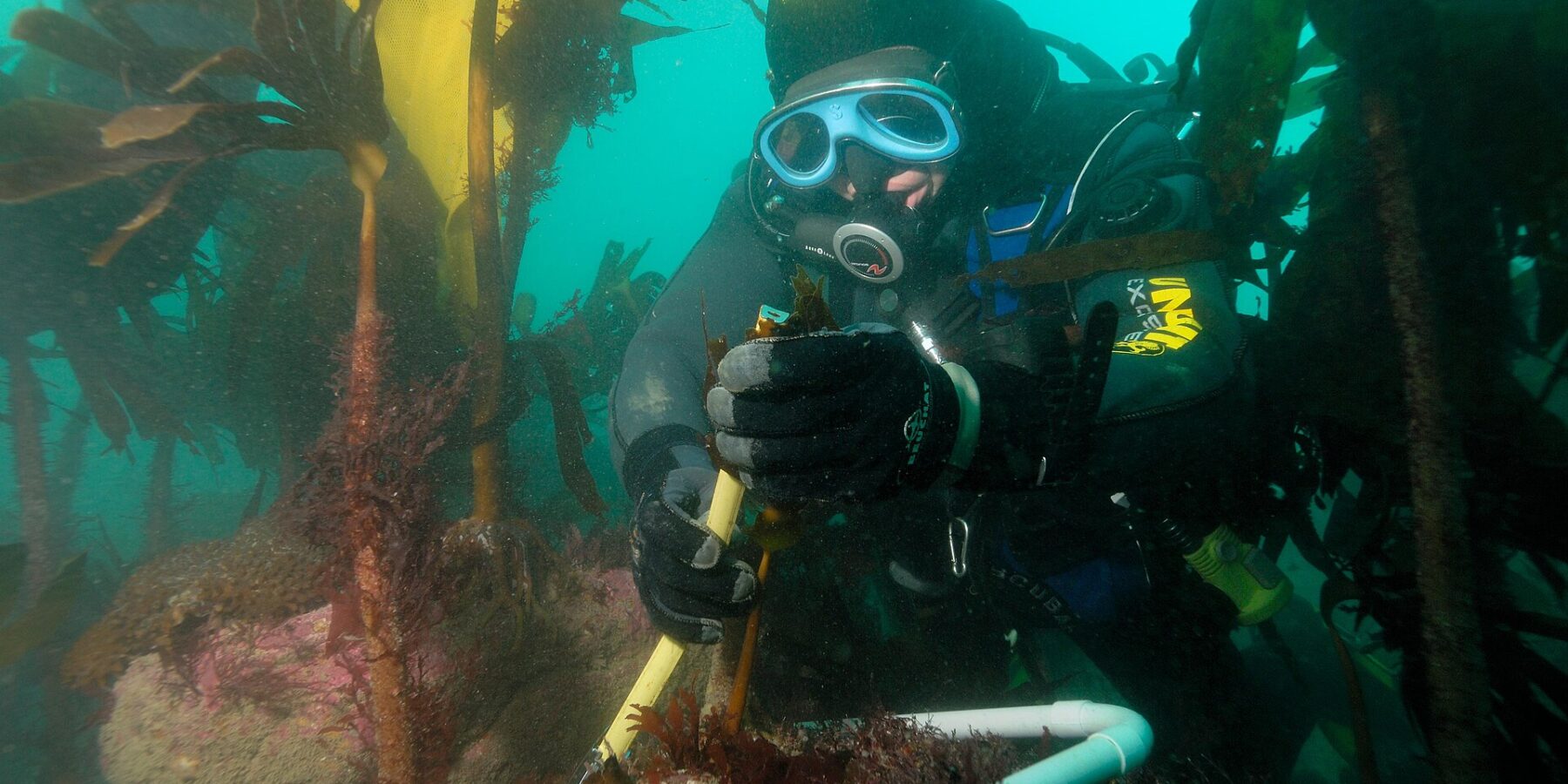
Tall kelp grows from a few meters down, hiding spider crabs, brown crabs and scallops. You also see pollack, granite boulders covered in jewel anemones, and sometimes a gray seal. On the Normandy wrecks, you find lobsters, conger eels, ballan wrasse and sea bass.
How much does diving in Brittany cost?
Diving in Brittany is mostly run by nonprofit clubs: Club de Plongée de Cornouaille in Concarneau, Actisub in Fouesnant, CIP Glénan on Saint-Nicolas island. Prices are low, from €40 at Actisub, but you must join the club and show an FFESSM license and a medical certificate from the current year. A visiting diver also needs a French Level 2 or its equivalent, CMAS two-star or PADI Advanced Open Water. CIP Glénan sells two-day stays with three dives or five-day stays with seven dives, full board on the island.
How do you reach the Glénan Islands, and what are the rules?
You reach Concarneau through Quimper train station. In summer, passenger boats run to Saint-Nicolas from Fouesnant, Concarneau, Bénodet or Loctudy, €50 for an adult crossing with Glénan Découverte. At the Glénan, speed is limited to 3 knots in the channel, 5 knots within 300 meters of the shore and 8 knots elsewhere. Landing is only allowed on Saint-Nicolas and the Penfret foreshore. No diving permit or access fee is required.
 FranceReef