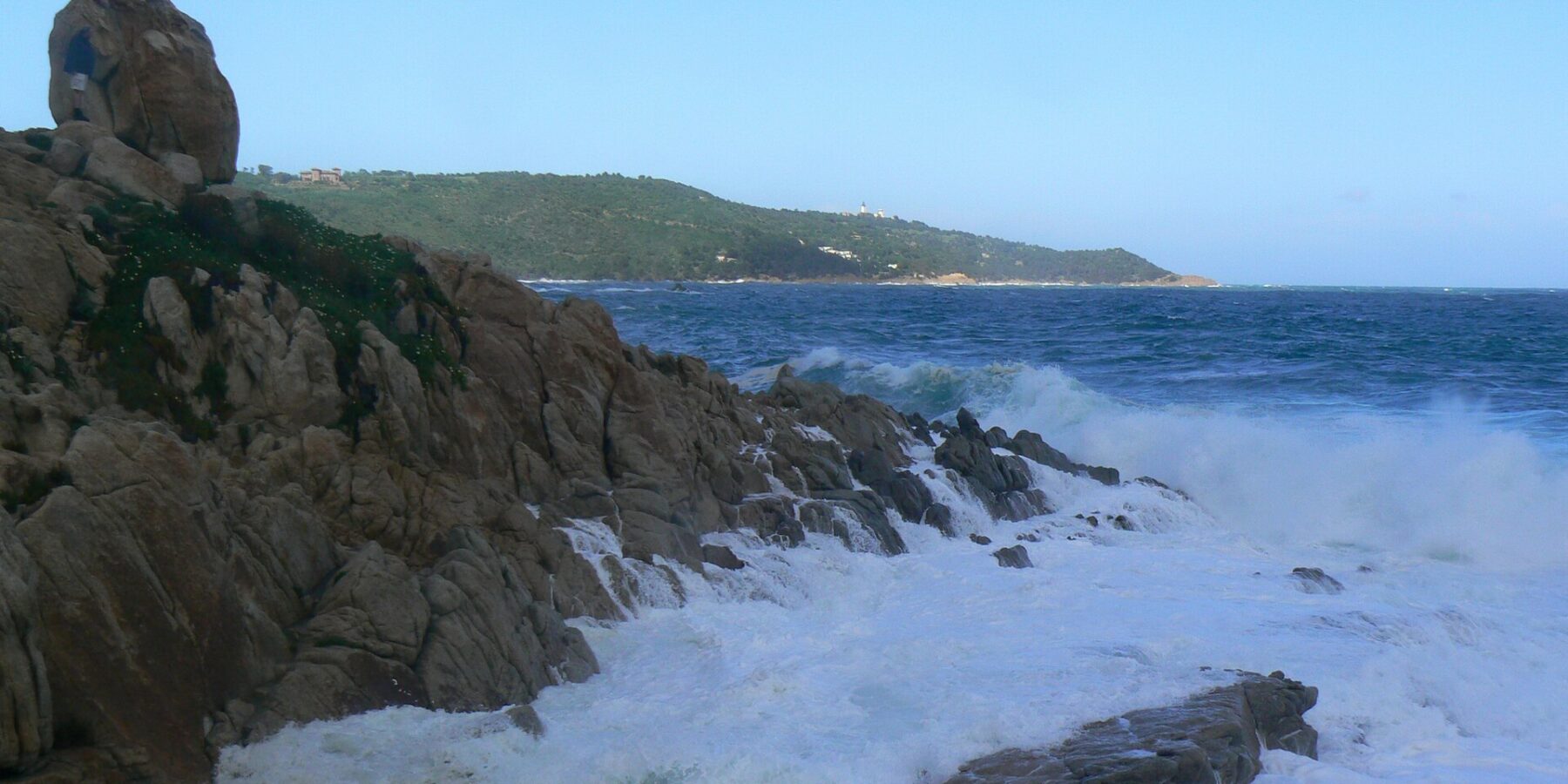
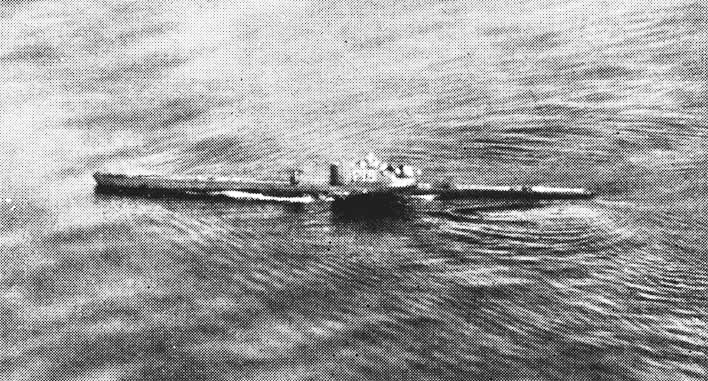
The Rubis is a Free French Naval Forces minelaying submarine, scuttled in 1958 off Cap Camarat, that sits upright and intact on the sand at 41 m, wrapped in anthias. The wreck is for experienced divers only, by boat from Cavalaire or Le Lavandou.
Why dive the Rubis?
- A record-holding Free French Naval Forces submarine, with 22 ships sunk, intact and sitting upright on the sand at 41 m
- A 66 m wreck you can see in a single dive, with the net cutter still in place at the stern
- Clouds of anthias and Mediterranean chromis around the hull, in often crystal-clear water
- Ranked among the hundred most beautiful dives in the world
The dive site on the map
Base: Cavalaire-sur-Mer, 14 km as the crow flies.
See nearby dive sites on the mapThe Rubis in pictures

What will you see at the Rubis?
There is little plant life on the Rubis: the white sand and the depth keep gorgonians scarce. The hull, though, works as a shelter. Conger eels and Mediterranean morays fill the openings of the conning tower and the nooks of the hull, and anthias and Mediterranean chromis form a permanent cloud above the wreck: that is the image everyone brings back from this dive. Out in the blue, the hunters of the Var coast, amberjacks or dentex, pass by now and then, and the often crystal-clear water lets you spot them from far away. The dusky grouper is not a regular here. You dive this wreck for the object, an intact submarine sitting upright on the sand, more than for the marine life: bring a light for the congers in the openings and a wide-angle lens to frame the whole hull in the light.
| Species | J | F | M | A | M | J | J | A | S | O | N | D | Note |
|---|---|---|---|---|---|---|---|---|---|---|---|---|---|
 Scalefin anthias | peak season | peak season | peak season | peak season | peak season | peak season | peak season | peak season | peak season | peak season | peak season | peak season | a permanent cloud above the hull |
| Mediterranean chromis | peak season | peak season | peak season | peak season | peak season | peak season | peak season | peak season | peak season | peak season | peak season | peak season | with the anthias, the signature image of this dive |
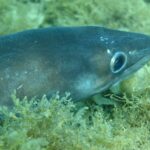 Conger eel | peak season | peak season | peak season | peak season | peak season | peak season | peak season | peak season | peak season | peak season | peak season | peak season | in the openings of the conning tower and the hull |
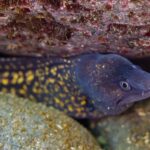 Mediterranean moray | peak season | peak season | peak season | peak season | peak season | peak season | peak season | peak season | peak season | peak season | peak season | peak season | in the nooks of the hull |
peak seasonpossiblerare
What is diving like at the Rubis?
The submarine sits upright on a bed of white sand at 41 m; the top of the wreck is at about 34 m. The bottom is beyond the limit of a guided French Level 2 diver and of PADI Advanced Open Water: the site calls for French Level 3, a guided Level 2 diver staying above 40 m, or a deep diving specialty. Current is very common and sometimes violent, up to 3 knots, at the surface as well as on the bottom: you descend and ascend along the mooring line, no exceptions. The water is often crystal clear, which makes the depth deceptive: watch your computer, nitrogen narcosis and your air consumption. Nitrox extends your no-decompression time. You can see the whole 66 m wreck in a single dive; the second dive of the morning is on a shallower coastal site. Prepare this dive carefully, for the depth and for the distance from shore.
When to dive the Rubis?
idealgoodnot recommended
The site is open all year in 2026, weather permitting, but it lies offshore and is exposed to every wind: the useful season runs from May to October, and from June to September the water is warmest and the sea most often calm. Surface water at Cavalaire is 13 or 14 °C from January to March, 15 °C in April, 17 to 18 °C in May, 21 °C in June, 23 to 24 °C in July, 23 to 25 °C in August, 22 to 23 °C in September, 20 °C in October, 17 to 18 °C in November and 15 to 16 °C in December. At 40 m, the water stays much colder than at the surface all summer: a 7 mm wetsuit with a hood at the very least, and a drysuit out of season. Mio Palmo lists the Rubis as a distant site in its 2026 prices, and the trip is confirmed the day before, depending on the weather.
How to get to the Rubis?
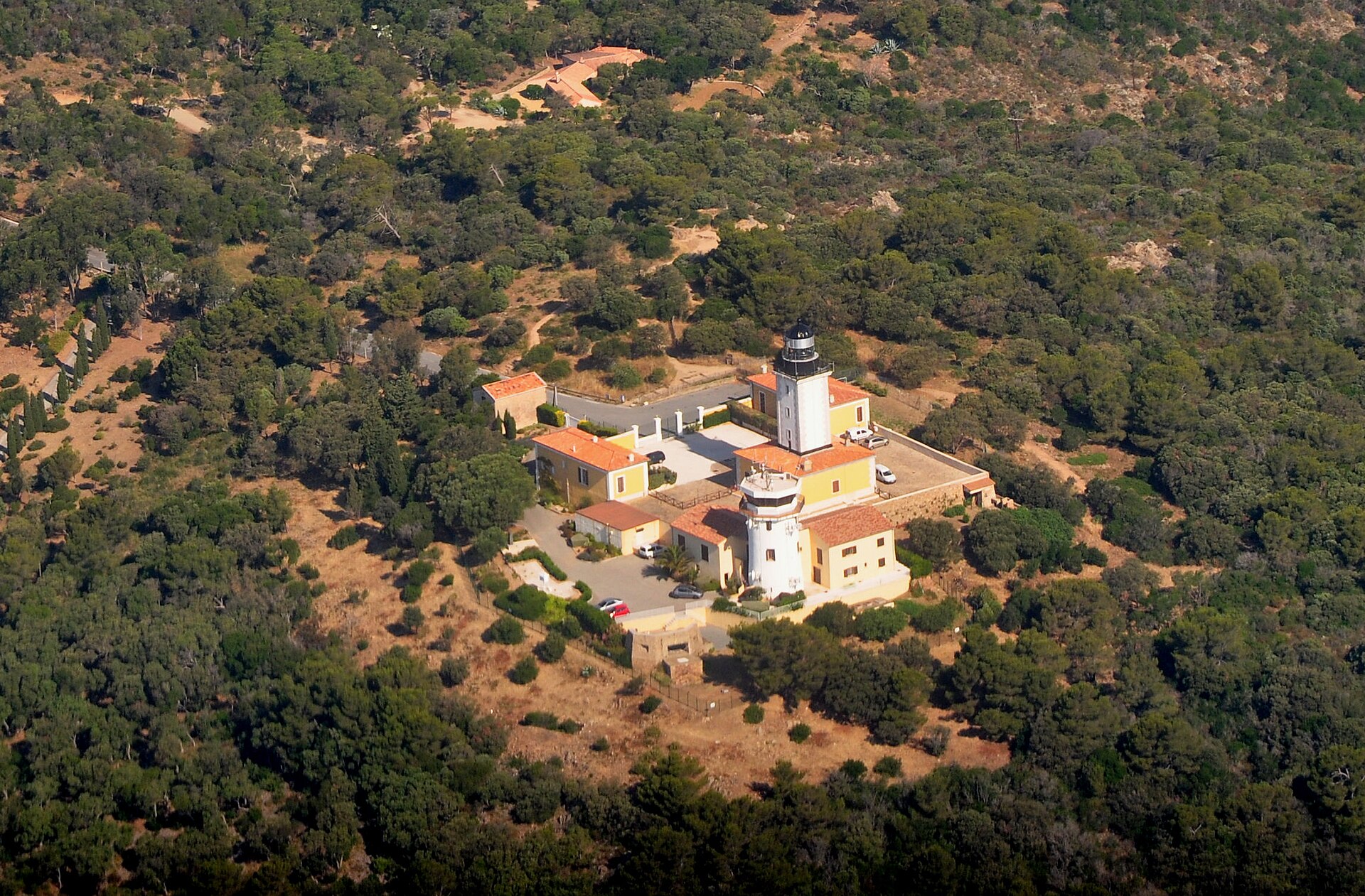
Boat only: the site lies about 1.4 nautical miles offshore, south of Cap Camarat, in the town of Ramatuelle, about 15 km from Cavalaire. Mio Palmo Plongée, at the harbor residences in Cavalaire, runs a two-dive morning trip, meeting at 8 a.m. and back around 12:30 p.m. Its 2026 price list shows a single dive at €50, filled tank and weights included, and €60 for a distant site such as the Rubis, the Grec or the Donator. Guiding by an instructor down to 40 m costs €20, full gear €30 per trip and nitrox €10: that makes €110 for the Rubis with a guide and full gear, €60 diving independently with your own equipment. Lavandou Plongée goes there too: €50 per dive, tank included, €20 for a guide below 20 m and a €10 Rubis surcharge. You can also leave from Saint-Tropez or from L'Escalet anchorage. Access to the site is free, with no fee or permit.
Stay in Cavalaire-sur-Mer
Where to stay near the Rubis?
Hotels, apartments and rooms around Cavalaire-sur-Mer, with current prices.
What is the story of the Rubis submarine?
The Rubis was a Saphir-class minelaying submarine, built at the Toulon shipyards and launched on September 30, 1931. She carried 32 mines and could lay them without surfacing. In June 1940, she was in Dundee, Scotland, when the armistice was signed, and she joined the Free French Naval Forces. She mined the coast of Norway from May 1940, the Bay of Biscay in 1942 and 1943, and the approaches to Stavanger in 1944. In 22 patrols, she laid nearly 683 mines and sank 22 ships, 14 of them German: the highest tally in the Free French Naval Forces.
Struck from the lists on October 4, 1949, she was sunk on January 31, 1958 off Cap Camarat to serve as a sonar target, with a 9 kg charge placed at the stern. That explains the state of the wreck: a whole submarine, sitting upright, without the break of a shipwreck.
What can you see on the Rubis at 41 m?
The wreck is 66 m long, 7 m wide and 8 m high. She sits upright on white sand, with the deck at around 34 m and the keel at 41. You descend along the mooring line, circle the hull in one direction, then come back over the deck and the conning tower. The net cutter is still in place at the stern, the openings in the hull let your light in on the conger eels, and the cloud of anthias and Mediterranean chromis wraps around everything. You can see it all in a single dive, which makes it one of the few big deep wrecks in the Var that you see whole in one go. It ranks among the hundred most beautiful dives in the world.
Current, depth, nitrox: how should you dive the Rubis?
The Rubis combines the constraints of a deep wreck and an offshore site. The current, sometimes 3 knots, hits at the surface as well as on the bottom: descend and ascend along the mooring line, hand on it, and keep the group together around the hull. At 41 m on a standard air tank, manage narcosis and air consumption from the moment you go in. Nitrox, €10 at Mio Palmo, extends your no-decompression time but changes nothing about the maximum depth, which you must respect for your mix. Exposure to every wind makes cancellations common: plan this trip early in your stay, with a spare day.
Our tip
Always descend and ascend along the line: the current sometimes reaches 3 knots. Dive on nitrox to stay longer at the bottom. Check the weather the day before, because the site is exposed to every wind.
Other dive sites nearby
 FranceWall
La Gabinière (Port-Cros)
French Mediterranean: Riviera, Provence and Corsica FranceWreck
Liban wreck (Marseille)
French Mediterranean: Riviera, Provence and Corsica FranceReef