Cap La Houssaye, a basalt point north of Saint-Gilles harbor, marks the northern edge of the Réunion Marine Nature Reserve. You dive it from 4 to 18 m, by boat or from shore, around a cannon, a green turtle seagrass bed and lobster caves, with humpback whales passing from July to September.
Why dive Cap La Houssaye?
- A 4 to 18 m site with weak current, open to try dives
- Resident green turtles on the seagrass bed, and a cannon at 5 m
- A cave and crevices full of spiny lobsters and slipper lobsters
- 5 to 20 minutes by boat from Saint-Gilles harbor, or reachable from shore
- Humpback whales offshore from July to September
The dive site on the map
Base: Saint-Gilles-les-Bains, 4 km as the crow flies.
See nearby dive sites on the mapCap La Houssaye in pictures
What will you see at Cap La Houssaye?
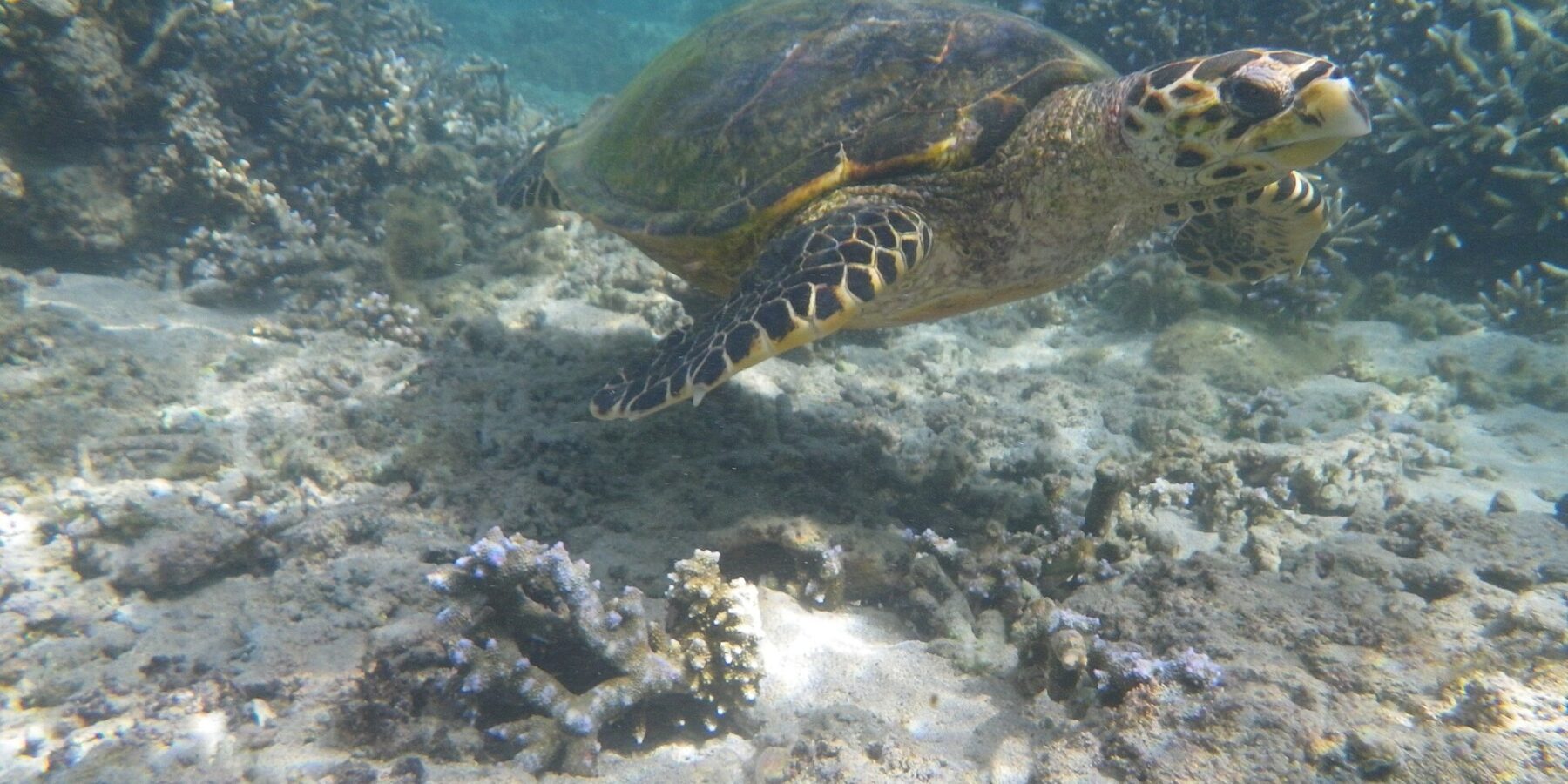
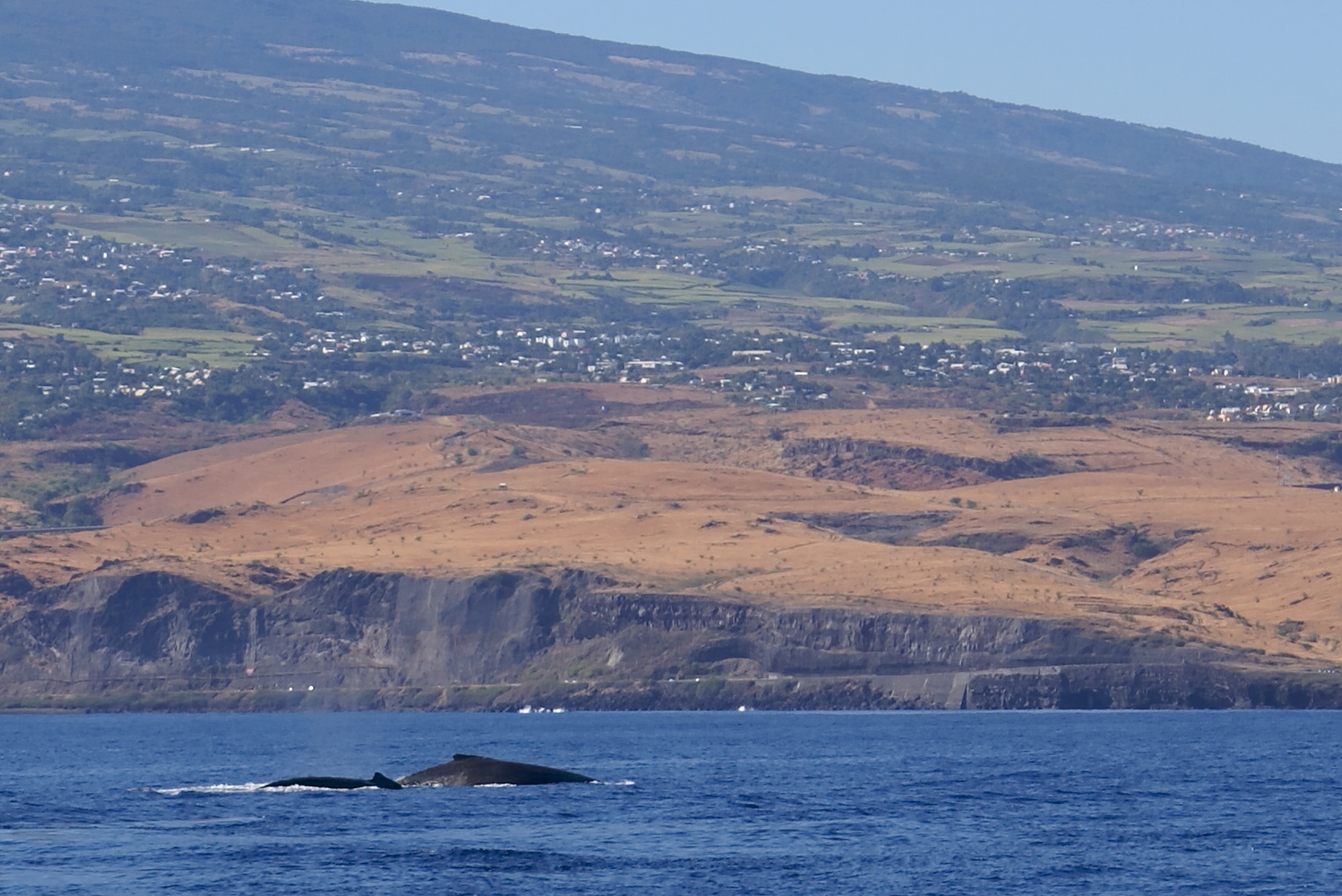
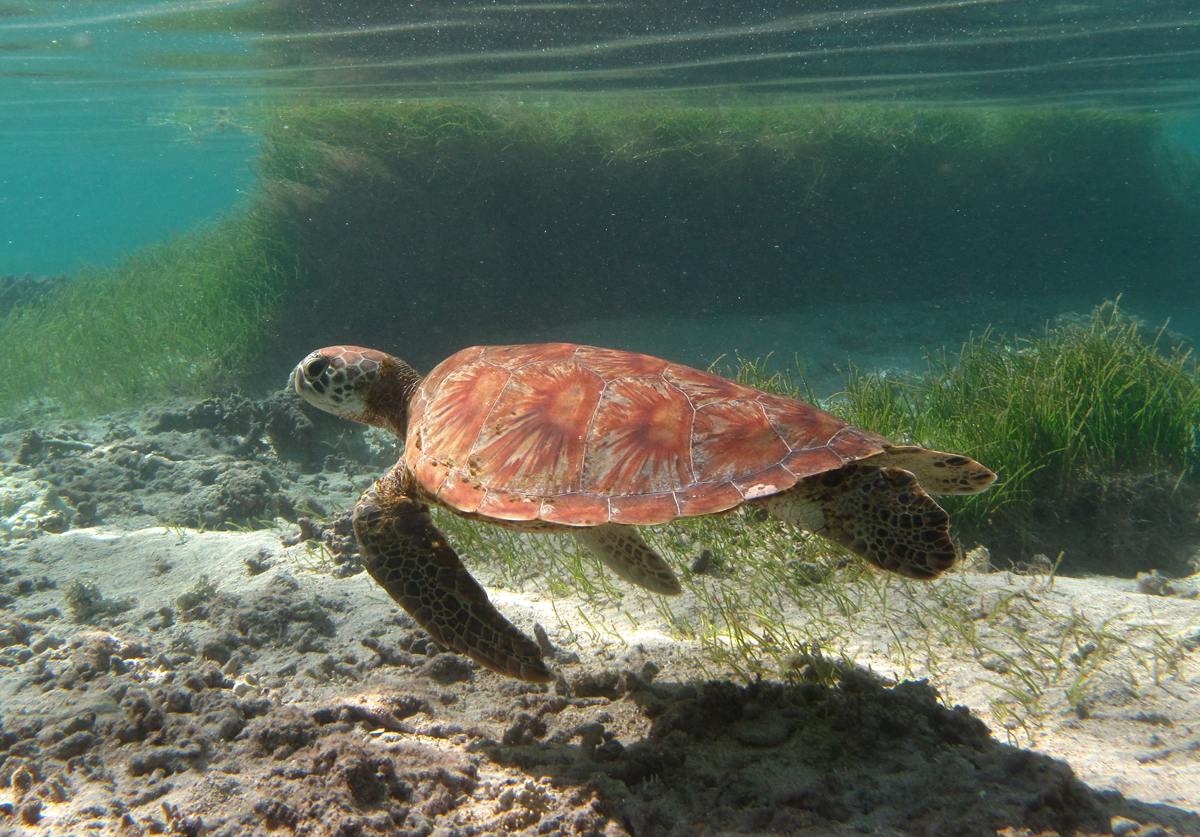
The cape is a coastal reef site, and its marine life rewards a close look. Green turtles are resident: they graze or rest on the seagrass bed between the cannon and the reef, and a hawksbill turtle comes in from the blue now and then. Spiny lobsters and slipper lobsters live in the cave and the crevices. The rocks sitting on the sand are rich in small life: juveniles, cowfish, frogfish, pipefish, octopus, nudibranchs, surgeonfish and damselfish, and sometimes ghost pipefish and seahorses, which are rare in the region. Hard corals, Pocillopora among them, cover the ridges and walls, with patches of fire coral between 1 and 4 m. From July to September, humpback whales cruise off Saint-Paul Bay: you mostly see them at the surface, on the boat ride or during the surface interval.
| Species | J | F | M | A | M | J | J | A | S | O | N | D | Note |
|---|---|---|---|---|---|---|---|---|---|---|---|---|---|
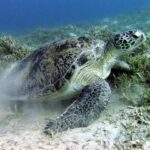 Green turtle | peak season | peak season | peak season | peak season | peak season | peak season | peak season | peak season | peak season | peak season | peak season | peak season | resident on the seagrass bed, between the cannon and the reef |
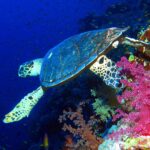 Hawksbill turtle | possible | possible | possible | possible | possible | possible | possible | possible | possible | possible | possible | possible | passing through, coming in from the blue |
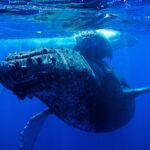 Humpback whale | rare | rare | rare | rare | rare | possible | peak season | peak season | peak season | possible | rare | rare | at the surface off the cape, sometimes heard underwater; whale watching is regulated from July 1 to September 30 |
| Spiny lobsters and slipper lobsters | peak season | peak season | peak season | peak season | peak season | peak season | peak season | peak season | peak season | peak season | peak season | peak season | in the cave and the crevices |
| Ghost pipefish and seahorses | possible | possible | possible | possible | possible | possible | possible | possible | possible | possible | possible | possible | rare, look for them with your guide |
| Frogfish and pipefish | possible | possible | possible | possible | possible | possible | possible | possible | possible | possible | possible | possible | on the rocks and in the seagrass |
| Octopus and nudibranchs | possible | possible | possible | possible | possible | possible | possible | possible | possible | possible | possible | possible | on the reef, more active at night |
peak seasonpossiblerare
What is diving like at Cap La Houssaye?
The cape is a basalt point that shelters the south side of Saint-Paul Bay. The reef is made of rocks sitting on sand, a small wall, a seagrass bed and a cave, from 4 to 18 m, with the sand at around 18 m at the foot of the reef. The current is very weak, which makes it a beginner site: dive centers bring try dives and French PE12 and Level 1 trainees here, and it works well as a night dive. The sea decides everything: with swell, waves or wind, the shore entry gets tricky, and the dive center picks another site. The boat avoids that entry. Do not touch the bottom, and watch out for fire coral in the first few meters. The dive lasts 45 to 60 minutes, on a three-hour trip.
When to dive Cap La Houssaye?
idealgoodnot recommended
The Saint-Gilles dive centers go out all year. The water reaches 28 °C in February and March and drops to 24 °C from August to October: a 3 mm wetsuit is enough in the austral summer, a 5 mm is more comfortable in winter. The rainy season runs from November to April, with the cyclone risk highest in January and February: those are the months when trips are canceled most often. April and May, then November and December, give you warm water without the cyclones. From July to October, the water is cooler, but the west coast gets humpback whales, present from June to October; whale watching is only allowed from July 1 to September 30. June is the transition month, with the first whales.
How to get to Cap La Houssaye?
Corsair, French Bee and Air France fly nonstop from Paris to Saint-Denis in about 11 hours. Saint-Gilles-les-Bains harbor, on the west coast, is home to at least eight dive centers, and the cape lies 4 km north, 5 to 20 minutes by boat. Réunion Diving leaves at 7 a.m., 10:15 a.m. and 2 p.m. with twelve divers per boat, and charges €65 for a guided dive with gear, €45 for an unguided one. Escapade Plongée, on its price list of January 1, 2026, asks €65 for a guided dive, gear and insurance included, €50 for an unguided dive and €550 for ten dives. Bleu Marine Plongée, in the outer harbor, charges €65 for a guided dive and €80 for a night dive; Mascareignes Plongée charges €48, gear and instructor included. French citizens only need an ID card. Allow 18 to 24 hours before flying after your last dive.
Stay in Saint-Gilles-les-Bains
Where to stay near Cap La Houssaye?
Hotels, apartments and rooms around Saint-Gilles-les-Bains, with current prices.
Where is Cap La Houssaye on Réunion?
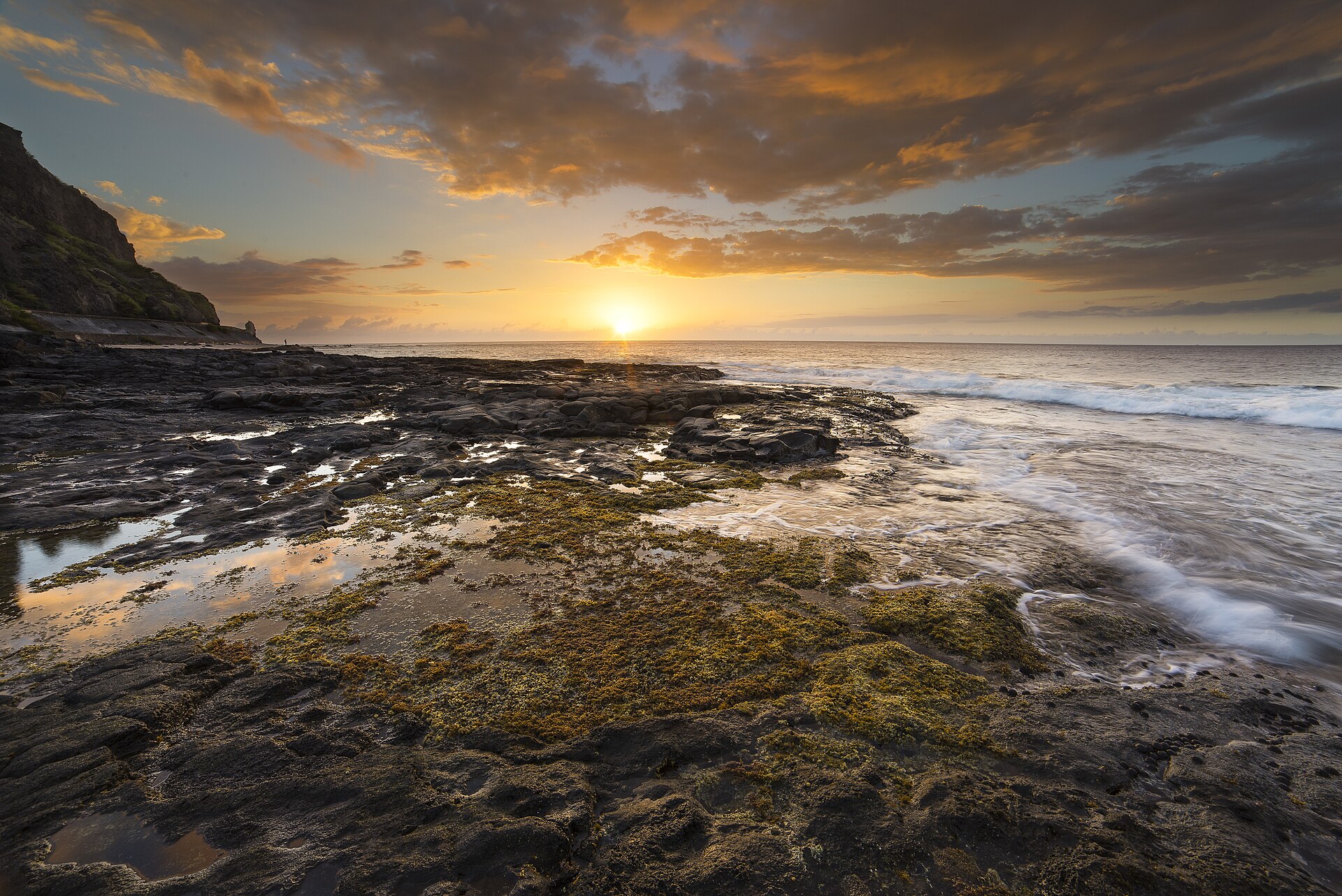
Cap La Houssaye closes off the south end of Saint-Paul Bay, north of Saint-Gilles harbor, in the town of Saint-Paul. It takes its name from the Breton captain Guillaume La Houssaye. It is a basalt point, and its ridges, slopes, crevices and small rock walls are covered in hard coral. In 2010, the Conservatoire du littoral, the French coastal agency, announced it wanted to buy 400 hectares at the cape to protect it. Underwater, it marks the northern limit of the National Marine Nature Reserve, created in 2007, which covers 3,500 hectares down to the Roche aux Oiseaux at L'Étang-Salé and protects 40 km of coastline, 20 of them coral reef.
What is the dive like at Cap La Houssaye?
The typical dive starts at a cannon lying at around 5 m. You then follow the seagrass bed, where green turtles graze or sleep, and move on to the reef rocks, their caves and crevices, where spiny lobsters and slipper lobsters sit deep in the holes, down to 18 m on the sand. The route is short and you take it slowly: the small stuff makes the dive, with frogfish, pipefish, nudibranchs and ghost pipefish for patient eyes. At night, with a dive center allowed to use lights, the reef changes face: octopus, crustaceans and lobsters come out of their shelters.
What are the rules for diving in the Réunion marine reserve?
The cape lies inside the marine reserve: dive centers need a permit to operate there, anchoring is banned and boats tie up to mooring buoys, one boat per buoy. You do not touch, feed or move any animal, you take nothing and you avoid any contact with the bottom; the reserve asks divers not to wear gloves. During whale season, boats slow down and keep their distance, and nobody gets in the water near a whale outside supervised trips. On Réunion, swimming outside the lagoon is restricted because of the shark risk: diving is still allowed, but always with a dive center.
Our tip
The sea is calmer in the morning: take the first boat, at 7 a.m. with Réunion Diving. Ask for Cap La Houssaye when you book, because the dive center picks the day's site based on the sea. From shore, never go in with swell or wind, and only with a dive center.
Other dive sites nearby
 FrancePass
S Pass (Mayotte)
French Indian Ocean: Réunion and Mayotte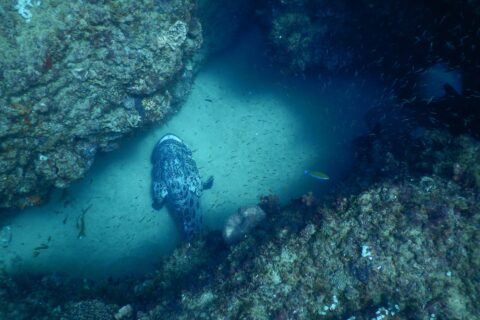
 TanzaniaPass
Kinasi Pass
Mafia Island TanzaniaPelagic