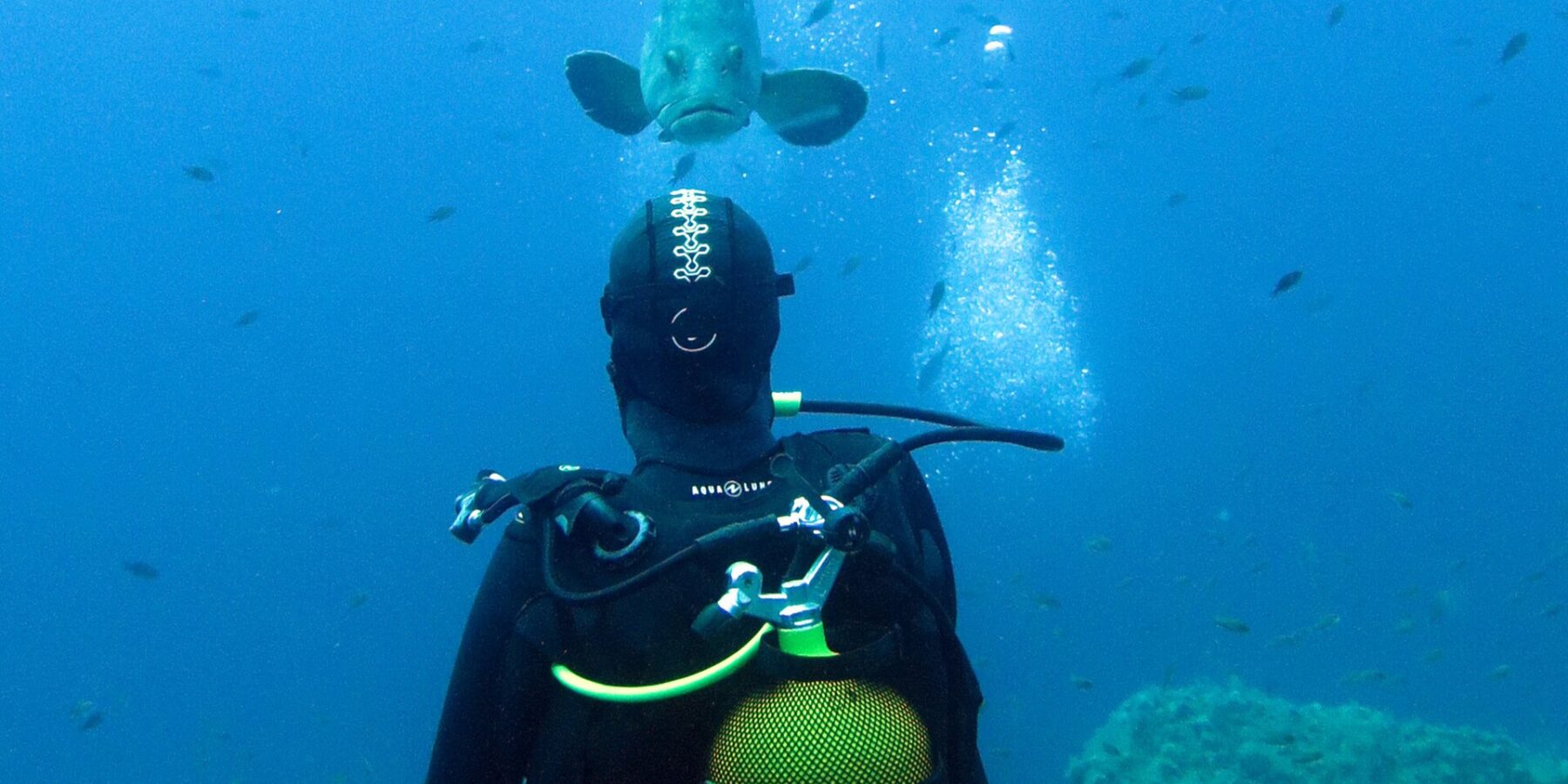
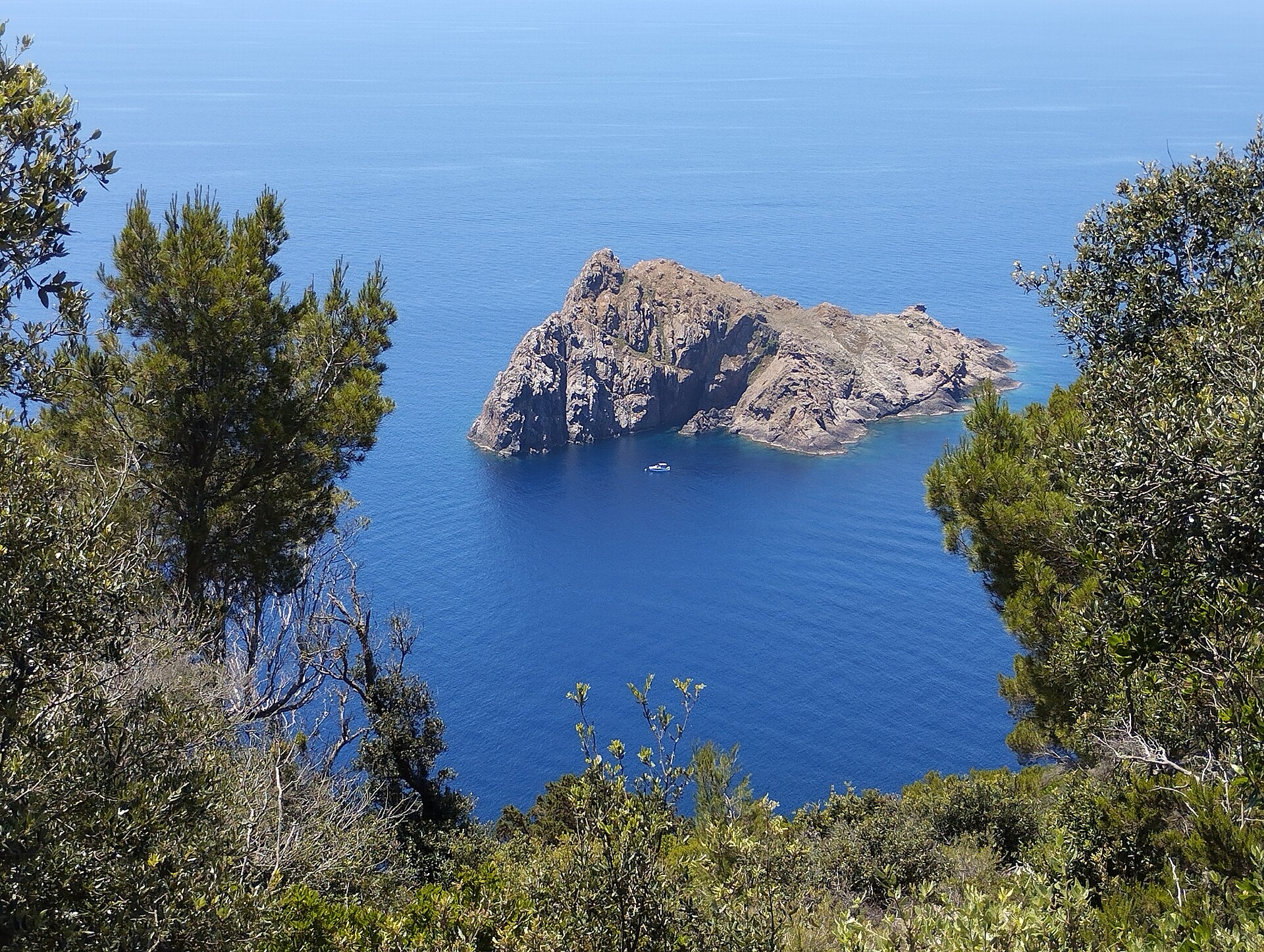
At La Gabinière, in Europe's first marine park, the groupers do not flee: they watch you arrive and stay within arm's reach, because nobody may fish them here anymore. Above the wall, a school of barracuda waits for you all year.
Why dive La Gabinière?
- Red gorgonians carpeting the lower part of the wall
- Brown meagre in groups in the crevices, within reach of your light
- Le Sec, at the southern tip, for Level 3 divers: amberjacks and red porgy in the current
- Dolphins on the crossing, right in the Pelagos Sanctuary
The dive site on the map
Base: Hyères, Tour Fondue harbor, 20 km as the crow flies.
See nearby dive sites on the mapLa Gabinière in pictures
What will you see at La Gabinière?
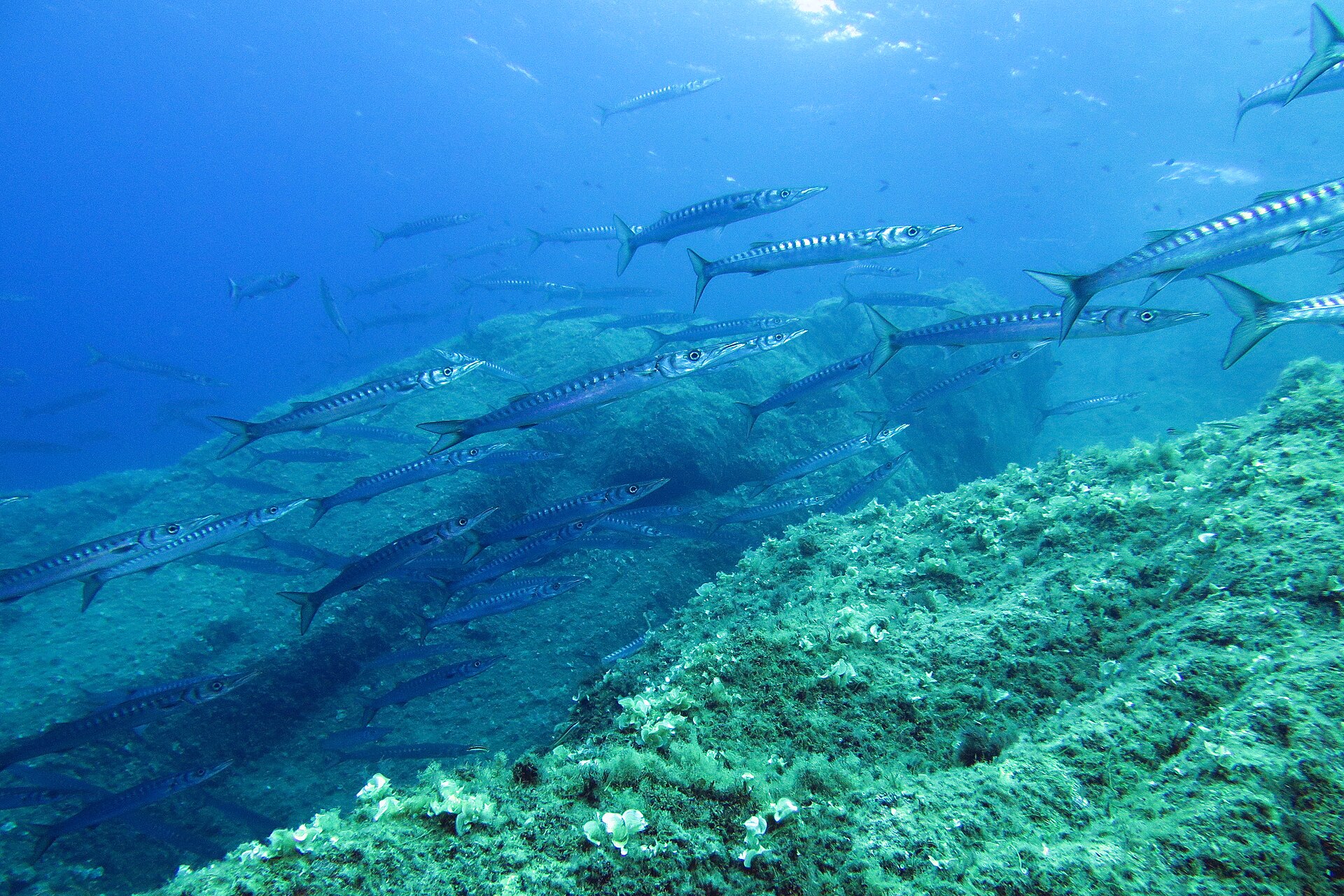
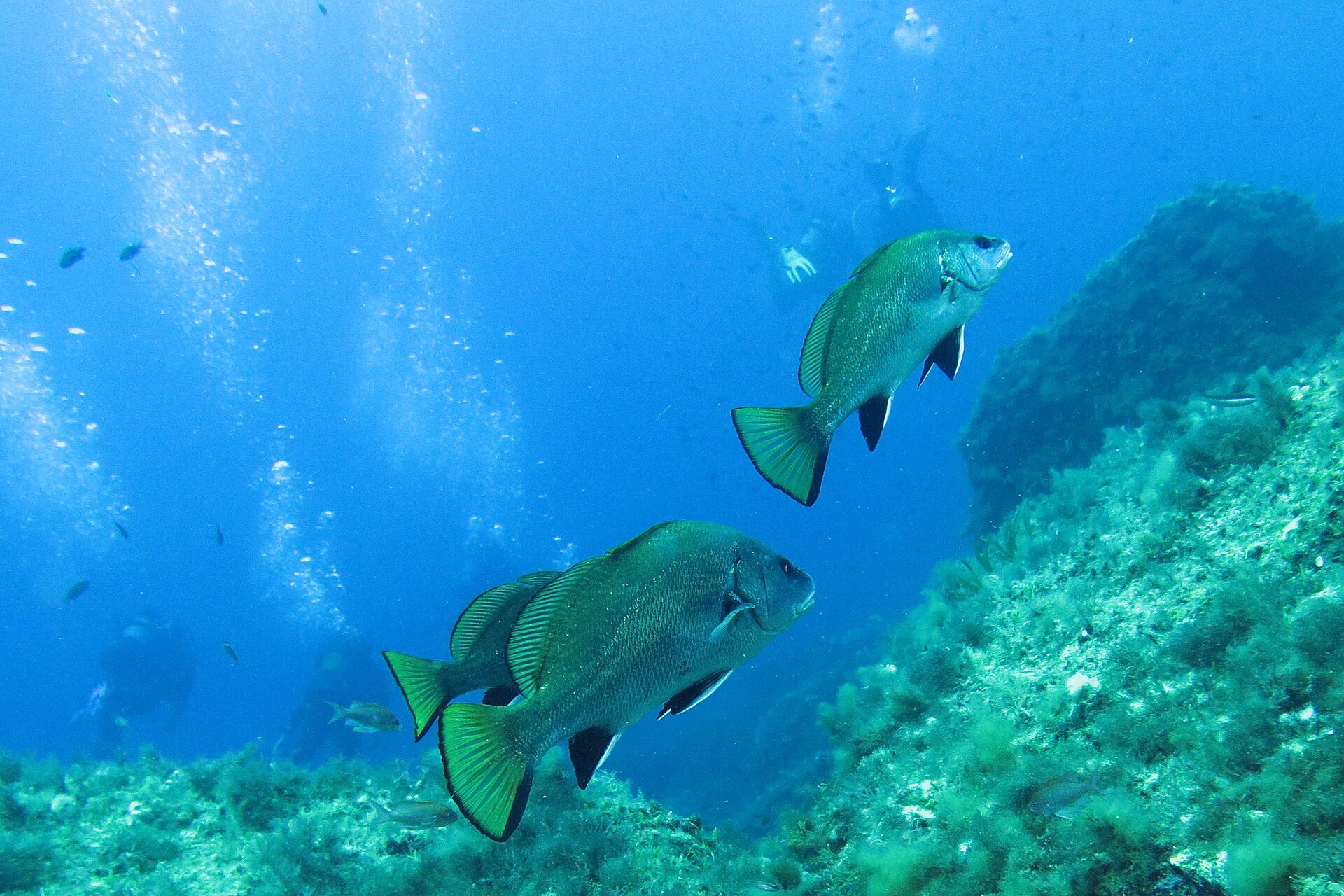
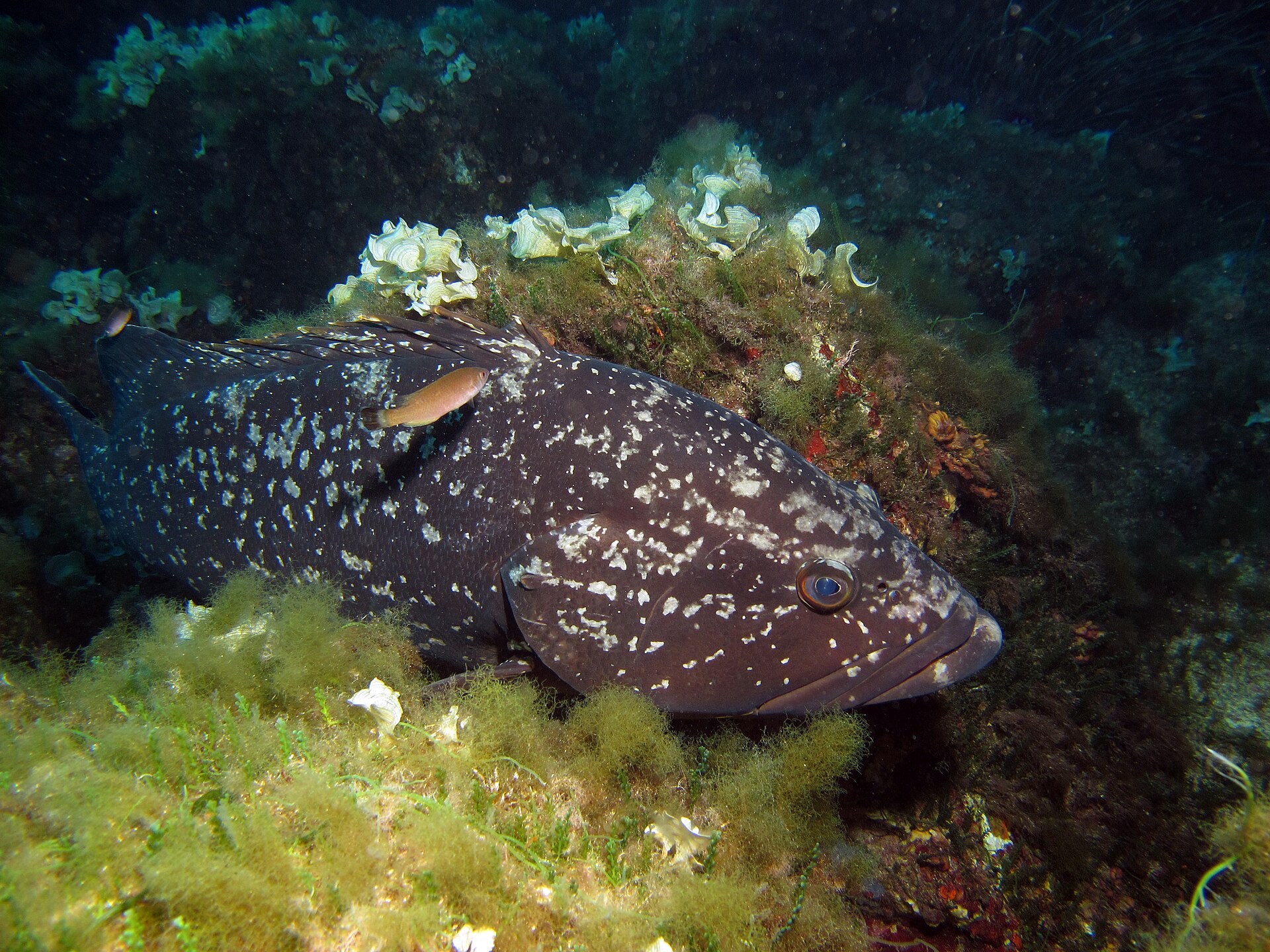
Count on about ten groupers per dive, and some are over a meter long: they hold their holes and let you come close. The barracuda school, about two hundred fish, is there above the wall on every dive. Dentex, amberjacks, leerfish and red porgy come and go with the current. Then look closely at the rock. Brown meagre huddle in the crevices, white seabream, red scorpionfish and black scorpionfish fill the boulder slopes, morays and conger eels poke their heads out of the holes, and Mediterranean chromis form a cloud in the blue. Deeper down, the red gorgonians carry flabellinas, if you like small stuff. A sunfish or a ray passes now and then, with no guarantee. This is where you see the grouper's return to the Mediterranean best.
| Species | J | F | M | A | M | J | J | A | S | O | N | D | Note |
|---|---|---|---|---|---|---|---|---|---|---|---|---|---|
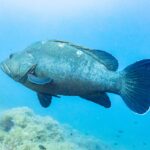 Dusky grouper | possible | possible | possible | possible | peak season | peak season | peak season | peak season | peak season | peak season | possible | possible | resident, everywhere from 15 m, about ten per dive |
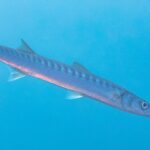 Yellowmouth barracuda | possible | possible | possible | possible | possible | peak season | peak season | peak season | peak season | peak season | possible | possible | a permanent school of about 200 fish above the wall |
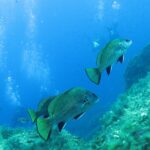 Brown meagre | peak season | peak season | peak season | peak season | peak season | peak season | peak season | peak season | peak season | peak season | peak season | peak season | in groups in the crevices and under the overhangs |
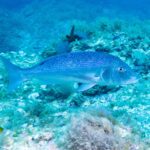 Common dentex | possible | possible | possible | possible | peak season | peak season | peak season | peak season | peak season | peak season | possible | possible | hunting in the current with amberjacks and leerfish |
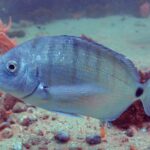 White seabream | peak season | peak season | peak season | peak season | peak season | peak season | peak season | peak season | peak season | peak season | peak season | peak season | all over the rock |
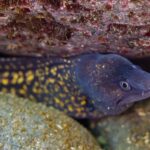 Mediterranean moray | peak season | peak season | peak season | peak season | peak season | peak season | peak season | peak season | peak season | peak season | peak season | peak season | in the holes of the wall, with the conger eels |
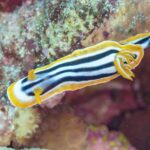 Nudibranchs | possible | possible | possible | possible | possible | possible | possible | possible | possible | possible | possible | possible | flabellinas on the gorgonians and sponges |
peak seasonpossiblerare
What is diving like at La Gabinière?
The boat ties up to the park buoy, and you descend along the line. On the East wall, the rock face and its boulder slopes run from 10 to 45 m, but everything happens in the upper half, between 15 and 25 m, where the groupers are most numerous. Deeper down, the Dolmen, a pile of boulders at 33 m, is the end point of the deep dive. You follow the wall, stop at the crevices and keep an eye on the blue. The current is almost always there, sometimes strong, especially toward Le Sec, the southern tip of the islet. Dive centers often run it as a drift dive: you let the current carry you, send up your DSMB at the end of the dive, and the boat comes to pick you up. That is why you need French Level 2 or Advanced to go below 20 m, and Level 3 for Le Sec, swept by current from top to bottom. As a guided Level 1 diver, you stay higher up, on the East wall, and you already see the best of it.
When to dive La Gabinière?
idealgoodnot recommended
June, September and October are the best months: the water is still warm, between 19 and 22 °C, and you will find fewer boats on the buoys. In July and August, the site is full and the dive centers share the time slots. At depth, the water stays cool even in summer: bring 5 mm in season, and 7 mm or a drysuit from November to May. Only one thing cancels the trip: the east wind. The site takes it head-on, and the dive centers decide the evening before.
How to get to La Gabinière?
Everything is done by dive center boat, and you have three departure harbors. From the Giens peninsula, Ulysse Plongée leaves from La Madrague harbor and Espace Mer Plongée from La Tour Fondue. From Le Lavandou, Lavandou Plongée has six nautical miles to cover. From La Londe, Aqualonde pairs La Gabinière in the morning with a more sheltered site in the afternoon. If you stay several days, the dive centers move on to Pointe de la Croix, La Galère, Montrémian or the Dalles de Bagaud. In summer, book your slot before you come.
Stay in Hyères, Tour Fondue harbor
Where to stay near La Gabinière?
Hotels, apartments and rooms around Hyères, Tour Fondue harbor, with current prices.
How did Port-Cros National Park bring back the groupers?
Port-Cros National Park was created on December 14, 1963, and it is Europe's first marine park. It covers Port-Cros, Bagaud, the islets of La Gabinière and Rascas, a large part of Porquerolles and a 600 m strip of sea around the islands. Diving here has been regulated since 1994, when some twenty dive centers signed a charter: six sites fitted with mooring buoys, no fishing within 100 m, and a cap on divers per site. You can count the result. Since 1993, the Groupe d'étude du mérou has counted the park's groupers every three years, in October: 473 in 2005, 565 in 2008, six and a half times more than at the first count.
Our tip
Take the morning trip, when the wind is light; if the east wind picks up, let the dive center take you to Bagaud. Go down without rushing: the groupers are there from the top of the wall. Do not shine your light in their eyes: they come to you on their own.
Other dive sites nearby
 FranceWreck
Rubis wreck (Cavalaire)
French Mediterranean: Riviera, Provence and Corsica FranceWreck
Liban wreck (Marseille)
French Mediterranean: Riviera, Provence and Corsica FranceReef