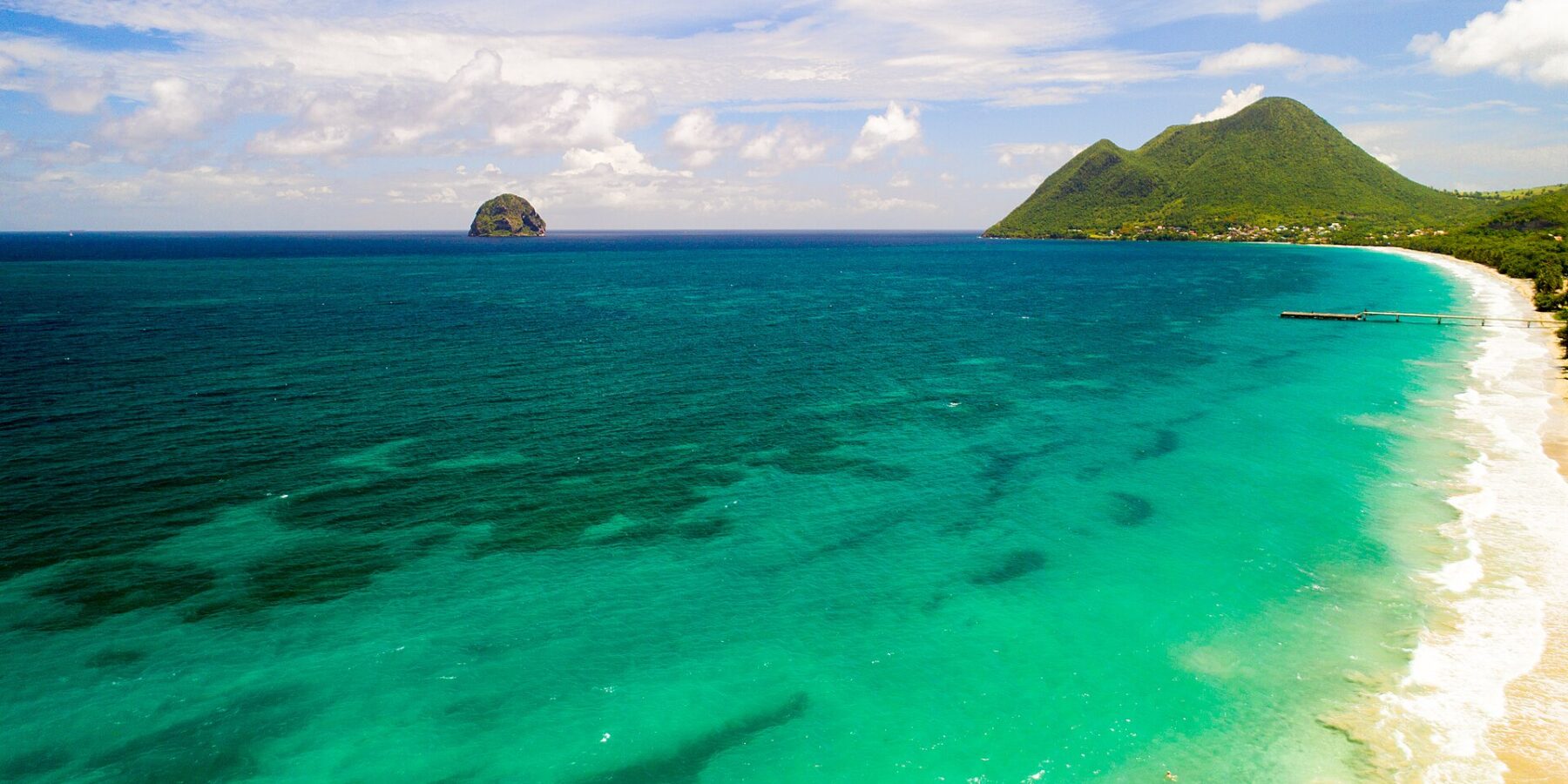
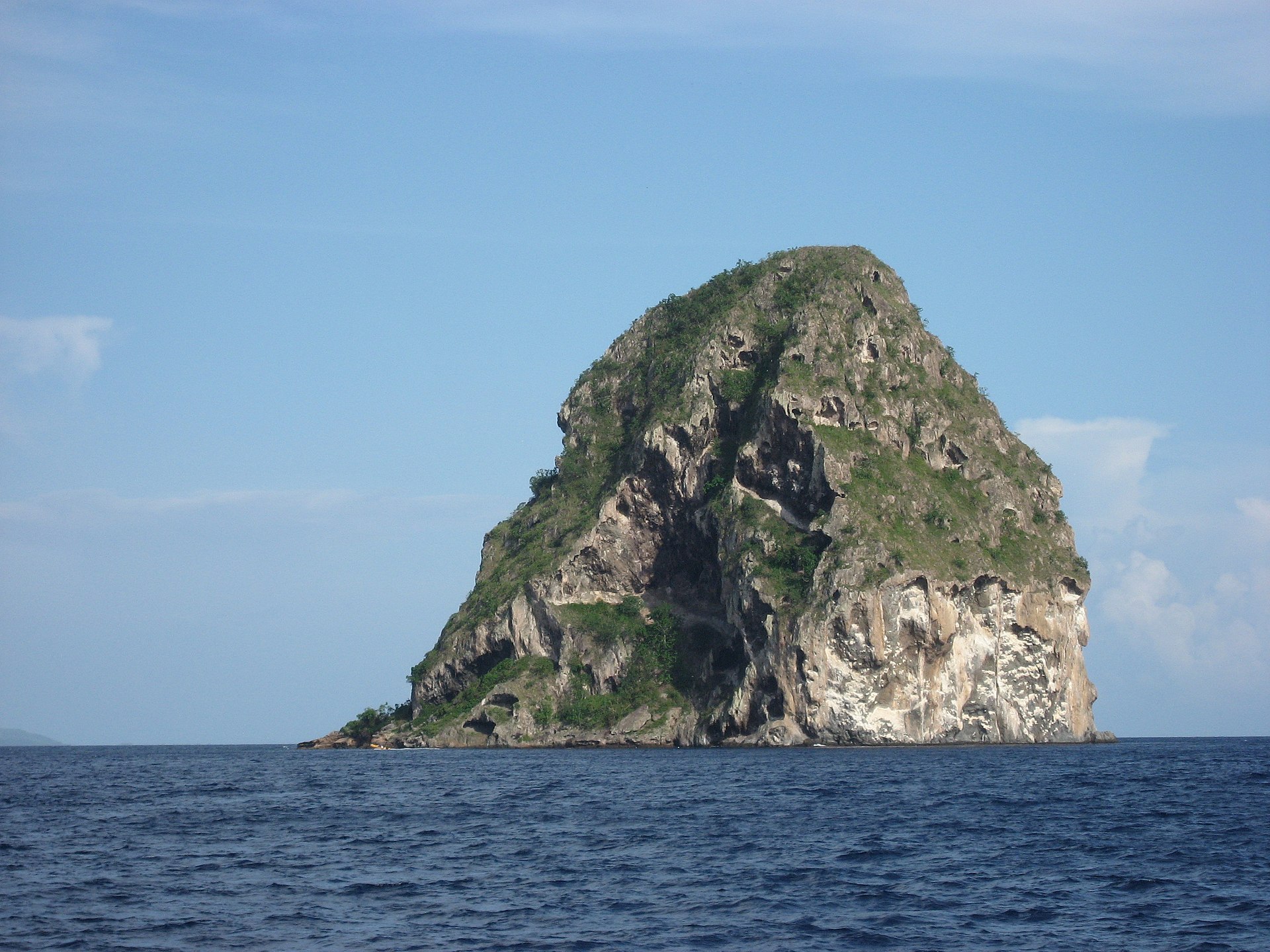
Diamond Rock is a 175 m volcanic pinnacle 2 km off the south coast of Martinique, in the current of the Saint Lucia Channel, where you dive a narrow crevice at around 20 m and walls of sponges and gorgonians down to 60 m. The Royal Navy registered it as a ship in 1804.
Why dive Diamond Rock?
- A crevice 2 to 3 m wide that cuts through the rock for about twenty meters, with surge and light pouring in
- A 175 m volcanic pinnacle, occupied and armed by the Royal Navy as HMS Diamond Rock from 1804 to 1805
- The Saint Lucia Channel current, which brings jacks, cero and barracuda
- Walls covered in barrel sponges, gorgonians and hard corals, from 10 to 40 m and beyond
- Nearly a thousand birds on the rock and the last refuge of the Martinique racer, a snake found only on Martinique
The dive site on the map
Base: Les Anses-d'Arlet, 7 km as the crow flies.
See nearby dive sites on the mapDiamond Rock in pictures
What will you see at Diamond Rock?
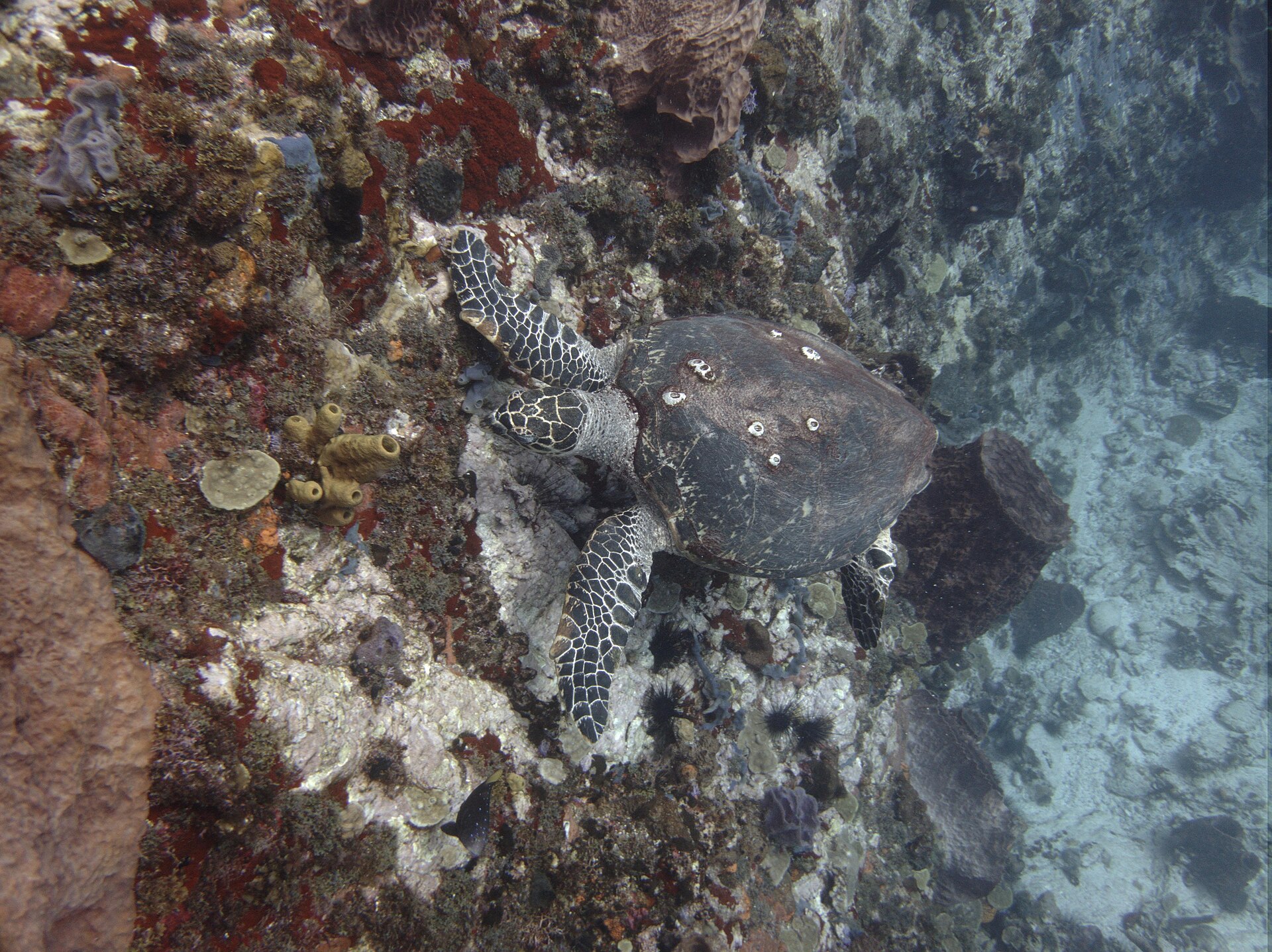
The rock is a pinnacle in open water, and its life is the life of the current. Jacks and cero hunt off the east and south faces, and great barracuda stay at the edge, in the blue. On the walls, the fixed life is dense: barrel sponges, gorgonians, anemones and hard corals cover the rock from 10 to 40 m, and moray eels fill the holes. The Brazilian spiny lobster hides in the cracks of the crevice and under the boulders at the foot of the wall. Turtles pass around the rock; on this bottom of rock and sponges, the hawksbill is the one you meet most often, while the green turtle prefers the seagrass in the nearby coves. Damselfish, angelfish and parrotfish liven up the reef flat. Above water, the rock holds nearly a thousand birds, including 300 breeding pairs, and is probably home to the last Martinique racers, an endemic snake.
| Species | J | F | M | A | M | J | J | A | S | O | N | D | Note |
|---|---|---|---|---|---|---|---|---|---|---|---|---|---|
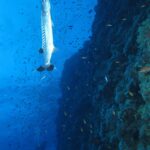 Great barracuda | possible | possible | possible | possible | possible | possible | possible | possible | possible | possible | possible | possible | in the current, off the east and south faces |
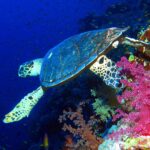 Hawksbill turtle | possible | possible | possible | possible | possible | possible | possible | possible | possible | possible | possible | possible | on the sponge walls, the turtle you are most likely to see on this rocky bottom |
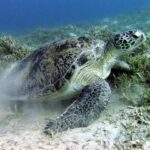 Green turtle | possible | possible | possible | possible | possible | possible | possible | possible | possible | possible | possible | possible | passing around the rock |
| Jacks and cero | peak season | peak season | peak season | peak season | peak season | peak season | peak season | peak season | peak season | peak season | peak season | peak season | hunting in the Saint Lucia Channel current |
| Brazilian spiny lobster | possible | possible | possible | possible | possible | possible | possible | possible | possible | possible | possible | possible | in the cracks of the crevice and under the boulders |
| Moray eels | possible | possible | possible | possible | possible | possible | possible | possible | possible | possible | possible | possible | in the holes in the walls |
| Barrel sponges and gorgonians | peak season | peak season | peak season | peak season | peak season | peak season | peak season | peak season | peak season | peak season | peak season | peak season | the fixed scenery of the west and south faces |
peak seasonpossiblerare
What is diving like at Diamond Rock?
The site takes the Saint Lucia Channel current, from 0 to 2 knots, most often from the east-southeast; it reverses with the tide and then comes from the northwest, and beginners sometimes have to hold on to the bottom. To the south and southeast, a vertical wall drops for the first 10 to 15 m, then a slope leads to a plateau at around 25 m, and the bottom falls away beyond 200 m all around. The crevice, 2 to 3 m wide and 5 to 6 m high, runs for about twenty meters, with the bottom at around 20 m; the swell rushes in, and you only go through in calm seas. The north face shelters a cove, the Pool, where dive centers take beginners and try dives; the crevice and the walls down to 40 m, or even 60, are for experienced divers. Dive centers accept Level 1 for the sheltered face; for the crevice and the exposed faces, plan on Level 2 or Advanced.
When to dive Diamond Rock?
idealgoodnot recommended
The dive centers of Les Anses-d'Arlet dive the rock all year, in water ranging from 27 °C in February to 29 °C from August to October: a 3 mm wetsuit is enough. The dry season, from December to April, gives the clearest water and the most manageable sea for crossing the Saint Lucia Channel; April and May are the most consistent months. From June to November, the rainy season clouds the water a little, and the hurricane season, from June 1 to November 30, means keeping an eye on the weather: the rock is exposed, and dive centers switch to a sheltered site when the swell picks up. September is the most unsettled month.
How to get to Diamond Rock?
You dive the rock by boat, and only by boat: landing is banned. Les Anses-d'Arlet is the closest base on the west side, 7 km away. Alpha Plongée Martinique, on Grande Anse beach, goes out at 7 a.m., 10 a.m., 2 p.m. and 6 p.m. all year with two boats of 15 to 20 seats, and charges €58 per dive for one to three dives, €49 from the tenth, plus a €6 surcharge for Diamond Rock, with full gear and computer provided; Nautitan Diving Club, with groups of four at most, asks €50 for an exploration dive and €70 for the Diamond Rock trip. Antilles Sub Diamond Rock leaves from La Taupinière fishing harbor in Le Diamant, 10 minutes from the rock, in the afternoon, when the other dive centers go in the morning. Espace Plongée Martinique, in Les Trois-Îlets, and Kalinago, in Sainte-Anne, get there in 20 to 45 minutes depending on the weather. Paris-Orly is 8 hours 40 minutes from Fort-de-France on a nonstop flight with Air France, Air Caraïbes or Corsair, and a ferry links Fort-de-France to Les Trois-Îlets.
Stay in Les Anses-d'Arlet
Where to stay near Diamond Rock?
Hotels, apartments and rooms around Les Anses-d'Arlet, with current prices.
Why was Diamond Rock registered as HMS Diamond Rock?
Diamond Rock is a basalt volcanic neck, the conduit of a volcano active nearly a million years ago, laid bare by erosion: 175 m high, a little over a kilometer around, 2 km off Pointe du Diamant, in the channel that separates Martinique from Saint Lucia.
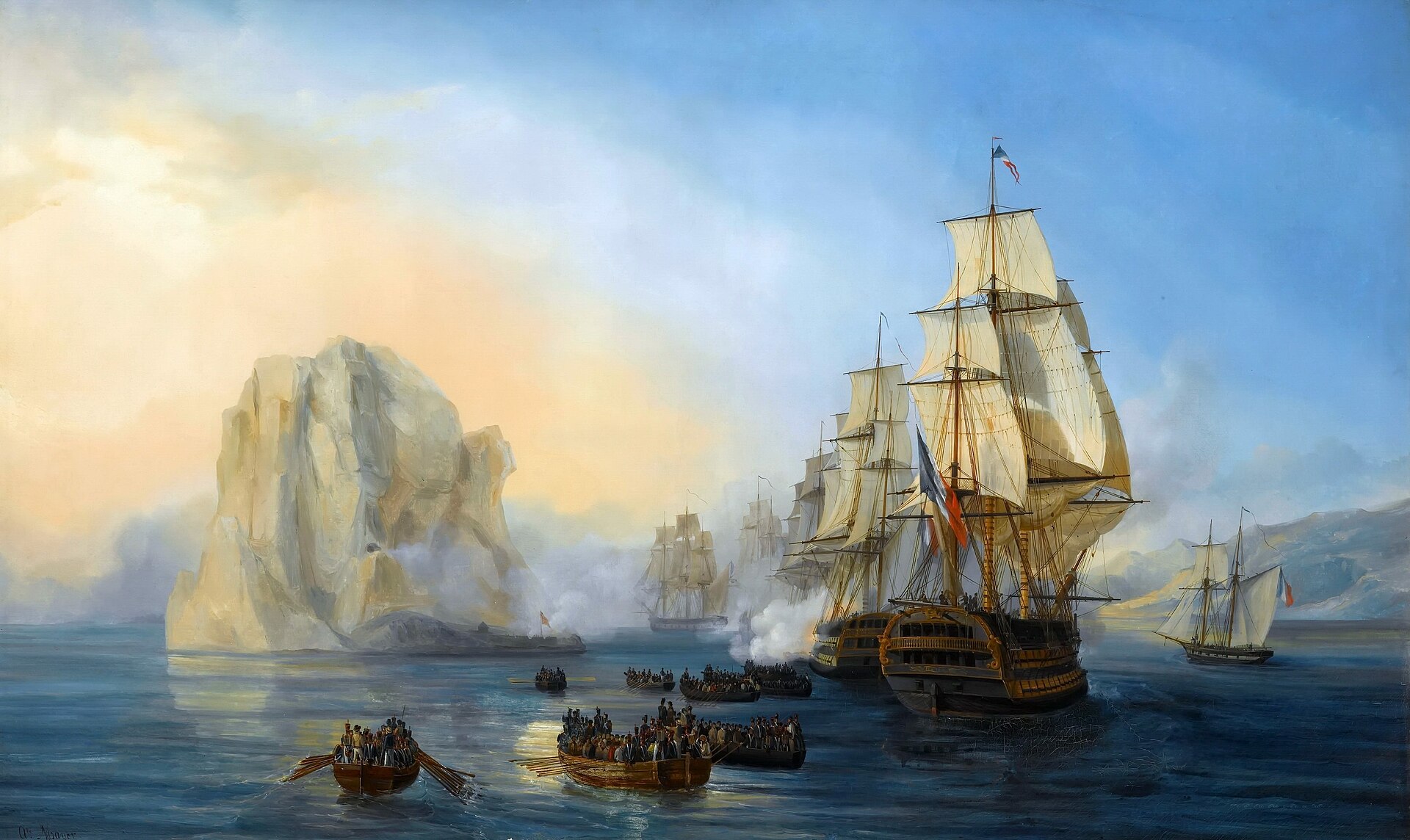
In January 1804, Rear Admiral Samuel Hood, aboard HMS Centaur, had the rock occupied and fortified: five cannons were hauled to the top, three 24-pounders and two 18-pounders, and a garrison of several dozen men settled in under Lieutenant Maurice. The Royal Navy entered the rock in its registers as a ship, HMS Diamond Rock, to shell French traffic heading for Fort-de-France. Seventeen months later, a division of Villeneuve's fleet, commanded by Cosmao-Kerjulien, laid siege to it, and the garrison surrendered on June 2, 1805. The rock now belongs to the Conservatoire du littoral and is uninhabited.
What can you see at Diamond Rock, face by face?
The underwater relief extends the pinnacle. To the south and southeast, the wall drops vertically for 10 to 15 m, then a slope of boulders and coral leads to a plateau at around 25 m, before the bottom plunges toward the great depths of the channel. This is the face for current and schools of jacks. The crevice cuts into the rock for about twenty meters, 2 to 3 m wide and 5 to 6 m high, with the bottom at around 20 m: you swim through in the play of light, with the surge pushing and pulling at every wave. An arch and a reef flat round out the west face, covered in barrel sponges and gorgonians. The sheltered north face forms the Pool, where try dives and Level 1 dives take place. You need at least two dives to see the crevice and an exposed face.
How do you dive Diamond Rock in the Saint Lucia Channel current?
The rock stands in open water, 7 km from Les Anses-d'Arlet, and the current rules everything. The guide picks the face based on where the current runs that day: the drift runs along the east face when the current carries, and the crevice is kept for calm days. Descend and ascend near the boat or the buoy, carry a DSMB, and tell the guide if you need to hold on to the bottom: the biotope order protects the rock, and the dive boats, which anchored every day on the north and west faces before the buoys, have damaged the bottom enough with their chains. No coral collecting, no landing, not even for a photo.
Our tip
Book the 7 a.m. departure with Alpha Plongée, or the afternoon trip from Le Diamant with Antilles Sub Diamond Rock, to avoid the other boats. Only ask for the crevice if the current is weak; otherwise the north face and the Pool stay sheltered. Antilles Sub only takes cash.
Other dive sites nearby
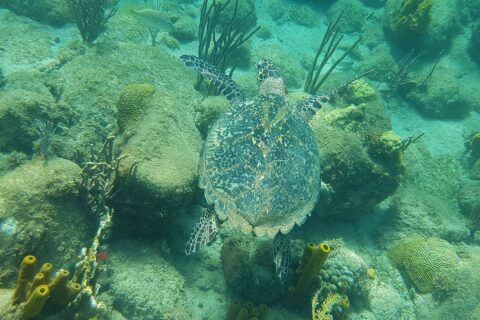
 FranceReef
Cousteau Reserve (Pigeon Islands)
French West Indies: Guadeloupe and Martinique
 Costa RicaCave or cenote
Caño Island
South Pacific: Osa and Caño Island Costa RicaPelagic