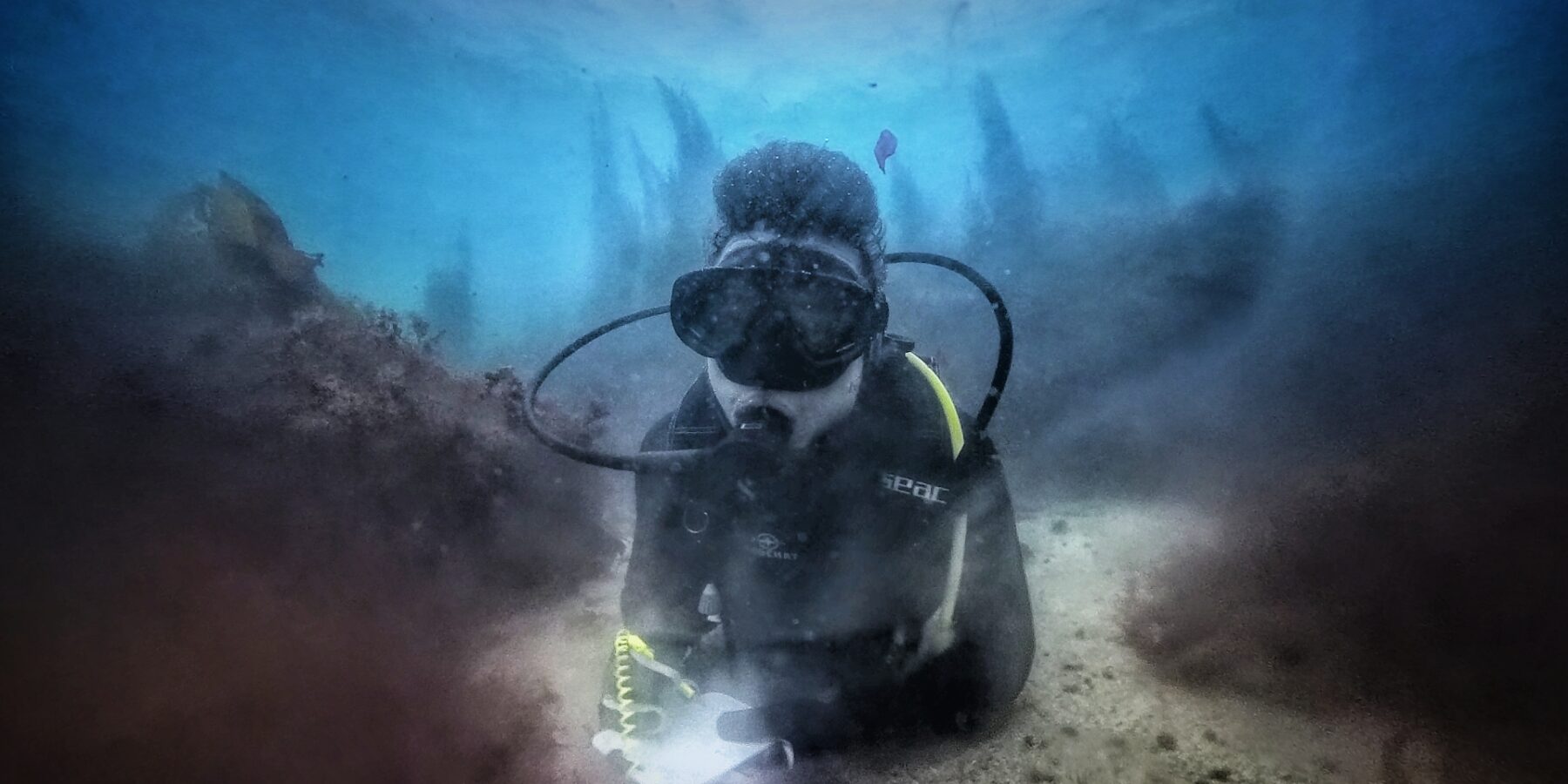
The Glénan Islands are an archipelago of granite and white sand off Concarneau, where clear water hides kelp forests, walls and about ten wrecks. You dive them by boat from Concarneau or Beg-Meil, or on a stay on Saint-Nicolas island: this is Breton diving at its best, cold, rich and club-based.
Why dive the Glénan Islands?
- Clear water with turquoise glints over white sand, and kelp forests from a few meters down
- About fifty sites 5 to 45 minutes by boat from Concarneau, from the lagoon to the wrecks
- The Pietro Orseolo wreck, a 140 m cargo ship sunk in 1943, between 17 and 30 m
- You can stay at the dive center on Saint-Nicolas island, inside the nature reserve
The Glénan Islands in pictures
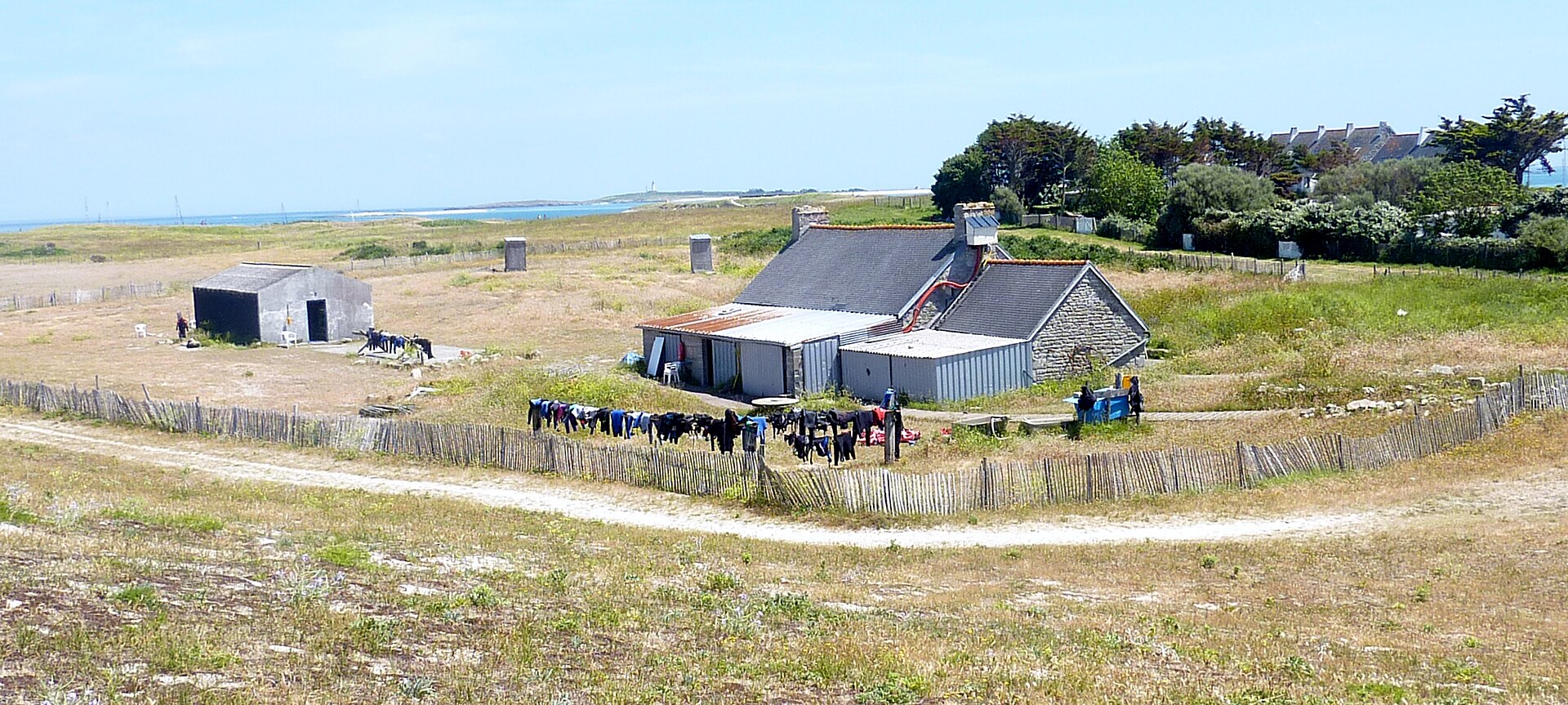
What will you see at the Glénan Islands?
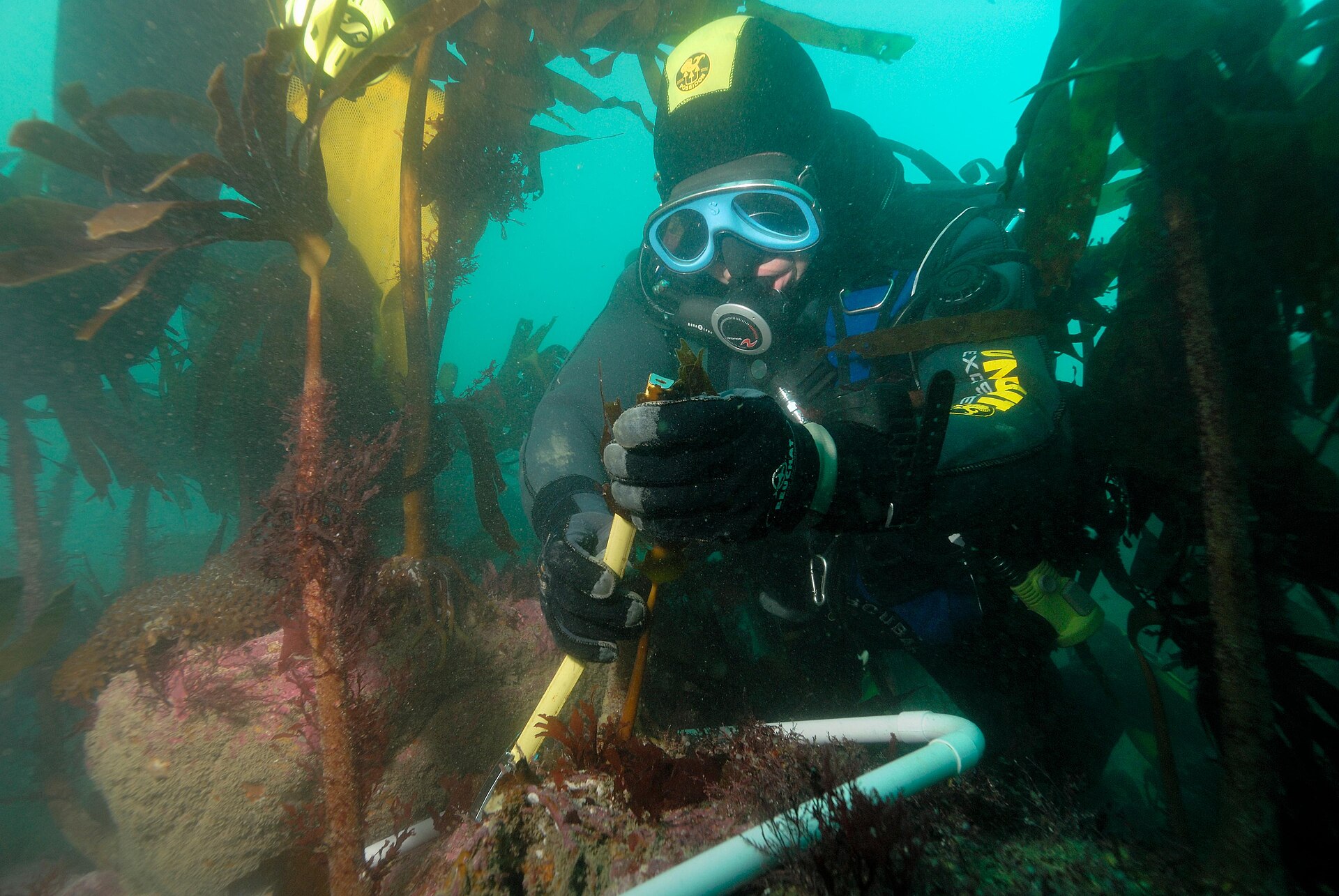
You dive the Glénan Islands for the kelp: brown algae in long ribbons, giant from a few meters down, forming corridors where spider crabs, edible crabs and king scallops hide. Pollack hunt along the edge, ballan wrasse search the rock, and the granite boulders are covered in jewel anemones, the small colorful anemones that make Breton macro. More rarely, a gray seal comes to look at the divers. On the wrecks, conger eels and lobsters hold the hull plates. Maerl beds, protected by Natura 2000 along with the archipelago's terns, carpet some of the bottoms. No groupers or barracuda here: this is cold-water life, all the easier to see because the water is clear, and the light on the white sand gives the kelp its jade color.
| Species | J | F | M | A | M | J | J | A | S | O | N | D | Note |
|---|---|---|---|---|---|---|---|---|---|---|---|---|---|
| Kelp | peak season | peak season | peak season | peak season | peak season | peak season | peak season | peak season | peak season | peak season | peak season | peak season | forests from a few meters down, ribbons of Laminaria hyperborea |
| Spider crab | possible | possible | possible | possible | peak season | peak season | peak season | peak season | peak season | possible | possible | possible | in the kelp corridors |
| Edible crab | peak season | peak season | peak season | peak season | peak season | peak season | peak season | peak season | peak season | peak season | peak season | peak season | under the rocks and in the crevices |
| King scallop | peak season | peak season | peak season | peak season | peak season | peak season | peak season | peak season | peak season | peak season | peak season | peak season | on the sandy bottoms between the rocks |
| Pollack | possible | possible | possible | possible | peak season | peak season | peak season | peak season | peak season | possible | possible | possible | hunting along the edge of the kelp |
| Jewel anemones | peak season | peak season | peak season | peak season | peak season | peak season | peak season | peak season | peak season | peak season | peak season | peak season | colorful carpets on the granite rocks and in the caves |
| Gray seal | possible | possible | possible | possible | possible | possible | possible | possible | possible | possible | possible | possible | rare, passing through |
peak seasonpossiblerare
What is diving like at the Glénan Islands?
Sites range from the Chambre lagoon, a few meters deep, to wrecks at 30 m. Laon Egen Hir, a group of rocks in the southeast of the archipelago, is dived between 0 and 18 m, with caves covered in jewel anemones; the Pietro Orseolo lies between 17 and 30 m. A certified diver of any level finds a dive to match with a guide. The wrecks and the western canyons call for guided French Level 2 at CIP Glénan, and Actisub takes outside divers from Level 2, CMAS two-star or PADI Advanced Open Water, with the FFESSM license and a medical certificate from the current year. Tidal currents stay weak, 1.5 knots at most on spring tides, but swell and tide set the schedule: you dive at slack water. Cold is the real constraint, 17 °C at best in August and 10 °C in winter.
When to dive the Glénan Islands?
idealgoodnot recommended
The season runs from June to September, when the water reaches 16 to 18 °C; it rarely goes above 17 °C, even in midsummer. Surface water at Concarneau is 10 °C from January to March, 12 °C in April, 14 °C in May, 16 °C in June, 17 °C in July, 17 to 18 °C in August, 17 °C in September, 16 °C in October, 14 to 15 °C in November and 12 to 13 °C in December. Dive centers go out to sea from April to October: the Club de Plongée de Cornouaille from April to October, CIP Glénan from April 1 to October 31, 2026, with a last diving and food weekend on October 3 and 4, and Actisub from May 1 to November 30, 2026. Passenger boats to Saint-Nicolas only run in summer. Wear a 7 mm wetsuit with a hood at the very least, and a drysuit outside summer.
How to get to the Glénan Islands?
The Glénan Islands lie about 15 km off the south coast of Finistère, and there are three ways to dive them. From Concarneau, the Club de Plongée de Cornouaille, an FFESSM club founded in 1961, takes up to 19 divers on its boat Kernev to about fifty sites, 5 to 45 minutes away, in the bay and the archipelago. From the Beg-Meil slipway in Fouesnant, Actisub, a nonprofit club, lists trips from €40, with membership and federation license. On the islands, CIP Glénan, based on Saint-Nicolas island, sells two-day stays with three dives or five-day stays with seven dives, full board only, with a yearly membership to the association; its exploration boat takes all levels. In summer, Glénan Découverte boats run to Saint-Nicolas from Fouesnant, Concarneau, Bénodet or Loctudy for €50 per adult. You reach Concarneau via Quimper train station. There is no access fee for the archipelago.
Stay in Concarneau
Where to stay near the Glénan Islands?
Hotels, apartments and rooms around Concarneau, with current prices.
How many dive sites are there in the Glénan Islands?
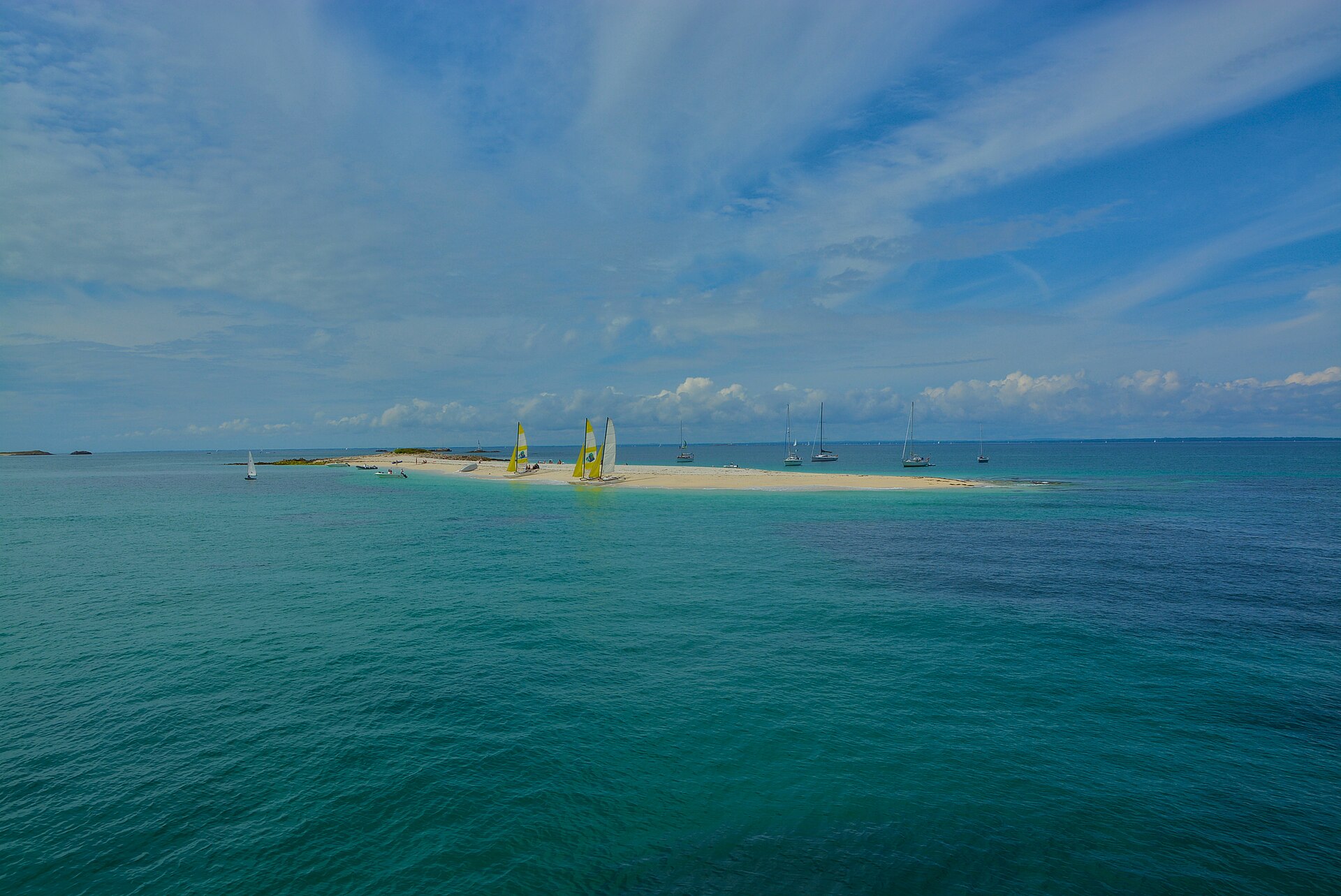
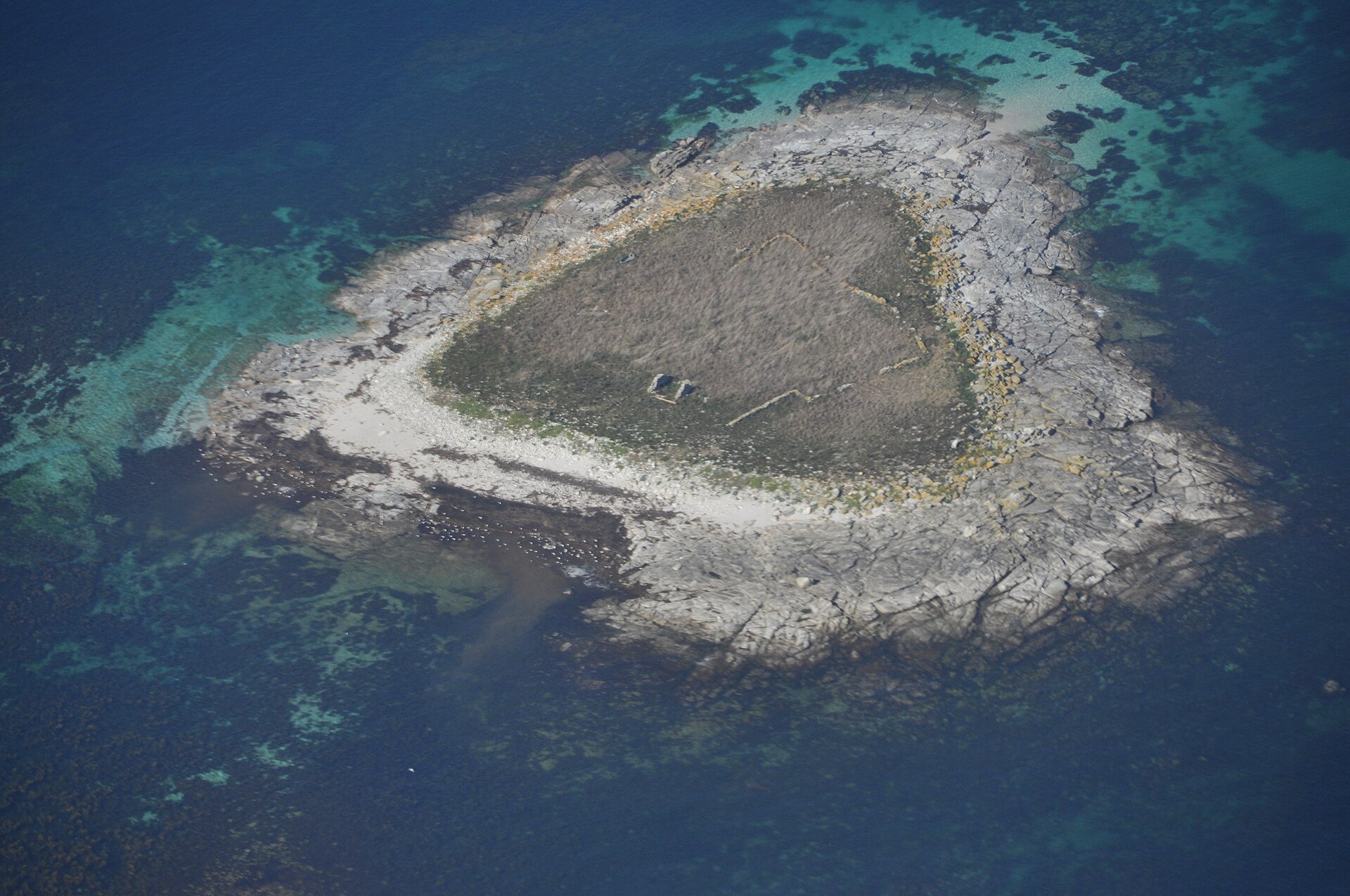
The Glénan Islands are made up of nine main islands, 5 km² of land in the town of Fouesnant, around a central lagoon, the Chambre, with turquoise water over white sand. Penfret, the easternmost, lies 10.5 km southwest of Pointe de Trévignon; Saint-Nicolas, Le Loc'h, Drenec and Bananec enclose the lagoon. The site has been officially protected since October 18, 1973, Saint-Nicolas has been a national nature reserve since 1974, and the Glénan narcissus, a plant that grows nowhere else, blooms there in spring.
Diving has a history here: the Groupe atlantique de plongée settled on Saint-Nicolas in 1959, drawn by the purity of the water, and became the Centre international de plongée des Glénan in 1980, still active on the island. The Glénans sailing school has been there since 1947. Today, dive centers use about fifty sites between Concarneau Bay and the archipelago: walls, rocky plateaus, western canyons and wrecks.
Which wrecks can you dive in the Glénan Islands?
More than ten wrecks are dived around the archipelago, including the Alja, the Mustang, the Arab and the Pietro Orseolo. The last one is a 140 m Italian cargo ship, attacked by RAF aircraft in December 1943, that lies between 17 and 30 m: it is the benchmark wreck dive of the Glénan Islands, for guided Level 2 divers. The wrecks and the western canyons of the archipelago are the focus of the trips CIP Glénan calls Plongée Aventure, reserved for Level 2 divers; the standard exploration boat is open to all levels, independent or guided. On the hull plates, you find conger eels and lobsters; around them, the same kelp and jewel anemones as on the rocks.
Tides, cold, clubs: what is different about diving in Brittany?
Three things change compared with the Mediterranean. First, the tide: currents stay weak at the Glénan Islands, 1.5 knots at most on spring tides, but you dive at slack water and trip times follow the tide tables, not the mood of the day. Second, the cold: 17 °C at best in August, 10 °C in winter, water that calls for a 7 mm wetsuit with hood, gloves and boots, or a drysuit. Last, the clubs: Breton diving is mostly nonprofit and cheaper, with a membership, the FFESSM license, a medical certificate from the current year and, for visiting divers, French Level 2 or its equivalent. Book ahead: club boats leave with their members, and spots for outsiders are limited.
Our tip
Dive at slack water, when the current drops: swell and tide set the schedule. Bring a 7 mm wetsuit with a hood or a drysuit: the water does not go above 17 or 18 °C in August. Book your stay at CIP Glénan early: places are limited.
Other dive sites nearby
 FranceWreck
Liban wreck (Marseille)
French Mediterranean: Riviera, Provence and Corsica FranceWall
La Gabinière (Port-Cros)
French Mediterranean: Riviera, Provence and Corsica FranceWreck