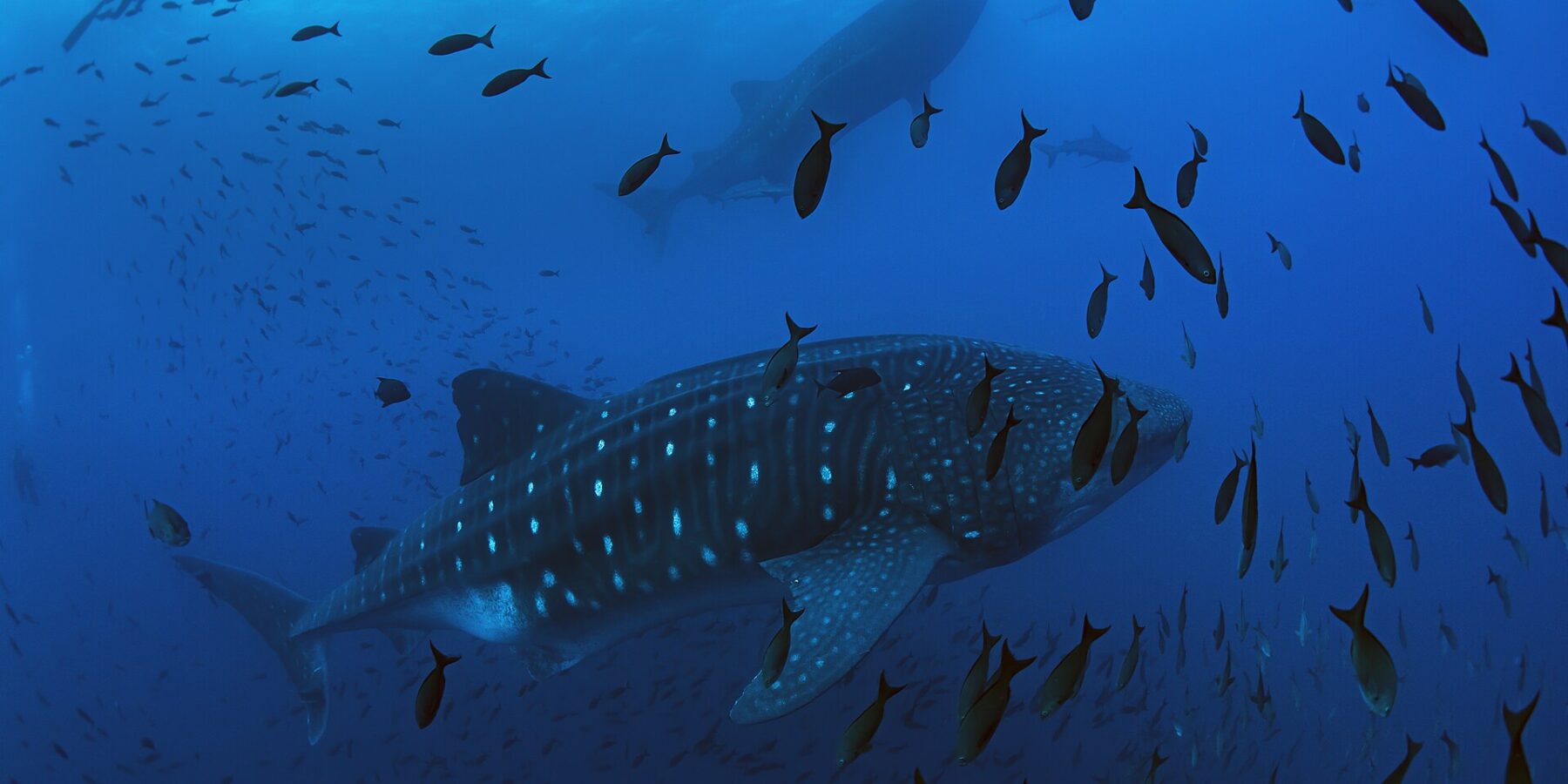
The whale shark is the largest fish in the world, a white-spotted giant that filters plankton and lets you approach with fins, mask and snorkel. You meet it at Mafia Island from October to March, in South Ari Atoll all year round and at Richelieu Rock from February to April. The species is Endangered: watch it without touching it.
Where to dive to see the whale shark?
 AzoresPelagic
Ambrósio
Santa MariaPeak season from August to September: around Santa Maria in August and September, on bait balls; not guaranteed at Ambrósio itself
 Costa RicaPelagic
Bajo Alcyone
Cocos IslandPeak season from July to September: from June to November, mostly from July to September, in the blue above the summit
 IndonesiaReef
Batu Bolong
KomodoCan be seen all year round: rare, passing through the blue
 ThailandPelagic
Chumphon Pinnacle
Gulf of Thailand: Koh TaoPeak season May and August: March to May and August to October, peaking in May and August, above the pinnacle
 EgyptPelagic
Daedalus Reef
Southern Red Sea, EgyptCan be seen all year round: recorded on the reef, an exceptional encounter
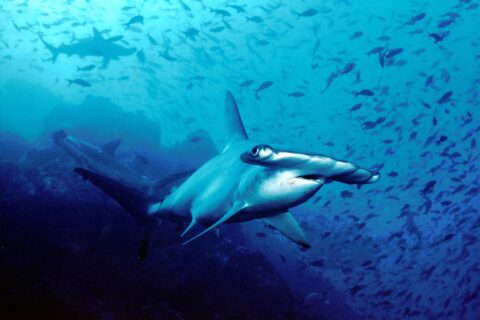 Costa RicaPelagic
Dirty Rock
Cocos IslandCan be seen all year round: an occasional visitor, mostly from June to November
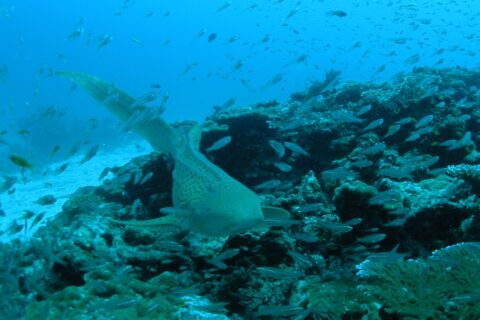 ThailandReef
Elephant Head Rock
Andaman Sea: Similan, Surin and LantaCan be seen all year round: an exceptional encounter, in plankton season
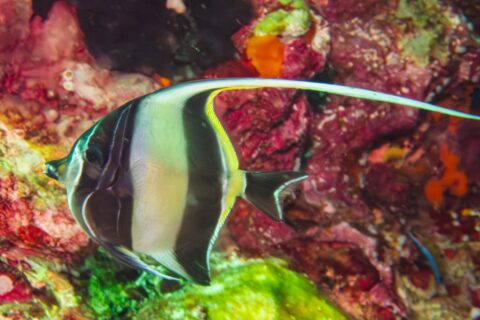 ThailandPelagic
Hin Daeng and Hin Muang
Andaman Sea: Similan, Surin and LantaCan be seen all year round: at random during the season, with no set month
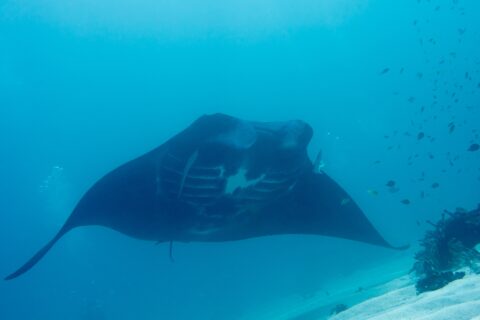 ThailandPelagic
Koh Tachai Pinnacle
Andaman Sea: Similan, Surin and LantaPeak season from February to April: not rare, passing through in the current, mostly from February to April

 MexicoReef
Los Islotes
Sea of Cortez: La Paz and Cabo PulmoCan be seen all year round: in La Paz Bay, on a guided snorkeling trip, in season
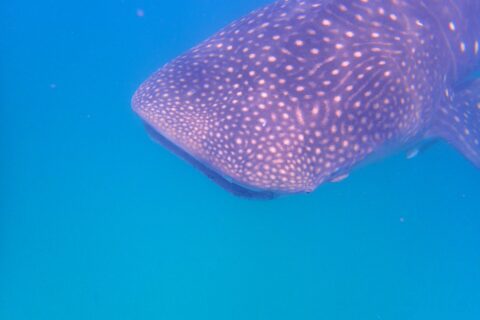
 TanzaniaPelagic
Mafia Island whale sharks
Mafia IslandPeak season from October to February: at the surface from October to March, peaking from mid-December to late January; present all year at depth, out of sight
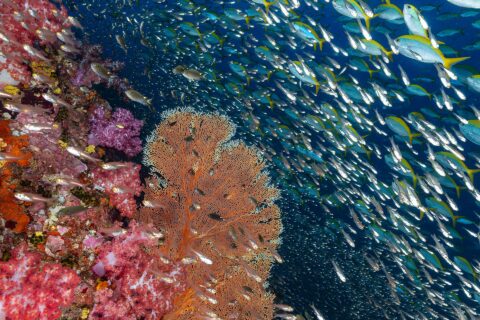 ThailandPelagic
Richelieu Rock
Andaman Sea: Similan, Surin and LantaPeak season from February to April: mostly from February to April, above the pinnacle or in the blue, when the plankton rises
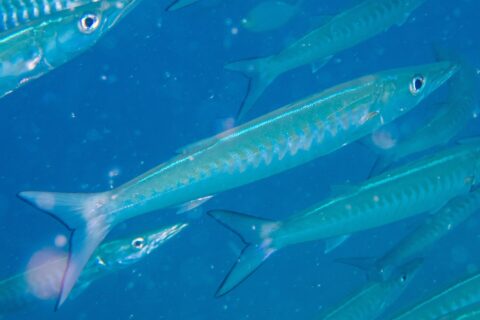 ThailandPelagic
Sail Rock
Gulf of Thailand: Koh TaoPeak season from March to May and from August to September: from March to September, during plankton blooms, peaking in May and August
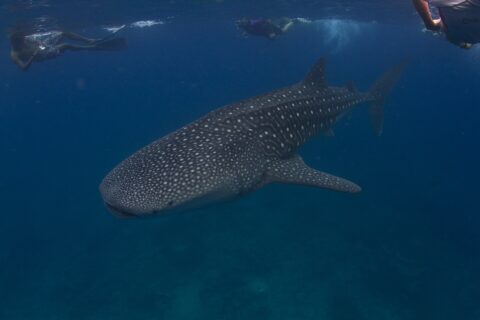
 MaldivesPelagic
South Ari Atoll (Maamigili)
Ari and Rasdhoo atollsPeak season all year round: resident all year; mostly to the west and south (Rangali, Maamigili) from December to April, toward Dhigurah from May to November
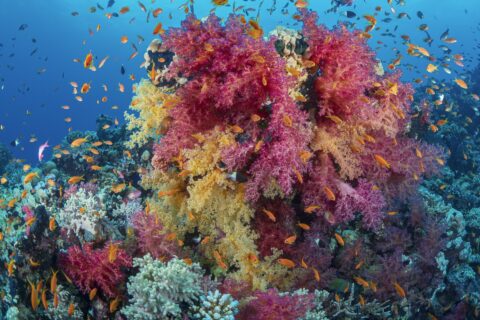 EgyptCave or cenote
St. John's and Fury Shoals
Southern Red Sea, EgyptCan be seen all year round: reported some summers, never guaranteed
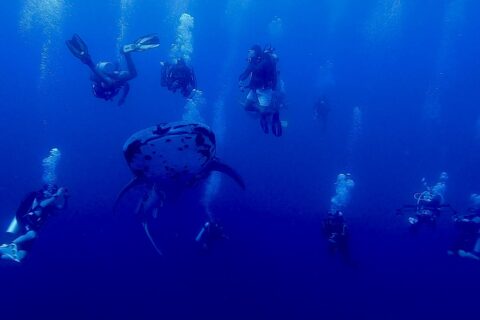
 PhilippinesPelagic
Tubbataha Reef
PalawanCan be seen all year round: passing along the Staghorn Point wall, on South Atoll, on some days
How do you identify a whale shark?
It is impossible to mistake: a massive body, blue-gray on top and white below, covered in a checkerboard of pale spots and lines, a broad, flat head, and a front-facing mouth more than a meter and a half wide on a 12-meter individual. Three ridges run along each flank to a crescent-shaped tail. The largest individual reliably measured was 18.8 meters long. Most encounters are with animals of 5 to 10 meters, often young males. One specimen of 11 to 12 meters weighed about fifteen tons. The spot pattern is unique to each animal, like a fingerprint: monitoring programs identify individuals from a photo of the left flank, behind the gills.
How does the whale shark live?
The whale shark is a filter feeder. It swims with its mouth open, at about 5 km/h, and its gill rakers trap plankton, krill, fish eggs and small schooling fish. It can also gulp water in bursts when food concentrates at the surface. That is what makes it visible: wherever a current, a tide or a coral spawning loads the water with plankton, it comes up to feed at the surface, within snorkeling range. The rest of the time, it travels and dives deep, down to 1,928 meters, the deepest dive on record. The species lives in all warm seas, between 30 degrees north and 35 degrees south. It is ovoviviparous: a female caught in 1996 carried some 300 embryos, and the pups are born at 40 to 60 centimeters. It only matures at around 8 or 9 meters, and its lifespan is estimated at 80 to 130 years.
Where and when can you see whale sharks?
Each site has its season, tied to the plankton. In Tanzania, the Mafia Island whale sharks come to the surface off Kilindoni from October to March, with a peak from November to February; you meet them snorkeling, never on scuba. In the Maldives, South Ari Atoll has them all year round, along the outer reef. In Thailand, Richelieu Rock sees them pass from February to April. In the Philippines, Donsol remains the natural encounter. At Oslob, on Cebu, fishermen feed the sharks, and the encounter, guaranteed, has nothing wild left about it. In Mexico, Isla Mujeres gathers one of the largest known concentrations from June to September, with a peak in July and August. Elsewhere, Ningaloo Reef in Australia, the Gulf of Tadjoura in Djibouti, Tofo in Mozambique, La Paz in Baja California and the Galápagos Islands are among the regular sites.
How do you approach a whale shark?
A whale shark doesn't bite, but a tail swipe from an animal weighing several tons is not up for debate, and a harassed animal leaves the surface. The codes of conduct at serious sites all say the same thing: at least three meters between swimmer and animal, more from the tail; entry into the water on the guide's signal, from the side, without jumping in front of it; no contact, no flash, no scooter; don't cut across its path, and never hold on to its fin. At Mafia, operators limit the number of swimmers per trip and work with Sea Sense and the Marine Megafauna Foundation, which wrote the code applied on the island. Feeding, as practiced at Oslob, changes the animals' behavior and is not a good idea.
Is the whale shark endangered?
The whale shark has been listed as Endangered on the IUCN Red List since 2016: its numbers have fallen by about 50% in 75 years, and by 63% in the Indo-Pacific. Fishing for its fins and meat, bycatch in nets and collisions with ships are the causes, made worse by late maturity and slow reproduction. It is listed on CITES Appendix II, which regulates its international trade. Tourism, when it respects the distances, tends to work in its favor: it funds photo monitoring of the populations and gives fishing villages, at Mafia as at Donsol, a reason to keep it alive.
Our tip
Stay at least three meters away, approach from the side and never put yourself in front of its mouth or behind its tail. No contact, no flash, no kicking in its wake: a disturbed whale shark dives, and the encounter is over for everyone. Pick an operator that limits the number of swimmers and does not use bait.