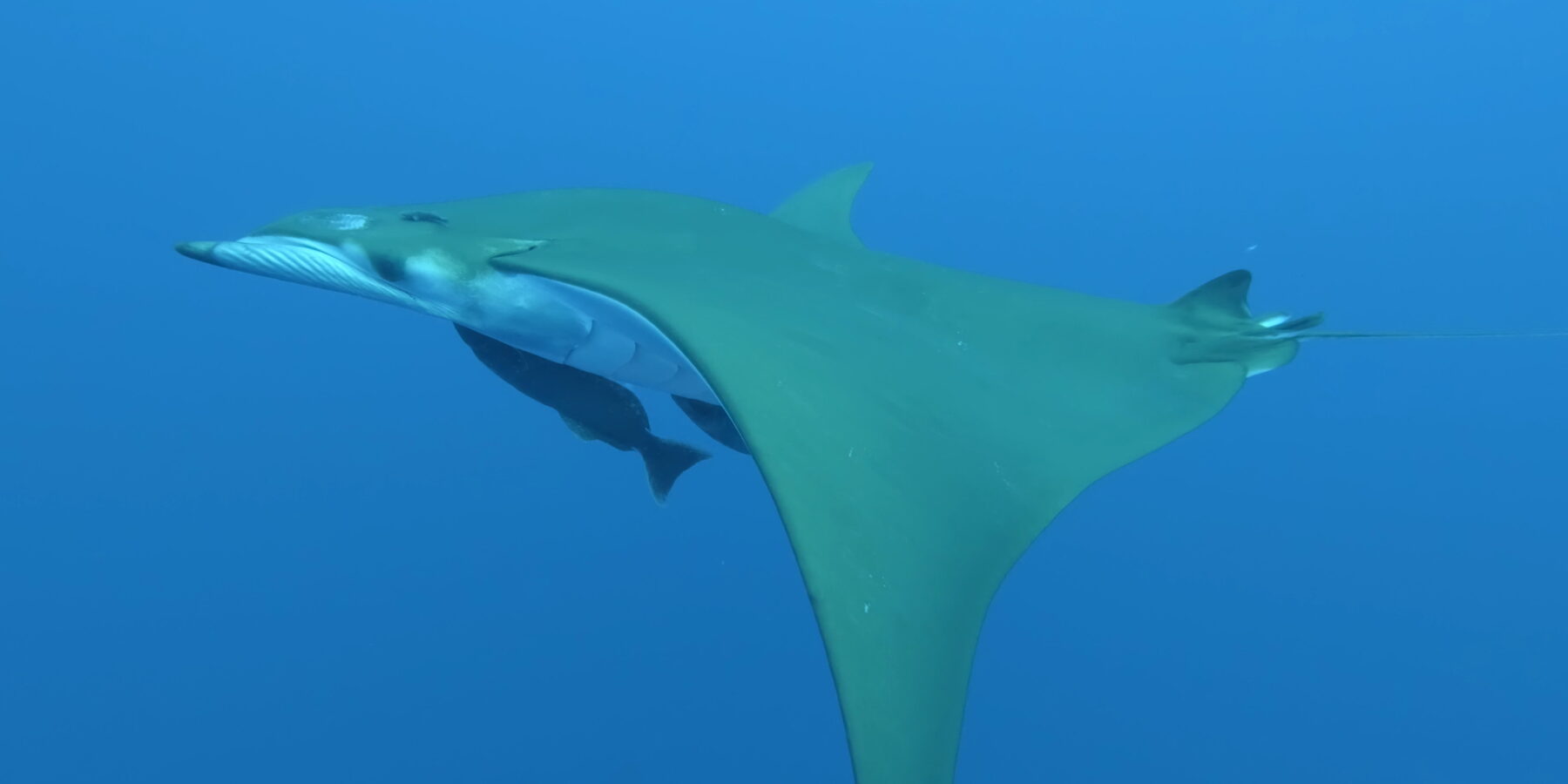
Ambrósio is a shoal three nautical miles off the north coast of Santa Maria, where dozens of mobula rays rise from June to October and circle a meter from divers holding the buoy line. Vila do Porto is forty minutes away by boat, and Mantamaria asks for Advanced or 25 dives.
Why dive Ambrósio?
- Dozens of mobula rays, up to hundreds, from June to October, between 5 and 15 m
- A site open to Advanced divers or divers with 25 logged dives, and to snorkelers
- Forty minutes by boat from the Vila do Porto marina, three nautical miles off the coast
- Schools of amberjacks, yellowmouth barracuda and bluefish around the buoy line
- A marine protected area with a fixed buoy and limited slots
The dive site on the map
Base: Vila do Porto (Santa Maria), 12 km as the crow flies.
See nearby dive sites on the mapAmbrósio in pictures
What will you see at Ambrósio?
Ambrósio is a mobula station, for Mobula tarapacana. From June to October, they rise from the depths in groups of several dozen, up to hundreds on good days, spiral along the buoy line a meter from divers, then leave and come back to the same spot every fifteen or twenty minutes. Pregnant females have been seen here, which suggests a breeding area. Between 5 and 15 m, the line runs through schools of amberjacks, yellowmouth barracuda and bluefish. On the bottom, on the 46 m platform, live the round fantail stingray and the red scorpionfish, and a sunfish sometimes passes in open water. Whale sharks show up around Santa Maria in August and September, on the bait balls that tuna also hunt, but a sighting at Ambrósio itself is not guaranteed. Common dolphins, bottlenose dolphins and Atlantic spotted dolphins often follow the boat during the forty-minute ride.
| Species | J | F | M | A | M | J | J | A | S | O | N | D | Note |
|---|---|---|---|---|---|---|---|---|---|---|---|---|---|
 Sicklefin devil ray | rare | rare | rare | rare | rare | possible | peak season | peak season | peak season | possible | rare | rare | by the dozens, up to hundreds, spiraling along the line between 5 and 15 m; peak in August and September |
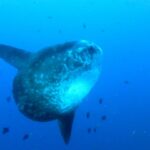 Giant sunfish | rare | rare | rare | rare | rare | possible | possible | possible | possible | possible | rare | rare | in open water or near the bottom, passing through |
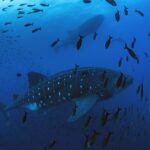 Whale shark | rare | rare | rare | rare | rare | rare | possible | peak season | peak season | rare | rare | rare | around Santa Maria in August and September, on bait balls; not guaranteed at Ambrósio itself |
| Amberjacks | rare | rare | rare | rare | rare | peak season | peak season | peak season | peak season | peak season | rare | rare | in large schools on the line, between 5 and 15 m |
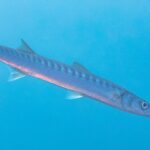 Yellowmouth barracuda | rare | rare | rare | rare | rare | peak season | peak season | peak season | peak season | peak season | rare | rare | Sphyraena viridensis, schooling around the line |
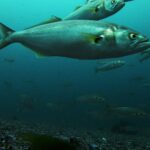 Bluefish | rare | rare | rare | rare | rare | possible | peak season | peak season | peak season | possible | rare | rare | schools of Pomatomus saltator in the current |
| Round fantail stingray | possible | possible | possible | possible | possible | possible | possible | possible | possible | possible | possible | possible | Taeniura grabata, on the platform at 46 m, with the red scorpionfish |
| Common dolphin | rare | rare | rare | rare | rare | possible | possible | possible | possible | possible | rare | rare | follows the boat on the ride, like the bottlenose dolphin and the Atlantic spotted dolphin |
peak seasonpossiblerare
What is diving like at Ambrósio?
Baixa do Ambrósio is an isolated shoal three nautical miles off the north coast of Santa Maria, whose top, a small platform about fifty meters long, sits at 45 or 46 m. You do not go down to it: the dive takes place on the fixed buoy line, between 5 and 15 m, where the mobulas and the schools come up near the surface. It is still an offshore dive, for which Mantamaria asks for Advanced or 25 dives, and snorkelers see the rays from the surface; the bottom, at 46 m, is for experienced or technical divers only. The current is moderate to strong: you hold the line or stay within reach of it depending on the day, and you do not drift away, because there is nothing to orient yourself by except the blue and the animals. Visibility ranges from 20 to 40 m. Dives are limited to 60 minutes, and time spent in the protected area to an hour and a half. A DSMB and good buoyancy at 5 m are essential.
When to dive Ambrósio?
idealgoodnot recommended
The mobulas are at Ambrósio from June to October, and the groups are biggest and encounters most reliable between July and September; the peak is in August and September. The Santa Maria dive centers, Mantamaria, Haliotis and Wahoo Diving, only open from June to October and close in winter. The water is 20 °C in June, 22 °C in July, 23 °C in August and September and 22 °C in October: wear a 5 mm wetsuit in midsummer and 7 mm in June and October. In April and May, it does not go above 17 or 18 °C, and it is 16 °C in March. Slots on the buoy are limited to a small number of boats: book your dive as soon as you arrive, and keep two or three trips spread over the week, because the sea decides. You can also snorkel the site and see the same animals from the surface.
How to get to Ambrósio?
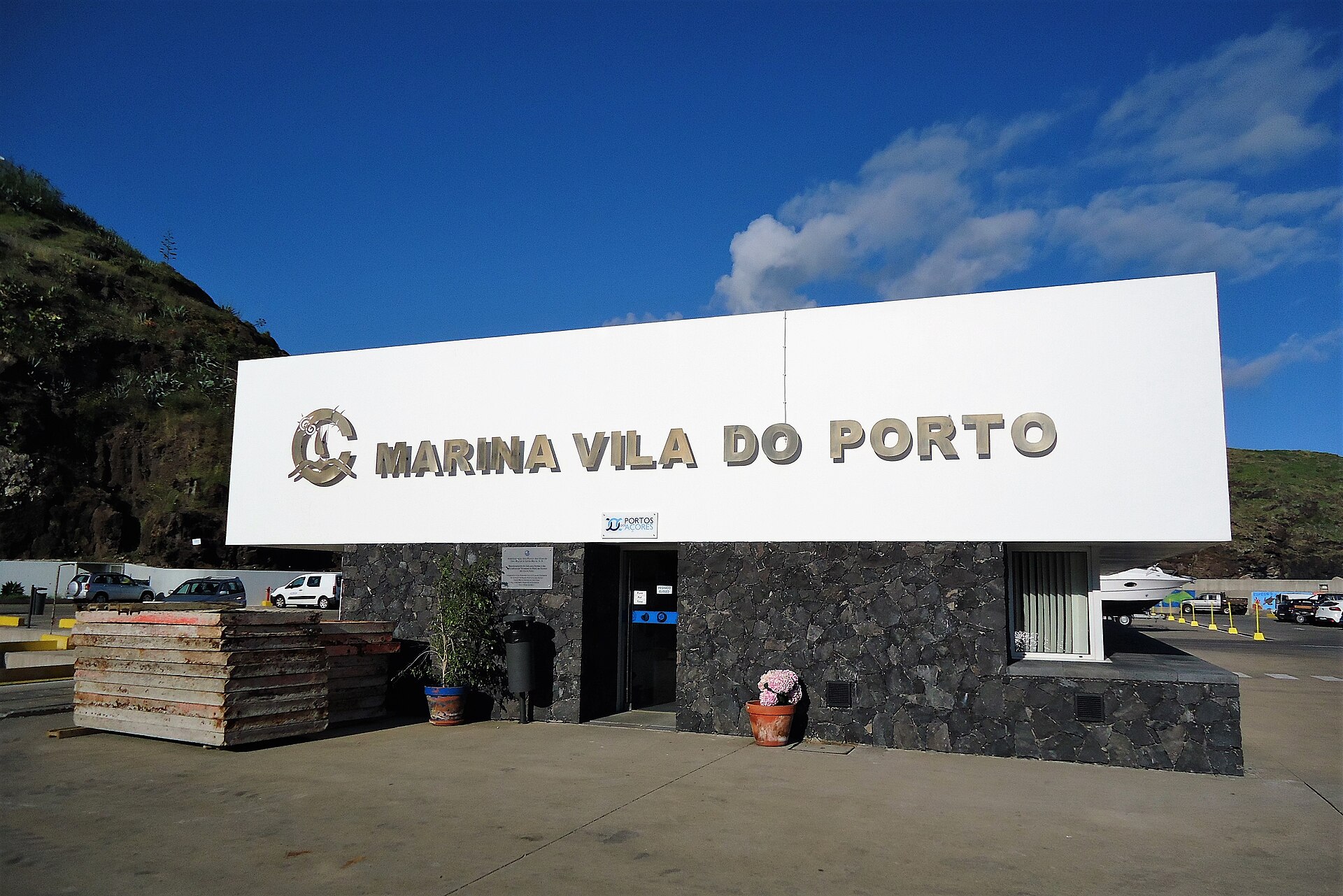
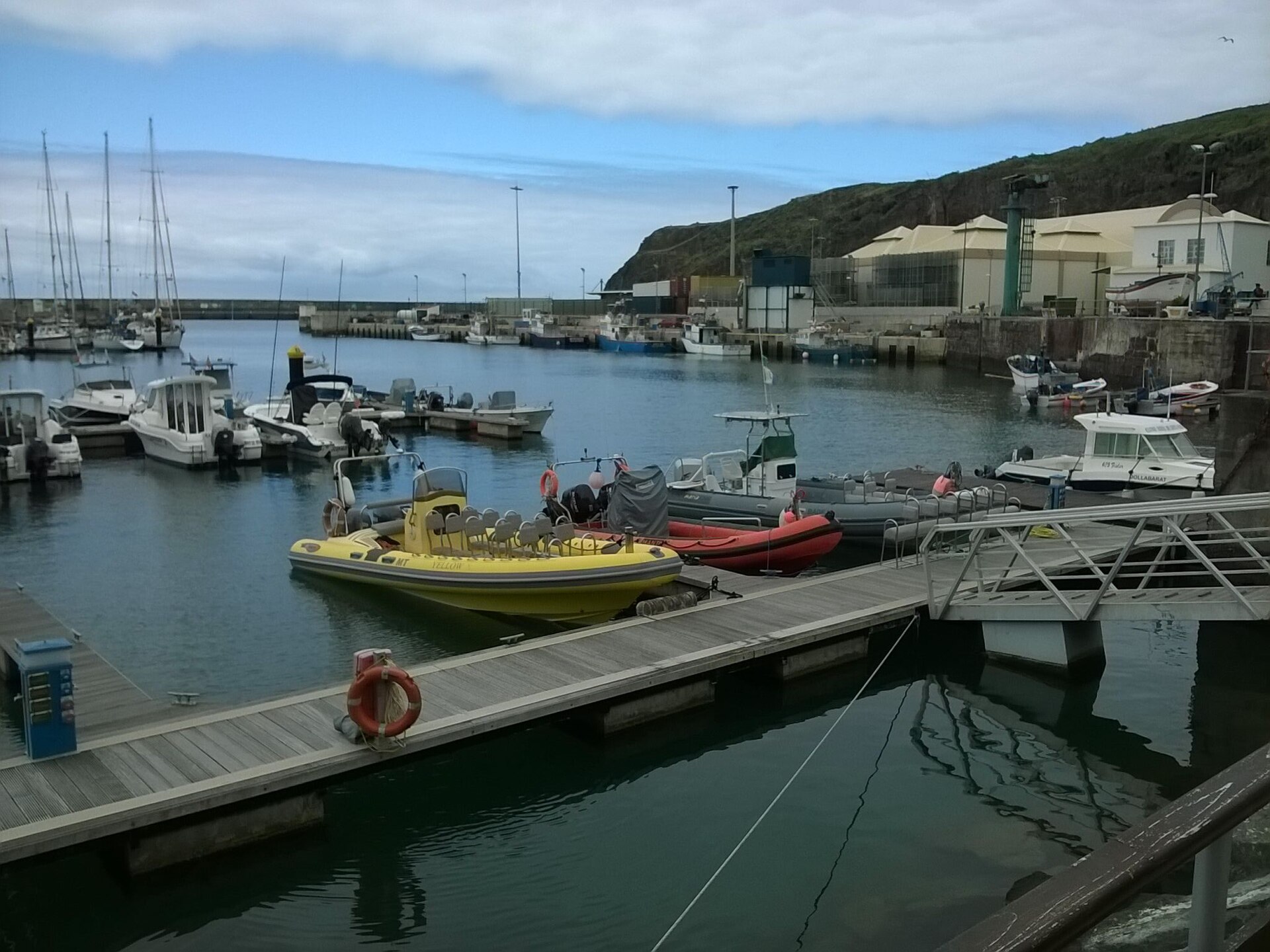
The dive centers leave from the Vila do Porto marina, in the south of the island, and reach Ambrósio in 40 to 45 minutes by RIB, following the coast around. Haliotis Santa Maria sells the Ambrósio dive for €99, with a 12-liter tank, weights, boat, guide and insurance included, €35 extra for a second dive on site and €89 for snorkeling, and rents full gear for €39 a day. At Mantamaria, the 2026 price list shows €58 per dive and a €44 surcharge for Ambrósio, waived from eight dives, €68 for the snorkeling trip with the mobulas, €30 a day for gear and €13 for a Nitrox tank. Santa Maria airport is 5 km from Vila do Porto: SATA Air Açores flies there from Ponta Delgada, and Azores Airlines from Lisbon. From Paris, Azores Airlines flies nonstop to Ponta Delgada in four hours, three times a week, and the inter-island flight to Santa Maria then takes less than an hour.
Stay in Vila do Porto (Santa Maria)
Where to stay near Ambrósio?
Hotels, apartments and rooms around Vila do Porto (Santa Maria), with current prices.
Why do mobula rays gather at Ambrósio?
Ambrósio is a coastal seamount three nautical miles off the north coast of the oldest island in the Azores, the only one with marine fossil deposits. Its top, at 46 m, concentrates the current and the life that comes with it, and the mobulas rise from offshore to circle near the surface, from early summer into fall. Pregnant females have been seen here, hence the idea of a breeding area. Rays tagged in the Azores have been found in winter off Cape Verde, nearly 2,500 km away: the Ambrósio rays are travelers, and the site is just one stop in their year. The archipelago, and Ambrósio in particular, is one of the Hope Spots designated by Mission Blue, the network of marine areas to protect first.
How does a dive at Ambrósio unfold?
The boat ties up to the fixed buoy and the group descends along the line to 10 or 15 m, no deeper. Then you wait, hanging in the blue, in water with 30 m visibility. The mobulas arrive from below, white bellies first, in groups of ten, twenty or fifty, and start spiraling up around the line, sometimes all the way to the surface, before heading back down; a quarter of an hour later, they come back, often to the same spot. Snorkelers, staying at the surface above the boat, see the same scene from above. Schools of amberjacks and barracuda pass between two rounds. The dive lasts 60 minutes at most, and the site works better with six people in the water than with twelve: too many bubbles keep the rays at a distance and spoil the pictures.
What are the rules in the Ambrósio marine protected area?
Baixa do Ambrósio is one of the marine protected areas of the Santa Maria Natural Park, along with Baixa da Maia, Baixa da Pedrinha and Ilhéu da Vila. A code of use from December 2014 sets the rules for operators, who register before each trip and limit their time on site to an hour and a half. A mooring buoy reserved for diving keeps anchors off the shoal, and no boat outside the activity may come within 100 m of it. The regional code of conduct for diving with mantas completes the picture: you let the animals come, you do not touch them, you do not chase them, and you avoid blowing bubbles under their bellies. This framework, and the limited number of boats on the site, are why the mobulas come back to the same spot every summer.
Our tip
Book as soon as you arrive and keep two or three trips spread over the week, in case of swell. Stay on the line between 5 and 15 m: the mobulas come back every fifteen or twenty minutes. Aim for August and September, for water at 23 °C.
Other dive sites nearby
 AzoresReef
Formigas and Dollabarat
Santa Maria AzoresReef
Ilhéus da Madalena
Pico and Faial AzoresReef