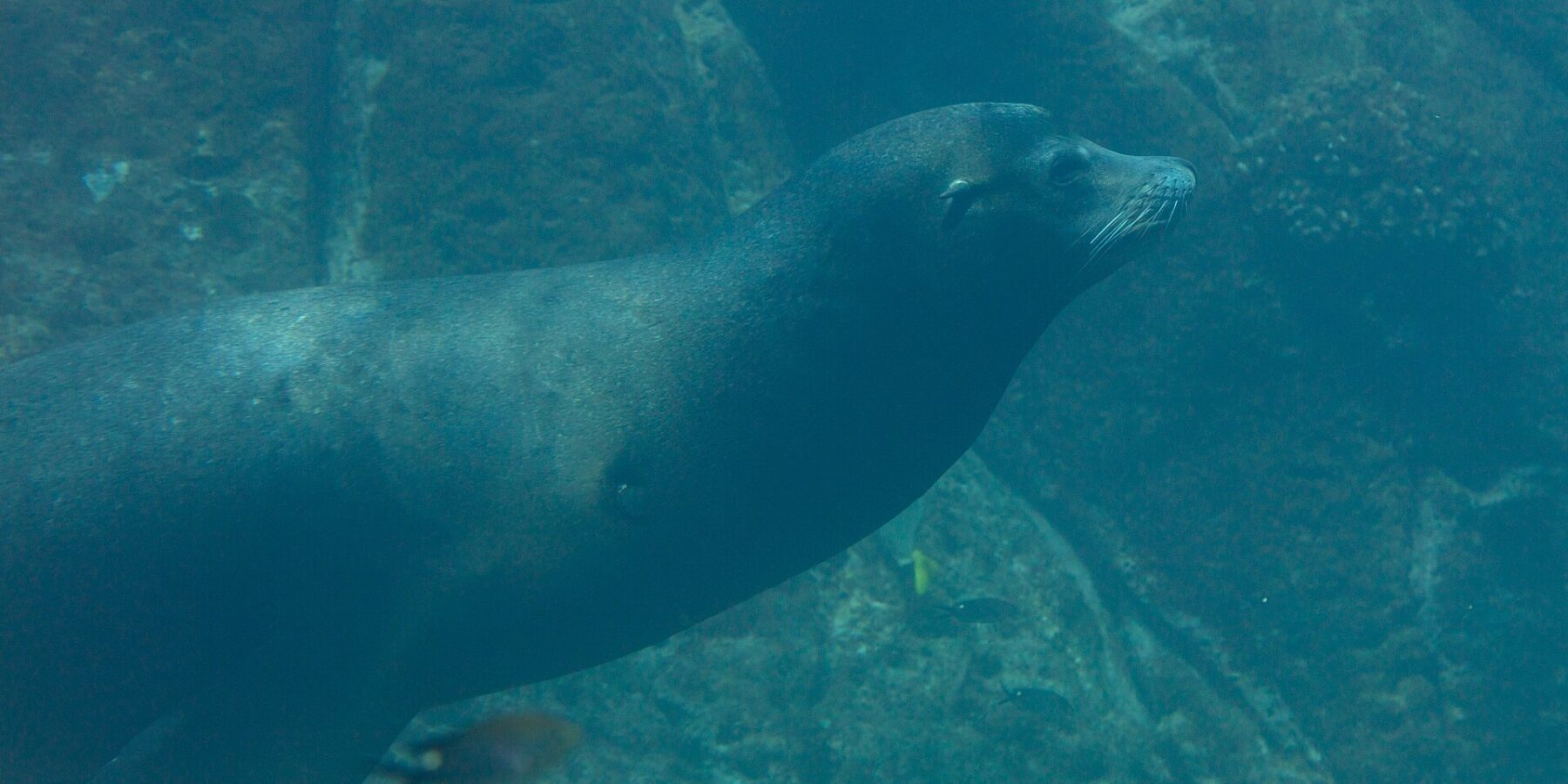
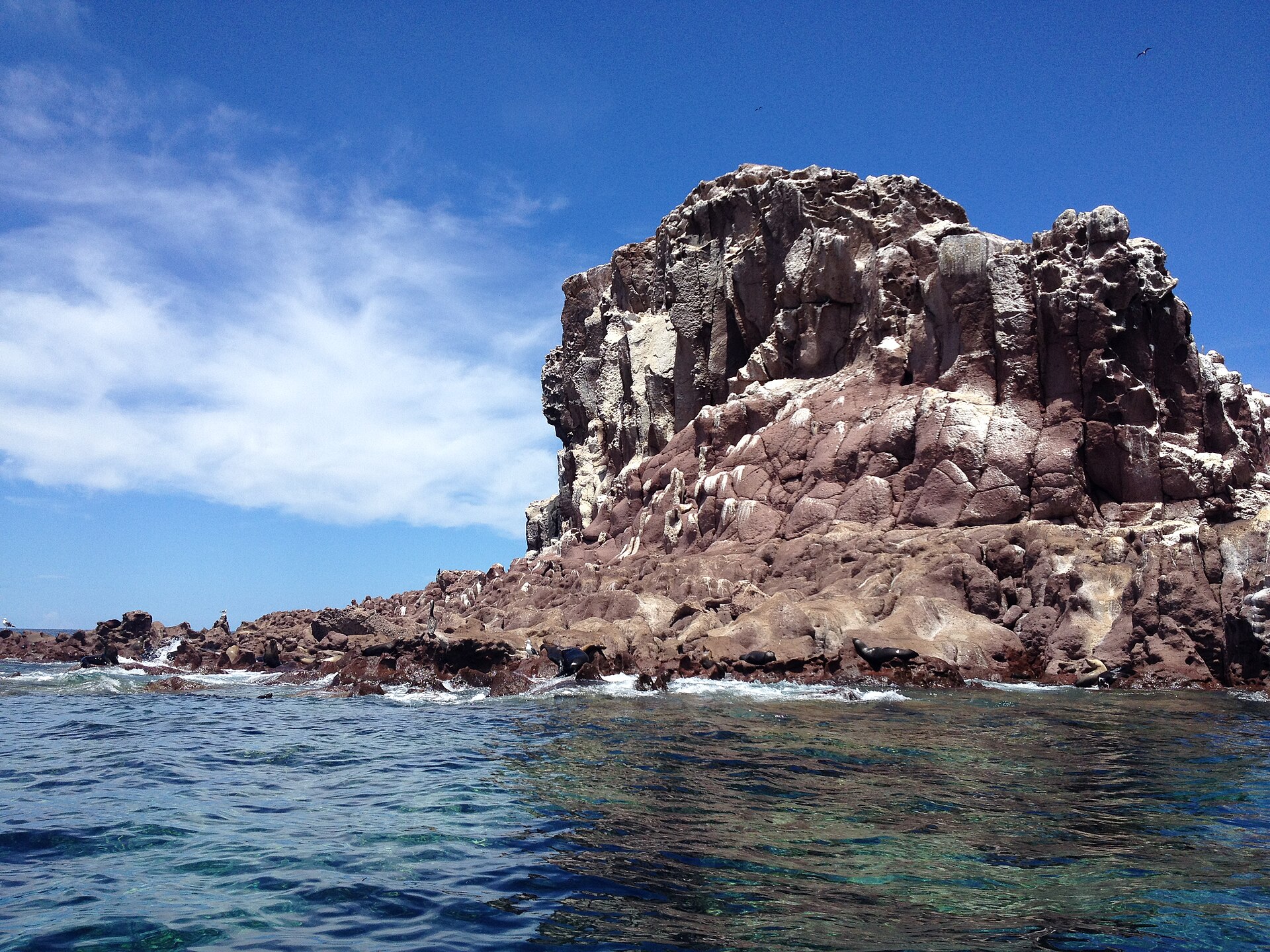
Los Islotes are two islets north of Espíritu Santo, 45 minutes by boat from La Paz, home to some 300 California sea lions. The pups come to nibble your fins between 5 and 15 meters, and Open Water is enough. The site closes from June to the end of August, during the breeding season.
Why dive Los Islotes?
- A colony of about 300 California sea lions, with pups that come to play with divers
- Between 5 and 15 meters with no current: open to Open Water divers, and to snorkelers
- Anchovy schools where sea lions and cormorants hunt, with morays and porcupinefish in the cracks
- A 45-minute crossing with dolphins, mobulas and seabirds
- Two dives for US$190 with La Paz Divers, park fees and lunch included
Los Islotes in pictures
What will you see at Los Islotes?
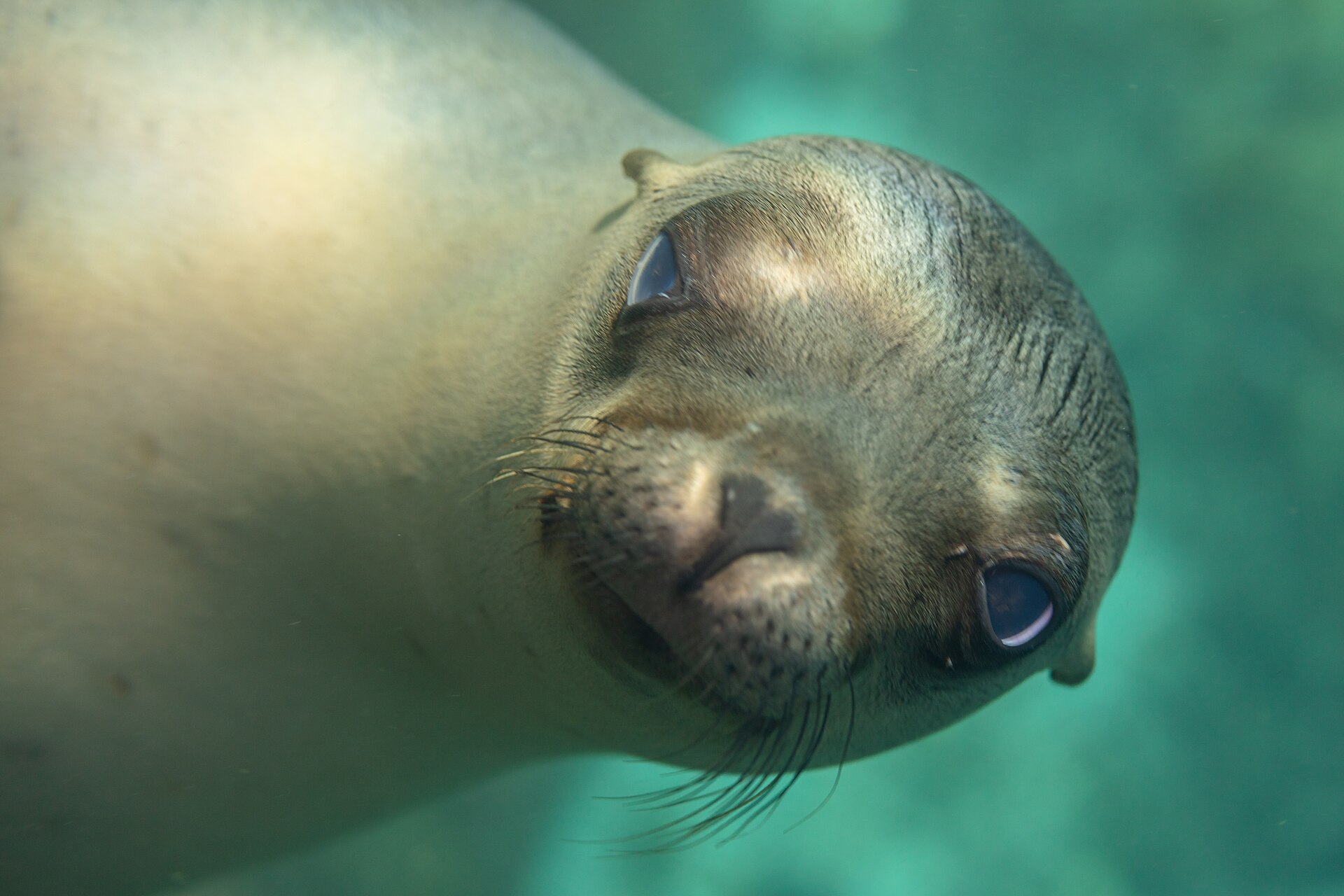
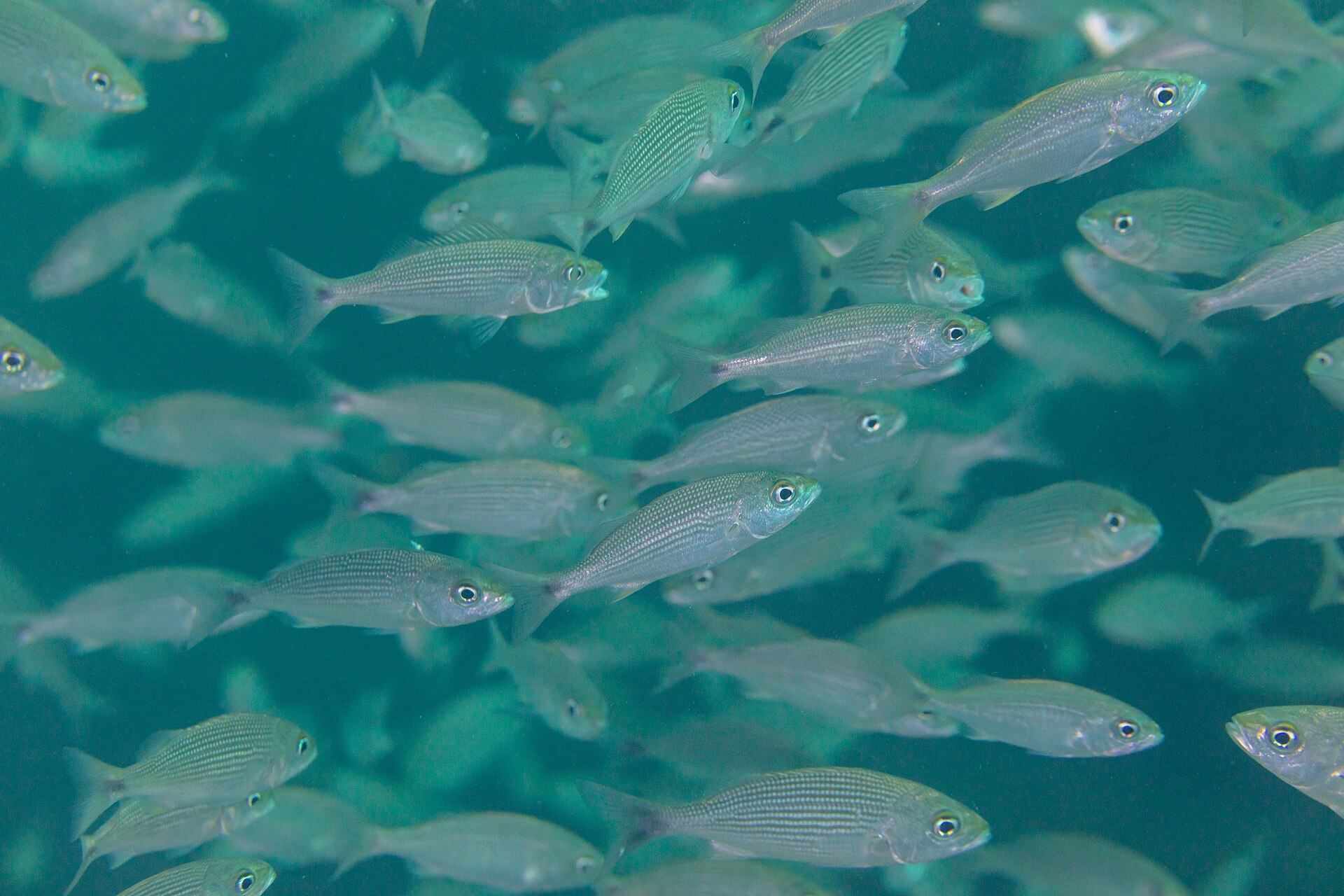
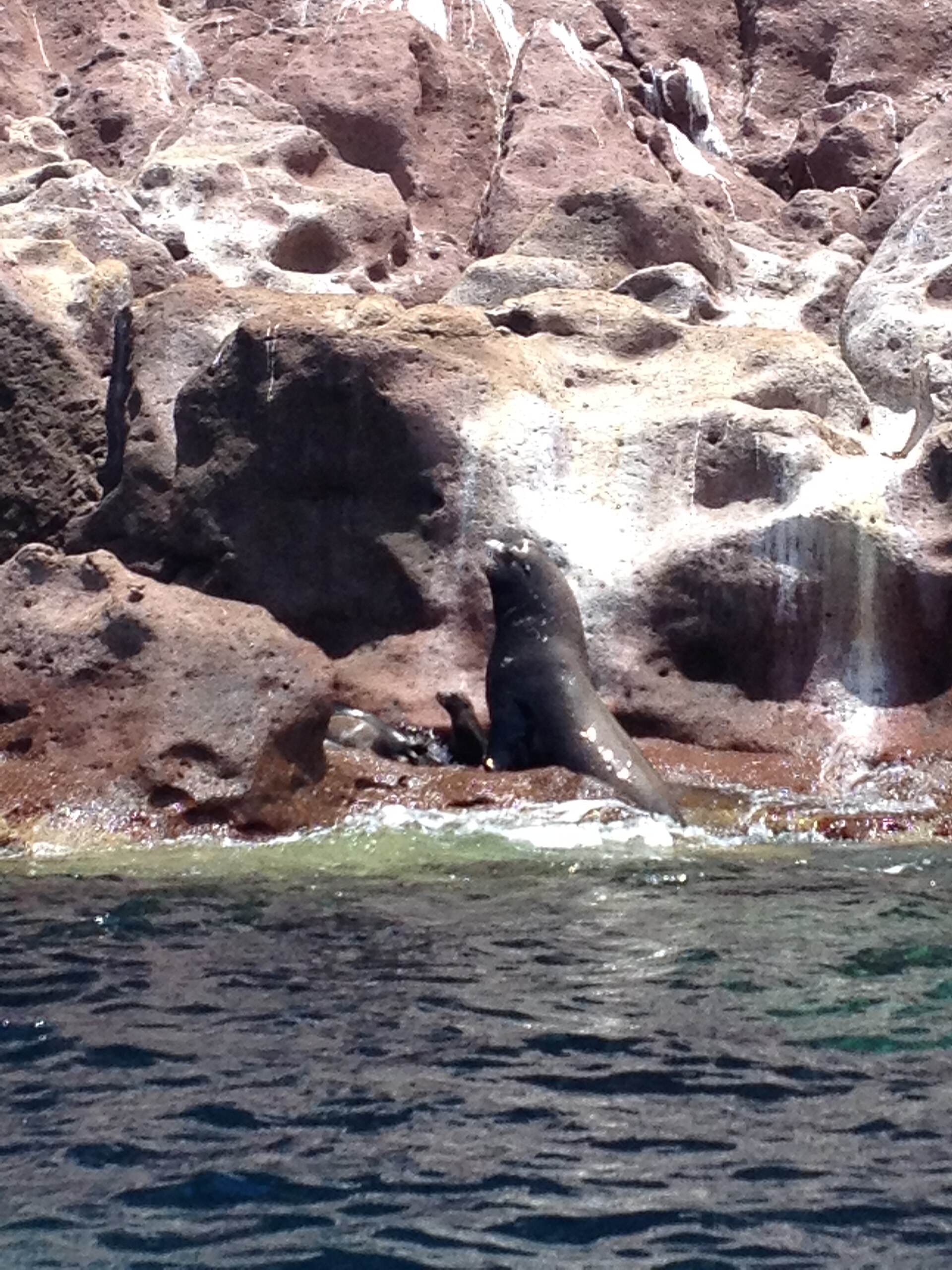
The sea lions are the show. The colony numbers some 300 animals: the males, dark and heavy, bark on the rocks to hold their territory, while the females and the year's pups are in the water. The pups are as curious as puppies: they circle divers, nibble fins, tug on mask straps, chew on a bit of wetsuit or a finger, and play with anything that passes, even porcupinefish, which they carry around in their mouths like a ball. Between two somersaults, they hunt in anchovy schools of several thousand fish, where cormorants dive too. Around the islets, the rocks hold morays, schooling grunts, angelfish and parrotfish, and turtles come up to breathe at the surface. The crossing from La Paz provides the rest: dolphins escorting the panga, leaping mobulas, blue-footed boobies, frigatebirds and pelicans. Hammerheads and whale sharks are elsewhere, at El Bajo and in La Paz Bay.
| Species | J | F | M | A | M | J | J | A | S | O | N | D | Note |
|---|---|---|---|---|---|---|---|---|---|---|---|---|---|
 California sea lion | peak season | peak season | peak season | peak season | peak season | rare | rare | rare | peak season | peak season | peak season | peak season | a colony of about 300 animals, with pups that come right up to divers; closed to swimmers from June to August 31 |
 Green turtle | possible | possible | possible | possible | possible | possible | possible | possible | possible | possible | possible | possible | at the surface and on the Espíritu Santo reefs, during the crossing and the second dive |
 Sicklefin devil ray | possible | possible | possible | possible | possible | possible | possible | possible | possible | possible | possible | possible | schools leaping offshore during the crossing, depending on the season |
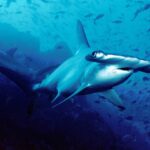 Scalloped hammerhead | possible | possible | possible | possible | possible | possible | possible | possible | possible | possible | possible | possible | not at Los Islotes itself: on the El Bajo seamount, a separate trip that depends on the weather |
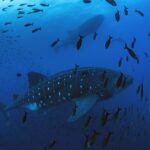 Whale shark | possible | possible | possible | possible | possible | rare | rare | rare | rare | possible | possible | possible | in La Paz Bay, on a guided snorkeling trip, in season |
| Anchovy and grunt schools | peak season | peak season | peak season | peak season | peak season | peak season | peak season | peak season | peak season | peak season | peak season | peak season | clouds of small fish where the sea lions and cormorants hunt |
| Morays and porcupinefish | peak season | peak season | peak season | peak season | peak season | peak season | peak season | peak season | peak season | peak season | peak season | peak season | in the cracks between the rocks; the young sea lions play with the porcupinefish |
peak seasonpossiblerare
What is diving like at Los Islotes?
Los Islotes are two islets of reddish rock pierced by an arch, north of Espíritu Santo Island, with boulder slopes and small walls that drop to the sand between 5 and 15 meters. There is no notable current and little swell in the shelter of the rocks; the water is green in winter and blue in summer, with visibility of 10 to 20 meters depending on the season. It is a dive for everyone, from Open Water up, and snorkelers share the site. The only challenge is behavior: sea lions are wild animals and a bite from a male does serious damage, so you keep your distance from the rocks and the big males and let the pups come to you. No touching, no feeding, no climbing on the rocks. Photographers spend their whole tank here, often freediving too: the sea lions stay with you as long as you stay in the water.
When to dive Los Islotes?
idealgoodnot recommended
The season is set by the sea lions and by the water. From June to August 31, the site is closed to swimming and diving: it is the breeding season, the males hold their territory and charge intruders, and attacks happened in the years when the rule was not respected. Pups are born in June and July. The site reopens in September with the year's pups, and that is the best time: the water is 27 to 29 °C from August to October, visibility is at its highest, and wildlife is at its most varied until November. In winter, from December to March, the water drops to 20 °C, sometimes 16, plankton clouds the water and you need a thick wetsuit, but the sea lions are there and whale sharks visit La Paz Bay. Spring is an in-between season, with cool water and average visibility.
How to get to Los Islotes?
The islets are 45 minutes by panga north of La Paz, the capital of Baja California Sur, along Espíritu Santo Island, in the national park of the archipelago's marine zone. La Paz Divers sells a two-dive day, at Espíritu Santo, La Paz Bay or the San Lorenzo Channel, for US$190, park fees, lunch and drinks included, with basic equipment extra at US$35 and a minimum of four divers. Trips to El Bajo or La Reina, for the hammerheads, cost US$225 and depend on the weather. Fun Baja, in La Paz, offers the sea lion snorkeling day, diving, whale sharks and the Valentina liveaboard; Koox Diving also has a base in La Paz. The city has its own airport, with flights to Mexico City, and you can also drive from Los Cabos, whose airport has connections through the United States.
Stay in La Paz
Where to stay near Los Islotes?
Hotels, apartments and rooms around La Paz, with current prices.
Why is the Sea of Cortez called the aquarium of the world?
Jacques-Yves Cousteau called the Sea of Cortez the aquarium of the world, and La Paz, at the mouth of the gulf, is its gateway. Espíritu Santo and its islets are part of the Islands and Protected Areas of the Gulf of California, listed as a World Heritage Site in 2005, and the archipelago's marine zone is a national park, in the lower band of the federal entry fee scale. Depending on the season, you can meet hammerheads, whale sharks, mantas, mobulas, turtles, dolphins, humpback whales, blue whales and even orcas. Los Islotes, with its colony, is the safest and easiest site of all.
Why is Los Islotes closed from June to August?
For several years now, CONANP, together with the state and the municipality of La Paz, has suspended swimming and diving at the Espíritu Santo lobera from June to the end of August: the sea lions breed and give birth, and the territorial males turn aggressive. In 2017, visitors were attacked. Licensed operators hold a permit and a management plan, and an operator who ignored the rule would lose its license. You can still approach by boat to watch the colony from the water. In 2026 the rule is the same: check the exact reopening dates in early September with your dive center, as they depend on the state of the colony.
How should you behave with the sea lions at Los Islotes?
Never climb on the rocks: you stress the animals, which take you for an intruder, and that is where the males attack. Stay away from the rocks and the big males, and let the females and pups come to you in open water. Do not touch, feed or provoke them: they are wild animals, and a bite does serious damage. An experienced guide who knows the colony makes the difference between a fun dive and an incident. For photographers, the site works as well for freediving as for scuba, and the sea lions love bubbles as much as dome ports.
Our tip
Aim for September to November: the water is 27 to 29 °C and the year's pups are at their most playful. Stay away from the rocks and let them come to you, without reaching out. Fully charge your camera batteries.
Other dive sites nearby
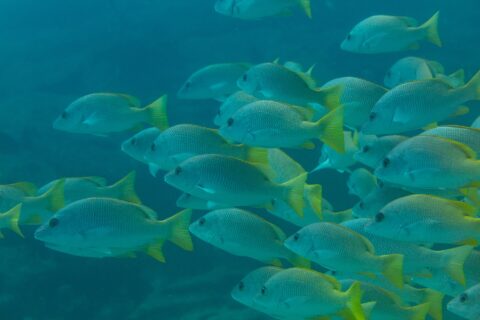
 MexicoReef
Cabo Pulmo
Sea of Cortez: La Paz and Cabo Pulmo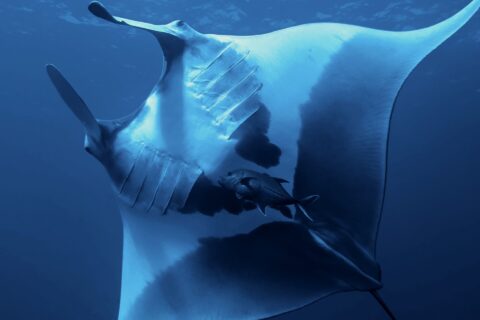 MexicoPelagic
El Boiler
Revillagigedo Islands (Socorro)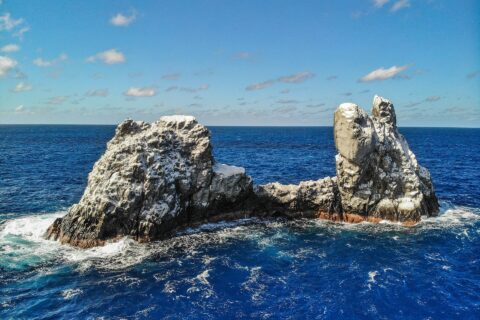 MexicoPelagic