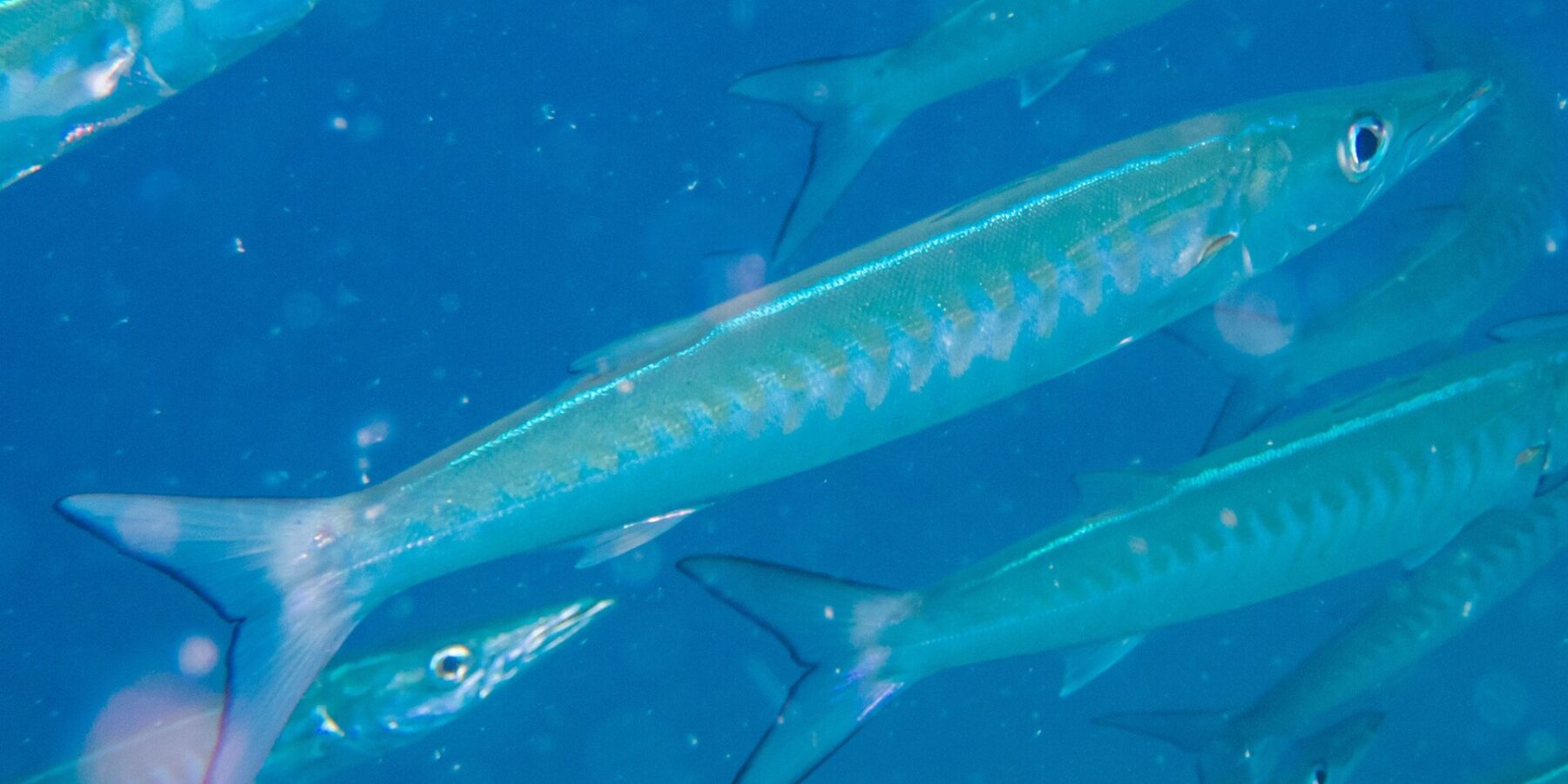
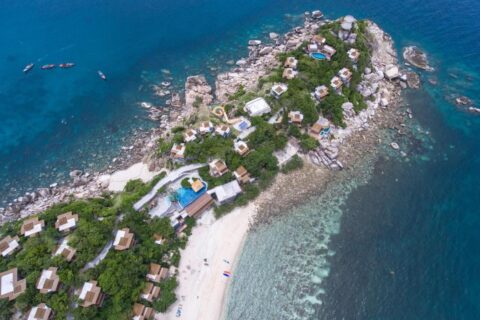
Sail Rock is a rock rising from open sea between Koh Tao and Koh Phangan, dropping to 40 meters. You swim through it by a vertical chimney from 5 to 18 meters, among barracudas, whale sharks visit from March to September, and Koh Tao dive centers go there two or three times a week.
Why dive Sail Rock?
- The vertical chimney through the rock, from 5 to 18 meters
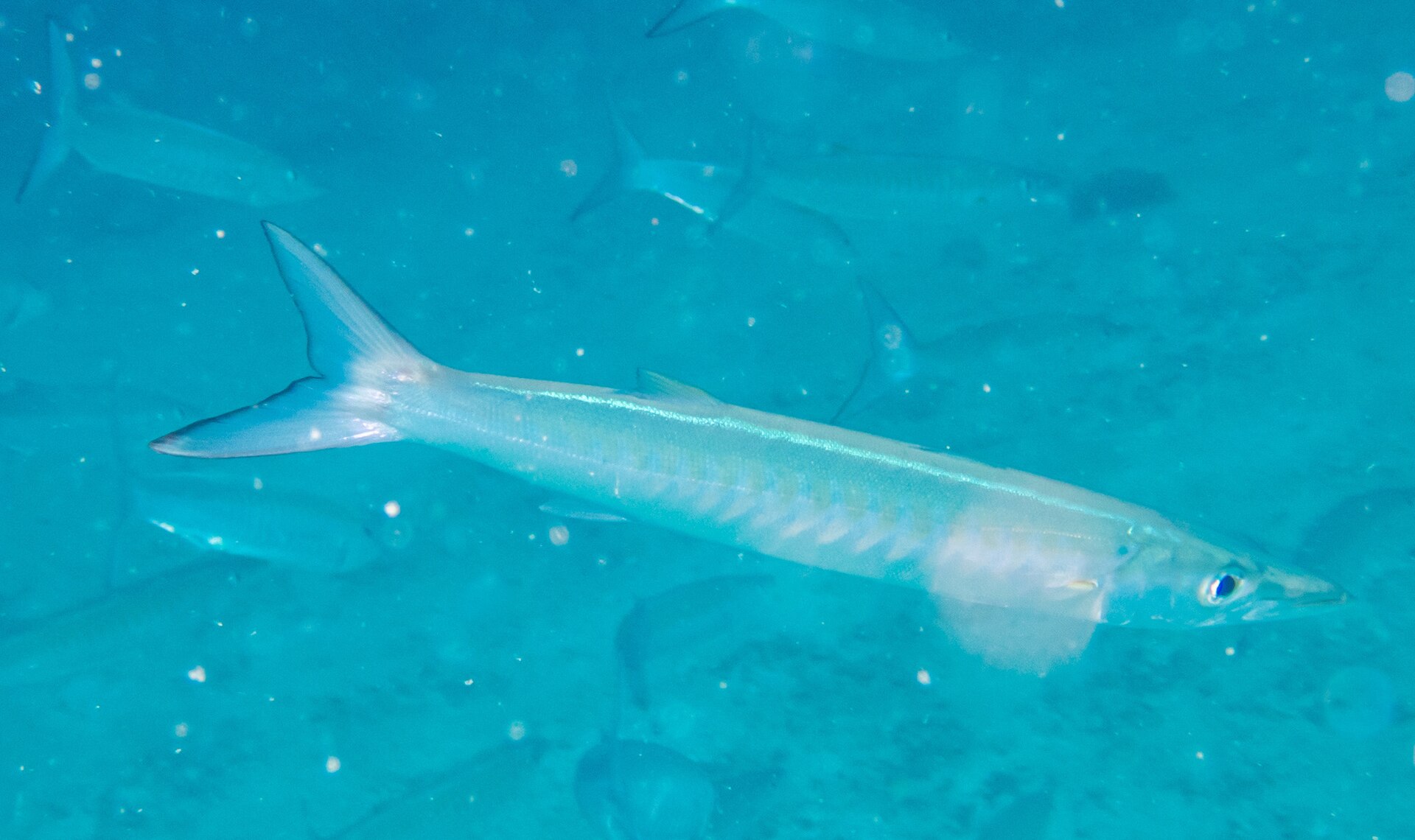
- Schools of chevron and pickhandle barracudas circling the pinnacle
- Whale sharks from March to September, the most reliable site in the gulf
- An isolated rock in open sea, from the surface to 40 meters, for two different dives
- Day trips from Koh Tao from THB 3,200, gear included
Sail Rock in pictures
What will you see at Sail Rock?
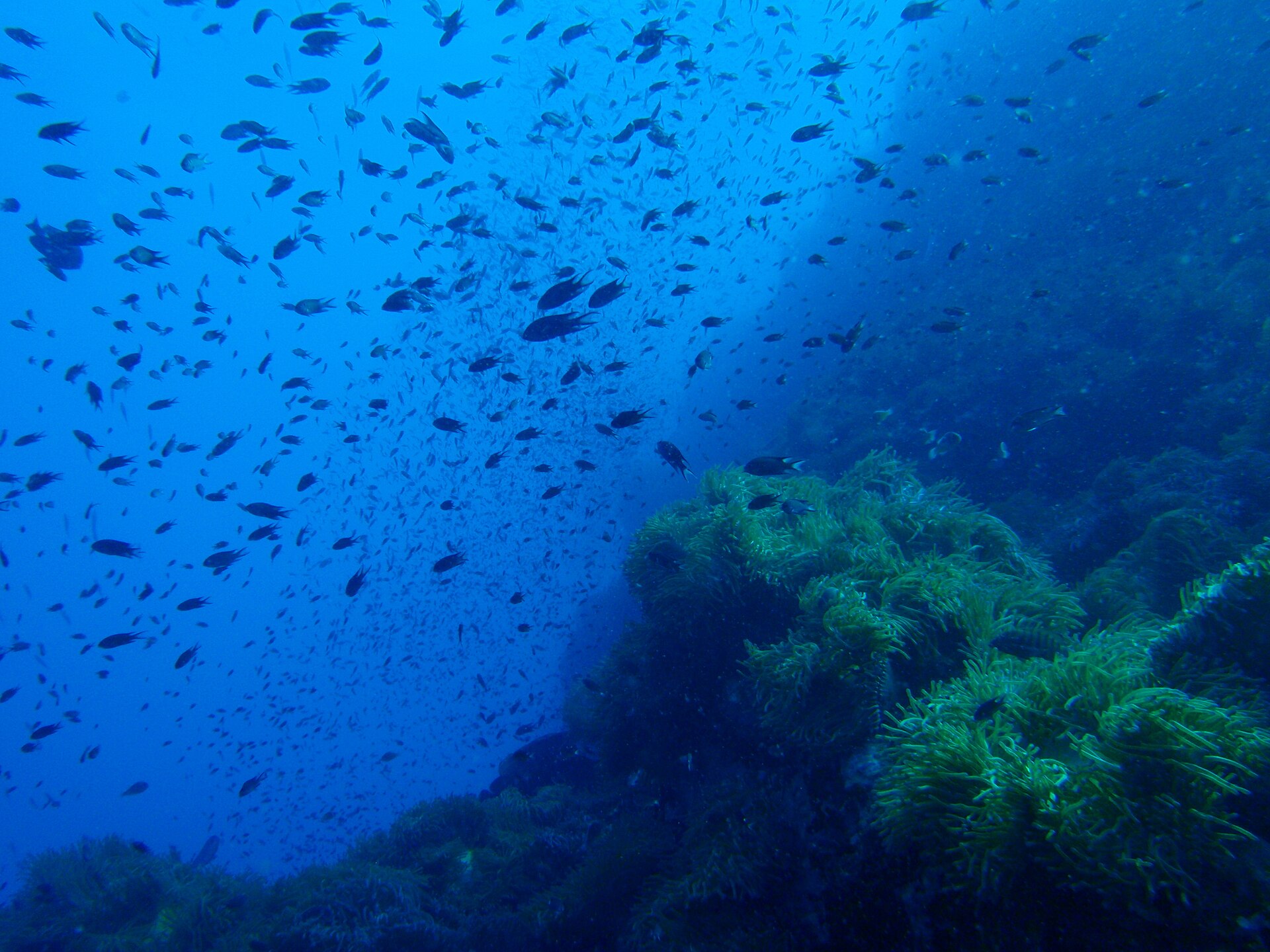
Sail Rock is the fishiest site in the Gulf of Thailand, because it stands alone in open sea. Chevron and pickhandle barracudas circle the rock in tight schools, and great barracudas hunt on the edges. Queenfish, trevallies, snappers and batfish form walls in the water column, on the current side. Large groupers live at the foot of the rock and on the offshore boulders, at 30 meters. The whole rock is covered in hard corals, sponges and anemones with pink anemonefish; stonefish and shrimp hide in the hollows, for the second dive. The whale shark is the reason for the trips: it comes to feed at the rock from March to September, and this is where you see it most often in the gulf. Eagle rays pass in the blue, with a manta now and then, and dolphins, pilot whales and false killer whales show up at the surface on the way out.
| Species | J | F | M | A | M | J | J | A | S | O | N | D | Note |
|---|---|---|---|---|---|---|---|---|---|---|---|---|---|
 Whale shark | rare | rare | peak season | peak season | peak season | possible | possible | peak season | peak season | possible | rare | rare | from March to September, during plankton blooms, peaking in May and August |
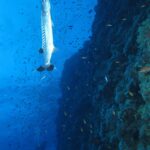 Great barracuda | peak season | peak season | peak season | peak season | peak season | peak season | peak season | peak season | peak season | peak season | possible | possible | alone on the edges of the chevron barracuda schools |
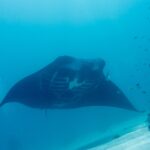 Reef manta ray | rare | rare | possible | possible | possible | rare | rare | possible | possible | rare | rare | rare | an occasional encounter, in the same season as the whale shark |
| Chevron and pickhandle barracudas | peak season | peak season | peak season | peak season | peak season | peak season | peak season | peak season | peak season | peak season | possible | possible | in schools circling the rock, the signature of the site |
| Queenfish, trevallies, snappers and batfish | peak season | peak season | peak season | peak season | peak season | peak season | peak season | peak season | peak season | peak season | possible | possible | schooling in the water column, especially on the current side |
| Large groupers | peak season | peak season | peak season | peak season | peak season | peak season | peak season | peak season | peak season | peak season | peak season | peak season | at the foot of the rock and on the offshore boulders, at 30 meters |
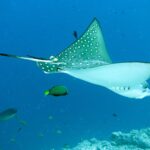 Spotted eagle ray | possible | possible | possible | possible | possible | possible | possible | possible | possible | possible | possible | possible | passing by in the blue |
| Pink anemonefish, stonefish and shrimp | peak season | peak season | peak season | peak season | peak season | peak season | peak season | peak season | peak season | peak season | peak season | peak season | in the anemones and on the rock, for the second dive |
| Dolphins, pilot whales and false killer whales | possible | possible | possible | possible | possible | possible | possible | possible | possible | possible | possible | possible | seen at the surface on the way out, now and then |
peak seasonpossiblerare
What is diving like at Sail Rock?
The rock stands 8 to 15 meters above the water depending on the tide and swell, and drops underwater to 20 meters, where it meets the sand. The sand then slopes gently down to 40 meters, with boulders at 30 meters to the northeast and deeper ones to the northwest. The chimney opens on the west side at 5 meters and comes out at 18 meters: a vertical shaft in the granite, done on the way down, one diver at a time, without touching the walls. The current is variable, sometimes strong on the exposed face, and there is no shelter other than the rock itself. Open Water divers are allowed within the 18-meter limit, but most dives take place between 20 and 30 meters, so Advanced is the norm. You descend and ascend on the mooring line, and the third dive, when there is one, is at Shark Island on the way back.
When to dive Sail Rock?
idealgoodnot recommended
The gulf can be dived all year, and Sail Rock is on the Koh Tao dive centers' schedule from January to December, two or three times a week. The best period runs from March to September: calm seas, water at 29 or 30 °C, and visibility that often tops 20 meters. Whale sharks show up from March to September, during plankton blooms, peaking in May and August. In November and December, the northeast monsoon raises a swell; visibility drops to 5 or 10 meters and trips are canceled in rough weather, sometimes the day before. October is rainy but still diveable, and the end of the monsoon brings the schools back from January.
How to get to Sail Rock?
Sail Rock, Hin Bai to Thais, is 20 kilometers southeast of Koh Tao, between Koh Tao and Koh Phangan: 1 hour 30 minutes to 2 hours by boat from Mae Haad or Sairee. Black Turtle Dive goes there on Wednesdays and Saturdays, sometimes on Mondays: THB 3,200 for two dives on the rock, with one guide for four divers at most, full Aqualung gear with a computer, insurance, breakfast on the way out and a Thai buffet on the way back. Big Blue Diving leaves at 7:30 a.m. on its boat Enzo and returns at 4 p.m., about every three days: THB 4,000 for three dives, two at Sail Rock and one at Shark Island, with breakfast and lunch included. Dive centers on Koh Phangan and Koh Samui go there too, in 1 hour 30 minutes to 2 hours. Koh Tao is reached by Lomprayah catamaran from Chumphon, 1 hour 30 minutes to 2 hours for THB 600 to 700, or from Koh Samui in 2 hours.
Stay in Koh Tao
Where to find a dive guide in Sail Rock?
Guided tours you can book online, ranked by number of reviews. These are affiliate links: if you book, you support us at no extra cost.

 Viator
Open Water Course - Become certified diver in 3 days
5.0 (1,157 reviews)View and book Viator
Advanced Adventurer - 2 days ( Advanced Open Water)
5.0 (210 reviews)View and book Viator
La Bombona Diving Koh Tao Open Water Course
5.0 (173 reviews)View and book Viator
Become certified diver in 3 days - PADI Open Water Diver course on Koh Tao
5.0 (107 reviews)View and book Viator
Fun Diving Packages (Certified Divers)
4.9 (95 reviews)View and book Viator
PADI Discover Scuba Diving in Koh Tao - half day and two dives
4.6 (77 reviews)View and bookWhere to stay near Sail Rock?
Hotels, apartments and rooms around Koh Tao, with current prices.
Which hotels to choose near Sail Rock?
Why is Sail Rock the best dive site in the Gulf of Thailand?
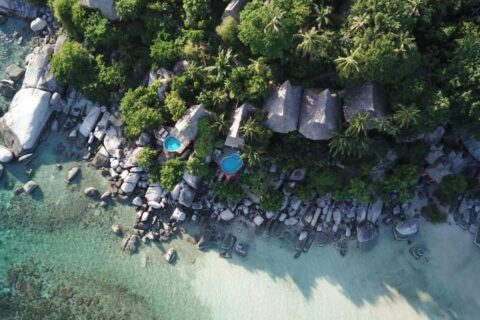
Sail Rock is an isolated granite pinnacle in the Gulf of Thailand, halfway between Koh Tao and Koh Phangan, with nothing but sand around it. Its name comes from its outline seen from the boat, a sail standing on the water; Thais call it Hin Bai. Because it stands alone, it concentrates everything that passes: schools looking for shelter, the predators that follow them, the plankton that the current piles up against the rock, and the whale sharks that come to filter it. It is the site that Koh Tao, Koh Phangan and Koh Samui dive centers sell as the best in the gulf, and it is.
What can you see on a Sail Rock dive?
The first dive starts with the chimney: you enter at 5 meters on the west side, go down the vertical shaft one by one, and come out at 18 meters on the wall. From there you carry on to the foot of the rock at 20 meters, then to the offshore boulders at 30 meters for the groupers and eagle rays, before coming back up along the exposed face, among the barracudas. The second dive circles the rock between 18 and 8 meters, through the schools of batfish, queenfish and trevallies, and finishes in the anemones on the top. The third, for those who have one, is at Shark Island, south of Koh Tao, on the way back.
How do you dive the Sail Rock chimney?
The chimney is narrow and vertical. You do it with perfect buoyancy, fins still and light on, behind the guide and one diver at a time. Dive centers keep it for comfortable divers and close it when the swell pushes into the shaft. Outside the chimney, the difficulty of the site is the current, which has no shelter: keep the rock within reach, do not head into the blue after a school, and ascend on the line. Dive centers ask for a recent dive, within twelve months, and offer a refresher the day before to those who have not had one.
Our tip
Book as soon as you arrive: dive centers only go two or three times a week and cancel when the swell picks up. Do the chimney on the first dive, and circle the rock among the barracudas on the second. Bring a jacket for the boat.
Other dive sites nearby
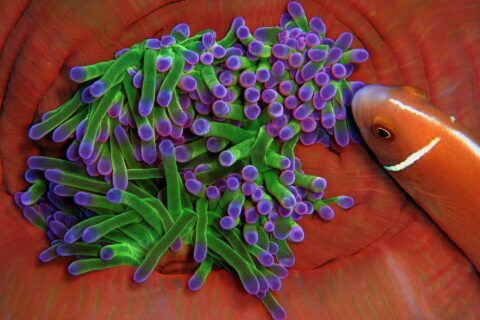
 ThailandPelagic
Chumphon Pinnacle
Gulf of Thailand: Koh Tao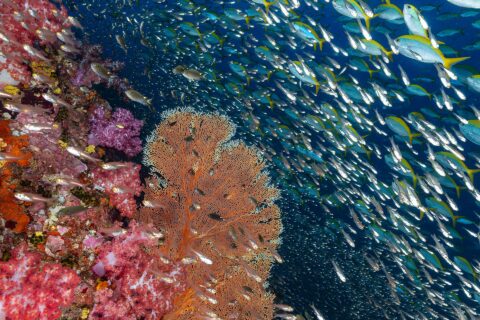 ThailandPelagic
Richelieu Rock
Andaman Sea: Similan, Surin and Lanta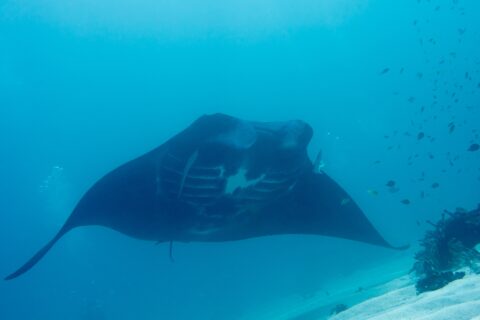 ThailandPelagic