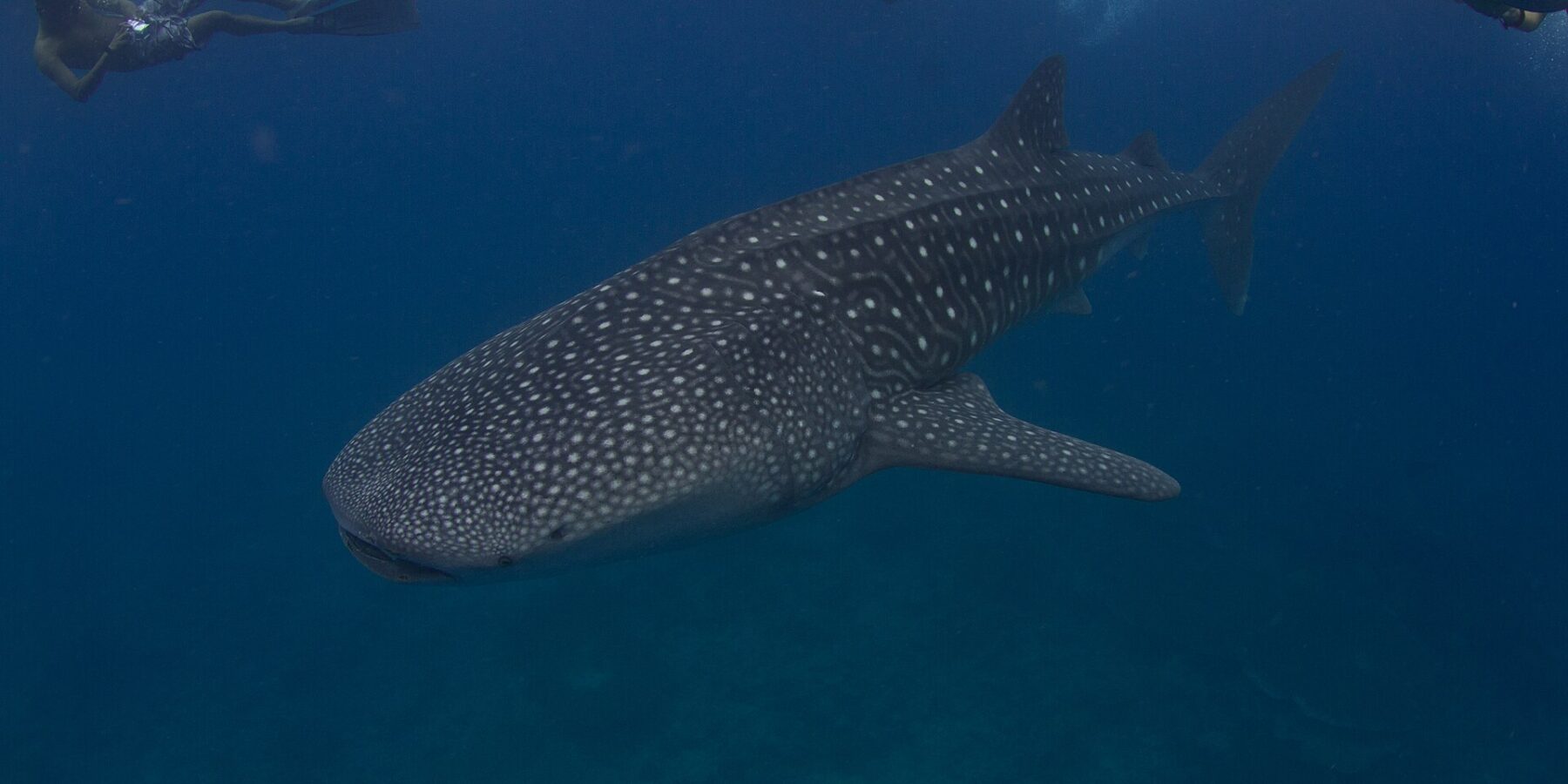
South Ari Atoll has been a marine protected area since 2009, and whale sharks are seen there all year along the outer reef. Most are resident young males of 4 to 8 meters, more than 700 have been identified, and you approach them snorkeling, under strict rules.
Why dive South Ari Atoll?
- Whale sharks all year, at one of the few sites in the world where they are resident
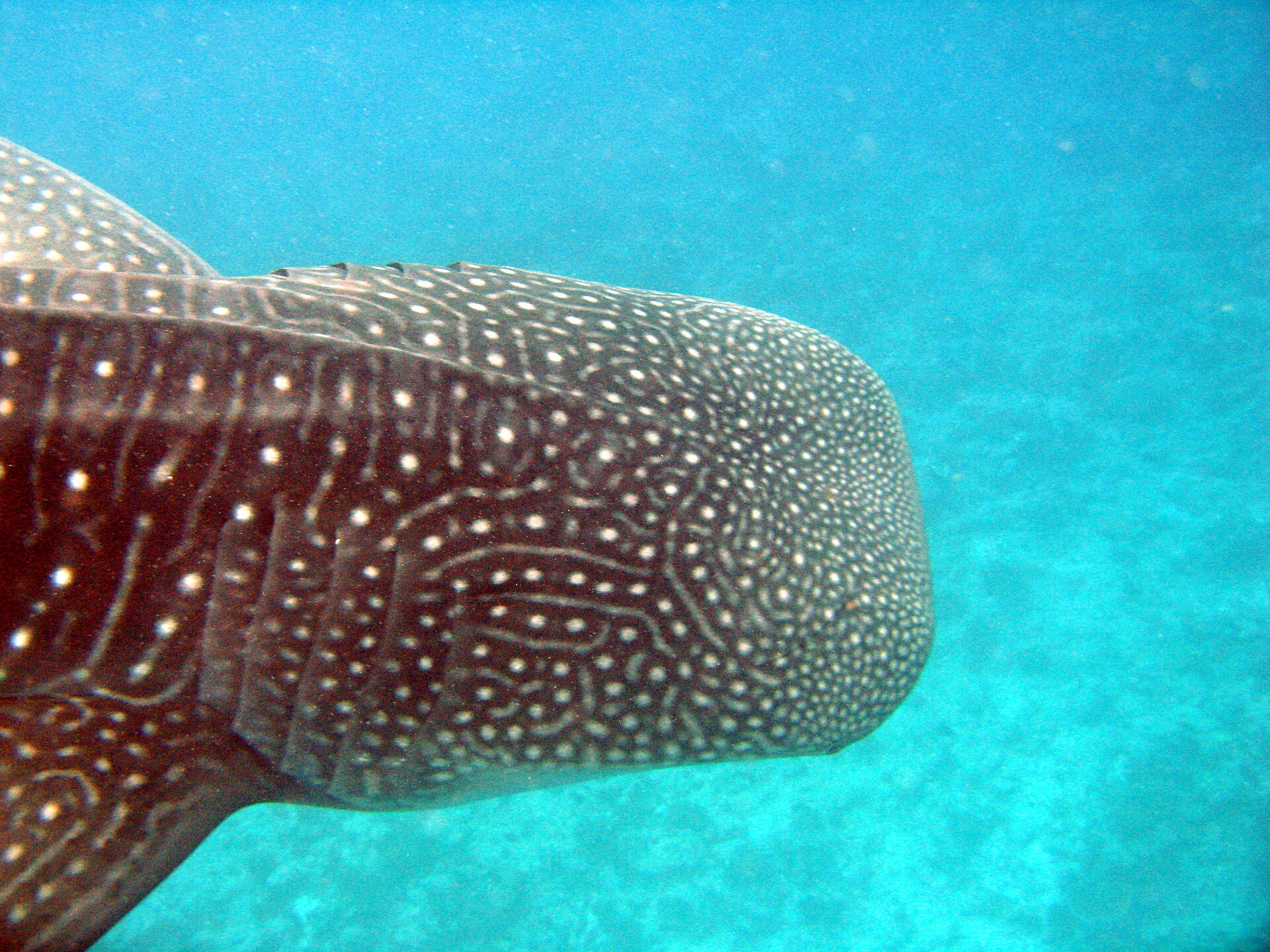
- More than 700 sharks identified by their spots, mostly young males of 4 to 8 meters that come back year after year
- A 56 km² protected area since 2009, with precise approach rules enforced by rangers
- Dhigurah, a local island on the edge of the protected area, for snorkeling and diving without a resort
South Ari Atoll in pictures
What will you see at South Ari Atoll?
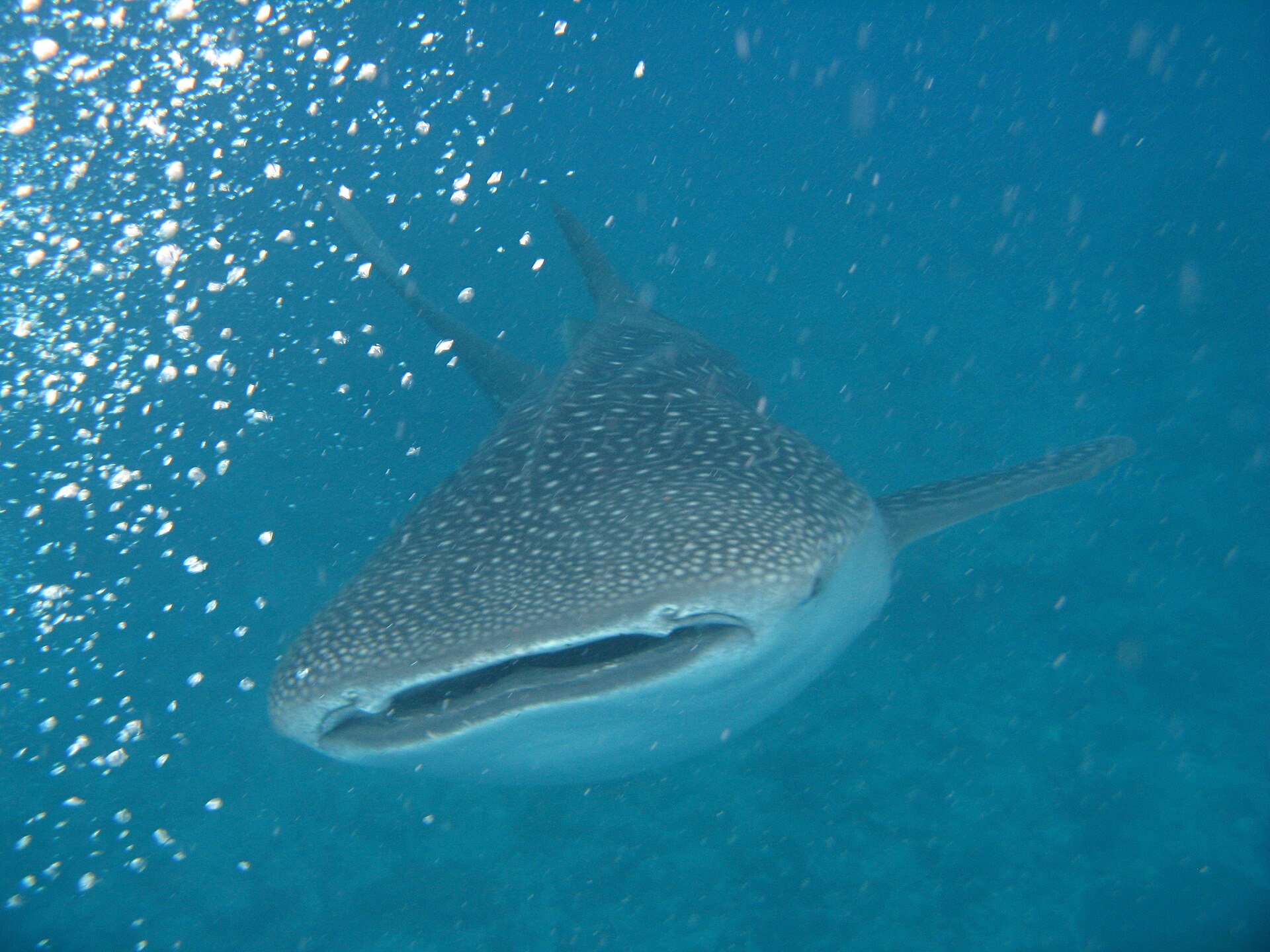
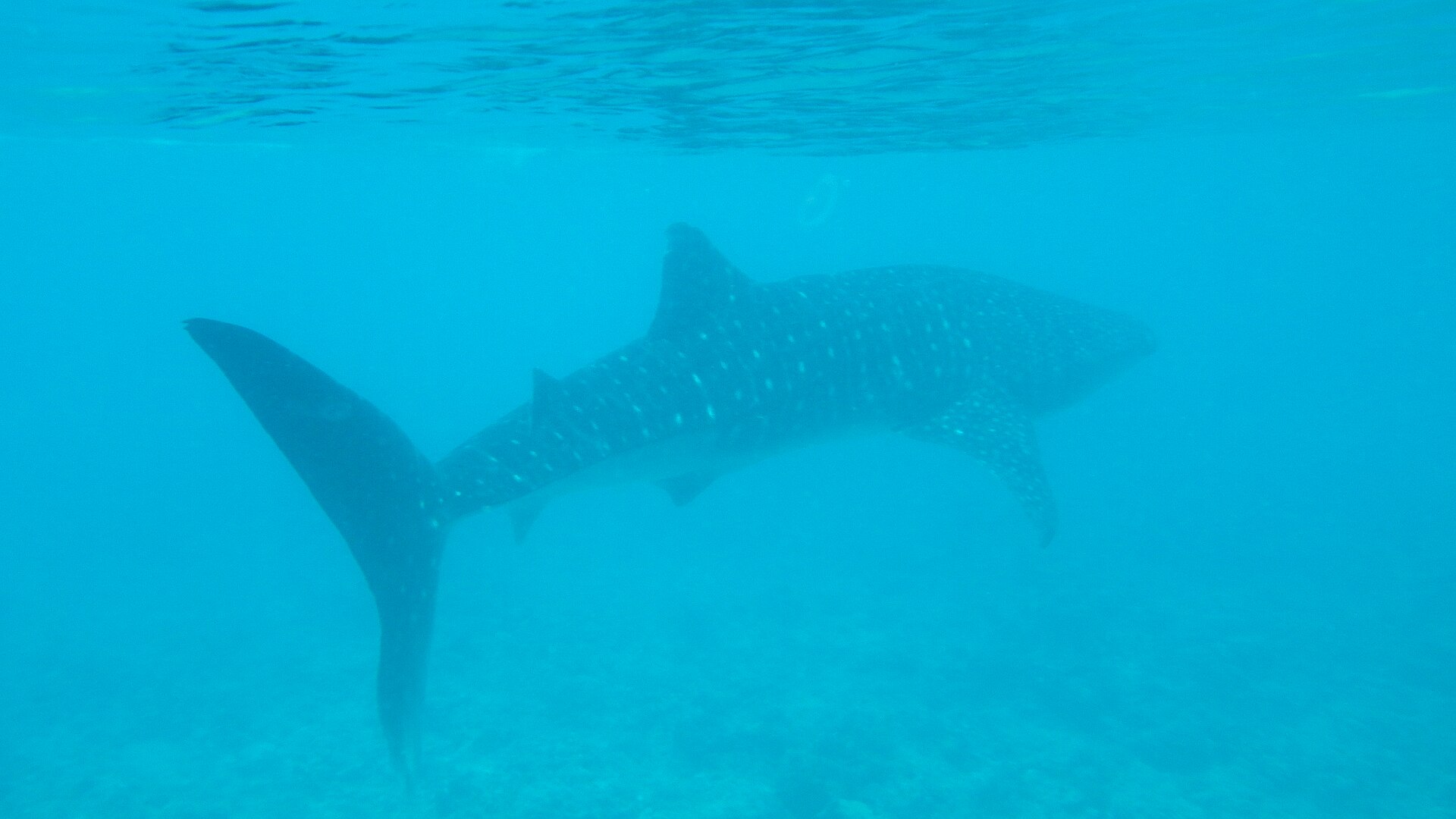
South Ari is one of the few places in the world where the whale shark is resident all year. The animals you meet are mostly young males, 72.5% of sightings, 4 to 8 meters long, that come back to the same reef from one season to the next. More than 700 have been identified by their spot patterns and more than 8,000 encounters recorded, the highest resighting rate known for the species. They swim slowly near the surface, along the outer wall, where plankton concentrates. The reef that borders the protected area also hosts passing manta rays, green and hawksbill turtles, whitetip reef sharks resting on the wall and the usual Maldives reef life, chevron butterflyfish included; twelve threatened vertebrate species have been recorded there.
| Species | J | F | M | A | M | J | J | A | S | O | N | D | Note |
|---|---|---|---|---|---|---|---|---|---|---|---|---|---|
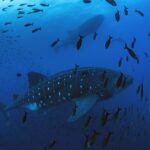 Whale shark | peak season | peak season | peak season | peak season | peak season | peak season | peak season | peak season | peak season | peak season | peak season | peak season | resident all year; mostly to the west and south (Rangali, Maamigili) from December to April, toward Dhigurah from May to November |
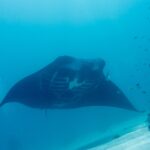 Reef manta ray | possible | possible | possible | possible | possible | possible | possible | possible | possible | possible | possible | possible | passing through the protected area, at the South Ari cleaning stations |
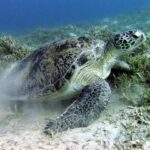 Green turtle | possible | possible | possible | possible | possible | possible | possible | possible | possible | possible | possible | possible | on the outer reef |
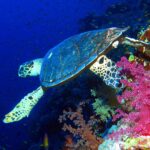 Hawksbill turtle | possible | possible | possible | possible | possible | possible | possible | possible | possible | possible | possible | possible | on the outer reef |
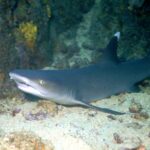 Whitetip reef shark | peak season | peak season | peak season | peak season | peak season | peak season | peak season | peak season | peak season | peak season | peak season | peak season | resting on the outer wall |
| Chevron butterflyfish and reef fish | peak season | peak season | peak season | peak season | peak season | peak season | peak season | peak season | peak season | peak season | peak season | peak season | on the reef flat and the wall |
peak seasonpossiblerare
What is diving like at South Ari Atoll?
The protected area runs one kilometer out from the reef crest, from the northwest corner of Rangali to the northern tip of Dhigurah: a long outer reef with a reef flat at 5 meters and a wall that drops well past 30 meters, the legal limit. The encounter happens snorkeling, at the surface, after a boat search along the reef. Current is moderate, and the southwest swell can get in the way from May to November. On scuba, dive centers drift the Maamigili or Dhigurah wall between 10 and 30 meters, and the whale shark is then only a possible encounter, kept at 20 meters. No particular level is needed to snorkel; Open Water is enough for the reef.
When to dive South Ari Atoll?
idealgoodnot recommended
There is no whale shark season in South Ari: they are there all year, with encounters on 70 to 90% of trips depending on the month. What changes is the side of the atoll. During the northeast monsoon, from December to April, with calm seas and visibility of 25 to 40 meters, they stay mostly to the west and south, toward Rangali and Maamigili. During the southwest monsoon, from May to November, the plankton drifts east and the animals move closer to Dhigurah, with visibility down to 15 to 25 meters; August to November are often the most productive months. The water is 28 °C from December to February, 30 °C in April and May, and 29 °C the rest of the year.
How to get to South Ari Atoll?
The protected area runs along the south of Ari Atoll, about a hundred kilometers southwest of Malé. The budget base is Dhigurah, a local island whose outer reef closes the area to the northeast. Guesthouses there charge a green tax of US$6 a night, Island Divers sells a two-dive trip for US$120, and Fari Dive Center a package of three nights and five dives, with accommodation and transfers included, for US$771, at 2026 prices. A shared half-day snorkeling trip with the whale sharks costs US$60 to US$120 per person. Dhigurah is reached from Malé by public speedboat in two to two and a half hours, for US$66 to US$70. Maamigili, at the other end of the area, and the South Ari resort islands run the same trips, and liveaboards out of Malé spend a day here. Entry to the area is free, and boats must be registered with the EPA.
Stay in Dhigurah
Where to find a dive guide in South Ari Atoll?
Guided tours you can book online, ranked by number of reviews. These are affiliate links: if you book, you support us at no extra cost.

 Viator
3 Point Snorkeling Safari
4.9 (75 reviews)View and bookWhere to stay near South Ari Atoll?
Hotels, apartments and rooms around Dhigurah, with current prices.
What is SAMPA, the 56 km² area protected in South Ari since 2009?
The government of the Maldives declared the South Ari Marine Protected Area, or SAMPA, on June 5, 2009, by a directive of the Ministry of Environment under the 1993 environmental protection law. It stretches one kilometer out from the reef crest of all the islands between the northwest corner of Rangali reef and the northern tip of Dhigurah reef, 5,610 hectares in all, and it is managed by the Environmental Protection Agency, the EPA, with rangers on the water. The management plan adopted in 2025 made boat registration, propeller guards from June 30, 2025, and guide licensing mandatory. Entry is still free, but the ministry can introduce a fee.
Why do whale sharks stay in South Ari all year?
What makes South Ari unique is residency. Elsewhere, whale sharks pass through with the plankton; here, they stay. Males account for 72.5% of sightings, almost all juveniles of 4 to 8 meters, and the same animals come back year after year. The Maldives Whale Shark Research Programme has identified more than 700 of them by their spot patterns since 2006, with more than 8,000 encounters logged. The area probably serves as a transition habitat between youth and maturity. Its economic value has been put at US$9.4 million a year, from 65,000 visitors who come for these animals, and the propeller injuries seen on some of the sharks explain the strict boating rules.
What are the whale shark rules in South Ari?
In the water, keep 3 meters from the head and body and 4 meters from the tail. Never move ahead of the gills, never cut across its path, and never touch or hold on to it. Flash, selfie sticks and bright lights are banned, as are lights that attract animals at night. No more than sixty people, guides included, can be in the water with the same shark, each for fifteen minutes when other boats are waiting in the contact zone, and a SAMPA-licensed guide goes with every group of six. Boats stay under 10 knots in the area, 5 knots within 250 meters of an animal and 2 knots within 50 meters, and activities stop from 6 p.m. to 6 a.m. The EPA penalizes violations.
Should you snorkel or dive with the South Ari whale sharks?
In South Ari you meet the whale shark at the surface, and snorkeling is the normal way to see it: a boat search along the outer reef, a gentle entry as soon as an animal is spotted, then swimming parallel at its pace, which is slow but steady. On scuba, the Dhigurah and Maamigili dive centers dive the outer wall, Maamigili Beyru or Dhigurah Beyru, between 10 and 30 meters: whitetip reef sharks, turtles, reef schools, and sometimes the big spotted shadow passing overhead, to be kept at 20 meters as the management plan requires. Photographers prefer snorkeling, with no flash, on a calm dry-season morning.
Our tip
Go early with a dive center whose guide is SAMPA-licensed. Slip into the water quietly, swim parallel to the animal and let it go when it dives. Stick to your fifteen minutes, because another boat is waiting its turn.
Other dive sites nearby
 MaldivesReef
Kuda Rah Thila
Ari and Rasdhoo atolls MaldivesReef
Fish Head (Mushimasmingili Thila)
Ari and Rasdhoo atolls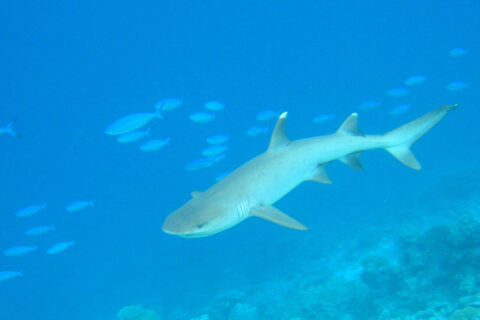 MaldivesReef