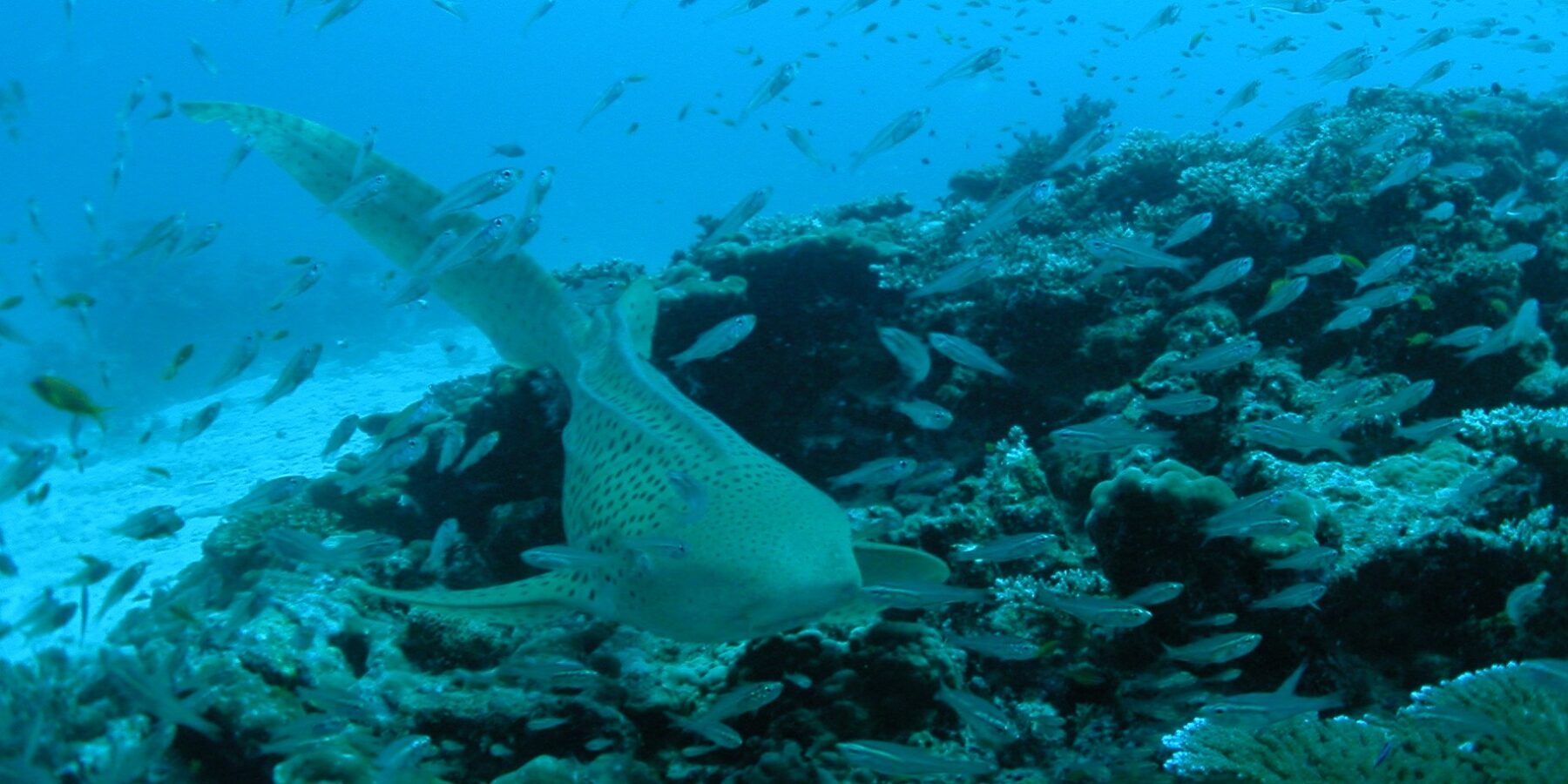
Elephant Head Rock is three granite boulders southwest of Similan Island 8, forming an underwater maze of arches and canyons between 5 and 40 meters, and it is the best-known site in the park. Whitetip reef sharks sleep under the boulders, and the current calls for experience.
Why dive Elephant Head Rock?
- The Similan granite maze: swim-throughs, arches and canyons between the boulders, from 5 to 40 meters
- Whitetip reef sharks under the boulders and zebra sharks on the sand
- Three rocks above the surface that mark the site from afar, one kilometer from Island 8
- A wide-angle photo site, with light falling into the cracks
- Shelter behind every boulder when the current picks up
Elephant Head Rock in pictures
What will you see at Elephant Head Rock?
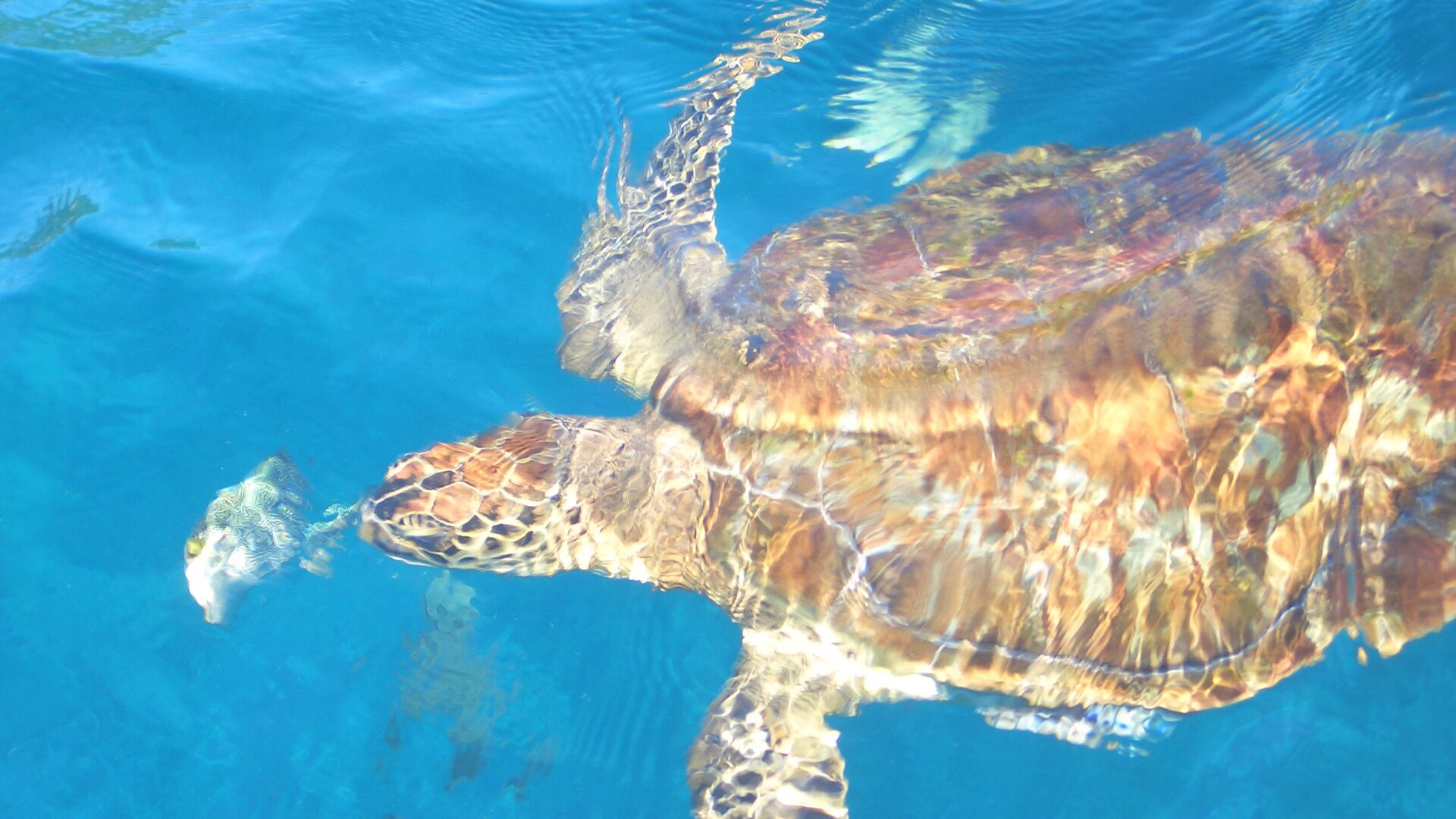
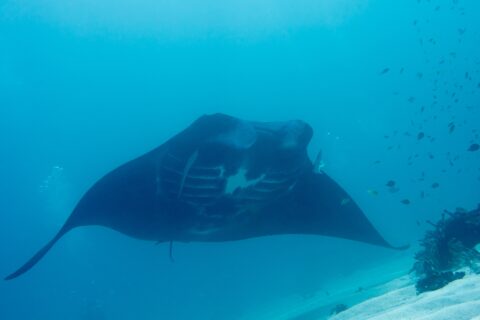
You dive Elephant Head Rock for its sharks. Whitetip reef sharks sleep under the boulders and patrol the canyons; a zebra shark often rests on the sand at the foot of the rocks, and blacktips pass higher up, along the walls. Bluefin trevallies and fusiliers hunt around the boulders, especially on the first dive of the morning, when crabs and small fish are still out. In the swim-throughs, out of the current, snappers, triggerfish, surgeonfish, wrasses and goatfish crowd together. The cracks in the granite shelter giant morays, and the sponges hide frogfish that you have to find with a light. Hawksbill turtles from Islands 7 and 8 come up to breathe between the rocks. Manta rays and whale sharks have been seen here, but with no regularity: you hope for them, you do not count on them.
| Species | J | F | M | A | M | J | J | A | S | O | N | D | Note |
|---|---|---|---|---|---|---|---|---|---|---|---|---|---|
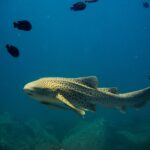 Zebra shark | possible | possible | possible | possible | possible | rare | rare | rare | rare | possible | possible | possible | resting on the sand between the boulders, at the foot of the swim-throughs |
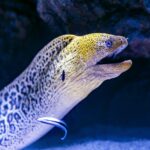 Giant moray | peak season | peak season | peak season | peak season | peak season | rare | rare | rare | rare | peak season | peak season | peak season | in the cracks in the granite, head out |
 Hawksbill turtle | possible | possible | possible | possible | possible | rare | rare | rare | rare | possible | possible | possible | on the corals of Islands 7 and 8, sometimes at the surface between the boulders |
 Green turtle | possible | possible | possible | possible | possible | rare | rare | rare | rare | possible | possible | possible | passing by, rarer than the hawksbill |
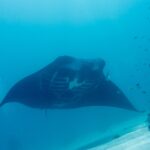 Reef manta ray | rare | possible | possible | possible | rare | rare | rare | rare | rare | rare | rare | rare | seen now and then in the blue, with no regularity |
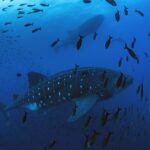 Whale shark | rare | possible | possible | possible | rare | rare | rare | rare | rare | rare | rare | rare | an exceptional encounter, in plankton season |
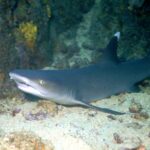 Whitetip reef shark | peak season | peak season | peak season | peak season | peak season | rare | rare | rare | rare | peak season | peak season | peak season | under the boulders and in the canyons, the highlight of the site |
| Bluefin trevallies | peak season | peak season | peak season | peak season | peak season | rare | rare | rare | rare | peak season | peak season | peak season | hunting around the boulders, especially early in the morning |
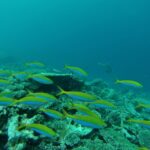 Fusiliers | peak season | peak season | peak season | peak season | peak season | rare | rare | rare | rare | peak season | peak season | peak season | hunting around the boulders, especially early in the morning |
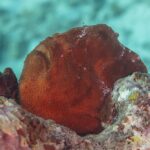 Frogfish | possible | possible | possible | possible | possible | rare | rare | rare | rare | possible | possible | possible | clinging to sponges, look for them with a light |
| Snappers, triggerfish, surgeonfish and goatfish | peak season | peak season | peak season | peak season | peak season | rare | rare | rare | rare | peak season | peak season | peak season | in the swim-throughs, out of the current |
peak seasonpossiblerare
What is diving like at Elephant Head Rock?
Three big granite boulders break the surface; below, dozens of others are stacked up, forming walls, arches, canyons and swim-throughs that go down to 35 or 40 meters. Most of the dive happens between 15 and 30 meters, at the depth of the big swim-throughs. The current can be strong and it changes direction around the rocks, with surge in the gaps: you can always find shelter behind a boulder, but you have to know how to use it. Advanced level is the rule, and good buoyancy is a must in the swim-throughs, where you touch neither the sand nor the walls. Bottom time is short at this depth: plan the dive on your computer, and ascend along a boulder, not in the blue.
When to dive Elephant Head Rock?
idealgoodnot recommended
Mu Ko Similan National Park is open from October 15 to May 15; the 2026-2027 season opened on October 15, 2026. The sea is calmest from November to April, which is the season for day trips from Khao Lak: Sea Bees runs Elephant Head Rock from November 1, 2026 to April 30, 2027. Surface water goes from 28.6 °C in January to 30.2 °C in May, with 27 to 29 °C at the bottom. Visibility stays between 10 and 30 meters; it drops when plankton rises, around the full moon and the new moon. From mid-May to mid-October, the southwest monsoon closes the park and nobody dives there.
How to get to Elephant Head Rock?
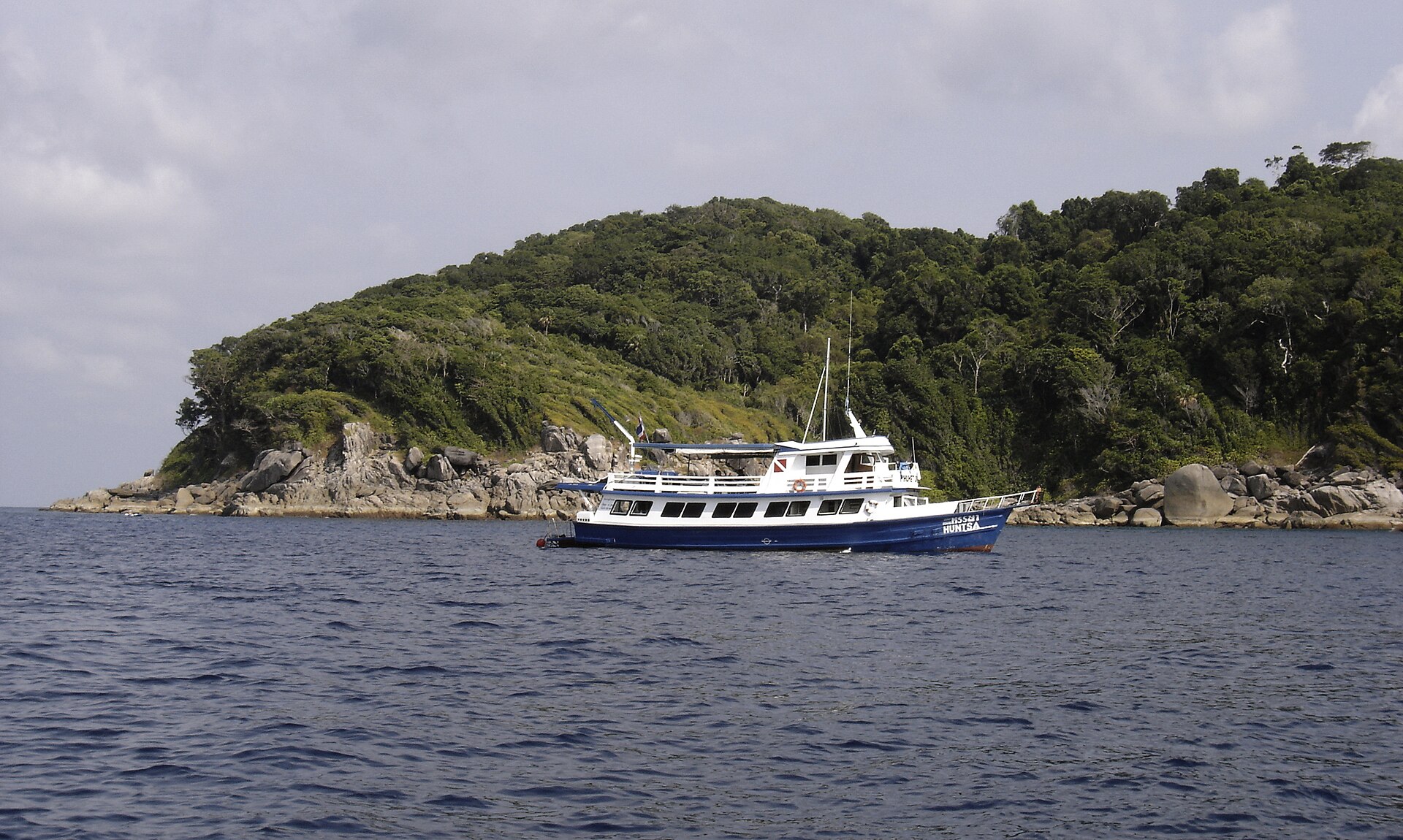
Elephant Head Rock is one kilometer southwest of Similan Island 8, 65 kilometers from the port of Tap Lamu, which is itself 13 kilometers from Khao Lak. For day trips, Sea Bees goes there by catamaran, the MC Stingray, from November 1, 2026 to April 30, 2027: two dives, one at Island 9 and the other at Elephant Head Rock, for THB 5,600, plus THB 700 in park fees paid on site. Khao Lak Explorer sells the Similan day trip for THB 6,300 for two dives, park fees and gear included, and THB 7,900 for three. On a liveaboard, Manta Queen 1 (Khao Lak Scuba Adventures) stops here on a five-day, four-night trip, with fifteen dives from the Similans to Richelieu Rock for THB 28,000; the MV Andaman does four days and four nights for THB 24,000 to 27,000, park fees included. Phuket airport is 60 kilometers south of Khao Lak.
Stay in Khao Lak
Where to stay near Elephant Head Rock?
Hotels, apartments and rooms around Khao Lak, with current prices.
Which hotels to choose near Elephant Head Rock?
Why is Hin Pusa called Elephant Head Rock?
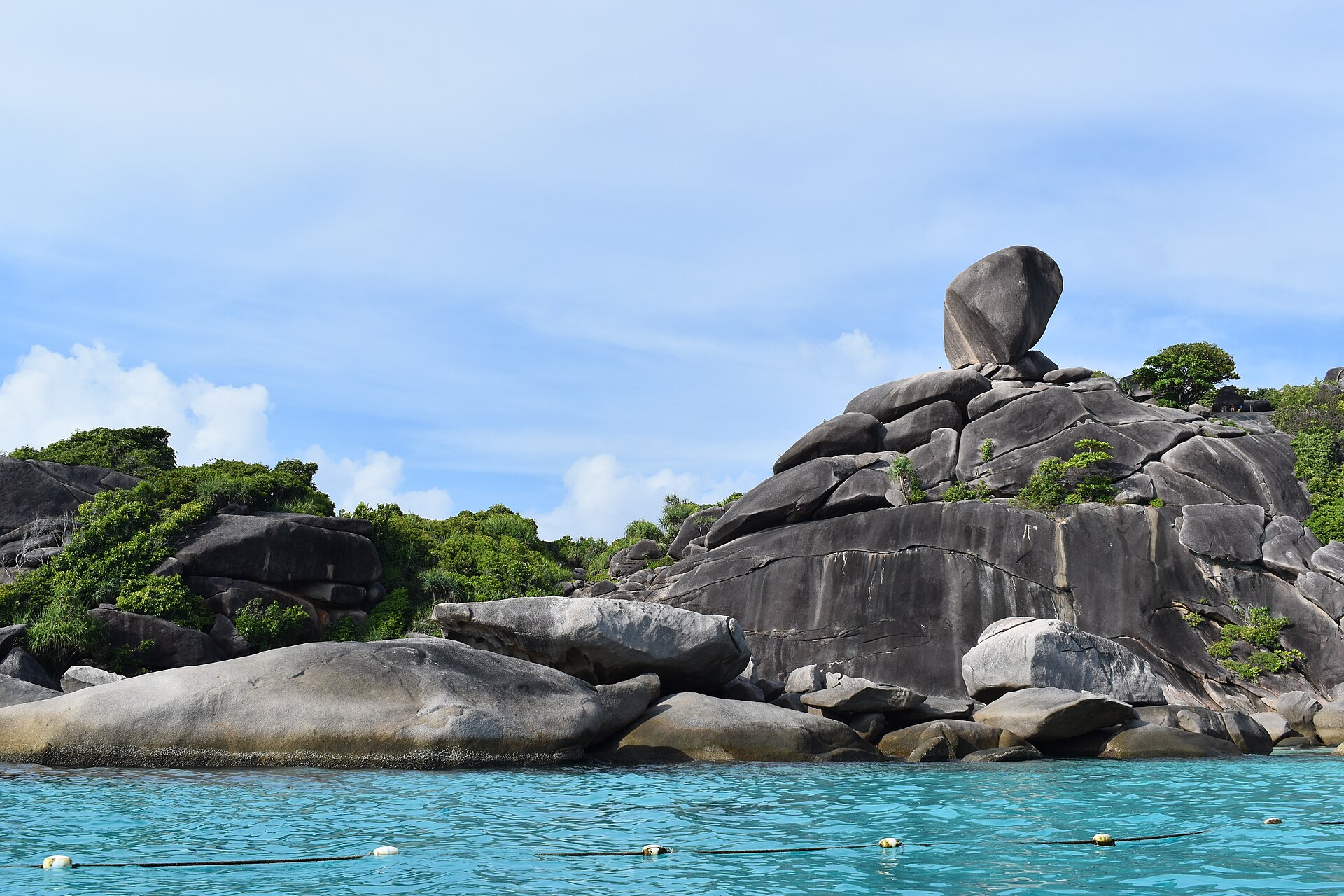
Thais call it Hin Pusa; divers call it Elephant Head Rock, because the biggest of the three boulders above the water, seen from the boat, looks like a forehead and a trunk. The site is one kilometer southwest of Island 8, Koh Similan, between Islands 7 and 8 of the park. The Similans are granite islands: the rounded boulders you see at Donald Duck Bay, on Island 8, carry on underwater, stacked on top of each other, and that stack is what makes the site. Mu Ko Similan National Park, created in 1982, has had eleven islands since Koh Bon and Koh Tachai were added in 1998.
What can you see on an Elephant Head Rock dive?
You descend along a boulder to 25 or 30 meters, on the sheltered side, and the guide threads through the swim-throughs one after another: a canyon opening onto the sand, an arch, then a gap where light falls from above. Whitetip reef sharks sit at the bottom of the canyons, resting on the sand or patrolling slowly; the zebra shark, when it is there, sleeps at the foot of the rocks. You then come back up over the top boulders, between 15 and 8 meters, where bluefin trevallies hunt among the fusiliers and triggerfish guard their nests. One dive is rarely enough: liveaboards often come back the next morning.
How do you dive the Elephant Head Rock swim-throughs?
The swim-throughs of Elephant Head Rock are not caves: you can always see the exit. But the surge pushes and pulls through them, and the sand kicked up by a fin stroke cuts the visibility for the divers behind. Move in single file with a light, two meters behind the diver in front, elbows tucked in, and wait for the surge to ease before crossing a narrow gap. Wide-angle gives the best shots: a diver in the arch, backlit, with light pouring down into the crack. Check your depth at every swim-through, as the bottom is quickly at 35 meters.
Our tip
Ask for the first dive of the morning, before the day boats. Keep a light on in the swim-throughs and stay two meters behind the diver in front: the surge pushes through the gaps. Watch your computer: the bottom pulls you toward 35 meters.
Other dive sites nearby
 ThailandPelagic
Koh Tachai Pinnacle
Andaman Sea: Similan, Surin and Lanta ThailandPelagic
Richelieu Rock
Andaman Sea: Similan, Surin and Lanta ThailandPelagic