Hin Daeng and Hin Muang are two offshore rocks south of Koh Lanta: Hin Daeng, the red rock, is covered in soft corals, and Hin Muang, the purple rock, rises from 65 to 8 meters. Manta rays visit in January and February, and whale sharks show up at random during the season.
Why dive Hin Daeng and Hin Muang?
- Hin Muang, a ridge from 65 to 8 meters covered in purple soft corals, with walls that drop to 70 meters
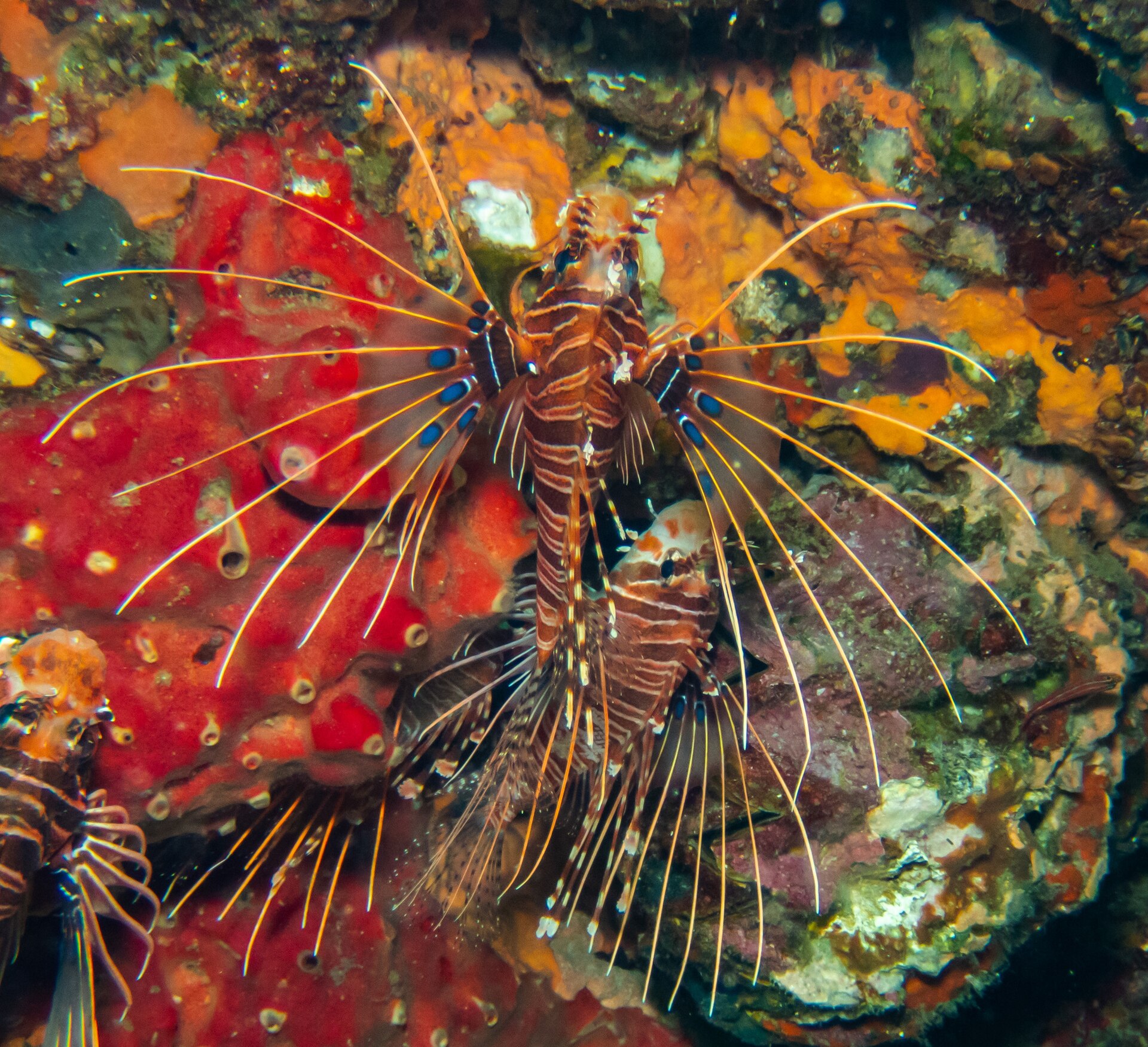
- Hin Daeng, the red rock, with its red sponges and soft corals covered in lionfish
- Manta rays in January and February, often several at once, at the cleaning stations
- Whale sharks at random during the season
- Schools of trevallies, rainbow runners and barracudas in the blue
Hin Daeng and Hin Muang in pictures
What will you see at Hin Daeng and Hin Muang?
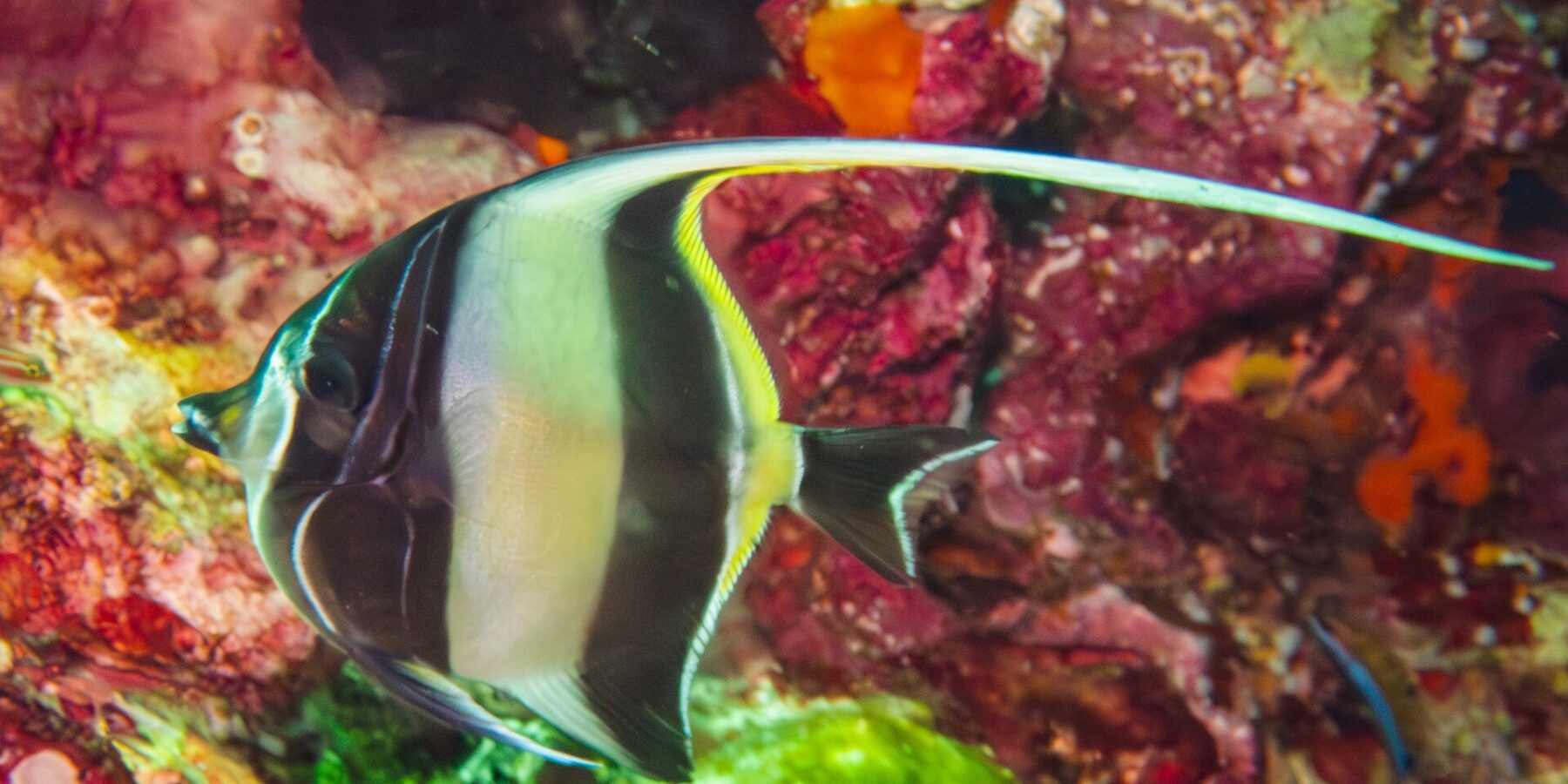
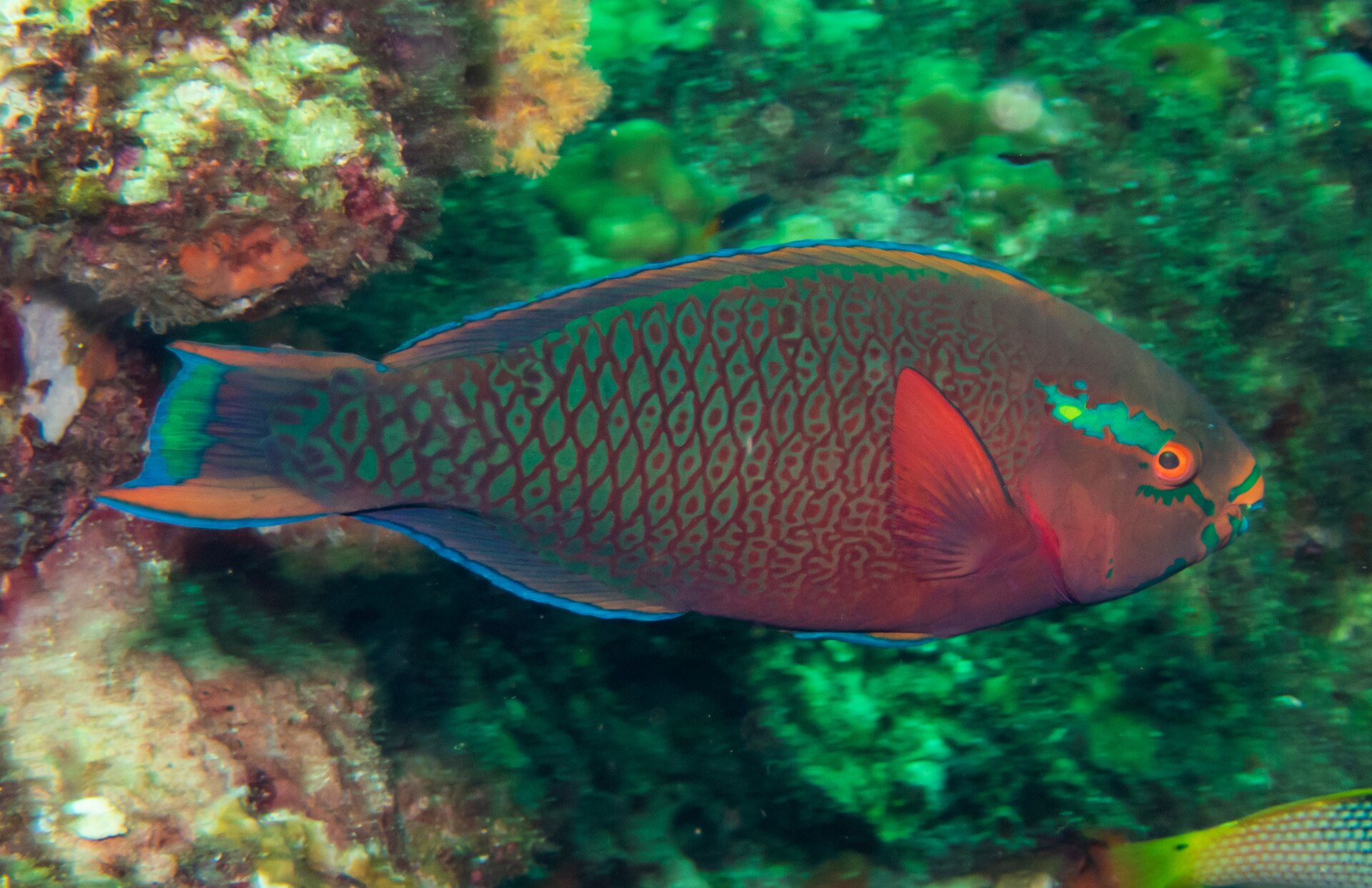
The two rocks are named after their colors. Hin Daeng, the red rock, is covered in red sponges and soft corals; Hin Muang, the purple rock, in a forest of purple soft corals. These walls are home to groups of spotfin lionfish, Moorish idols, parrotfish, moray eels and all the small life of the sponges. But you come first for the open water: manta rays, mostly in January and February and often several at once, which visit the Hin Muang cleaning stations and pass right over divers; whale sharks, at random during the season, with no set month; and the schools of pelagics that cruise the walls, trevallies, rainbow runners, barracudas, mackerel and tuna. Bull sharks show up once in a while. When the current picks up, all this life holds on the exposed side, and so do the divers.
| Species | J | F | M | A | M | J | J | A | S | O | N | D | Note |
|---|---|---|---|---|---|---|---|---|---|---|---|---|---|
 Reef manta ray | peak season | peak season | possible | possible | possible | rare | rare | rare | rare | rare | possible | possible | mostly January and February, often several at once, at the Hin Muang cleaning stations |
 Whale shark | possible | possible | possible | possible | possible | rare | rare | rare | rare | rare | possible | possible | at random during the season, with no set month |
 Great barracuda | peak season | peak season | peak season | peak season | peak season | rare | rare | rare | rare | possible | peak season | peak season | schooling in the blue, along the walls |
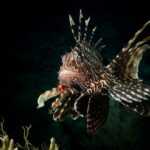 Lionfish | peak season | peak season | peak season | peak season | peak season | rare | rare | rare | rare | peak season | peak season | peak season | spotfin lionfish in groups on the red sponges of Hin Daeng |
 Bigeye trevally | peak season | peak season | peak season | peak season | peak season | rare | rare | rare | rare | possible | peak season | peak season | hunting along the walls |
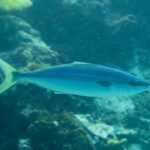 Rainbow runner | peak season | peak season | peak season | peak season | peak season | rare | rare | rare | rare | possible | peak season | peak season | hunting along the walls |
| Tuna and mackerel | possible | possible | possible | possible | possible | rare | rare | rare | rare | possible | possible | possible | passing by off the rocks |
| Moorish idols and parrotfish | peak season | peak season | peak season | peak season | peak season | rare | rare | rare | rare | peak season | peak season | peak season | on the red-encrusted walls, all season |
peak seasonpossiblerare
What is diving like at Hin Daeng and Hin Muang?
Hin Daeng is a large pinnacle rising from about 50 meters, with sheer walls down to 60 meters. Hin Muang, a few hundred meters away, is a long, narrow ridge that starts at 65 meters, peaks at 8 or 9 meters on its western tip, sinks east to 35 meters and then breaks into small pinnacles, with vertical walls down to 70 meters. Recreational divers stay between 10 and 40 meters: on these walls nothing stops your descent, and your computer sets the rules. Current ranges from weak to strong, usually only at the surface: you jump off the boat, go straight down the mooring line, then dive in the shelter of the rock. Visibility is 10 to 30 meters. Dive centers require experience: 50 dives for an Open Water diver at Phoenix Divers, and a 30-meter certification plus a dive in the last six months at Blue Planet Divers.
When to dive Hin Daeng and Hin Muang?
idealgoodnot recommended
Koh Lanta dive centers dive Hin Daeng and Hin Muang from October 15 to May 15, when the Andaman Sea is calm. Mu Ko Lanta National Park, though, lists a closure from May 16 to November 15 for the southwest monsoon, so check the date before booking a trip in October or November. January and February are the manta months. The water stays between 27 and 30 °C all season. Visibility averages 10 to 20 meters and sometimes tops 30 meters; it drops when the plankton arrives, and the plankton brings in the big animals. From June to September, nobody goes: the ocean swell makes the rocks impossible to reach.
How to get to Hin Daeng and Hin Muang?
The two rocks lie offshore, southwest of Koh Lanta, in Mu Ko Lanta National Park, less than two hours by speedboat from Saladan, the port at the north end of the island. Lanta Diver goes there by speedboat for two dives at THB 4,700, with gear, transfers and meals included. Phoenix Divers sells the three-dive day, Hin Daeng, Hin Muang and Koh Haa, for THB 5,900, with 10% off if you book online a week ahead; Blue Planet Divers offers the same day for THB 5,100, or THB 4,850 with early booking, in groups of four per guide. Park fees, THB 600 per dive day, are extra everywhere. Koh Lanta is reached from Krabi airport, served from Bangkok by Bangkok Airways and Thai AirAsia: three to four hours by minibus and ferries, or one and a half to two hours by private speedboat. A bridge has linked Koh Lanta Noi to Koh Lanta Yai since 2015.
Stay in Koh Lanta
Where to find a dive guide in Hin Daeng and Hin Muang?
Guided tours you can book online, ranked by number of reviews. These are affiliate links: if you book, you support us at no extra cost.

 Viator
Discover Freediving in Koh Lanta, Thailand
5.0 (19 reviews)View and book Viator
Fun Diving Safari Day Trip From Koh Lanta - Certified Divers
4.9 (17 reviews)View and bookWhere to stay near Hin Daeng and Hin Muang?
Hotels, apartments and rooms around Koh Lanta, with current prices.
Which hotels to choose near Hin Daeng and Hin Muang?

Why are Hin Daeng and Hin Muang called the red and purple rocks?
Hin Daeng means red rock and Hin Muang purple rock, and one descent is enough to see why: the first is lined with red sponges and soft corals, the second with a forest of purple soft corals. Both belong to Mu Ko Lanta National Park, created on August 15, 1990, which covers 134 square kilometers and sixteen islands in the south of Krabi province and lists them, with Koh Rok, among its sites closed during the monsoon. They are the tops of isolated seamounts in open sea: nothing marks them at the surface except a rock head at Hin Daeng, and the walls around them drop to 60 and 70 meters, among the deepest in the country.
What can you see on a Hin Daeng and Hin Muang dive day?
The first dive is usually on Hin Muang, the deeper of the two: a descent onto the western tip at 8 or 9 meters, then along the ridge to the east between 20 and 35 meters, past the cleaning stations where the mantas stop and, below, the purple walls that drop away endlessly. The second dive circles Hin Daeng between 15 and 30 meters, over the red walls, the sponges and the lionfish, with an eye on the blue for trevallies and barracudas. Three-dive days end at Koh Haa, more sheltered, on the way back to Koh Lanta.
When can you see manta rays at Hin Muang?
Hin Muang is one of the manta sites of the Andaman Sea, along with Koh Bon and Koh Tachai. The mantas come to the cleaning stations on the ridge, where small wrasses rid them of their parasites, and they often arrive several at once, mostly in January and February. Watch them as you would anywhere: stay low and still, and never swim toward them or pass above them. The whale shark follows the same logic and comes when the plankton is there, with no calendar; the dive centers that see it most often sell it as a bonus, not a promise.
Why stay on Koh Lanta to dive Hin Daeng and Hin Muang?
Koh Lanta Yai, 25 kilometers long and 6 wide, with 10,830 residents in 2012, has stayed a quiet island, less built up than Phuket or Phi Phi, with its west coast beaches, Klong Dao, Long Beach and Klong Khong, and its old town on the east coast. The dive centers are in Saladan, in the north, where the speedboats leave for Hin Daeng and Hin Muang, Koh Haa, Koh Bida and the King Cruiser wreck. The 2004 tsunami spared the island, with 11 deaths against thousands in Khao Lak. From Krabi airport you arrive by minibus and ferries or by speedboat; the dive center season follows the Andaman Sea season, from mid-October to mid-May.
Our tip
Come in January or February for the mantas, and take the three-dive trip. Go straight down the boat's line: the current is mostly at the surface. On the Hin Muang ridge, watch your depth, as the wall drops past the recreational diving limit.
Other dive sites nearby
 ThailandReef
Elephant Head Rock
Andaman Sea: Similan, Surin and Lanta ThailandPelagic
Koh Tachai Pinnacle
Andaman Sea: Similan, Surin and Lanta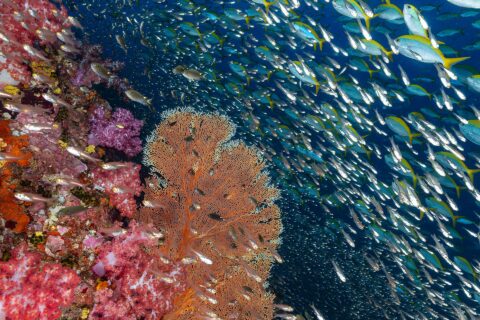 ThailandPelagic