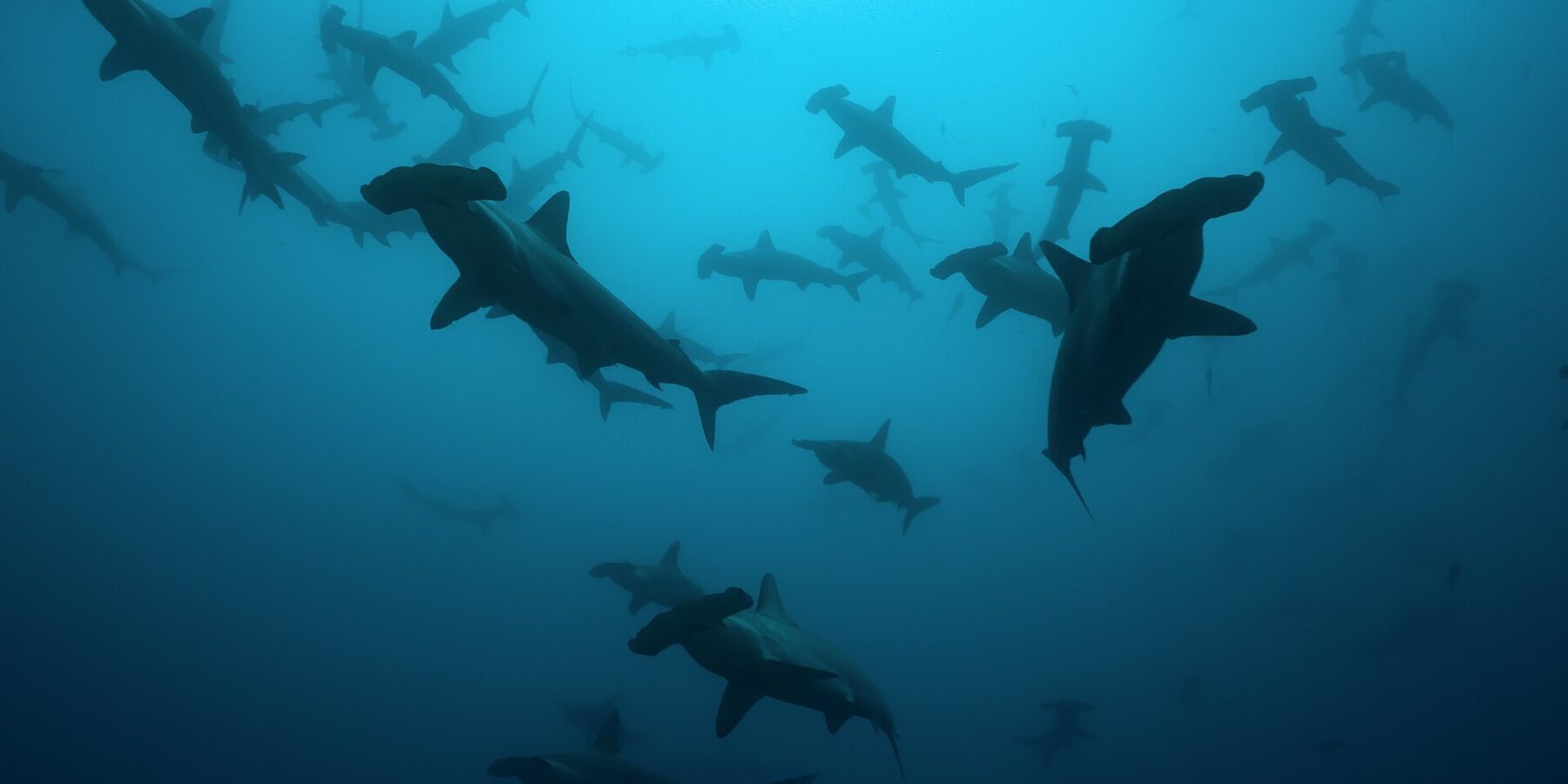
Bajo Alcyone is a seamount with its summit at 25 meters, off Cocos Island, 36 hours by boat from the Costa Rican coast. From August to October, schools of scalloped hammerheads pass over divers by the hundreds. You can only dive it on a liveaboard, with Advanced.
Why dive Bajo Alcyone?
- Schools of scalloped hammerheads, one hundred to five hundred animals from August to October, seen from below
- An isolated seamount whose summit, a boulder plateau, sits between 25 and 27 meters
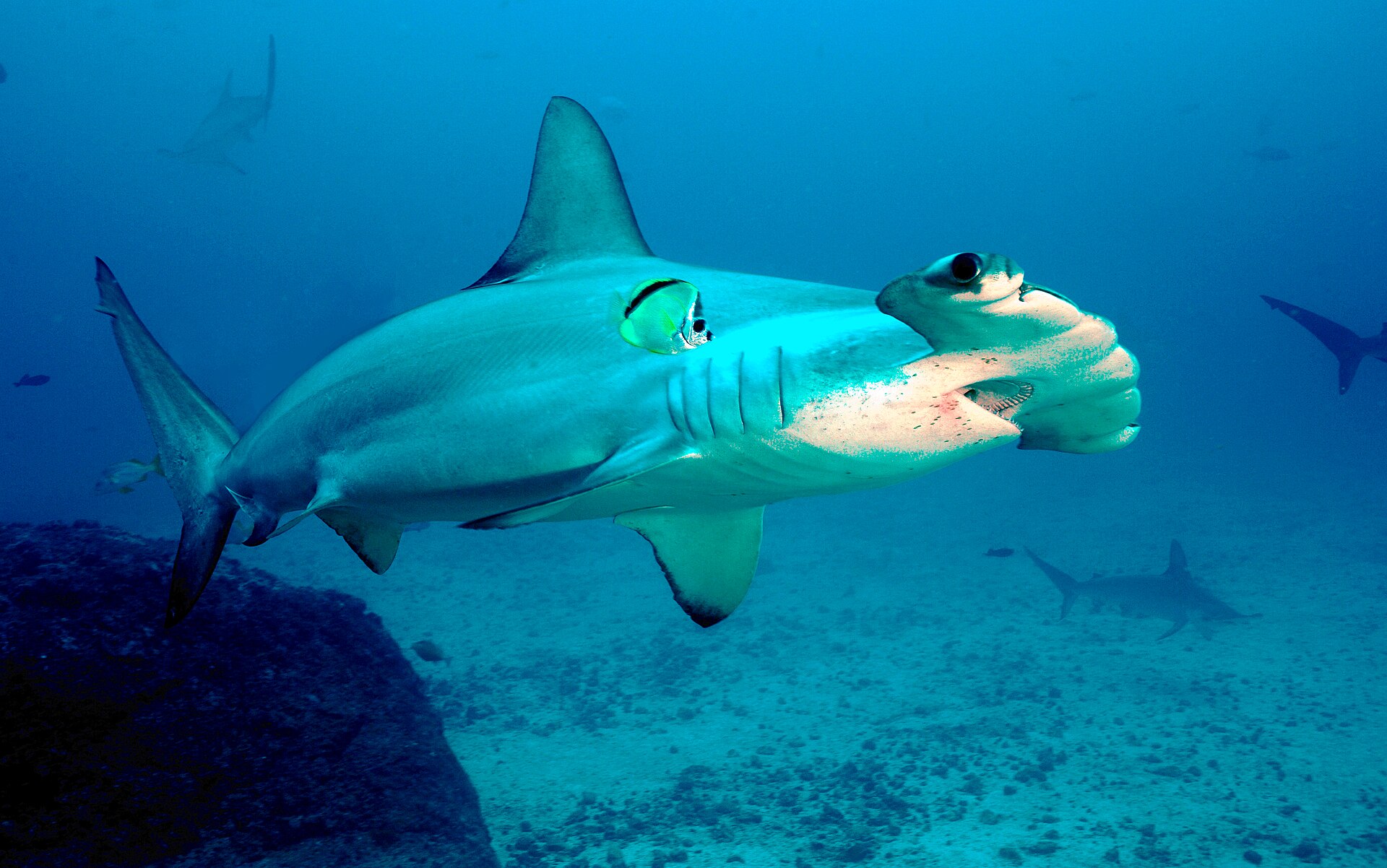
- Two cleaning stations on the plateau, where hammerheads come to have their parasites picked off by barberfish
- Silky sharks, Galapagos sharks, mobulas and, from June to November, whale sharks
- Marbled rays, morays and octopus between the boulders on the summit
Bajo Alcyone in pictures
What will you see at Bajo Alcyone?
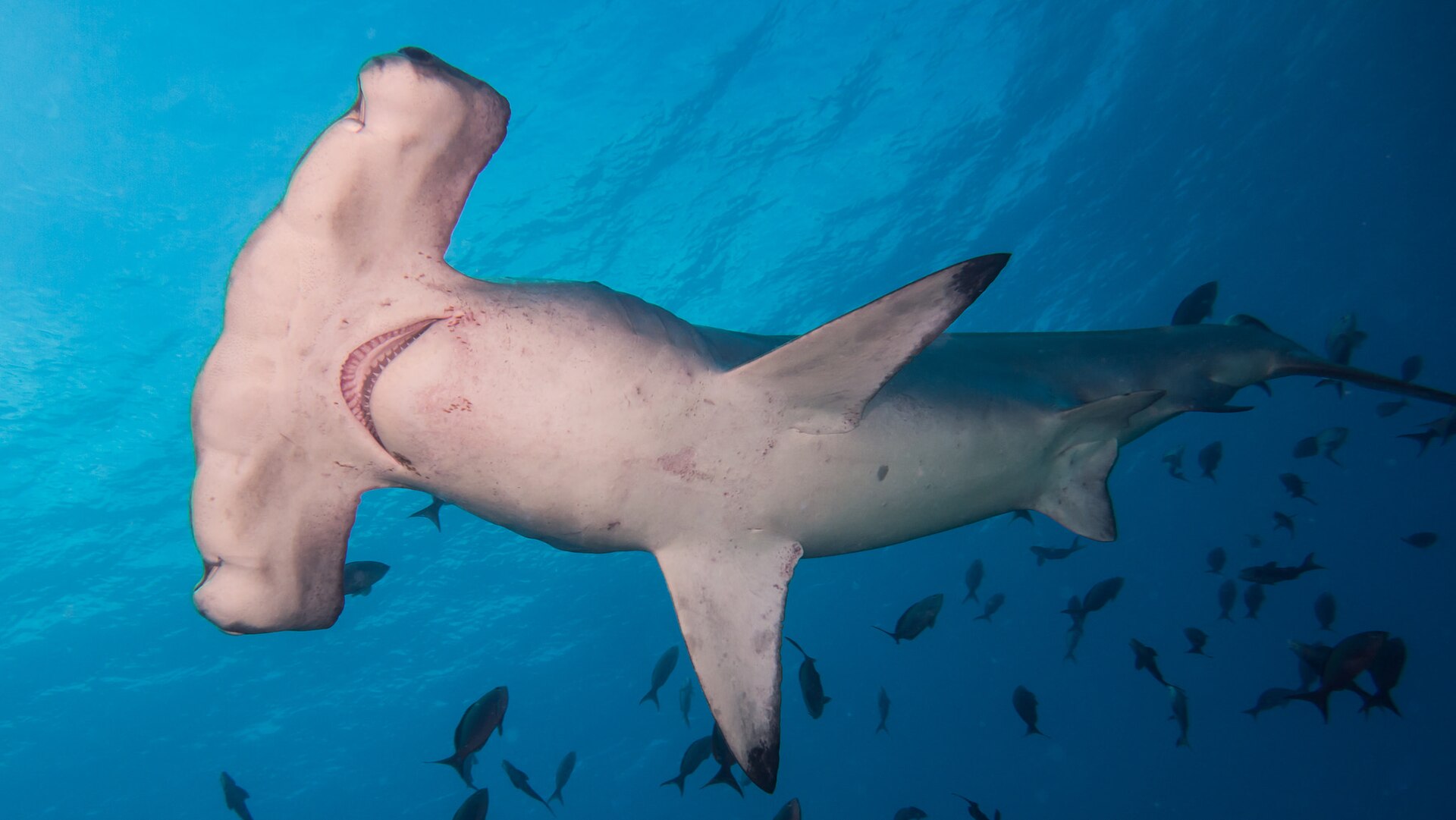
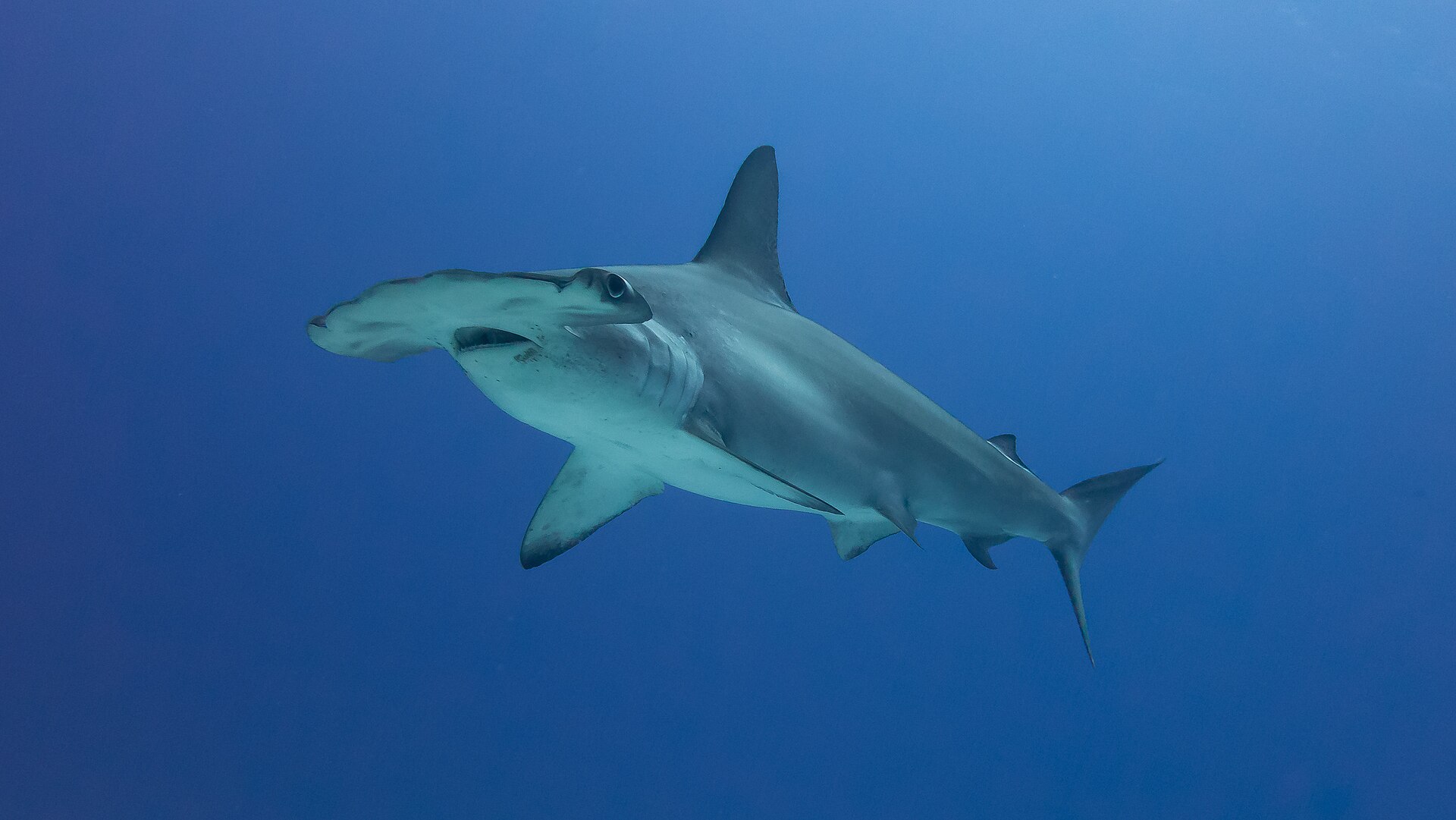
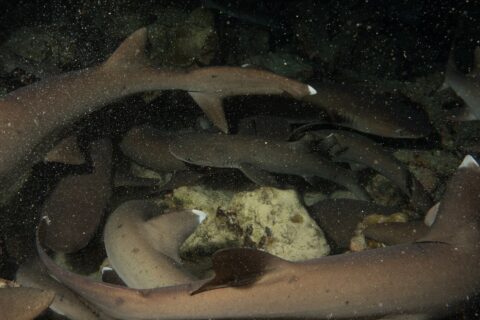
Bajo Alcyone is the scalloped hammerhead site. They come in from the blue by the dozens, sometimes by the hundreds, to be cleaned by barberfish and angelfish at the two stations on the plateau, then head off in schools above the divers. From August to October, at the height of the rainy season, the groups number one hundred to five hundred animals; in the dry season they are still there, in smaller and steadier schools. Around them you find silky sharks and Galapagos sharks at the deepest station, whitetip sharks resting between the boulders, schools of mobulas, eagle rays, and tuna and trevally hunting in the current. Whale sharks pass from June to November, oceanic mantas now and then. On the summit itself, marbled rays, morays and octopus wait for those who look down.
| Species | J | F | M | A | M | J | J | A | S | O | N | D | Note |
|---|---|---|---|---|---|---|---|---|---|---|---|---|---|
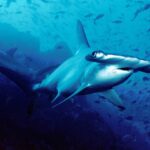 Scalloped hammerhead | possible | possible | possible | possible | possible | peak season | peak season | peak season | peak season | peak season | peak season | possible | by the hundreds above the cleaning stations, at their peak from August to October; present year-round in smaller groups |
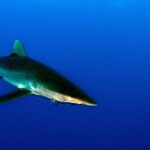 Silky shark | possible | possible | possible | possible | possible | possible | possible | possible | possible | possible | possible | possible | in the blue above the seamount and during safety stops, year-round |
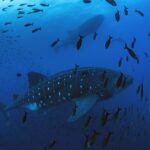 Whale shark | rare | rare | rare | rare | rare | possible | peak season | peak season | peak season | possible | possible | rare | from June to November, mostly from July to September, in the blue above the summit |
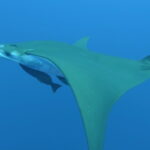 Sicklefin devil ray | possible | possible | possible | possible | possible | possible | possible | possible | possible | possible | possible | possible | schooling above the seamount, year-round |
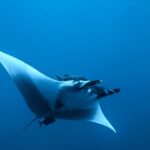 Oceanic manta ray | possible | possible | possible | possible | possible | possible | possible | possible | possible | possible | possible | possible | passing through, occasional |
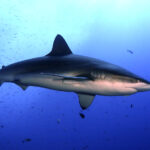 Galapagos shark | possible | possible | possible | possible | possible | possible | possible | possible | possible | possible | possible | possible | at the deepest cleaning station |
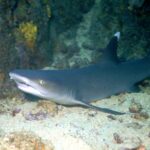 Whitetip reef shark | peak season | peak season | peak season | peak season | peak season | peak season | peak season | peak season | peak season | peak season | peak season | peak season | resting on the summit, between the boulders |
| Marbled rays | peak season | peak season | peak season | peak season | peak season | peak season | peak season | peak season | peak season | peak season | peak season | peak season | on the summit plateau, with morays and octopus |
| Tuna | possible | possible | possible | possible | possible | possible | possible | possible | possible | possible | possible | possible | hunting in the current, off the seamount |
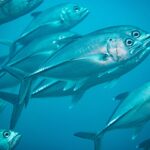 Bigeye trevally | possible | possible | possible | possible | possible | possible | possible | possible | possible | possible | possible | possible | hunting in the current, off the seamount |
peak seasonpossiblerare
What is diving like at Bajo Alcyone?
The summit of the seamount is a boulder plateau between 25 and 27 meters, with flanks that drop beyond 40. The dive takes place between 25 and 35 meters, on Nitrox, and bottom time is limited. Current is the rule: moderate most of the time and strong on some days, it means descending and ascending along the mooring line, holding on firmly to the plateau boulders and surfacing in open water under an SMB, away from the boat. Visibility ranges from 10 meters in the rainy season to more than 30 in the dry season; the thermocline, at around 25 meters, drops the temperature by five to eight degrees at once. Both operators require Advanced Open Water and real ease in current and in the blue: this is not a site for your first deep dive.
When to dive Bajo Alcyone?
idealgoodnot recommended
You can dive the seamount year-round, but the rainy season, from June to November, is the time of the big schools: thermoclines rise, plankton feeds the food chain, and hammerheads gather by the hundreds from August to October, with whale sharks from July to September and tiger sharks in the area. The price to pay is a rougher crossing, currents of two to four knots, visibility of 10 to 25 meters, and water at 24 to 27 °C at the surface that drops to 18 to 22 °C below the thermocline, at around 25 meters. From December to May, the sea is calm, the surface is 26 to 29 °C, visibility often exceeds 30 meters, and hammerheads are still around in smaller groups. Both boats sail year-round.
How to get to Bajo Alcyone?
Bajo Alcyone can only be dived on a liveaboard. Both boats leave from Puntarenas, on the Pacific coast, after an included transfer from San José, for 36 hours at sea to the island, seven days of diving at three dives a day and 36 hours back: eleven days in all. In 2026, Undersea Hunter's Sea Hunter, with 20 passengers, sells its ten nights for US$7,250, Nitrox, 12-liter tanks and weights included, plus US$554 in park fees payable in advance and a US$200 fuel surcharge paid on board. The Okeanos Aggressor II, with 22 passengers, lists US$6,399 for a Deluxe cabin, US$6,749 for a Master and US$7,249 for a Suite for ten nights, with park fees, fuel and chamber extra. The official park fees are US$50 per person per day, plus US$20 per dive day. Plan on a direct Air France flight from Paris to San José, about 11 hours 35 minutes, and a night in San José before boarding.
Stay in Puntarenas
Where to stay near Bajo Alcyone?
Hotels, apartments and rooms around Puntarenas, with current prices.
What is Bajo Alcyone, the seamount off Cocos Island?
Bajo Alcyone is an isolated seamount off the east coast of Cocos Island. Its summit, a plateau of big boulders, sits between 25 and 27 meters, and its flanks plunge well beyond 40. Nothing breaks the surface: the site is found by GPS and the mooring buoy, and everything that lives here comes from the open ocean. The current that hits the seamount brings plankton, the plankton draws small fish, and at the end of the chain come the hammerheads, the silkies, the tuna and the whale shark. Cocos is one of the great hammerhead gatherings of the eastern Pacific, with the Galapagos and Malpelo, and Alcyone is the island's most reliable site.
How do you dive Bajo Alcyone?
You enter from the tender and descend straight down the line to the plateau without lingering: the current pushes and bottom time is short. Once on the boulders, everyone settles behind a rock at 27 or 30 meters, facing the current, and waits. The hammerheads arrive from a distance, in a line or in a school, rise toward the cleaning stations where the barberfish wait for them, and pass overhead. The rule is simple: stay still, no bursts of bubbles, no flash, and the school stays; a diver who fins toward them sends them away for ten minutes. You ascend along the line or in open water under an SMB, with a safety stop in the blue where silkies often pass.
How is Cocos Island National Park protected?
Cocos Island National Park, created in 1978 and a World Heritage Site since 1997, was enlarged in December 2021 from 2,034 to 54,844 square kilometers to protect the seamounts around it. Illegal fishing, above all shark finning, remains its main threat: the scalloped hammerhead is listed as Critically Endangered. The park fees paid by divers, US$50 a day and US$20 per dive day, fund the patrols. Groups are limited to twelve divers, sixty a day on the island, and only one group dives each site at a time.
Our tip
Settle on the plateau at 27 or 30 meters, behind a boulder, without finning: hammerheads come toward a group that stays still. Dive on Nitrox, because bottom time counts. Bring a 5 mm wetsuit and a hood: the water drops to 18 or 20 °C at depth.
Other dive sites nearby
 Costa RicaPelagic
Manuelita
Cocos Island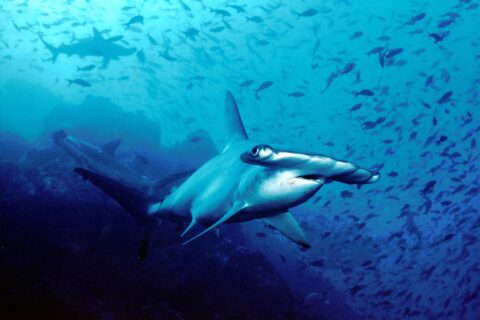 Costa RicaPelagic
Dirty Rock
Cocos Island Costa RicaCave or cenote