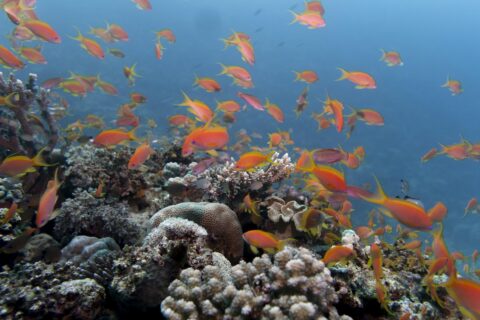
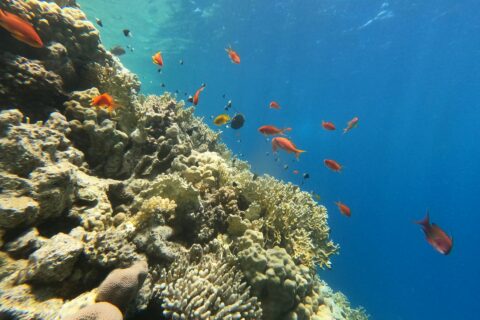
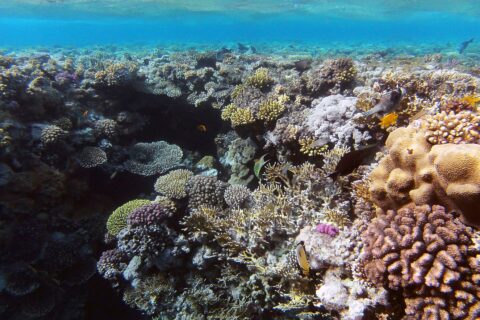
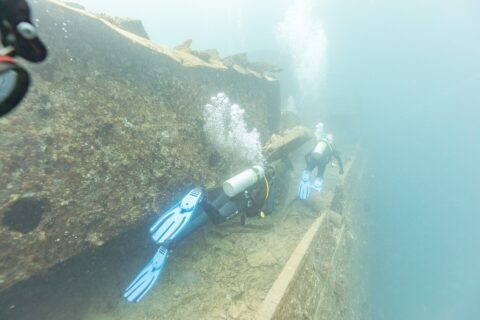
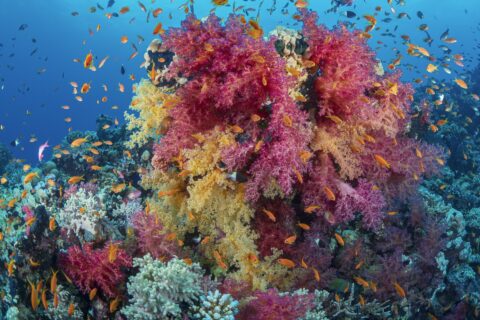
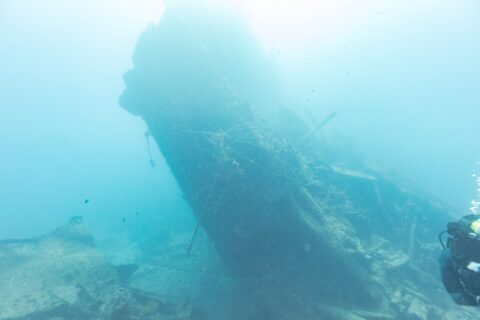
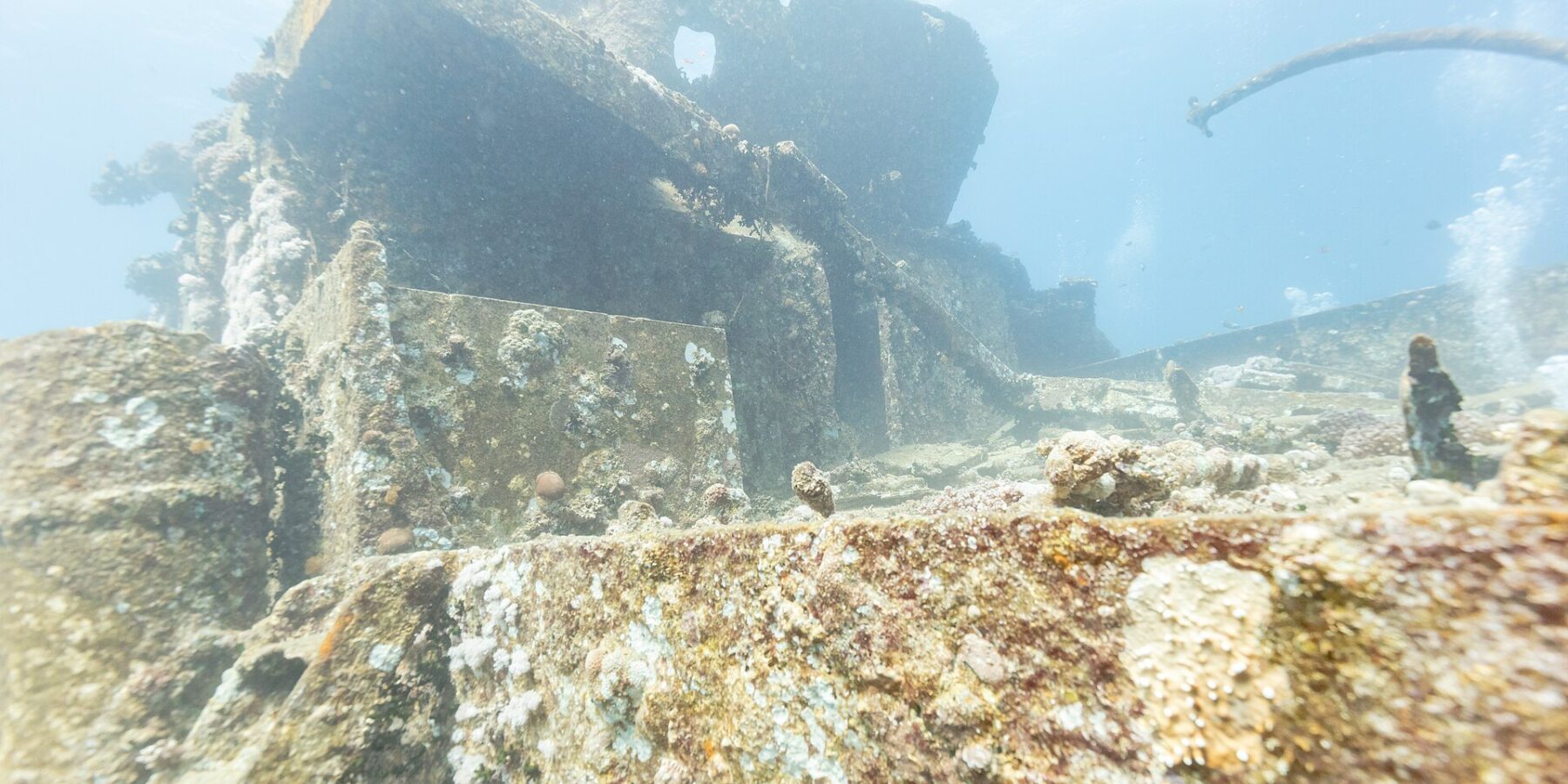
Egypt is one of the finest scuba diving destinations, and the closest to France for warm water all year round. Two sites are worth the trip on their own. In its holds, the Thistlegorm still carries the trucks and motorcycles it was transporting in 1941, and at Ras Mohammed, Napoleon wrasse come right up to your mask.
Why dive Egypt?
Here, scuba diving is done as day trips. The dive center picks you up in the morning, and the boat comes back in the afternoon, after two dives. In Dahab, you do not even need a boat: you walk into the water from the beach.
In the north, at Ras Mohammed, a tight school of barracuda holds above the reef from May to October. The Thistlegorm also fits in a day, but the center picks you up around 3 a.m. You mostly keep liveaboards for the isolated reefs of the south, a night's sailing from the coast.
Where to dive in Egypt?
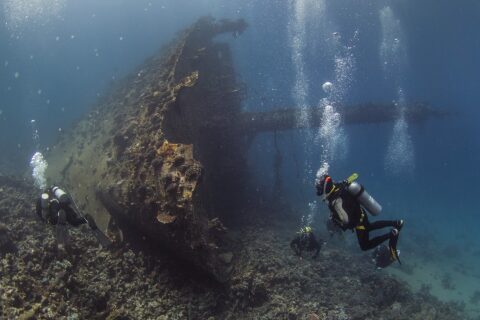
Around Sharm el-Sheikh, you come for the walls and the wrecks. Most of the big sites require Advanced, for the depth and the current. You drift along Shark Reef, the wall of Ras Mohammed that drops more than 700 meters. The Thistlegorm also requires twenty logged dives, and often Nitrox. At the Dahab Blue Hole, dive centers keep the Bells for Advanced divers and do not take Open Water divers below 18 meters. You descend this chimney in the reef and come out into the pool over the saddle.
If you are a beginner or coming back after a break, choose Hurghada. Open Water is enough at the Giftun Islands, for the Erg Somaya plateau and for Banana Reef. It is also enough for the upper parts of the Giannis D and the Carnatic, at Abu Nuhas. Advanced opens up the rest of Abu Nuhas and the Salem Express, a ferry that sank in 1991.
The southern Red Sea is for offshore sharks, and you stay in Marsa Alam or Port Ghalib. Elphinstone is a half-day trip from the coast, with Advanced and a DSMB. The Brothers and Daedalus need a liveaboard, and the boat takes nobody without Advanced and fifty logged dives. If you are short of dives, take a liveaboard to St. John's, where Open Water is enough almost everywhere.
When is the best time to dive Egypt?
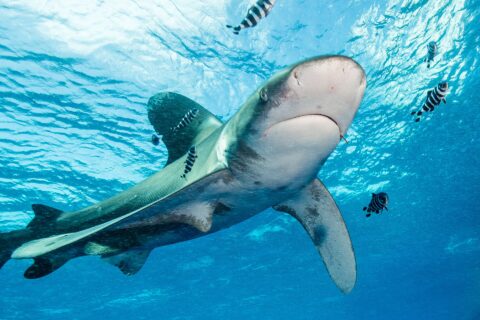
From September to November, the sea stays calm and pelagics are at their most numerous at Ras Mohammed. On liveaboards to the Brothers and Daedalus, thresher sharks cruise along the walls at dawn. From the coast, the oceanic whitetip shark arrives at Elphinstone in October and stays until April.
For hammerheads, come in early summer. They school at Daedalus from May to July. You also meet them along Jackson Reef, near Sharm, from June to August.
In winter, Elphinstone has its best visibility of the year, often 40 meters. But the north wind cancels trips there. Dahab then has mild days, and swell almost never cancels the Blue Hole, sheltered in the Gulf of Aqaba. In February, the water drops to 22°C, and a 5 mm wetsuit is not too much.
How much does a dive trip to Egypt cost?
The dive package covers the guide and the tank, and gear is extra. The Thistlegorm trip adds €140 to €175. The Dahab Blue Hole entry fee, about US$20, is paid on site. In Hurghada, several centers include the park fee and lunch in the boat day. Full gear rents there from €20 a day.
A one-week liveaboard to the Brothers and Daedalus costs €1,115 to €2,260 without flights, for eighteen dives. To St. John's, entry-level prices run from €1,200 to €1,350, for two fewer dives. Budget €8 a day for the southern marine park. And some boats even charge you a €255 fuel supplement on board.
What do you need to know before diving Egypt?
Packages do not include dive insurance, so take it out before you leave. Also bring your logbook, a signal light and a DSMB, which boats require at the Brothers and Daedalus.
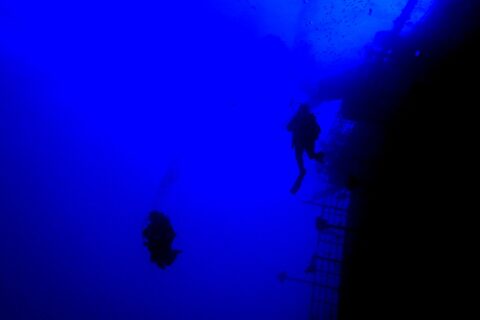
In the parks, you dive without gloves. The law forbids bringing anything up from the Thistlegorm, because it is a war grave. Only enter its holds with wreck diving training and two lights, one of them a backup. Forget the Arch of the Blue Hole, at 55 meters, unless you are a technical diver. Most of the site's fatal accidents happen there.
The French Foreign Ministry strongly advises against travel to North Sinai and the border with Israel. The coastal resorts, where you dive, remain open.
 EgyptReef