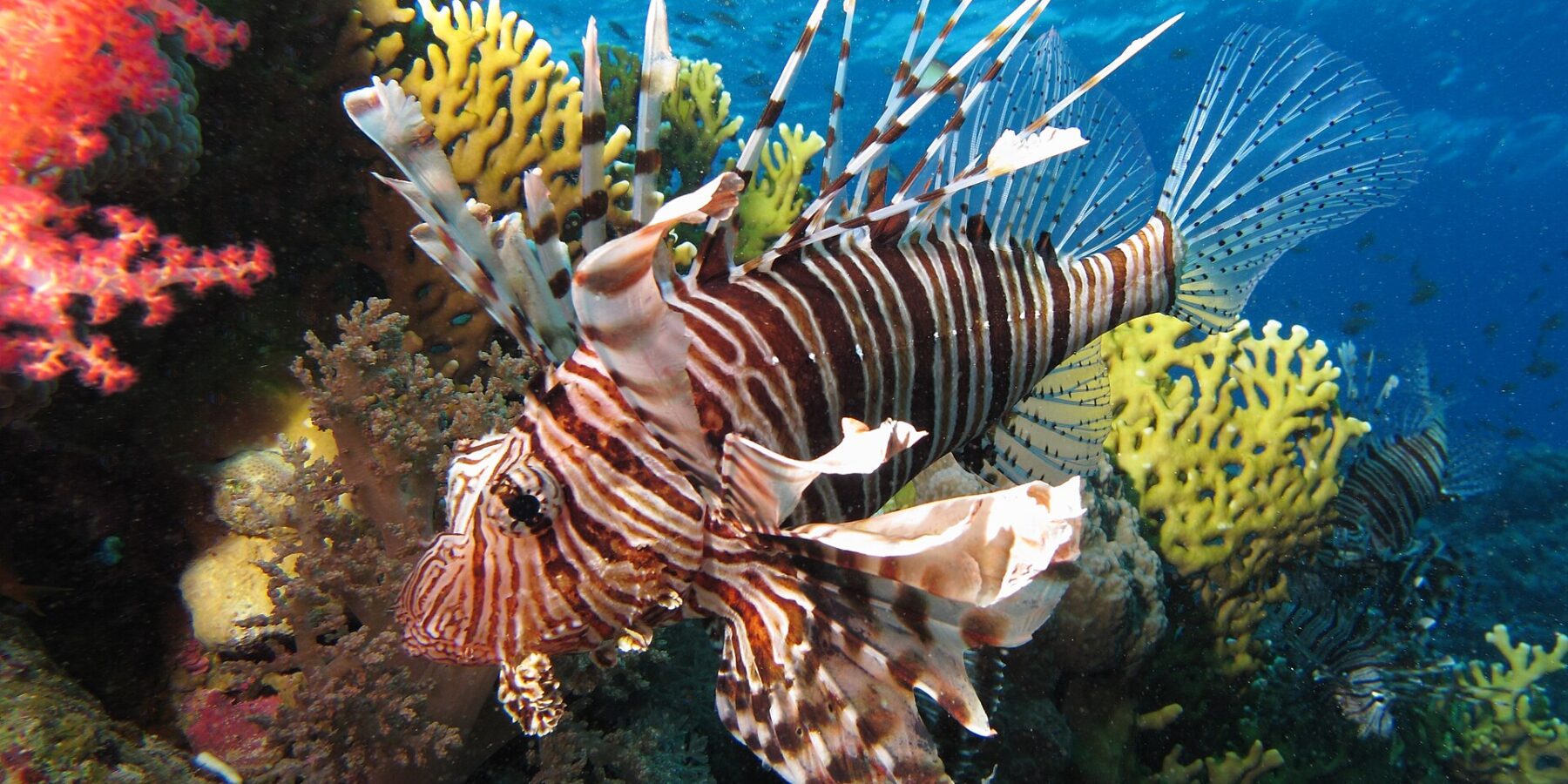
The Dunraven is a British sail and steam ship that sank in 1876 on Sha'ab Mahmoud reef and was found again in 1977. It lies upside down between 18 and 30 meters, its hull open and full of glassfish. It is the most accessible wreck in the Strait of Gubal, on a day trip from Sharm el-Sheikh.
Why dive the Dunraven?
- An upturned hull 80 meters long, open in three places, that you swim through from end to end
- The two boilers and the propeller, still in place under the stern
- A cloud of glassfish filling the inside, and lionfish by the dozens
- An easy, sheltered and shallow wreck, ideal for a first wreck dive
- Can be combined with Ras Mohammed on the same day
The dive site on the map
Base: Sharm el-Sheikh, 31 km as the crow flies.
See nearby dive sites on the mapThe Dunraven in pictures
What will you see at the Dunraven?
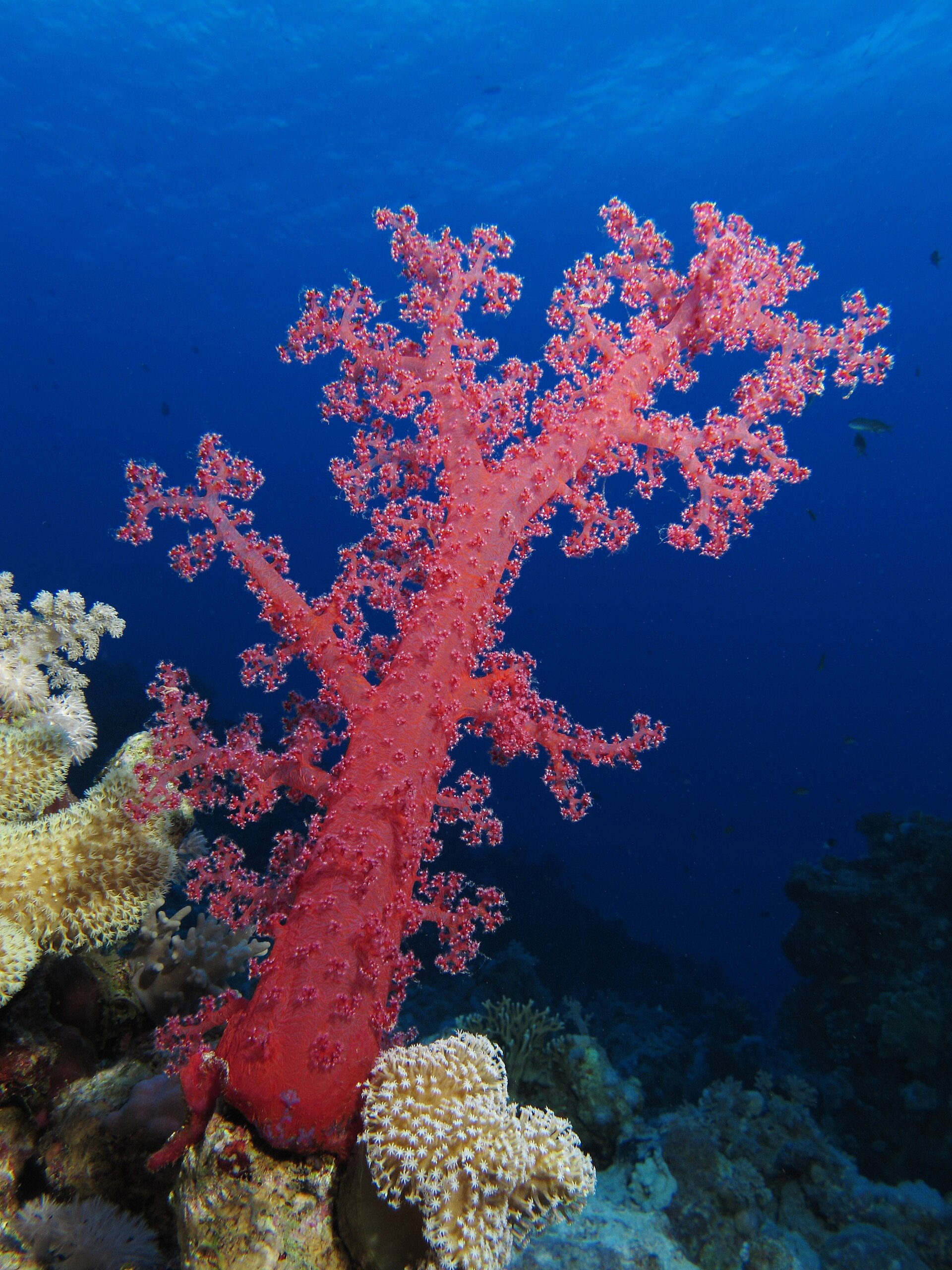
A hundred and fifty years underwater have turned the hull into a reef: soft corals, hard corals and sponges cover the plates, and nudibranchs hide there for macro photographers. Inside, glassfish form a cloud that opens and closes as divers pass, watched by groupers and lionfish hunting within. On the sand and the plates, crocodilefish and scorpionfish wait motionless; morays live in the stern; trevallies and a few batfish circle the wreck, and Sha'ab Mahmoud reef, just above, adds its butterflyfish, parrotfish and, now and then, a turtle.
| Species | J | F | M | A | M | J | J | A | S | O | N | D | Note |
|---|---|---|---|---|---|---|---|---|---|---|---|---|---|
 Glassfish | peak season | peak season | peak season | peak season | peak season | peak season | peak season | peak season | peak season | peak season | peak season | peak season | a cloud filling the hull, around the boilers |
 Lionfish | peak season | peak season | peak season | peak season | peak season | peak season | peak season | peak season | peak season | peak season | peak season | peak season | in the shade of the hull, by the dozens |
| Groupers | peak season | peak season | peak season | peak season | peak season | peak season | peak season | peak season | peak season | peak season | peak season | peak season | under the plates and in the holes of the hull |
| Crocodilefish and scorpionfish | peak season | peak season | peak season | peak season | peak season | peak season | peak season | peak season | peak season | peak season | peak season | peak season | lying on the sand and on the plates, you have to look for them |
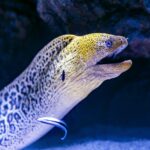 Giant moray | peak season | peak season | peak season | peak season | peak season | peak season | peak season | peak season | peak season | peak season | peak season | peak season | in the stern, near the propeller |
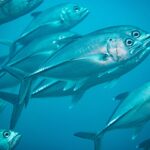 Bigeye trevally | possible | possible | possible | possible | possible | possible | possible | possible | possible | possible | possible | possible | hunting around the wreck |
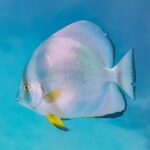 Orbicular batfish | possible | possible | possible | possible | possible | possible | possible | possible | possible | possible | possible | possible | a few above the hull |
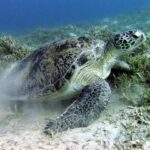 Green turtle | possible | possible | possible | possible | possible | possible | possible | possible | possible | possible | possible | possible | passing over the reef, above the wreck |
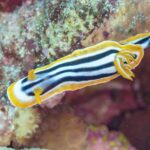 Nudibranchs | peak season | peak season | peak season | peak season | peak season | peak season | peak season | peak season | peak season | peak season | peak season | peak season | on the soft corals covering the hull |
peak seasonpossiblerare
What is diving like at the Dunraven?
The wreck lies upside down on a sloping sandy bottom: the stern, with the propeller and rudder, is at 30 meters, and the bow rises to about 18 meters against the reef. You enter the hull through one of the three large openings, swim through from end to end between the boilers and fallen plates, then finish the dive on the reef, between 5 and 12 meters, for the safety stop. The current is weak, visibility 15 to 25 meters, and the depth stays reasonable: dive centers ask for Advanced Open Water, but it is an easy wreck, with no tight penetration.
When to dive the Dunraven?
idealgoodnot recommended
The site is sheltered by the reef and dived all year; it is the crossing from Sharm el-Sheikh that depends on the sea, as for the Thistlegorm, but the Dunraven is much closer and gets canceled far less often. The water drops to 22°C in February and rises to 29°C in August; visibility, 15 to 25 meters, varies with plankton and wind more than with the season. From April to November, the sea is at its calmest for the trip.
How to get to the Dunraven?
The Dunraven lies at the southern tip of Sha'ab Mahmoud, a large reef west of Ras Mohammed, at the mouth of the Gulf of Suez. From Sharm el-Sheikh, the boat takes an hour and a half to two hours; the trip is sold as an extra, €35 at Reef Oasis, on top of a package dive, and is almost always combined with Shark and Yolanda or another Ras Mohammed site. Liveaboards on northern routes stop here between the Thistlegorm and Abu Nuhas. Sharm el-Sheikh airport is a five-hour flight from Paris; ask your dive center whether the free Sinai stamp is enough for this trip, as the zone boundary runs very close.
Stay in Sharm el-Sheikh
Where to find a dive guide in the Dunraven?
Guided tours you can book online, ranked by number of reviews. These are affiliate links: if you book, you support us at no extra cost.

 Viator
Discover Scuba Diving
5.0 (1,861 reviews)View and book Viator
Open Water Diver Course
5.0 (280 reviews)View and book Viator
Discover Scuba Diving Sharm El Sheikh
4.8 (235 reviews)View and book Viator
PADI Scuba Diver (PSD)
5.0 (189 reviews)View and book Viator
Introduction: Diving in Sharm El Sheikh 15 minutes underwater
5.0 (125 reviews)View and book Viator
Advanced Open Water Diver Course
5.0 (88 reviews)View and bookWhere to stay near the Dunraven?
Hotels, apartments and rooms around Sharm el-Sheikh, with current prices.
Which hotels to choose near the Dunraven?
 Egypt
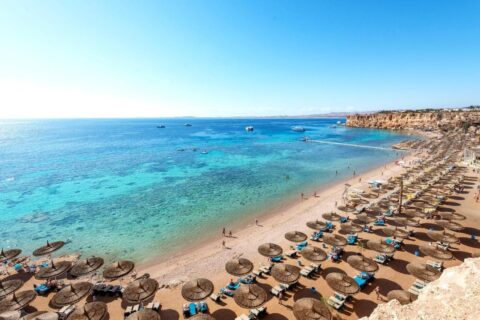
Reef Oasis Beach Resort
Northern Red Sea, Egypt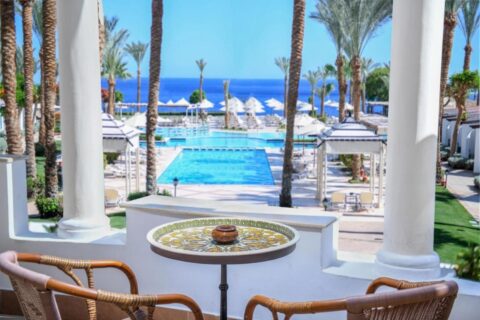 Egypt
JAZ Fanara Resort
Northern Red Sea, Egypt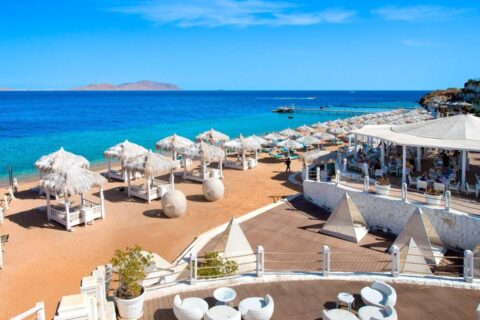 Egypt
Sunrise Arabian Beach Resort
Northern Red Sea, Egypt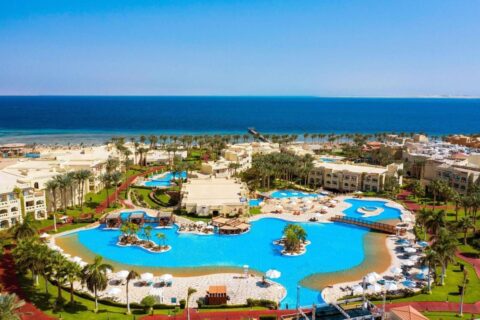 Egypt
Rixos Sharm El Sheikh
Northern Red Sea, EgyptWhat was the Dunraven, launched in 1872?
The Dunraven was launched on December 14, 1872, in Newcastle upon Tyne, at the C. Mitchell and Co. yards, for the shipowner W. Milburn. Just over 80 meters long, she ran on sail and steam, and was built for the route between Britain and Bombay. In January 1876 she left Liverpool loaded with steel and timber; in Bombay the cargo was sold and replaced with spices, cotton and muslin for the return voyage.
How did the Dunraven sink on April 25, 1876?
On April 25, 1876, the ship reached the approaches to the Suez Canal. Captain Care and his twenty-five men believed they were farther up the gulf than they were: the Dunraven ran onto the reef, south of Beacon Rock, on the outer face of Sha'ab Mahmoud. The crew fought for fourteen hours to free her; when the hull finally slid off the reef, she lost her balance, capsized and sank in 25 meters. The sailors, in the lifeboats, were picked up by fishermen. The Board of Trade inquiry found the captain negligent, and his certificate was suspended for a year.
How was the Dunraven wreck found in 1977?
Fishermen had known the wreck for generations, because their nets snagged on it. Divers only rediscovered it in 1977: a group from Sharm el-Sheikh, including Howard Rosenstein, who then ran the Red Sea Divers center. In the early years, theories ran wild: some made it a World War I ship working for Lawrence of Arabia, until a piece of porcelain stamped with the name SS Dunraven settled the matter. The legend of a quarrel between a drunken captain and his wife has never been confirmed.
How do you dive the Dunraven wreck?
The hull lies upside down, badly broken up, but three large openings let you enter and swim through the wreck from end to end. You descend the mooring line to the stern, at 30 meters, where the propeller and rudder are still in place, then work back up toward the bow inside, between the two big boilers and a heap of fallen metal, in a cloud of glassfish. You exit on the reef side, at about 18 meters, and end the dive on top of Sha'ab Mahmoud reef, so rich that the safety stop is worth a dive on its own. Because it is shallow, the wreck is one of the fishiest in the north: groupers, trevallies, scorpionfish and crocodilefish hang around the openings in the hull.
Our tip
Ask to pair the wreck with Shark and Yolanda, the neighboring site. Enter at the stern, at 30 meters, for the boilers and the propeller, then work your way up toward the bow. A light changes everything inside the hull, even in broad daylight.
Other dive sites nearby
 EgyptReef
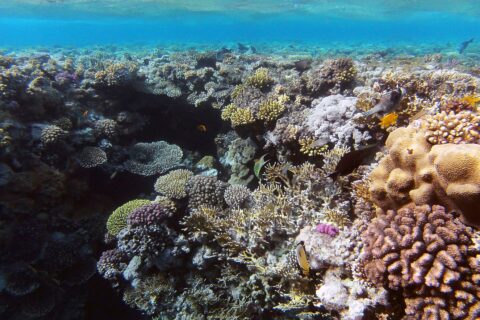
Shark and Yolanda Reef, Ras Mohammed
Northern Red Sea, Egypt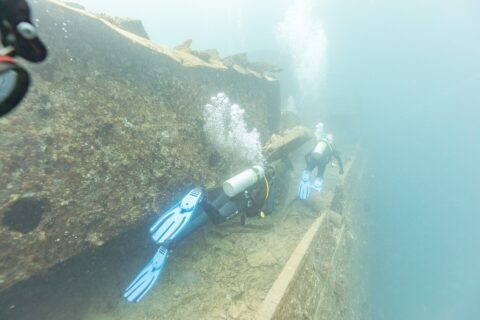 EgyptWreck
SS Thistlegorm
Northern Red Sea, Egypt EgyptReef