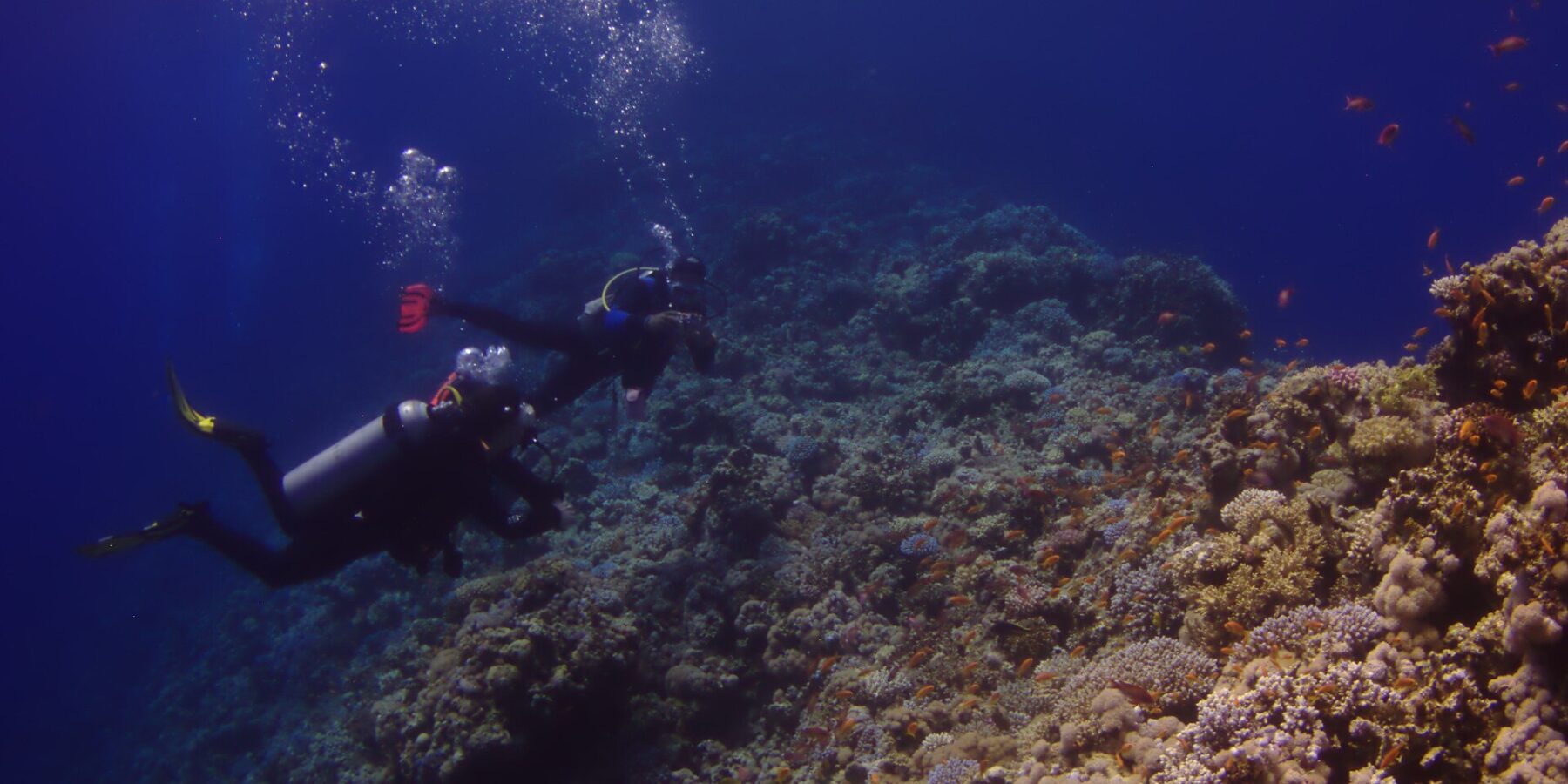
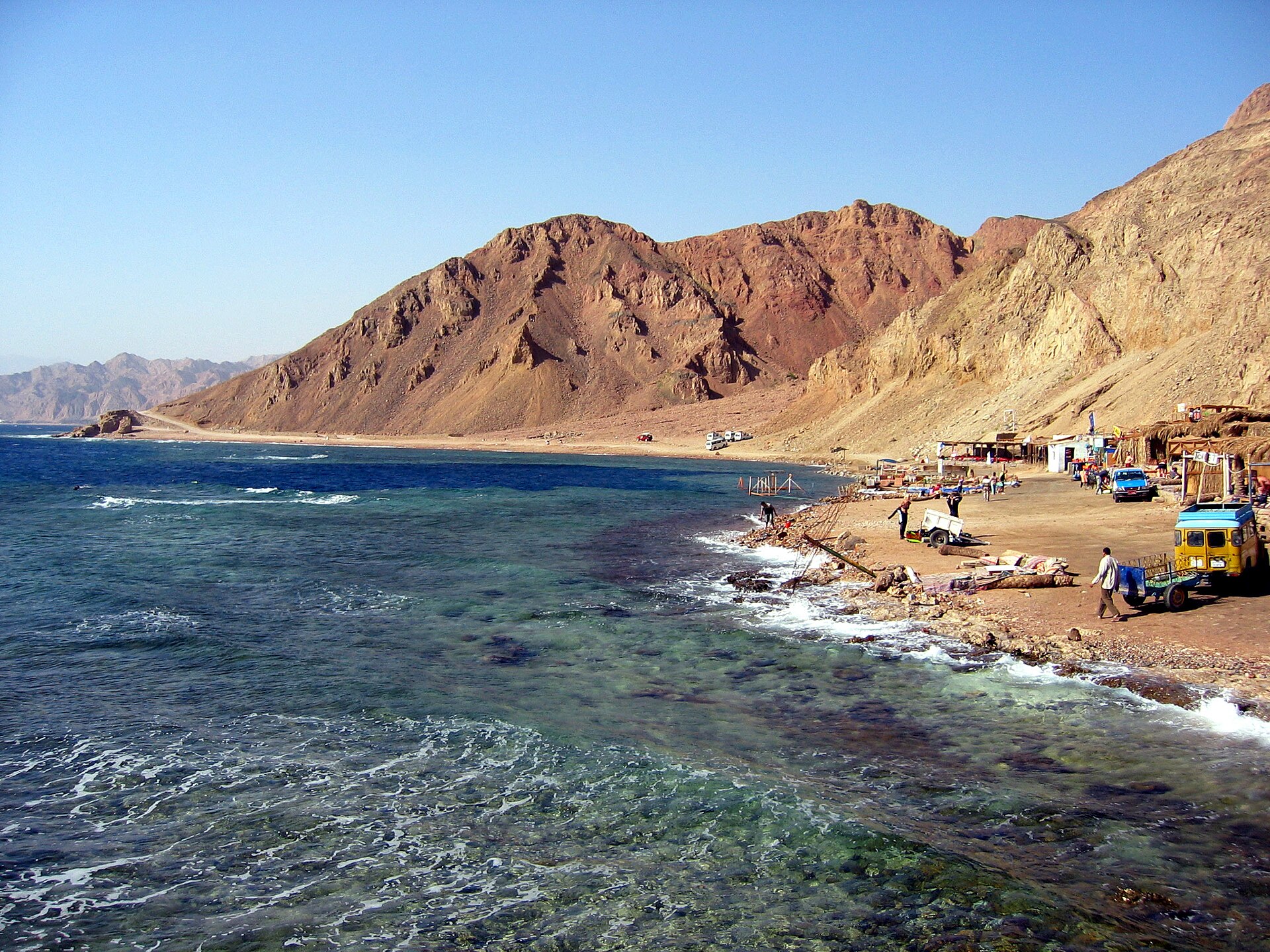
The Blue Hole is a sinkhole more than 100 meters deep in the reef, twenty minutes north of Dahab, and you dive it from the beach. You go in through the Bells chimney and come back over the saddle at 7 meters. It is the most famous site in the Sinai, and a place of pilgrimage for freediving.
Why dive the Dahab Blue Hole?
- The entry through the Bells, a narrow chimney in the reef that opens onto the outer wall at 26 meters
- The outer wall, covered in soft corals and anthias, all the way to the saddle at 7 meters
- The blue sinkhole, more than 100 meters deep, where the world's best freedivers train
- Two shore dives in a day, with no boat and no seasickness
- The Canyon and Eel Garden a few kilometers away, to round out the day
The Dahab Blue Hole in pictures
What will you see at the Dahab Blue Hole?
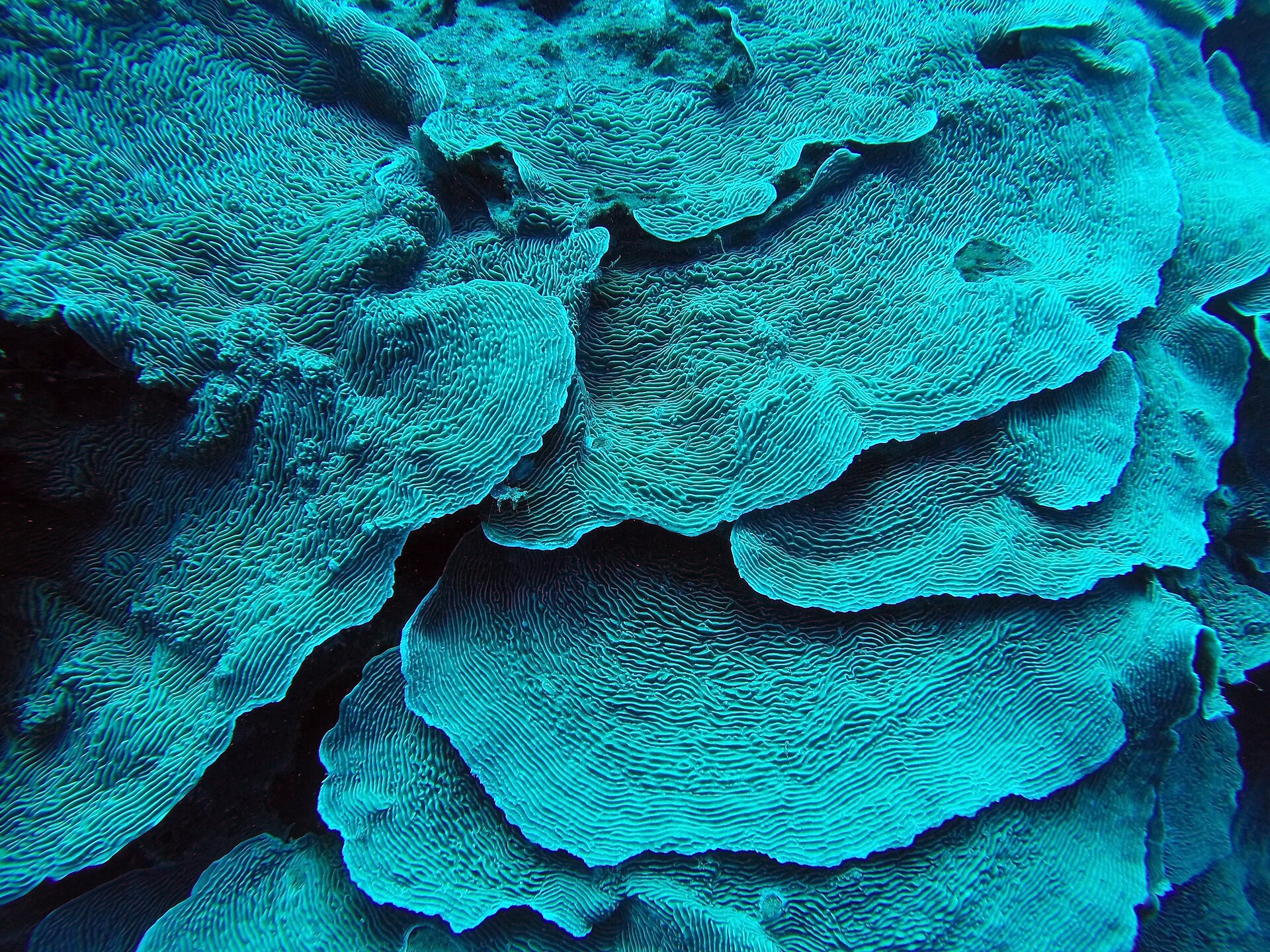
The outer wall, between the Bells and the saddle, is carpeted with soft corals, sea fans and hard corals, with anthias everywhere. Along the wall you meet green turtles, hunting trevallies and, now and then, a shark or a ray out in the blue. Inside the hole, life clings to the walls: batfish, lionfish, nudibranchs, morays, and schools of glassfish under the overhangs. The bottom of the shaft is too deep for reef life: below 40 meters, there is only rock and blue.
| Species | J | F | M | A | M | J | J | A | S | O | N | D | Note |
|---|---|---|---|---|---|---|---|---|---|---|---|---|---|
 Scalefin anthias | peak season | peak season | peak season | peak season | peak season | peak season | peak season | peak season | peak season | peak season | peak season | peak season | in clouds along the whole outer wall |
 Green turtle | possible | possible | possible | possible | possible | possible | possible | possible | possible | possible | possible | possible | passing on the wall and near the saddle |
 Orbicular batfish | peak season | peak season | peak season | peak season | peak season | peak season | peak season | peak season | peak season | peak season | peak season | peak season | inside the hole, below the freedivers' lines |
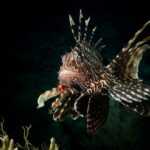 Lionfish | peak season | peak season | peak season | peak season | peak season | peak season | peak season | peak season | peak season | peak season | peak season | peak season | under the overhangs inside the hole and in the Bells |
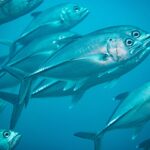 Bigeye trevally | possible | possible | possible | possible | possible | possible | possible | possible | possible | possible | possible | possible | hunting in the blue, off the wall |
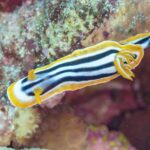 Nudibranchs | peak season | peak season | peak season | peak season | peak season | peak season | peak season | peak season | peak season | peak season | peak season | peak season | on the walls of the hole, for macro |
| Passing sharks and rays | rare | rare | rare | rare | rare | rare | rare | rare | rare | rare | rare | rare | rare, spotted in the blue from the saddle |
peak seasonpossiblerare
What is diving like at the Dahab Blue Hole?
The classic dive starts at the Bells, a hundred meters to the north: a narrow chimney in the reef, a vertical descent one diver at a time, and an exit at 26 meters onto the wall under a small arch. You then follow the wall south, at 20 or 30 meters and then rising, to the saddle at 7 meters, which opens into the Blue Hole; you do your safety stop inside, above the void. No significant current and 20 to 30 meters of visibility: the challenge is the depth and buoyancy control in the chimney. The Arch, a tunnel 26 meters long that links the hole to the open sea from 55 meters down, is technical diving, with decompression gas and proper training: dozens of divers have died there underestimating the swim.
When to dive the Dahab Blue Hole?
idealgoodnot recommended
You can dive the site from shore all year, and it is one of the few in the Red Sea that swell almost never cancels: the Gulf of Aqaba is sheltered. The water drops to 22°C in February and climbs back to 28°C in August, and visibility holds between 20 and 30 meters. From June to September, the heat on land tops 40°C at noon: dive early. Winter is the most pleasant season in Dahab, with mild days and fewer people on the beach.
How to get to the Dahab Blue Hole?
The Blue Hole is about twenty minutes up a dirt track north of Dahab, along the coast: the town's dive centers drive you there by pickup, tanks on board, and the Bedouin cafés on the beach are your base between the two dives. Dahab dive centers sell shore dives one at a time, €40 to €45, or in pairs, €70 to €77, and ten-dive packages from €230: it is the cheapest base in the Red Sea. Dahab is an hour and a half by road from Sharm el-Sheikh airport; from Sharm, dive centers sell a day trip by 4x4 with two shore dives, €120 on top of the package. The site itself has an entry fee of about twenty dollars, paid on the spot. The free Sinai stamp, issued on arrival and valid for fifteen days, is enough for Dahab.
Stay in Dahab
Where to find a dive guide in the Dahab Blue Hole?
Guided tours you can book online, ranked by number of reviews. These are affiliate links: if you book, you support us at no extra cost.

 Viator
Ras Mohammed & White Island Snorkeling & Diving - Sharm El Sheikh
4.7 (47 reviews)View and book Viator
Tiran Island Snorkeling , Diving Cruise & Lunch - Sharm El Sheikh
4.6 (12 reviews)View and bookWhere to stay near the Dahab Blue Hole?
Hotels, apartments and rooms around Dahab, with current prices.
How deep is the Dahab Blue Hole?
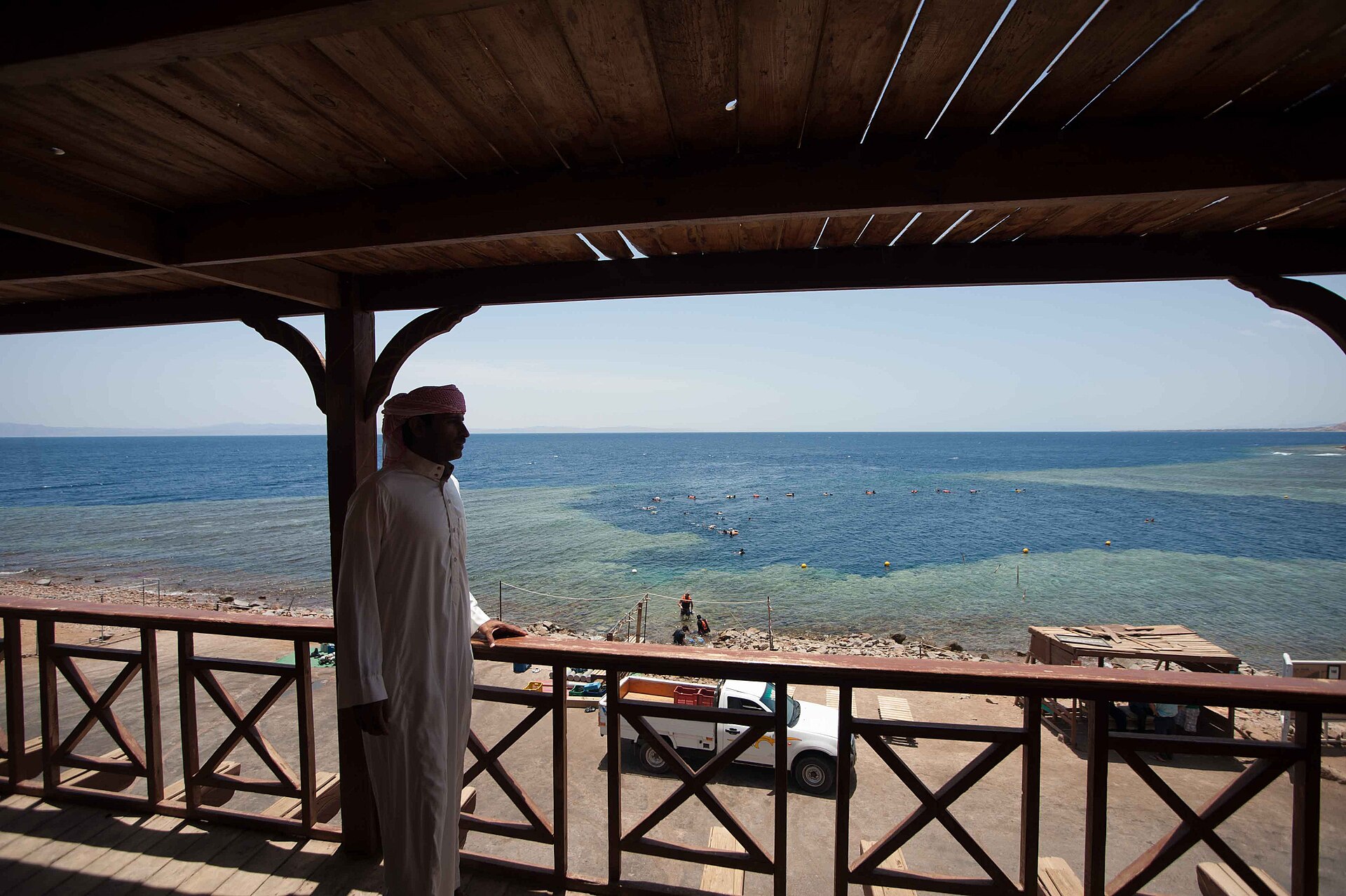
The Blue Hole is a collapse in the fringing reef: an almost round pool, open to the beach, that drops to more than 100 meters. On the seaward side, only a coral saddle 7 meters below the surface closes it off, and divers use it to enter and exit. Lower down, from 55 meters, a tunnel 26 meters long, the Arch, cuts through the reef and links the hole to the outer wall. From shore you see only a dark blue disk ringed with turquoise; the Bedouin cafés, the dive groups gearing up on the rugs and the freedivers' lines in the middle complete the scene.
What is the Bells to Blue Hole dive like?
The dive starts a hundred meters to the north, at the Bells: a crack in the top of the reef where you sink straight down, your tank so close to the rock that it rings like a bell, hence the name, to a small arch at 26 meters that opens onto the outer wall. You then drift south along the wall, soft corals and anthias on your right, the blue on your left, slowly rising. The saddle, at 7 meters, marks the way into the hole, where you finish the dive and your safety stop above the void, often beneath freedivers going down their line. The Canyon, two kilometers south, or Eel Garden, in Dahab itself, makes the second dive of the day.
Why is the Blue Hole Arch so dangerous?
The Blue Hole has a reputation as the deadliest dive site in the world, and it comes down to a single passage: the Arch. The tunnel entrance is hard to find, the 26 meter swim is longer than it looks, the current often flows through it toward the hole, and the ceiling is at 55 meters: on a standard air tank, nitrogen narcosis and air that runs out fast at that depth do the rest. Dozens of divers have died there, most often recreational divers who overestimated their abilities; their plaques are set in the cliff above the beach. For a trained and equipped tech diver, the passage poses no particular problem. For everyone else, the site comes down to the wall and the hole, and that is already a very fine dive.
Why is Dahab called the freediving capital?
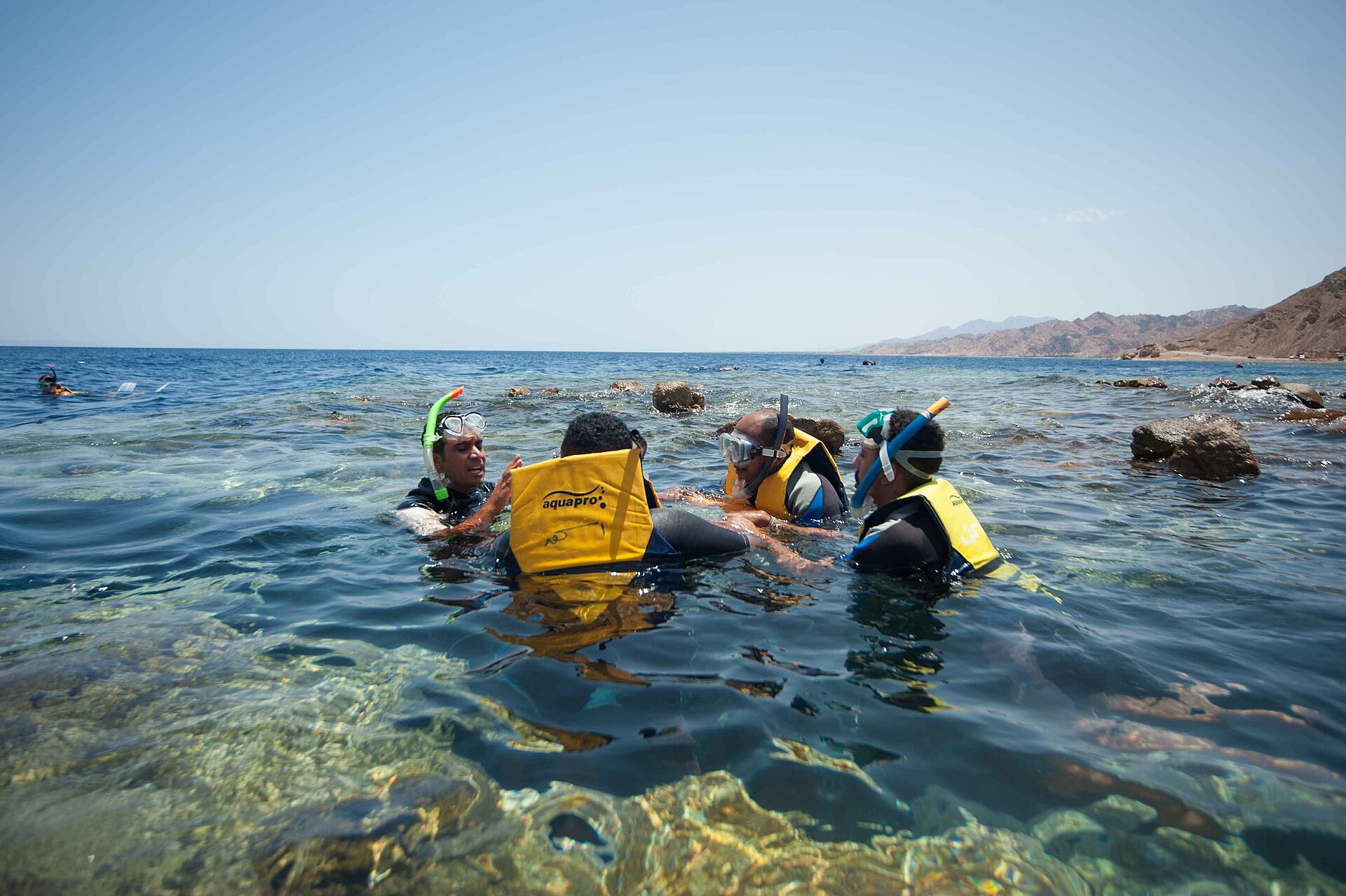
Deep, sheltered and reachable from the beach, the pool has made the Blue Hole one of the world's freediving centers: Dahab schools set up their lines there all year, and competitions are held there. For scuba divers, that means sharing the water with freedivers dropping straight down in the middle of the hole: stay along the edges, never swim under a line, and keep your bubbles away from their path.
What other shore dives are there in Dahab?
Dahab is dived almost entirely from the beach. The Canyon, between the village and the Blue Hole, is a narrow crack that runs under the reef down to 30 meters, full of glassfish. Eel Garden, north of the village, is a sandy plateau of garden eels. Lighthouse, in the center, is the training and night dive site; The Islands, to the south, is a shallow maze of coral heads. Farther north, Abu Galum can only be reached by camel or by boat, for reefs with nobody on them.
Our tip
Do the Bells to Blue Hole crossing in the morning, before the minibuses from Sharm arrive. Check your weighting before entering the Bells, where divers go down one at a time. Forget the Arch unless you are trained and equipped for 55 meters.
Other dive sites nearby
 EgyptReef
Shark and Yolanda Reef, Ras Mohammed
Northern Red Sea, Egypt EgyptWreck
SS Thistlegorm
Northern Red Sea, Egypt EgyptWreck