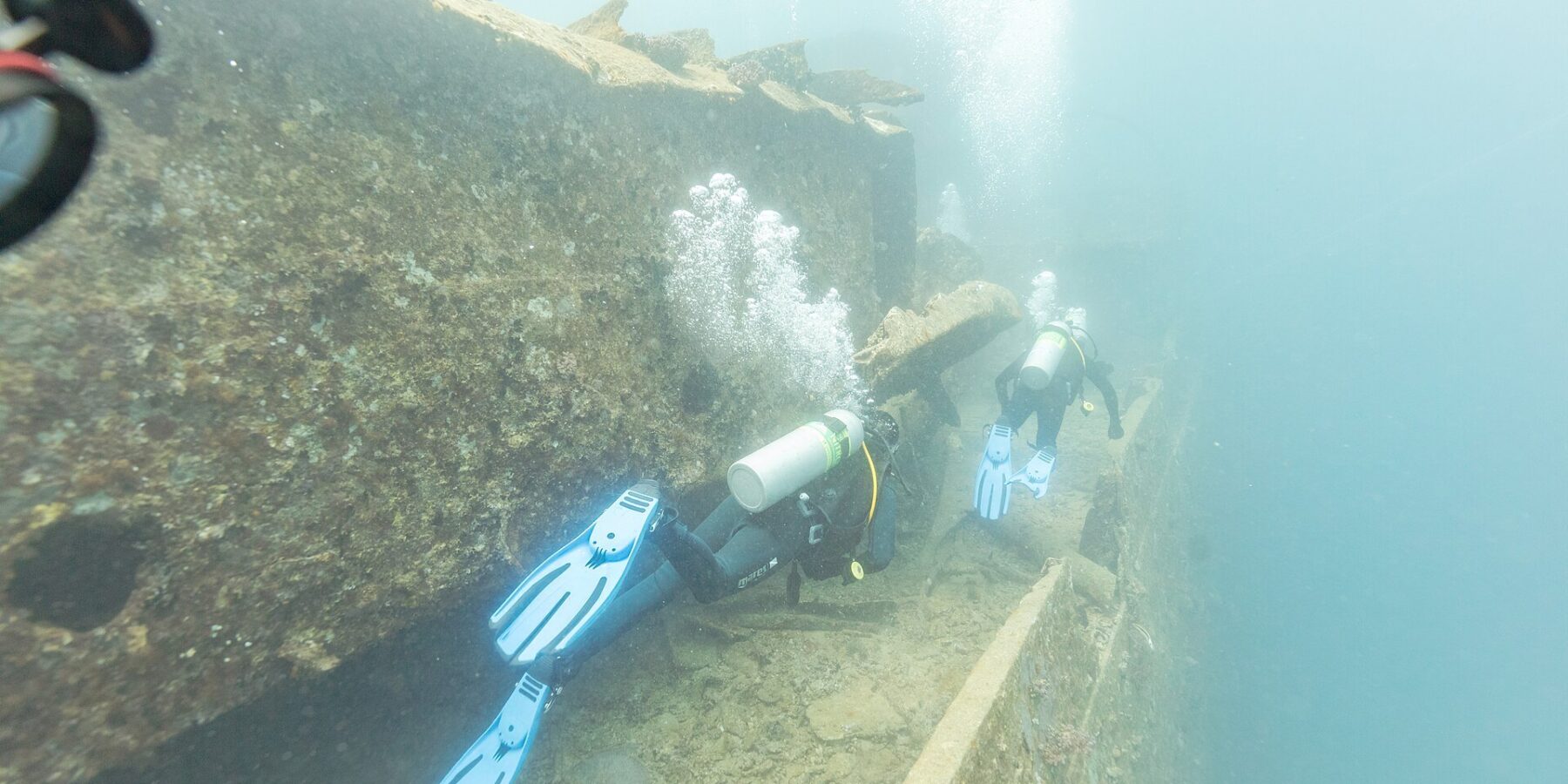
The Thistlegorm is a British cargo ship sunk in October 1941 with its trucks, motorcycles and locomotives; it sits almost upright in 30 meters of water in the northern Red Sea. It is one of the most famous wrecks in the world, and you can dive it on a day trip from Sharm el-Sheikh.
Why dive the Thistlegorm?
- One of the most famous wrecks in the world, with its 1941 cargo still in place
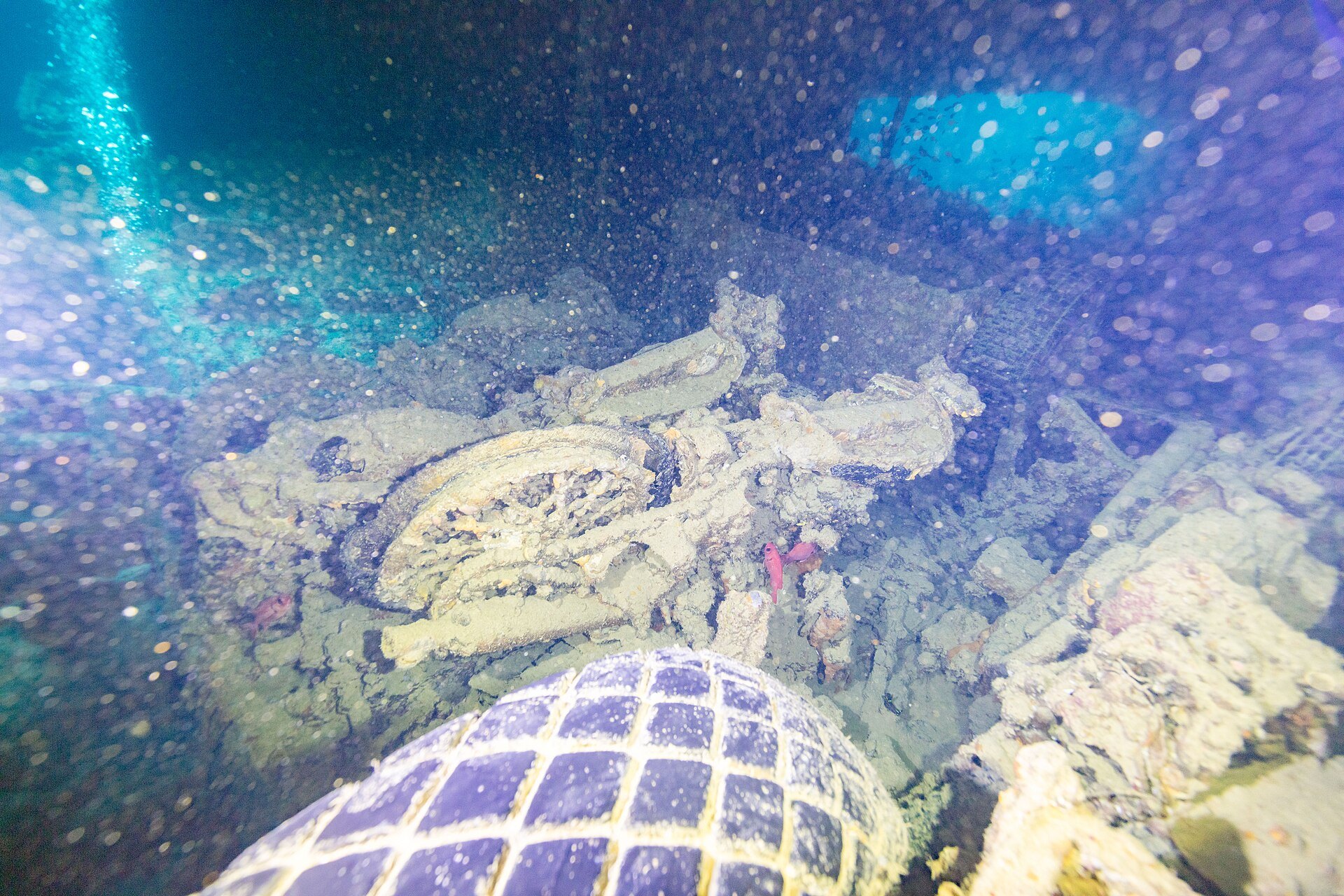
- BSA and Norton motorcycles, Bedford trucks and rifle crates in the forward holds
- Two steam locomotives lying on the sand, on either side of the hull
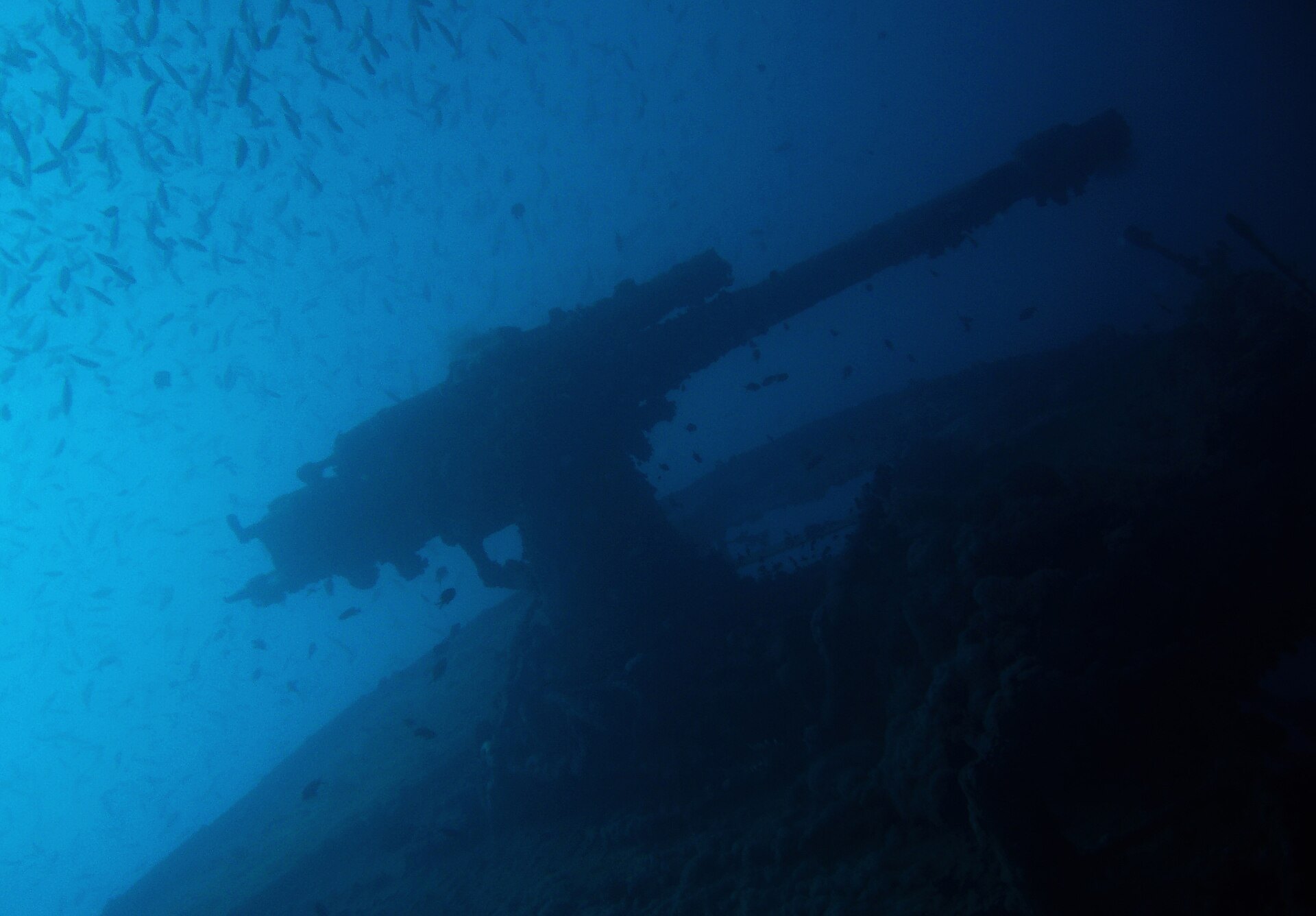
- The stern gun and the blast zone, at the back
- Schools of barracudas, batfish and anthias around the structure
The dive site on the map
Base: Sharm el-Sheikh, 42 km as the crow flies.
See nearby dive sites on the mapThe Thistlegorm in pictures
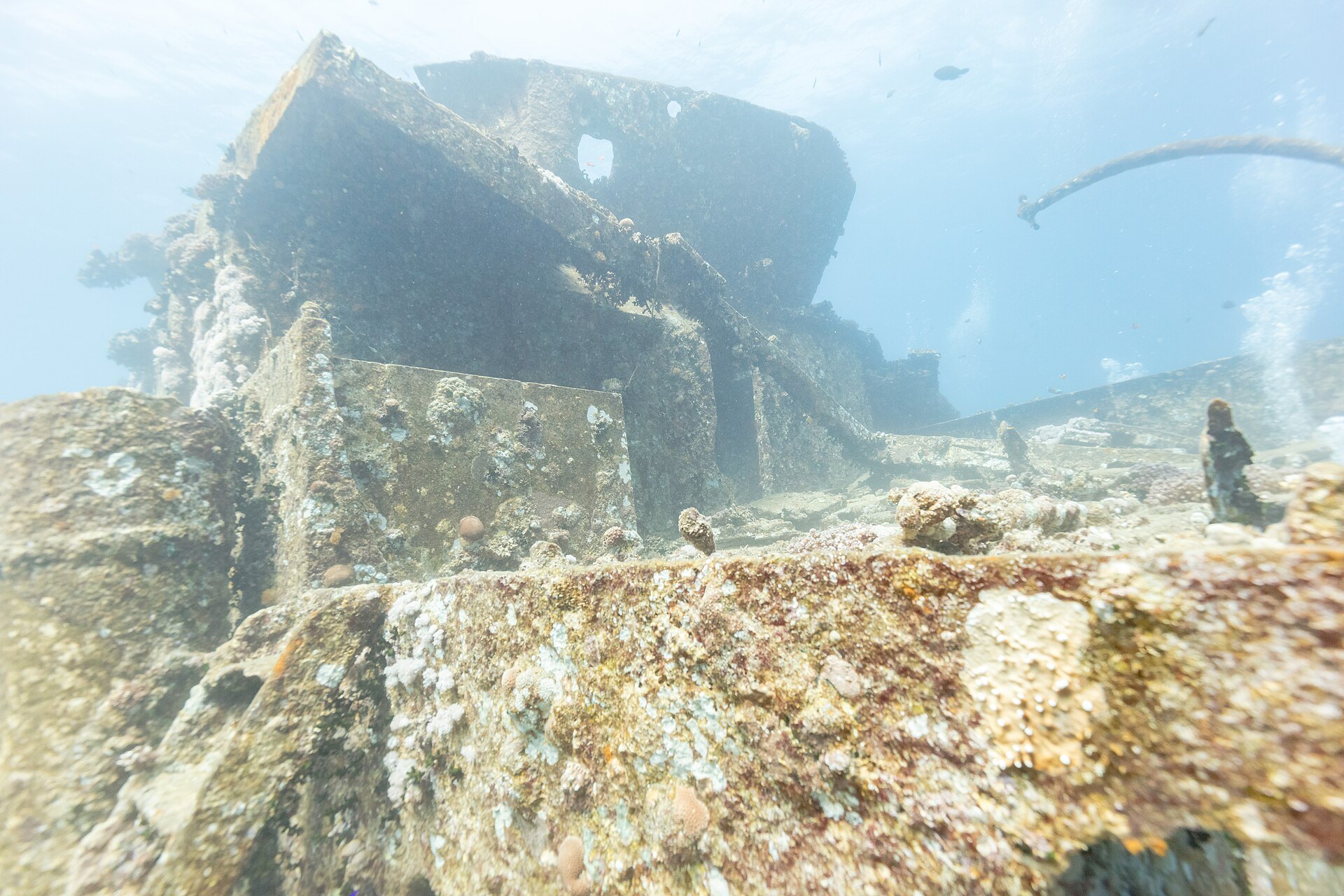
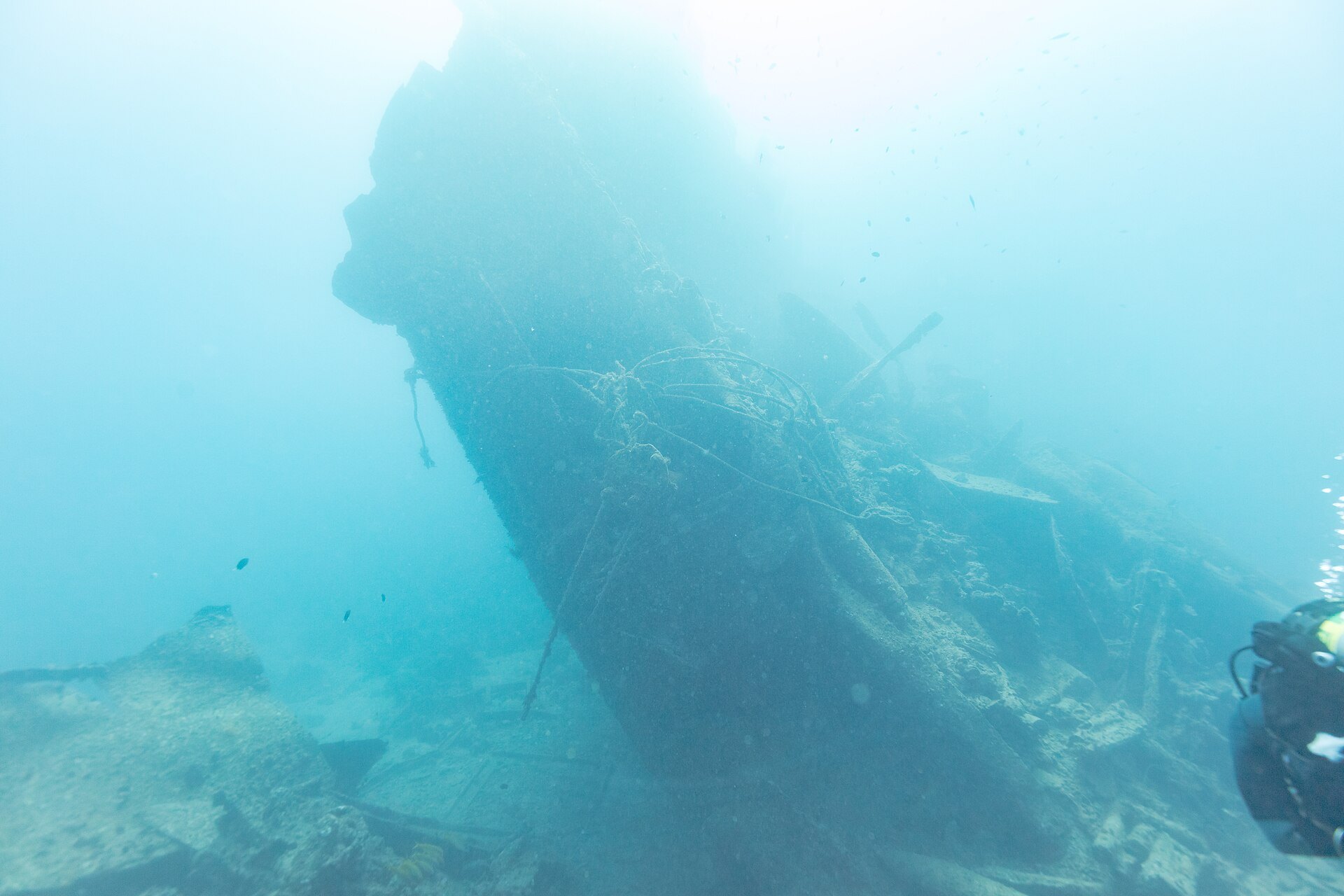
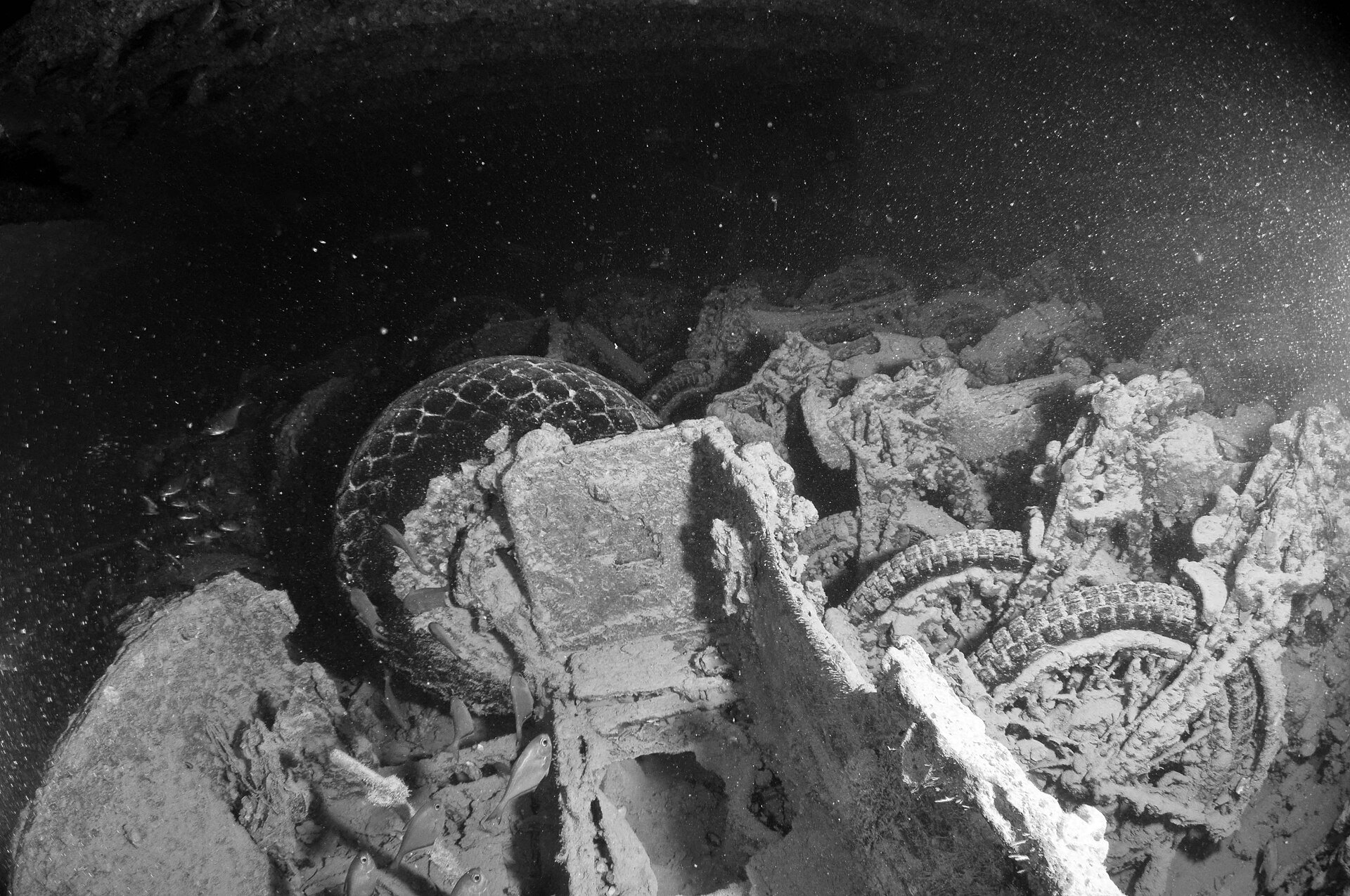
What will you see at the Thistlegorm?
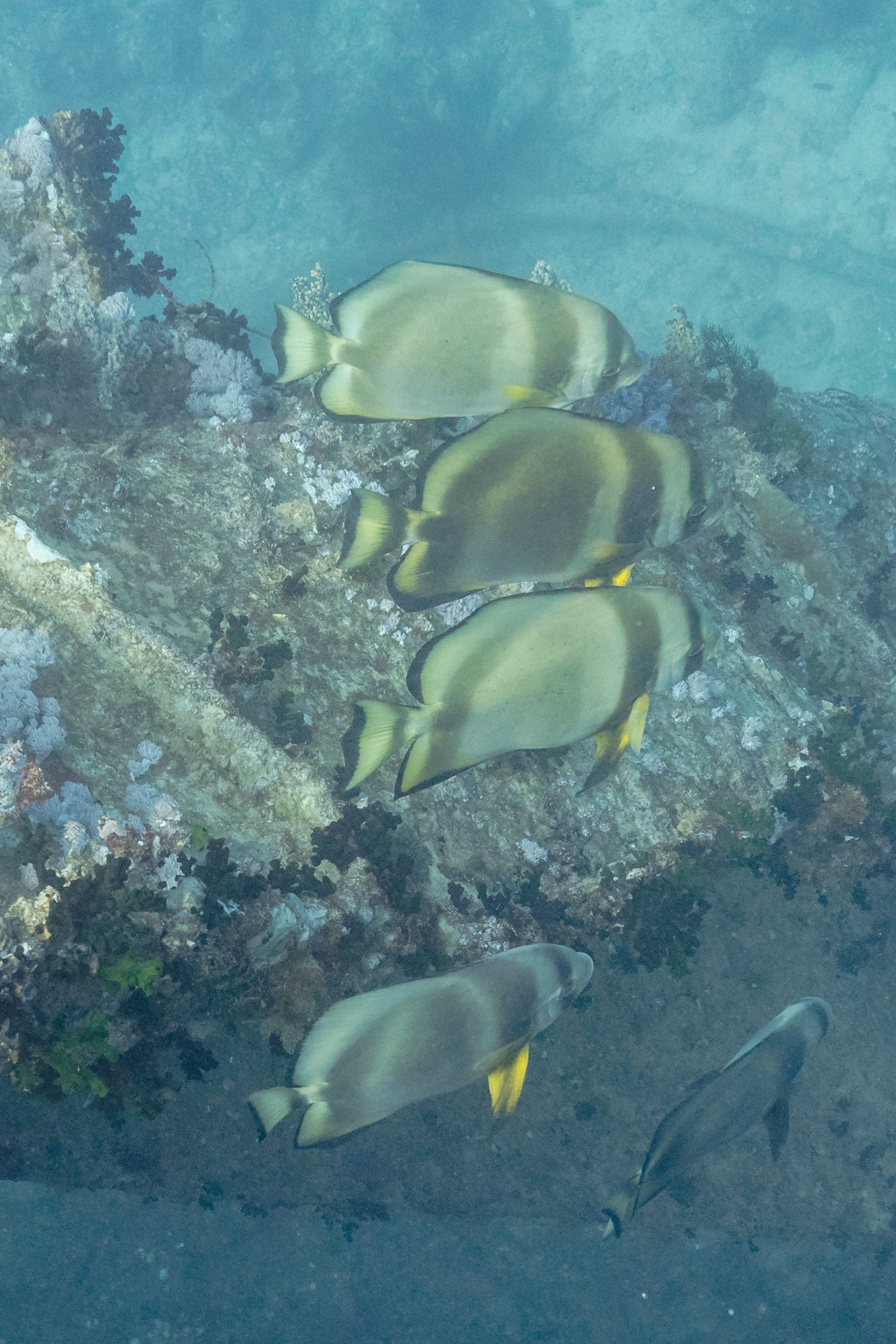
In eighty years, the cargo ship has become a 126 meter artificial reef. Schools of barracudas, batfish and anthias circle the structure; morays, lionfish, stonefish, crocodilefish and scorpionfish sit on the plates and in the holds; glassfish fill the passageways. On every crate of cargo, nudibranchs, crabs and shrimp wait for macro photographers. Tuna pass in the blue, and turtles graze on the deck.
| Species | J | F | M | A | M | J | J | A | S | O | N | D | Note |
|---|---|---|---|---|---|---|---|---|---|---|---|---|---|
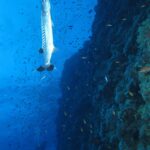 Great barracuda | possible | possible | possible | peak season | peak season | peak season | peak season | peak season | peak season | peak season | peak season | possible | schooling above the bridge, densest from April to November |
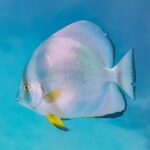 Orbicular batfish | peak season | peak season | peak season | peak season | peak season | peak season | peak season | peak season | peak season | peak season | peak season | peak season | resident, along the deck and around the stern |
 Green turtle | possible | possible | possible | possible | possible | possible | possible | possible | possible | possible | possible | possible | passing through, grazing on the deck |
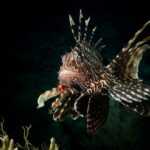 Lionfish | peak season | peak season | peak season | peak season | peak season | peak season | peak season | peak season | peak season | peak season | peak season | peak season | in the shade of the holds and passageways |
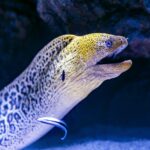 Giant moray | peak season | peak season | peak season | peak season | peak season | peak season | peak season | peak season | peak season | peak season | peak season | peak season | in the plates and among the cargo crates |
 Glassfish | peak season | peak season | peak season | peak season | peak season | peak season | peak season | peak season | peak season | peak season | peak season | peak season | they fill the passageways and hold 2 |
| Tuna | possible | possible | possible | possible | possible | possible | possible | possible | peak season | peak season | peak season | possible | in the blue off the stern, mostly from September to November |
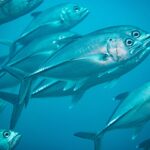 Bigeye trevally | possible | possible | possible | possible | possible | possible | possible | possible | peak season | peak season | peak season | possible | in the blue off the stern, mostly from September to November |
peak seasonpossiblerare
What is diving like at the Thistlegorm?
The main deck is at 18 meters and the sand at 32: both dives happen between 18 and 30 meters, usually on Nitrox to gain bottom time. Current is the real issue: it sometimes tops two knots and turns between the two dives, hence the descent and ascent along the mooring line. In the holds, silt kicked up by fins quickly cuts visibility. Dive centers require Advanced Open Water and twenty dives; entering the holds requires wreck training, a light and a backup light.
When to dive the Thistlegorm?
idealgoodnot recommended
The wreck is dived all year, but the day trip depends on the sea: from April to November, the crossing from Sharm el-Sheikh is calm; from December to February, swell regularly cancels departures, and a liveaboard becomes the surest way to get there. The water drops to 22°C in February and rises to 29°C in August. Visibility changes little with the seasons: 15 to 25 meters all year.
How to get to the Thistlegorm?
There are two ways in. From Sharm el-Sheikh, a five-hour flight from Paris, there is the day trip: hotel pickup around 3 a.m., three hours at sea, two dives, back in the late afternoon, two or three times a week. It is paid on top of two package dives: €140 at Emperor Divers, 12-liter Nitrox included, €145 at Circle Divers, €175 at Reef Oasis. From Hurghada, the "north" dive liveaboard, three days to a week long, links Abu Nuhas, the Rosalie Moller and Ras Mohammed, with three or four dives on the wreck, at dawn and dusk, away from the day boats.
Either way, the full visa at US$25 is mandatory: the free "Sinai only" stamp at Sharm airport does not cover this trip. You can get it on arrival or online on the official portal visa2egypt.gov.eg.
Stay in Sharm el-Sheikh
Where to find a dive guide in the Thistlegorm?
Guided tours you can book online, ranked by number of reviews. These are affiliate links: if you book, you support us at no extra cost.

 Viator
Discover Scuba Diving
5.0 (1,861 reviews)View and book Viator
Open Water Diver Course
5.0 (280 reviews)View and book Viator
Discover Scuba Diving Sharm El Sheikh
4.8 (235 reviews)View and book Viator
PADI Scuba Diver (PSD)
5.0 (189 reviews)View and book Viator
Introduction: Diving in Sharm El Sheikh 15 minutes underwater
5.0 (125 reviews)View and book Viator
Advanced Open Water Diver Course
5.0 (88 reviews)View and bookWhere to stay near the Thistlegorm?
Hotels, apartments and rooms around Sharm el-Sheikh, with current prices.
Which hotels to choose near the Thistlegorm?
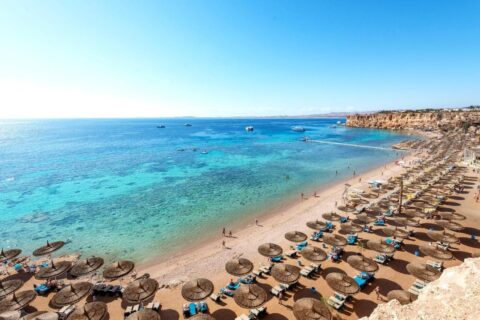
 Egypt
Reef Oasis Beach Resort
Northern Red Sea, Egypt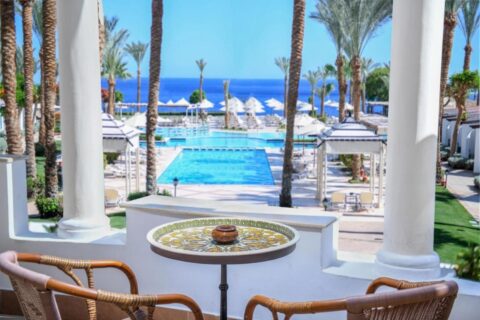 Egypt
JAZ Fanara Resort
Northern Red Sea, Egypt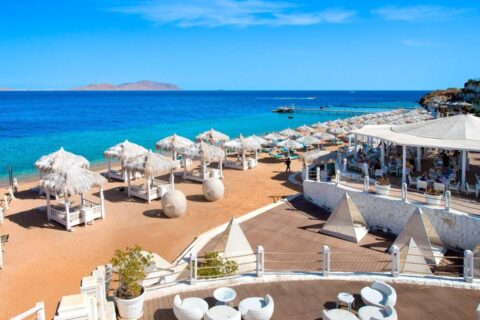 Egypt
Sunrise Arabian Beach Resort
Northern Red Sea, Egypt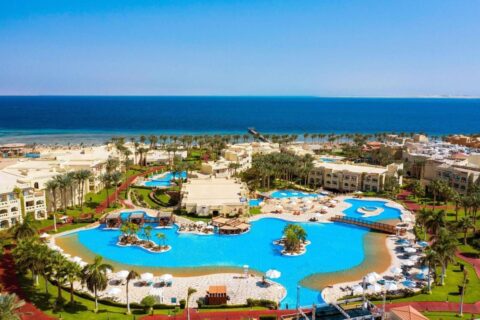 Egypt
Rixos Sharm El Sheikh
Northern Red Sea, EgyptHow did the Thistlegorm sink in October 1941?
The Thistlegorm is a 126 meter British cargo ship, launched in Sunderland in April 1940 for the Albyn Line. On her fourth voyage, leaving Glasgow on June 2, 1941, with supplies for British forces in Egypt, she sailed around Africa via Cape Town, then waited at anchor in the area known as "Safe Anchorage F" near Sha'ab Ali for her turn to pass through the Suez Canal, blocked by a collision.
On the night of October 6, 1941, at 1:30 a.m., two Heinkel He 111 bombers flying from Crete spotted her. Two bombs hit hold 4, the ammunition exploded, and the ship broke apart and sank. Nine men died, four sailors and five gunners; the survivors were picked up by the cruiser HMS Carlisle, anchored nearby.
Jacques-Yves Cousteau found the wreck in the early 1950s with help from local fishermen. He brought up the bell, the captain's safe and a motorcycle, showed it in the February 1956 issue of National Geographic and filmed it for The Silent World. The site then fell back into obscurity until the early 1990s, when Sharm el-Sheikh became a dive resort.
What can you see on the Thistlegorm wreck?
The wreck sits almost upright on the sand, at 30 to 32 meters, with the main deck at about 18 meters. The bow section is intact: holds 1 and 2 shelter BSA and Norton motorcycles lined up in rows, Bedford trucks, rifle crates, rubber boots, aircraft wings and engines. Tracked Bren carriers and railcars are still recognizable.
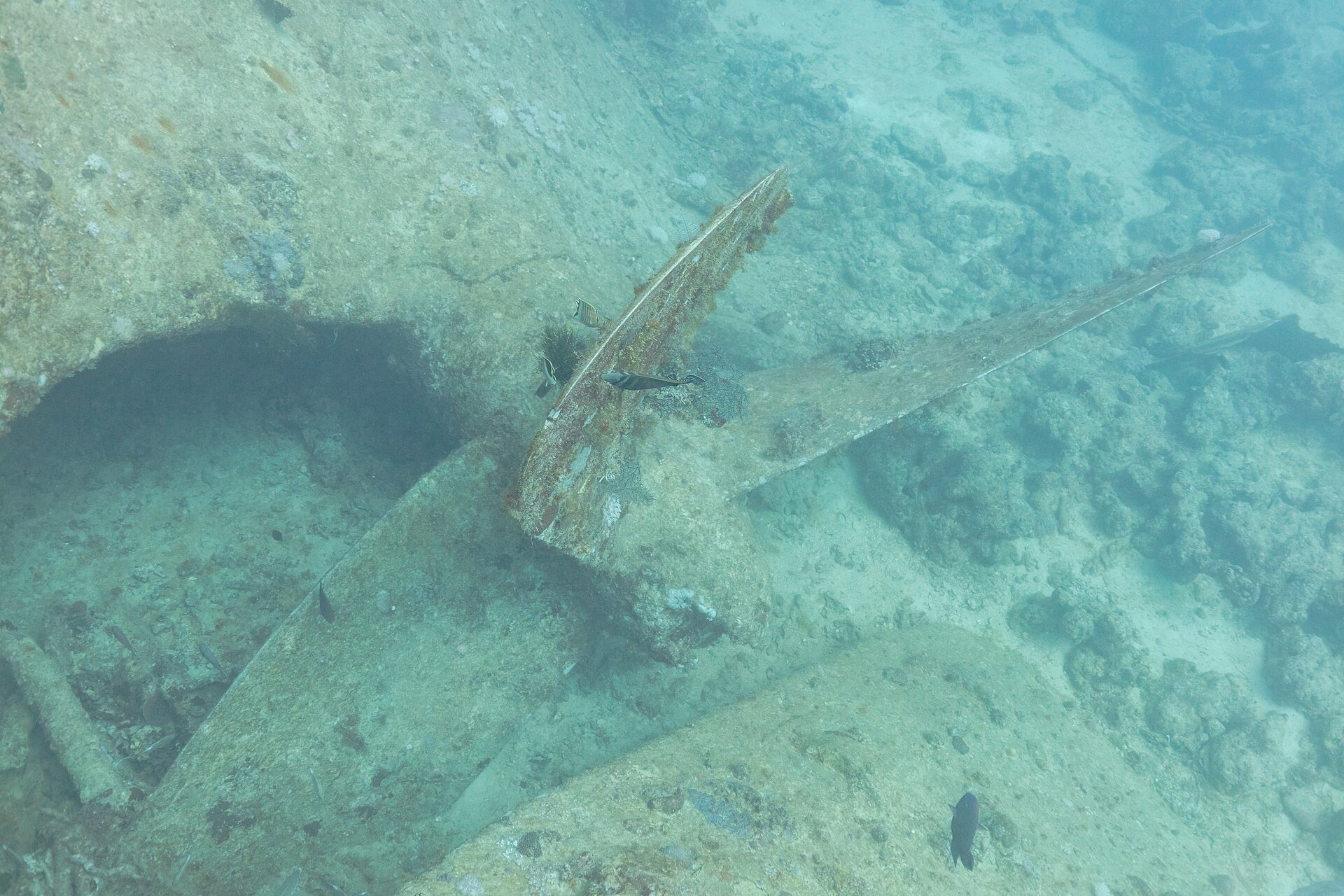
At the back, the explosion ripped the ship open: the stern lies broken, twisted away from the hull, its gun still pointing upward. The two steam locomotives, carried on deck, were thrown to either side of the wreck and can be visited on the sand. The propeller stayed in place.
Schools of barracudas, batfish and anthias circle the structure; tuna, morays, lionfish, stonefish, crocodilefish and turtles also frequent the wreck.
What are the two Thistlegorm dives like?
The first dive goes around the outside, between 18 and 30 meters: the bridge, the guns, the locomotives on the sand, the propeller. The second goes into the holds, between 25 and 30 meters, for wreck-trained divers with a guide: that is where the motorcycles, trucks and rifle crates are. Photographers come back three or four times on a liveaboard, for the morning light on the deck and hold 2 with nobody in it.
Why is the Thistlegorm protected as a war grave?
Nine men died here. The wreck is protected by Egyptian antiquities law: nothing comes up, not even a shell casing. Boats tie up directly to the structure, for lack of lasting moorings: the thirty-two buoys laid in late 2007 had vanished two years later. Every fin kick in a hold, every hand on a plate wears down a ship that has been rusting for more than eighty years.
The Thistlegorm Project, led by the University of Nottingham with Ain Shams and Alexandria universities, produced the first complete photogrammetric survey of the wreck in 2017: it is the benchmark for measuring what the wreck loses each year.
Our tip
Book the trip early in your stay: it leaves around 3 a.m. and gets postponed when the sea is rough. Get the full visa at the airport, as the free Sinai stamp does not cover this trip. Dive on Nitrox, with a light for hold 2.
Other dive sites nearby
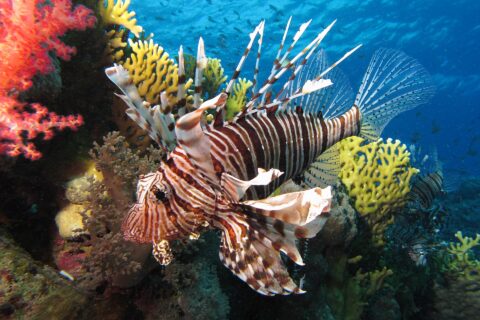 EgyptWreck
Dunraven wreck
Northern Red Sea, Egypt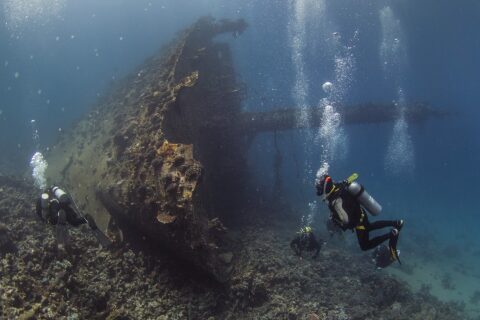 EgyptReef
Abu Nuhas wrecks
Central Red Sea, Egypt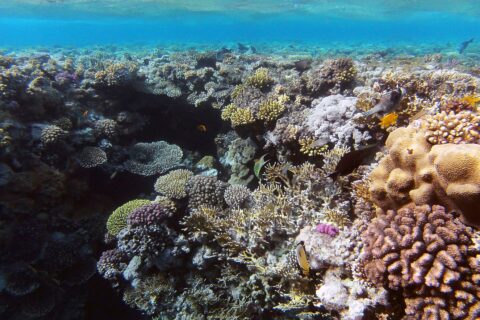 EgyptReef