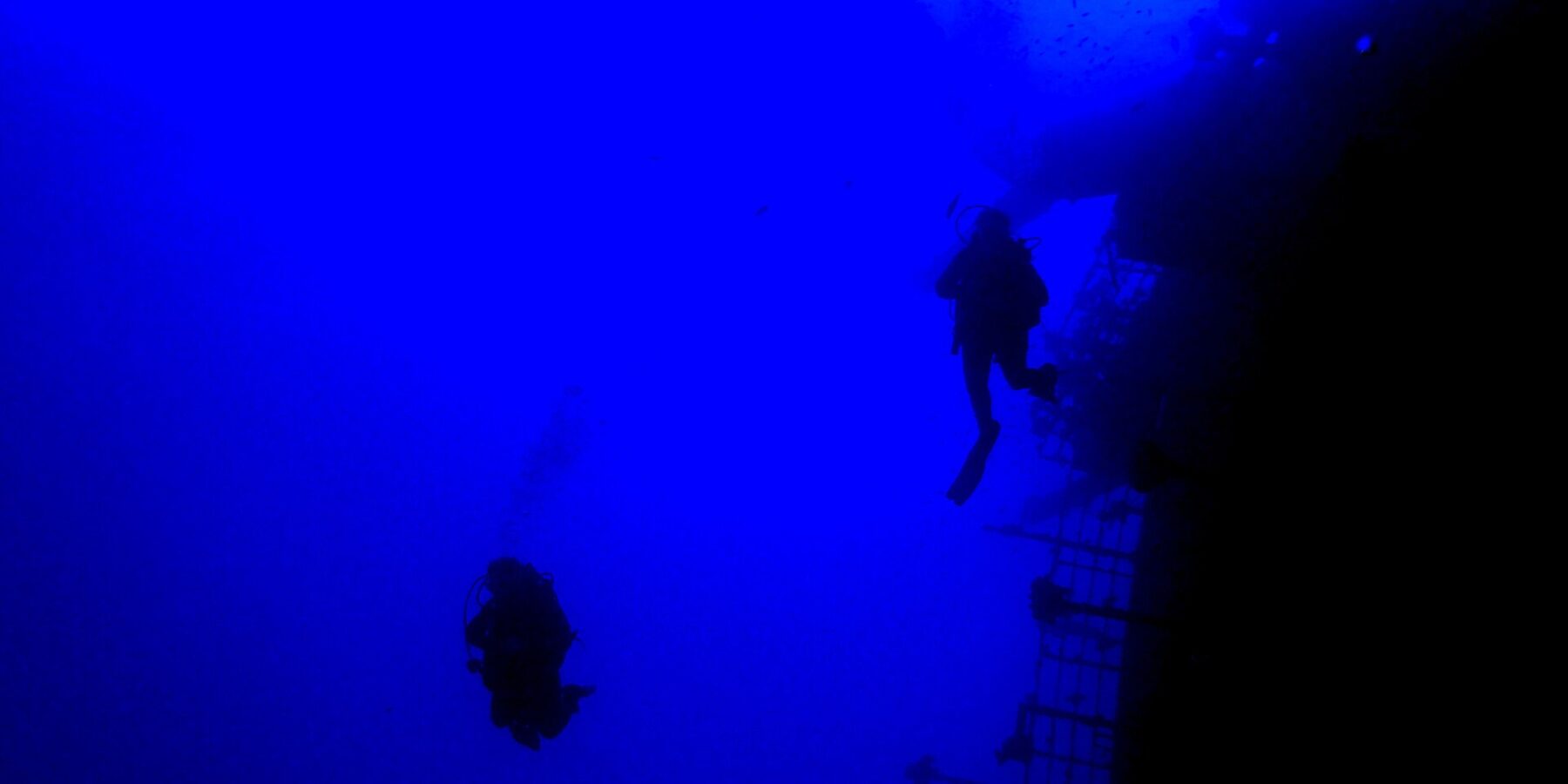
The Salem Express is a 115 meter ferry that struck a reef off Safaga on the night of December 14 to 15, 1991, with hundreds of pilgrims on board. It lies on its side between 7 and 32 meters. The wreck is intact and deeply moving, and you dive it with respect.
Why dive the Salem Express?
- An almost intact 115 meter ferry, lying on its port side between 7 and 32 meters
- The bow doors, the funnels marked with an S, the lifeboats lying on the sand
- A recent wreck, lightly encrusted, where everything is recognizable: decks, davits, railings
- Glassfish by the thousands under the decks, groupers in the lifeboats
- A dive that stays with you, best done with a guide who tells its story
What will you see at the Salem Express?
Thirty-five years underwater is not long for a wreck: the Salem Express is still bare in places, and that is what makes it so easy to read. Soft corals have started to dress the railings, davits and funnels, and macro here means nudibranchs. Under the decks and in the open passageways, glassfish form clouds that lionfish swim through; groupers have taken over the lifeboats lying on the sand, and morays the plates. Along the starboard side, which faces the surface, trevallies and batfish pass by, and Hyndman Reef, right next door, adds its butterflyfish and passing turtles.
| Species | J | F | M | A | M | J | J | A | S | O | N | D | Note |
|---|---|---|---|---|---|---|---|---|---|---|---|---|---|
 Glassfish | peak season | peak season | peak season | peak season | peak season | peak season | peak season | peak season | peak season | peak season | peak season | peak season | in clouds under the decks and in the open passageways |
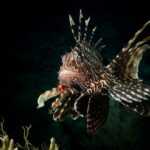 Lionfish | peak season | peak season | peak season | peak season | peak season | peak season | peak season | peak season | peak season | peak season | peak season | peak season | in the shade of the superstructure |
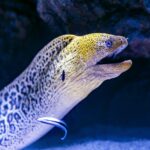 Giant moray | peak season | peak season | peak season | peak season | peak season | peak season | peak season | peak season | peak season | peak season | peak season | peak season | in the plates and the davits |
| Groupers | peak season | peak season | peak season | peak season | peak season | peak season | peak season | peak season | peak season | peak season | peak season | peak season | under the lifeboats lying on the sand |
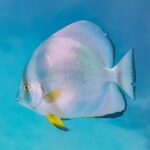 Orbicular batfish | possible | possible | possible | possible | possible | possible | possible | possible | possible | possible | possible | possible | above the funnels |
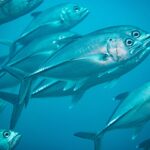 Bigeye trevally | possible | possible | possible | possible | possible | possible | possible | possible | possible | possible | possible | possible | hunting along the starboard side, toward the surface |
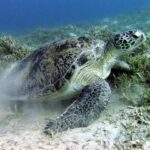 Green turtle | possible | possible | possible | possible | possible | possible | possible | possible | possible | possible | possible | possible | passing on Hyndman Reef, next door |
| Soft corals | peak season | peak season | peak season | peak season | peak season | peak season | peak season | peak season | peak season | peak season | peak season | peak season | on the railings and davits, for macro |
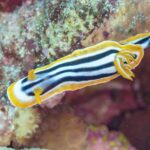 Nudibranchs | peak season | peak season | peak season | peak season | peak season | peak season | peak season | peak season | peak season | peak season | peak season | peak season | on the railings and davits, for macro |
peak seasonpossiblerare
What is diving like at the Salem Express?
The ferry lies on its port side, its starboard hull a few meters below the surface, the propeller and rudder at 32 meters. Most of the dive happens between 12 and 30 meters, along a deck that now stands vertical: you descend onto the stern, follow the decks and lifeboats, pass the two funnels and finish at the bow doors, around 12 to 18 meters. The current is weak, visibility 15 to 25 meters, and the layout is easy to read: technically it is an easy wreck, demanding for the depth of its lowest parts and for the respect it calls for. Advanced at minimum; entries are limited to the open areas the guide points out.
When to dive the Salem Express?
idealgoodnot recommended
The wreck is sheltered in Safaga Bay and dived all year; visibility, 15 to 25 meters, depends more on plankton and wind than on the season. The water drops to 22°C in February and March, when a 5 mm wetsuit is welcome, and rises to 29°C in August. The north wind in winter lengthens the crossing from Hurghada more than it stops trips from Safaga, which is much closer.
How to get to the Salem Express?
The wreck lies off Safaga, fifty kilometers south of Hurghada, on Hyndman Reef, an hour and a half by boat. Dive centers in Safaga and Soma Bay go there on day trips: at Shams Safaga, the wreck is an €11 extra on the €58 boat day. You can also go from Hurghada, with a longer ride: at Red Sea Life, the day costs €130 to €190 depending on the departure port. Liveaboards heading south or cruising around Safaga often schedule a dive on the way. Hurghada airport is 45 minutes by road from Safaga; the full visa, US$25, is mandatory.
Stay in Safaga
Where to find a dive guide in the Salem Express?
Guided tours you can book online, ranked by number of reviews. These are affiliate links: if you book, you support us at no extra cost.

 Viator
Magic Red Sea Discovery - Discover Scuba Diving Marsa Alam
5.0 (13 reviews)View and book Viator
Scuba Diving in Hurghada _ 2 Stops Dive With Equipments & Lunch
4.9 (12 reviews)View and book Viator
Intro Diving 2 Stops For Beginners, Cruise With Lunch - Hurghada
5.0 (10 reviews)View and book Viator
Red Sea Open Water Diver Course in Marsa Alam
5.0 (10 reviews)View and bookWhere to stay near the Salem Express?
Hotels, apartments and rooms around Safaga, with current prices.
Which hotels to choose near the Salem Express?
How did the Fred Scamaroni become the Salem Express?
The ship was born in 1965 at the La Seyne-sur-Mer shipyards as the Fred Scamaroni, named after a Corsican Resistance fighter killed in World War II, for the Marseille to Ajaccio route. She was a roll-on roll-off ferry 115 meters long and 18 wide, with bow doors for vehicles and two funnels. Sold and renamed Salem Express, she ended her career in the Red Sea on the route between Safaga and Jeddah, in Saudi Arabia, carrying workers and pilgrims.
What happened to the Salem Express on December 14, 1991?
On December 14, 1991, the Salem Express was sailing back from Jeddah to Safaga, packed with pilgrims returning from Mecca, far beyond her official capacity. Rather than rounding Panorama Reef to the north, the long and safe route, the captain took a shortcut between Hyndman Reef and the coast. Shortly before midnight, the ship drifted about a kilometer off course; at 11:13 p.m., she struck the reef. The breach opened the hull, the bow doors gave way, water flooded the car deck and the ferry went down in a few minutes, a few kilometers from port. The official toll is 464 dead; the real number of victims is very likely over a thousand. It is one of the worst maritime disasters in Egypt's modern history.
Is it right to dive the Salem Express?
The question comes up before you book, and everyone answers it for themselves. Victims still lie inside the ship: after the first dives, some of the decks were welded shut to close off the interior spaces, and penetration is now limited to the open areas. Serious dive centers present the site as a memorial, tell the story of the sinking before you get in the water, and forbid any photo of human remains as well as taking anything. On those terms, the dive is possible and dignified; it is nothing like an attraction.
How do you dive the Salem Express wreck?
The ferry lies on its port side, almost intact. You descend onto the stern, where the propeller and rudder stand at 32 meters, then work your way up along the decks, now vertical: the empty davits, the lifeboats fallen onto the sand where groupers hide, the railings dressed in soft corals, the two funnels marked with the company's S. At the bow, the car deck doors, torn open by the impact, and the ripped plates tell the story of the sinking. Under the decks, glassfish, lionfish and morays have moved into the passageways. Two dives are enough to see it all; most divers surface without a word.
Our tip
Choose a dive center that tells the story of the sinking before the dive and refuses penetration outside the permitted areas. Start with the stern, at 30 meters, then save the bow, at 12 to 18 meters, for the second dive. Take a light and fin smoothly, because the silt rises fast.
Other dive sites nearby
 EgyptReef
Panorama Reef
Central Red Sea, Egypt EgyptReef
Giftun Islands
Central Red Sea, Egypt EgyptPelagic