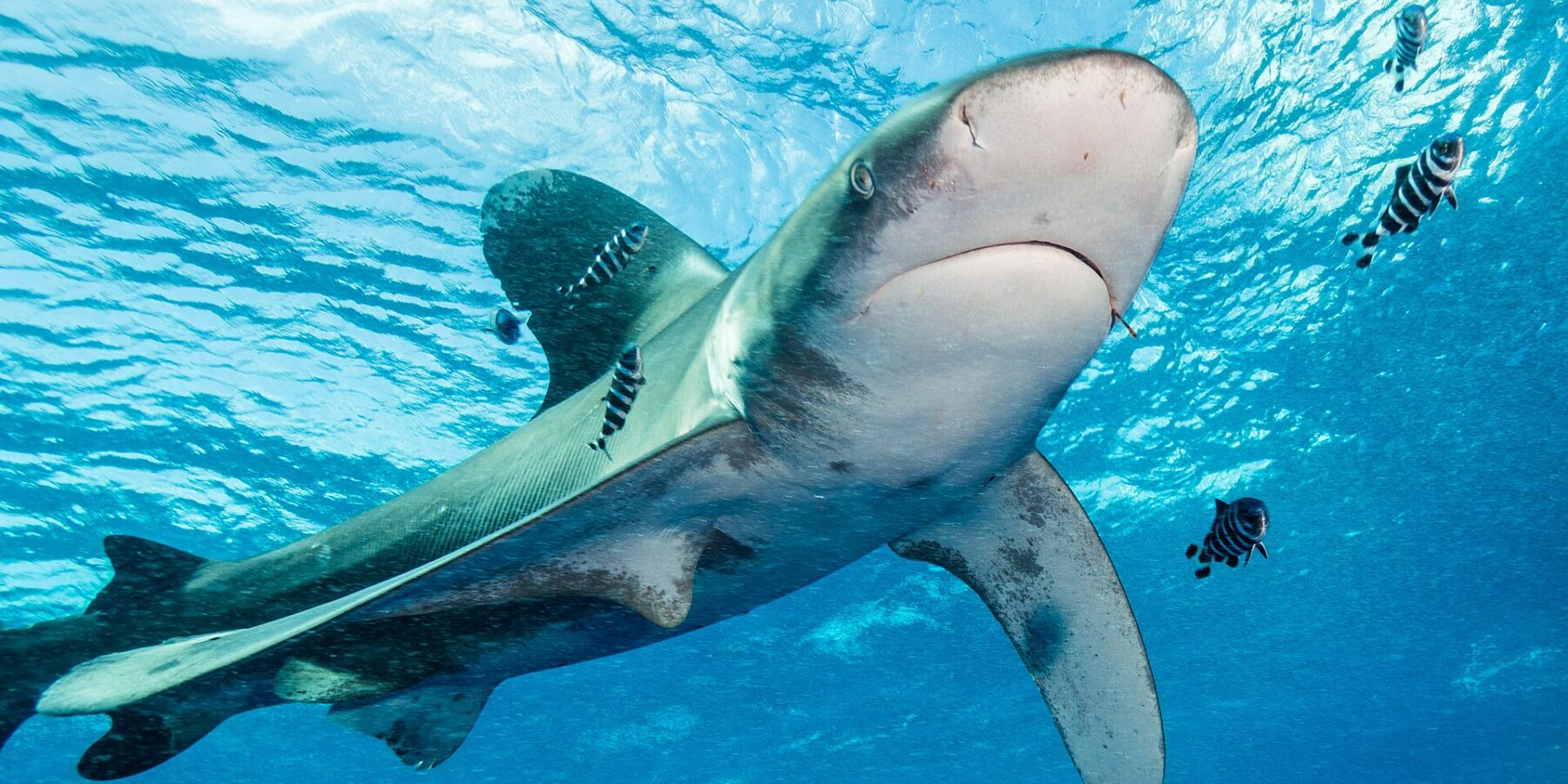
The oceanic whitetip shark circles under the hulls of moored boats, at the surface. Look for it on the isolated reefs of the southern Red Sea, at Elphinstone, the Brothers and Daedalus. October and November are peak season, and it often passes a few meters from you during the safety stop.
Where to dive to see the oceanic whitetip shark?
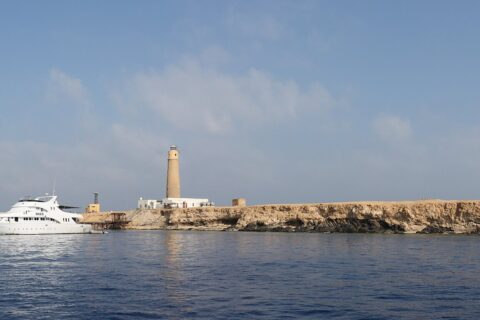
 EgyptPelagic
Brothers Islands
Southern Red Sea, EgyptPeak season from September to November: under the moored boats, from September to November
 EgyptPelagic
Daedalus Reef
Southern Red Sea, EgyptPeak season from September to November: under the moored boats, from September to November
 EgyptPelagic
Elphinstone Reef
Southern Red Sea, EgyptPeak season from October to December: under the boats and over the plateaus, mostly October to December, still around until April
How do you identify an oceanic whitetip shark?
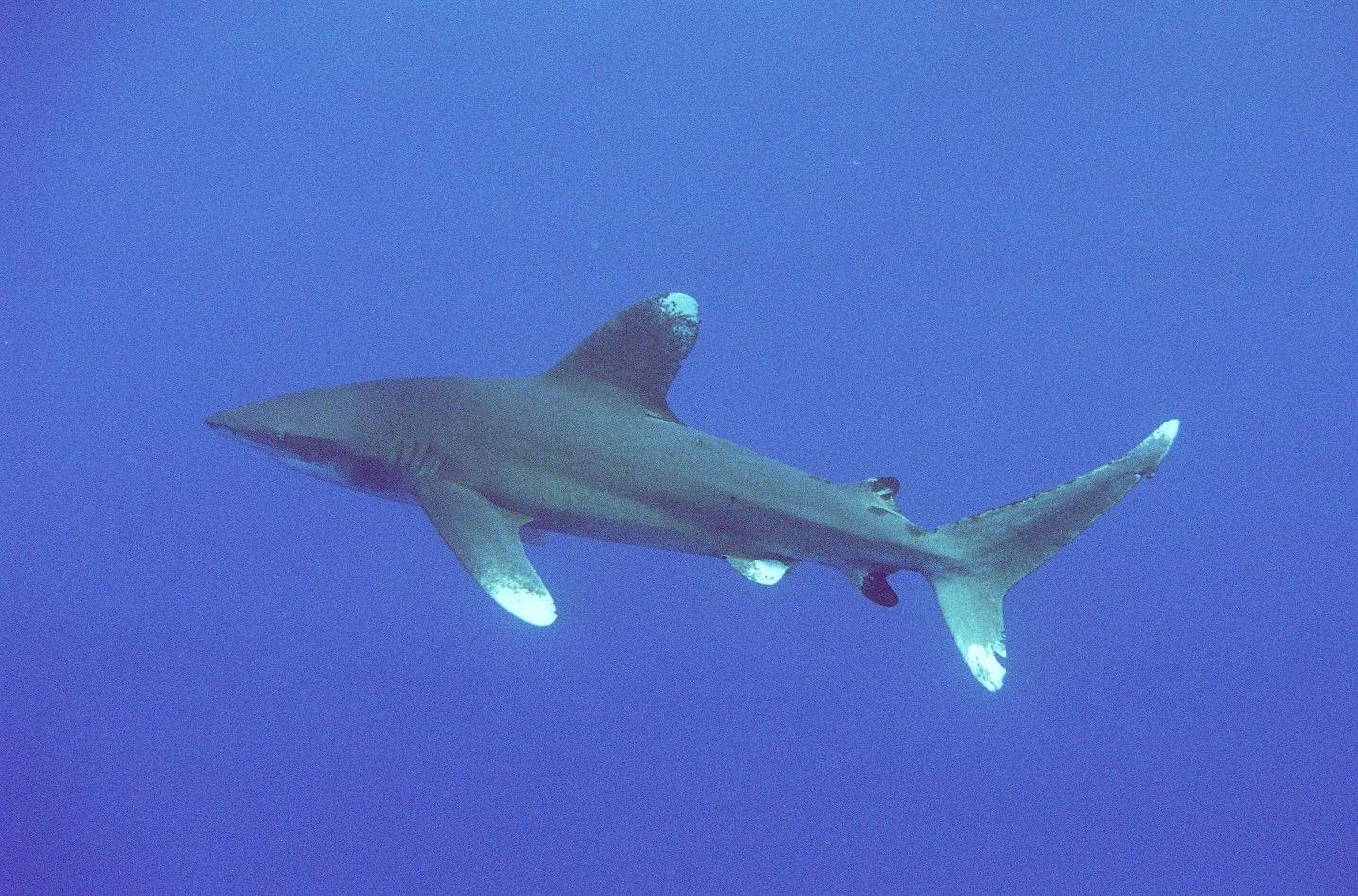
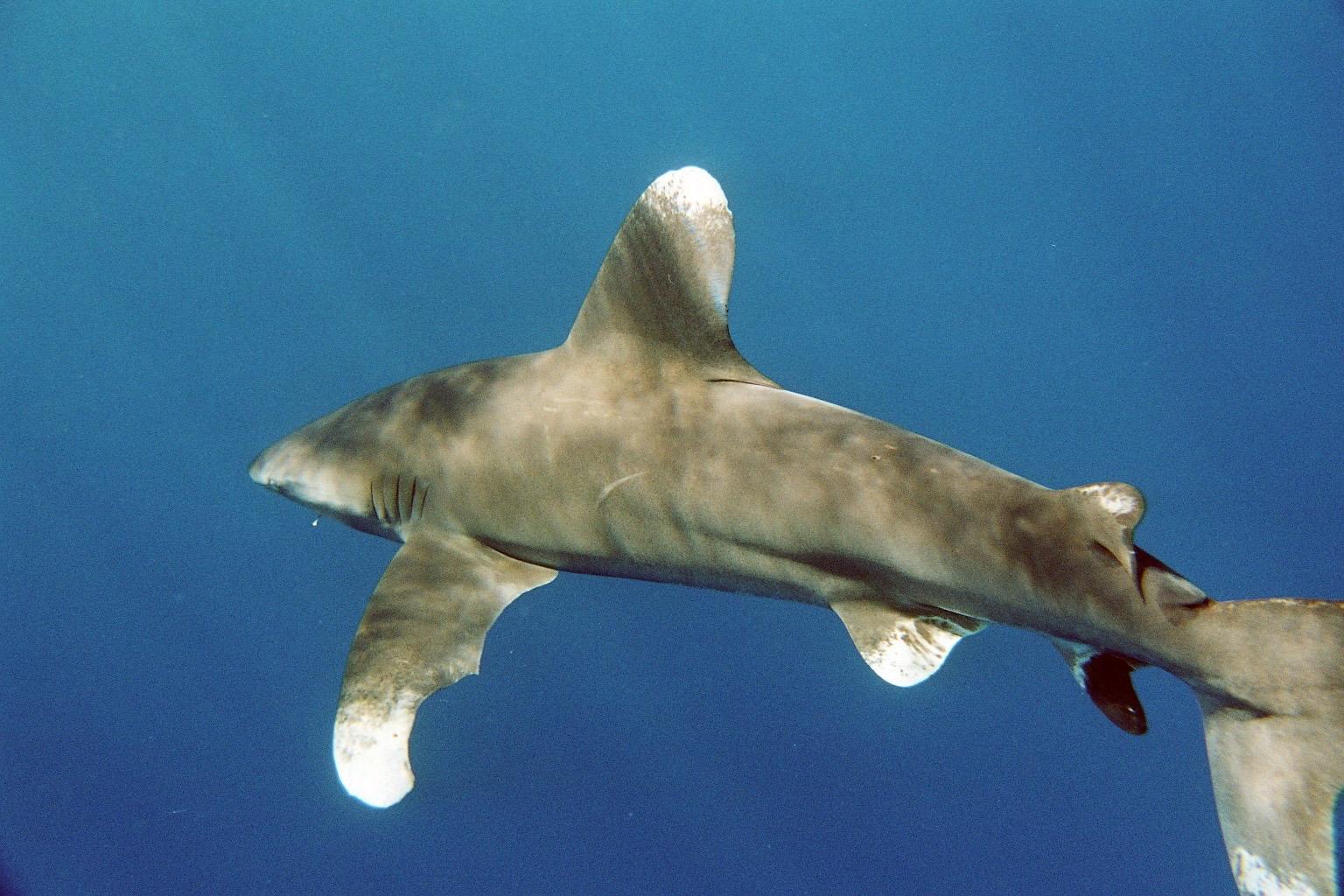
The oceanic whitetip shark is a large, stocky shark that rarely exceeds three meters in length. Its pectoral fins and first dorsal fin are much longer and broader than those of other sharks, clearly rounded, and their tips are white, sometimes mottled: they give it away at first glance, even from a distance. The back is gray-brown, the belly white, the snout short and rounded. It swims slowly, in circles, often escorted by pilot fish.
Oceanic whitetip shark in pictures
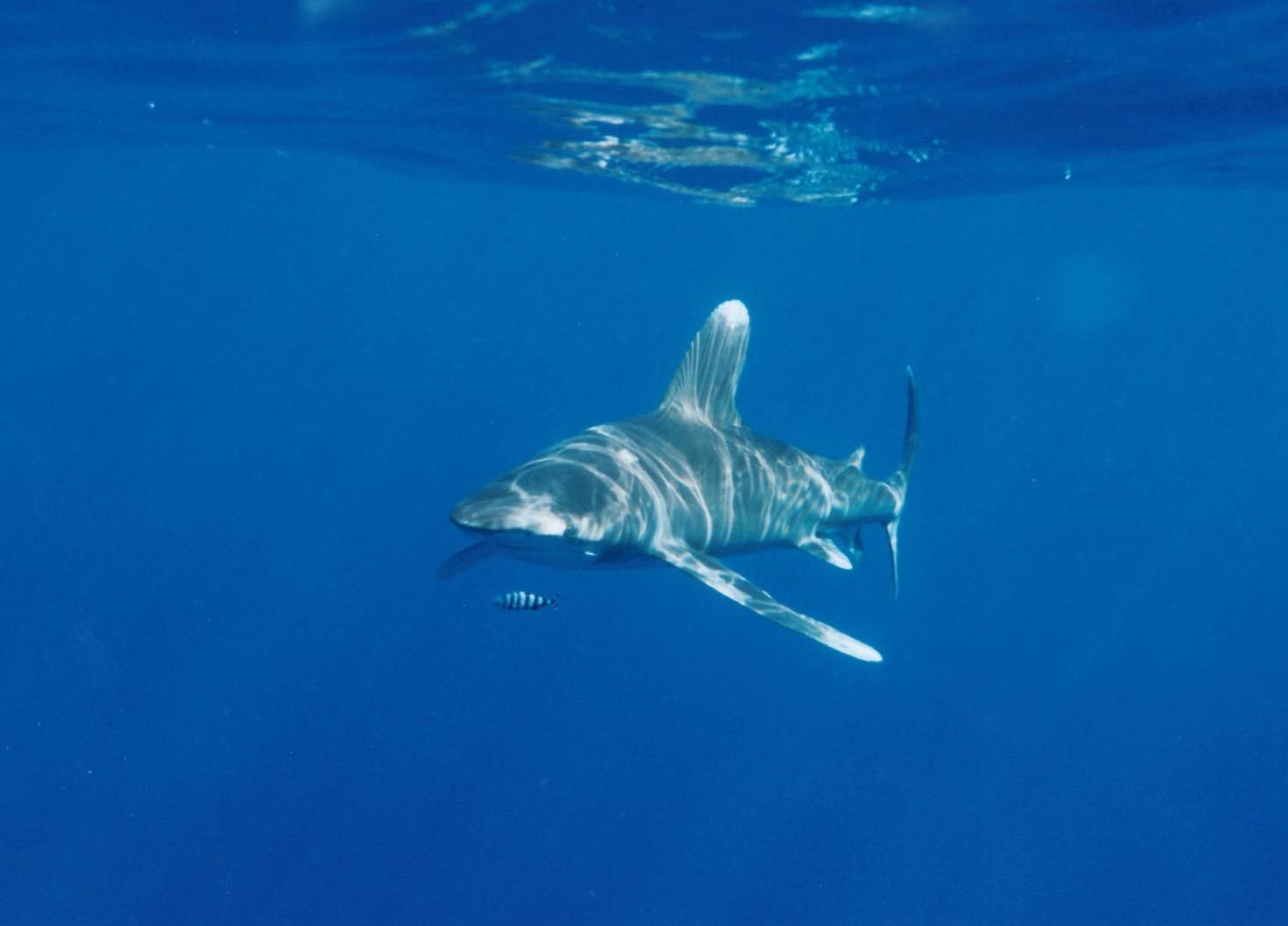
How does the oceanic whitetip shark live?
It is an offshore shark that lives in the deep waters of tropical oceans and in the warm zones of temperate oceans, far from the coast. Solitary and slow, it feeds mainly on cephalopods and bony fish, and it dominates feeding frenzies when several species compete for prey. It has a bad reputation among survivors of shipwrecks and plane crashes, but attacks in swimming waters are rare, because it doesn't go there. Its population is falling sharply, because of the demand for fins and fishing pressure across its whole food chain: the species is listed as Vulnerable globally, and Critically Endangered in the northwest and western central Atlantic.
Where and when can you see oceanic whitetip sharks?
In the Red Sea, the oceanic whitetip is seen on the isolated reefs of the south, where the wall drops straight into the blue. Elphinstone has the longest season: it is there mostly from October to December, and still possible until April. At the Brothers and Daedalus, its season runs from September to November.
Don't look for it on the bottom. It rises toward moored boats and circles under the hulls, at the surface. You will see it most often during the safety stop, when it passes a few meters away. Fall liveaboards are made for it: in October and November, it is peak season on all these reefs.
How should you behave around oceanic whitetip sharks?
The oceanic whitetip is curious and fearless: it comes to look, comes back, and gets closer and closer. The rule is simple and every guide repeats it: stay grouped, vertical under the boat or against the reef, never swim toward it and never turn your back on it, don't feed it and don't reach out. If one gets persistent, climb back on board calmly. Watched this way, it is one of the easiest and most impressive encounters in the Red Sea.
Our tip
Stay grouped under the boat, vertical in the water, and never swim toward it: it comes to you. No feeding, no outstretched hand, and get out of the water without lingering if one becomes persistent. The safety stop, near the surface, is when it passes closest.