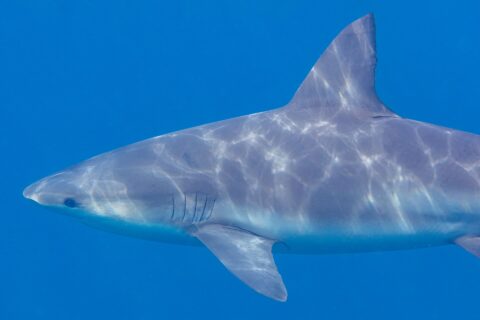
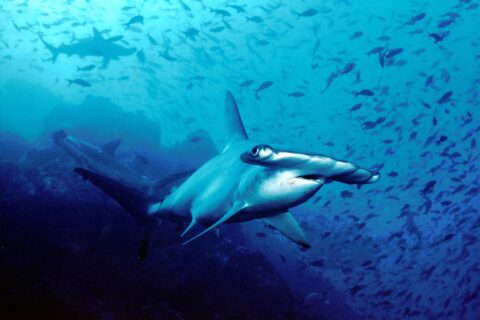
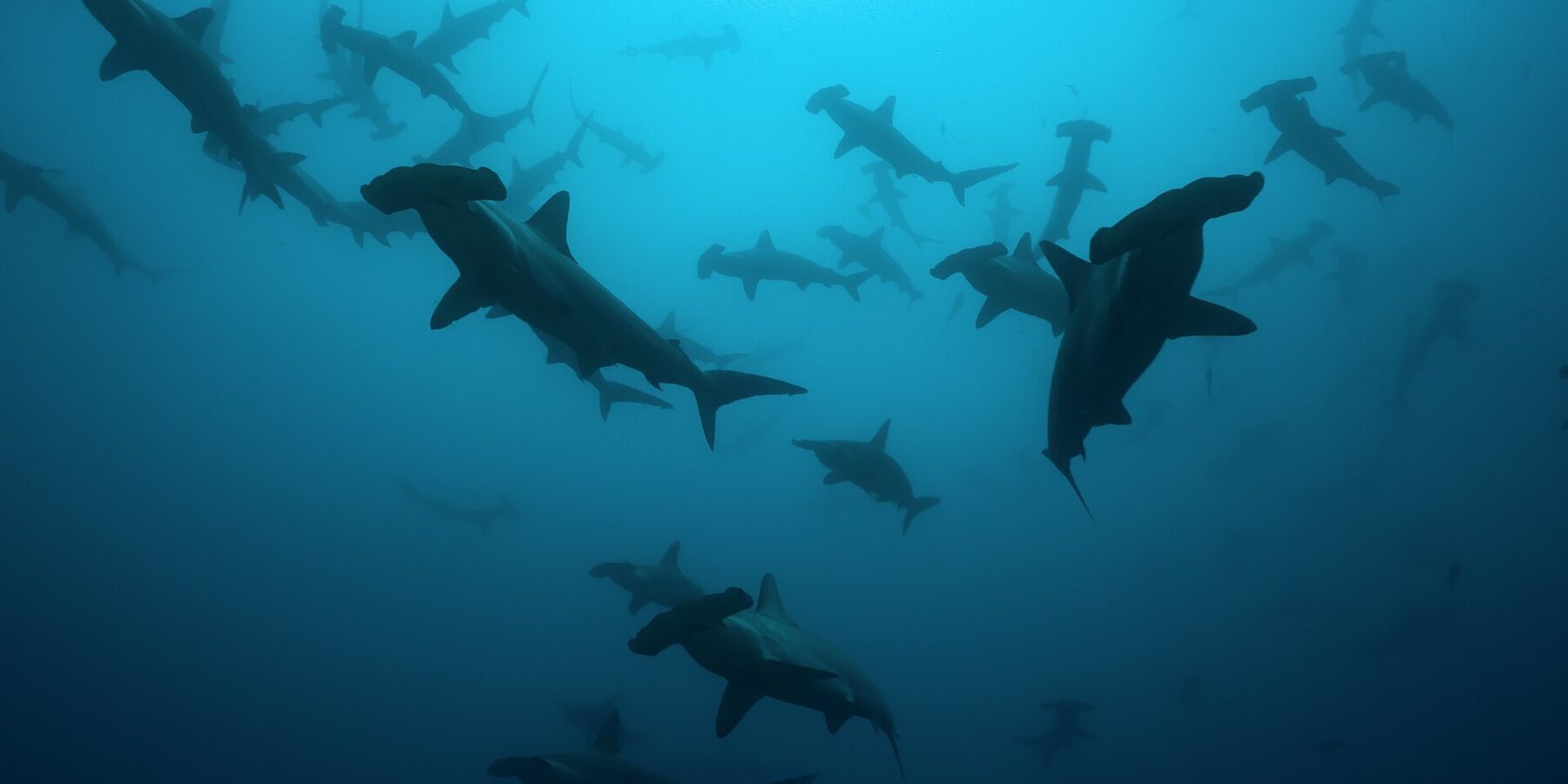
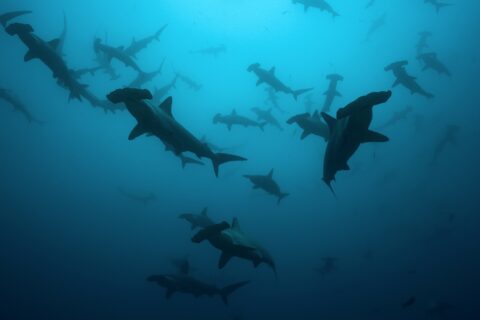
You go diving in Costa Rica for the sharks above all. At Cocos Island, 550 kilometers off the coast, hammerheads pass over you by the hundreds from August to October. Closer in, from May to November, boats head to the Bat Islands, where bull sharks come to their cleaning station without bait.
Why dive Costa Rica?
Here, scuba diving happens almost entirely on the Pacific side, over volcanic rock and pinnacles in open current. Cold water rising from the deep brings in plankton, which feeds the whole food chain. Scalloped hammerheads are critically endangered, but at Cocos, from August to October, you see them in schools of a hundred to five hundred. To see that many in the eastern Pacific, you have to go to the Galápagos or Malpelo.
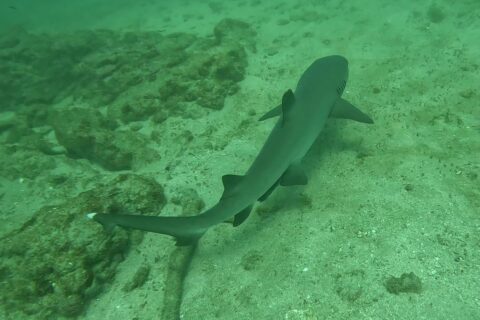
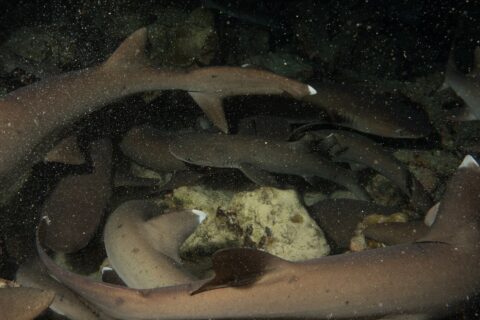
The bull sharks of the Bat Islands and the mantas of the Catalinas, on the other hand, are day trips from the coast. If you only have Open Water, go to Caño Island, the most accessible dive in the country. About ten whitetip reef sharks sleep there in a cave at 14 meters, the Cueva del Tiburón.
Where to dive in Costa Rica?
Only a liveaboard goes to Cocos Island, where the boat stays seven days, with three dives a day. You need Advanced and experience in current. At Bajo Alcyone, an isolated seamount, you tuck in behind a boulder on the plateau, at 27 or 30 meters. If your group stays still, the hammerheads come to you.
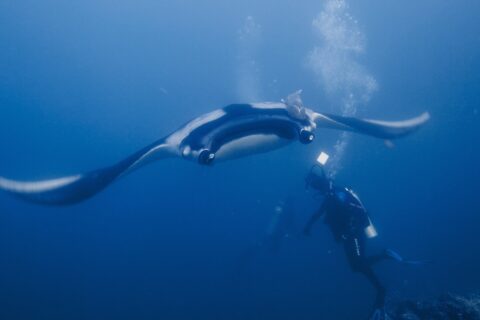
In Guanacaste, you stay in Playas del Coco or Playa Flamingo. Playas del Coco is less than an hour from Liberia airport and five hours' drive from San José. Oceanic manta rays pass over the cleaning stations of the Islas Catalinas. Open Water is enough almost everywhere there, but La Punta, one of these stations, calls for experience in current. At the Bat Islands (Islas Murciélago), dive centers require Advanced, because at Big Scare the bull sharks hold between 20 and 30 meters, in the current.
On the South Pacific coast, boats to Caño Island leave from Uvita or Drake Bay. Drake Bay has no paved road, and you get there by boat from Sierpe or by plane from San José. At Caño, only experienced divers go to El Faro and Bajo del Diablo. Bajo del Diablo, a pinnacle, drops from 5 to 45 meters in open current.
On the Caribbean side, the Cahuita reefs are shallow, and you will mostly see them snorkeling.
When is the best time to dive Costa Rica?
At the Catalinas, mantas are never guaranteed, even from December to April, so keep a spare day. They come with the cold water, which drops to 16°C below the thermocline, and you will dive in a 5 mm wetsuit, or even a 7 mm. When the water warms up, from May to November, they become rarer.
From June to November, the hammerhead schools grow, but the crossing to Cocos is rougher and the current reaches two to four knots. Whale sharks pass over Bajo Alcyone, mostly from July to September. The hammerheads stay from December to May in smaller groups, with calm seas and 30 meters of visibility.
At Caño, the water clears from December to April, and humpback whales arrive from the north. You see them from the boat. Others come from the south to give birth from July to October, when the rain cuts visibility.
How much does a dive trip to Costa Rica cost?
The price of a Cocos Island liveaboard includes the transfer from San José, but not the park fees or fuel. On the Okeanos Aggressor II, the price depends mostly on the cabin, and the hyperbaric chamber fee is extra. The Sea Hunter costs a little more, but Nitrox is included. On board, you still pay US$200 for fuel and US$35 in rescue fees.
On the coast, you pay by the day or by package. Rich Coast Diving charges US$355 for six dives over three days, less than the Cocos park fees alone. At the Bat Islands, a two-dive day costs US$165 to US$210 before VAT, with lunch and park fees almost always included. From Drake Bay, the Caño trip, at US$140 to US$155, even includes gear.
What do you need to know before diving Costa Rica?
On arrival, you must be able to show where you are staying and that you can pay for your stay. Crime is rising, and some parts of San José are best avoided. On some beaches, rip currents drown swimmers every year, so it is better not to swim alone.
Do not go to Cocos without dive insurance, because the nearest chamber is 36 hours away by sea. The park bans decompression dives and any contact with the bottom. At Dirty Rock, a Cocos pinnacle, a DSMB is mandatory.
In Playas del Coco, the Rocket Frog and Rich Coast centers require a day of local diving before the Catalinas and the Bat Islands. The boat only goes with at least four divers. In the dry season, book the Caño trip a week ahead.
 Costa RicaPelagic