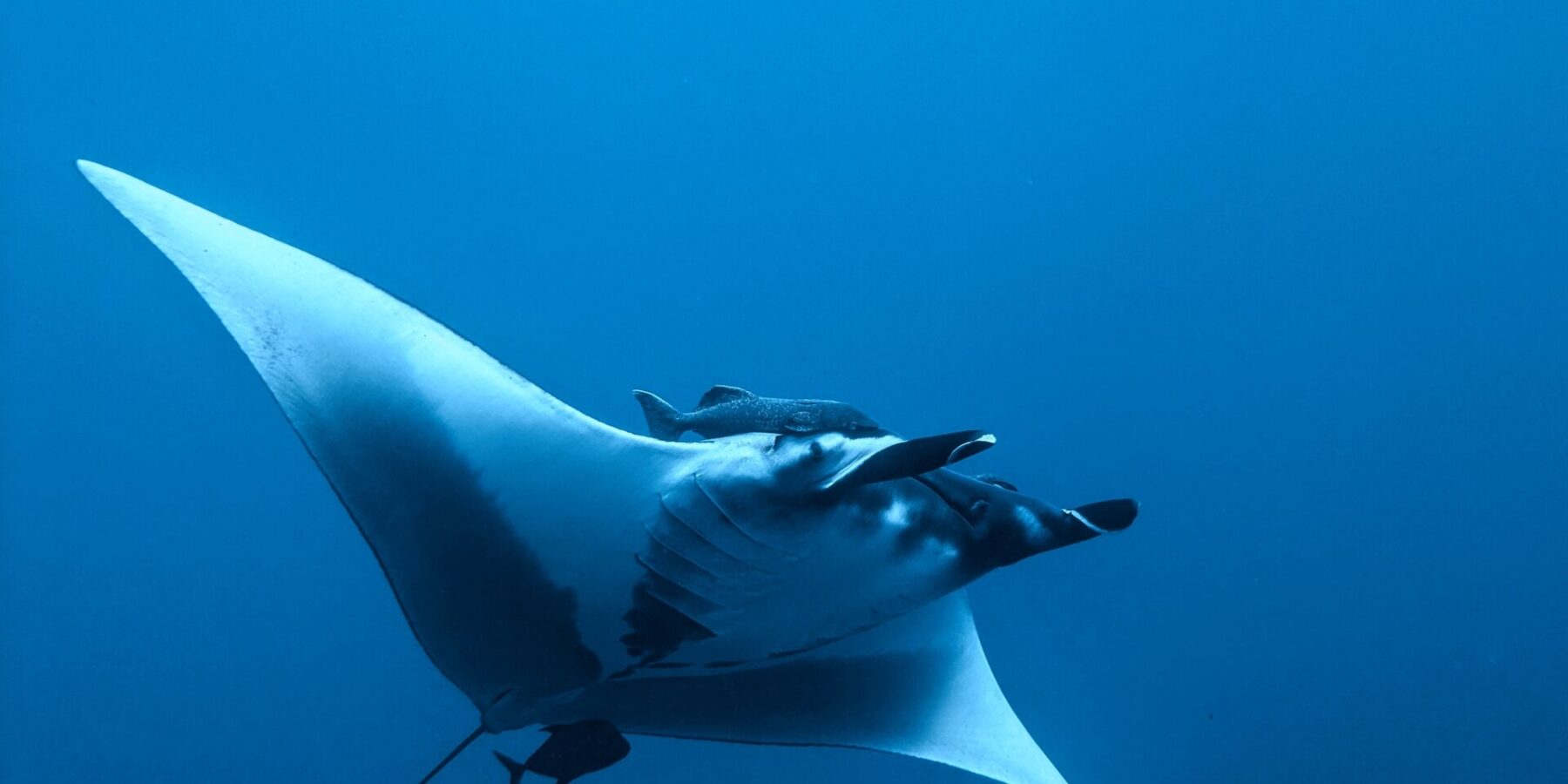
The oceanic manta ray, the largest ray in the world, measures 4 to 5 meters across, up to 7 meters, and lives offshore. At El Boiler, in the Revillagigedo Islands, a resident population comes up close to divers for tens of minutes at a time. The species is Endangered and has no stinger: let it come to you.
Where to dive to see the oceanic manta ray?
 Costa RicaPelagic
Bajo Alcyone
Cocos IslandCan be seen all year round: passing through, occasional
 Costa RicaPelagic
Bat Islands (Islas Murciélago)
Guanacaste and the North PacificCan be seen all year round: now and then at Big Scare
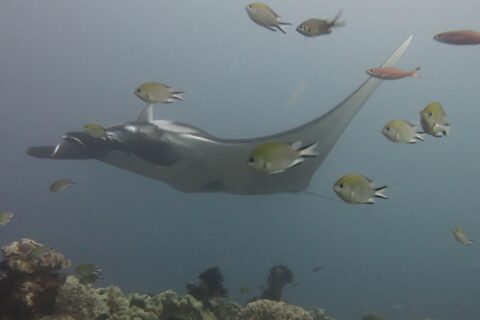
 IndonesiaPelagic
Blue Magic
Raja AmpatPeak season from December to March: at the cleaning stations on top, from December to March, when plankton concentrates in the strait
 Costa RicaCave or cenote
Caño Island
South Pacific: Osa and Caño IslandCan be seen all year round: passing through, seen several times off the sites
 MexicoPelagic
El Boiler
Revillagigedo Islands (Socorro)Peak season from November to May: resident population, at the cleaning station between 25 and 30 meters, best from November to January and from April to May
 AzoresReef
Formigas and Dollabarat
Santa MariaCan be seen all year round: rare, alone, in open water above the bank
 Costa RicaReef
Islas Catalinas
Guanacaste and the North PacificPeak season from December to April: at the cleaning stations of La Punta, South Point and The Wall, mostly from December to April, never guaranteed
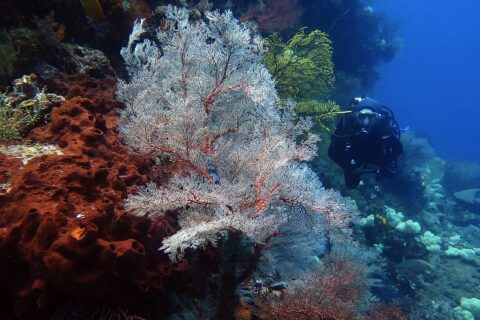 IndonesiaPelagic
Magic Mountain (Misool)
Raja AmpatPeak season from November to March: at the cleaning station at the end of the western peninsula, often in the first minutes of the dive
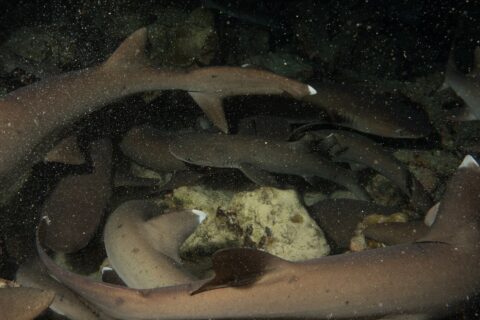 Costa RicaPelagic
Manuelita
Cocos IslandCan be seen all year round: an occasional visitor on the outer slope
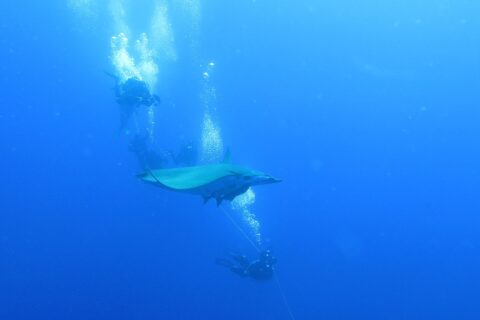 AzoresPelagic
Princess Alice Bank
Pico and FaialCan be seen all year round: much rarer than the mobula, alone or in pairs
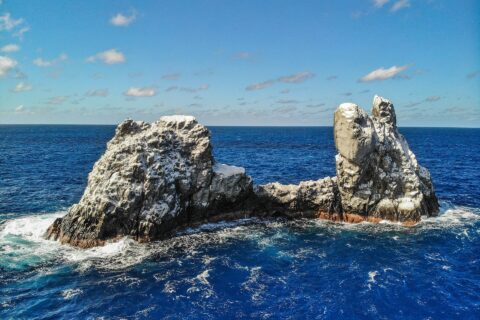 MexicoPelagic
Roca Partida
Revillagigedo Islands (Socorro)Can be seen all year round: passing around the rock, less faithful than at El Boiler
How do you identify an oceanic manta ray?
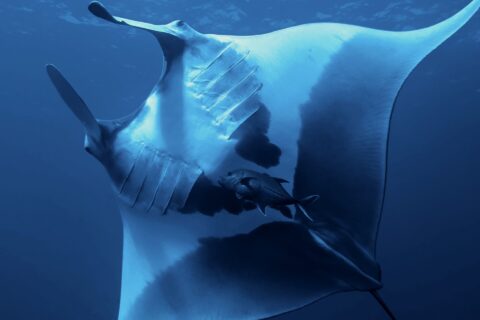
The oceanic manta is the largest ray in the world: 4.50 meters across on average, 4 to 5 meters for most adults, and up to 7 meters and nearly three tons for the largest. The disc is flat, extended by two large triangular pectoral fins. At the front, two cephalic fins, rolled into a spiral while it swims, unfurl to channel water toward the wide, rectangular mouth. The tail is long, with no stinger, just a small bulge at its base. The back is black, dark brown or steel blue, often edged with a paler color; the belly is white, marked with dark spots unique to each individual. To tell it from the smaller reef manta, look at the belly: on the oceanic manta, the spots are clustered on the lower abdomen, and the cephalic fins, the inside of the mouth and the gill slits are often black. Some individuals, called melanistic, are entirely black, top and bottom.
How does the oceanic manta ray live?
It is an offshore species that spends most of its life far from the coast, follows the currents and migrates to upwelling zones rich in zooplankton. It often associates with oceanic islands, and that is where you meet it. It feeds by swimming slowly around its prey with its mouth open, and also takes small fish. It has the largest brain of any fish, up to 200 grams, and may be able to recognize its reflection in a mirror. Males mature at around 4 meters across, females at around 5. After 12 to 13 months of gestation, the female gives birth to a single pup, rarely two, 1.40 meters across. It travels alone or in groups of up to about fifty.
Where and when can you see oceanic manta rays in Mexico?
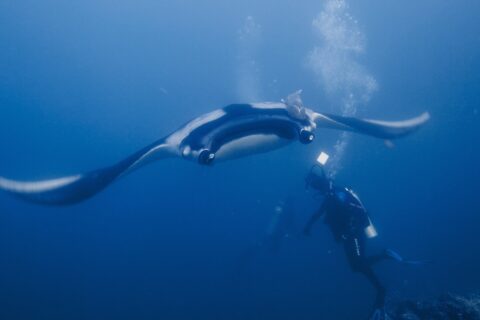
The Revillagigedo Islands, 24 to 36 hours by boat from Cabo San Lucas, are home to a resident population monitored for decades, and many of its mantas have names. At El Boiler, the San Benedicto pinnacle, the mantas visit the cleaning station between 25 and 30 meters, where butterflyfish and wrasses pick off their parasites. Then they glide over the divers, come back and pass through their bubbles: encounters of twenty to thirty minutes, unique in the world. You also see them at Cabo Pearce and The Canyon. The liveaboard season runs from November to May, with the best encounters from November to January and from April to May, in water at 23 to 26 °C.
Is the oceanic manta ray endangered?
The oceanic manta is listed as Endangered by the IUCN. Its populations have crashed over twenty years under fishing pressure, both targeted and accidental, in drift nets and bottom nets, as it often feeds near the surface. Late maturity, a long gestation and one pup at a time make every catch a lasting loss. It also swallows microplastics with its plankton. In Mexico, the Revillagigedo archipelago has been closed to fishing since 2017, and the park regulates diving there so that these encounters remain encounters with wild animals.
Our tip
Don't chase it, it is much faster than you: stay away from the group, motionless, in midwater, and let it come to you. Save your bubbles for it: at El Boiler, mantas keep coming back for a bubble massage. Never touch it, the mucus covering its skin protects it.