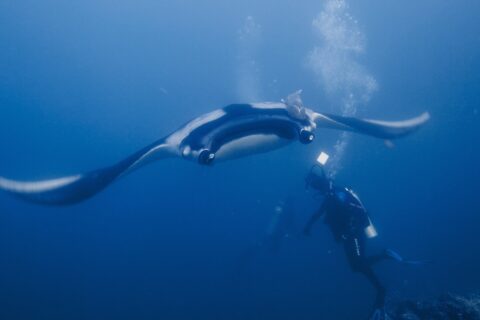
From December to April, the Papagayo winds bring up cold water, 20°C at the surface, which draws manta rays to the Catalinas. From May to November, the sea is flat, the water rises to 28 or 30°C and bull sharks arrive at the Bat Islands. Visibility stays at 8 to 20 meters.
Budget
In Playas del Coco, two dives cost US$85 on the local sites, US$135 to US$145 at the Catalinas and US$165 to US$182 at the Bat Islands. The 13% VAT is not always included. Rocket Frog and Rich Coast require a day of local diving before the longer trips.
Getting there
You fly into Liberia airport, less than an hour from Playas del Coco, or into San José, five hours away by road. The longer trips leave at 6 a.m. The Catalinas are 30 to 45 minutes away by boat, the Bat Islands 45 to 90 minutes.
What is diving like in Guanacaste and Playas del Coco?
Guanacaste is the north Pacific coast of Costa Rica, the driest in the country, served by Liberia international airport. The dive centers are in Playas del Coco, Playa Hermosa and Playa Flamingo. They go out every day to the islets of the Gulf of Papagayo for two local dives, US$85 at Rocket Frog Divers. The bottom is volcanic rock, boulders and sand, with no coral. Guanacaste diving is about fish: schools of jacks, rays, morays and whitetip reef sharks. Visibility is modest, 8 to 20 meters.
How do you dive the Catalinas and the Bat Islands?
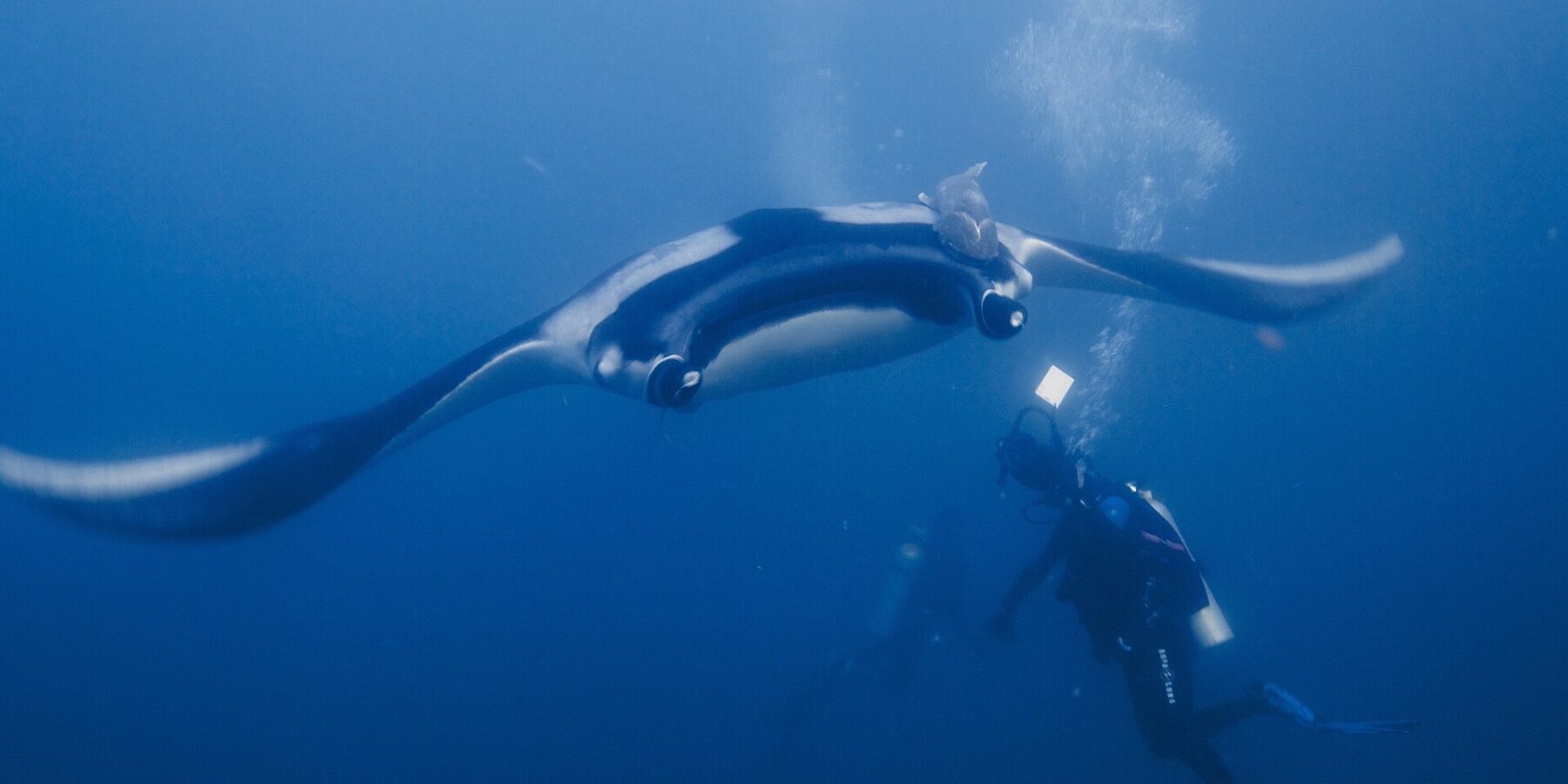
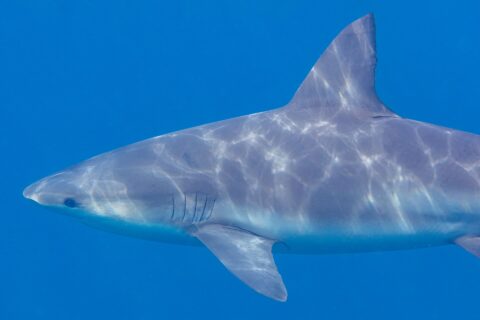
Two longer trips made the region famous. The Islas Catalinas, 45 minutes by boat from Playas del Coco and 40 minutes from Flamingo, are where oceanic manta rays gather from December to April. Their sites run from 12 to 36 meters, such as La Punta or the Cupcakes. The Bat Islands (Islas Murciélago), in the marine sector of the Área de Conservación Guanacaste, two hours away by sea, are home to Big Scare, the bull shark site, at 20 to 30 meters, from May to November. Advanced Open Water is mandatory, the park is booked online, and fees are US$15 before tax.
When is the best time to dive Guanacaste?
From December to April, the Papagayo winds push surface water offshore and draw up cold, nutrient-rich water. It is 20°C at the surface, sometimes 16 or 17°C at depth in January and February, with sharp thermoclines and choppy seas offshore. That plankton is what draws the mantas to the Catalinas. From May to November, the sea is flat, the water rises to 28 or 30°C, the afternoon rain settles the turbidity, and the bull sharks arrive at the Bat Islands. A 5 mm wetsuit, or even a 7 mm in the dry season, is no luxury here.
How much does diving in Guanacaste cost?
At Rich Coast Diving in Playas del Coco, two dives at the Catalinas cost US$145 with VAT, and two dives at the Bat Islands US$182, park fees included. At Rocket Frog Divers, they cost US$135 and US$165 before the 13% VAT, with meal and park fees included for the Bat Islands, and US$235 for three dives. Gear rental runs US$30 to US$35 a day, Nitrox US$10 per tank, and dive insurance, which some centers require, US$19 a day. Both centers require a day of local diving before the longer trips, and a minimum of four divers.
Where to stay in Guanacaste?
Hotels, apartments and rooms around Playas del Coco, the starting point for dives at the Bat Islands, with current prices.
 Costa RicaPelagic