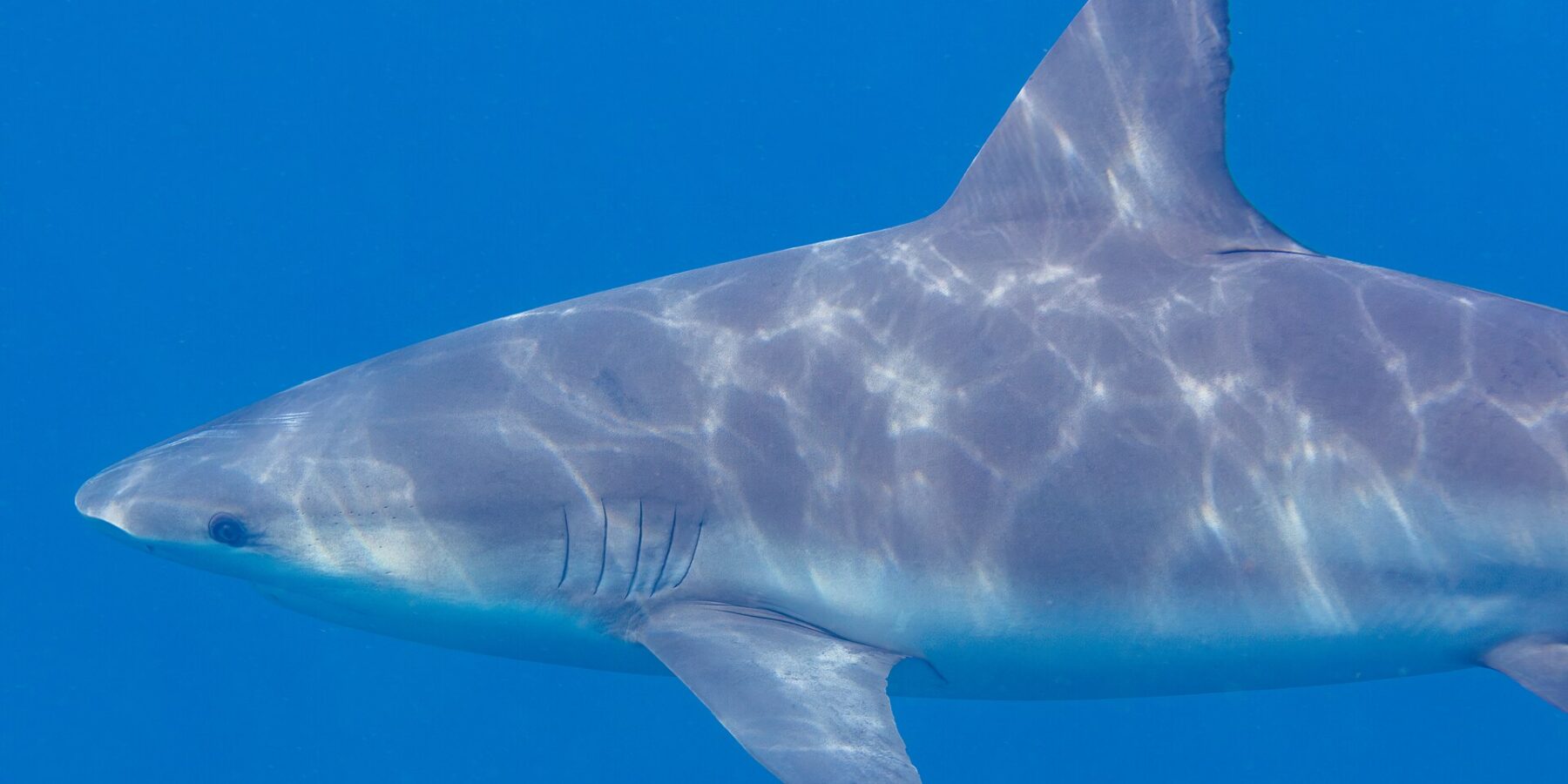
The Bat Islands are an archipelago in Santa Rosa National Park, 45 minutes by RIB from Playa Flamingo. At the Big Scare cleaning station, at 30 meters, bull sharks gather without bait from May to November. The site is reserved for Advanced divers.
Why dive the Bat Islands?
- Bull sharks of 2.5 to 3.5 meters at a natural cleaning station, with no bait or feeding
- A protected marine sector closed to fishing, Costa Rica's only archipelago
- Bajo Negro as the second dive: a pinnacle rising from 24 meters to just below the surface, wrapped in schools of fish
- 45 minutes by RIB from Playa Flamingo, with dolphins and humpback whales on the way
- A demanding dive, deep and in current, for Advanced divers
The dive site on the map
Base: Playas del Coco, 42 km as the crow flies.
See nearby dive sites on the mapThe Bat Islands in pictures
What will you see at the Bat Islands?
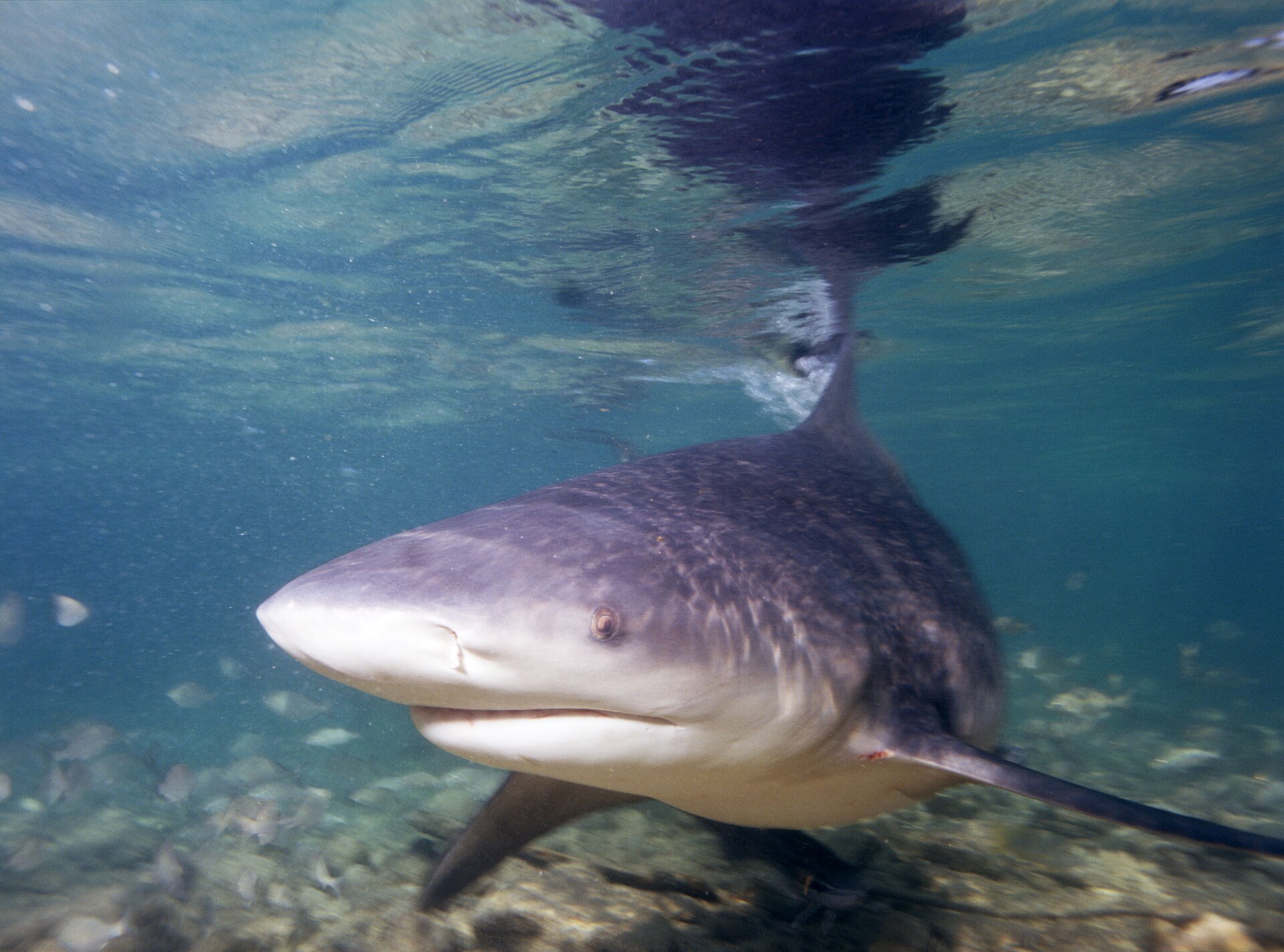
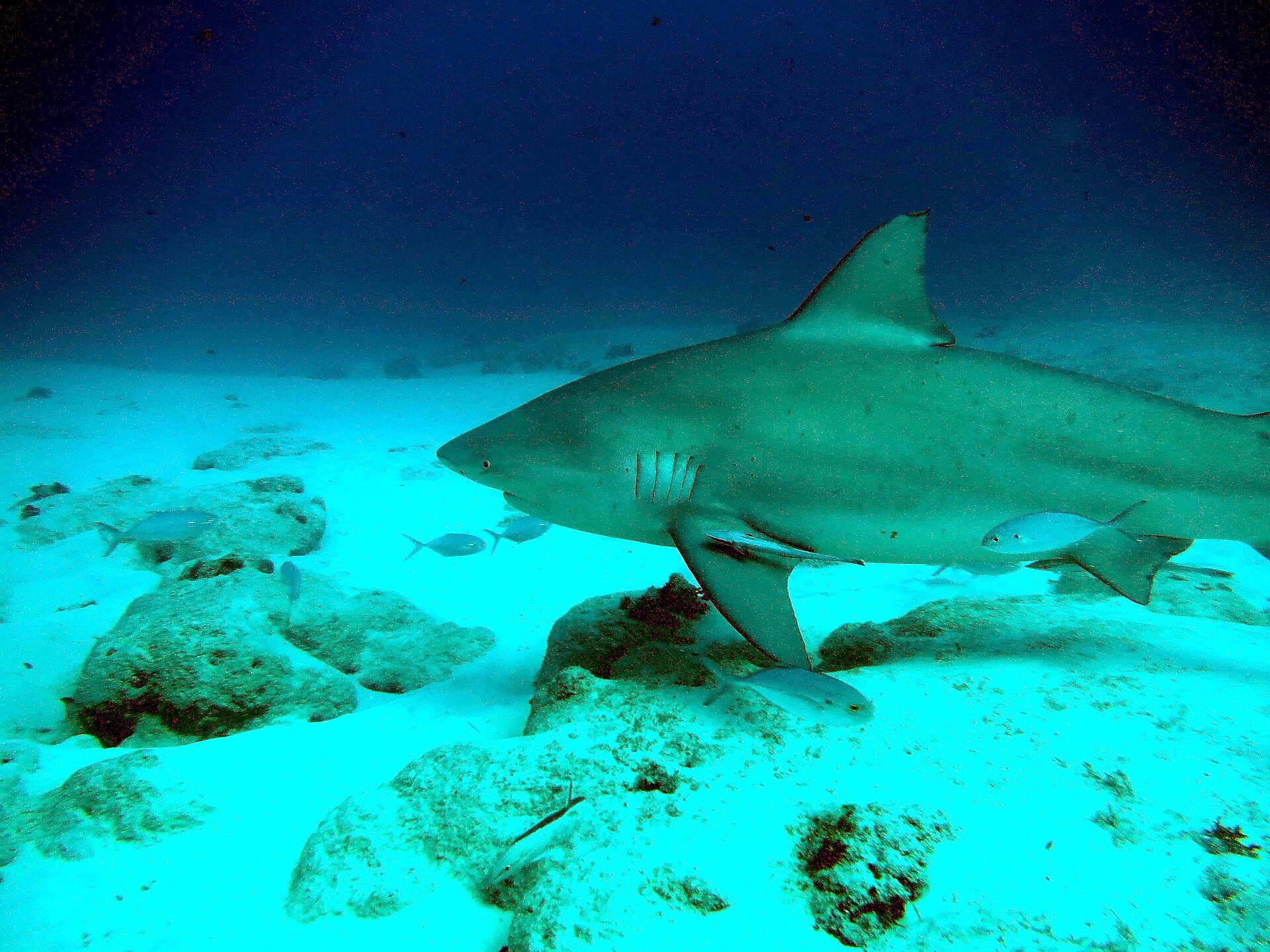
Big Scare, El Gran Susto, is a natural cleaning station at around 30 meters where bull sharks gather, with no bait or feeding. They commonly measure 2.5 to 3.5 meters, sometimes more, and pass over the sand in small groups. Some days there are a handful, other days none: this dive is an observation, not a show. Around them are schools of jacks, eagle rays, snappers, barracudas, morays and turtles, and now and then an oceanic manta. Bajo Negro, the second dive, is a pinnacle covered in black coral and sponges, wrapped in very dense schools. The marine sector of the Área de Conservación Guanacaste, closed to fishing, is also home to sailfish, marlin, tuna and golden cownose rays; on the boat ride, you see dolphins and, in season, humpback whales. The bull shark is the species that brings divers here, and the park knows it.
| Species | J | F | M | A | M | J | J | A | S | O | N | D | Note |
|---|---|---|---|---|---|---|---|---|---|---|---|---|---|
 Bull shark | possible | possible | possible | possible | possible | peak season | peak season | peak season | peak season | peak season | possible | possible | at the Big Scare cleaning station, around 30 meters, without bait; present year-round, with trips from mid-May to early November |
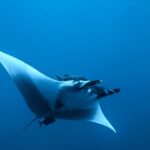 Oceanic manta ray | possible | possible | possible | possible | possible | possible | possible | possible | possible | possible | possible | possible | now and then at Big Scare |
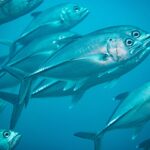 Bigeye trevally | peak season | peak season | peak season | peak season | peak season | peak season | peak season | peak season | peak season | peak season | peak season | peak season | very dense around Bajo Negro |
| Eagle rays | peak season | peak season | peak season | peak season | peak season | peak season | peak season | peak season | peak season | peak season | peak season | peak season | above the sand at Big Scare |
| Snappers and barracudas | peak season | peak season | peak season | peak season | peak season | peak season | peak season | peak season | peak season | peak season | peak season | peak season | on the Bajo Negro pinnacle |
| Morays and turtles | peak season | peak season | peak season | peak season | peak season | peak season | peak season | peak season | peak season | peak season | peak season | peak season | in the boulders and on the plateaus |
| Dolphins and humpback whales | possible | possible | possible | possible | possible | possible | possible | possible | possible | possible | possible | possible | on the boat ride, the whales in season |
peak seasonpossiblerare
What is diving like at the Bat Islands?
Big Scare is a demanding dive. The surface swell calls for a negative descent: back roll with an empty BCD, regroup at 5 or 6 meters, then go straight down toward 30 meters, where the sharks are. Maximum depth is 30 to 35 meters and bottom time is short, hence the value of Nitrox. The current is moderate to strong year-round, and it arrives without warning. Visibility ranges from 5 to 27 meters, and you have to accept seeing a three-meter shark loom out of murky water. Thermoclines drop to 16 °C. Advanced Open Water is the minimum dive centers require, and they ask for a day of local diving before the trip. Bajo Negro, the second dive, is easier: a pinnacle rising from 24 meters to just below the surface, which you spiral up, with less current but several thermoclines.
When to dive the Bat Islands?
idealgoodnot recommended
The bull sharks are there year-round, but the trips are not. From mid-May to early November, the rainy season, the sea is flat in the morning, the surface water is 28 to 29 °C, and dive centers run the Bat Islands several times a week: this is the season, peaking from June to October. From December to April, the Papagayo winds whip up a short, rough sea on the crossing, the surface water drops to 27 °C and the thermoclines to 16 °C; most dive centers then suspend the trip, and the Bat Islands drop off the schedule. Visibility is hit-or-miss in every season, from 5 to 27 meters, and thermoclines stack up on Bajo Negro. Wear a 3 millimeter wetsuit at least, 5 in the dry season.
How to get to the Bat Islands?
The Bat Islands are dived as a day trip from Playas del Coco, Playa Hermosa or Playa Flamingo. From Flamingo, allow 45 to 50 minutes by fast RIB, and 60 to 90 minutes from the other bases depending on the sea. The trip includes two dives, Big Scare then Bajo Negro, and lunch at most dive centers, with a minimum of four divers. In 2026, Rich Coast Diving, in Playas del Coco, sells the two dives for US$182 taxes included. Rocket Frog Divers, in El Coco, charges US$165 for two dives and US$235 for three on Nitrox, lunch and park fee included, excluding the 13% VAT; Rocket Frog Divers Flamingo charges US$210 for two dives and US$280 for three, park included, excluding VAT. Bill Beard's, in Playa Hermosa, charges US$165 plus taxes, with the park fee extra, US$16.95 per diver. The dive center books entry online with the Área de Conservación Guanacaste. Liberia airport is a 40-minute drive from Playas del Coco.
Stay in Playas del Coco
Where to stay near the Bat Islands?
Hotels, apartments and rooms around Playas del Coco, with current prices.
Where are the Bat Islands, Costa Rica's only archipelago?
The Islas Murciélago, the Bat Islands, form the country's only archipelago, a line of islets running east to west off the Santa Elena Peninsula, in the far northwest of Guanacaste. Their rocks, Jurassic and Cretaceous basalts, radiolarites and breccias, are among the oldest in Costa Rica, and the islands themselves are between 109,000 and two million years old. They belong to the marine sector of the Área de Conservación Guanacaste, 43,000 hectares protected as a national park under Santa Rosa, with a research and patrol station on Isla San José. Big Scare, El Gran Susto to the park administration, is at Isla San Pedrillo, at the end of the chain.
How does a dive at Big Scare go?
The boat positions itself over the site, and everyone goes in at once: back roll, empty BCD, regroup at 5 or 6 meters, then straight down to the sand at around 30 meters. There, you settle or hold your position in a tight group, facing the current, and wait. The bull sharks come to the cleaning station, pass, move off and come back; they ask nothing of divers and do not like being followed. Ten to twenty minutes at the bottom depending on your gas, then an open-water ascent under an SMB, in a current that can shift. After the surface interval and lunch comes Bajo Negro: a pinnacle rising from 24 meters to the surface, a kilometer from the coast, which you circle in a spiral from bottom to top, among schools of jacks, snappers and barracudas, with black coral and sponges on the rock.
What are the rules for diving the Bat Islands?
The Área de Conservación Guanacaste only opens three sites in the archipelago to diving: El Gran Susto, Los Arcos at Cabo Santa Elena, and Bajo Negro. Entry is booked online, with the date, the activity, the visitors' names, the crew, the boat and its registration; the number of entries per activity is limited, time slots run from 6 a.m. to 2 p.m., and the entry fee is paid in advance by deposit to the National Parks Fund account. Boats only anchor off the station on Isla San José. A boat that shows up without having paid is asked to leave. Dive centers handle the booking; at Bill Beard's, the entry fee, US$16.95 per diver, is added to the trip price, while at Rocket Frog Divers it is included.
Our tip
Get to the bottom fast and stay close to the group, without ever chasing a shark: they come to the station on their own. Dive on Nitrox, because the dive plays out at 30 meters. Book as soon as you arrive, as the sea decides whether the boat leaves.
Other dive sites nearby
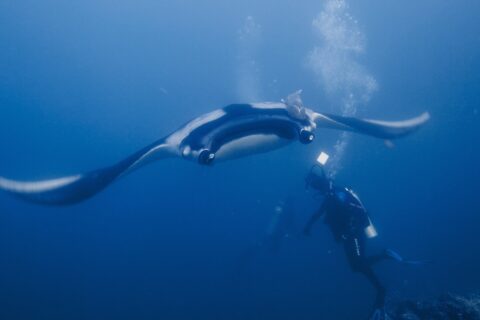
 Costa RicaReef
Islas Catalinas
Guanacaste and the North Pacific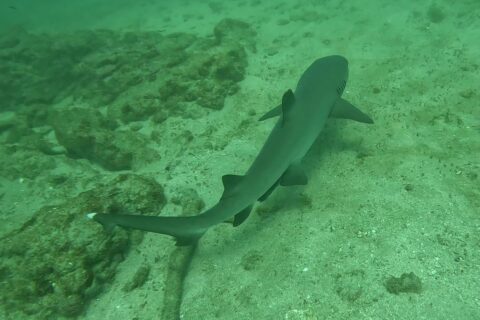 Costa RicaCave or cenote
Caño Island
South Pacific: Osa and Caño Island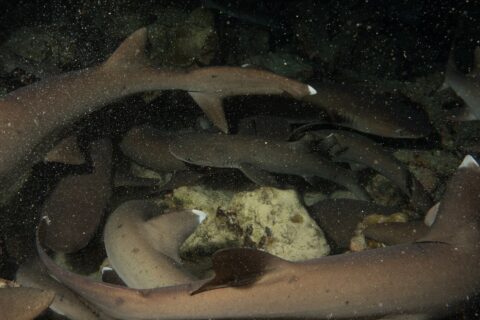 Costa RicaPelagic