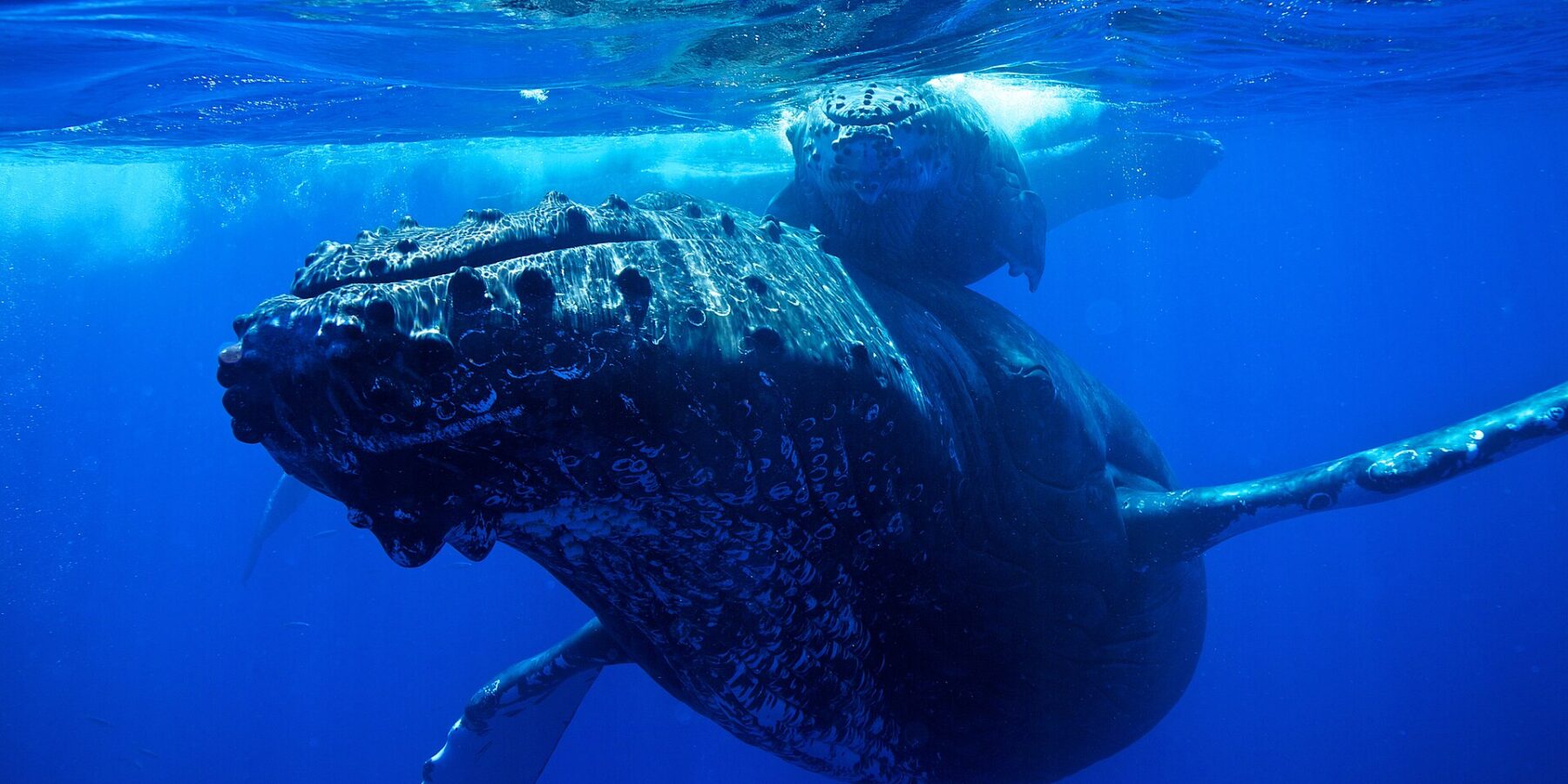
The humpback whale is a rorqual of 14 to 17 meters, up to 40 tons, with pectoral fins a third of its body length, that gives birth in tropical waters. You meet it while snorkeling, with an operator and strict approach rules, in Réunion from July to September and in French Polynesia from July to October.
Where to dive to see the humpback whale?
 FrancePass
Boulari Pass (New Caledonia)
New CaledoniaCan be seen all year round: at the surface during the crossing, from mid-July to mid-September
 FranceReef
Cap La Houssaye (Réunion)
French Indian Ocean: Réunion and MayottePeak season from July to September: at the surface off the cape, sometimes heard underwater; whale watching is regulated from July 1 to September 30
 FrancePass
S Pass (Mayotte)
French Indian Ocean: Réunion and MayottePeak season from July to October: in the lagoon, seen at the surface on the boat rides
How do you identify a humpback whale?
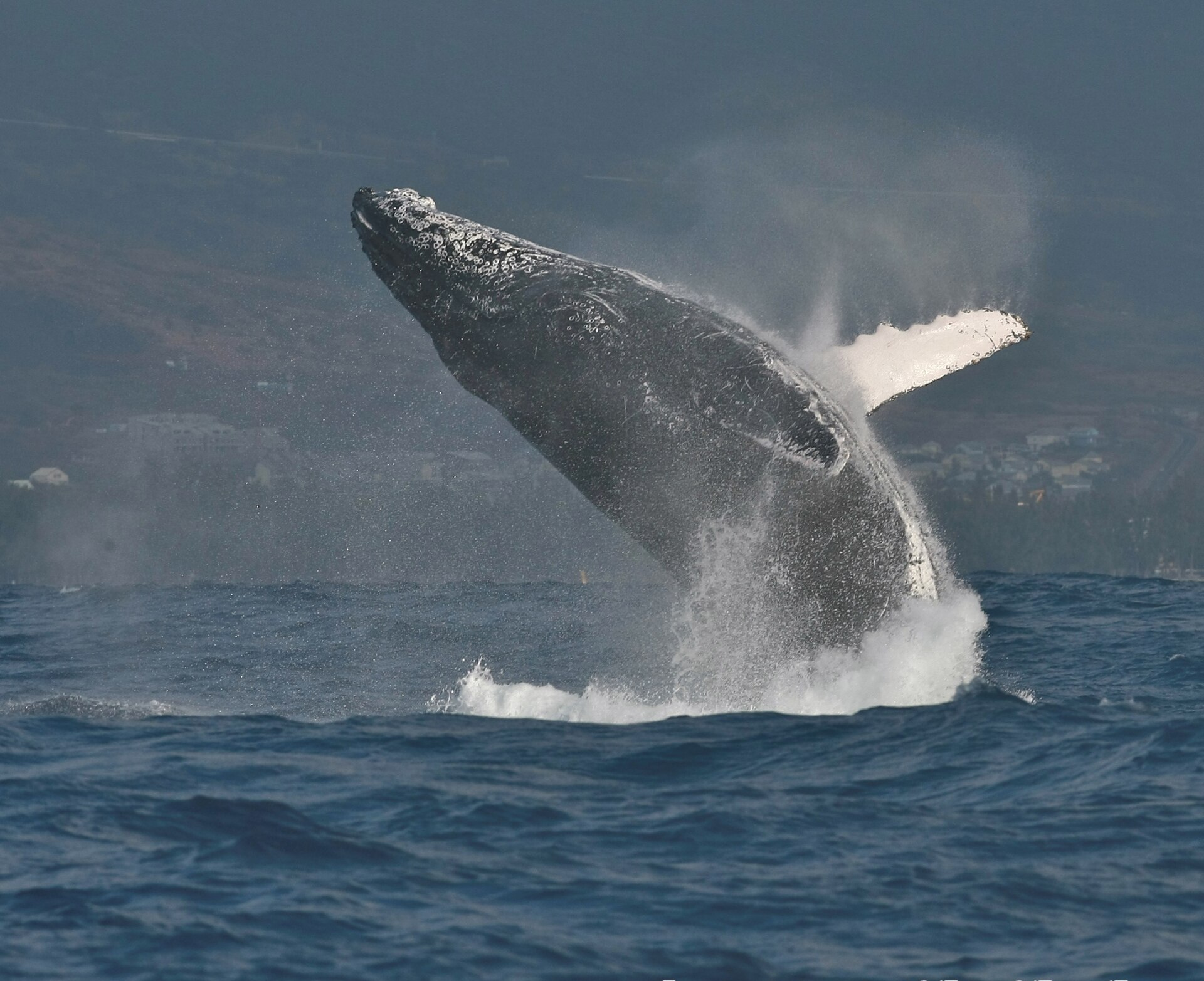
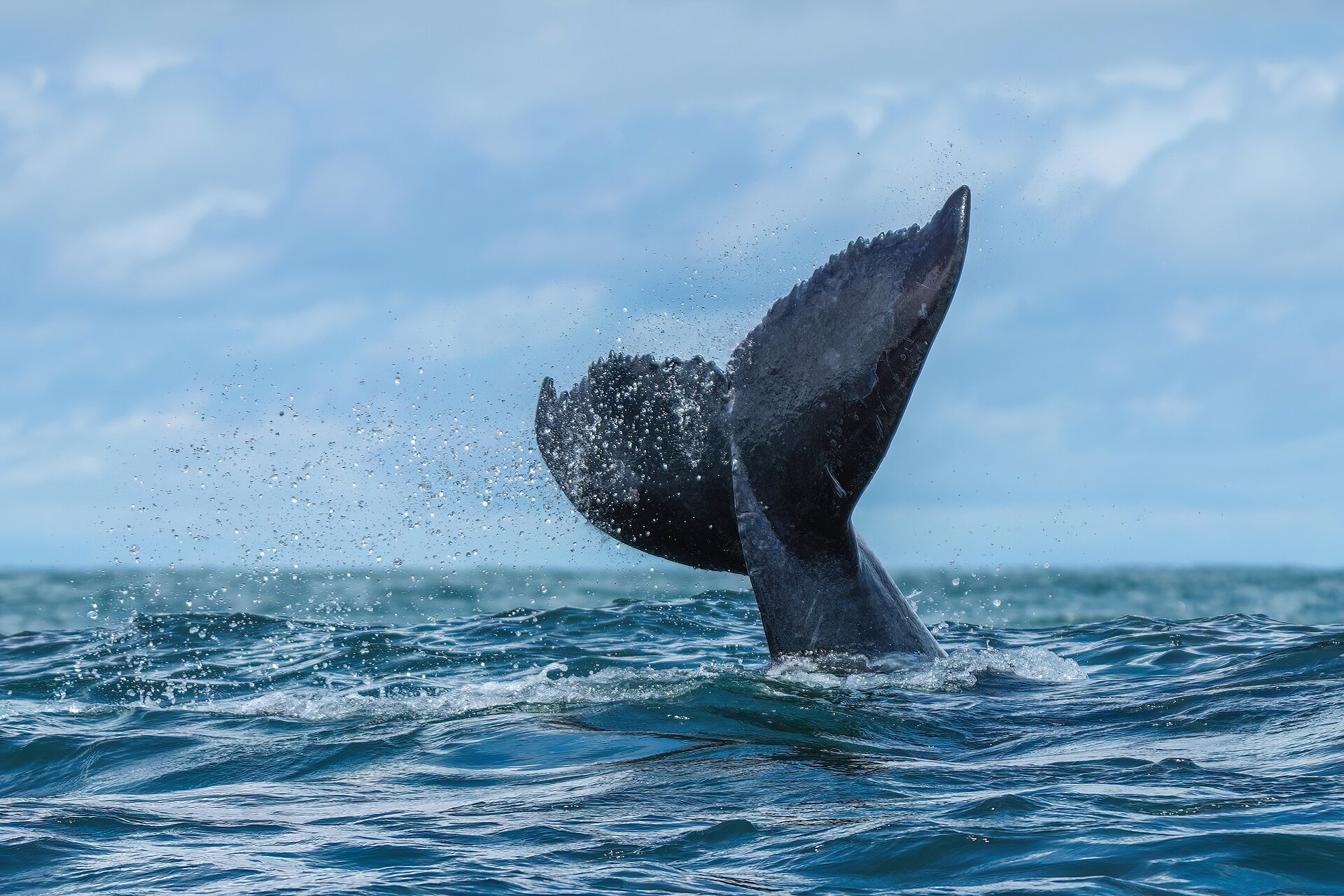
The humpback whale is a rorqual, the only species in its genus. Adults usually measure 14 to 15 meters, up to 17 meters, and weigh up to 40 tons; the female is 1 to 1.5 meters longer than the male. The body is massive, the rostrum slender, and the very long pectoral fins reach a third of the body length. The head and the leading edge of the pectoral fins carry tubercles, bumps that no other large whale has; the trailing edge of the fluke is serrated. The dorsal fin is small. When it dives, it shows the underside of its fluke, whose patterns and scars are unique to each individual: this is how researchers identify them. Whales from the Southern Hemisphere have more white than those from the north.
Humpback whale in pictures
How do humpback whales live?
It migrates every year between its feeding grounds, toward the poles, and its tropical breeding grounds, up to 8,000 kilometers one way. In the Southern Hemisphere, it eats Antarctic krill and small schooling fish, sometimes caught in bubble nets, from spring to fall; in warm waters, it barely feeds. Males sing during the breeding season, a complex song of 4 to 33 minutes. Gestation lasts 11.5 months, and the female gives birth to a single calf every two years, in shallow water, in the middle of the austral winter for southern populations. Breaches, tail slaps and pectoral slaps liven up the surface. It often dives to 80 meters and lives more than 50 years.
Where and when can you see humpback whales in French waters?
In Réunion, the whales arrive in the second half of June and stay until October, mostly on the west coast, off Saint-Gilles: nearly 1,200 were counted in 2023, 416 in 2024. In French Polynesia, they are there from July to October, sometimes until November, around Tahiti, Moorea and the Austral Islands. In New Caledonia, Prony Bay hosts them from mid-July to mid-September. In Mayotte, they pass through from July to November, and 60% of the groups are mothers with their calf, against 20% worldwide. In the French West Indies, the Agoa sanctuary receives them from December to April, for breeding. Réunion and French Polynesia allow supervised swims, with fins, mask and snorkel: a trip with an in-water session costs from €135 in Saint-Gilles and from €170 in Moorea.
What are the rules for approaching humpback whales?
In Réunion, the prefectoral order of June 2025 limits, from July 1 to September 30, the number of boats within 300 meters of an animal to three and the number of people in the water to seven, and only allows in-water sessions from 9 a.m. to 1 p.m. In marine protected areas, including the Réunion marine reserve and the Mayotte Marine Natural Park, approaching closer than 100 meters has been banned since 2021. In French Polynesia, the entire exclusive economic zone has been a marine mammal sanctuary since 2002; since April 2024, authorized boats stay 100 meters away and swimmers 15 meters. In the French West Indies, the Agoa sanctuary bans any approach closer than 300 meters, at the surface or underwater. Everywhere, you never chase a whale or cut across its path. The species has been listed as Least Concern by the IUCN since 2018, but as Vulnerable on the French West Indies red list.
Our tip
In Réunion, book an in-water session between July and September, in the morning, with an approved operator: slots are limited and only seven people go in the water per whale. Get in with fins, mask and snorkel, stay grouped behind the guide and let the animal choose the distance. Never dive toward a mother and her calf, and get out of the water as soon as the guide asks.